

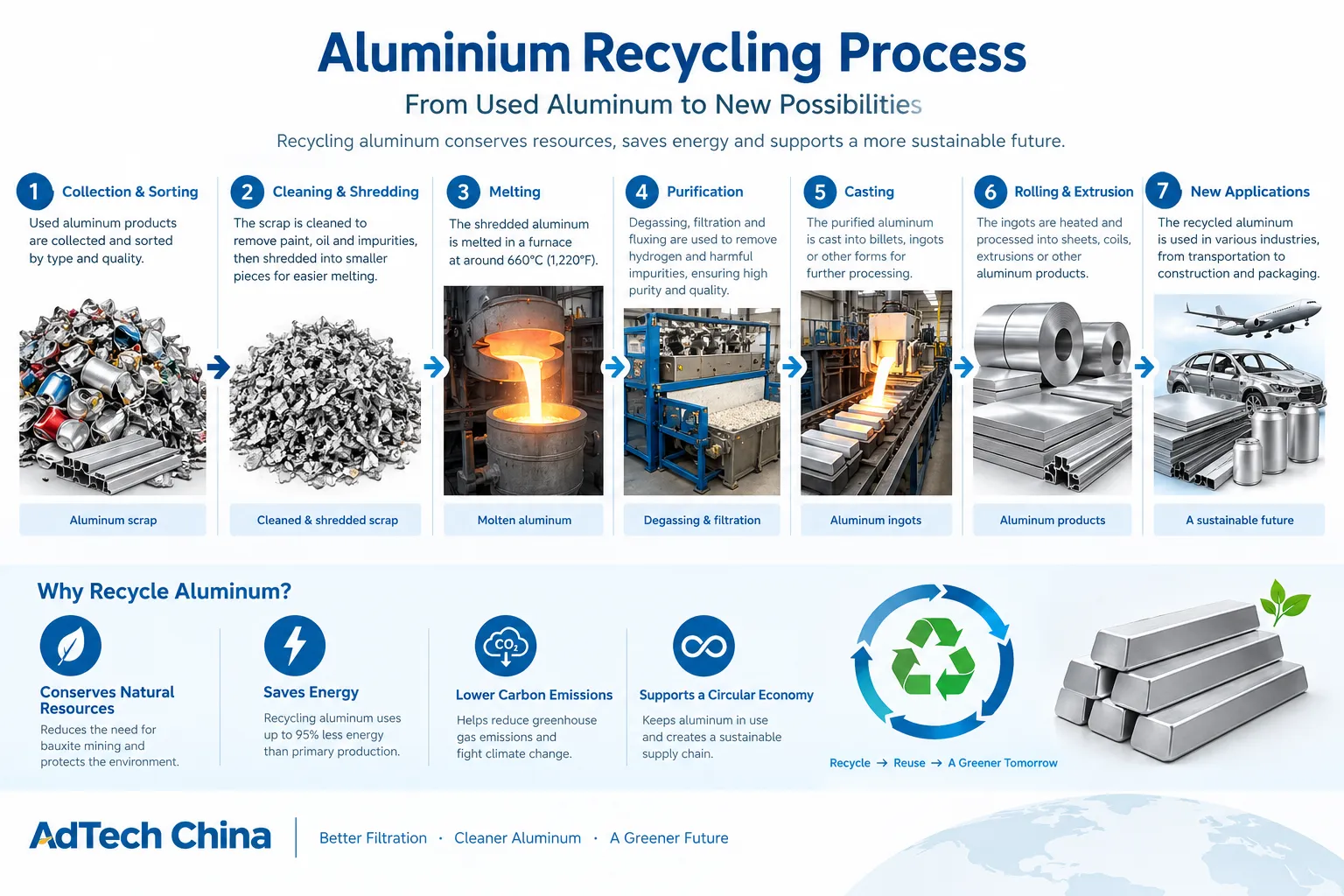
The aluminium recycling process converts aluminium scrap into reusable metal through collection, sorting, pre-treatment, melting, melt refining, alloy adjustment and casting. The exact process depends on the scrap source, alloy composition, contamination, coating, moisture content and the quality required for the final product. For industrial recyclers, the objective is not simply to melt aluminium, but to recover as much usable metal as practical while controlling alloy chemistry, inclusions, hydrogen, emissions and production costs.
Aluminium recycling is widely used to produce secondary aluminium for foundry alloys, extrusion billets, rolling slabs and other applications. Compared with producing primary aluminium from bauxite, recycling generally requires substantially less energy. However, achieving consistent recycled metal quality requires suitable scrap preparation and process control.
1. Aluminium Recycling Process at a Glance
The following table summarizes the main stages of industrial aluminium recycling.
| Сцена | Main operation | Основная цель |
|---|---|---|
| 1. Collection | Gather manufacturing scrap and end-of-life aluminium | Establish a usable feedstock supply |
| 2. Sorting | Отделить алюминий от других материалов и сортировать лом | Повысить однородность сплава и снизить уровень загрязнения |
| 3. Предварительная обработка | Измельчить, отсортировать по размеру, высушить, удалить масло или покрытия в соответствии с требованиями | Подготовьте лом для безопасной и эффективной переплавки |
| 4. Плавление | Загрузите лом в подходящую печь | Превратить цельный алюминий в расплавленный металл |
| 5. Флюсование и снятие пены | Нанесите подходящую флюсовую пасту в необходимых местах и удалите остатки с поверхности | Контроль окисления, отделение остатков и извлечение металла |
| 6. Рафинирование расплава | Корректировать химический состав и удалять нежелательные компоненты расплава | Обеспечить соответствие требованиям к целевому сплаву и качеству расплава |
| 7. Дегазация и фильтрация | При необходимости удаляйте растворенный водород и неметаллические включения | Повысить чистоту расплава |
| 8. Литье | Производство слитков, заготовок, слябов или других литых изделий | Подготовить металл к последующим этапам производства |
| 9. Контроль качества | Проанализировать состав и проверить соответствующие показатели качества | Убедитесь в пригодности для предполагаемого применения |
Эти этапы не везде одинаковы на всех предприятиях по переработке отходов. Чистый производственный лом может потребовать относительно небольшой предварительной подготовки, тогда как смешанный бытовой лом может потребовать нескольких этапов сортировки и обработки перед плавкой. На некоторых предприятиях операции по плавке и рафинированию объединены, в то время как на других расплавленный металл перемещают между отдельными печами или станциями обработки.
2. Collection and Classification of Aluminium Scrap
Процесс переработки начинается с определения источника происхождения лома и его состава.
Manufacturing scrap
Производственный лом образуется в процессе изготовления алюминиевых изделий. К нему относятся, например, обрезки листов, остатки экструзии, стружка от механической обработки и литейный лом.
Чистый, сортированный производственный лом зачастую можно эффективно переработать, поскольку его происхождение и характеристики материала относительно хорошо известны. Однако маслянистая стружка, смешанные сплавы и материалы с покрытиями могут потребовать дополнительной обработки.
Post-consumer aluminium scrap
Потребительский лом получают из изделий, срок эксплуатации которых истек. К типичным примерам относятся:
-
Подержанные алюминиевые банки из-под напитков и упаковка.
-
Алюминиевые оконные рамы и строительные элементы.
-
Компоненты транспортных средств.
-
Бытовые и промышленные изделия из алюминия.
-
Композитные алюминиевые детали, содержащие сталь, пластмассу, резину или другие материалы.
Лом, полученный после использования, как правило, представляет собой более сложную задачу для сортировки, поскольку его предыдущее применение, состав сплава и степень загрязнения могут быть неизвестны.
Aluminium dross and other process residues
Алюминиевый шлак образуется в процессе плавки и обработки металла. Он содержит оксид алюминия, другие компоненты и потенциально извлекаемый металлический алюминий.
Шлак не следует приравнивать к чистому алюминиевому лому. Способ его переработки зависит от его состава, температуры, истории обращения и доступных технологий переработки.
Важным принципом является то, что классификация лома должна производиться до выбора маршрута прохождения через печь. Предприятие, которое рассматривает все материалы, содержащие алюминий, как взаимозаменяемые, рискует столкнуться с ненадлежащим контролем состава сплава, ненужной переработкой и снижением выхода металла.
3. Sorting and Separation: Why Alloy Composition Matters
Сортировка является одним из важнейших этапов производства вторичного алюминия, поскольку химический состав поступающего лома напрямую влияет на качество конечного металла.
Алюминиевые сплавы содержат различные доли таких элементов, как кремний, магний, медь и марганец. Эти элементы влияют на такие свойства, как прочность, коррозионная стойкость, формуемость и литейность.
Например, к литейному сплаву с высоким содержанием кремния и к алюминиевому кованому сплаву, предназначенному для прокатки, могут предъявляться разные требования к составу. Их смешивание без соответствующего технологического плана может затруднить получение конечного сплава, отвечающего заданным требованиям.
Common aluminium scrap sorting methods
| Метод | Назначение | Важное ограничение |
|---|---|---|
| Ручная сортировка | Удалите заметные посторонние предметы и отсортируйте металлолом по идентифицируемым категориям | Зависит от последовательности действий оператора и наглядности существенных различий |
| Магнитная сепарация | Удалите железосодержащие материалы, такие как куски стали | Не проводит разграничения между марками алюминиевых сплавов |
| Сепарация с помощью вихревых токов | Выделять проводящие цветные металлы из соответствующих потоков отходов | Производительность зависит от размера и формы материала, способа его подачи и конструкции оборудования |
| Сортировка с использованием датчиков | Определить и выделить отдельные категории материалов или группы сплавов | Требуется применение соответствующих технологий обнаружения и проверенных критериев сортировки |
| Chemical composition analysis | Check alloy composition and support material classification | A representative sample and appropriate analytical method are required |
Laser-induced breakdown spectroscopy and colour-based sorting technologies are among the methods described by the Aluminum Association for improving scrap separation. Their usefulness depends on the feedstock and the recycling objective.
What happens when different aluminium alloys are mixed?
Mixing alloys is not automatically unacceptable. Some secondary aluminium products are designed to use mixed scrap, with composition adjusted through the process.
The problem arises when the mixture cannot meet the intended specification economically or consistently.
For example, an unwanted element that remains dissolved in the melt cannot ordinarily be removed simply by passing the metal through a ceramic filter. Depending on the element and target chemistry, practical responses may include better sorting, blending with suitable metal, changing the target product or using a more specialized metallurgical process.
Therefore, sorting is not merely a waste-handling activity. It is an important form of quality control that takes place before the metal enters the furnace. Research reviews of secondary aluminium production identify scrap composition and unwanted alloying elements as persistent challenges in producing recycled alloys.
4. Pre-Treatment: Shredding, Cleaning, Drying and Decoating
The purpose of pre-treatment is to prepare scrap for the selected melting process. Not every material requires every operation.
Shredding, shearing and sizing
Large or bulky components may be cut, crushed or shredded into manageable sizes. The required size depends on the separation equipment, furnace charging arrangement and characteristics of the scrap.
Size reduction can improve material handling and support downstream separation. However, it also consumes energy and may generate dust, so the equipment should match the actual feedstock.
Removing coatings and organic contaminants
Used beverage cans, painted components and other coated scrap may require decoating or delacquering before melting.
Coatings, oil, grease, lubricants and plastic residues can contribute to emissions and complicate the melting process. Suitable pre-treatment can improve metal recovery and reduce the contaminant load entering the furnace.
The need for thermal treatment depends on the coating and material type. It should not be assumed that every aluminium component requires the same decoating method.
Drying and de-oiling aluminium turnings
Machining chips and turnings deserve special attention because they may retain cutting fluids, oil and moisture. Their shape also gives them a relatively high surface area compared with their mass.
Suitable cleaning and drying can help prepare this material for safer charging and efficient metal recovery. The treatment method must be appropriate for the contaminant and the physical form of the scrap.
Why wet scrap is a serious safety concern
Wet or moisture-contaminated scrap must not be charged into molten metal without appropriate controls. Water contacting molten metal can cause a violent explosion.
The UK’s Health and Safety Executive advises storing scrap in dry, covered areas where possible, checking materials for water contamination and drying scrap when covered storage is not available. It also emphasizes training, appropriate protective equipment and safe operating practices.
Closed containers, trapped liquids and other potentially dangerous contaminants require specific assessment under the facility’s safety procedures.
Pre-treatment should therefore be selected based on three factors: material quality, metallurgical requirements and safe furnace operation.
5. Melting: Turning Prepared Scrap into Molten Aluminium
After preparation, the scrap is charged into a suitable melting furnace.
Pure aluminium has a melting point of approximately 660°C. Commercial alloys and industrial recycling processes operate according to their respective melting ranges and process requirements, so 660°C should not be treated as a universal furnace setpoint.
The actual operating temperature depends on alloy composition, furnace technology, charge condition, required throughput and downstream casting requirements.
Choosing a melting furnace
Different furnace designs suit different forms of scrap and production requirements.
| Тип печи | General consideration | What to evaluate |
|---|---|---|
| Реверберационная печь | Used for melting substantial quantities of aluminium scrap and other suitable feedstocks | Capacity, thermal efficiency, charge characteristics and melt handling |
| Ротационная печь | Used in some secondary aluminium operations, particularly where scrap characteristics suit rotary processing | Scrap contamination, process residues, flux requirements and recovery performance |
| Индукционная печь | Provides electromagnetic heating and may suit particular melting tasks | Furnace capacity, charge characteristics, electrical infrastructure and melt cleanliness |
| Crucible furnace | Used in selected smaller-scale or specialized melting applications | Batch size, alloy range, operating flexibility and handling arrangements |
These are general selection considerations rather than a universal ranking. Furnace suitability cannot be determined from nominal capacity alone.
One important industry distinction is the feedstock and refining route. Cleaner, well-characterized scrap may be remelted through a relatively direct process, while more contaminated or mixed scrap can require more intensive refining. Terminology such as remelter and refiner varies by market and production context, but the underlying distinction is useful when evaluating a process.
Controlling oxidation and metal losses
Aluminium develops oxide films when exposed to oxygen. During charging, melting, transfer and surface disturbance, oxidation can contribute to metal losses and non-metallic residues.
Scrap size, surface condition, furnace operation, temperature control, handling practices and melt exposure all influence the outcome.
A practical process review should therefore measure metal recovery rather than relying only on how quickly the furnace melts the charge.
6. Fluxing, Dross Removal and Alloy Adjustment
After melting, the metal may require additional treatment to meet its target composition and cleanliness requirements.
Fluxes are used in various aluminium recycling operations, but their function depends on the flux formulation and the process in which it is applied.

What does flux do in aluminium recycling?
Depending on the formulation and application, flux can help protect the melt surface, support separation of unwanted material, assist metal recovery from dross or perform a defined refining function.
It is not correct to assume that every flux removes the same contaminants or that fluxing alone can bring every melt to specification.
Common functional categories include:
| Категория флюсов | Типичное назначение | Key consideration |
|---|---|---|
| Покрывной флюс | Helps protect the molten metal surface | Compatibility with the process and melt conditions |
| Рафинирующий флюс | Поддерживает указанные функции рафинирования расплава | Alloy, impurity type, treatment method and dosage |
| Deslagging or drossing flux | Assists separation of metal from surface residues | Dross characteristics and the recovery procedure |
| Очистка печи от флюса | Used to address suitable deposits on furnace surfaces | Furnace condition and the manufacturer’s operating instructions |
| Переработка флюса | Used in selected processes to recover metallic aluminium from dross or ash | Residue composition and recovery equipment |
The International Aluminium Institute describes the use of salt fluxes in many scrap-refining processes to cover molten metal, help remove impurities and reduce oxidation. It also identifies dross, skimmings and salt slag as process residues requiring suitable handling and recovery routes. Not all recycling processes use the same flux system.
Removing dross
Dross forms as oxide-bearing material and other constituents accumulate at the molten metal surface. Depending on the process, some of this material contains recoverable aluminium.
Surface dross removal must be coordinated with the furnace and metal-handling procedure. Aggressive or poorly controlled handling can increase oxidation, while unsuitable residue treatment can lead to avoidable losses.
Dross should be managed as a recoverable process residue where technically and economically appropriate, with handling and final treatment selected for the actual material.
Alloy composition adjustment
After melting, producers may add suitable alloying materials or blend metal to achieve the required chemistry.
A representative chemical analysis is essential when the target specification is strict. The relevant elements depend on the grade and the final application.
Fluxing, skimming and alloy adjustment solve different problems. A well-designed process defines the purpose of each treatment rather than assuming one step can correct every type of impurity.
7. Melt Refining: Degassing and Filtration
For recycled aluminium intended for demanding casting applications, melt treatment may be necessary after melting and initial refining.
Two important operations are degassing and filtration. They are complementary, but they do not perform the same function.
Подробнее: Как очистить алюминий: дегазация, флюсование, фильтрация, методы.
7.1 Degassing removes dissolved hydrogen
Hydrogen can dissolve in molten aluminium and contribute to gas porosity when the metal solidifies under unsuitable conditions.
Industrial degassing commonly uses an inert gas such as argon or nitrogen introduced into the melt through a suitable treatment system. Hydrogen transfers from the melt into the gas bubbles and is carried away.
The effectiveness of degassing depends on parameters such as gas delivery, rotor or injector design where applicable, melt temperature, treatment time, alloy condition and initial hydrogen content.
A degassing system does not correct an incorrect alloy composition, and the presence of a degassing unit does not by itself guarantee a particular final hydrogen level. Appropriate operating conditions and verification are required.
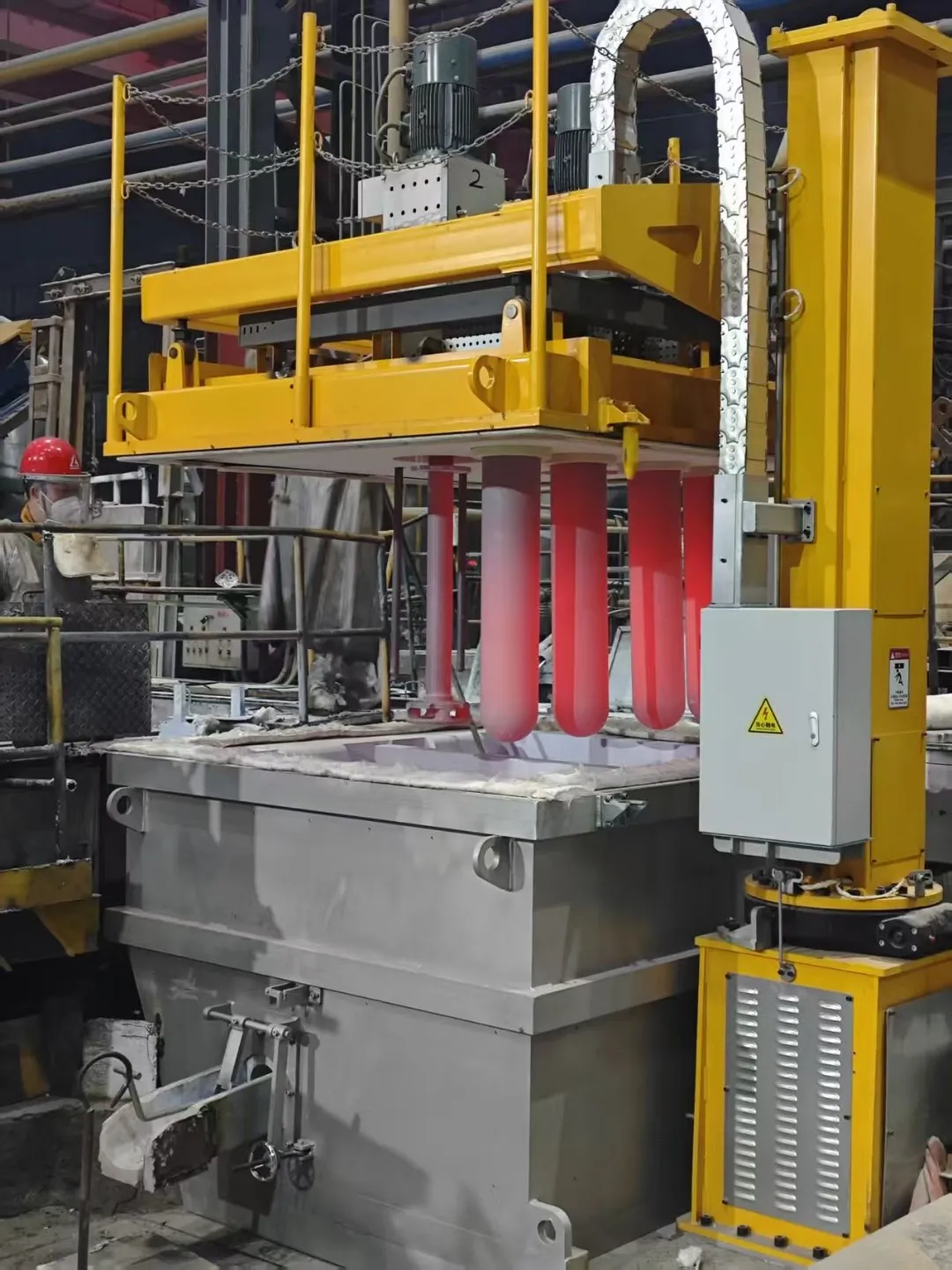
7.2 Filtration removes non-metallic inclusions
Molten aluminium may contain oxide films and other non-metallic inclusions. These can contribute to casting defects and reduce product quality.
Ceramic foam filters are used in suitable aluminium casting applications to capture or retain inclusions through a combination of filtration mechanisms and interactions with the filter structure.
The filter must be selected according to the required cleanliness, metal flow rate, alloy, filtration arrangement and casting conditions.
A filter that is too restrictive for the required flow may disrupt production, while an unsuitable filter arrangement may fail to deliver the desired cleanliness.
Degassing versus filtration
| Процесс | Main target | What it does not replace |
|---|---|---|
| Дегазация | Dissolved hydrogen and other specifically targeted melt constituents, depending on process configuration | Alloy chemistry control and inclusion filtration |
| Фильтрация керамической пеной | Non-metallic inclusions in the molten metal | Удаление растворенного водорода |
| Обработка флюсом | Specific surface protection, refining or residue-separation functions, depending on the flux | All other melt-treatment operations |
| Alloy adjustment | Химический состав | Physical removal of all inclusions or dissolved gas |
This distinction is particularly important in a recycling plant that produces metal for high-quality casting. Hydrogen control and inclusion control should be evaluated separately.
7.3 Which filtration solution should a plant consider?
Different filtration arrangements can suit different production requirements.
-
Ceramic foam filters: Used in appropriate casting lines where inclusion removal is required.
-
Cartridge filtration systems: Considered when the process requires a specific filtration arrangement and performance level.
-
Deep-bed filtration systems: Evaluated for production lines and filtration duties suited to that configuration.
Selection should follow the actual production target rather than assuming that the most complex filtration system is always the best choice.
For plants producing high-value alloys, filtration must be integrated with melting, melt treatment, metal flow and casting. It cannot compensate for poor scrap sorting or an unacceptably contaminated feedstock.
8. Casting and Final Product Quality Control
Once the molten metal meets the required chemical composition and melt-quality conditions, it can be cast into a form suitable for downstream processing.
Typical forms include:
-
Ingots for storage, transport or subsequent remelting.
-
Billets for extrusion.
-
Slabs for rolling.
-
Литые изделия для областей применения, в которых эти продукты используются напрямую.
-
Жидкий металл поставляется на последующий этап производственного процесса, если это необходимо.
Выбор оптимального способа литья зависит от предполагаемого продукта и возможностей предприятия. Вторичный алюминий не является единым универсальным продуктом: различные области применения литейной продукции предъявляют разные требования к химическому составу, чистоте и габаритам.
Quality checks before release
Контроль качества должен определяться с учетом технических требований к продукции и рисков, связанных с технологическим процессом.
| Проверка качества | Почему это важно |
|---|---|
| Chemical composition analysis | Подтверждает, что металл соответствует указанному составу сплава |
| Измерение содержания водорода, где это необходимо | Оценивает состояние расплава для применений, чувствительных к газовой пористости |
| Оценка включений или чистоты | Проверяет, соответствует ли обработка расплава требуемым критериям чистоты |
| Проверка температуры | Обеспечивает контролируемый перенос и литье |
| Контроль литья | Выявляет соответствующие проблемы, связанные с качеством поверхности, размерами или внутренними характеристиками |
| Производственные и партийные записи | Помочь отследить, откуда поступил лом и в каких условиях он эксплуатировался |
Выбор подходящего метода испытаний и пределов приемлемости зависит от сплава и вида продукции. В общем документе не следует устанавливать единый универсальный предел содержания водорода, уровень включений или допуск на дефекты для всего вторичного алюминия.
Важна также прослеживаемость. В случае обнаружения дефекта данные об источнике ломного сырья, составе сплава, обработке расплава, отборе проб и условиях литья помогают определить, лежит ли причина в исходном сырье, процессе плавки или последующих этапах производства.
9. How Energy-Efficient Is Aluminium Recycling?
Переработка алюминия, как правило, требует гораздо меньших затрат энергии, чем производство первичного алюминия из бокситов. Однако при интерпретации процентных показателей всегда следует учитывать установленные границы системы.
Международный институт алюминия сообщает, что, согласно данным о мировом производстве за 2019 год и приведенной модели инвентаризации жизненного цикла, производство первичного алюминия требовало примерно 186 ГДж первичной энергии на тонну от добычи до литейного цеха, в то время как для вторичного алюминия этот показатель составлял 8,3 ГДж на тонну. В результате расчетная экономия энергии составила 95,51 TP3T.
Алюминиевая ассоциация также отмечает, что производство вторичного алюминия примерно на 95% более энергоэффективно, чем производство первичного алюминия.
Это сравнения на уровне отрасли. Они не означают, что каждый завод по переработке отходов сократит собственное энергопотребление ровно на 95%. Фактические показатели зависят от состава потока лома, требований к предварительной обработке, типа печи, эффективности завода, рекуперации остатков и границ учета.
What affects the environmental performance of a recycling plant?
Подготовка лома: удаление неподходящих примесей и правильная подготовка лома могут улучшить процесс переработки, однако сама подготовка требует затрат энергии и ресурсов.
Эффективность печи: на энергопотребление влияют режим загрузки, состояние печи, теплообмен, время выдержки и регулирование температуры.
Извлечение металла: Предотвращение излишнего окисления и извлечение металлического алюминия из подходящих остатков позволяет повысить объем полезного продукта, получаемого из каждой тонны исходного сырья.
Управление выбросами: измельчение, термическая обработка, нанесение покрытий, сжигание топлива и некоторые процессы с использованием флюсов могут приводить к образованию пыли, выбросам органических веществ или других загрязняющих веществ, что требует применения соответствующих мер контроля.
Утилизация отходов: шлак, пену и солевой шлак необходимо обрабатывать и утилизировать с учетом их состава и действующих требований.
IAI выделяет пыль, органические соединения, выбросы углекислого газа, связанные с использованием топлива, а также — в некоторых процессах с использованием солевого флюса — дополнительные выбросы и солевой шлак в качестве экологических факторов, которые необходимо учитывать при переработке лома. Поэтому разработка подходящей конструкции печи, оптимизация технологического процесса и меры по контролю выбросов являются неотъемлемой частью ответственной переработки отходов.
10. Common Problems in Aluminium Recycling and How to Address Them
Зачастую наиболее эффективным способом оптимизации процесса является выявление причины проблемы до того, как прибегать к более интенсивным мерам устранения или приобретать дополнительное оборудование.
| Выявленная проблема | Возможные причины, требующие расследования | Правильное направление |
|---|---|---|
| Конечный сплав не соответствует техническим требованиям | Смешанные сплавы, загрязнённый лом, неправильное смешивание или недостаточная химическая проверка | Улучшить классификацию поступающего лома и внедрить процедуру контролируемой корректировки состава |
| Чрезмерная потеря металла | Окисление, ненадлежащая подготовка лом, методы погрузки и разгрузки или неэффективная утилизация шлака | Проанализировать характеристики заряда, технологию плавки и способы утилизации остатков |
| Газовая пористость в литых изделиях | Водород, условия затвердевания или другие факторы, связанные с литьем | При необходимости измерьте содержание водорода и проанализируйте условия обработки расплава и литья |
| Дефекты, связанные с включениями | Оксидные пленки, загрязнённое сырьё, ненадлежащее обращение или недостаточная фильтрация | Определить источники попадания примесей и проверить эффективность мер по обеспечению чистоты расплава |
| Высокое энергопотребление | Чрезмерная продолжительность выдержки, ненадлежащая подготовка сырья, неэффективная работа печи или излишний повторный нагрев | Проанализируйте потребление энергии на этапах подготовки, плавления, поддержания температуры и транспортировки |
| Нестабильный уровень производства | Ограничения печи, низкая однородность загрузки, узкие места в процессе обработки или последующей разливки | Оценивайте весь процесс в целом, а не отдельное оборудование в изоляции |
| Чрезмерное количество пыли или дыма | Примеси в ломе, измельчение, покрытия, термическая обработка или ненадлежащая экстракция | Определить источник выбросов и проверить наличие подходящих систем сбора и очистки |
A defect does not automatically mean the filtration system is inadequate. Likewise, a low metal recovery rate cannot necessarily be solved by changing flux.
Reliable improvement begins with identifying where the loss or defect originates, measuring the problem and matching the solution to the cause.
11. How to Select Aluminium Recycling Equipment
Equipment selection should begin with the actual production requirement.
Before requesting quotations, establish the following:
-
Feedstock: What types of aluminium scrap will be processed, and how consistent are their alloy composition and contamination levels?
-
Capacity: What are the required hourly and annual throughput, operating hours and batch sizes?
-
Target product: Will the plant produce foundry alloys, extrusion billets, rolling slabs or another product?
-
Quality requirements: Which alloy specifications, cleanliness criteria and final product tests are required?
-
Existing equipment: What furnace, holding furnace, degassing, filtration and casting systems are already installed?
-
Operating conditions: What are the existing temperature profile, metal flow, transfer distance and production constraints?
-
Environmental and safety requirements: What treatment is required for dust, coatings, residues and process emissions under the local rules?
These details help determine whether a plant needs better pre-treatment, upgraded melting capacity, more reliable composition control, additional melt treatment or improved casting arrangements.
Where do fluxes and molten aluminium purification equipment fit?
AdTech’s published product portfolio includes refining fluxes, flux injection systems, оборудование для дегазации в режиме онлайн, ceramic foam filters, other filtration equipment and integrated launder equipment for molten aluminium processing. These products relate to specific melt-treatment and casting stages, rather than replacing the collection, sorting and pre-treatment stages of recycling.
Например:
-
Flux selection should match the intended treatment function and the manufacturer’s operating instructions.
-
Flux injection equipment may be relevant where controlled and repeatable flux delivery is required.
-
Degassing equipment should be considered when hydrogen control is a defined process requirement.
-
Ceramic foam filters should be evaluated when non-metallic inclusion removal is required.
-
Launder equipment should be considered for controlled transfer of molten aluminium and temperature management in the relevant casting layout.
The right configuration depends on the plant’s process, alloy range, throughput and final quality targets. A supplier should be able to explain the function and limitations of each proposed system, not simply provide a list of machines.
12. Frequently Asked Questions
Does every aluminium scrap type use the same recycling process?
No. Clean production scrap may require minimal preparation, while mixed scrap, coated products and machining turnings may need additional sorting, cleaning, drying or decoating. The route should reflect both the feedstock and the target product.
Can a ceramic foam filter remove hydrogen from molten aluminium?
No. A ceramic foam filter is designed to remove non-metallic inclusions. Dissolved hydrogen generally requires a suitable degassing process when hydrogen reduction is necessary.
Can aluminium recycling recover every kilogram of metal?
No. Metal losses can occur through oxidation, residues, handling and other process inefficiencies. Proper preparation, controlled melting and suitable residue recovery can improve metal yield, but a universal recovery rate would not be appropriate for all scrap types and plants.
How are painted aluminium cans prepared for recycling?
Depending on the coating and process requirements, used cans may be sorted, shredded or otherwise sized, and thermally treated to remove coatings before remelting. The specific treatment depends on the feedstock, equipment and emissions-control requirements.
What temperature is needed to melt aluminium scrap?
Pure aluminium melts at approximately 660°C, but actual furnace operating temperatures depend on alloy composition, furnace design and the requirements of the melting and casting process. The melting point should not be used as a universal operating setpoint.
Why is dross produced during aluminium melting?
Aluminium oxidation and the interaction of the melt with process residues contribute to dross formation. Dross may contain recoverable metallic aluminium, so appropriate handling and recovery methods can help reduce avoidable metal losses.
What are the main environmental concerns in aluminium recycling?
Key considerations include energy use, fuel-related emissions, dust from material handling, emissions associated with coatings and thermal treatment, and the management of dross or salt slag. The actual impact depends on the process route, input scrap and emissions controls.
Заключение
The aluminium recycling process is a coordinated sequence of material preparation, melting, metal refining and casting. Its performance depends on the condition and composition of the scrap, safe charging practices, appropriate furnace operation and effective control of the final metal quality.
For industrial producers, the most important principle is to match each treatment to a defined problem. Sorting controls feedstock consistency, fluxing supports specific refining and residue-separation functions, degassing addresses dissolved hydrogen, and filtration targets non-metallic inclusions. When these operations are selected and controlled together, a recycling plant is better positioned to achieve consistent metal quality, efficient metal recovery and responsible resource use.