

Continuous casting nozzles are components that help deliver or control material flow during continuous casting, but the term covers different products with different purposes. In steelmaking, it often refers to refractory flow-control components such as submerged entry nozzles and tundish nozzles. In aluminum strip casting, the corresponding product of interest may be a caster tip or casting nozzle that distributes molten aluminum into the casting zone. Selecting the correct component requires matching its material, geometry, dimensions and flow characteristics to the casting machine. AdTech China supplies caster tips, spacers, hard ears, front boxes and removable launders for aluminum casting and rolling applications. Its published caster-tip specifications include lengths of 200 to 2,300 mm, widths of 50 to 600 mm, and tip thicknesses of 1.6 to 10 mm, subject to confirmation for the required design.
What Are Continuous Casting Nozzles?
A continuous casting nozzle is a flow-delivery component used in a continuous casting process. Its purpose depends on the material being cast, the machine configuration and the position of the component within the production line.
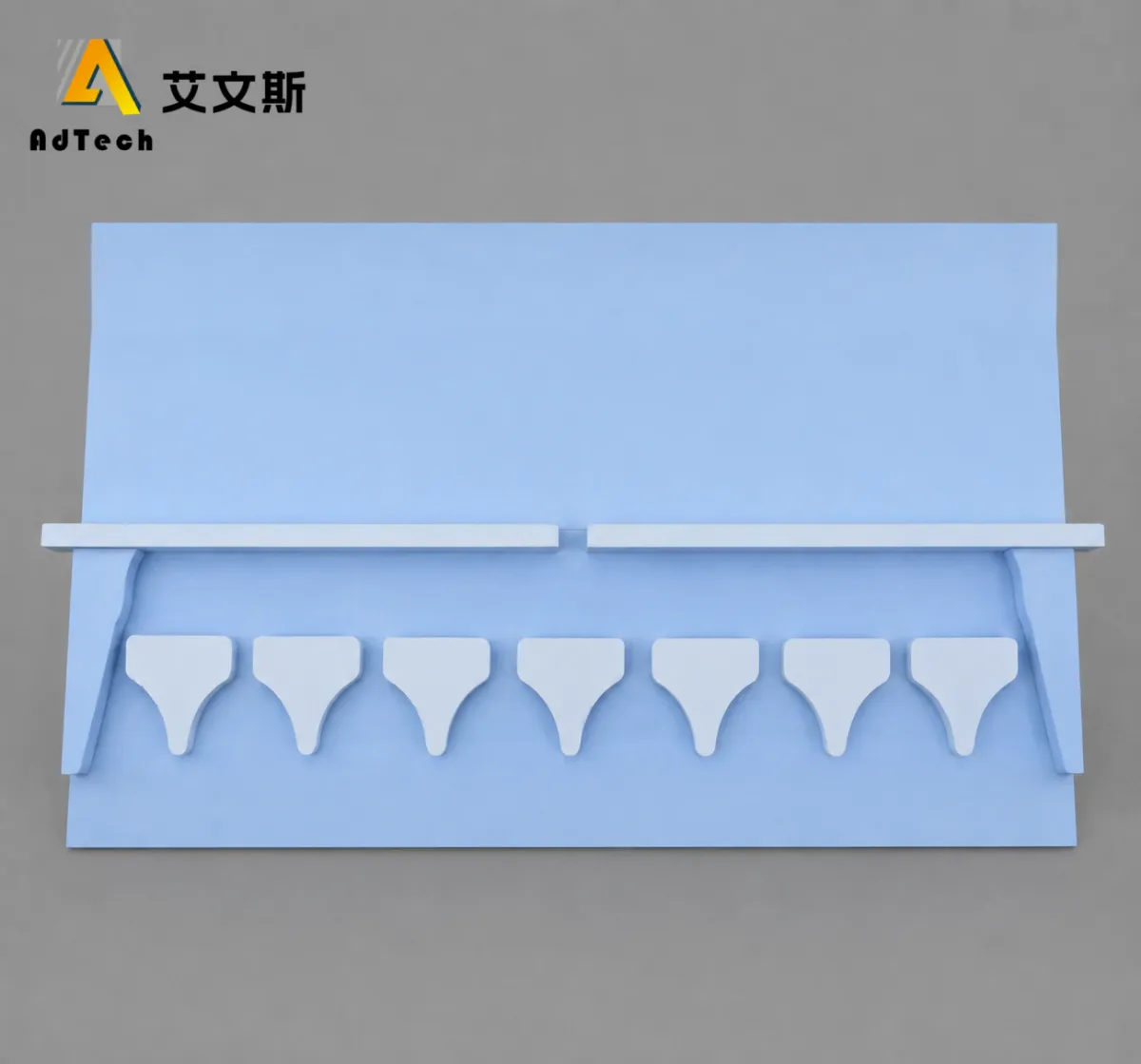
The term is not sufficiently specific to identify a product on its own. Buyers should establish whether they need a component that delivers molten metal, controls its distribution, or sprays cooling water onto an already formed strand.
Three Different Product Categories
| Product category | Main application | Principal function |
|---|---|---|
| Steelmaking flow-control nozzles | Steel continuous casting | Transfer molten steel, control flow and help protect the metal from reoxidation |
| Secondary cooling spray nozzles | Steel continuous casting machines | Apply water or air-mist cooling to the partly solidified strand |
| Aluminum casting nozzles and caster tips | Aluminum casting and rolling | Deliver molten aluminum and control its distribution as solidification begins |
These categories have different material requirements, mechanical interfaces and operating conditions.
Steel continuous casting suppliers describe ladle shrouds, tundish nozzles and submerged nozzles as functional refractories used in steel-flow control. Meanwhile, secondary cooling equipment suppliers distinguish hydraulic spray nozzles from air-mist nozzles, which are selected for the cooling strategy and machine configuration.
For an aluminum casting plant, a caster tip or aluminum casting nozzle may be the appropriate product when molten aluminum is delivered into a strip-casting or related casting-and-rolling system.
Why This Distinction Matters When Purchasing
A buyer searching for “continuous casting nozzles” may receive quotations for steelmaking refractories, spray nozzles or aluminum caster tips.
These products are not interchangeable merely because they are all called nozzles.
Before contacting a supplier, identify the metal being cast, the casting method and the component’s exact position in the machine. Include the equipment manufacturer’s details and an existing component drawing where available.
This simple step helps prevent quotations for the wrong material, geometry or operating application.
What Does an Aluminum Caster Tip Do?
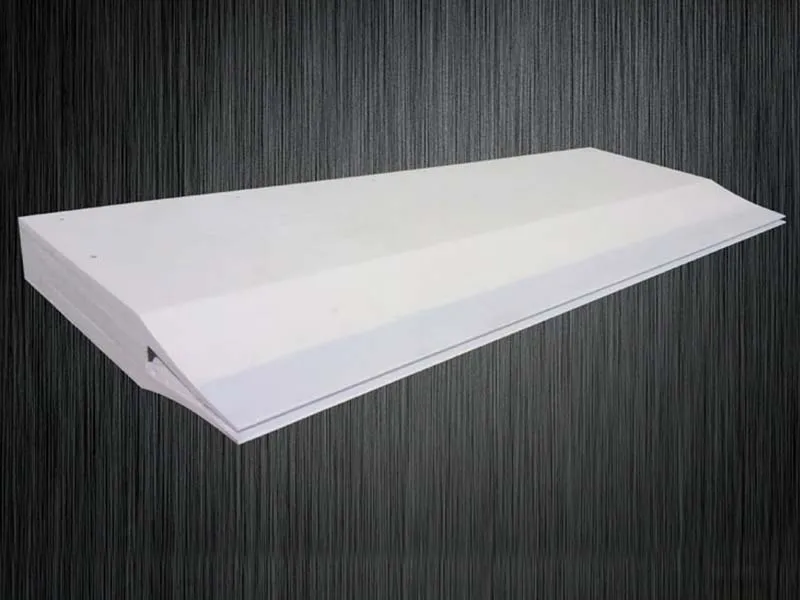
An aluminum caster tip is a precision flow-delivery component used in certain continuous casting and rolling systems. In twin-roll strip casting, the caster tip and associated spacers form a cavity through which molten aluminum flows before solidifying into a thin strip.
The dimensions and internal geometry of this assembly help determine how metal is distributed across the casting width.
Pyrotek’s published product information describes casting tips and nozzles as components that influence the width of aluminum sheet during continuous casting. It also explains that tip sections and spacers create the metal-flow cavity immediately before sheet solidification.
Main Functions of a Caster Tip
1. Deliver molten aluminum to the casting zone.
The caster tip provides the final passage through which the metal moves before entering the region where solidification begins. Its geometry must match the intended casting arrangement.
2. Support uniform distribution across the casting width.
Uneven flow distribution can be associated with thickness variation or other quality problems. Internal channel geometry, the condition of the tip, spacer dimensions and upstream metal delivery should therefore be evaluated together.
3. Establish the required casting geometry.
Tip width, thickness, edge geometry and installation alignment must be compatible with the machine. A replacement that differs from the original design may change the available flow passage or the position of the component relative to the casting rolls.
4. Maintain a suitable metal-contact surface.
Surface condition and material compatibility matter because the component remains in contact with molten aluminum during operation. The relevant requirements depend on the alloy, temperature, production method and component design.
How the Caster Tip Works With Other Components
A caster tip is normally considered as part of a larger assembly rather than as an isolated piece.
Related components may include:
- Spacer: Helps establish the required cavity between casting-tip sections.
- Hard ear or end component: Supports the assembly’s edge configuration, depending on the machine design.
- Blocker or baffle: Used where specified to manage local flow distribution.
- Front box or flow-control box: Receives and distributes molten metal upstream.
- Launder: Transfers molten aluminum between process stages.
AdTech’s published Caster Series includes caster tips, spacers, ears, blockers, movable launders and front boxes. Its product descriptions identify caster tips, spacers and hard ears as components made from nanoscale fiber composite materials using precision processing, while the front box and removable launder are described as aluminum-silica products for controlling molten-metal flow in aluminum plate, strip and foil casting-and-rolling lines.
Not every casting machine uses all these components in the same configuration. Confirm the required assembly against the actual machine layout.
What Materials Are Used for Aluminum Casting Nozzles?
Material selection affects the component’s behavior in contact with molten aluminum, including its dimensional stability, resistance to erosion, thermal behavior and surface condition.
There is no single material description that can be applied to every continuous casting nozzle. A steelmaking nozzle, a spray nozzle and an aluminum caster tip serve different functions and require different product specifications.
Nanoscale Fiber Composite Materials
AdTech describes its caster tips, spacers and hard ears as products formed through vacuum suction filtration of nanoscale fiber composite materials and processed using precision equipment.
Its published product information identifies several relevant characteristics:
- Precision-controlled dimensions.
- A sealed surface and non-stick properties on key parts treated with nanocoating.
- Resistance to erosion by molten aluminum.
- Thermal insulation.
- Low deformation.
- An internal structure designed to provide a suitable symmetrical flow channel.
These are the characteristics described in the manufacturer’s product literature, not a guarantee of identical performance in every operating environment. Actual results depend on the exact product grade, installation and casting conditions.
Why Surface Condition Matters
The surface condition of a caster tip can affect the interaction between the component and molten aluminum.
Build-up, erosion or damage to a critical flow surface may alter the effective passage geometry. This can affect flow behavior even when the external dimensions appear correct.
When assessing a product, ask the supplier to explain its surface treatment, compatibility with the intended alloy and recommended handling procedures.
If a non-stick coating or refractory coating is required, confirm whether it is supplied as part of the caster-tip specification or must be applied separately.
AdTech also lists BN Coating and Refractory Mud for use on aluminum-contact surfaces of products such as launders, filter boxes, caster tips and hot-top casting components. This should not be interpreted as evidence that every caster tip is supplied with BN coating as standard. The coating arrangement must be confirmed for the specific order.
Which Specifications Matter Most When Selecting Continuous Casting Nozzles?
The most important specifications are those that determine whether the component fits the casting machine and provides the required flow behavior under actual production conditions.
A general description such as “high-temperature nozzle” is not enough to select a replacement accurately.
1. Casting Machine and Process Type
Begin with the casting method.
Twin-roll strip casting, belt casting and direct-chill billet or slab casting have different metal-delivery arrangements. A caster tip designed to form a thin strip between two rolls should not be assumed suitable for an unrelated casting configuration.
Record the machine manufacturer, model, casting method and component installation position.
2. Dimensions and Tolerances
AdTech publishes the following fixed-size specification ranges for its caster-tip products:
| Parameter | Published specification |
|---|---|
| Length | 200 to 2,300 mm |
| Width | 50 to 600 mm |
| Tip thickness | 1.6 to 10 mm |
| Shape | Chamber or horizontal, as listed in the product information |
These ranges provide an initial reference, not a recommendation that every combination of length, width and thickness is available or compatible with every casting line.
Before ordering, confirm the actual dimensions against the approved drawing. Include relevant edge geometry, the installation interface, spacer dimensions and any machine-specific tolerances.
3. Internal Flow-Channel Geometry
The internal cavity must suit the intended distribution of molten aluminum.
Two tips with similar external dimensions can still differ in their internal passage geometry. An incompatible internal design may change the distribution of metal entering the casting zone.
Where drawings or samples are available, ask the supplier to confirm the internal channel arrangement and any differences from the existing component.
4. Operating Conditions
Provide the actual aluminum-alloy family and the operating-temperature range at the casting point. Also identify the intended casting width, production speed and any known flow-related problems.
These details help the supplier assess compatibility without assuming that a component suitable for one line will perform identically on another.
5. Surface Treatment and Handling
Confirm whether the requested product includes a surface coating, whether additional coating is required, and how the finished component should be stored, handled and installed.
Ask for the approved preheating procedure, if applicable. Do not copy the temperature or holding time from a different manufacturer’s product unless the supplier confirms that the same procedure is appropriate.
How to Select a Caster Tip for Different Casting Applications
The required nozzle or caster-tip design depends on the casting process, not simply on the name of the metal.
| Casting application | Main design consideration | Information to provide |
|---|---|---|
| Twin-roll aluminum strip casting | Distribution into a narrow casting gap and compatibility with the roll width | Casting width, roll-caster model, tip drawing, spacer dimensions and operating conditions |
| Aluminum foil stock production | Dimensional compatibility and consistent flow distribution for the intended product | Foil-stock casting requirements, machine configuration and existing component dimensions |
| Belt casting | Compatibility with the belt-caster feed arrangement | Belt-caster model, feed geometry and required flow conditions |
| DC billet or slab casting | Compatibility with the distribution and delivery system used by that machine | Mold geometry, delivery arrangement, component drawing and production requirements |
These are initial selection considerations. They do not establish that a single caster tip is suitable for every process listed.
For aluminum strip and foil casting, confirm whether the machine uses an assembled tip-and-spacer arrangement or another specific flow-delivery design.
For billet or slab casting, determine whether the required product is an aluminum distribution nozzle, a different refractory flow-control component or another part of the delivery system. Do not specify a twin-roll caster tip merely because the machine is described as a continuous caster.
Common Problems With Continuous Casting Nozzles
When a casting problem occurs, replacing the nozzle immediately may not address the underlying cause.
The component should be inspected alongside the installation, metal-delivery system and current process conditions. The following table provides possible investigation paths rather than definitive diagnoses.
| Observed problem | Possible factors to investigate | Recommended checks |
|---|---|---|
| Uneven strip thickness | Uneven flow distribution, incorrect internal geometry, misalignment or variation in upstream metal delivery | Check the tip drawing, alignment and flow-distribution arrangement |
| Metal flow appears stronger on one side | Damaged flow channels, unsuitable geometry, incorrect assembly or upstream distribution issues | Inspect the tip and spacer assembly; review upstream flow conditions |
| Surface quality becomes inconsistent | Changes in casting conditions, component wear, flow instability or other process variables | Compare operating records and inspect the relevant metal-delivery components |
| Metal sticks to a contact surface | Surface condition, coating compatibility or operating conditions | Inspect the surface and confirm the approved material and coating specification |
| Component damage during installation | Handling damage, incorrect fit, excessive fixture loading or unsuitable installation practices | Check the component and fixture against the approved installation procedure |
| Premature wear or dimensional change | Material mismatch, erosion or operating conditions outside the recommended range | Review the service conditions and request a material-compatibility assessment |
Why Flow Problems Should Not Automatically Be Blamed on the Nozzle
Flow instability can have more than one cause.
For example, irregular delivery into a caster tip may originate upstream of the component. Similarly, a dimensional mismatch can result from a manufacturing difference, an incorrect replacement specification or the condition of the machine interface.
A useful investigation should establish whether the problem follows the component, the installation or the process.
Document the casting conditions, the timing of the problem and any recent changes to equipment or consumables. Photographs of damaged surfaces and a dimensional inspection can help the supplier distinguish between different possibilities.
For severe damage or an abnormal casting condition, follow the plant’s operating and safety procedures before inspection or replacement.
Installation, Preheating and Maintenance Considerations
Correct installation is necessary to obtain the intended flow geometry and reduce avoidable damage.
The component should be compatible with its support structure, spacers and retaining arrangement. A product that fits approximately is not necessarily acceptable where the working gap or alignment is critical.
Follow the Manufacturer’s Installation Procedure
Before installing a replacement:
- Confirm the part number, drawing and dimensions.
- Inspect the component for visible damage and verify the mating surfaces.
- Check the condition of the support, fixture and related assembly components.
- Follow the specified handling, installation and preheating instructions.
- Verify alignment and the required assembly gaps before operation.
These steps are general inspection principles. The exact method must be set by the machine and product specifications.
Why There Is No Universal Preheating Schedule
Preheating requirements depend on the material composition, manufacturing process, product design and intended operating conditions.
A procedure published for one caster-tip material should not automatically be applied to another. Ask the supplier to provide the appropriate schedule, including the heating method, ramp rate and holding conditions where applicable.
Do not assume that the temperature ratings of steelmaking refractories apply to aluminum caster tips. The products have different functions and must be evaluated against their own technical documentation.
Maintain Traceable Inspection Records
For repeat orders, retain the approved drawing, supplier identification, dimensions, operating conditions and observations from previous production campaigns.
When a component is replaced, record any associated changes in casting width, flow behavior, surface quality or downtime. These records can help determine whether a different specification or installation adjustment is justified.
How to Compare Continuous Casting Nozzle Manufacturers
A useful supplier comparison should go beyond the unit price.
For aluminum casting, the manufacturer should understand the machine configuration, component geometry and required operating conditions.
Ask each supplier for the same core information so the quotations can be compared on an equivalent basis.
| Evaluation criterion | What to request | Why it matters |
|---|---|---|
| Product application | Confirmation of suitability for the intended aluminum casting process | Prevents confusion between steel nozzles, cooling spray nozzles and aluminum caster tips |
| Dimensions | An approved drawing and dimensional tolerances | Confirms installation compatibility |
| Material | Material description and relevant technical documentation | Helps assess compatibility with molten aluminum |
| Flow geometry | Confirmation of the internal passage and assembly arrangement | Connects the component design with the intended flow distribution |
| Surface treatment | Details of the specified coating or surface condition | Clarifies what is included in the quoted product |
| Quality control | Inspection documentation and part identification | Helps verify consistency with the approved specification |
| Handling instructions | Installation and preheating requirements where applicable | Reduces the risk of avoidable installation damage |
| Commercial terms | Unit price, quantity, packaging, delivery and customization charges | Allows a realistic comparison of quotations |
Questions to Ask Before Placing an Order
Before approving a quotation, consider asking:
- Is this product designed for our exact casting machine and process?
- Can you manufacture it to our approved drawing?
- Which dimensions and tolerances are guaranteed?
- What material and surface treatment are specified?
- Are spacers, hard ears or other assembly components included?
- What inspection documents will accompany the shipment?
- What handling, storage, installation and preheating requirements apply?
- How should we provide feedback if the component does not perform as expected?
The answers should be documented so the delivered component can be checked against the purchase specification.
What Affects the Cost of Aluminum Casting Nozzles?
There is no reliable universal price for continuous casting nozzles because the term covers several distinct product categories.
For an aluminum caster tip, the main cost factors may include the dimensions, material grade, internal geometry, machining or precision-processing requirements, surface treatment, tolerances, assembly configuration and order quantity.
Custom shapes or non-standard dimensions can require additional engineering and manufacturing work.
Buyers should also distinguish between a standalone tip and a complete assembly containing spacers, hard ears or other required components. Comparing the price of a single component with that of a complete assembly would not provide an equivalent cost comparison.
Evaluate Cost Alongside Operating Suitability
A low initial price does not necessarily represent the best procurement choice if the component does not fit the machine or meet the required process conditions.
At the same time, a more expensive design should not automatically be considered superior. Its benefits must be relevant to the intended application and supported by appropriate specifications or evidence.
For repeat purchasing, consider the unit cost alongside replacement frequency, installation time, quality consistency and any associated production interruption. Use actual plant records where available rather than assuming a universal service life.
AdTech China: Caster Tips and Related Flow-Control Components
AdTech Metallurgical Materials Co., Ltd. is a China-based manufacturer and supplier focused on the casting and rolling of high-purity aluminum and aluminum alloys.
Its published Caster Series includes caster tips, spacers, hard ears, blockers, movable launders and front boxes. The company’s caster-tip page describes components manufactured from nanoscale fiber composite materials, with precision processing and dimensional specifications intended for aluminum plate, strip and foil casting-and-rolling applications.
The AdTech Caster Tip / Spacer / Hard Ear page provides the published dimensional ranges and product details. Buyers should use these as the starting point for discussion, then confirm the required design against the machine drawing.
AdTech also offers Front Box and Removable Launder products, which form part of the upstream molten-aluminum delivery and flow-control arrangement.
For a quotation, provide the casting method, machine model, required dimensions, current component drawing, aluminum-alloy information and relevant production requirements. If replacing a component that has developed a problem, include clear photographs and an explanation of the observed issue.
This information helps establish whether the required product is a caster tip, a related assembly component or another part of the aluminum flow-control system.
Conclusion
Continuous casting nozzles cover several product categories, and the correct choice depends on the metal and casting process.
For aluminum strip and foil casting, the relevant product may be a caster tip used with spacers and other flow-control components. Its dimensions, internal geometry, material, surface condition and installation must match the requirements of the casting machine.
For AdTech’s target customers, the most effective purchasing process begins with an accurate drawing and a clear description of the production conditions. Buyers should confirm component compatibility, dimensional tolerances, material specifications and installation requirements before approving an order.
The key is to select a nozzle or caster tip for the actual casting process, not simply to buy a product carrying the general label “continuous casting nozzle.”
FAQ
1. What are continuous casting nozzles?
Continuous casting nozzles are components used to deliver or control material flow in continuous casting processes. Depending on the industry, the term may describe steelmaking flow-control refractories, secondary cooling spray nozzles or aluminum casting tips. These products have different functions and specifications.
2. What is the difference between a steel continuous casting nozzle and an aluminum caster tip?
Steelmaking nozzles control the transfer of molten steel between vessels and the mold, while an aluminum caster tip may control the delivery and distribution of molten aluminum into a casting zone. Their material requirements, geometry and equipment interfaces differ, so they should not be treated as interchangeable.
3. What does an aluminum caster tip do?
An aluminum caster tip delivers molten aluminum into the casting zone. In twin-roll strip casting, it works with spacers to create the passage through which metal flows immediately before forming a solidifying strip.
4. What material is used for aluminum casting nozzles?
The required material depends on the nozzle design and application. AdTech describes its caster tips, spacers and hard ears as being formed from nanoscale fiber composite materials. Buyers should verify the precise grade, surface treatment and material compatibility for the intended casting conditions.
5. Which dimensions should I provide when ordering a caster tip?
Provide the required length, width, thickness, edge geometry, internal flow-channel information and relevant installation dimensions. An approved drawing and the casting-machine model are particularly useful for confirming compatibility.
6. Why can a casting nozzle cause uneven metal flow?
Possible causes include unsuitable internal geometry, misalignment, component wear, assembly errors or variations in upstream metal delivery. The nozzle should be inspected alongside the related components and process conditions before a root cause is assigned.
7. Do aluminum casting nozzles require preheating?
Preheating requirements depend on the specific material and product design. Follow the manufacturer’s approved procedure and do not apply a temperature schedule from a different caster-tip grade without confirmation.
8. How do I choose a continuous casting nozzle manufacturer?
Compare application suitability, dimensional capability, material documentation, tolerance control, relevant quality records, assembly compatibility and technical support. Make sure each supplier is quoting the same product configuration and requirements.
9. What affects the price of a caster tip?
Price may depend on dimensions, material grade, internal geometry, precision-processing requirements, coatings, customization, assembly configuration and order quantity. Request an itemized quotation for the exact drawing and specification.
10. Can one continuous casting nozzle be used for different casting machines?
Not automatically. Differences in machine configuration, casting method, dimensions, flow requirements and installation interfaces may make a component unsuitable for another line. Compatibility should be confirmed against the equipment requirements before ordering.