

Aluminum recovery chemicals for foundry operations in 2026 must meet significantly tighter metallurgical performance standards than previous generations of flux and refining agents — the benchmark has shifted from simply recovering metal to recovering clean, inclusion-free, hydrogen-controlled aluminum at yields that justify the economics of secondary processing. At AdTech, we work directly with foundry engineers and procurement specialists across die casting, sand casting, and continuous casting facilities, and the data from those engagements consistently shows that chemical selection is the single highest-leverage variable in determining both metal recovery rates and downstream casting quality.
If your project requires the use of Aluminum dross recovery flux, you can contact us for a free quote.
What Are Aluminum Recovery Chemicals and How Do They Work in Foundry Operations?
Aluminum recovery chemicals encompass a broad category of metallurgical additives — including covering fluxes, refining fluxes, dross treatment agents, degassing tablets, grain refiners, and modifier alloys — that collectively serve to maximize the percentage of usable aluminum extracted from both primary melt and secondary scrap while simultaneously controlling metal cleanliness to casting specification. The term “recovery” in foundry context has a dual meaning: physical recovery of metallic aluminum from dross and slag, and chemical recovery in the sense of restoring melt quality to specification after contamination from scrap or processing.
The foundry environment introduces contamination challenges that are substantially more complex than primary aluminum smelting. Scrap charge materials arrive with surface oxides, paint residues, lubricants, moisture, and alloying element variability. A production heat in a typical automotive die casting foundry might combine purchased aluminum ingots, in-house return scrap, and purchased scrap in ratios that shift daily depending on availability and cost. Each charge composition demands that the recovery chemical system adapt accordingly.
We have found that foundries operating without a systematic chemical recovery program typically lose between 3% and 8% of their total aluminum throughput to unrecovered dross metal, elevated scrap rates from inclusion defects, and hydrogen porosity-related rejections. A well-designed recovery chemical program typically reduces these combined losses to below 2% of throughput — a difference that at typical foundry scales represents substantial annual savings in raw material costs alone.
Primary Recovery Pathways in Foundry Operations
Aluminum recovery in a foundry setting follows three distinct pathways, each requiring specific chemical intervention:
Pathway 1 — Melt Surface Recovery: Covering and refining flux applied to the furnace bath surface prevents oxide formation, dissolves existing oxide films, and concentrates non-metallic inclusions into a recoverable dross layer. This is the primary application for chloride-fluoride flux systems.
Pathway 2: Dross Processing Recovery: After skimming, the dross contains 30–70% metallic aluminum trapped within an oxide-salt matrix. Dross treatment chemicals — also called exothermic dross compounds or dross separation agents — initiate controlled exothermic reactions that re-melt the trapped metal, allowing it to pool and be recovered.
Pathway 3: Melt Purification Recovery: Hydrogen and inclusion removal through degassing chemical treatments recovers the quality-value of the aluminum, allowing metal that would otherwise be scrapped or downgraded to meet specification for premium casting applications.
| Recovery Pathway | Chemical Type | Typical Recovery Gain | Application Point |
|---|---|---|---|
| Melt surface protection | Covering-refining flux | 1–3% yield improvement | Furnace bath surface |
| Dross metal extraction | Dross treatment agents | 15–30% more metal from dross | Dross processing station |
| Hydrogen removal | Degassing tablets/gas | 0.5–2% rejection rate reduction | Degassing unit or ladle |
| Inclusion removal | Refining flux + filtration | 1–3% defect rate reduction | Melt treatment + filter box |
| Alkali metal removal | Reactive fluoride flux | Chemistry correction | Furnace or ladle |
What 2026 Refining Specifications Apply to Foundry Aluminum Recovery Chemicals?
The 2026 refining specification landscape reflects converging pressures from three directions: automotive lightweighting programs demanding higher structural aluminum quality, environmental regulations tightening around fluoride-containing waste streams, and supply chain sustainability commitments pushing foundries toward higher secondary material utilization. Together these forces have elevated the technical bar for what aluminum recovery chemicals must achieve.
Updated Hydrogen Content Specifications for 2026
Hydrogen porosity remains the dominant quality challenge in aluminum foundry production. The 2026 specifications for hydrogen content in various application segments have tightened compared to 2022 benchmarks:
| Application Segment | 2022 Max H₂ (cc/100g Al) | 2026 Target H₂ (cc/100g Al) | Measurement Method |
|---|---|---|---|
| Structural automotive (safety parts) | 0.15 | 0.10 | RPDFT / Telegas |
| Non-structural automotive | 0.20 | 0.15 | RPT Density Index |
| Aerospace sand casting | 0.10 | 0.07 | Vacuum Hot Extraction |
| General die casting | 0.25 | 0.18 | RPT Density Index |
| Gravity/permanent mold | 0.20 | 0.12 | RPT Density Index |
| Continuous casting (billet) | 0.12 | 0.08 | Telegas online |
These tighter hydrogen targets require that degassing chemicals and rotary degassing operations achieve higher purging efficiency. The 2026 specification compliance has driven adoption of more reactive chlorine-generating flux tablets and more sophisticated rotary degassing equipment with optimized rotor designs.
Inclusion Content Specifications and Cleanliness Benchmarks
The 2026 industry benchmarks for inclusion content, particularly for automotive structural applications, have adopted quantitative cleanliness ratings rather than the qualitative visual assessments that were standard in previous decades:
K-mold fractography method: Total crack length measurement replacing simple pass/fail criteria.
PoDFA cleanliness classification: The 2026 automotive supply chain increasingly requires PoDFA measurements below 0.15 mm²/kg for structural casting applications.
Ultrasonic cleanliness index: Inline ultrasonic measurement during casting, with rejection triggers at defined echo intensity thresholds.
Recovery chemicals must now be validated not just for their general refining capability but for their specific performance at achieving these quantitative cleanliness targets in the production environment.
Chemical Composition Purity Specifications for 2026 Compliant Flux
The 2026 specification framework also addresses the purity of the recovery chemicals themselves — a recognition that inferior-quality flux can introduce contamination rather than remove it:
| Chemical Parameter | 2026 Specification Limit | Testing Standard | Why It Matters |
|---|---|---|---|
| Moisture content | Below 0.3% by weight | Karl Fischer titration | Explosion hazard + hydrogen source |
| Iron (Fe) content | Below 300 ppm | ICP-OES | Fe contamination of melt |
| Heavy metals (Pb+Cd+Hg) | Below 100 ppm total | ICP-MS | Environmental + quality |
| Free carbon | Below 0.1% | Combustion analysis | Inclusion source |
| Particle size D90 | Within ±15% of spec | Laser diffraction | Application consistency |
| Batch chemistry variation | Below 1.5% in major components | Per-batch XRF | Process repeatability |
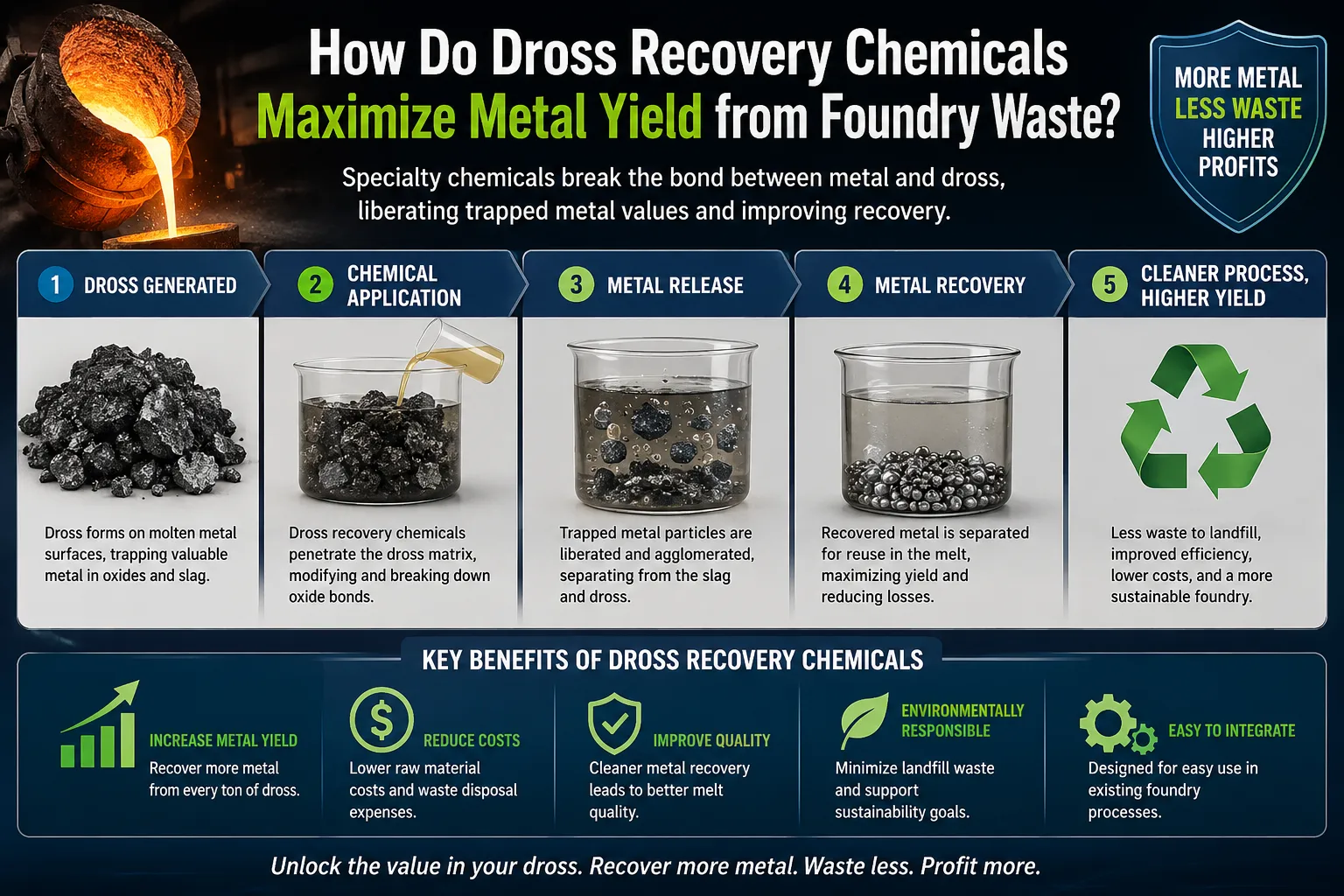
How Do Dross Recovery Chemicals Maximize Metal Yield from Foundry Waste?
Foundry dross represents one of the most significant recoverable value streams in aluminum processing. A foundry producing 5,000 tons of aluminum castings annually may generate 150–400 tons of dross, depending on alloy type, scrap charge quality, and furnace management practice. The metallic aluminum content of that dross, at current prices, represents substantial recoverable value — yet without appropriate chemical treatment, much of it goes to waste processing or landfill.
How Dross Treatment Chemicals Work
Dross treatment agents — sometimes marketed as exothermic dross compounds, dross pressing aids, or dross fluidizers — work through controlled thermochemical reactions. When mixed with hot dross (typically at 600–750°C), these compounds react with residual oxygen in the dross matrix through exothermic oxidation reactions. The heat generated locally re-melts aluminum droplets that have solidified within the oxide network. The accompanying gas evolution and salt flux components simultaneously reduce the viscosity of the oxide phase, allowing metal droplets to coalesce and pool.
The chemical mechanism involves multiple simultaneous reactions:
- Exothermic oxidation of reactive metal additives raises local temperature by 100–200°C.
- Fluoride salt components react with and dissolve aluminum oxide crystalline phases.
- Salt flux creates a low-viscosity liquid phase that wets metal droplets and promotes coalescence.
- Gas evolution from decomposing components provides micro-stirring that facilitates metal-slag separation.
Dross Treatment Chemical Types and Performance Comparison
| Chemical Type | Mechanism | Metal Recovery Gain | Application Method | Cost Level |
|---|---|---|---|---|
| Exothermic powder blend | Heat + flux | 20–35% additional recovery | Mix into hot dross | Moderate |
| Fluoride-rich flux blend | Chemical dissolution | 15–25% additional recovery | Sprinkle onto hot dross | Low-Moderate |
| Salt + oxide mixture | Flux only | 10–20% additional recovery | Mix into dross | Low |
| Specialized reactive blend | Multi-mechanism | 25–40% additional recovery | Mechanically mix | Higher |
Dross Press Integration with Chemical Treatment
The most effective dross recovery systems combine chemical treatment with mechanical pressing. After dross treatment chemical addition, the treated dross is transferred while still hot to a hydraulic press where pressure of 15–50 MPa is applied. The chemical pretreatment increases metal recovery from dross pressing by:
- Reducing dross viscosity so metal drains more freely under pressure.
- Pre-coalescing fine metal droplets into larger pools that respond to hydraulic pressure.
- Converting the oxide phase from a continuous matrix to a more open, permeable structure.
Combined chemical treatment plus pressing typically achieves metal recovery rates of 60–75% from the dross mass, compared to 30–45% from pressing alone and 15–30% from chemical treatment alone.
What Chemical Formulations Are Used for Different Foundry Alloy Systems?
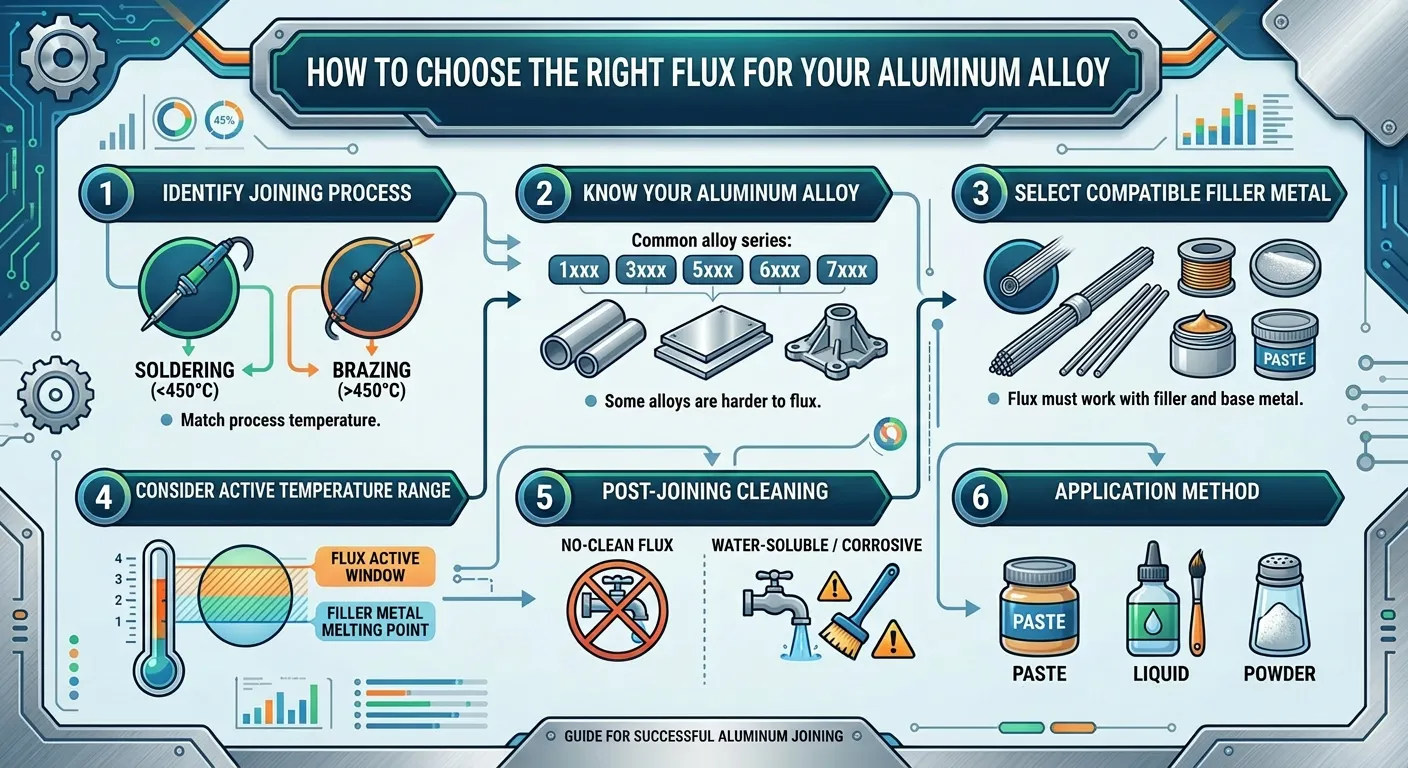
Alloy chemistry is not a secondary consideration in recovery chemical selection — it is the primary determinant. Using incompatible flux chemistry can actively damage alloy composition, introduce inclusions of a different type than those being removed, or cause unexpected reactions with melt treatment additives.
Recovery Chemicals for Aluminum-Silicon Casting Alloys (3xx.x Series)
The 3xx.x series — including A380, A356, A360, and related alloys — dominate automotive die casting and gravity casting production. These alloys contain 6–12% silicon and varying amounts of copper, magnesium, and zinc depending on the specific grade.
Key chemical considerations for this alloy family:
- Sodium content in flux must be tightly controlled when strontium modification is used. Sodium above 8–10 ppm can neutralize strontium modification, shifting the eutectic silicon. morphology back to unmodified acicular form.
- Chloride-fluoride ratio in covering flux should favor moderate fluoride levels (8–15%) to provide alkali removal capability without excessive magnesium attack.
- Degassing chemicals must be compatible with strontium modifier — some chlorine-rich tablets consume strontium through SrCl₂ formation.
- Grain refiner additions (Al-Ti-B or Al-Ti-C master alloys) should be timed after flux treatment to avoid titanium diboride interaction with fluoride residues.
Recovery Chemicals for Aluminum-Magnesium Alloys (5xxx Series)
Wrought aluminum-magnesium alloys present the most chemically sensitive flux application environment. Magnesium reacts aggressively with fluoride compounds, and even moderate fluoride flux exposure can measurably reduce alloy magnesium content.
Reaction mechanism: MgO + 2AlF₃ → 2AlF·MgF₂ + oxidation products.
At 740°C, this reaction proceeds rapidly, and a fluoride-rich flux applied to an Al-Mg alloy can deplete magnesium at rates of 0.01–0.05% per treatment cycle, depending on flux fluoride content and treatment intensity.
Recommended approach for 5xxx series:
- Pure chloride covering flux (KCl/NaCl system, no fluoride additions).
- Physical covering function prioritized over chemical reactivity.
- Dedicated low-fluoride refining flux if alkali removal is required.
- Separate nitrogen or argon degassing rather than chlorine-generating tablets.
Recovery Chemical Requirements by Alloy Family
| Alloy Family | Si Content | Mg Sensitivity | Recommended Flux Type | Fluoride Level | Na Limit |
|---|---|---|---|---|---|
| A380 (Al-Si-Cu) | 7.5–9.5% | Low | Standard KCl/NaCl/fluoride | 10–18% | 15 ppm |
| A356 (Al-Si-Mg) | 6.5–7.5% | Moderate | Low-Na, moderate fluoride | 8–15% | 8 ppm |
| 5052 (Al-Mg) | <0.25% | Very High | Fluoride-free KCl/NaCl | 0–3% | 20 ppm |
| 6061 (Al-Mg-Si) | 0.4–0.8% | Moderate | Low-fluoride | 5–10% | 10 ppm |
| 7075 (Al-Zn-Mg) | <0.4% | Moderate | Specialized Zn-compatible | 5–8% | 8 ppm |
| 2xxx (Al-Cu) | <0.5% | Low | Standard chloride-fluoride | 10–15% | 15 ppm |
Recovery Chemicals for High-Purity and Specialty Aluminum
Some foundry applications — thin-wall automotive structural components, aerospace investment castings, heat exchanger tubing — require aluminum purity levels that go beyond standard flux treatment capability. These applications drive demand for specialty recovery chemical systems:
Boron treatment for primary Al purification: AlB₂ master alloy additions precipitate titanium and vanadium as insoluble borides, removing these elements from electrical-grade and high-conductivity aluminum.
Sodium removal flux systems: Dedicated flux formulations using AlF₃-rich chemistry specifically engineered to remove sodium to below 2 ppm for critical eutectic modification applications.
Strontium-compatible refining flux: Chloride-based low-fluoride formulations verified to preserve strontium modifier at target levels through multiple treatment cycles.
How Do Fluxing Agents, Degassing Chemicals, and Grain Refiners Interact?
One of the most underappreciated aspects of foundry aluminum chemistry is the interaction between different chemical treatment systems. Foundry metallurgists often treat flux treatment, degassing, grain refining, and modification as independent sequential steps — but in practice, each treatment affects the subsequent one.
Also read: Covering and Refining Flux for Aluminum Holding Furnaces
Flux Treatment and Its Effect on Degassing Efficiency
Proper flux coverage before degassing significantly improves hydrogen removal efficiency. The mechanism is straightforward: flux treatment removes oxide film barriers from the melt surface and reduces the oxide skin thickness. During rotary degassing, gas bubbles rising to the surface must penetrate this oxide skin to release hydrogen. Thicker, more intact oxide skins act as diffusion barriers that trap hydrogen in rising bubbles, reducing their desorption efficiency.
Foundries that flux-treat before degassing consistently achieve lower final hydrogen levels with equivalent degassing time and gas flow rates compared to operations that degas without prior flux treatment.
Chlorine-Generating Tablets and Grain Refiner Interaction
Degassing tablets that release chlorine gas through reaction with aluminum create a specific interaction risk with titanium-boron grain refiners. The chlorine reacts with titanium diboride (TiB₂) particles — the active nucleation sites in Al-Ti-B grain refiners — converting them to titanium chloride compounds. This reaction reduces the effective grain refiner potency.
Practical implication: When using chlorine-generating degassing tablets in alloys that require grain refining, the grain refiner addition should be made after degassing, not before. The timing window between degassing completion and casting must be kept short (below 30 minutes) to prevent regrowth of oxide films before casting begins.
Modification Chemistry and Flux Interaction Timing
Strontium modification (used in Al-Si casting alloys to modify eutectic silicon morphology) faces chemical depletion risk from chloride flux systems. Strontium reacts with chloride ions to form SrCl₂, which partitions into the flux dross layer, reducing the effective strontium level in the melt.
Measured strontium depletion rates from flux treatment:
- High-chloride flux, 30-minute treatment: approximately 20–30% strontium reduction.
- Low-chloride flux, 30-minute treatment: approximately 5–15% strontium reduction.
- Physical covering flux only (minimal chloride activity): below 5% strontium reduction.
This data means that strontium addition timing and dosing must account for flux treatment depletion. Many foundries over-dose strontium precisely because they do not account for this systematic loss.
Which Aluminum Refining Chemical Standards Apply to Automotive and Aerospace Foundries?
The most demanding quality environments for foundry aluminum recovery chemicals are automotive structural castings and aerospace components. Both sectors have developed specific qualification requirements that go well beyond generic material specifications.
Automotive Sector Chemical Standards
The automotive aluminum casting supply chain operates under a multi-tier qualification framework. Tier 1 automotive suppliers are required to demonstrate that their aluminum melt treatment chemicals meet specific performance criteria validated through formal metallurgical testing.
Key automotive quality standards affecting recovery chemical selection:
IATF 16949: The automotive quality management system standard requires that chemical suppliers be subject to the same supplier qualification and monitoring requirements as other production material suppliers. This means flux and recovery chemical suppliers must provide documented process capability data, SPC charts for critical chemical parameters, and notification protocols for any chemistry changes.
OEM-specific material specifications: Major automotive OEMs (BMW, Mercedes, Ford, GM, Toyota) maintain their own aluminum casting material specifications that implicitly require specific melt cleanliness levels achievable only through appropriate chemical treatment programs.
ASTM B179, B85, and related standards: These ASTM specifications for aluminum alloy ingot and die castings include chemical composition limits that recovery chemicals must support, not undermine.
Aerospace Foundry Chemical Requirements
Aerospace aluminum foundry operations follow even more stringent chemical treatment requirements, with the additional layer of formal process specification control:
| Standard | Issuing Body | Relevance to Recovery Chemicals |
|---|---|---|
| AMS 2770 | SAE | Heat treatment procedures for aluminum — melt cleanliness prerequisite |
| AMS 4218 | SAE | Aluminum alloy investment casting — requires specific inclusion limits |
| NADCAP AC7114 | PRI/NADCAP | Nondestructive testing of castings — flux must support UT/RT cleanliness |
| Boeing D1-4426 | Boeing | Approved process sources — chemical suppliers may require Boeing approval |
| EN 4267 | AECMA/ASD | European aerospace aluminum casting specification |
| MIL-A-21180 | US DoD | Military aluminum casting — strict chemistry and cleanliness requirements |
Chemical Traceability Requirements for Premium Foundry Markets
Both automotive and aerospace markets increasingly require full traceability of chemical inputs used in aluminum processing. Recovery chemical suppliers must now provide:
- Certificate of Analysis (CoA) for each production batch.
- Traceable raw material sourcing for salt components.
- Documented manufacturing quality system (ISO 9001 minimum).
- Heavy metal content verification through accredited laboratory testing.
- Retained samples from production batches for retrospective testing.
How Should Foundries Evaluate and Select Aluminum Recovery Chemical Suppliers?
Supplier selection for aluminum recovery chemicals has significant downstream consequences. A supplier change that seems economically attractive can undermine months of process optimization work if the new product chemistry varies in ways that affect melt treatment performance.
Technical Qualification Process
We recommend a structured four-phase qualification process for any new recovery chemical supplier:
Phase 1: Documentation Review (2–4 weeks): Evaluate technical data sheets, safety data sheets, certificates of analysis from minimum 10 recent production batches, third-party laboratory test reports, and customer references from similar foundry operations.
Phase 2 — Laboratory Comparison Testing (4–6 weeks): Side-by-side laboratory trials comparing the candidate product against the current benchmark using standardized test protocols. Measure flux spreading rate, dross separation quality, density index achievement, and inclusion content.
Phase 3: Controlled Production Trial (6–12 weeks): Limited production trials under controlled conditions with comprehensive data collection. Track flux consumption rate, dross volume and metal content, casting defect rates, and density index distributions.
Phase 4 — Full Production Qualification (4–8 weeks): Full production quantities with supplier audit, logistics assessment, and formal approval documentation.
Supplier Evaluation Scorecard
| Evaluation Criterion | Weight | Poor (1) | Adequate (3) | Excellent (5) |
|---|---|---|---|---|
| Chemical consistency (batch-to-batch) | 25% | >3% variation | 2–3% variation | <1.5% variation |
| Technical support capability | 20% | No metallurgists | General support | Dedicated foundry metallurgist |
| Moisture content control | 20% | >0.5% | 0.3–0.5% | <0.3% |
| Supply reliability | 15% | Frequent shortages | Occasional delays | Consistent availability |
| Environmental compliance | 10% | Basic only | REACH compliant | Full documentation |
| Packaging quality | 10% | Inconsistent | Adequate sealing | Excellent moisture barrier |
Red Flags in Supplier Evaluation
Certain supplier behaviors or documentation gaps should immediately raise qualification concerns:
- Refusal to provide full chemical composition data (claiming trade secret protection for all components).
- Inconsistent moisture content results across batches (suggests inadequate manufacturing quality control).
- No accredited laboratory certificates for heavy metal content.
- Inability to provide references from foundry operations comparable in scale and alloy type.
- No formal change notification process for chemistry modifications.
- Price fluctuations exceeding 15% between quotes without corresponding raw material market movement.
What Are the Latest Environmental Regulations Affecting Foundry Refining Chemicals in 2026?
The regulatory environment for foundry aluminum recovery chemicals has tightened substantially between 2022 and 2026, with particularly significant changes in the European Union, United Kingdom, and several US states that are implementing stricter environmental standards independent of federal EPA requirements.
European REACH Updates Affecting Flux Chemistry
The European Chemicals Agency (ECHA) has progressively added fluoride compounds to restriction consideration under REACH Annex XVII. The 2026 status of key flux components under European regulation:
Ammonium Hexafluorosilicate (NH₄)₂SiF₆: Subject to restriction proposals in industrial applications due to fluoride release potential. Foundries using this component in flux formulations must document engineering controls.
Cryolite (Na₃AlF₆): Remains permitted but subject to workplace exposure limit reviews. Several EU member states have adopted stricter national occupational exposure limits for fluoride dust than the EU-wide reference values.
Chlorine gas generation thresholds: EU Industrial Emissions Directive (IED) implementation across member states has placed stricter emission monitoring requirements on foundries where flux treatment generates chlorine or HCl emissions above threshold quantities.
US Environmental Regulations Affecting Foundry Chemical Waste
In the United States, the classification of fluoride-containing dross and flux residues under RCRA (Resource Conservation and Recovery Act) continues to evolve:
| Waste Stream | Current Classification | Disposal Requirement | 2026 Update |
|---|---|---|---|
| Fluoride-rich dross | Characteristic hazardous (D) in many states | Licensed hazardous waste facility | Stricter leachate testing thresholds |
| Spent covering flux residue | Non-hazardous in most states | Certified industrial landfill | State-by-state variation increasing |
| Salt cake from flux processing | K088 listed in some states | Strict hazardous waste protocols | No change expected |
| Low-fluoride flux residue | Generally non-hazardous | Industrial landfill | Exemption thresholds under review |
Low-Emission and Fluoride-Reduced Flux Development Trends
Regulatory pressure has accelerated development of alternative flux chemistries that maintain performance while reducing environmental impact:
Organic flux additives: Research programs exploring organic salt systems that decompose cleanly without fluoride or heavy chloride residues. Performance currently below chloride-fluoride systems for demanding applications but improving.
Reduced-fluoride hybrid systems: Formulations achieving equivalent alkali removal performance with 30–50% less fluoride content through optimized fluoride speciation and particle distribution.
Captured gas systems: Closed-loop furnace designs that capture chlorine and HCl emissions from flux treatment for neutralization, allowing continued use of effective chloride chemistries while meeting air emission limits.
Process Control and Quality Verification for Aluminum Recovery Chemical Performance
Implementing an effective aluminum recovery chemical program without systematic process control and quality verification is essentially operating blind. The most sophisticated flux chemistry delivers inconsistent results without measurement systems that track its effectiveness in real production conditions.
Real-Time Quality Monitoring Methods
Density Index Trending: Every heat should produce a density index measurement using the Reduced Pressure Test. The data should be trended over time by shift, furnace, and charge composition. Density index values outside control limits (typically ±0.05 from target) should trigger investigation of flux application adequacy, charge moisture, or furnace conditions.
Dross Characterization: Weighing and characterizing dross from each heat provides indirect evidence of flux coverage quality. Increasing dross mass without proportional change in charge composition suggests inadequate flux coverage allowing excessive oxidation.
Visual Melt Surface Assessment: Experienced operators can assess flux coverage quality by the visual character of the melt surface. Properly fluxed aluminum shows a uniform, slightly luminous surface with no bare metal patches. Inadequate coverage shows dark oxide patches with potentially reflective bare metal areas.
Sampling and Laboratory Testing Protocol
| Test | Frequency | Method | Control Limit | Action Trigger |
|---|---|---|---|---|
| Density Index | Every heat | ASTM E2792 RPT | Application-specific | Above upper limit |
| Spectrochemical composition | Every heat | OES (arc/spark) | Alloy specification | Outside alloy limits |
| Inclusion assessment | Weekly minimum | K-mold or PoDFA | Process-specific | Deteriorating trend |
| Hydrogen (quantitative) | Sampling basis | Telegas/LECO | Application-specific | Above threshold |
| Flux moisture | Each new batch | KF titration | Below 0.3% | Above 0.3% |
Statistical Process Control Application
The most sophisticated foundry operations apply statistical process control (SPC) to their aluminum recovery chemical performance data. Control charts for density index, dross metal content, and casting rejection rates allow early detection of process drift before it manifests as product failure.
Control chart setup recommendations:
- Establish baseline data from minimum 30 heats of stable production.
- Set control limits at ±3 sigma from the process mean for density index.
- Plot dross metal content percentage on an individuals chart (I-chart) with 20-heat moving range.
- Use CUSUM charts for detecting gradual drift in inclusion-related rejection rates.
Cost-Benefit Analysis of Premium vs. Standard Aluminum Recovery Chemicals
The economic case for premium-specification recovery chemicals is compelling when analyzed correctly, but the analysis requires looking beyond unit price to total process economics.
The True Cost Calculation Framework
Scenario: Foundry producing 8,000 tons of aluminum castings per year, using secondary aluminum with 15% average scrap return ratio.
| Cost Element | Standard Flux (Base Case) | Premium Flux (Upgraded) | Difference |
|---|---|---|---|
| Flux unit cost | $1.20/kg | $1.85/kg | +$0.65/kg |
| Flux consumption rate | 2.8 kg/ton Al | 2.1 kg/ton Al | -0.7 kg/ton |
| Annual flux cost | $26,880 | $31,080 | +$4,200 |
| Dross metal content (avg) | 48% | 38% | -10 percentage points |
| Annual dross volume | 400 tons | 360 tons | -40 tons |
| Recoverable Al from dross | 192 tons | 136.8 tons lost = better recovery | +22 tons additional |
| Value of additional recovered Al | — | +$44,000 | +$44,000 |
| Casting rejection rate (inclusions) | 2.8% | 1.6% | -1.2% |
| Annual rejection cost reduction | — | +$96,000 | +$96,000 |
| Net annual benefit (premium flux) | — | +$135,800 | — |
This simplified model demonstrates that the premium chemical investment of $4,200 per year generates approximately $135,800 in combined recoverable metal and rejection reduction benefits — a return ratio of approximately 32:1.
Where Cost Savings from Lower-Quality Flux Are Lost
Foundries that switch to lower-cost recovery chemicals often encounter these downstream cost increases that eliminate the initial savings:
- Increased flux consumption volume required to compensate for lower active ingredient content.
- Higher casting rejection rates requiring additional rework or scrap recycling costs.
- Increased dross processing costs due to higher dross volume and lower pressing yield.
- Potential customer quality claims from inclusion-related field failures in critical components.
- Refractory wear acceleration from poorly formulated flux chemistry.
Safety Protocols and Handling Requirements for Foundry Refining Chemicals
Safety management for foundry recovery chemicals is non-negotiable. The combination of high-temperature molten metal and reactive chemical compounds creates hazard conditions that require systematic controls.
Storage Requirements
Proper chemical storage is the foundation of safe foundry chemical management:
- Store all flux and recovery chemicals in dedicated, dry, indoor storage areas with controlled humidity below 50% RH.
- Never store flux in areas subject to roof leaks, ground moisture intrusion, or temperature fluctuations that cause condensation.
- Maintain FIFO (first in, first out) rotation to prevent aged stock from accumulating.
- Seal partially used bags immediately using heat sealing or strong clip closures.
- Keep storage area locked and accessible only to trained personnel.
- Maintain a current chemical inventory log matched to Safety Data Sheet (SDS) availability.
Personal Protective Equipment Requirements
| Chemical Handling Task | Minimum PPE Requirement | Recommended Additional PPE |
|---|---|---|
| Flux bag handling (unopened) | Safety glasses, gloves | Dust mask if broken bags |
| Manual flux application to furnace | Face shield, heat gloves, apron | Supplied air if poor ventilation |
| Dross treatment chemical application | Face shield, heat gloves, apron, steel boots | Full face shield |
| Powder injection system operation | Safety glasses, hearing protection | Dust respirator |
| Emergency response (spill/splash) | Full PPE ensemble | Emergency shower access |
Emergency Response Planning
Every foundry using aluminum recovery chemicals must maintain updated emergency response procedures for:
- Chemical splash or burn incidents.
- Moisture-related steam explosion events.
- Chlorine gas release from flux-metal reactions.
- Chemical storage fire events.
- First aid protocols specific to fluoride and chloride chemical exposure.
Post emergency procedures visibly in the work area. Conduct drills minimum twice annually. Maintain eyewash stations within 10 seconds of travel from all flux application points.
FAQs About Aluminum Recovery Chemicals for Foundry Applications
Q1: What is the best aluminum recovery chemical for high-silicon die casting alloys like A380?
For A380 and similar Al-Si-Cu die casting alloys, the most effective recovery chemical system combines a moderate-fluoride covering-refining flux (10–18% fluoride content, balance KCl/NaCl) with chlorine-generating degassing tablets or rotary degassing. The flux should be verified for low sodium content if strontium modification is used. Dross treatment with a mild exothermic dross compound improves metal recovery from skimmings. The specific optimal formulation depends on your scrap charge quality and furnace type.
Q2: How do 2026 refining specifications differ from 2022 standards?
The 2026 specifications are primarily more stringent on hydrogen content (lowered by approximately 25–30% across most application categories), quantitative inclusion limits (replacing qualitative assessments), flux purity requirements (stricter moisture and heavy metal limits), and environmental compliance documentation. Automotive structural applications now typically require density index below 0.10% versus 0.15% previously.
Q3: Can aluminum recovery chemicals fully substitute for degassing with inert gas?
No. Recovery chemicals — particularly covering and refining fluxes — complement but do not replace rotary degassing or purging gas treatment for hydrogen removal. Flux treatment improves the efficiency of subsequent degassing by removing oxide diffusion barriers and reducing melt surface tension, but the mechanical gas-bubble flotation mechanism of rotary degassing is necessary to achieve hydrogen levels below 0.15 cc/100g Al in most production alloys.
Q4: What happens if I use a high-fluoride flux on an aluminum-magnesium alloy?
Using high-fluoride flux (above 15% fluoride content) on 5xxx series Al-Mg alloys will cause measurable magnesium depletion through fluoride-magnesium exchange reactions. Depending on treatment intensity, you could lose 0.05–0.2% of alloy magnesium content per treatment cycle. Over multiple heats, this depletion compounds and can push the alloy composition outside specification limits. Always use low-fluoride or fluoride-free flux for magnesium-containing alloys.
Q5: How do I calculate the correct flux addition rate for my foundry furnace?
Start with the furnace bath surface area (in m²) and the target flux layer depth of 20–30 mm. Flux density is approximately 1.5–2.0 g/cm³ when melted, giving you a volume-based starting point. Typical industry benchmarks are 1–3 kg of flux per metric ton of aluminum for holding furnace applications, with higher rates needed for contaminated scrap charges. Track dross character and density index to optimize the specific rate for your operation.
Q6: How long does flux remain effective in an aluminum holding furnace?
Flux effectiveness diminishes over time as it absorbs inclusions and its chloride-fluoride chemistry is consumed by reactions with the melt and its contaminants. In continuous operations, flux layers typically require replenishment every 2–4 hours. The visual indicator is when the melt surface becomes dark and dull rather than showing the characteristic slightly luminous appearance of a freshly fluxed bath. Dross skimming should be accompanied by fresh flux addition.
Q7: Are there flux formulations that are both effective and fully fluoride-free?
Fully fluoride-free flux formulations exist but have significant performance limitations compared to fluoride-containing systems. Pure chloride (KCl/NaCl) flux systems provide effective covering and moderate oxide dissolution but cannot achieve the alkali removal capability or the oxide dissolution rate of fluoride-containing products. For operations where alloy chemistry constraints or environmental regulations preclude fluoride use, pure chloride systems combined with aggressive nitrogen or argon degassing represent the most viable alternative.
Q8: What documentation should I receive from my recovery chemical supplier in 2026?
At minimum, expect: Certificate of Analysis per batch (with chloride %, fluoride %, moisture %, particle size distribution, iron content, and heavy metal content); Safety Data Sheet per GHS/CLP standards; REACH compliance declaration for EU supply; ISO 9001 quality system certificate; and packaging integrity certificate for moisture-sensitive products. Premium suppliers also provide metallurgical test data demonstrating product performance in aluminum melt applications.
Q9: How should we handle flux that has been stored for more than 12 months?
Before using long-stored flux, inspect packaging for any breach in moisture barrier integrity. If packaging is fully intact and storage conditions were properly controlled (dry, indoor, below 50% RH), the product may still be suitable. Perform moisture content testing (Karl Fischer method) on a representative sample. If moisture content is below 0.3%, the product is likely still effective. If moisture content exceeds 0.5%, discard the material — the explosion risk from wet flux contacting molten aluminum is not worth any cost savings from using aged stock.
Q10: What aluminum recovery chemical innovations should foundries expect in 2026 and beyond?
Several developments are approaching commercial readiness. Nano-structured fluoride compounds are showing significantly improved alkali removal efficiency at lower overall fluoride loadings in laboratory trials. Real-time flux dosing systems linked to online melt quality sensors (density index, ultrasonic cleanliness) are moving from prototype to commercial availability, enabling automatic flux addition rate adjustment based on measured melt condition rather than fixed schedules. Lower-emission flux systems using captured reactive gas and organic buffer compounds are entering field trials in European foundries facing the strictest air emission regulations. The direction of innovation is consistently toward higher performance at lower chemical consumption and lower environmental impact.
Summary
Aluminum recovery chemical selection and application for foundry operations in 2026 demands a level of technical rigor that matches the increasingly demanding specifications coming from automotive, aerospace, and structural casting customers. The recovery chemical system — spanning covering flux, refining flux, dross treatment agents, and degassing chemistry — must be engineered as an integrated system matched to specific alloy chemistry, scrap charge quality, furnace type, and downstream quality requirements.
At AdTech, we have invested significantly in understanding how chemical selection decisions propagate through the entire foundry process chain, from charge melting through casting and final inspection. The evidence consistently supports investing in premium, well-characterized recovery chemicals with full traceability documentation, choosing suppliers who can provide metallurgical technical support alongside product supply, and building measurement systems that allow real quantification of chemical treatment effectiveness.
The 2026 refining specifications represent a clear direction of travel: tighter hydrogen limits, quantitative inclusion benchmarks, stricter chemical purity requirements, and expanding environmental compliance documentation. Foundries that align their recovery chemical programs with these specifications now will be better positioned competitively as these standards propagate through the supply chain over the next several years.