

Refractory mortar is a high-temperature bonding material specifically engineered to withstand extreme heat, thermal cycling, and chemically aggressive environments where conventional Portland cement would fail completely. Composed primarily of refractory aggregates such as calcined fireclay, silica, alumina, or silicon carbide — combined with binding agents — refractory mortar maintains structural integrity at temperatures ranging from 900°C to well above 1800°C (1650°F to 3270°F), depending on the formulation. It serves as the critical jointing compound between refractory bricks, castable blocks, and ceramic fiber modules in furnaces, kilns, boilers, incinerators, and petrochemical reactors. Without properly selected and applied refractory mortar, even the highest-quality refractory brick installations would fail rapidly under industrial operating conditions.
If your project requires the use of Refractory Mortar, you can contact us for a free quote.
We have worked alongside ceramic engineers, kiln operators, and procurement teams across multiple industries, and one consistent finding stands out: the selection of refractory mortar is frequently underestimated compared to the selection of the refractory bricks themselves. That is a costly mistake. The joint material — which can constitute up to 15% of a refractory lining’s total mass — directly governs thermal efficiency, structural longevity, and maintenance cycles.
What Makes a Mortar “Refractory”?
The word “refractory” itself comes from the Latin refractarius, meaning stubborn or resistant — and that is precisely what these materials are. A mortar qualifies as refractory when it retains mechanical bonding strength and chemical stability at sustained elevated temperatures that would destroy ordinary construction adhesives or cements.
Standard Portland cement begins to lose its structural strength around 300°C and undergoes complete decomposition by approximately 600°C. Refractory mortar, by contrast, achieves its actual service strength through firing. The heat treatment triggers sintering and ceramic bonding reactions that conventional mortars lack entirely.
The Core Criteria That Define Refractory Classification
For a mortar to be classified as refractory by international standards (ISO 1927, ASTM C71), it must satisfy several key benchmarks:
- Refractoriness Under Load (RUL): The material must not deform significantly under mechanical stress at operating temperature.
- Pyrometric Cone Equivalent (PCE): Minimum cone rating of SK 26 (approximately 1580°C) for most industrial grades.
- Permanent Linear Change (PLC): Dimensional change after firing must remain within acceptable limits (typically less than ±2%).
- Cold Crushing Strength (CCS): Adequate post-firing compressive strength to maintain joint integrity.
- Chemical Resistance: Resistance to slag, gases, and molten metal penetration.
We have tested numerous formulations in controlled laboratory environments and observed that even within the “refractory” category, the performance gap between a mid-grade and a high-grade mortar under identical thermal cycling conditions can be dramatic. Choosing based purely on price without understanding these criteria is a common and avoidable error.
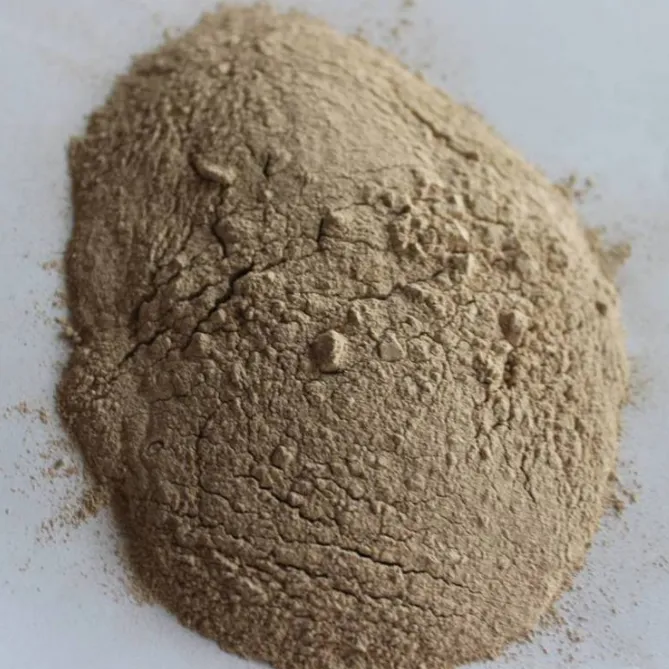
Chemical Composition and Raw Materials
The specific properties of any refractory mortar stem directly from its chemical composition. Understanding the role of each component helps engineers and procurement specialists make informed purchasing decisions.
Primary Refractory Aggregates
| Raw Material | Al₂O₃ Content | Max Service Temp | Key Property |
|---|---|---|---|
| Fireclay (Calcined) | 25–45% | 1350–1500°C | Cost-effective, moderate duty |
| High-Alumina Aggregate | 45–90% | 1500–1750°C | High strength, thermal shock resistance |
| Silica (Ganister) | 93–97% SiO₂ | 1650–1700°C | Excellent volume stability at high temp |
| Fused Alumina | 95–99% Al₂O₃ | Up to 1800°C | Premium grade, high purity |
| Silicon Carbide (SiC) | — | 1400–1700°C | Exceptional thermal conductivity |
| Magnesia (MgO) | — | 1700–2000°C | Basic chemistry, slag resistance |
| Chromite | — | 1600–1800°C | Excellent in steelmaking environments |
| Zirconia (ZrO₂) | — | Up to 2200°C | Ultra-high-temperature specialty use |
Secondary Components and Binders
Beyond the refractory aggregate, the binder system determines how the mortar behaves during installation and initial heatup:
Hydraulic Binders: Calcium aluminate cement (CAC) is the most widely used hydraulic binder in refractory mortars. It provides green strength (strength before firing) through a hydraulic setting reaction with water. CAC with high Al₂O₃ content (70%+) performs significantly better at elevated temperatures than standard 40% alumina CAC.
Chemical Binders: Sodium silicate, phosphoric acid, and colloidal silica function as chemical binders that set through chemical reaction rather than hydraulic hardening. They are particularly valuable in air-setting mortars used for patching and repair work.
Organic Temporary Binders: Dextrin, molasses, or organic polymer additions provide workability and green strength during installation, then burn out cleanly during the first firing without leaving damaging residues.
Fine Matrix Fillers: Microsilica (silica fume), reactive alumina, and fly ash fill the particle size gap between aggregate grains, improving density, chemical resistance, and reducing porosity.
Alumina Content as a Classification Benchmark
Alumina content (Al₂O₃ percentage) serves as the primary classification axis for most refractory mortars:
| Classification | Al₂O₃ % | Temperature Range | Typical Application |
|---|---|---|---|
| Fireclay Grade | 25–45% | Up to 1350°C | Brick kilns, chimney stacks |
| Semi-Silica | < 30% with high SiO₂ | Up to 1500°C | Glass tank foundations |
| High-Alumina (Low) | 45–60% | Up to 1600°C | Rotary cement kilns |
| High-Alumina (Mid) | 60–75% | Up to 1700°C | Steel ladles, electric arc furnaces |
| High-Alumina (High) | 75–90% | Up to 1780°C | Blast furnace hot blast stoves |
| Corundum Grade | 90–99% | Up to 1850°C | Petrochemical reformer tubes |
| Ultra-High Purity | 99%+ | Up to 2000°C | Specialty laboratory and aerospace |
Types of Refractory Mortar Explained
Classifying refractory mortars requires understanding two overlapping systems: classification by setting mechanism and classification by chemical character. Both matter for different reasons.
Classification by Setting Mechanism
Air-Setting Refractory Mortar
Air-setting mortars cure and develop initial bond strength through chemical reactions that occur at ambient temperature — no external heat is needed to initiate setting. The binding mechanism typically involves sodium silicate or phosphate-based chemical binders reacting with aluminum oxide or silica particles.
Advantages:
- Can be used for repair work on partially cooled equipment.
- Develops useful working strength within hours.
- Suitable for areas that cannot be easily refired.
Limitations:
- Generally lower ultimate strength compared to heat-setting types.
- Can be susceptible to moisture attack if not fully dried before service.
Heat-Setting Refractory Mortar
Heat-setting mortars rely on sintering or ceramic bonding reactions that are activated only when the installation reaches a minimum firing temperature — typically between 800°C and 1200°C. Before firing, the joints have minimal mechanical strength and must be handled carefully.
This category represents the majority of high-performance refractory mortars used in steel, cement, and glass manufacturing. The final bond is a true ceramic bond with superior strength and chemical resistance compared to air-setting alternatives.
Hydraulic-Setting Refractory Mortar
A subset using calcium aluminate cement as the binder, hydraulic-setting mortars combine the benefits of rapid green strength development (through cement hydration) with the high-temperature ceramic bond that develops during service. They are particularly popular in situations requiring both fast installation and demanding service conditions.
Classification by Chemical Character
Acidic Refractory Mortars
Composed predominantly of silica (SiO₂), these mortars resist attack from acidic slags and fluxes. Common in glass furnaces, non-ferrous smelting, and coke oven batteries. They must not come into contact with basic refractories or contamination will cause eutectic melting and joint failure.
Basic Refractory Mortars
Formulated from magnesia (MgO), dolomite, or chrome-magnesia compositions, basic refractory mortars resist alkaline slags and are essential in steelmaking converters, electric arc furnaces, and cement rotary kilns where basic flux chemistry dominates.
Neutral Refractory Mortars
High-alumina and chrome-based formulations that resist attack from both acidic and basic environments. These are the most versatile category and the most widely specified in modern industrial installations where mixed slag chemistry or changing process conditions create uncertainty.
Specialty Refractory Mortar Types
| Specialty Type | Key Feature | Primary Application |
|---|---|---|
| Carbon/Graphite Mortar | Electrically conductive, non-wetting | Blast furnace hearths, aluminum smelters |
| Insulating Mortar | Low thermal conductivity | Backup lining layers, kiln crowns |
| Castable Refractory Mortar | Free-flow or vibration-cast | Complex shapes, monolithic linings |
| Phosphate-Bonded Mortar | Excellent chemical resistance | Steel ladles, induction furnaces |
| Colloidal Silica-Bonded | Ultra-low cement, high purity | Petrochemical, semiconductor processing |
| Gunning Mortar | Specific particle sizing for spray application | Emergency patching, large area repair |
Key Physical and Thermal Properties
Understanding the measurable performance characteristics of refractory mortar is essential for both engineering specification and quality control during procurement.
Critical Thermal Properties
Refractoriness (PCE Rating):
The Pyrometric Cone Equivalent test measures the temperature at which a test cone deforms under its own weight. This value establishes the absolute upper temperature limit of the material. Most commercial refractory mortars range from PCE 26 (1580°C) to PCE 38 (1820°C).
Thermal Shock Resistance:
This property measures a material’s ability to withstand rapid temperature changes without cracking. It is governed by thermal conductivity, coefficient of thermal expansion, and elastic modulus. Mortars with lower elastic modulus and higher thermal conductivity generally perform better under thermal cycling.
Thermal Conductivity:
Ranges from approximately 0.3 W/m·K for insulating mortars to over 4 W/m·K for silicon carbide-based formulations. This property directly impacts heat loss calculations in furnace energy efficiency modeling.
Coefficient of Thermal Expansion (CTE):
The CTE of the mortar must be carefully matched to the adjacent refractory brick to prevent differential expansion stresses that can open joints during heatup and cooldown cycles. Mismatch is a leading cause of premature joint failure.
Critical Mechanical Properties
| Property | Test Method | Typical Range | Units |
|---|---|---|---|
| Cold Crushing Strength (CCS) | ASTM C133 | 5–80 | MPa |
| Modulus of Rupture (MOR) | ASTM C133 | 1–15 | MPa |
| Permanent Linear Change (PLC) | ASTM C210 | -0.5 to +1.5 | % |
| Apparent Porosity | ASTM C20 | 15–30 | % |
| Bulk Density | ASTM C20 | 1.8–3.2 | g/cm³ |
| Water Absorption | ISO 5017 | 5–15 | % |
Chemical Resistance Properties
Slag Resistance:
Evaluated through standardized slag cup tests or rotating drum tests. The mineralogy of the mortar matrix determines whether it resists acidic, basic, or neutral slag compositions.
Alkali Resistance:
Critical for cement kiln applications where alkali vapors (potassium and sodium compounds) condense and attack refractory joints, causing volume expansion and spalling.
Oxidation Resistance:
Important for carbon-containing mortars in steel applications where oxygen ingress can cause decarburization and loss of bond strength.
Also read: Refractory mortar vs refractory cement.
How Refractory Mortar Differs from Regular Mortar
This question comes up frequently in procurement and engineering discussions, and the answer involves more than just temperature rating. The differences are fundamental and span material science, application technique, and performance expectations.
Side-by-Side Comparison
| Property | Regular Portland Mortar | Refractory Mortar |
|---|---|---|
| Maximum Service Temp | 200–300°C | 900–2000°C+ |
| Setting Mechanism | Hydraulic (water + cement) | Ceramic sintering, chemical bond |
| Strength Development | Decreases with temperature | Increases with temperature (up to limit) |
| Chemical System | Calcium silicate hydrate | Alumina-silica, magnesia, SiC systems |
| Porosity | 10–20% | 15–30% (designed for thermal properties) |
| Cost | Low ($0.10–0.50/kg) | Moderate to high ($2–100+/kg) |
| Shelf Life | 12–24 months | 6–18 months (dry), 3–6 months (premix) |
| Application Skill | Basic masonry | Requires trained refractory installers |
| Joint Thickness | 5–20mm typical | 1–5mm for dense brick, up to 25mm for insulation |
| Curing Process | Water curing | Controlled heatup schedule required |
Why You Cannot Substitute One for the Other
We have encountered real-world cases where inexperienced contractors attempted to use high-temperature-rated construction products — including some Portland-based hydraulic mortars — in furnace applications based on incorrect temperature ratings on product datasheets. Without exception, these installations failed during the first firing cycle. The reason is straightforward: regular mortar develops strength through calcium silicate hydrate gel formation, which decomposes irreversibly at temperatures above 600°C. No additive or modification can overcome this fundamental thermodynamic limitation.
Industrial Applications Across Major Sectors
Refractory mortar touches nearly every energy-intensive industry on Earth. The breadth of its application is genuinely remarkable.
Steel and Iron Manufacturing
The steel industry represents the largest single consumer of refractory mortar globally. Applications include:
Blast Furnace Linings: The hearth and bosh zones of blast furnaces reach temperatures approaching 1600°C with simultaneous exposure to molten iron, slag, and pressurized reducing gases. Carbon-bonded mortars with graphite additions are standard here.
Electric Arc Furnace (EAF) Side Walls: High alumina and magnesia-chrome mortars withstand the intense arc radiation and aggressive slag chemistry. EAF operating campaigns between relines have increased dramatically with improved mortar selection.
Steel Ladles and Torpedo Cars: Alumina-magnesia and alumina-spinel mortars resist CaO-FeO-SiO₂ slag systems typical of secondary steelmaking.
Tundish Linings: Magnesia-based spray coatings and mortars provide clean steel quality by minimizing contamination risk.
Cement and Lime Industry
Rotary Cement Kilns: The burning zone of a cement kiln reaches 1400–1500°C with highly basic alkali-rich atmosphere. Basic magnesia-spinel or alumina-chrome refractory mortars are specified for the burning zone, while fireclay grades suffice in cooler zones.
Lime Shaft Kilns: Vertical shaft kilns present a challenging combination of high temperature, CO₂ atmosphere, and mechanical abrasion from moving limestone charge.
Preheater Cyclone Towers: Alkali-resistant high-alumina mortars are critical here due to aggressive alkali attack from raw meal.
Glass Manufacturing
Glass Melting Tanks: One of the most chemically aggressive environments for refractories. Molten glass attacks nearly all oxide refractories to some degree. Fused cast AZS (alumina-zirconia-silica) blocks bonded with compatible AZS mortar are standard in premium float glass furnaces.
Regenerator Checker Work: Silica brick with compatible silica-rich mortar is used in the regenerators, requiring exceptional joint quality due to the thermal cycling demands.
Petrochemical and Refining Industry
Steam Methane Reformers: The reformer tube supports and floor tiles reach 900–1100°C in a hydrogen-rich reducing atmosphere. High-purity alumina mortars with colloidal silica binder systems are preferred for their resistance to hydrogen attack and carbon deposition.
Fluid Catalytic Cracking (FCC) Units: Insulating and erosion-resistant refractory linings with compatible mortars must withstand fluidized catalyst impingement at 700–800°C.
Ethylene Cracking Furnaces: High-alumina and castable mortar systems line the radiant section fireboxes.
Non-Ferrous Metals
Aluminum Smelting Pots: Carbon-based refractory mortars with excellent resistance to molten aluminum are essential. Standard oxide mortars are attacked rapidly by molten Al.
Copper Converters: Basic magnesia-chrome mortars handle the high-temperature oxidizing conditions and basic slag chemistry.
Zinc Retorts: Silicon carbide mortars offer the thermal conductivity and chemical resistance needed for zinc distillation processes.
Power Generation
Coal-Fired Boilers: Insulating refractory mortars line the furnace walls, reducing heat losses and protecting the steel shell. Abrasion resistance is critical in high-velocity ash zones.
Waste-to-Energy Incinerators: Combination of high temperature, aggressive chlorine-bearing gases, and variable heat input makes refractory mortar selection particularly challenging. High-alumina and silicon carbide combinations are common.
Biomass Boilers: Similar to waste incineration but with additional alkali attack from potassium compounds in fuel ash.
How to Select the Right Refractory Mortar
Selection methodology matters as much as product knowledge. A systematic approach prevents costly specification errors.
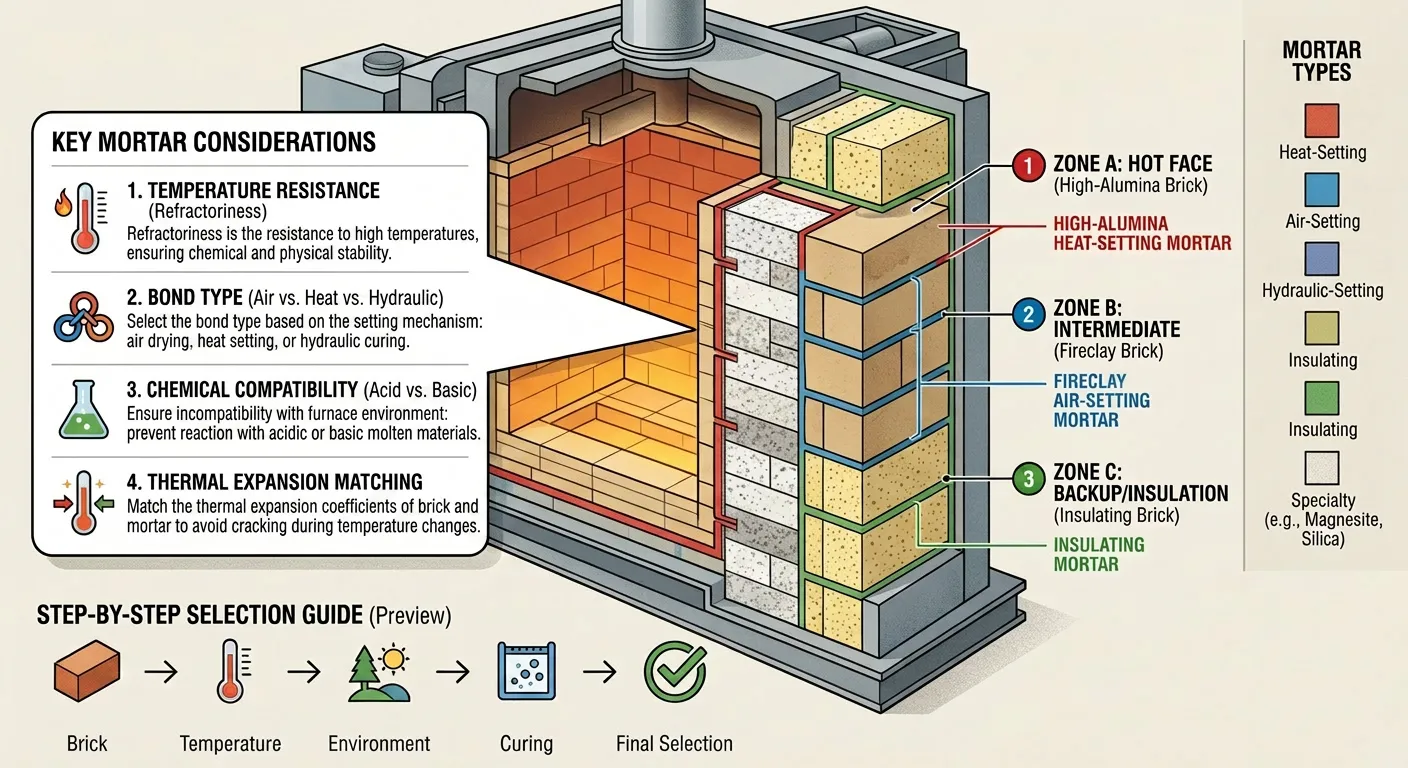
Step 1: Define the Operating Thermal Profile
- Peak temperature (°C)
- Continuous operating temperature (°C)
- Number of thermal cycles per year
- Rate of temperature change during heatup/cooldown (°C/hour)
Step 2: Characterize the Chemical Environment
- Identify the slag or flux chemistry (acidic/basic/neutral)
- Determine gas atmosphere (oxidizing, reducing, neutral, hydrogen, CO)
- Assess presence of volatile species (alkali, sulfur, chlorine, fluorine)
Step 3: Match to the Refractory Brick System
The mortar must be compatible with the adjacent brick in terms of:
- Chemical composition (acidic mortar with acidic brick, etc.)
- Coefficient of thermal expansion.
- Maximum service temperature.
Step 4: Consider Application Method
| Application Method | Preferred Mortar Consistency | Setting Type |
|---|---|---|
| Hand buttering (trowel) | Stiff paste | Air or heat setting |
| Dipping | Slurry (thin) | Heat setting |
| Gunning (spray) | Specific gradation | Air or heat setting |
| Casting | Self-flow or vibration cast | Hydraulic |
| Ramming | Dry or semi-dry | Heat setting |
Step 5: Evaluate Total Cost of Ownership
Procurement teams frequently focus on mortar unit cost ($/kg) without accounting for application labor, energy costs during curing, and maintenance downtime costs associated with premature lining failure. We consistently recommend presenting a total cost of ownership analysis when justifying a premium mortar specification against a lower-cost alternative.
Mortar-to-Brick Compatibility Matrix
| Brick Type | Compatible Mortar Chemistry | Incompatible Combinations |
|---|---|---|
| Fireclay Brick | Fireclay mortar | Magnesia, basic mortars |
| High-Alumina Brick | High-alumina mortar | Silica-rich mortars (high temp) |
| Silica Brick | Silica mortar | Alumina mortars (eutectic risk) |
| Magnesia Brick | Magnesia mortar | Silica, fireclay mortars |
| Carbon Brick | Carbon/graphite mortar | Oxide-based mortars |
| AZS Brick | AZS-compatible mortar | Chrome mortars in glass service |
Application Methods and Best Practices
Even the highest-specification refractory mortar will underperform if application technique is poor. This is an area where we see significant variability in field installations.
Surface Preparation
Brick Face Cleanliness: The bonding faces of refractory bricks must be clean, free from dust, loose particles, oil contamination, and absorbed moisture. Pre-wetting dense fired bricks before mortar application is recommended for heat-setting slurry mortars — but only to the degree specified by the manufacturer, as over-wetting dilutes the mortar mix at the joint.
Joint Dimension Control: Most refractory engineering standards specify maximum joint thickness for dense firebrick at 1.5–3mm. Exceeding this limit reduces the structural performance of the lining and increases thermal stress concentration at joints.
Mixing and Consistency
Pre-mixed mortars in ready-to-use containers require thorough mixing before application to reconstitute settled solids. Dry mortars mixed with water on-site must reach the consistency specified on the technical data sheet — typically described in terms of flow or penetration.
Critical Warning: Never add more water than specified to improve workability. Excess water increases shrinkage on drying, increases porosity, and reduces final strength.
Application Techniques
Buttering Method: The most common hand application technique. Mortar is applied to the brick face with a trowel, and the brick is pressed firmly into position. Squeeze-out at the joint confirms adequate coverage. Excess mortar is removed immediately.
Dipping Method: The brick face is dipped into a slurry-consistency mortar. This technique produces excellent coverage and consistent joint thickness. It is particularly effective with heat-setting thin-joint mortars in furnace crown and wall construction.
Gunning Application: Pneumatic gunning equipment propels refractory mortar against a surface at high velocity. Used for large surface area applications, emergency repair patching, and areas with restricted access. Requires mortars specially formulated with specific particle sizing and rebound resistance.
Joint Thickness Guidelines
| Brick Type | Recommended Joint Thickness | Standard Reference |
|---|---|---|
| Dense Fireclay Brick | 1–3 mm | ASTM C199 |
| High-Alumina Dense Brick | 1–2 mm | ISO 8840 |
| Insulating Firebrick (IFB) | 2–5 mm | Manufacturer specification |
| Large Format Shapes | 3–6 mm | Project specification |
| Repair/Patch Work | Up to 25 mm | Project specification |
Setting and Curing: What Actually Happens During Firing
The chemistry and physics of refractory mortar curing are more complex than most installation guides communicate. Understanding this process helps prevent the most common curing-related failures.
Stage 1: Drying (Ambient to 200°C)
Free water evaporates during this stage. If heating is too rapid, steam pressure buildup inside the mortar joint can cause explosive spalling — particularly in dense, low-porosity formulations. The standard recommendation is holding at 100–120°C for several hours before proceeding.
Stage 2: Bound Water Release (200–600°C)
Chemically bound water from clay hydrates, calcium aluminate hydrates, and other hydrated phases is driven off. This stage is often accompanied by some temporary strength reduction before the ceramic bond begins to develop.
Stage 3: Ceramic Bond Development (600–1200°C)
Sintering reactions between fine matrix particles begin to form solid-state ceramic bridges between aggregate grains. Alumina-silica systems form mullite (3Al₂O₃·2SiO₂) as a critical bonding phase. This transformation is essentially irreversible and gives heat-setting mortars their superior final performance.
Stage 4: Full Consolidation (Above 1200°C)
Final densification and phase equilibrium are achieved at operating temperature. The mortar reaches its design performance specifications. Repeated thermal cycling further consolidates the structure through continued sintering.
Recommended Heatup Rate Guidelines
| Temperature Range | Maximum Heatup Rate | Hold Recommendation |
|---|---|---|
| Ambient to 150°C | 20–25°C/hour | Hold 4–8 hours |
| 150°C to 350°C | 25–30°C/hour | Hold 2–4 hours |
| 350°C to 600°C | 30–40°C/hour | Hold 2 hours |
| 600°C to 900°C | 40–50°C/hour | Hold 2 hours |
| Above 900°C | Up to 80°C/hour | Hold at max operating temp |
Note: These are general guidelines. Always follow the mortar manufacturer’s specific heatup schedule for the installed formulation.
Common Failures and How to Prevent Them
In our experience reviewing failed refractory installations, the failures fall into predictable categories — most of which are preventable with proper specification and installation practice.
Joint Cracking During Heatup
Cause: Excessively rapid temperature increase during initial firing, causing steam pressure or differential thermal expansion to exceed the green strength of the unfired mortar.
Prevention: Strict adherence to controlled heatup schedules. Do not accelerate the initial drying phase regardless of production pressure.
Mortar Wash-Out in Slag Applications
Cause: Chemical incompatibility between mortar composition and slag or flux chemistry. Acidic mortar dissolving in basic slag is a classic example.
Prevention: Chemical character matching between mortar, brick, and slag systems. Consider laboratory slag cup testing before major installations.
Joint Erosion in High-Velocity Gas Flow
Cause: Insufficient hot abrasion resistance. Mortars with coarse pore structure or inadequate bonding are particularly vulnerable.
Prevention: Specify mortars with demonstrated abrasion resistance values for the service velocity. Silicon carbide additions significantly improve abrasion resistance.
Alkali Attack and Volume Expansion
Cause: Alkali vapors (K₂O, Na₂O) from process gases condense in mortar pores and form expansive crystalline phases that crack the joint.
Prevention: Dense, low-porosity mortar formulations. Alkali-resistant alumina phases. Barrier coatings in extreme cases.
Differential Thermal Expansion Joint Opening
Cause: CTE mismatch between mortar and adjacent brick causes joints to open during heatup and fail to reseal on cooling.
Prevention: Always match mortar CTE to brick CTE within the application temperature range. This requires knowing both values from supplier technical data.
Premature Failure Due to Moisture
Cause: Improperly dried installations subjected to rapid startup. Common in new furnace commissionings that face production schedule pressure.
Prevention: Complete the full drying and controlled heatup sequence without shortcuts.
Standards, Testing, and Certifications
Quality assurance in refractory mortar procurement requires familiarity with the applicable international standards.
Key International Standards
| Standard | Organization | Scope |
|---|---|---|
| ASTM C71 | ASTM International | Standard terminology for refractories |
| ASTM C105 | ASTM International | Sampling of refractory brick |
| ASTM C133 | ASTM International | Cold crushing strength and MOR |
| ASTM C199 | ASTM International | Pyrometric cone equivalent test |
| ASTM C210 | ASTM International | Reheat change of refractory brick |
| ISO 1927 | ISO | Monolithic refractories — general |
| ISO 8840 | ISO | Refractory products — joint mortar |
| EN 993 | European Standards | Physical testing of dense shaped products |
| JIS R 2103 | Japanese Standards | Testing methods for refractory mortars |
| GB/T 14982 | Chinese Standards | High-alumina refractory mortar |
Third-Party Testing and Quality Assurance
Reputable refractory mortar suppliers provide batch-specific certificates of conformance (CoC) confirming that each production lot meets the stated specifications. For critical industrial applications, we recommend requesting third-party laboratory testing of at least one sample per shipment for key properties: Al₂O₃ content, PCE, PLC, CCS after firing at the intended service temperature, and water of addition.
Procurement Considerations and Cost Factors
For procurement professionals, navigating refractory mortar purchasing involves balancing technical requirements, supplier reliability, lead times, and total project cost.
Price Drivers for Refractory Mortar
| Cost Factor | Impact | Notes |
|---|---|---|
| Alumina content | High | Each 10% increase in Al₂O₃ raises cost significantly |
| Purity of raw materials | High | Fused vs. sintered vs. calcined raw material |
| Binder system | Moderate | Colloidal silica more expensive than clay binder |
| Production scale | Moderate | Custom formulations carry premium pricing |
| Packaging | Low | Bulk bags vs. small pail packaging |
| Lead time required | Moderate | Emergency procurement carries premium |
Supplier Evaluation Criteria
When evaluating refractory mortar suppliers, consider:
- Technical documentation quality: Complete TDS, SDS, and application guides.
- Quality system certification: ISO 9001 or equivalent manufacturing QMS.
- Batch-to-batch consistency: Request historical CoC data for key properties.
- Technical support availability: Access to application engineers for complex projects.
- Regional warehouse availability: Delivery time to your facility.
- After-installation support: Failure analysis and troubleshooting capability.
Typical Packaging Options
| Package Type | Typical Weight | Best For |
|---|---|---|
| Plastic pail | 5–25 kg | Small repairs, trials |
| Fiber drum | 50–100 kg | Medium applications |
| Polywoven bag (dry) | 20–25 kg | Large installations |
| Big bag (FIBC) | 500–1000 kg | Major new construction |
| Pre-mixed drum | 20–200 L | Ready-to-use applications |
Frequently Asked Questions (FAQs)
Q1: What is the maximum temperature refractory mortar can withstand?
The maximum service temperature depends entirely on the specific formulation. Standard fireclay mortars handle up to approximately 1350°C. High-alumina grades extend this to 1600–1750°C. Corundum, magnesia, and zirconia-based specialty mortars can perform at temperatures approaching 2000°C or above in specific applications. Always verify the maximum service temperature against the manufacturer’s tested data rather than estimated classifications.
Q2: Can refractory mortar be used for pizza oven or fireplace construction?
Yes. For residential fireplaces and wood-fired pizza ovens, fireclay-based refractory mortar with a PCE rating of at least SK 26 is appropriate. These applications typically reach 400–600°C at most, which is well within the capability of even entry-level refractory mortars. Pre-mixed fireclay mortar in small containers is widely available for this market.
Q3: How thick should refractory mortar joints be?
For dense refractory brick in industrial furnace applications, the target joint thickness is 1–3mm. Thicker joints introduce thermal stress concentration points and reduce lining structural performance. Insulating firebrick joints may be slightly thicker, typically 3–5mm. Large format shapes or patching applications may use up to 25mm, but this should be considered an exception rather than standard practice.
Q4: What is the difference between air-setting and heat-setting refractory mortar?
Air-setting mortar develops bond strength at ambient temperature through a chemical reaction — no firing is required to achieve functional strength. Heat-setting mortar only develops its full performance after being heated to sintering temperatures during the initial furnace firing. Air-setting types are more convenient for repair work but typically deliver lower ultimate performance than heat-setting grades at high temperatures.
Q5: How long does refractory mortar last in service?
Service life is highly variable and depends on operating temperature, thermal cycling frequency, chemical environment, and installation quality. Well-specified and correctly installed refractory mortar joints in a steel ladle lining might last 50–150 heats. In a continuously operated industrial furnace, a complete refractory lining including mortar might run for 2–8 years before major repair is needed. Proper mortar selection can extend campaign life by 20–50% compared to an incorrect or marginal specification.
Q6: Is refractory mortar the same as refractory cement?
The terms are sometimes used interchangeably in consumer markets, but in industrial practice they refer to different product forms. Refractory cement (or castable refractory) is typically a monolithic material cast into place to form a shaped section. Refractory mortar is specifically the jointing compound applied between pre-formed refractory shapes. Both share common raw materials and bonding chemistry but differ in application method and particle sizing.
Q7: Can you apply refractory mortar to a hot surface?
In general, standard refractory mortars should not be applied to surfaces above approximately 70–80°C because the rapid evaporation of water compromises workability and adhesion. However, specific hot repair mortars are formulated for application to partially cooled or moderately heated surfaces, typically up to 300–400°C. These specialty formulations use binder systems that tolerate rapid moisture loss and still achieve adequate bond.
Q8: What causes refractory mortar to crack during initial heatup?
Cracking during first firing is most commonly caused by one of three issues: (1) moisture-related steam pressure from inadequate initial drying; (2) excessively rapid temperature increase that prevents uniform expansion; or (3) CTE mismatch between mortar and adjacent brick. Following the manufacturer’s recommended heatup schedule and confirming mortar-brick compatibility before installation prevents the majority of these failures.
Q9: How should unused refractory mortar be stored?
Dry powder mortars should be stored in sealed bags in a dry location at temperatures above 5°C, away from ground moisture. Typical shelf life is 12–18 months from manufacturing date. Pre-mixed wet mortars in sealed containers typically have a 6–12 month shelf life. Once opened, containers should be resealed tightly and used within the timeframe specified on the product label. Frozen or contaminated mortar should not be used.
Q10: What is the role of refractory mortar in energy efficiency?
Beyond its structural function, the thermal properties of refractory mortar directly influence furnace energy efficiency. Joints represent linear thermal bridges in an otherwise uniform refractory wall. Mortars with thermal conductivity significantly different from the adjacent brick create localized hot or cold zones. For maximum energy efficiency in insulating lining designs, using a mortar with thermal conductivity matched to or lower than the adjacent insulating brick is important. In some advanced furnace designs, the mortar joint thermal performance is explicitly modeled in the heat transfer calculations.
Conclusion
Refractory mortar is far more than a gap filler between refractory bricks. It is a precision-engineered material system that must be correctly specified, properly applied, and carefully cured to achieve its design performance. The chemistry, thermal properties, and application technique all interact to determine whether a refractory installation will perform for months or for years.
For engineers specifying new installations, the key takeaways are clear: match the mortar chemistry to the process environment, ensure CTE compatibility with the adjacent brick, specify the correct setting type for the application conditions, and insist on a properly controlled heatup schedule. For procurement professionals, the lesson is equally clear: mortar unit cost is a poor proxy for total value — the right mortar at a higher price per kilogram almost always delivers a lower total cost of ownership than a cheaper but underspecified alternative.
We hope this comprehensive treatment of refractory mortar — covering composition, types, properties, applications, selection criteria, and installation best practices — provides a reliable technical reference for both first-time specifiers and experienced refractory engineers looking to validate their knowledge base.