

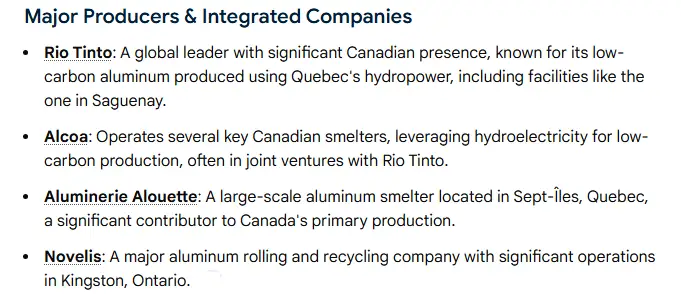
Canada’s aluminum sector is dominated by a small group of highly integrated primary producers and a larger set of specialized downstream firms; the ten companies that most shape the market today are Rio Tinto (Rio Tinto Alcan), Aluminerie Alouette, Alcoa Canada, Norsk Hydro / Hydro Aluminium Canada, Novelis (Kingston), Kaiser Aluminum (Canada operations), Exco Technologies, Dajcor Aluminum, Dynacast (Canadian plants), and Spectra Aluminum Products. These firms together account for the lion’s share of primary production, rolling, recycling, extrusion, tooling and die-casting capacity in Canada, and they are the names buyers, investors and policy makers watch most closely.
Quick reference: Top 10 aluminium companies in Canada
| Rank | Company name | Main Canada footprint | Core activities |
|---|---|---|---|
| 1 | Rio Tinto (Rio Tinto Alcan) | Multiple smelters in Quebec and BC | Primary smelting, ingots, plates, low-carbon aluminium products. |
| 2 | Aluminerie Alouette Inc. | Sept-Îles, Quebec | Large primary smelter (largest in the Americas), primary ingots, modernisation investment. |
| 3 | Alcoa Canada | Baie-Comeau, Deschambault, Bécancour (Québec) | Smelting, casting, ASI-certified low-carbon production. |
| 4 | Norsk Hydro / Hydro Aluminium Canada | Montreal office; interests in Canada | Extrusion, rolled products, aluminium metal activities; partner in some Canadian assets. |
| 5 | Novelis (Kingston, ON) | Kingston, Ontario | Rolling, recycling, flat-rolled products (automotive, packaging). |
| 6 | Kaiser Aluminum (Canada operations) | Canadian mills / sales offices | Engineered mill products, speciality rolling and extrusion support. |
| 7 | Exco Technologies | Ontario HQ and global footprint | Tooling and equipment for die-cast and extrusion; parts and assemblies. |
| 8 | Dajcor Aluminum | Chatham, Ontario | Large Canadian extruder, fabrication, anodizing, assemblies. |
| 9 | Dynacast (Canadian plants) | Peterborough, Montreal, others | Precision die-casting (aluminum, zinc), finishing. |
| 10 | Spectra Aluminum Products | Bradford / Toronto area | Extrusion, anodizing, fabrication, colour finishing. |
Note: “Top” blends scale and strategic influence. Canada’s primary smelters are concentrated in Quebec and are complemented by downstream players across Ontario and Quebec. National production statistics and industry context are from the Aluminium Association of Canada and Natural Resources Canada.
Company profiles (detailed, expert perspective)
Rio Tinto (Rio Tinto Alcan)
Rio Tinto’s Canadian aluminium business operates several smelters and downstream facilities in Quebec and British Columbia. The company is a major supplier of primary aluminium and invests in low-carbon aluminium products marketed to customers who pay premiums for low emissions content. Rio Tinto’s vertically integrated footprint and technology investments make it a reference point for pricing and quality in North America. For buyers seeking low-carbon primary metal or rolling ingots, Rio Tinto remains a first-tier counterparty.
Aluminerie Alouette Inc.
Aluminerie Alouette in Sept-Îles is the largest single aluminium smelter in the Americas by annual capacity. It operates with a consortium ownership structure (including Rio Tinto, Hydro Aluminium, AMAG, Marubeni and Quebec investment interests) and recently announced major modernization and long-term power supply agreements intended to secure competitive energy through 2045. These investments underscore Alouette’s strategic role in North American supply security and decarbonisation.
Alcoa Canada
Alcoa runs several smelters in Quebec (Baie-Comeau, Deschambault, Bécancour) and has achieved industry certifications for responsible, low-carbon production. Alcoa’s Canadian operations are integrated into its global footprint but are notable for low-emission primary aluminium production and long-standing relationships with downstream fabricators. Alcoa’s Canadian assets often serve automotive and industrial customers that require ASI-certified metal.
Norsk Hydro / Hydro Aluminium Canada
Hydro (Norsk Hydro) is active in Canada primarily through commercial offices and partnership stakes in plants. Hydro’s global leadership in extrusion and rolling complements Canada’s supply chain, and the company’s sustainability credentials and product portfolio are important to Canadian fabricators seeking energy-efficient supply.
Novelis (Kingston, Ontario)
Novelis operates the only large-scale flat-rolled aluminium mill in Canada (Kingston). The plant performs cold mill rolling, coil finishing and slitting and is central to automotive and beverage packaging supply chains in the region. Novelis is also a global recycling leader, providing high-recycled-content billets and coils to OEMs pursuing circular-material targets. Novelis’s Kingston facility has been certified under industry performance standards.
Kaiser Aluminum (Canadian presence)
Kaiser Aluminum supplies engineered, semi-fabricated mill products across North America and maintains facilities and sales operations that serve Canada. Its product focus—heat-treated and specialty alloys for aerospace, automotive and industrial uses—makes Kaiser an important supplier to Canadian manufacturers that demand technical alloys and tight tolerances.
Exco Technologies
Exco is a Toronto-listed company that supplies dies, tooling and components for extrusion and die-casting worldwide. Exco’s Canadian operations are a bridge between tooling capability and manufacturing: they design and build the tooling that allows high-quality aluminium components to be produced efficiently. For aluminum foundries and die-casters, Exco is a major technical partner.
Dajcor Aluminum
Dajcor is one of Canada’s largest extruders and fabricators, with a full-service business model spanning custom extrusions, anodizing, fabrication and assembly. It serves automotive, building, renewable energy and industrial markets and has grown rapidly since founding. For buyers needing integrated extrusion + finishing in Canada, Dajcor is one of the top domestic suppliers.
Dynacast (Canada plants)
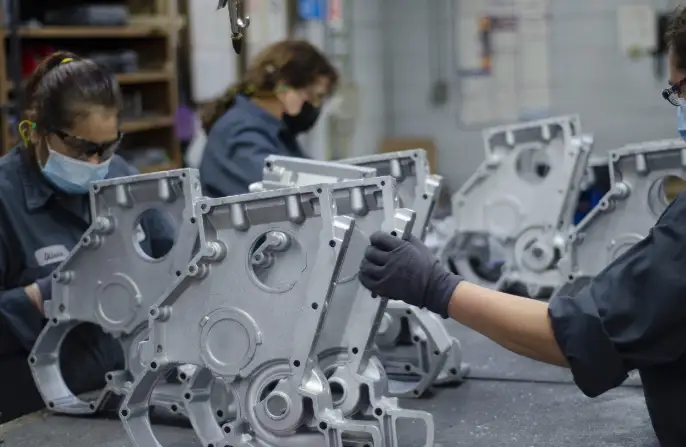
Dynacast’s Canadian locations produce precision die-cast components in aluminum and zinc for OEMs. The company’s facilities in Peterborough and Montreal are known for high-volume, detailed finishing capabilities. Dynacast is a go-to for small, high-precision parts where aluminum die-casting yields weight and performance advantages.
Spectra Aluminum Products
Spectra is a large, family-owned Canadian extruder and finishing house near Toronto, offering extrusions, anodizing, powder coating and assembly. It serves building, architectural and industrial markets and is frequently shortlisted for mid-to-large extrusion programs in southern Ontario.
Also read: Top 10 Aluminum Companies in The World.
Canada aluminium industry snapshot (key metrics and context)
| Metric | Latest figure / note | Source |
|---|---|---|
| Primary production (Canada) | ~3.3 million tonnes (2023 estimate) | Natural Resources Canada |
| World rank by primary aluminium | 4th largest producer | Aluminium Association of Canada |
| Number of primary smelters in Canada | 10 smelters, 9 in Quebec and 1 in British Columbia | Industry map and smelter listings |
| Employment supported | ~9,800 jobs in primary industry (direct) | Aluminium Association of Canada |
| Export value | > C$11 billion in exports from primary industry | Aluminium Association of Canada |
Canada’s primary aluminium sector benefits from abundant hydroelectric energy in Quebec, which gives Canadian smelters one of the lowest CO2 footprints per tonne of primary aluminium worldwide. That characteristic drives a “green premium” for Canadian metal in certain end markets.
Canada market structure and value chain
-
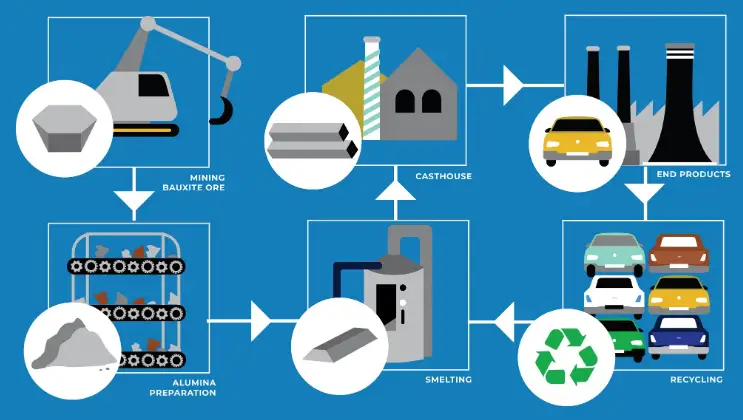
Bauxite & alumina: Mostly imported; Canada does not produce significant bauxite.
-
Primary smelting: Concentrated in Quebec and one smelter in BC; uses hydro power.
-
Remelting & recycling: Local recycling facilities and remelters (Novelis, independent recyclers).
-
Rolling & finishing: Novelis (Kingston) and other rolling mills; value-added producers (ex: Kaiser, Spectra).
-
Extrusion & fabrication: Numerous domestic extruders and fabricators (Dajcor, Spectra).
-
Die-casting & tooling: Dynacast, Exco and others supply precision components and tooling.
This structure explains why Canadian metal is attractive for automotive lightweighting and sustainable packaging customers.
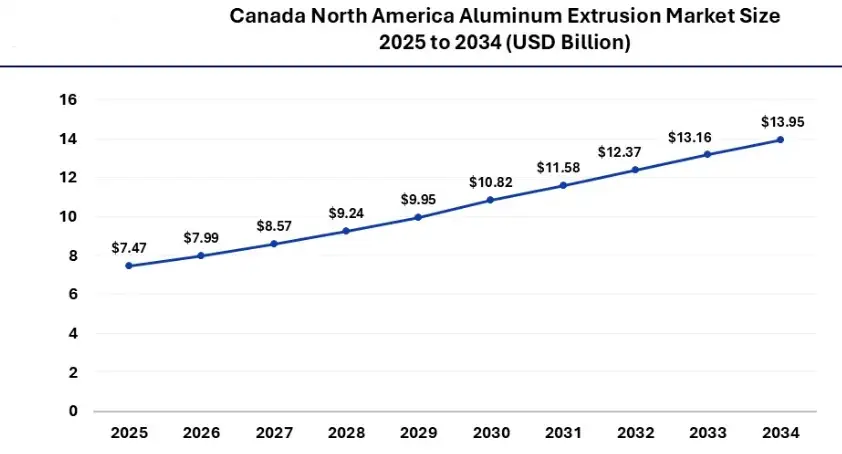
Five to ten year outlook
A. Near-term (1–3 years)
-
Modernization and capacity preservation: Major smelters (notably Alouette) are investing in modernization to secure long-term power and competitiveness, reducing closure risk.
-
Policy sensitivity: Trade measures and US tariff discussions can quickly shift North American flows; Canadian producers are active in policy dialogues.
B. Medium-term (3–7 years)
-
Green aluminium premium grows: Buyers in automotive and consumer packaging will increasingly pay premiums for low-CO2 aluminium; Canadian smelters are well placed to capture this due to hydro power.
-
Recycling ramp-up: Circular supply (high-recycled-content aluminium) will expand; downstream recycling and remelting create local feedstock and reduce import dependence. Novelis and other recyclers are central here.
C. Long-term (7–10 years)
-
Electrified, lighter vehicles: Demand from EV platforms for structural, crash-absorbent and battery housings will sustain growth for rolled and extruded aluminium.
-
Geopolitical diversification: Firms will diversify supply chains to reduce tariff and energy exposure; Canadian producers with stable hydro power have an edge.
Factors that influence Canadian aluminium prices
-
Primary energy costs (hydro contracts, transmission): energy is the largest operating cost for smelters.
-
Global aluminium LME price: spot and futures markets influence contract pricing.
-
Trade policy and tariffs: US/Canada trade measures shift flows and local premiums.
-
Currency fluctuations: CAD/USD moves affect export competitiveness.
-
Carbon pricing and regulatory costs: policies that price emissions raise marginal costs and change the value of low-carbon production.
-
Scrap availability and recycling economics: local scrap prices and collection systems determine remelt feedstock costs.
-
Technical alloy demand: aerospace and automotive demand for specialty alloys pushes price spreads.
-
Logistics and freight: port congestion and inland transport impact landed cost for downstream converters.
Two short analytical tables you can use right away
Table A: Representative smelter production / capacity (selected)
| Smelter / Company | Location | Approx annual capacity (tonnes) | Note |
|---|---|---|---|
| Aluminerie Alouette | Sept-Îles, QC | ~630,000 | Largest single smelter in the Americas; modernisation investment announced. |
| Rio Tinto plants (Arvida, Alma, Kitimat etc) | Quebec, BC | Multiple sites; combined large capacity | Rio Tinto operates several Canadian smelters and low-carbon product lines. |
| Alcoa Canada smelters | Baie-Comeau, Deschambault, Bécancour | Several hundred thousand combined | Alcoa has multiple Quebec assets and ASI certifications. |
Table B: Where downstream heavy processing occurs
| Activity | Typical province(s) | Representative companies |
|---|---|---|
| Rolling / flat-rolled | Ontario, Quebec | Novelis (Kingston) |
| Extrusion & anodizing | Ontario, Quebec | Dajcor, Spectra, numerous mid-size shops |
| Die-casting & precision parts | Ontario, Quebec | Dynacast, Exco tooling groups |
Trade, regulation and energy: where risk concentrates
-
Electricity contracts: long-term hydro contracts are critical; changes to provincial energy policy can alter competitiveness overnight. The Alouette long-term power agreement shows how energy security can enable capital investment.
-
US trade policy: exclusion lists, tariffs and quotas in the US are a recurring source of risk for Canadian exporters. The industry actively monitors and lobbies on trade measures.
-
Emissions accounting and certification: ASI certification and low-carbon product labels will increasingly determine market access and premium pricing.
Practical recommendations for buyers and investors
-
If low-carbon content matters: prioritize Quebec-sourced primary metal and request ASI or equivalent certification.
-
If your program needs integrated supply: prefer suppliers that combine extrusion, finishing and assembly (for instance, Dajcor or Spectra) to cut logistics and handling risk.
-
If you are investing: watch energy contracts and modernization announcements. Modernized smelters with guaranteed power are less likely to curtail capacity. The Alouette modernization and long-term power deal is a template.
Sources and evidence notes
-
Industry overview and membership, Aluminium Association of Canada.
-
Canada production and statistics, Natural Resources Canada.
-
Aluminerie Alouette capacity, shareholders and investment news.
-
Rio Tinto aluminium operations and low-carbon product mentions.
-
Alcoa Canada ASI certifications and Canadian smelter notes.
-
Novelis Kingston facility ASI certification and function.
-
Company profiles for Dajcor, Exco, Dynacast and Spectra (company websites and facility pages).
Closing summary
Canada’s aluminum industry is compact, strategically important and unusually low-carbon because of its hydro-powered smelters. The domestic ecosystem pairs world-scale primary producers with capable downstream fabricators and tooling businesses; together they support automotive lightweighting, sustainable packaging and industrial manufacturing. For purchasers and investors the key near-term signals are energy contracts, ASI credentials and downstream recycling capacity. Companies that combine scale, long-term power security and credible low-carbon certifications will define the market’s winners over the next decade.