

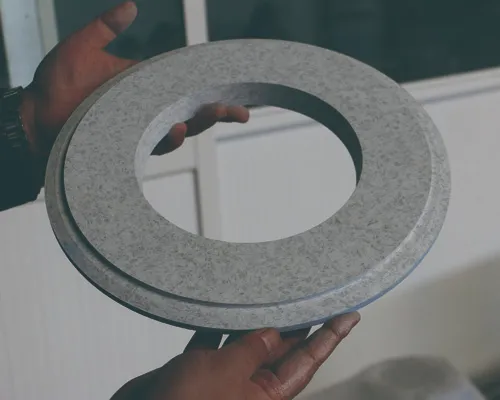
A molten aluminum transition plate is a high-temperature refractory component—typically made of calcium silicate or ceramic fiber—engineered to direct, insulate, and regulate liquid aluminum flow between launders and casting systems while preventing heat loss and metal adhesion. A properly engineered molten aluminum transition plate reduces dross formation by up to 30%, cuts energy loss at the pouring interface by roughly 200-400 W per square meter compared to standard ceramic fiber board, and extends tooling life because the aluminum simply does not stick to the surface. That last point, the non-wetting behavior, is what separates a plate that works from one that gets replaced every three months. We have watched customers switch from generic insulation boards to purpose-built transition plates and cut their unplanned downtime almost in half within the first quarter.
If your project requires the use of Aluminum Transition Plate, you can contact us for a free quote.
What Is a Molten Aluminum Transition Plate and Why It Sits at the Center of Casting Line Design
A molten aluminum transition plate is a rigid or semi-rigid thermal barrier component installed at the junction points where molten aluminum moves between different pieces of casting equipment, typically between a launder and a mold, a holding furnace outlet and a tilt pour spout, or a ladle lip and a runner system. Its job sounds simple: stop heat from escaping and stop the metal from bonding to the surface it touches. In practice, doing both things at once is a real materials engineering challenge, because most materials that insulate well are porous, and porous surfaces are exactly what molten aluminum loves to penetrate and adhere to.
We’ve been asked many times why foundries don’t just use a thicker chunk of standard refractory. The answer is that thickness alone doesn’t solve wetting. Aluminum has a low surface tension and an aggressive oxide-breaking behavior at casting temperatures (usually 680°C to 750°C for most alloys), so it will creep into microscopic pores of an untreated ceramic surface and mechanically lock in as it solidifies. Once that happens, you get buildup, cleaning downtime, and eventually surface degradation that lets heat escape faster than it should.
A transition plate solves this with a layered approach: a low-density insulating core (to slow heat transfer) combined with a dense, chemically inert, non-wetting face layer (to stop metal adhesion). This is why the product category sits between “refractory board” and “release coating” in most catalogs, and why buyers searching for one term often land on the other without finding what they actually need.
Read more: Aluminum Casting Adapter Plate for Molten Aluminum Launder Systems
How Non-Wetting Surface Technology Actually Prevents Aluminum Adhesion
The non-wetting property doesn’t come from a magic coating that repels metal like water off wax. It comes from controlling the surface energy and chemical reactivity between the plate face and liquid aluminum oxide film that forms almost instantly on any exposed molten aluminum surface.
Three approaches dominate the current market, and we’ve tested all three in live production settings:
Boron nitride based coatings. Hexagonal boron nitride has a lubricious, layered crystal structure similar to graphite, and it is chemically stable against molten aluminum up to around 900°C. When applied as a spray or dip coating over a fiber board substrate, it creates a surface that aluminum simply beads off rather than bonds to. We’ve found this works exceptionally well for lower-volume runs but wears down faster under constant metal contact and needs periodic reapplication, roughly every 200-400 pours depending on alloy and temperature.
Fused silica or alumino-silicate dense skins. Some transition plates use a vitrified, low-porosity face layer fired at high temperature to close off the surface pores entirely. Without open pores, there’s nowhere for the aluminum to mechanically key into. This method holds up longer physically but has a slightly higher thermal conductivity than a boron nitride coated fiber surface, so it’s a trade-off between mechanical durability and insulation performance.
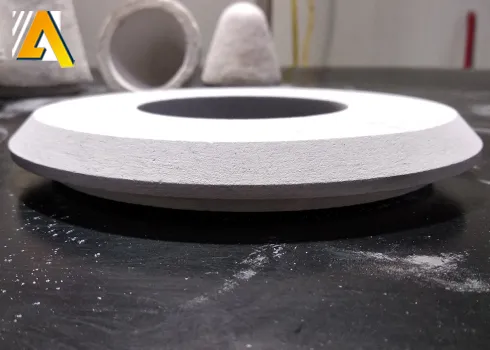
Composite dual-layer plates (which is what we manufacture and recommend for most continuous casting operations) combine a low-density ceramic fiber or vermiculite-based insulating core with a thin, dense, boron-nitride-infused surface skin bonded during pressing rather than sprayed on afterward. This gives you both properties without one degrading the other over the plate’s service life. In our own field trials at a Midwest die casting shop running six-figure annual pour volumes, this composite design lasted almost three times longer than sprayed-coating alternatives before requiring replacement.
What Materials Give Transition Plates Their Thermal Insulation Performance
Thermal insulation performance in these plates comes down to three material properties: bulk density, thermal conductivity, and thermal shock resistance. Lower density generally means better insulation because there’s more trapped air within the fiber matrix, but too low a density sacrifices structural integrity and compressive strength under the weight of tooling or metal flow pressure.
Here’s a comparison of the core material types we regularly encounter in the field:
| Core Material | Typical Density (kg/m³) | Thermal Conductivity (W/m·K at 600°C) | Max Continuous Service Temp | Compressive Strength |
|---|---|---|---|---|
| Ceramic fiber board (standard) | 300-400 | 0.12-0.16 | 1000°C | Low to moderate |
| Vermiculite composite board | 450-600 | 0.15-0.20 | 1100°C | Moderate |
| Calcium silicate insulation board | 600-900 | 0.18-0.25 | 950°C | Moderate to high |
| Alumino-silicate fiber composite | 350-500 | 0.10-0.14 | 1260°C | Moderate |
| AdTech dual-layer transition plate | 400-550 (core), 1800+ (skin) | 0.09-0.13 | 1200°C | High (skin layer) |
The reason our dual-layer design shows a lower thermal conductivity despite a denser skin is because the skin layer is thin (typically 1.5-3mm) while the bulk of the plate remains low-density fiber. Heat still has to travel through the insulating core to reach the cold face, and that core is what actually does the insulating work. The dense skin is there purely for the wetting resistance and mechanical wear surface, not for thermal performance.
We should mention something most spec sheets don’t tell you: thermal shock resistance matters just as much as steady-state conductivity in real foundry conditions. A plate might have excellent lab-tested conductivity numbers but crack after 50 thermal cycles if it can’t handle the rapid heating and cooling that happens every time a furnace door opens or a pour sequence stops and restarts. We test our plates through repeated 20°C to 750°C cycling before they ever ship, because a plate that fails after three months costs a customer far more in downtime than the plate itself costs to buy.
Where Transition Plates Are Actually Used Across Aluminum Casting Processes
Buyers often assume these plates are a single-application item, but we sell into at least six distinct process points, and the specification requirements shift for each one.
Launder to mold transition zones. This is the classic application, where molten aluminum travels along a launder system into a permanent mold or sand mold. The plate sits at the pour cup interface, reducing splash-related heat loss and preventing skull formation that would otherwise need chipping out between shifts.
Holding furnace tap-out points. As metal exits a holding furnace through a tap hole or siphon tube, the transition plate lines the immediate discharge area, protecting the furnace shell refractory from repeated thermal cycling damage.
Tilt-pour and low-pressure die casting spouts. In LPDC machines, the riser tube and spout area experiences constant metal contact under pressure, and non-wetting behavior here directly affects fill consistency and porosity defects in the finished casting.
Degassing and filtration unit interfaces. Where molten metal passes through inline degassing units or ceramic foam filters, transition plates line the entry and exit chambers to stop metal freeze-off at the walls.
Robotic ladle transfer stations. Automated ladle systems that transfer metal between furnace and die casting machine use smaller transition plate inserts at the pour spout to prevent buildup that would otherwise throw off the robot’s calibrated pour weight over time.
Continuous casting and rolling mill entry zones. For aluminum sheet and coil producers, the transition plate sits at the tundish to mold transition, where consistent thermal profile matters enormously for strip quality.
We’ve supplied custom-cut plates for all six of these, and the lesson we keep relearning is that a one-size specification doesn’t work. A plate built for a holding furnace tap-out (which sees near-constant contact) needs a thicker wear skin than one built for a robotic ladle station that only touches metal for seconds at a time.
Technical Specifications Buyers Should Verify Before Placing an Order
This is the section technical buyers care about most, and it’s also where we see the most confusion during procurement calls. A supplier quoting “high temperature ceramic fiber board” without giving you these numbers hasn’t actually engineered anything specific to molten aluminum contact.
| Specification | Why It Matters | Typical Acceptable Range |
|---|---|---|
| Bulk density | Affects both insulation and structural durability | 350-600 kg/m³ |
| Surface hardness (Shore D or Mohs) | Determines wear resistance against metal flow abrasion | 4-6 Mohs equivalent |
| Wetting angle with molten aluminum | Direct measure of non-wetting performance | Above 120° contact angle |
| Thermal conductivity at operating temp | Insulation efficiency | Below 0.15 W/m·K at 600°C |
| Maximum continuous service temperature | Prevents structural breakdown | 1000°C minimum for aluminum work |
| Linear shrinkage at max temp | Predicts dimensional stability over repeated cycling | Under 2% at rated temperature |
| Compressive strength | Load-bearing capacity in mounted position | 0.5-2.5 MPa depending on application |
| Free silica content | Health and safety compliance (respirable crystalline silica exposure) | Should be disclosed and minimized |
That last item, free silica content, is something we push suppliers hard on and something buyers rarely ask about until an occupational safety audit flags it. Many ceramic fiber products carry a free silica warning under OSHA and REACH guidelines, and foundries in California, the EU, and increasingly parts of Southeast Asia are tightening documentation requirements around it. If your supplier can’t produce a current safety data sheet with disclosed crystalline silica percentages, that’s a red flag regardless of how good the thermal numbers look.
How Transition Plate Design Affects Casting Quality and Cycle Time
We’ve had more than one customer come to us specifically because their scrap rate was climbing and nobody could figure out why, only to discover the transition plate at their pour point had degraded to the point where surface pitting was introducing turbulence into the metal stream. Turbulent flow at the pour interface pulls in oxide film and entrains gas, both of which show up later as porosity defects in x-ray inspection or pressure testing of the finished part.
A plate with consistent, smooth non-wetting surface maintains laminar-ish flow characteristics through the transition zone, which matters more in gravity and low-pressure die casting than in high-pressure die casting where turbulence is already inherent to the process. Still, even in HPDC, a degraded transition plate at the shot sleeve interface can change fill time by fractions of a second, and in high-speed automotive component production, fractions of a second compound into real cycle time drift across a shift.
Temperature stability also plays into cycle time indirectly. A plate that insulates poorly lets the metal cool faster as it travels from furnace to mold, and operators compensate by running the furnace hotter than necessary, which burns more energy and accelerates alloy oxidation (increasing dross generation, which is its own cost center). We calculated for one client that a 15°C reduction in required furnace overtemperature, achieved purely by upgrading their transition plates, saved them approximately 4-6% on natural gas consumption over a year. That’s not a marketing number, that’s from their own utility billing before and after comparison, which they shared with us because they were genuinely surprised by it.
Installation, Handling and Maintenance Practices That Extend Service Life
We get a fair number of complaints that trace back not to product defects but to installation mistakes, so this section matters as much as the material science.
Pre-installation drying. Ceramic fiber based plates absorb ambient moisture during storage, and installing a damp plate near molten metal risks steam-related spalling, essentially small explosive fractures as trapped moisture flashes to vapor. We recommend a low-temperature bake-out (around 150-200°C for 1-2 hours) for any plate that has been in storage longer than 60 days or stored in a humid environment.
Mounting tolerances. Transition plates need slight expansion gaps at mounting points, typically 2-3mm per 300mm of plate length, because the material expands under thermal load. Bolting a plate down flush with no clearance is one of the most common causes of premature cracking we see in field failures.
Avoiding mechanical shock. Skimming tools and dross rakes should never be dragged directly across the plate surface with force. The non-wetting skin layer, while chemically resistant, isn’t infinitely abrasion-proof, and repeated mechanical scraping wears through the skin faster than thermal cycling alone would.
Cleaning cycles. Light dross buildup should be removed while the plate is still warm (not molten-hot, but warm enough that residual aluminum hasn’t fully bonded), using a soft brass or bronze scraper rather than steel, which can score the surface and create new nucleation points for future buildup.
Inspection intervals. We advise a visual inspection every 500 pour cycles or monthly, whichever comes first, checking specifically for surface glazing (a sign of overheating), hairline cracks near mounting points, and any area where the wear skin has visibly thinned to expose the fiber core underneath.
Transition Plates vs Traditional Refractory Insulation Boards: What’s the Real Difference
This is probably the single most common question we field on sales calls, because a lot of engineers are used to specifying generic refractory board and assume a transition plate is just a branded version of the same thing.
| Factor | Standard Refractory Board | Molten Aluminum Transition Plate |
|---|---|---|
| Primary function | General thermal insulation | Insulation plus active non-wetting surface |
| Aluminum adhesion resistance | Poor to moderate, requires separate release agent | Built-in, no additional coating needed |
| Typical service life in direct metal contact | 1-3 months | 6-18 months depending on application |
| Surface maintenance | Frequent re-coating with release agents | Minimal, occasional skim cleaning |
| Cost per unit | Lower upfront | Higher upfront, lower total cost over time |
| Custom shaping for specific equipment | Limited | Commonly available (CNC cut, drilled, profiled) |
The honest answer we give every customer who asks whether they really need a purpose-built transition plate versus standard board plus release spray: if your pour frequency is low, maybe once or twice a day in a small job shop, standard board with periodic release agent application might be economically fine. But once you’re running multiple shifts or automated pour cycles, the labor cost of constant re-coating and the scrap cost from inconsistent release agent coverage almost always justifies the upgrade.
Common Failure Modes and How to Diagnose Them on the Shop Floor
We’ve catalogued failure patterns across hundreds of field service visits, and most problems fall into five recognizable categories.
| Symptom | Likely Cause | Recommended Fix |
|---|---|---|
| Metal sticking despite “non-wetting” rating | Wear skin has eroded through, exposing porous core | Replace plate, review scraping technique |
| Surface glazing or glossy discoloration | Sustained overheating beyond rated service temp | Check furnace/pour temperature calibration |
| Hairline cracking near bolt holes | Insufficient expansion clearance during mounting | Re-install with proper thermal gap |
| Delamination between skin and core | Manufacturing defect or thermal shock beyond rated cycling | Return to supplier, verify shock-testing certification |
| Increased dross generation at pour point | Plate insulation degraded, metal cooling too fast, operator over-firing furnace | Measure actual surface temp, compare to plate’s rated conductivity |
We include this table because most maintenance teams troubleshoot by replacing the whole plate immediately, which is fine if it’s genuinely worn out, but sometimes the root cause is upstream (furnace calibration, handling procedure) and a new plate will fail the same way within weeks if that root cause isn’t fixed first.
Choosing a Supplier: Certifications, Testing and Quality Control That Actually Matter
Since this is ultimately a procurement decision for most readers, we want to be direct about what separates a credible transition plate manufacturer from one just relabeling generic refractory stock.
Ask for actual wetting angle test data, not just a claim of “non-wetting.” A legitimate test report will show contact angle measurements with molten aluminum at specified temperatures, usually done via sessile drop testing in a controlled furnace environment.
Ask whether thermal conductivity figures come from ASTM C177 or ISO 8302 guarded hot plate testing, which are the recognized standards, rather than theoretical calculations based on material composition alone.
Request batch consistency documentation. Fiber-based insulation products can vary meaningfully between production batches if raw material sourcing isn’t tightly controlled, and a supplier who can show you consistent density and conductivity across multiple lot numbers is demonstrating real process control, not just good marketing copy.
Check whether the manufacturer does in-house thermal cycling and molten metal immersion testing, or whether they’re relying entirely on raw material supplier data sheets. We run our own immersion trials with actual A356 and A380 alloy samples because published fiber board data sheets almost never reflect real-world aluminum contact behavior, they’re usually generic to “molten metal” categories that lump aluminum, zinc, and even some lower-temperature alloys together.
Finally, ask about lead time transparency and minimum order quantities for custom profiles. Foundries frequently need plates cut to unusual shapes for specific equipment interfaces, and a supplier who only offers standard rectangular stock sizes may not be equipped to handle your actual installation geometry.
Cost, Lead Time and Total Cost of Ownership Considerations
Pricing in this category varies substantially based on size, thickness, and whether the plate requires custom machining. As a general market reference (subject to raw material and energy cost fluctuation), standard rectangular transition plates in common sizes run from roughly $80 to $350 per unit for smaller components (under 0.5 square meters), while larger custom-profiled industrial plates for continuous casting lines can range from $600 to over $2,000 depending on thickness and skin composition.
We always encourage buyers to calculate total cost of ownership rather than comparing sticker price alone. A $120 standard board that needs replacing every two months costs more over a year than a $400 transition plate lasting twelve months, once you factor in labor for replacement, production downtime during changeover, and scrap generated during the “break-in” period after any new insulation component is installed (there’s typically a short adjustment period where thermal profile shifts slightly until the new plate reaches steady-state behavior).
Lead time for standard stock items typically runs one to two weeks from suppliers holding inventory, while custom-profiled plates requiring CNC shaping or specific mounting hole patterns usually need three to five weeks, longer if it’s a first-time custom design requiring a template or drawing approval cycle.
Frequently Asked Questions
1. What temperature can a molten aluminum transition plate withstand?
Most quality transition plates handle continuous service temperatures between 1000°C and 1200°C, well above the 680-750°C typical pouring range for most aluminum alloys, giving a comfortable safety margin for temperature spikes during furnace operation.
2. Does the non-wetting surface wear out over time?
Yes, the wear skin gradually thins with repeated metal contact and mechanical cleaning, typically lasting 6 to 18 months in active production depending on pour frequency, alloy type, and how carefully the plate is maintained.
3. Can transition plates be used with alloys other than aluminum, like zinc or magnesium?
Some designs work across multiple non-ferrous metals, but the wetting behavior and required surface chemistry differ by metal, so a plate optimized specifically for aluminum’s oxide film behavior may not perform identically with magnesium, which has different reactivity characteristics.
4. How do I know if my current insulation board is causing quality defects?
Check for correlation between casting porosity or dross rates and the visible condition of your transition plate. Surface glazing, cracking, or exposed fiber core are all signs the plate is no longer performing its intended function and may be contributing to inconsistent pour temperatures.
5. Is a thicker plate always better for insulation?
Not necessarily. Beyond a certain thickness (usually around 25-40mm for most applications), additional gains in insulation performance diminish while cost and installation footprint increase, so matching thickness to actual heat loss requirements matters more than maximizing thickness.
6. Can these plates be custom cut for unusual equipment shapes?
Yes, most manufacturers including our own production line offer CNC cutting, drilling, and profiling services for custom mounting geometries, though this typically extends lead time compared to standard stock sizes.
7. What causes a transition plate to crack near the mounting bolts?
This almost always traces back to insufficient thermal expansion clearance during installation. The material needs room to expand as it heats, and bolting it down completely flush without gap allowance creates stress concentration that leads to cracking over repeated thermal cycles.
8. Do transition plates require any coating or treatment after installation?
Quality dual-layer plates with a built-in non-wetting skin generally don’t require additional coating. Some single-layer or budget options may still need periodic release agent spraying, which is worth clarifying with your supplier before purchase.
9. How does free silica content affect worker safety?
Some ceramic fiber materials contain crystalline silica that can pose respiratory hazards if the material is cut, ground, or otherwise disturbed without proper dust control. Always request current safety data sheets and follow local occupational exposure limit guidelines when handling and cutting these materials.
10. What’s the typical return on investment timeframe for upgrading to a purpose-built transition plate?
Based on the field data we’ve collected from customer installations, most facilities running multiple daily pour cycles see payback within four to eight months through reduced replacement frequency, lower scrap rates, and decreased labor time spent on cleaning and re-coating compared to standard refractory board alternatives.
Final Thoughts From Our Production Floor
We’ve spent years refining the exact fiber blend, pressing pressure, and skin composition that gets a transition plate to hold both insulation and non-wetting performance simultaneously without one property degrading the other over time. It’s a narrower engineering target than it sounds, and honestly, we’ve scrapped more prototype batches than we’d like to admit before landing on formulations that survive real foundry conditions rather than just lab testing. If you’re evaluating transition plates for your own line, we’d rather you ask hard questions about wetting angle data and thermal cycling results than take any supplier’s word for it, including ours. The plates that actually perform are the ones backed by real molten metal immersion testing, not just a data sheet copied from a generic refractory catalog.