

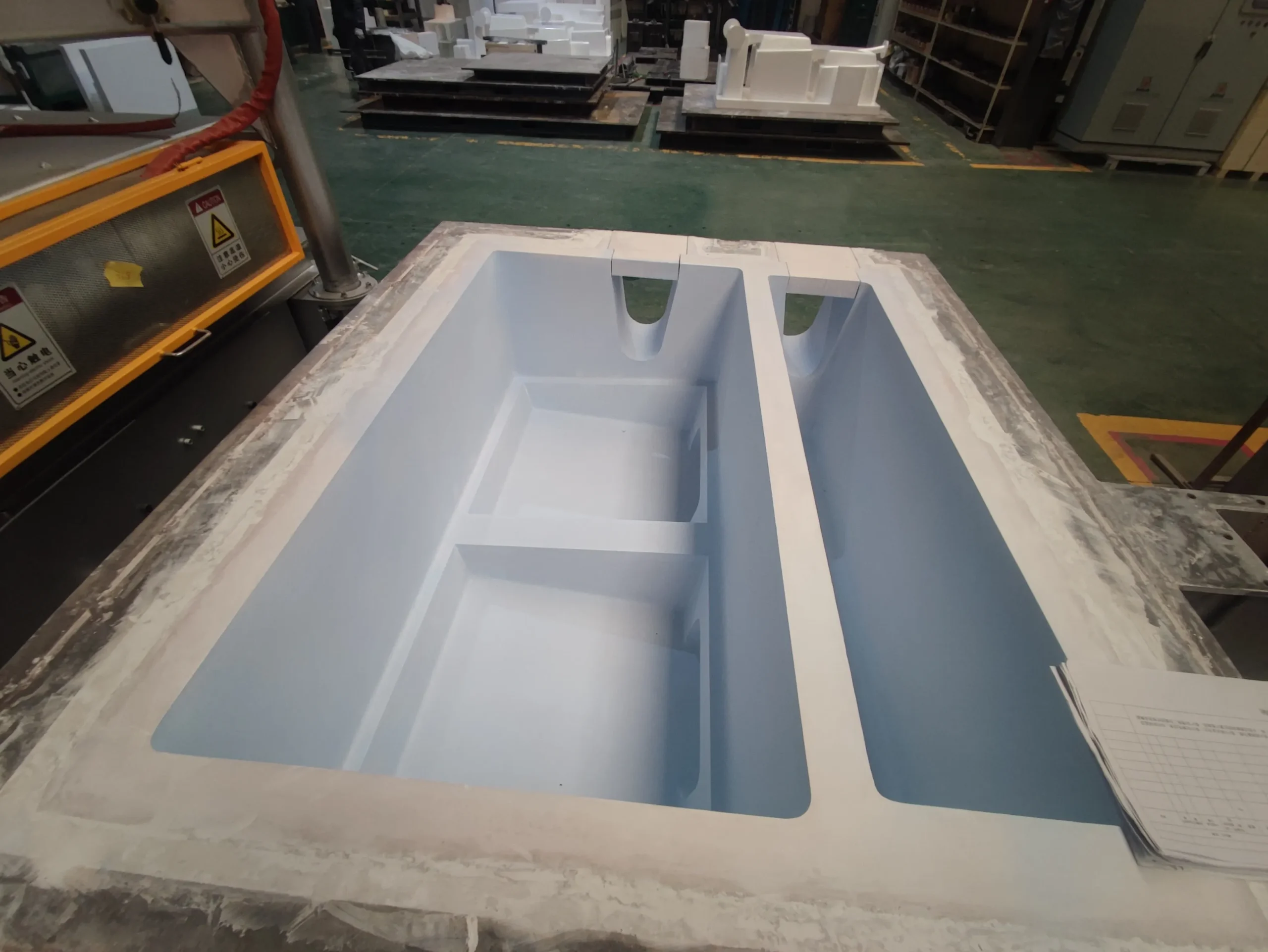
A molten aluminum filter box is an inline filtration unit designed to house ceramic foam filters or tubular filter cartridges, ensuring the removal of non-metallic inclusions and impurities from liquid aluminum before it enters the casting mold. A molten aluminum filter box system removes non-metallic inclusions, oxide films, and trapped gas from liquid aluminum before it reaches the casting mold, and after twenty years of building these units for foundries across North America, Europe, and Southeast Asia, we can tell you plainly: the box itself matters less than how well it’s matched to your furnace output, alloy chemistry, and casting speed. A poorly sized filter box will crack under thermal shock within weeks. A properly engineered one, built with the right refractory lining and correct filter seat geometry, will run for months without a single rejected heat.
If your project requires the use of Molten Aluminum Filter Box System, you can contact us for a free quote.
What Exactly Is a Molten Aluminum Filter Box System?
A filter box system is a refractory-lined enclosure positioned in the metal flow path, typically between the launder (the trough carrying molten metal from the furnace) and the casting machine or holding furnace. Its job is straightforward on paper: hold a ceramic foam filter, ceramic tube filter, or filter plate in a fixed position so molten aluminum passes through it under controlled flow.
In practice, the box has to do several things simultaneously. It has to resist thermal cycling without spalling. It has to seal tightly enough that metal doesn’t bypass the filter media through gaps. It has to allow quick filter changes during production changeovers, because a clogged filter mid-run means lost heats and wasted alloy. And it has to be built to a footprint that matches your existing launder system, because retrofitting an entire casting line just to accommodate one component isn’t something any plant manager wants to hear.
We’ve walked into facilities where the “filter box problem” everyone blamed on the filter media was actually a box design issue, uneven flow distribution caused by an undersized inlet chamber, or a seal gap that let unfiltered metal sneak past the edges. The box and the filter are a system, not two separate purchases, and treating them that way is where most quality issues get solved.
How the Filtration Process Actually Works
Molten aluminum straight from the reverb furnace or tilting rotary furnace carries a mix of contaminants: aluminum oxide (Al2O3) films, spinel inclusions, carbides, borides from grain refiner additions, and dissolved hydrogen gas. These impurities cause porosity, poor surface finish, reduced fatigue strength, and machining defects in the finished casting.
The filter box channels this metal through a ceramic filter medium with a controlled pore structure. As aluminum passes through, three mechanisms trap the contaminants:
Cake filtration happens at the filter’s inlet face, where larger particles build up and form a filtering cake that then helps trap even smaller particles as the run continues. Depth filtration occurs inside the ceramic structure itself, where the tortuous internal pathways of a foam filter physically capture particles smaller than the visible pore size. Bulk filtration, sometimes called deep bed filtration, relies on the fact that certain inclusions have chemical affinity for the filter material and stick to the ceramic surface even when the particle is technically small enough to pass through the pore geometry.
This is why filter selection isn’t just “pick the smallest pore size available.” A 30 PPI (pores per inch) foam filter run at too high a flow velocity will actually filter worse than a 20 PPI filter running at the correct rate, because turbulence disrupts cake formation. We size flow rate to filter face area first, then choose pore density, and this order of operations trips up a surprising number of first-time buyers.
Core Components of a Custom Filter Box
| Component | Function | Typical Material |
|---|---|---|
| Outer steel shell | Structural support, mounting interface | Carbon steel or stainless steel plate |
| Refractory lining | Thermal insulation, contact surface for molten metal | High-alumina castable, fused silica board |
| Filter seat / support ledge | Holds filter media in fixed position | Precast refractory or fiber board gasket |
| Inlet chamber | Distributes metal evenly across filter face | Lined steel with tapered geometry |
| Outlet chamber | Collects filtered metal, transitions to downstream launder | Lined steel |
| Preheat access port | Allows torch preheating before casting starts | Steel with removable cover |
| Filter media | The actual filtration element | Ceramic foam, ceramic tube, or bonded particle plate |
| Sealing gasket | Prevents bypass flow around filter edges | Ceramic fiber rope or board |
Each of these pieces has to be engineered together. We’ve seen boxes where the refractory lining was excellent but the inlet chamber geometry created a jet of metal that hit the center of the filter face at high velocity while the edges saw almost no flow, essentially wasting 60% of the filter’s surface area and shortening its service life dramatically.
Read more: Die Casting Melt Filter Box Liner, Non-Wetting, High Thermal Insulation
Types of Filter Media Used in These Systems
Ceramic Foam Filters (CFF)
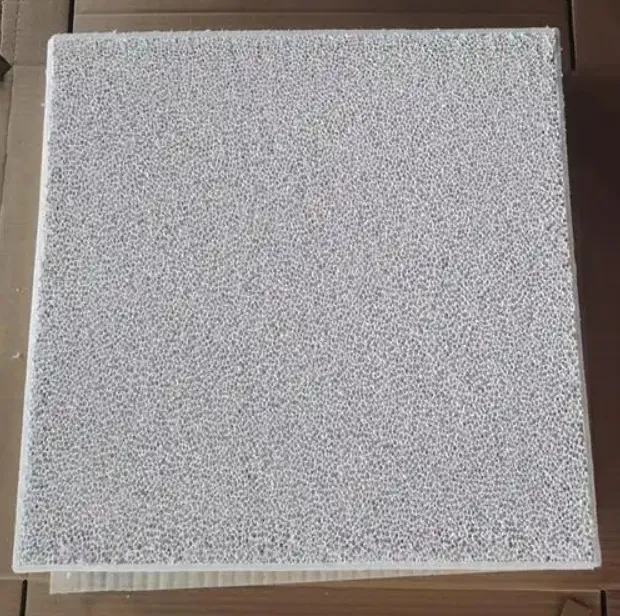
These remain the industry standard for aluminum casting because of their high filtration efficiency relative to cost. They’re manufactured by impregnating polyurethane foam with a ceramic slurry, then burning off the foam and firing the ceramic structure. Common pore densities run from 10 PPI to 50 PPI, with 20-30 PPI being the most common range for general aluminum casting work.
Ceramic Tube Filters
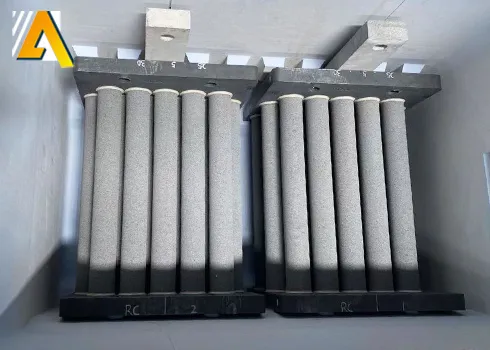
Used more often in gravity die casting and low-pressure die casting setups, tube filters offer a different flow pattern and are sometimes preferred when dealing with metal that has a heavier inclusion load, since the tube geometry resists clogging differently than a flat foam panel.
Bonded Particle / Deep Bed Filters
These provide the highest filtration efficiency, capable of catching particles down in the single-digit micron range, but they come with higher pressure drop and cost more per unit. We typically recommend these only when the customer has aerospace or automotive structural casting specifications requiring extremely low inclusion counts.
| Filter Type | Pore Range | Efficiency Level | Typical Application |
|---|---|---|---|
| Ceramic Foam (CFF) | 10-50 PPI | Good to very good | General sand, permanent mold, DC casting |
| Ceramic Tube | Variable | Good | Gravity die casting, low pressure casting |
| Bonded Particle | Fine graded | Excellent | Aerospace, high-integrity structural parts |
| Rigid Media Filter | Fine graded | Excellent | Continuous casting, wheel casting |
Custom Design Considerations We Factor Into Every Project
No two casting lines are identical, and that’s really the whole argument for custom design over catalog parts. When our engineering team scopes a new filter box project, we work through a checklist that covers more ground than most customers initially expect.
Flow rate and furnace capacity. A box built for a 2-ton/hour launder won’t perform correctly bolted onto a line running 8 tons/hour. We calculate required filter face area based on peak flow rate, not average flow rate, because casting operations rarely run at a perfectly steady state.
Alloy chemistry. High-magnesium alloys (5xxx series) behave differently in a filter box than standard 6xxx or 3xxx series aluminum. Magnesium oxide films are stickier and can build up faster on certain refractory linings, so we sometimes adjust the lining material specification based on the alloy family a customer runs most frequently.
Physical footprint and headroom. Retrofitting into an existing casting line means working around existing launder height, floor clearance, and crane access for filter changes. We’ve had projects where the entire box had to be redesigned around a 4-inch height restriction imposed by an overhead structure nobody mentioned until our installation team showed up with the original design.
Preheating method. Some plants preheat with a portable torch, others have a fixed gas preheat manifold. The box’s preheat port location and size needs to match whichever method the plant actually uses, not the method we assume they use.
Filter change frequency and access. High-volume die casting operations might change filters every shift. Continuous casting operations might run a filter for a full campaign lasting days. The clamping mechanism, whether it’s a simple wedge lock or a full hydraulic clamp assembly, gets specified based on how often operators will actually be opening that box.
Metal cleanliness targets. Customers supplying automotive structural or aerospace castings need documented inclusion count reduction, sometimes verified through LiMCA (Liquid Metal Cleanliness Analyzer) testing or PoDFA (Porous Disc Filtration Apparatus) analysis. This drives filter media selection and sometimes leads us to recommend a two-stage filtration setup rather than a single filter box.
Read more:Industrial Aluminum Liquid Filter Box for Inline Filtration, Casting Lines
Materials of Construction: Why Refractory Selection Matters More Than People Think
The refractory lining inside a filter box takes constant thermal cycling, chemical attack from molten aluminum and its oxide byproducts, and mechanical stress from filter loading and metal flow. Getting this wrong is the single most common reason we get called in to fix somebody else’s failing installation.
| Lining Material | Max Service Temp | Thermal Shock Resistance | Notes |
|---|---|---|---|
| High-alumina castable (70-90% Al2O3) | 1650°C+ | Good | Most common choice, cost-effective |
| Fused silica board | 1200°C | Excellent | Good for areas needing rapid temp changes |
| Insulating firebrick backup | 1400°C | Moderate | Used as secondary insulation layer, not hot face |
| Ceramic fiber board | 1260°C | Excellent | Common at seal points and gaskets |
| Corundum-mullite castable | 1700°C+ | Very good | Premium option for continuous high-throughput lines |
We’ve moved away from standard fireclay linings entirely for aluminum applications over the past decade. Aluminum’s affinity for reacting with silica in certain refractory formulations causes accelerated wear that customers running steel or iron filtration systems never encounter. If your supplier is quoting a generic “furnace refractory” without specifying aluminum-compatible chemistry, that’s worth questioning directly.
The Manufacturing Process from Design to Delivery
Building a custom filter box isn’t a rush job, and any manufacturer promising a two-week turnaround on a fully custom unit is probably cutting corners somewhere in the curing schedule.
Step one, engineering review. We take the customer’s furnace output data, launder drawings, alloy specifications, and physical space constraints and produce a preliminary design. This usually goes through two or three revision rounds before both sides sign off.
Step two, steel fabrication. The outer shell gets cut, welded, and fitted with mounting brackets, preheat ports, and access panels according to the approved drawing. We pressure test weld seams before moving to the lining stage.
Step three, refractory installation. This is where patience actually matters. Castable refractory needs controlled curing time, typically 24 hours minimum before initial demolding, followed by a carefully staged dry-out schedule that can run anywhere from 48 to 96 hours depending on lining thickness. Rush this step and you get steam explosions or cracking the first time the box sees molten metal.
Step four, filter seat machining and fitting. The seat that holds the ceramic filter needs tight tolerances, usually within a couple millimeters, to prevent bypass flow. We machine or hand-finish this to match the specific filter dimensions the customer will be using.
Step five, quality inspection. Dimensional check against drawing, refractory dry-out verification, weld inspection, and a final fit check with a sample filter before the unit ships.
Step six, packaging and shipping. Refractory-lined boxes need careful crating to prevent lining damage during transport. We’ve seen units arrive at customer sites with hairline cracks purely from inadequate packaging by manufacturers who treat it like shipping a steel weldment rather than a lined refractory vessel.
Installation and Startup: What Actually Goes Wrong in the Field
Installation problems account for more early-life filter box failures than manufacturing defects, in our direct experience. A few patterns show up repeatedly across different plants and different countries.
Improper preheating is probably the number one issue. Cold-starting a refractory-lined box with molten aluminum, or preheating too fast, causes moisture trapped in the lining to flash to steam and crack the refractory from the inside out. We provide a preheat curve with every unit, and we genuinely mean it when we tell customers to follow it even when production pressure makes people want to skip steps.
Misalignment with the existing launder is the second common problem. Even a small vertical offset between the box inlet and the upstream launder creates turbulent flow entering the filter, which shortens filter life and increases bypass risk. Field verification of alignment before first pour, not after, saves a lot of headaches.
Seal failure around the filter media itself, usually from using the wrong gasket material or over-tightening the clamp mechanism and cracking the ceramic filter edge, shows up often enough that we now include a torque specification sheet with every clamping assembly we ship.
Maintenance and Filter Replacement Schedules
| Casting Operation Type | Typical Filter Change Interval | Box Inspection Interval |
|---|---|---|
| High-pressure die casting | Every shift to daily | Weekly visual, monthly full inspection |
| Sand casting / permanent mold | Daily to every 2-3 days | Weekly |
| DC (direct chill) ingot casting | Per cast (several hours to full campaign) | After each campaign |
| Continuous strip/rod casting | Days to weeks (campaign-based) | Scheduled shutdown inspection |
We recommend logging pressure drop across the filter if your system has the instrumentation for it. A rising pressure differential is the clearest early warning sign that a filter is loading up with inclusions and approaching the point where flow restriction will start affecting cast quality. Plants that track this data catch filter changes at the optimal time instead of guessing based on shift schedules alone.
Box maintenance itself is less frequent but shouldn’t be ignored. Refractory lining does erode over time, particularly at the metal line where oxidation and mechanical wear from filter changes concentrate stress. We generally tell customers to plan for a full reline somewhere between 12 and 24 months of continuous service, though high-throughput operations running aggressive alloys sometimes need it sooner.
Common Defects Traced Back to Filter Box Problems
| Defect Observed in Casting | Likely Filter Box Root Cause |
|---|---|
| Oxide inclusions despite new filter | Bypass flow from poor seal, cracked filter edge |
| Inconsistent porosity across batches | Uneven flow distribution from inlet chamber design |
| Filter cracking on installation | Filter seat tolerance too tight or misaligned |
| Metal freezing in box during changeover | Inadequate lining insulation, box too large for flow rate |
| Refractory spalling after weeks of service | Improper preheat cycle at commissioning |
| Reduced flow rate over short run time | Wrong pore density for actual metal cleanliness level |
Filter Box Systems Compared to Other Aluminum Filtration Methods
Some plants ask us whether they even need a dedicated filter box versus other filtration approaches like in-line strainers or rotary degassing units combined with basic screening.
| Method | Filtration Efficiency | Capital Cost | Best Fit |
|---|---|---|---|
| Filter box with ceramic foam filter | High | Moderate | Most general aluminum casting operations |
| Simple glass cloth strainer | Low to moderate | Low | Small-scale, low-spec castings only |
| Rigid media deep bed filter box | Very high | High | Aerospace, critical structural applications |
| Rotary degasser only (no filtration) | Removes gas, not solid inclusions | Moderate | Should be paired with filtration, not a substitute |
| Tube filter system | High | Moderate to high | Gravity/low-pressure die casting |
A rotary degasser and a filter box actually solve different problems, gas versus solid inclusions, and we frequently recommend running both in sequence rather than choosing one over the other. Customers sometimes come to us thinking they need to pick, when the correct answer for their quality targets is both.
Choosing a Manufacturer: Questions Worth Asking
We’ll be direct here, since this is essentially a buying decision article whether the search intent is technical research or supplier sourcing. When evaluating a filter box manufacturer, a few questions separate serious suppliers from ones assembling generic parts.
Ask what refractory brand and specification they use, and ask for the technical data sheet, not just a marketing claim of “high-alumina castable.” Ask how they handle the dry-out and preheat schedule, and whether that schedule ships with the unit or requires a separate consultation. Ask whether they’ve built for your specific alloy family before, since 5xxx series magnesium alloys and standard 6xxx series casting alloys don’t behave identically in a filter environment. Ask about lead time honestly, since anything under four weeks for a fully custom lined unit should raise questions about cure time being compressed. And ask for references from plants running similar tonnage to yours, since a manufacturer who only builds small-batch foundry units may not have solved the flow distribution challenges that come with high-volume DC casting lines.
At AdTech, we walk every new customer through their existing launder system data before quoting anything, because a filter box quoted without that context is really just a guess dressed up as an engineering drawing.
Cost Factors Buyers Should Understand
Pricing on a custom filter box depends on size, lining material grade, clamping mechanism complexity, and whether preheat systems are integrated or supplied separately. Standard single-filter boxes for small to mid-size operations typically represent a moderate capital investment relative to the rest of a casting line, while multi-stage or rigid-media systems for aerospace-grade cleanliness requirements cost considerably more due to both materials and the tighter manufacturing tolerances involved.
We’d caution against comparing quotes purely on unit price without checking lining specification and warranty terms, since a box priced 20% lower might be using a lower-grade castable that needs relining twice as often, which erases the initial savings within the first year of operation.
Industry Applications Beyond Standard Casting Lines
While general aluminum sand and permanent mold casting represents the largest share of filter box installations we handle, the same core technology gets adapted for several other applications worth mentioning. DC ingot casting for rolling mill feedstock relies heavily on filter box systems to meet the strict cleanliness specs rolling operations demand, since inclusions that would be tolerable in a simple casting become visible defects after rolling stretches the metal into thin sheet. Wheel casting for automotive applications, given the safety-critical nature of the part, typically specifies tighter filtration standards than general casting work. Extrusion billet casting similarly depends on clean feedstock, since inclusions in billet show up as surface defects after extrusion that are expensive to catch downstream rather than at the casting stage.
Frequently Asked Questions
What is the typical lifespan of a molten aluminum filter box?
With proper preheating and normal wear, the refractory lining typically lasts 12 to 24 months before needing a reline, though this varies based on alloy type, throughput volume, and how carefully the preheat and operating procedures are followed. The steel shell itself, if not damaged mechanically, can outlast several lining cycles.
How is the correct filter size determined for a specific furnace output?
Filter face area is calculated based on peak metal flow rate in kg/min or tons/hour, divided by the recommended flow rate per unit area for the chosen pore density. We always size to peak flow, not average, since casting operations rarely maintain perfectly steady output.
Can an existing filter box be retrofitted for a different filter type?
Sometimes, if the filter seat dimensions are compatible, but switching from a foam filter to a tube or bonded particle system usually requires modifying the inlet and outlet chamber geometry, so in most cases we recommend a new custom box rather than forcing a retrofit that compromises flow distribution.
What causes ceramic foam filters to crack during installation rather than during use?
This almost always traces back to filter seat tolerances being too tight, causing mechanical stress when the filter is seated, or a clamping mechanism applying uneven pressure across the filter edge rather than distributing load evenly.
Is a rotary degasser a substitute for a filter box?
No, they address different contamination types. Degassing removes dissolved hydrogen, while filtration removes solid oxide inclusions and particles. Best practice in most quality-focused operations is running both in sequence, degasser first, filter box second.
How long does refractory curing take before a new filter box can be put into service?
Initial cure typically runs 24 hours minimum, followed by a staged dry-out and preheat schedule that can take anywhere from 48 to 96 hours total depending on lining thickness and material. Skipping or compressing this schedule is the leading cause of early lining failure.
What pore density (PPI) should be used for general aluminum casting?
Most general aluminum casting operations run 20 to 30 PPI ceramic foam filters as a starting point, though the correct choice depends on incoming metal cleanliness, alloy type, and downstream quality requirements. We recommend PoDFA or LiMCA testing if you’re uncertain which density fits your actual inclusion load.
Does alloy chemistry affect filter box design?
Yes, significantly. High-magnesium alloys interact differently with certain refractory linings and oxide films behave differently in the filter media, so we adjust both lining specification and sometimes filter media recommendations based on the primary alloy family a customer runs.
What’s the difference between a foam filter box and a rigid media deep bed filter box?
Foam filters offer good general filtration at moderate cost and are the industry standard for most casting work. Rigid media deep bed filters catch much finer particles, down to single-digit micron range, but come with higher pressure drop, higher cost, and are typically reserved for aerospace or high-integrity structural applications with strict cleanliness specifications.
How do we know if our current filter box is undersized for our furnace output?
Common signs include inconsistent porosity results across casting batches, filters loading up and needing replacement much faster than the manufacturer’s stated service life, and visible turbulence or splashing at the box inlet during pouring. If any of these show up consistently, it’s worth having the flow rate recalculated against the actual box dimensions rather than assuming the filter media is at fault.
Final Thoughts from the Shop Floor
We’ve built these systems for small job-shop foundries pouring a few hundred kilograms a day and for continuous casting lines running multiple tons an hour, and the lesson that holds across every scale is the same one we opened with: the filter box is a system component, not a standalone part. Get the flow calculation right, match the refractory to your alloy chemistry, follow the preheat schedule even when the production schedule is screaming at you to skip it, and the filter media will do the job it’s designed to do. Skip any of those steps, and no amount of filter quality will save the casting.
If you’re sourcing a custom filter box, bring your actual furnace data, launder drawings, and alloy specifications to the conversation early. A manufacturer who asks detailed questions before quoting is doing you a favor, even when it feels like it’s slowing the process down. That upfront engineering work is exactly what separates a filter box that runs reliably for two years from one that’s back on your desk as a warranty claim in three months.