

Typical factory prices for molten aluminum ceramic foam filter plates usually fall between US$0.10 and US$5.00 per piece for standard alumina or silicon carbide plates in bulk orders. Retail or small-quantity purchases in North America and the Middle East often run higher, commonly US$1.00 to US$25.00 per piece, depending on size, pore density, material grade, and certification. China-based supplier ADtech offer the most competitive unit cost for mass orders.
Why this matters
Buying the right filter plate can cut scrap, improve surface finish, and reduce downstream machining work. Price alone cannot guide purchase decisions. Quality, pore rating, chemical stability, delivery lead time, and supplier reliability determine real value and total cost of ownership.
What are ceramic foam filter plates?
Ceramic foam filter plates are porous blocks made from high-temperature ceramic materials. They sit in the gating system or sprue cup so molten aluminum flows through the foam matrix. The matrix traps nonmetallic inclusions, oxide films, and coarse particles while promoting laminar flow. Better filtration yields fewer casting defects and higher final-product yield.
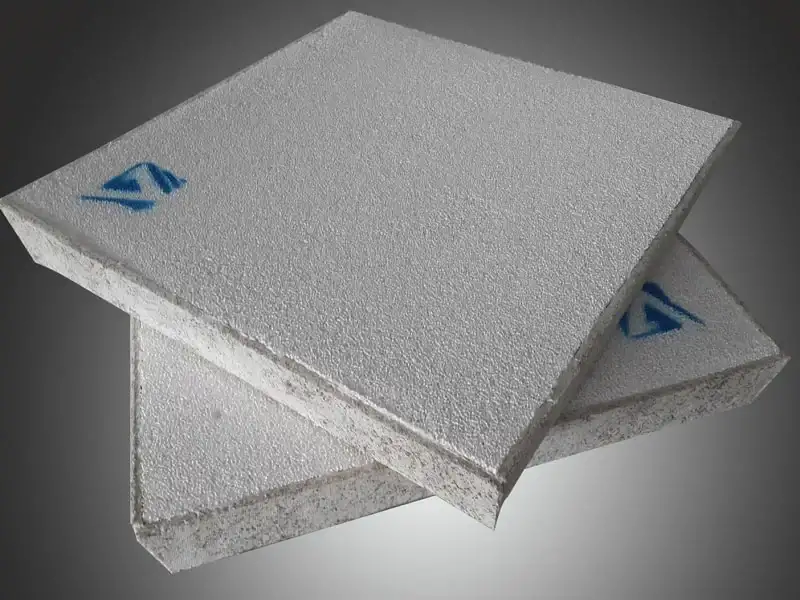
Common materials and how each affects price
- Alumina (Al₂O₃): most common for aluminum foundries. Good high-temperature stability and chemical resistance. Unit cost tends to be moderate.
- Silicon carbide (SiC): higher mechanical strength and thermal shock resistance. Industrial grades can cost more per unit than basic alumina plates.
- Zirconia (ZrO₂): used for specialized alloys where extreme corrosion resistance is required. Higher raw material cost pushes unit price upward.
Material choice is one of the single biggest drivers of price. Higher-purity ceramics plus tighter process control raise production cost quickly.
Also read: How to Make a Ceramic Filter.
How pore density (PPI), thickness, and size affect price
- PPI (pores per inch): Lower PPI means larger pores, lower pressure drop, plus lower manufacturing complexity. Higher PPI gives finer filtration but requires tighter control and higher cost. Typical commercial ranges run from 10 PPI to 60 PPI.
- Thickness and surface area: Bigger plates cost more because they use more raw material and need longer drying/firing cycles.
- Cutting, bonding, finishing: Custom cut shapes or edge sealing increase per-piece price.
These relationships are consistent across suppliers. If a buyer needs micron-level cleanliness, expect to pay a premium.
Molten aluminum ceramic foam filter plates price
Below is a practical price range table reflecting factory quotes, online B2B listings, and regional supplier pages. Use this for benchmarking rather than firm quotes. Prices vary by size, PPI, material, minimum order quantity, shipping, taxes, and active promotions.
| Region | Typical factory price range (bulk orders) | Typical small-order / retail price range | Notes |
|---|---|---|---|
| China (factory, FOB) | US$0.10 — US$2.00 per piece | US$0.20 — US$5.00 per piece | Large supplier listings show very low unit prices for simple alumina plates when MOQ is high. Custom grades cost more. |
| United States (distributor / small order) | US$0.80 — US$5.00 per piece (wholesale) | US$2.00 — US$25.00 per piece (retail / catalog) | Domestic suppliers stock a limited set of sizes and grades; small orders include handling and certification costs. |
| Middle East (regional distributor / import) | US$0.30 — US$6.00 per piece (imported) | US$1.00 — US$30.00 per piece (local retail) | Import duty, shipping, scarcity of local manufacturers push retail pricing upward in some markets. |
Key citation notes: China price bands use B2B marketplaces and manufacturer pages. US figures come from catalog suppliers and specialist vendors. Middle East estimates use regional distributors plus import examples.
Major factors that influence price (table)
| Factor | Why it impacts price | Typical percent effect on unit cost (rule of thumb) |
|---|---|---|
| Raw material type and purity (Al₂O₃, SiC, ZrO₂) | Higher-grade ceramics cost more; purity affects firing cycles and yield | 20% — 50% |
| Pore rating (PPI) and pore uniformity | Fine PPI needs tighter control, more rejects | 10% — 40% |
| Size and thickness | More material, longer kiln time | 5% — 30% |
| Production scale and MOQ | High-volume lowers unit cost dramatically | 10% — 60% |
| Machining, sealing, or custom cutting | Adds labor and equipment costs | 3% — 20% |
| Certifications, testing, traceability | Extra QA steps drive cost up | 5% — 15% |
| Shipping, duties, and import fees | Freight and tariffs change landed cost | Variable, often 5% — 50% |
| Energy and labor costs at factory | Local electricity, wages, kiln fuel influence pricing | Variable by country |
| Market demand and raw material cycles | Commodity swings change input cost | Variable; see trend section |
Some of these drivers have direct evidence in supplier product descriptions and market reporting for raw materials.
Manufacturing cost breakdown (high-level)
A typical ceramic foam filter plate’s landed price comes from:
- Raw ceramic powders procurement (bulk alumina, SiC feedstock)
- Binder, foaming template material, release agents
- Mixing, shaping, drying time, and finishing operations
- Kiln firing energy and time (major cost centre)
- Quality control tests (porosity measurement, strength checks)
- Packaging and shipping
Kiln operation and raw feedstocks are often the largest two contributors. Supply-chain shocks in alumina or silicon carbide will ripple into final pricing.
How size, PPI, and custom features map to price
This example uses common sizes and pore ratings to illustrate typical unit costs for standard-grade alumina plates from factory suppliers. These numbers are illustrative; ask suppliers for specific quotes and sample testing.
| Example plate | PPI | Typical factory price (China, bulk) | Typical small-order price (US distributor) |
|---|---|---|---|
| 85mm x 15mm round | 10 — 20 PPI | US$0.10 — US$0.50 | US$0.50 — US$3.00 |
| 150mm x 150mm x 20mm square | 10 — 30 PPI | US$0.30 — US$1.50 | US$1.00 — US$8.00 |
| 23″ x 23″ x 50mm plate (large) | 10 — 40 PPI | US$8 — US$30 (bulk variations) | US$12 — US$60 (retail) |
Sources show very low unit prices for small industrial pieces when buyers accept basic quality and high MOQ; prices increase substantially for large plates, tight tolerances, or small orders.
How to compare supplier quotes properly (practical checklist)
- Compare like for like: material grade, PPI, plate dimensions, density, compressive strength, recommended operating temperature.
- Ask for sample plates: verify porosity and performance under your process conditions.
- Confirm MOQ and lead time: low MOQs cost more per unit.
- Include testing costs: some suppliers offer porosity and strength reports for extra fees.
- Calculate landed cost: include shipping, insurance, customs, plus local delivery.
- Assess replacement frequency: unit price matters, but how often you replace filters matters more.
- Reference long-term contracts: fixed-price multi-month contracts can protect against commodity swings.
Supplier claims about pore uniformity, temperature tolerance, and lifespan should be validated by sample trials.
Logistics, lead time, and MOQ tradeoffs
- China factories: can produce thousands quickly, lowering unit cost. Long ocean freight plus customs may add days and cost.
- US distributors: offer quick local delivery for smaller orders; unit cost higher.
- Middle East: often rely on imports; choose suppliers with consolidated shipping or regional stock to reduce lead time.
Certification, quality tests worth paying for
- Porosity / flow rate tests: confirm filtration performance.
- Compressive strength: filter must survive handling and molten metal pressure.
- Chemical compatibility: verify composition matches the alloy environment.
- Trace documentation: batch numbers and QC reports support root-cause analysis if defects appear.
Spend on certification when rejecting scrap costs more than saving on cheap filters.
Future price trend snapshot and what to expect (table)
This table synthesizes commodity reports for alumina and silicon carbide with industry demand dynamics.
| Driver | Short-term (next 12 months) | Medium-term (2 — 4 years) | Evidence / rationale |
|---|---|---|---|
| Alumina feedstock cost | Stable to modest decline in some months, volatile spikes possible | Moderate growth overall, tied to aluminum production demand | Market trackers show monthly swings and recent volatility. |
| Silicon carbide cost | Tight supply for high-purity grades, potential price pressure upward | Growing demand for high-grade SiC likely to keep prices higher | Market reports show strong SiC demand driven by power electronics. |
| Energy cost at kiln plants | Region dependent; any energy price surge raises plate prices quickly | Efficiency investments may mitigate long-term increases | Kiln energy is a large cost component. |
| Shipping and tariffs | Likely to fluctuate with global freight rates and trade policy | Potential normalization, but geopolitical risk remains | Freight and duty shifts affect landed cost significantly. |
Short summary: expect periodic price volatility driven by raw material cycles, followed by gradual structural growth for premium-grade materials. Use multi-supplier quotes and fixed-term supply contracts to manage risk.

Total cost of ownership (TCO) checklist
When calculating real cost, include:
- Unit price and freight
- Downtime cost for filter changes
- Scrap reduction and higher yield from better filters
- Improved downstream machining effort and finish quality
- Waste disposal and environmental compliance
A higher upfront price can be justified by reduced scrap and leaner downstream processing.
Sourcing tactics that often save money
- Consolidate volume to meet factory MOQs for lower unit rates.
- Request factory test reports and reject suppliers lacking transparency.
- Negotiate lead time flexibility in exchange for a better price.
- Split orders between basic plates and premium ones to control budget while testing performance.
- Audit freight options: sea freight plus consolidated shipments commonly beat air freight for cost per piece.
How to validate filter performance in your process
- Run a pilot with sample plates under normal melt conditions.
- Measure inclusion counts, tensile test results, and surface finish before broader adoption.
- Compare scrap rates and rework hours.
- If results match expectations, scale up and secure a multi-month supply contract.
Frequently asked questions
1. What is a fair price for an alumina ceramic foam filter plate?
A fair factory-level price for standard sizes typically lies between US$0.10 and US$2.00 per piece when ordered in bulk from China. Small-order or specialty plates can cost much more. Always include total landed cost in evaluations.
2. Does higher PPI always mean better filtration?
Higher PPI yields finer filtration, but it also increases pressure drop and may shorten life if the filter cokes quickly. Balance pore rating with flow needs.
3. Which material performs best for molten aluminum?
Alumina is the common standard for aluminum foundries due to cost and chemical stability. SiC or zirconia may outperform in demanding conditions but cost more.
4. How much does shipping add to unit cost?
Shipping, insurance, and import fees can add anywhere from a few cents to over 50% of an item’s FOB price, depending on freight mode and destination. Factor in net landed cost when comparing suppliers.
5. Is it safe to buy cheap filters from online marketplaces?
Online low-price offers can be real, but quality varies. Ask for samples and independent porosity and strength tests before placing large orders.
6. How often should a filter be replaced?
Replacement depends on melt cleanliness, flow rate, and PPI. Monitor pressure drop and casting defects to decide replacement intervals. Sample testing helps set optimal cycles.
7. Can filter plates be reused?
No. These plates are single-use in molten metal casting because trapped inclusions and thermal stress damage the filter matrix. Reuse risks contamination and defects.
8. How does MOQ change price?
Higher MOQs usually give lower per-piece price. Suppliers set low MOQ pricing much higher to cover set-up and handling. Bulk contracts save money.
9. Are there local manufacturers in the Middle East?
Regional production capacity is limited; most distributors import plates. Local stockists sometimes hold inventory for fast delivery but at higher unit cost.
10. What certifications matter for critical components?
Porosity and flow reports, compressive strength, chemical composition, traceability paperwork, and any industry-specific approvals required by large OEM customers. Verified test data reduces acceptance risk.
Procurement template: email checklist to request quotes
Use this quick template when asking suppliers for comparable quotes:
- Plate material and CAS or grade number
- Dimensions (length x width x thickness) or shape file
- PPI and target porosity percentage
- Required compressive strength and operating temperature
- MOQ, sample availability, lead time, trade terms (FOB, CIF)
- Packaging, testing certificates, and warranty terms
- References from existing foundry customers (if available)
Quick risk-control tips
- Keep 1–2 months’ consumption as buffer stock during volatile commodity periods.
- Validate new suppliers with a small paid trial order.
- Maintain a shortlist of three vetted suppliers to avoid single-source risk.
Closing summary
For molten aluminum ceramic foam filter plates, cheap unit price does not always equal lowest cost in practice. The best procurement strategy blends competitive factory pricing with validated performance data, sensible MOQ planning, and landed-cost calculation. Regional differences are large: China offers the lowest factory prices, US distributors provide quick delivery at higher cost, and Middle East buyers typically pay import premiums if local stock is scarce. Use sample tests and TCO modeling to decide which tradeoffs fit your foundry.