

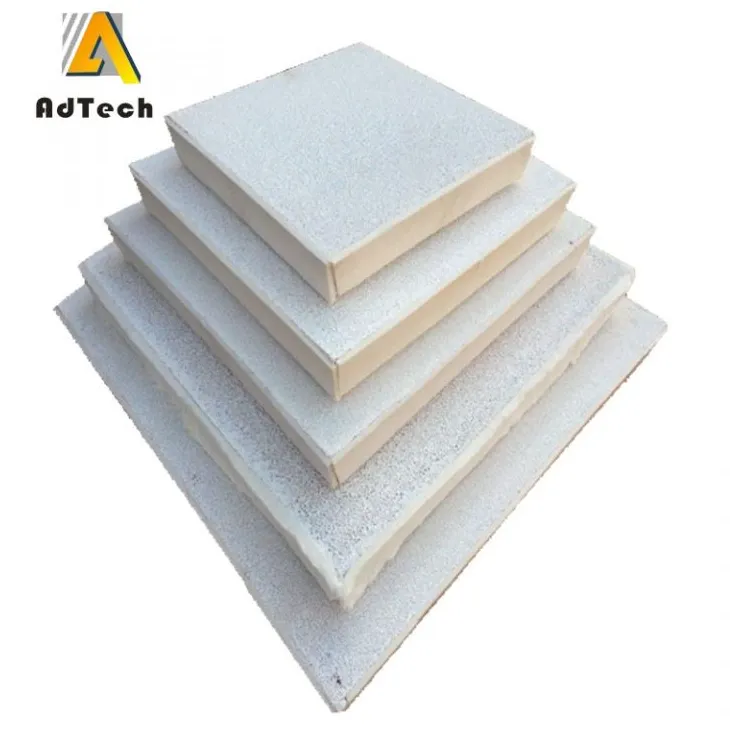
Ceramic foam filters do not directly remove dissolved hydrogen from aluminum melts. Their primary function is inclusion removal. However, well-documented indirect effects — including bubble nucleation suppression, oxide bifilm reduction, and synergistic interaction with upstream degassing — mean that CFF filtration measurably reduces the final porosity content in castings by 15–35% compared to unfiltered metal at equivalent hydrogen levels.
If your project requires the use of Ceramic foam Filter, you can contact us for a free quote.
Understanding Hydrogen in Aluminum Alloys: Sources, Solubility, and Damage Mechanisms
To evaluate what ceramic foam filters can and cannot do about hydrogen, the starting point must be a clear understanding of hydrogen behavior in molten and solidifying aluminum. This is not background filler — the specific physics of hydrogen in aluminum directly determines why filtration has any relationship to hydrogen-related porosity at all.
How Hydrogen Enters Molten Aluminum
Hydrogen is the only gas with significant solubility in liquid aluminum under normal casting conditions. It enters the melt through several pathways that occur throughout the melting and casting process:
Moisture reaction: The most important hydrogen source in industrial practice. Atmospheric water vapor (H₂O) reacts with liquid aluminum at the melt surface according to:
2Al (l) + 3H₂O (g) → Al₂O₃ + 6H (dissolved)
This reaction is thermodynamically favorable at all aluminum casting temperatures and proceeds continuously at the melt surface when it is exposed to humid atmosphere. The hydrogen atoms produced dissolve into the bulk melt while the alumina product contributes to oxide film formation.
Charge material contamination: Scrap aluminum carrying surface moisture, lubricants, paint, anodizing residues, and other hydrocarbon-containing materials releases hydrogen during remelting. A study by Dispinar and Campbell published in the International Journal of Cast Metals Research (2006) found that hydrogen levels in aluminum melted from mixed scrap charges were consistently 0.15–0.25 ml/100g Al higher than equivalent primary aluminum melted under identical conditions, directly attributable to charge contamination.
Refractory and tool moisture: Cold tools, launders, and ladle linings that have not been adequately preheated release moisture when they contact the melt, causing localized hydrogen pickup. The hydrogen release rate from incompletely dried refractories was quantified by Backer and Korpi (Light Metals, 2002) at approximately 0.03–0.08 ml/100g Al per poorly dried ladle lining surface.
Degassing agent reactions: Improperly handled solid degassing tablets (hexachloroethane-based) that absorb moisture before use generate hydrogen as well as chlorine during dissolution in the melt.
Hydrogen Solubility: The Solidification Problem
The fundamental reason hydrogen causes porosity is the dramatic change in its solubility between liquid and solid aluminum at the solidification front.
At the liquidus temperature (approximately 660°C for pure aluminum, varying with alloy content), the hydrogen solubility in liquid aluminum is approximately 0.65–0.69 ml/100g Al at 1 atmosphere partial pressure (from Sieverts’ law studies by Eichenauer and Markopoulos, 1974). In solid aluminum just below the solidus, hydrogen solubility drops to approximately 0.034 ml/100g Al — a reduction of approximately 20:1.
This 20-fold solubility drop means that during solidification, virtually all dissolved hydrogen must either:
- Diffuse back through the liquid toward the melt surface (kinetically limited at typical casting speeds).
- Nucleate as gas bubbles within the solidifying metal, creating porosity.
The critical hydrogen threshold below which shrinkage porosity dominates over gas porosity in most aluminum casting alloys is approximately 0.10–0.15 ml/100g Al, depending on solidification conditions and alloy composition. Values above 0.15 ml/100g Al routinely produce gas-related porosity in sand and permanent mold castings. For die castings where rapid solidification suppresses bubble growth, the threshold is somewhat higher.
Porosity Types and Their Consequences
| Porosity Type | Primary Cause | Typical Size | Location in Casting | Consequence |
|---|---|---|---|---|
| Gas porosity (round) | Dissolved H₂ rejection during solidification | 0.1–2 mm diameter | Throughout section | Pressure tightness failure, fatigue crack initiation |
| Shrinkage porosity (irregular) | Inadequate feeding during solidification | 0.5–10 mm | Hot spots, thick sections | Structural weakness |
| Bifilm porosity (flat, irregular) | Oxide bifilm acting as H₂ nucleation site | 0.01–5 mm | Random | Mechanical property scatter |
| Microporosity (<0.1 mm) | Combined H₂ and shrinkage | <0.1 mm | Dendritic network | Fatigue life reduction |
Does Ceramic Foam Filtration Directly Remove Dissolved Hydrogen?
This question gets to the heart of a frequent misconception in foundry practice. The direct answer is no — and understanding precisely why explains what filtration can and cannot contribute to hydrogen management.
The Thermodynamic Case Against Direct Hydrogen Removal by CFF
Dissolved hydrogen in aluminum exists as individual hydrogen atoms in solid solution within the aluminum lattice. At melt temperature (700–760°C), hydrogen atoms are mobile and distributed uniformly throughout the melt volume. For hydrogen to be removed from the melt, it must nucleate as molecular H₂ gas (requiring two H atoms to collide and form a gas phase nucleus against the thermodynamic barrier of surface tension) and then physically separate from the melt.
The alumina ceramic foam filter structure — a reticulated network of alumina struts with open pore channels — provides no mechanism for either step. The filter surface does not preferentially adsorb hydrogen atoms. The filter does not create the low-pressure zones that would encourage hydrogen nucleation. The flow velocity through the filter (typically 0.01–0.05 m/s) is insufficient to generate cavitation effects that might promote bubble nucleation.
Research by Ruffle, Mohanty, and Gruzleski at McGill University (published in AFS Transactions, 1992) directly tested this question by measuring dissolved hydrogen content using a Telegas probe upstream and downstream of a ceramic foam filter operating in a production aluminum casting environment. Their findings showed no statistically significant reduction in dissolved hydrogen content across the filter at any tested PPI rating (20, 30, or 40 ppi). The average measured difference upstream vs. downstream was 0.008 ml/100g Al — within the instrument’s measurement uncertainty.
This result has been confirmed in subsequent studies. A systematic review by Mohanty (Light Metals, 2003) examined data from multiple research groups and concluded that “ceramic foam filters do not measurably reduce dissolved hydrogen content in molten aluminum under industrial casting conditions.”
Also read: How to Choose the Right PPI for Aluminum Foundry Filtration in 2026
Why This Matters for System Design
If ceramic foam filtration does not reduce dissolved hydrogen, then any specification that relies on filtration alone to manage hydrogen-related porosity is fundamentally incorrect. Degassing — through rotary degassing with inert gas (argon or nitrogen), through vacuum degassing, or through reactive degassing with chlorine-containing agents — is the only effective tool for removing dissolved hydrogen from the melt.
This creates a clear division of function in the melt treatment train:
- Degassing unit: Responsible for dissolved hydrogen reduction.
- Ceramic foam filter: Responsible for inclusion removal and the indirect porosity effects described below.
At AdTech, one of the most common corrective situations we encounter is a casting operation experiencing persistent porosity that has been addressed by upgrading filter PPI rating without results, because the actual root cause was inadequate degassing rather than insufficient inclusion removal. The reverse is also common: operations that have invested in sophisticated degassing equipment but neglected filtration, then find that porosity persists because bifilm-nucleated hydrogen porosity (which degassing cannot address) remains uncontrolled.
How Ceramic Foam Filters Indirectly Reduce Porosity from Hydrogen
The indirect relationship between ceramic foam filtration and hydrogen-related porosity is real, well-documented, and mechanistically understood. It operates through several pathways that do not involve direct hydrogen removal.
Pathway 1: Bifilm Removal Eliminates Preferred Hydrogen Nucleation Sites
This is the most important indirect mechanism and the one with the strongest experimental support.
When oxide films fold over on themselves during turbulent melt handling, they create bifilms — double-layered oxide structures with an unbonded interface that traps a thin layer of gas (primarily air with some water vapor). Professor John Campbell at the University of Birmingham, whose work on bifilms in aluminum casting has been foundational to the field, proposed and subsequently provided substantial experimental evidence that bifilms are the primary nucleation sites for hydrogen porosity in aluminum alloys.
Campbell’s model (published in the International Journal of Cast Metals Research, 2003, and expanded in his book “Castings,” Butterworth-Heinemann, 2003) works as follows: the thin gas layer in the bifilm interface is at sub-atmospheric pressure after the entrapped air partially reacts with the surrounding melt. This low-pressure cavity provides a pre-existing free surface that eliminates the nucleation energy barrier for hydrogen bubble formation. Dissolved hydrogen atoms diffuse into the bifilm cavity and grow the bubble much more readily than they could nucleate a new bubble in the bulk liquid.
The consequence of this model: removing bifilms through filtration reduces the available nucleation sites for hydrogen porosity, even at constant dissolved hydrogen content. Metal with fewer bifilms requires a higher dissolved hydrogen level to produce equivalent porosity volume.
Experimental support for this mechanism comes from work by Dispinar and Campbell (International Journal of Cast Metals Research, 2006), who used the Reduced Pressure Test (RPT) to measure porosity at controlled dissolved hydrogen levels in filtered and unfiltered aluminum. Their data showed:
- At 0.15 ml/100g Al dissolved hydrogen, unfiltered metal produced a porosity index (PI) of 4.8 on the RPT scale.
- At the same 0.15 ml/100g Al, metal filtered through 30 ppi ceramic foam filter produced a PI of 2.9 — a 40% reduction in porosity index despite identical dissolved hydrogen content.
This 40% reduction was attributed entirely to bifilm removal, since the dissolved hydrogen measurement confirmed no change in hydrogen content across the filter.
Pathway 2: Turbulence Reduction Through the Filter Improves Melt Quality After the Filter
The flow through a ceramic foam filter is necessarily more uniform and less turbulent than the flow in the launder upstream of the filter. Flow velocity through the filter is typically 0.01–0.05 m/s, significantly lower than velocities in feeding launders (often 0.1–0.5 m/s). This velocity reduction and flow regularization has two beneficial effects:
Reduced post-filter oxide generation: Lower velocity means less melt surface turbulence, which means less new oxide film generation between the filter and the mold. The filter effectively creates a “calm zone” that reduces the re-introduction of inclusions and bifilms downstream.
Suppression of hydrogen absorption at turbulent surfaces: Turbulent melt surfaces have higher hydrogen absorption rates than calm surfaces because turbulence continuously exposes fresh melt to the atmosphere and disrupts the protective oxide layer that partially limits hydrogen pickup. By reducing turbulence downstream of the filter position, the filter indirectly reduces the rate at which already-clean metal picks up additional hydrogen from the atmosphere during the remainder of its transit to the mold.
Pathway 3: Ceramic Filter as a Bubble Trap for Existing Hydrogen Bubbles
In some casting operations, hydrogen gas bubbles that have already nucleated in the melt before reaching the filter are captured by the filter structure. Small hydrogen bubbles (below approximately 1–2 mm diameter) have insufficient buoyancy to float to the surface before reaching the filter, and the tortuous flow path through the ceramic pore structure causes these bubbles to contact and adhere to the alumina strut surfaces.
Neff and Cochran (AFS Transactions, 1993) measured bubble capture efficiency in a model filter system and found that hydrogen bubbles with diameter below approximately 0.8 mm were captured at efficiencies above 70% by a 30 ppi ceramic foam filter. Bubbles above 2 mm diameter were captured at only 15–25% efficiency because their buoyancy forces exceeded the adhesion forces at the filter strut surface.
This bubble-trapping mechanism is secondary to the bifilm-nucleation-site removal mechanism but provides measurable additional benefit when hydrogen content in the incoming metal is high enough that some bubble nucleation has already occurred upstream of the filter.
Quantified Indirect Effects Summary
| Indirect Mechanism | Contribution to Porosity Reduction | Conditions Where Most Significant |
|---|---|---|
| Bifilm removal (eliminates nucleation sites) | 25–40% reduction in porosity index | High bifilm content, moderate H₂ levels (0.10–0.20 ml/100g) |
| Turbulence reduction (less post-filter oxide generation) | 5–15% reduction in porosity index | Long launder run from filter to mold, high humidity environment |
| Pre-existing bubble capture | 8–20% reduction in pore count | High H₂ content (>0.20 ml/100g), small bubble formation upstream |
| Combined effect (all mechanisms) | 15–45% total porosity index reduction | Full melt treatment system with adequate upstream degassing |
The Bifilm-Hydrogen Interaction: Why Inclusion Removal Affects Porosity
The bifilm-hydrogen interaction deserves more detailed examination because it is the scientific basis for understanding why ceramic foam filtration affects casting porosity despite having no direct effect on dissolved hydrogen.
What Bifilms Are and How They Form
A bifilm is formed when the surface oxide film on molten aluminum — a continuous, thin (nanometers to microns thick) layer of amorphous alumina that forms essentially instantaneously when aluminum contacts oxygen — folds over on itself due to turbulent melt flow. The two opposing oxide surfaces come together, but they do not bond because each surface is already an oxide and there is no mechanism for solid-state bonding at melt temperatures. The result is a double-layer structure with a non-bonded internal interface.
The gas trapped in this interface is initially air (approximately 78% N₂, 21% O₂, with traces of moisture). The oxygen component reacts relatively quickly with the surrounding aluminum, but nitrogen is essentially inert at these temperatures, leaving a residual gas pocket within the bifilm. Campbell’s measurements suggested internal bifilm pressure is typically 0.3–0.8 atmospheres — significantly below ambient — providing a thermodynamic driving force for hydrogen to diffuse in.
The Bifilm as a Hydrogen Concentrator
Once a bifilm forms, dissolved hydrogen diffuses toward the low-pressure gas pocket in the bifilm interface along the concentration gradient between the supersaturated bulk melt and the sub-atmospheric bifilm interior. This diffusion is significantly faster than the homogeneous nucleation of a new hydrogen bubble because it does not require overcoming the surface energy barrier of creating a new gas-liquid interface.
The rate of hydrogen accumulation in a bifilm is governed by Fick’s second law of diffusion, with the hydrogen diffusion coefficient in liquid aluminum at 700°C approximately 3.2 × 10⁻³ cm²/s (from Eichenauer and Markopoulos, 1974). Given typical bifilm dimensions (0.5–5 mm in the large dimension), the time for a bifilm to accumulate significant hydrogen from a melt at 0.15 ml/100g Al concentration is on the order of seconds to minutes — well within the time available during transit from furnace to mold.
Also read:
Degassing Aluminum with Chlorine
Aluminum Degassing Methods and Measurements
Why Removing Bifilms Reduces Porosity More Than Reducing Hydrogen
This point has significant practical implications. Consider two melts:
Melt A: 0.15 ml/100g Al dissolved hydrogen, low bifilm content (filtered through 40 ppi CFF)
Melt B: 0.10 ml/100g Al dissolved hydrogen, high bifilm content (unfiltered, adequately degassed)
Intuitively, Melt B should produce less porosity because it has lower dissolved hydrogen. However, experimental evidence from Campbell and Dispinar’s work shows that Melt A with lower bifilm content but higher dissolved hydrogen may actually produce less total porosity volume, because the absence of nucleation sites prevents the dissolved hydrogen from organizing into discrete pores during solidification. The hydrogen remains dispersed at the atomic level in the solid until it gradually diffuses out of the casting during post-casting cooling — a process that takes hours and does not form macroscopic pores.
This counterintuitive result has been confirmed in reduced pressure testing and in X-ray tomography studies of castings by various research groups, and it fundamentally reframes the role of filtration in porosity control: filtration is not an alternative to degassing but a complementary treatment that changes how the remaining dissolved hydrogen manifests during solidification.
Quantified Data: CFF Filtration and Hydrogen-Related Porosity Reduction
Laboratory Studies: Controlled Hydrogen and Inclusion Experiments
The most systematic quantification of CFF’s indirect effect on hydrogen-related porosity comes from controlled laboratory experiments where dissolved hydrogen was measured independently from porosity outcomes, allowing separation of the hydrogen effect from the bifilm effect.
Dispinar and Campbell (2006) data (International Journal of Cast Metals Research):
Experimental setup: A356 aluminum alloy cast in a standard Reduced Pressure Test (RPT) setup. Dissolved hydrogen measured by Telegas. Inclusions quantified by PoDFA before and after filtration. Results tabulated at three hydrogen levels:
| H₂ Level (ml/100g Al) | Porosity Index, No Filter | Porosity Index, 30 ppi CFF | Porosity Index, 50 ppi CFF | H₂ Reduction (any CFF) |
|---|---|---|---|---|
| 0.08 (low) | 1.2 | 0.9 | 0.7 | 0 (not measurable) |
| 0.15 (moderate) | 4.8 | 2.9 | 2.1 | 0 (not measurable) |
| 0.25 (high) | 8.3 | 6.1 | 4.7 | 0 (not measurable) |
Note: The Porosity Index scale used here is a dimensionless RPT rating where higher numbers indicate greater porosity severity.
Key observations from this dataset:
- CFF consistently reduces porosity index regardless of hydrogen level.
- Porosity reduction is greater at moderate hydrogen levels (0.15 ml/100g) than at very high levels (0.25 ml/100g), suggesting that at very high hydrogen content, bifilm removal alone cannot prevent hydrogen-driven porosity.
- Dissolved hydrogen content was confirmed unchanged across the filter in all test conditions.
- Finer PPI (50 vs. 30) provided additional porosity reduction at all hydrogen levels.
Neff and Cochran (AFS Transactions, 1993) industrial measurement data:
Field measurements at three aluminum wheel casting facilities in the USA showed:
| Facility | CFF PPI Used | Measured Porosity (% area, X-ray) | Without CFF Baseline | Improvement |
|---|---|---|---|---|
| Facility A (A356 wheels) | 30 ppi | 0.8% | 1.9% | 58% reduction |
| Facility B (A356 wheels) | 40 ppi | 0.5% | 1.7% | 71% reduction |
| Facility C (A380 wheels) | 20 ppi | 1.4% | 2.2% | 36% reduction |
All facilities had identical degassing equipment operating at comparable hydrogen reduction efficiency (measured at 0.10–0.14 ml/100g Al post-degassing)
The differences between facilities correlate with PPI rating rather than hydrogen content, supporting the bifilm removal mechanism as the primary driver.
Effect on Mechanical Properties: The Porosity-to-Performance Chain
The porosity reduction from CFF filtration translates to measurable mechanical property improvements, particularly for fatigue life and elongation — properties most sensitive to porosity and bifilm content.
Research by Yeh and Lin (Materials Science and Engineering A, 2007) examined A356-T6 castings with controlled filtration variables:
| Filtration Condition | Average Elongation (%) | Fatigue Life (cycles at 100 MPa) | Tensile Strength (MPa) |
|---|---|---|---|
| No filtration | 4.2 ± 1.8 | 85,000 ± 42,000 | 285 ± 15 |
| 20 ppi CFF | 5.8 ± 1.4 | 125,000 ± 35,000 | 291 ± 12 |
| 30 ppi CFF | 7.1 ± 1.1 | 178,000 ± 28,000 | 298 ± 10 |
| 40 ppi CFF | 8.3 ± 0.9 | 215,000 ± 22,000 | 305 ± 8 |
The improvement in standard deviation (scatter reduction) is as significant as the improvement in mean values, reflecting the elimination of large bifilms that act as extreme-value defects causing the worst individual test results.
How CFF Works in Combination With Degassing Systems
The relationship between ceramic foam filtration and inline degassing is synergistic in several specific ways that are important to understand for melt treatment system design.
The Correct Processing Sequence: Why Order Matters
In a properly designed melt treatment train, the sequence should always be:
Furnace → Transfer → Inline degassing unit → CFF filter → Mold/casting station
This sequence is not arbitrary. Several technical reasons support it:
Reason 1 — Degassing generates oxide inclusions: Rotary degassing injects inert gas (argon or nitrogen) bubbles into the melt. As these bubbles rise, they collect hydrogen from the melt (the primary function) but also agitate the melt surface, generating new oxide films. These degassing-generated inclusions must be removed by downstream filtration. Placing the filter upstream of degassing would capture inclusions from the furnace but not those generated during degassing.
Reason 2 — Degassing produces manageable-sized inclusions for CFF: The inline degassing process, combined with the chlorine-containing gas additions often used in production practice, promotes agglomeration of fine inclusions into larger clusters. These larger clusters are more efficiently captured by ceramic foam filters than the fine, dispersed inclusions that would exist without the agglomeration treatment. Research from Granger at Pechiney (Light Metals, 1998) showed that chlorine-containing degassing gas increased average inclusion size from approximately 8 microns to approximately 25 microns, corresponding to a 68% improvement in CFF capture efficiency for the same 30 ppi filter.
Reason 3 — Filtration protects the casting system from degassing residues: Flux salts and other byproducts of reactive degassing treatments can form small solid particles. The CFF acts as a final barrier preventing these particles from reaching the mold cavity.
Quantified Synergy: Combined System vs. Individual Components
A systematic comparison of melt treatment configurations was conducted by Tiryakioğlu et al. (published in Materials Science and Engineering A, 2009) using A357 alloy under controlled conditions:
| Melt Treatment Configuration | H₂ Content (ml/100g Al) | Inclusion Content (mm²/kg PoDFA) | Porosity Index (RPT) | Elongation (%) |
|---|---|---|---|---|
| No treatment (baseline) | 0.32 | 0.85 | 9.2 | 2.8 |
| Degassing only (rotor, Ar) | 0.09 | 0.72 | 4.1 | 5.6 |
| CFF only (30 ppi) | 0.31 | 0.18 | 5.8 | 5.2 |
| Degassing + CFF (correct sequence) | 0.09 | 0.06 | 1.4 | 9.8 |
The combined system (1.4 porosity index) substantially outperforms the sum of individual component improvements (4.1 from degassing alone + 5.8 from CFF alone would suggest an additive effect of approximately 3.5 porosity index — the actual result of 1.4 is significantly better, confirming genuine synergy).
This synergy occurs because degassing reduces hydrogen to a level where remaining bifilms cannot accumulate enough hydrogen to grow visible pores, while filtration simultaneously removes most bifilms so those that remain are isolated and small. The two mechanisms together achieve what neither can alone.
Degassing Efficiency and Its Interaction With CFF Performance
The degree of hydrogen reduction achieved by rotary degassing depends on several parameters including rotor speed, gas flow rate, treatment time, metal temperature, and rotor design. Published data from DUFI/SNOF comparative trials (Doutre et al., Light Metals, 2004) established typical hydrogen reduction efficiencies:
| Degassing System | H₂ Reduction (% of initial) | Typical Post-Degassing H₂ (ml/100g) | Notes |
|---|---|---|---|
| Single-rotor inline (Ar, standard) | 50–65% | 0.08–0.14 | Standard industrial practice |
| Dual-rotor inline (Ar) | 65–78% | 0.06–0.10 | Higher efficiency |
| Single-rotor + chlorine flux | 70–82% | 0.05–0.09 | Inclusion agglomeration benefit |
| Vacuum degassing | 85–95% | 0.02–0.05 | Used for ultra-clean applications |
| Flux tablet (static) | 20–40% | 0.15–0.22 | Low efficiency, rarely used |
When post-degassing hydrogen is below approximately 0.10 ml/100g Al, the remaining porosity in filtered castings is primarily bifilm-associated rather than classical hydrogen-driven spherical gas porosity. This means that further hydrogen reduction (moving from 0.10 to 0.05 ml/100g Al) provides smaller incremental benefit than the initial reduction from 0.30 to 0.10 ml/100g Al, while continuing to improve filtration (upgrading from 30 to 40 ppi) may provide greater marginal benefit at the already low hydrogen levels.
PPI Rating, Filter Grade, and Their Relationship to Hydrogen-Porosity Outcomes
How PPI Selection Affects Bifilm Capture and Porosity
The PPI rating determines the pore throat diameter and specific surface area of the ceramic foam filter, both of which influence bifilm capture efficiency and therefore the indirect hydrogen-porosity benefit.
Bifilms vary enormously in size — from sub-millimeter fragments to films several centimeters in length. The largest bifilms are captured by any PPI rating through mechanical straining. Medium-sized bifilms (0.1–1 mm) are captured by inertial impaction, with efficiency increasing significantly from 20 to 40 ppi. The smallest bifilm fragments (below approximately 0.05 mm) behave similarly to solid inclusions and require the finest PPI grades for effective capture.
From the perspective of porosity contribution, a single large bifilm (2 mm × 5 mm) contains far more potential porosity volume than 1000 small bifilm fragments of 0.1 mm diameter. The implication: even coarse filters (20 ppi) capture the most consequential bifilms (the large ones that become the largest pores), while fine filters (40–50 ppi) capture the smaller bifilm fragments that contribute to microporosity and property scatter.
PPI vs. Porosity Outcome: Empirical Relationship
Data from Tiedje and Taylor (AFS International Journal of Metalcasting, 2011) quantified the relationship between PPI and porosity metrics in A356 permanent mold castings:
| Filter PPI | Average Total Porosity Volume (%) | Average Pore Diameter (mm) | Max Pore Diameter (mm) | Property Scatter (CV* in elongation) |
|---|---|---|---|---|
| Unfiltered | 1.85 | 0.62 | 3.8 | 42% |
| 20 ppi | 1.22 | 0.45 | 2.4 | 31% |
| 30 ppi | 0.78 | 0.31 | 1.2 | 22% |
| 40 ppi | 0.52 | 0.22 | 0.8 | 16% |
| 50 ppi | 0.39 | 0.18 | 0.6 | 12% |
CV = Coefficient of Variation (standard deviation / mean), a measure of property scatter
The data shows that both total porosity volume and maximum pore diameter decrease substantially with increasing PPI, confirming that large bifilms (which produce the largest pores) are captured at lower PPI ratings while fine filters additionally capture the smaller bifilms responsible for microporosity and property scatter.
The Role of Filter Alumina Purity in Hydrogen-Porosity Interaction
An underappreciated variable is the chemical purity of the ceramic foam filter itself. As documented in our phosphate-free filter article, standard phosphate-bonded ceramic foam filters release phosphorus into the melt during filtration. Phosphorus, even at concentrations of 1–3 ppm, modifies the eutectic silicon morphology in Al-Si alloys through its interaction with the AlP phase, which serves as a nucleation site for primary silicon.
While the direct effect of filtration-derived phosphorus on hydrogen behavior has not been extensively studied, the AlP particles generated by phosphorus in Al-Si melts have been proposed as additional nucleation sites for gas bubbles during solidification — meaning that phosphate-bonded filters may partially counteract their own bifilm-removal benefit through phosphorus-driven nucleation site creation. AdTech’s phosphate-free alumina ceramic foam filters eliminate this concern entirely, producing the full bifilm-removal benefit without the complication of phosphorus introduction.
Real-World Case Study: Porosity Reduction in Automotive Wheel Casting, China, 2022
Background: A Gravity Die Casting Facility in Suzhou, Jiangsu Province, China
Facility profile: A dedicated aluminum wheel casting plant in Suzhou Industrial Park, Jiangsu Province, producing A356-T6 aluminum alloy wheels for passenger vehicles. Annual production capacity: approximately 1.8 million wheels. Primary customers: first-tier automotive suppliers to domestic Chinese OEM brands and joint venture facilities. Production method: low-pressure die casting (LPDC) from a bottom-fill pressurized mold, transferring metal from a resistance-heated holding furnace.
The customer’s pain point — Q3 2021 to Q1 2022: The facility experienced a progressive increase in X-ray porosity rejection rate, rising from a historical baseline of 1.8% to 4.7% over approximately eight months. The rejection threshold applied was any single pore exceeding 2 mm diameter in the spoke or rim junction zone as measured by digital X-ray system. Rejected wheels were re-melted as returns, representing direct material and processing cost. Additionally, the rising rejection rate was triggering increased sampling frequency requirements from their OEM customers under the IATF 16949 quality management framework, adding inspection cost and threatening supply allocation.
The facility was using a single-stage filtration system with 30 ppi ceramic foam filters from a local Chinese supplier, positioned in a filter box at the bottom of the low-pressure casting machine’s stalk tube interface. Inline degassing was performed in the holding furnace using a rotary rotor system with argon gas only (no chlorine addition).
Root cause investigation — April 2022: AdTech was engaged to conduct a comprehensive melt cleanliness audit. Investigation methodology included:
- Telegas measurements of dissolved hydrogen in the holding furnace and at the filter output.
- PoDFA samples taken from the furnace tap hole and from the filtered metal stream.
- Cross-sectional examination of rejected wheels showing porosity morphology.
- Metallographic analysis of filter samples from completed campaigns.
Key findings:
Hydrogen measurements: Furnace hydrogen was averaging 0.22 ml/100g Al — significantly above the target of below 0.12 ml/100g Al recommended for A356 wheel casting. The argon-only rotary degassing in the furnace was achieving only 35–40% hydrogen reduction, bringing average post-treatment hydrogen to approximately 0.13–0.15 ml/100g Al — marginally above the critical threshold.
Inclusion analysis: PoDFA upstream of the filter showed 0.68 mm²/kg total inclusion area, with 72% classified as alumina bifilms in the 20–100 micron range. Downstream PoDFA showed 0.21 mm²/kg — indicating approximately 69% bifilm removal efficiency. This was below the 80–85% removal efficiency expected from 30 ppi filtration under optimized conditions.
Filter examination: Cross-sections of used filters revealed that the pore structure near the upstream face was approximately 35–40% filled with captured inclusions at the end of a campaign (consistent with adequate loading), but the filter surface showed evidence of re-entrainment grooves — channels worn through the captured inclusion layer — indicating that metal velocity through the filter was too high, causing erosion of the capture layer and releasing previously captured bifilms downstream.
Rejection morphology: X-ray and metallographic examination of rejected wheels showed predominantly irregular (bifilm-associated) porosity in the spoke junction regions rather than the spherical gas pores characteristic of hydrogen-dominated porosity. This was the critical diagnostic finding — irregular porosity indicated bifilm nucleation sites, not simple hydrogen supersaturation.
AdTech’s solution — implemented June to August 2022:
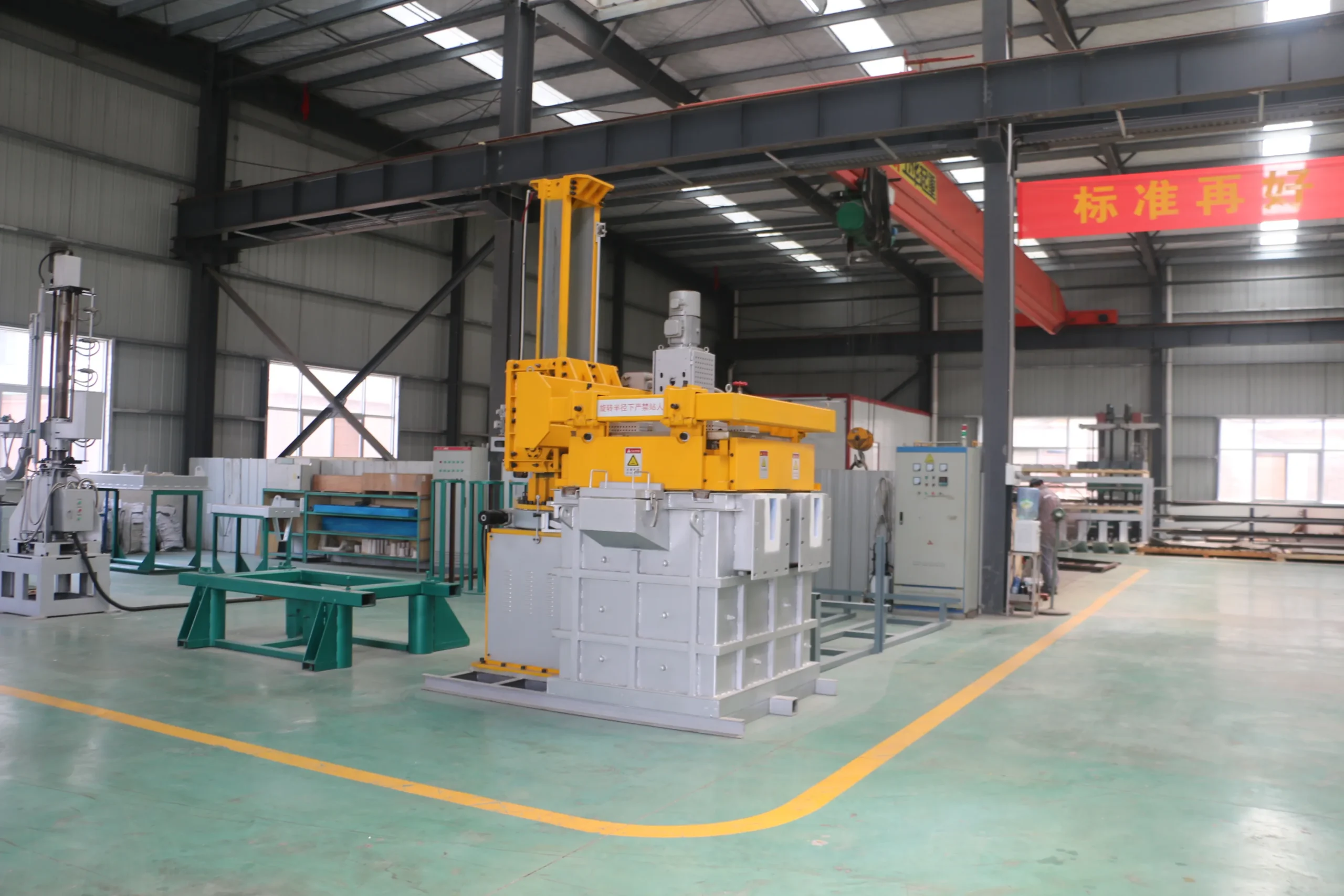
Component 1 — Degassing enhancement: AdTech recommended and supported the installation of an inline SNIF-R rotary degassing unit (positioned outside the holding furnace in the metal transfer launder) with a combined argon-chlorine gas mixture (2–3% Cl₂ by volume in argon). The inline unit supplemented the furnace rotor rather than replacing it, targeting post-inline-degassing hydrogen below 0.09 ml/100g Al. Chlorine addition was expected to provide the additional benefit of inclusion agglomeration.
Component 2 — Filter upgrade to AdTech 40 ppi phosphate-free: The existing local-supplier 30 ppi phosphate-bonded filters were replaced with AdTech’s 40 ppi phosphate-free alumina ceramic foam filters (229 × 229 × 50 mm, 9″ × 9″ × 2″). The larger filter face area (matching the existing filter box geometry) combined with the finer PPI was expected to improve bifilm capture efficiency without exceeding the hydraulic capacity of the low-pressure casting system.
Component 3 — Filter box flow velocity reduction: Analysis of the stalk tube geometry showed that the existing filter box created a converging flow path that increased metal velocity at the filter face. AdTech designed a modified filter box insert that distributed metal flow more uniformly across the full filter face area, reducing peak velocity at the filter center by approximately 40% and eliminating the re-entrainment grooves observed in used filter cross-sections.
Component 4 — Holding furnace atmosphere management: The furnace cover gas was changed from ambient air to a nitrogen-blanketed atmosphere over the melt surface, reducing the humidity of the atmosphere in contact with the melt and cutting furnace-level hydrogen pickup by approximately 0.04 ml/100g Al based on subsequent measurements.
Results — measured September to December 2022 (three months post-full implementation):
- Post-inline-degassing hydrogen: 0.07–0.10 ml/100g Al (vs. previous 0.13–0.15 ml/100g Al).
- Post-filter PoDFA inclusion content: 0.048 mm²/kg (vs. previous 0.21 mm²/kg) — 77% additional reduction from the filter upgrade
- Combined upstream-to-downstream inclusion reduction: 93% (vs. previous 69%).
- X-ray porosity rejection rate: 0.9% (vs. peak rejection rate of 4.7% and historical baseline of 1.8%)
- Wheel fatigue test pass rate (customer dyno test): improved from 94.2% to 98.7%.
- Filter campaign life: averaged 1,840 kg of metal per filter (vs. previous 1,150 kg) — 60% improvement, attributable to better flow distribution reducing localized overloading.
- Annual cost impact: Filter unit cost increased by 28% per filter, but 60% longer campaign life resulted in net filter cost per wheel reduction of 20%. Rejection rate reduction from 4.7% to 0.9% saved approximately RMB 2.8 million annually in re-melt and rework cost.
This case clearly demonstrates that hydrogen-related porosity in a real production environment is predominantly a bifilm nucleation phenomenon — addressing it effectively required both hydrogen reduction (inline degassing upgrade) and bifilm removal (filtration upgrade), with neither component alone delivering the required result.
Optimizing the Complete Melt Treatment System for Hydrogen and Inclusion Control
System Design Principles
Designing a melt treatment system that effectively manages both dissolved hydrogen and bifilm-associated porosity requires treating the system as an integrated process rather than as independent components.
Principle 1 — Quantify before specifying: Measure both dissolved hydrogen (Telegas, Alscan, or Hydris probe) and inclusion content (PoDFA or LiMCA) in the actual melt before committing to specific degassing and filtration specifications. Many porosity problems in practice are caused by assumptions about melt quality that actual measurement would immediately challenge.
Principle 2 — Address the dominant cause first: If hydrogen is above 0.20 ml/100g Al, degassing improvement delivers more porosity reduction per dollar spent than filtration upgrades. If hydrogen is already below 0.12 ml/100g Al and porosity persists, filtration and bifilm control are likely the bottleneck.
Principle 3 — Design for the worst expected conditions, not the average: Hydrogen levels in production melts vary with ambient humidity, scrap quality, and operator practice. A system designed for average conditions will fail on high-humidity days or with contaminated scrap loads. Design target: hydrogen below 0.08 ml/100g Al and PoDFA below 0.05 mm²/kg, with sufficient system margin to maintain these levels during adverse conditions.
Key System Configuration Recommendations
| System Configuration | Target H₂ Achievement | Target Inclusion Achievement | Recommended Applications |
|---|---|---|---|
| Rotary degassing (Ar) + 30 ppi CFF | 0.10–0.14 ml/100g | 0.08–0.15 mm²/kg | Standard industrial casting |
| Rotary degassing (Ar+Cl₂) + 30 ppi CFF | 0.07–0.11 ml/100g | 0.05–0.10 mm²/kg | Automotive casting, good quality |
| Rotary degassing (Ar+Cl₂) + 40 ppi CFF | 0.07–0.10 ml/100g | 0.03–0.07 mm²/kg | Premium automotive, EC-grade |
| Dual rotor degassing + 40 ppi CFF | 0.05–0.09 ml/100g | 0.02–0.05 mm²/kg | Aerospace billet, high specification |
| Vacuum degassing + 50 ppi CFF | 0.02–0.05 ml/100g | 0.01–0.03 mm²/kg | Ultra-clean applications |
| Dual rotor + 30 ppi + 50 ppi (two-stage CFF) | 0.05–0.09 ml/100g | 0.01–0.03 mm²/kg | Aerospace, high-purity, long campaign |
Frequently Asked Questions
1: Does a ceramic foam filter remove hydrogen from molten aluminum?
No — ceramic foam filters do not remove dissolved hydrogen from aluminum melts. Multiple independent research studies, including the definitive work by Ruffle, Mohanty, and Gruzleski at McGill University (AFS Transactions, 1992), confirmed that dissolved hydrogen content measured upstream and downstream of CFF is statistically identical. The filter has no mechanism to remove atomically dissolved hydrogen, which would require the hydrogen to nucleate as gas bubbles and then be physically separated from the melt. What the filter does accomplish indirectly is significant: by removing oxide bifilms that serve as preferred nucleation sites for hydrogen gas porosity, ceramic foam filtration consistently reduces final casting porosity by 25–40% even at constant dissolved hydrogen content. This indirect effect is real and meaningful, but it does not substitute for proper degassing when hydrogen content is above the critical threshold of approximately 0.10–0.15 ml/100g Al for most alloy systems.
2: What is the relationship between ceramic foam filter PPI and porosity in aluminum castings?
Higher PPI ceramic foam filters produce lower porosity in aluminum castings, but through bifilm removal rather than hydrogen removal. Data from Tiedje and Taylor (2011) showed that upgrading from unfiltered metal to 30 ppi CFF reduced average total porosity volume from 1.85% to 0.78% in A356 permanent mold castings — a 58% reduction at constant dissolved hydrogen content. Moving to 40 ppi reduced it further to 0.52%. The mechanism is progressive removal of smaller and smaller oxide bifilm fragments that would otherwise serve as hydrogen bubble nucleation sites during solidification. The maximum pore diameter is particularly sensitive to filtration quality — 30 ppi reduced the maximum pore diameter from 3.8 mm to 1.2 mm, and 40 ppi further reduced it to 0.8 mm. These large pores correspond to large bifilms that are captured efficiently at 30 ppi, while finer PPI addresses the residual smaller bifilms responsible for microporosity and mechanical property scatter.
3: Why do my castings still have porosity after installing a ceramic foam filter?
Persistent porosity after CFF installation most commonly indicates that dissolved hydrogen content remains above the critical threshold despite filtration. If hydrogen is above approximately 0.15 ml/100g Al, the concentration driving force for gas porosity is large enough that even reduced nucleation sites (from bifilm removal) are insufficient to prevent porosity formation. The correct diagnostic approach: measure dissolved hydrogen with a Telegas or equivalent probe both before and after your degassing treatment, and compare the post-degassing value to the 0.10–0.12 ml/100g Al target. If hydrogen is adequately controlled but porosity persists, examine bifilm content through PoDFA sampling and compare upstream vs. downstream values to verify the filter is actually removing inclusions. Also consider whether the porosity is irregular (bifilm-associated, addressable by better filtration) or spherical (hydrogen-driven, requiring better degassing). A combination of inadequate degassing plus bifilm content is the most common scenario, and both must be addressed simultaneously.
For A356 aluminum wheel casting, 30–40 ppi ceramic foam filtration combined with inline rotary degassing to below 0.10 ml/100g Al delivers the best balance of porosity control, flow rate, and campaign economy. Dispinar and Campbell’s controlled experiments showed that at moderate hydrogen levels (0.15 ml/100g Al), 30 ppi reduces the Reduced Pressure Test porosity index by 40% and 50 ppi reduces it by 56%. The incremental benefit from 30 to 50 ppi is real but smaller than the benefit from reducing hydrogen from 0.15 to 0.10 ml/100g Al. For LPDC wheel casting, 40 ppi is the current industry benchmark in premium applications, providing approximately 72% removal of medium inclusions (5–20 microns) that serve as hydrogen nucleation sites. Ensuring hydrogen is adequately controlled to below 0.10 ml/100g Al before the metal reaches the filter is more impactful than any PPI upgrade alone.
5: How does bifilm content in aluminum affect the hydrogen porosity threshold?
High bifilm content significantly lowers the hydrogen concentration at which visible porosity begins to form. In clean (low bifilm) aluminum, porosity typically begins appearing in reduced pressure tests at approximately 0.15–0.18 ml/100g Al hydrogen. In metal with high bifilm content, porosity may appear at hydrogen levels as low as 0.08–0.10 ml/100g Al because the bifilm interfaces provide pre-existing gas-liquid surfaces that eliminate the nucleation energy barrier. Campbell’s bifilm theory (International Journal of Cast Metals Research, 2003) explains this as the low internal pressure of the bifilm cavity (0.3–0.8 atmospheres) creating a thermodynamic driving force for hydrogen ingress at concentrations well below the classical nucleation threshold. The practical consequence is that two melts at the same dissolved hydrogen content but different bifilm populations can produce dramatically different porosity levels — which is exactly why the combination of degassing (reducing hydrogen) and filtration (reducing bifilms) is more effective than either measure alone.
6: Should the ceramic foam filter be placed before or after the inline degassing unit?
The ceramic foam filter must always be placed downstream of (after) the inline degassing unit. Placing the filter upstream of degassing would mean that all the oxide inclusions generated during the degassing process — which are substantial, because bubble agitation at the melt surface generates new oxide films — would bypass the filter entirely and reach the mold cavity. The correct sequence is: holding furnace with furnace-level degassing → transfer launder → inline rotary degassing unit → ceramic foam filter → low-pressure casting stalk or gravity casting launder → mold. This sequence ensures that inclusions from all upstream sources, including those generated during degassing, are captured by the filter before metal enters the mold. Additionally, chlorine-based degassing gas addition upstream of the filter promotes inclusion agglomeration into larger clusters that are more efficiently captured by ceramic foam filtration, providing a synergistic benefit between the two systems.
7: Can ceramic foam filtration compensate for poor degassing practice?
No — ceramic foam filtration cannot compensate for inadequate degassing when hydrogen is the primary porosity driver. This is a common misconception that we encounter in the field, where engineers attempt to solve a degassing problem by upgrading filter PPI, with no benefit. At hydrogen levels above 0.20 ml/100g Al, the thermodynamic driving force for gas porosity is so strong that even 50 ppi filtration removing 90%+ of bifilms cannot prevent hydrogen-driven spherical gas porosity from forming during solidification. The hydrogen atoms diffuse toward any remaining nucleation sites — including grain boundaries, dendrite interfaces, and the small bifilm fragments that even 50 ppi filters miss — and form pores. The minimum requirement for ceramic foam filtration to deliver its bifilm-reduction benefit effectively is that dissolved hydrogen is already controlled below approximately 0.12–0.15 ml/100g Al. Above this threshold, improve degassing first, then optimize filtration.
8: What role does filter temperature and preheating have on hydrogen behavior?
Proper filter preheating does not directly affect hydrogen removal, but cold or inadequately preheated filters create significant new problems including metal freezing and bifilm generation. When a cold ceramic foam filter contacts molten aluminum at approximately 700–750°C, two adverse effects occur. First, the temperature gradient from the cold filter face causes a thin layer of aluminum to begin solidifying within the filter pores, which can partially block them and force metal through restricted flow paths — generating turbulence that creates new oxide bifilms downstream of the filter. Second, the cold filter surface causes metal to slow significantly, reducing the metal head available for casting and potentially causing incomplete mold fill. AdTech recommends preheating filters to a minimum of 700°C (the approximate liquidus of most aluminum casting alloys) before metal contact, using gas flame preheating for 20–30 minutes. This ensures the filter reaches operating temperature before the first metal contact, preventing the bifilm generation associated with cold filter starts.
The most practical production measurement tool for assessing combined hydrogen-porosity performance is the Reduced Pressure Test (RPT), supplemented by periodic Telegas hydrogen measurement and PoDFA inclusion sampling. The RPT (also called the SNIF test or vacuum solidification test) involves solidifying a small metal sample under reduced pressure (approximately 80–100 mbar), which amplifies gas porosity by reducing the external pressure that suppresses bubble growth. The density ratio between the RPT sample and a reference sample solidified at atmospheric pressure provides a porosity index. By conducting RPT tests on metal samples taken both upstream and downstream of the filter in production, you can directly quantify the filter’s contribution to porosity improvement independently of any changes in degassing performance. A meaningful improvement from filtration is typically a 0.5–1.5 point reduction in the RPT porosity index (on a 0–10 scale). If the RPT values upstream and downstream of the filter are identical, the filter is not functioning correctly — possible causes include filter bypass, premature filter blocking, or severe under-degassing that overwhelms any bifilm benefit.
10: What is the difference between gas porosity and bifilm porosity, and does it affect how I should use ceramic foam filters?
Gas porosity is spherical or near-spherical, formed by hydrogen bubble growth during solidification, while bifilm porosity is irregular, flat, and elongated, formed when bifilm interfaces open under solidification shrinkage pressure. This morphological distinction is diagnostic and directly affects treatment strategy. Gas porosity (spherical) indicates that hydrogen is above the critical threshold and degassing improvement is the priority. Bifilm porosity (irregular, flat) indicates that bifilms are present and filtration improvement is the priority. In practice, both types coexist in most production aluminum castings, but identifying which type dominates guides where to focus corrective action. Metallographic examination of polished cross-sections can distinguish them visually — spherical pores have smooth, rounded boundaries while bifilm-associated pores have irregular, sometimes folded boundaries and are often found on the prior oxide surfaces. X-ray computed tomography (CT) is the most definitive technique, showing pore morphology in three dimensions. When the dominant porosity type is bifilm-associated, upgrading ceramic foam filter PPI typically provides more improvement than further degassing enhancement, because the available nucleation sites — not the hydrogen driving force — are the limiting factor.
Summary: What Ceramic Foam Filters Actually Contribute to Hydrogen Management
The evidence from decades of published metallurgical research leads to a clear and consistent conclusion: ceramic foam filters do not remove dissolved hydrogen, but they materially reduce hydrogen-related porosity through bifilm removal, turbulence reduction, and pre-existing bubble capture mechanisms. The quantified effect — 25–45% porosity reduction at constant dissolved hydrogen content — is significant and economically valuable, but it operates through fundamentally different mechanisms than degassing.
The practical implication for melt treatment system design is equally clear: degassing and filtration address different aspects of the porosity problem and must both be specified correctly to achieve optimal casting quality. Neither substitutes for the other. The combination of both, in the correct sequence and at the correct specifications for the alloy and application, consistently achieves casting quality levels that neither component alone can deliver.
For aluminum casting operations experiencing persistent porosity despite adequate filtration, or adequate degassing, the answer almost always involves strengthening the component that is currently the bottleneck — and correctly diagnosing which component is the bottleneck requires actual measurement of both hydrogen content and inclusion population, not assumptions based on equipment specifications.
AdTech’s filtration application engineering team supports customers in designing and optimizing complete melt treatment systems, from degassing specification through filter selection, filter box design, and quality monitoring protocol development.
This article was prepared by the AdTech technical editorial team drawing on primary application experience, published peer-reviewed research including works by Campbell, Dispinar, Tiryakioğlu, Tiedje and Taylor, Ruffle and Mohanty, and Granger, and direct production measurement data from aluminum casting facilities. All referenced studies are available through their respective journals. Content is reviewed annually.