

For reliable, high-yield aluminium melting and holding, choose furnace technology that matches metal chemistry, throughput, scrap condition, and plant utilities; prioritize robust refractory, controlled charging, precise temperature management, and repeatable degassing and skimming routines to secure high quality and low cost per tonne.
Overview of furnace categories
Furnaces used in aluminium handling split into several functional groups. Each group brings specific strengths and weaknesses related to throughput, thermal efficiency, footprint, control accuracy, and capital requirement.
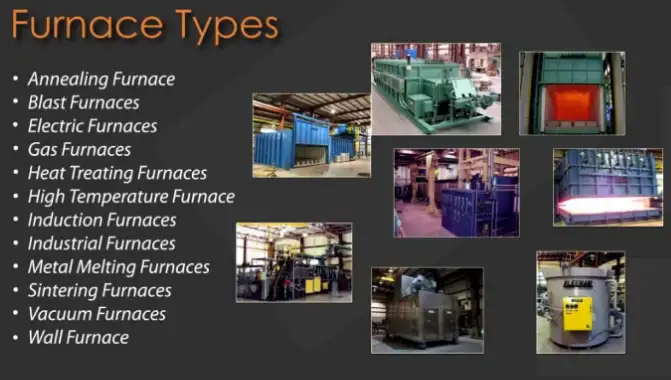
Primary furnace groups
- Induction furnace: Electromagnetic heating with clean heat transfer and rapid response. Common for precision alloy work where oxidation must remain low.
- Reverberatory furnace: Hearth-based melting with radiant heat. Suitable for bulk melting in larger casthouses.
- Tower furnace: Vertical geometry optimized for continuous feed. Effective for recycling and mixed-scrap lines.
- Tilting or barrel furnace: Batch melting with mechanical tilt for pouring. Good for small foundries with mixed runs.
- Crucible or holding furnace: Short-term holding near downstream equipment such as diecasting machines or gravity-casting stations.
Table 1: Furnace type comparison
| Furnace type | Best fit | Melt rate typical | Yield tendency | Capital intensity |
|---|---|---|---|---|
| Induction | Alloy control, diecasting feed | 0.1 to 10+ tonnes per hour | High | High |
| Reverberatory | Bulk melting | 1 to 20 tonnes per hour | Moderate | Medium |
| Tower | Continuous recycling feed | 1 to 15 tonnes per hour | High | High |
| Tilting | Flexible batch work | 0.5 to 8 tonnes per hour | Moderate | Medium |
| Crucible / holding | On-demand holding for machines | 0.01 to 1 tonnes per hour | Good for short runs | Low to medium |
Key selection criteria for plant operators
Selection depends on alloy mix, daily output target, scrap cleanliness, space constraints, permitted emissions, electrical capacity, and capital allocation. Use a weighted scorecard that rates each criterion then totals to reveal the best fit for your operation.
Suggested scorecard items
- Throughput alignment with daily tonnage target.
- Energy per tonne potential.
- Expected metal yield percentage.
- Capital expenditure limit.
- Plant footprint constraints.
- Maintenance complexity and spare-part lead times.
Table 2: Sample procurement scorecard
| Criteria | Weight (1-5) | Induction score | Reverberatory score | Tower score | Tilting score |
|---|---|---|---|---|---|
| Throughput fit | 5 | 4 | 4 | 5 | 3 |
| Energy efficiency | 5 | 5 | 2 | 4 | 3 |
| Yield potential | 4 | 4 | 3 | 5 | 3 |
| Capital cost | 3 | 2 | 3 | 2 | 3 |
| Maintenance complexity | 3 | 3 | 3 | 4 | 3 |
Refractory choice and lifetime management
Refractory lining impacts rebuild frequency, metal contamination risk, and thermal loss. Material options include fire-clay brick, high-alumina brick, corundum-mullite products, and castable refractories. Match lining to furnace duty: high-power melting calls for premium high-alumina or corundum-based materials, while holding service tolerates lower-cost fire-clay solutions.

Failure modes to monitor
- Penetration by molten metal
- Abrasion from charging hard scrap
- Chemical attack from contaminant fluxes
- Thermal spalling from rapid temperature changes
Table 3: Refractory types and properties
| Refractory type | Typical lifetime (hours) | Primary benefit | Primary downside |
|---|---|---|---|
| Fire-clay brick | 5,000 to 15,000 | Low initial cost | Lower resistance to penetration |
| High-alumina brick | 10,000 to 25,000 | High wear resistance | Higher material cost |
| Corundum-mullite brick | 15,000+ | Excellent chemical resistance | Highest cost |
| Castable refractory | 8,000 to 20,000 | Conforms to shapes, easy repairs | Requires skilled installation |
Energy intensity and operating cost drivers
Energy per tonne depends on furnace type, insulation quality, melt schedule, scrap preheating, and idle time. Typical ranges by technology provide planning guidance for budgeting and lifecycle cost calculations.
Typical energy ranges
- Induction furnaces: roughly 400 to 700 kWh per tonne in optimized setups
- Reverberatory furnaces: roughly 600 to 1,200 kWh per tonne given larger heat losses
- Tower furnaces: roughly 350 to 700 kWh per tonne when optimized for continuous feed
- Tilting furnaces: roughly 600 to 900 kWh per tonne depending on batch practice
- Crucible and holding devices: 200 to 500 kWh per tonne for short, continuous demand
Table 4: Energy profile by furnace group
| Furnace group | Energy intensity (kWh/t) | Notes |
|---|---|---|
| Induction | 400 to 700 | Depends on coil design and melt cycle control |
| Reverberatory | 600 to 1,200 | Large hearth increases radiant loss |
| Tower | 350 to 700 | Vertical charge improves yield |
| Tilting | 600 to 900 | Batch variability impacts efficiency |
| Crucible / holding | 200 to 500 | Small volumes with idle heat penalties |
Charging practice and scrap handling
Consistent scrap preparation prevents contamination, reduces dross, and shortens melt cycles. Steps for repeatable charging include removing nonmetallic items, segregating alloys, preheating heavy pieces, and charging in controlled sequences that minimize surges in temperature and unwanted reactions.
Charging sequence recommendations
- Start with clean, light pieces that melt quickly, then add heavier items that maintain bath temperature.
- Avoid introducing wet or coated scrap; moisture causes violent steam reactions that expel metal and force emergency shutdowns.
- Keep an inventory of alloy-specific bins labeled by nominal composition.
Degassing, fluxing, and inclusion control
Hydrogen pickup and nonmetallic inclusions reduce mechanical properties and induce porosity. Techniques for control include rotary degassing with inert gas, targeted flux application that binds oxides, and robust skimming protocols that remove dross thoroughly before transfer.
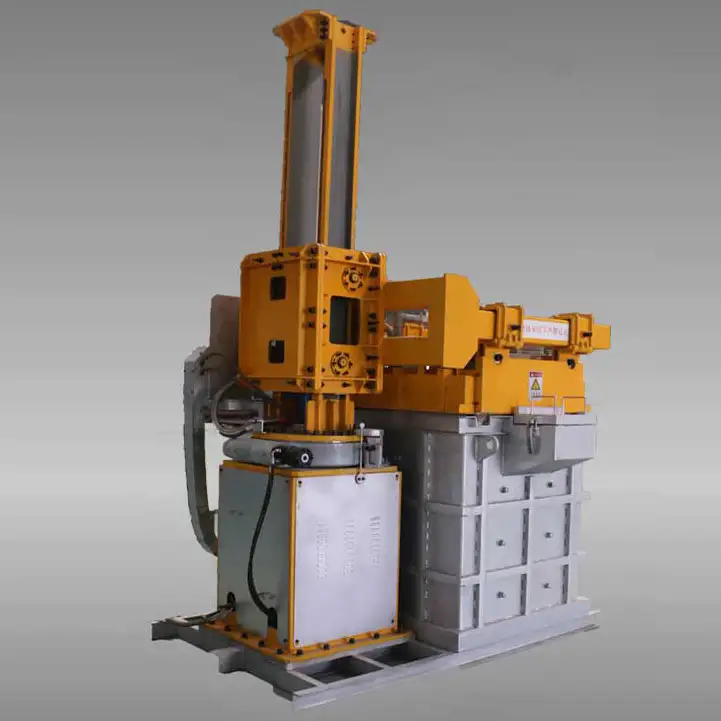
Rotary degassing practice
- Adjust rotor speed and gas flow to target dissolution kinetics without excessive turbulence.
- Measure hydrogen content after parameter changes to confirm gains.
- Regularly inspect rotor for wear and replace seals before performance drops.
Quality testing and metallurgical control
Use handheld spectrometers for fast alloy checks at charging and before pouring. For porosity and mechanical properties, sample castings must undergo pressure tests, tensile testing, or X-ray inspection for critical parts. Maintain a sampling log correlated with operator notes and furnace parameters to trace quality shifts to process changes.
Minimum testing routine for medium-volume plant
- Spectrometer reading for each furnace batch
- Porosity check on one sample per shift for production runs
- Tensile test each week for representative alloy combinations
Maintenance program and common KPIs
Preventive maintenance increases uptime and reduces emergency repairs. Track performance metrics to detect deterioration early.
Suggested KPIs
- Unscheduled stoppage frequency per 1,000 operating hours.
- Refractory penetration rate in millimeters per month.
- Average energy per tonne trend over rolling 30-day window.
- Metal yield percentage calculated from charged mass and delivered cast mass.
Spare parts and critical inventory
Maintain on-site critical spares such as induction coils, refractory bricks tailored to the current lining, rotor seals, burner nozzles, thermocouples, and control system backups. Long lead times for custom castable mixes or coil windings justify a small strategic reserve to avoid lengthy outages.
Emissions control and worker safety
Furnace fumes include particulate from dross, volatile compounds from coatings, and combustion byproducts in fuel-fired systems. Control options include baghouse filters for particulates, wet or dry scrubbers for acid-forming gases, and thermal oxidizers for VOC removal. Ensure hooding and local exhaust capture at charging points to protect operators.
Operator safety essentials
- Strict charging protocols with moisture checks for scrap.
- Full heat-resistant personal protective equipment for melt-room staff.
- Emergency pour containment with rated crucible traps and spill trays.
- Lockout-tagout for all tilt and charging mechanisms.
Lifecycle cost model inputs
Estimate total cost over an expected equipment life of five to ten years by summing capital cost, refractory rebuilds, energy, consumables, labour, spare parts, and downtime impacts. Perform sensitivity analysis on energy price and scrap contamination level to determine breakpoints for alternative equipment choices.
Installation notes for plant engineers
Coordinate early with utilities for electrical capacity and distribution when selecting induction systems. For fuel-fired furnaces, plan combustion air routing, stack routing, and permit timing so deadlines do not delay commissioning. Verify floor load capacity where heavy hearths or tower structures will be placed.
Electrical requirements checklist
- Confirm available service voltage and short-circuit capacity at the point of connection.
- Specify harmonic mitigation equipment if induction drive units present non-linear loads.
- Include cable routing and ventilation for power electronics racks.
Digital control and data logging
Modern process control units record temperature profiles, energy consumption, alarm history, and process setpoints. Use data to drive repeatable cycles, support process improvement, and supply evidence for warranty claims. Integrate logs with higher-level plant systems for traceability from charge through final cast part.
Rebuild planning and refractory replacement
Plan refractory replacement for planned outages in line with production schedules. Document previous lining performance with photos and measurement notes to refine future selections. Contract qualified installers for castable mixes to ensure bond integrity and minimize cure-time failures.
Purchasing checklist for vendors
When requesting quotes, require these items in writing to avoid ambiguity in performance guarantees:
- Melt-rate guarantee stating test method and charge composition used.
- Energy consumption baseline with defined measurement protocol.
- Detailed refractory spec plus expected rebuild intervals under defined duty.
- Warranty terms for power electronics, burners, mechanical tilt systems, and controls.
- Spare parts list with lead times and recommended stock levels.
- On-site commissioning scope and training scope for operators and maintenance staff.
Practical operator checklists for start of shift
- Inspect refractory surface for fresh penetration or hot spots.
- Verify degassing unit function and gas supply pressure.
- Confirm thermocouple calibrations within tolerance.
- Check charging pathway and scrap dryness.
- Inspect all lifting and tilt mechanisms for free motion and correct lubrication.
Common process problems and remedies
Issue: Rapid refractory penetration. Remedy: Lower peak temperature, switch to higher-alumina lining, and reduce abrasive charging. Issue: Excess dross production. Remedy: Review charge sequence, check flux use, adjust melt temperature, confirm rotor parameters for degassing. Issue: High energy per tonne. Remedy: Improve insulation, shorten idle periods, implement batch planning that reduces partial melts.
Table 5: Typical problems and corrective steps
| Problem | Common causes | Corrective action |
|---|---|---|
| High refractory wear | Abrasive scrap, high operating temperature | Change lining to high-alumina, enforce scrap prep |
| Frequent coil failures | Electrical transients, poor cooling | Install surge protection, verify coolant flow |
| Excessive porosity | High hydrogen content, poor degassing | Adjust rotary parameters, measure hydrogen, increase fluxing if needed |
| Low metal yield | High oxidation, poor skimming | Optimize charge order, improve skimming practice |
Recycling-focused furnace setups
Recycling lines face mixed alloys and contaminants that change thermal and chemical behavior. Tower furnaces provide vertical charging that reduces surface exposure, increasing yield. Enhance feed automation to keep charge consistent and add robust off-gas control since contaminants produce variable fumes.
Material handling recommendations for recycling
- Mechanical sorting that removes nonmetallic fragments and heavy contaminants.
- Preheating to drive off moisture and volatile coatings before charging.
- Continuous monitoring of alloy composition at downstream points.
Case and application notes
Small diecasting shop replacing a twenty-year-old holding crucible with modern induction holding unit reported shortened warm-up cycles and improved die life because metal oxygen content decreased prior to machine fill. Example: Recycling operation adopting tower geometry increased recovered metal per tonne of incoming scrap due to reduced oxidation exposure during charging.
Operator training and competence
Train operators on charge assessment, emergency procedures, degassing parameter selection, and safe handling of flux materials. Competency tests should include simulated emergency charging with a refusal to proceed if moisture checks fail.
Documentation and record keeping
Maintain a charge log with alloy labels, batch mass, energy consumption, degassing settings, and any corrective interventions. Correlate quality testing results to furnace logs to reveal patterns that inform process changes.
Frequently asked questions
1. Which furnace type delivers highest metal yield for scrap?
Vertical continuous-feed furnaces generally deliver the best yield when processing mixed scrap, because vertical charging reduces exposed surface area during melt, which reduces oxidation loss.
2. Which furnace type typically uses the least energy per tonne?
Induction units that feature efficient coil design and tight process control tend to show the lowest energy use on a per-tonne basis for alloy-accurate operations.
3. What is a practical refractory inspection routine?
Inspect lining visually at every scheduled outage, measure wear and penetration depth with a gauge, photograph locations of concern, then update the lining history log to support rebuild timing.
4. How often should degassing be performed for high-quality castings?
Degassing frequency depends on hydrogen pickup risks and alloy sensitivity, but common practice is to degas each batch or running melt that will supply critical castings.
5. What steps reduce dross formation?
Limit excessive bath temperature, follow controlled charging order that avoids turbulent melt, apply correct flux in proper amount, and skim dross frequently from the surface.
6. Can induction furnaces process mixed scrap reliably?
Yes. Induction units handle mixed scrap effectively when charging is controlled and alloy verification happens after melt to correct composition before pouring.
7. What emission controls are typical for melting rooms?
Common systems include baghouse filters for particulates, wet scrubbers for gaseous pollutants from coatings, and thermal oxidizers for volatile organic compounds. Hooding at charging points improves worker safety.
8. What maintenance items cause the most unexpected downtime?
Custom coil failures and refractory breaches often cause long outages because replacements may have long lead times or require specialty installers. Keep critical spares on site when possible.
9. How should energy per tonne be measured?
Record energy consumption over a period with consistent charge types, then divide net energy used by net aluminium mass produced to calculate kWh per tonne. Exclude non-process loads to isolate furnace energy.
10. What sampling frequency supports reliable alloy control?
For standard industrial parts, a spectrometer check on each batch provides adequate control. For safety- or performance-critical parts, increase sampling and add mechanical testing on representative castings.
Final remarks
High-performing aluminium melt and hold operations combine correct furnace choice, disciplined charging, precise temperature and degassing control, and robust refractory management. A structured program of measurement, recording, and continuous fine-tuning yields consistent metal quality, reduced energy per tonne, and longer equipment life.