

Ceramic fiber rope typically trades in a broad band from roughly $0.10 per meter for very thin commodity cord up to $600 per spool for specialty, heavy-duty reels, with a practical commercial average near $3 to $25 per meter depending on diameter, reinforcement, temperature rating, and purchase volume. The most reliable buying metric for engineering procurement remains price per kilogram and price per coil length rather than isolated per-meter quotes because mechanical reinforcement, packing, and minimum order quantities drive the real cost.
1. Why Ceramic Fiber Rope Price is Important
Ceramic fiber rope is an industrial consumable that performs sealing, gasketing, packing, and insulation duties in kilns, furnaces, petrochemical lines, boilers, and many metallurgical applications. Small differences in composition, reinforcement, or braid can change performance and life span dramatically, which in turn alters life-cycle cost. Getting the purchase unit right from the start avoids repeated replacements, unplanned downtime, and warranty disputes. The market shows a wide spread in nominal price points because product form, minimum orders, and seller margins vary significantly.
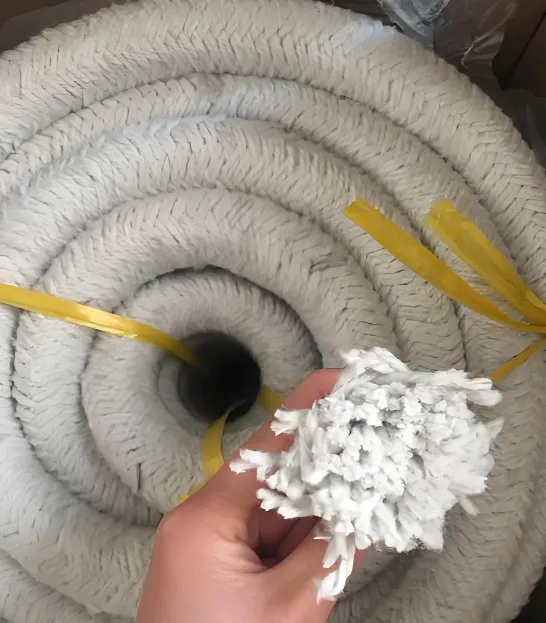
2. Quick market snapshot and representative price ranges
Below are representative commercial ranges you will encounter when requesting quotes. These figures reflect retail listings, manufacturer product pages, and customs/import summaries. Use these numbers only as starting references; a formal supplier quote will replace any estimate.
Representative price ranges (summary)
-
Commodity small-diameter rope, thin braid, unreinforced: $0.10 to $2 per meter (bulk, low MOQ).
-
Mid-range braided or twisted rope, common diameters, glass filament reinforced: $2 to $20 per meter depending on diameter and spool length.
-
Premium or reinforced rope, stainless-steel wire reinforcement, graphite impregnated, specialty spools: $20 to $600+ per spool / per specified length depending on configuration.
-
Import-average price signal (historical customs data): ~$4.67 per unit basis for recorded import shipments under HS code for similar product groupings. This gives a market-level benchmark when comparing quotation levels.
Note: quoting by kilogram or by full coil length produces clearer comparisons than isolated per-meter numbers because packing, core, and handling add fixed costs.
3. What determines the unit price: raw materials and construction factors
Price formation for ceramic fiber rope depends on four broad categories:
-
Raw fiber chemistry and grade
-
Lower cost products typically use lower alumina-silica mixes suited to 1000 to 1100 °C continuous use. Higher grade alumina-rich materials and specialty blends rated at 1260 °C or above command higher prices.
-
-
Physical construction
-
Twisted 3-ply cords, braided square cords, and flat tapes require different production steps. Braided or square-section rope can cost more than simple twisted rope because of higher processing time and tooling.
-
-
Reinforcements and treatments
-
Glass filament reinforcement gives dimensional stability on a budget. Stainless-steel wire or graphite impregnation adds significant cost but extends service life in abrasive or pressurized sealing roles. Coatings that improve abrasion or reduce dusting also add to price.
-
-
Packaging, minimum order quantity, and logistics
-
Small retail coils or cut lengths inflate unit price. Long continuous reels spread overhead and reduce per-meter cost. Export packing and shipping, customs duties, and order handling add fixed costs that show up in smaller orders. Zauba customs data can highlight realistic landed price ranges for import-dependent buyers.
-
4. Types and constructions of ceramic fiber rope with pricing implications
Below are the main constructions buyers will specify, and how each class typically affects price and application suitability.
4.1 Twisted 3-ply rope
-
Construction: multiple yarns twisted together.
-
Strengths: flexible, economical, commonly stocked.
-
Typical use: door seals, general gasketing, insulating fills.
-
Pricing: usually on the lower-mid end due to simple manufacture.
4.2 Braided round rope
-
Construction: many strands braided into a round cross-section.
-
Strengths: better surface integrity, lower dusting, good for packing glands.
-
Pricing: moderate; increases with braid density and filament reinforcement.
4.3 Square braided rope and packing tapes
-
Construction: square profile provides improved contact area for sealing.
-
Strengths: superior sealing in flange faces and doors.
-
Pricing: higher than round braid because manufacturing tolerances and tooling are stricter.
4.4 Wire reinforced and impregnated rope
-
Construction: integrated stainless wire or graphite impregnation.
-
Strengths: withstands mechanical compression, pressure, and abrasion.
-
Pricing: premium class; suitable where service life reduction would cost more than the material premium.
5. How diameter, reinforcement, and temperature rating change cost — tables and examples
To make procurement comparisons easier, engineers should examine price per unit mass and price per coil. The following tables synthesize public listing price bands and give engineering-friendly comparisons. These are representative and intended to be used alongside supplier quotations.
Table 1. Typical retail price by diameter and construction (approximate)
| Diameter (mm) | Common construction | Typical unit pricing (retail, per meter) | Typical reel / spool common lengths |
|---|---|---|---|
| 3 mm | twisted, unreinforced | $0.10 to $1.50 | 50 m to 1000 m |
| 6 mm | braided round, glass filament | $1.50 to $6.00 | 50 m to 500 m |
| 10 mm | square braided, glass or SS filament | $3.00 to $18.00 | 20 m to 300 m |
| 20 mm | heavy braided, SS reinforced | $15.00 to $60.00 | 10 m to 150 m |
| Custom heavy duty | SS wire + impregnation | $20.00 to $600 per spool | bespoke lengths |
Sources: manufacturer retail pages and bulk marketplaces. Price bands reflect minimum order and retail reels.
Table 2. Typical pricing by selling model: retail coil, bulk reel, and kg basis
| Selling model | Typical pricing pattern | Best use case |
|---|---|---|
| Cut lengths / small coils | highest unit price because binning and handling add fixed cost | small maintenance orders, emergency repairs |
| Full factory reels (bulk) | lowest unit price, lower per-meter due to spread overhead | production stocking, OEM programs |
| Price per kg at manufacturer | useful for specification comparators | multi-coil procurement, cost-modeling |
| Specialty impregnated rope | premium per kg; labor and material premium. | high abrasion or pressurized sealing |
Customs and import datasets suggest average landed import benchmarks useful to compare against supplier quotes.
Table 3. Typical performance-to-price tradeoffs (practical selection matrix)
| Priority | If you need | Recommended rope type | Cost implication |
|---|---|---|---|
| Lowest upfront cost | simple insulation without mechanical stress | thin twisted rope | low |
| Long life under abrasion | mechanical sealing under sliding motion | SS wire reinforced, graphite impregnated | high |
| Tight sealing at flange faces | low creep, good compression recovery | square braided, denser packing | moderate to high |
| High temperature continuous duty | 1260 °C rated alumino-silicate wool | higher grade fiber, mid to high price | moderate to high |
Performance specs and grades are available from refractory textile manufacturers.
6. Regional supply patterns and import price signals
Major supplier regions include China, India, and specialized manufacturers in Europe and North America that produce high-spec materials for demanding applications. Marketplaces show a broad spread because many small factories in China list minimal MOQs with aggressive unit pricing that increases materially when adjusted for shipping and certification needs. Historic customs records offer a pragmatic benchmark: import-level data aggregated under HS groupings show a recorded average near $4.67 for product shipments in certain sample months, which helps procurement compare their landed quotes to a baseline.
Notable points:
-
China commands a large share of global volume and listings, which drives aggressive nominal prices on international B2B marketplaces.
-
Suppliers in India and regional manufacturers offer locally competitive pricing and sometimes shorter lead times; sample listings show per kilogram offers in the Rs450 range in retail channels which equates to a few dollars per kilogram on conversion.
-
Western specialty sellers list spooled products at higher per-unit nominal prices but typically include traceable quality control and certification documentation suitable for regulated plants.
7. Sourcing tactics for procurement and inventory planning
Here are practical steps experienced buyers take to optimize cost without compromising performance.
-
Define the engineering boundary conditions precisely
-
Continuous temperature rating, peak spikes, chemical exposure, pressure load, mechanical abrasion, and expected replacement interval. These control choice of plain fiber, glass filament reinforcement, or stainless-steel wire reinforcement.
-
-
Ask for price breakdowns
-
Request separate line items for raw material, reinforcement, impregnation, packing, and freight. This simplifies future cost comparisons.
-
-
Compare price-per-kg and price-per-coil
-
Convert supplier quotes into both metrics. For small orders, the per-meter price often appears high but the kilogram price can be comparable.
-
-
Request test certificates and traceability
-
Factory certificates, continuous fiber grade, and test reports matter. Low upfront price without documentation can cause downstream failures and hidden costs.
-
-
Use staggered contracts and stock reels
-
Lock contract pricing on bulk reels to reduce unit cost while keeping small emergency kits stocked at higher retail pricing.
-
-
Validate vendor manufacturing process
-
If life-cycle cost matters, verify manufacture, braid density, and reinforcement method through samples and destructive lab testing if necessary.
-
Marketplaces can be used for price discovery but always validate the technical spec with the vendor.
8. Practical specification checklist engineers should include on purchase orders
When engineers issue a purchase requisition, include these minimum items to reduce ambiguity:
-
Product description: twisted/round/square braid, texturized yarn or continuous filament.
-
Fiber grade: nominal alumina percentage and continuous temperature rating, for example 1260 °C rated alumino-silicate.
-
Diameter and tolerance: specify nominal mm and allowed tolerance.
-
Reinforcement: none, glass filament, or stainless-steel wire (specify wire gauge and strand pattern).
-
Impregnation/coating: graphite, silicone, polymer-based binder, or none.
-
Packaging: coil length, core type, number of coils per carton, gross weight.
-
Certs required: batch chemical report, tensile strength test, dimension report, RoHS/other compliance if needed.
-
Delivery terms: Incoterm, lead time, minimum order quantity, sample policy.
A clear PO reduces conversions between vendor engineering and purchasing and avoids rework.
9. Cost-saving techniques while preserving service life and safety
-
Right-sizing diameter: Using a slightly larger diameter in a square braided profile might extend pad life and reduce replacement frequency even if the per-meter cost is higher.
-
Selective reinforcement: Use SS-wire reinforcement only where mechanical loads justify it. Elsewhere, glass filament may be adequate and far cheaper.
-
Spool consolidation: Buy full reels to reduce per-meter cost and minimize handling scrap.
-
Preventative storage: Protect rope from moisture and mechanical damage while in inventory. Improper storage increases dusting and shortens life.
10. Example procurement scenario and quick calculations
Scenario: Maintenance buyer needs 100 m of 10 mm square braided rope with glass filament reinforcement. Supplier quotes: (A) $8/m with 100 m spool; (B) $4/m but 500 m MOQ with freight charged at $200.
Calculate landed cost per meter for both options and choose based on inventory policy and cash flow. Always convert to price per kg if vendor supplies weight, then include duty and logistics.
11. Supplier checklist and recommended verification tests
When qualifying a new supplier, request:
-
Material composition report
-
Tensile and elongation test
-
Continuous temperature rating test
-
Abrasion resistance test and compression recovery figures
-
Production traceability and batch ID scheme
Specialty manufacturers and western retailers commonly include certified test data with premium spools, while commodity marketplace listings may not. Documentation is an important part of the effective unit cost.
12. Real-world pricing examples and references
Publicly listed retail and manufacturer pages illustrate market variety. Representative supplier listing ranges include very low per-meter listings on large B2B marketplaces and higher-priced spooled goods through recognized refractory suppliers in North America and Europe. Use these public lists only as a preliminary reference before technical qualification.
Tables: consolidated reference
Price snapshot table (synthesized public data)
| Source type | Representative unit price band | Notes |
|---|---|---|
| Large B2B marketplace listings | $0.10 to $5 per m for thin cords | MOQ and shipping can shift effective price. |
| Manufacturer retail spools (western) | $215 to $600 per spool (various lengths) | Higher traceability and certification. |
| Regional supplier retail (India) | ~Rs450 per kg retail listings | Converts to a few USD per kg; regional logistics matter. |
| Import customs average (sample HS group) | ~$4.67 per recorded unit basis | Useful benchmark for landed-cost comparison. |
13. FAQs
Ceramic Fiber Rope: 10/10 Procurement FAQ
1. What is the typical lifetime of ceramic fiber rope in a kiln door seal?
Lifetime depends on temperature cycling, mechanical load, and chemical exposure. In many furnace door applications under moderate cycling, rope can last months to years. Heavy abrasion or pressurized exposure shortens service life. Always validate with field trials.
2. How to compare quotes with different units (per meter, per kg, per spool)?
Convert all quotes to a common denominator.
Price per KG = Spool Price / Gross Weight (excluding packaging)
Use price-per-kg for bulk procurement and price-per-meter for precise maintenance planning.
3. Is stainless-steel wire reinforcement necessary?
Only when the rope will face mechanical compression, extrusion under pressure, or sliding abrasion. Wire reinforcement increases cost significantly but may reduce replacement frequency in harsh industrial roles.
4. Does higher continuous temperature rating always increase price?
Yes. Higher alumina content and specially processed fibers that sustain 1260 °C or above increase raw-material costs and require stricter manufacturing controls, pushing the market price higher.
5. Can I use cheap marketplace rope for critical applications?
6. How do I store rope to maximize shelf life?
7. What is a fair lead time for custom diameter and reinforced rope?
8. How do environmental or regulatory rules affect price and selection?
9. Which performance tests should be requested with the first order?
Request at minimum:
- Tensile strength test report
- Batch certificate of composition
- Continuous temperature rating verification
- Loss on ignition (LOI) data
10. Where should I look for realistic market price benchmarks?
Use a combination of B2B platforms for bulk floor prices, manufacturer retail pages for certified spools, and import/customs summaries to validate landed-price baselines.
14. Closing recommendations
-
Convert every supplier quote into price per kg and price per meter before comparing.
-
Require minimal technical documentation with the first sample shipment.
-
Buy full factory reels if you can carry stock. This lowers unit cost and reduces emergency replacement purchases.
-
Use reinforcement selectively where mechanical conditions demand it; validate by testing rather than assumption.
-
Use customs import data as a sanity check when evaluating international supplier landed cost.