
The United Arab Emirates is home to some of the world’s largest aluminum smelters and the most ambitious architectural projects. AdTech addresses the unique demands of the UAE market by supplying ceramic fiber blanket rolls that meet the stringent performance requirements of Emirates Global Aluminium (EGA) and the UAE Civil Defense (UCD) fire safety codes.
If your project requires the use of Ceramic Fiber Blanket, you can contact us for a free quote.
Our 1260℃ (2300℉) insulation blankets are the gold standard for lining reduction cells, launders, and holding furnaces in the aluminum industry. Furthermore, for the UAE’s iconic skyline, AdTech provides high-density refractory solutions designed for passive fire protection in steel structures and HVAC ductwork, ensuring compliance with the region’s Net Zero 2050 sustainability goals through superior energy retention.
UAE-Specific Industrial & Logistics Advantages:
-
Smelter-Grade Performance: Optimized for the aluminum electrolysis process, offering low iron (Fe2O3) content to prevent contamination in the melt.
-
Fire Safety Certification: Engineered to meet high-rise building fireproofing standards common in Dubai and Abu Dhabi.
-
Regional Logistics Hub: Strategically positioned to serve as a primary GCC supplier, with efficient shipping from Jebel Ali Free Zone (JAFZA) and KIZAD.
-
Thermal Efficiency: Helps UAE industries reduce carbon footprints by lowering heat loss in high-intensity industrial ovens and boilers.
-
Custom Fabrication: On-site cutting and slitting services available for bespoke gasket shapes and expansion joint strips.
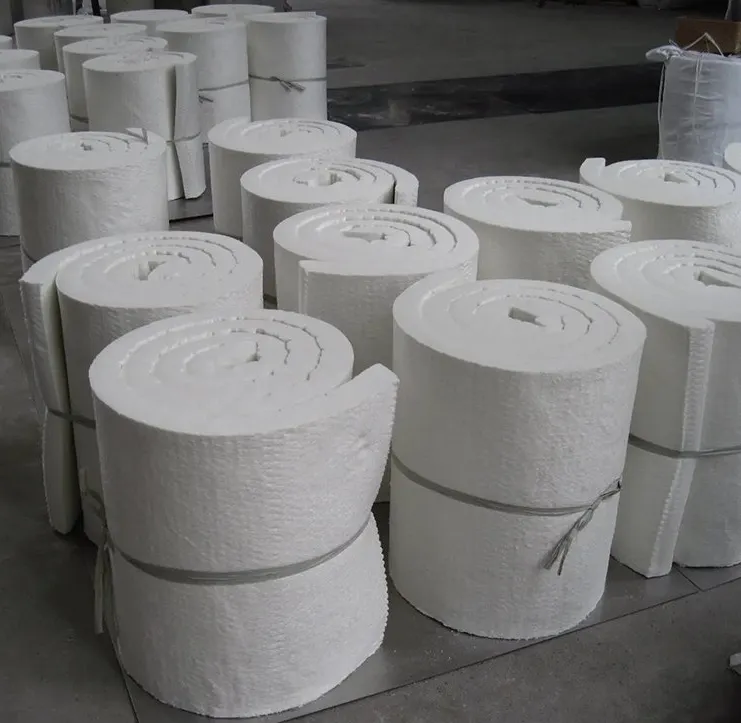
What is ceramic fiber blanket and why is it widely used in the UAE?
Ceramic fiber blanket is a lightweight, flexible, high-temperature insulation product made mainly from alumina and silica fibers. It is usually needle-punched into a resilient mat, supplied in roll form, and selected when heat retention, low thermal mass, fast installation, and ease of cutting are important.
Why does the UAE market use so much of it?
The UAE has a broad industrial base with high heat applications across oil and gas, refining, petrochemicals, marine repair, power generation, metal processing, glass, ceramics, cement, and process manufacturing. These sectors need insulation materials that can perform under elevated temperatures while reducing fuel loss and speeding maintenance work.
Ceramic fiber blanket is popular because it offers:
- Low thermal conductivity.
- Good resistance to thermal shock.
- Flexible installation around irregular shapes.
- Reduced heat storage compared with dense refractory.
- Lower structural load due to light weight.
- Faster heat-up and cool-down in many systems.
- Easy handling in layered lining designs.
Where is it commonly installed?
Typical UAE applications include:
- Furnace walls and roofs.
- Kilns and reheating units.
- Boiler doors and access covers.
- Expansion joints.
- Exhaust ducts and stacks.
- Turbine insulation covers.
- Petrochemical heater casings.
- Backup insulation behind brick or castable.
- Removable thermal blankets.
- Fire protection systems where approved design applies.
- Marine engine exhaust shielding.
- Process vessels in hot service.
Core product profile
| Property | Common market range in UAE | Why it matters |
|---|---|---|
| Fiber type | Alumina silica RCF, high purity grades, zirconia grades, bio-soluble alternatives in some cases | Defines temperature capability and handling profile |
| Classification temperature | 1260°C, 1360°C, 1430°C, sometimes higher specialty grades | First screening point |
| Density | 64, 96, 128 kg/m³, sometimes 160 kg/m³ | Affects resilience, installation feel, and lining design |
| Thickness | 6 mm, 12.5 mm, 25 mm, 38 mm, 50 mm | Controls thermal resistance and system build-up |
| Roll width | Usually 610 mm, sometimes 1220 mm | Important in take-off and cutting waste |
| Form | Blanket roll, foil-faced variant, module feedstock | Selected based on duty |
| Surface condition | Flexible, compressible, easy to cut | Valuable in field installation |
Which ceramic fiber blanket grades, sizes, and densities are most requested in the UAE?
The UAE market is driven by practical industrial demand, not by every grade that appears in a catalog. The fastest-moving items are usually standard blanket specifications that suit general maintenance and shutdown work.
Which grades move fastest?
In daily supply activity, the common requests usually center on:
- 1260°C ceramic fiber blanket
- 1360°C high purity blanket
- 1430°C zirconia blanket
Many buyers default to 1260°C in general-purpose thermal insulation. More demanding process zones may call for 1360°C or 1430°C, especially when a safety margin is needed or when the hot face sees severe service.
Which densities are common?
96 kg/m³ and 128 kg/m³ are the most frequently requested in the UAE. The lighter 64 kg/m³ density may appear in less demanding thermal packages, while 160 kg/m³ is typically linked with specialty use.
A frequent misunderstanding is the belief that heavier density always means better quality. That is not a reliable rule. Density should match the mechanical duty, thermal design, and lining layout.
Common sale-ready specifications
| Product type | Typical specification | Typical UAE use case |
|---|---|---|
| Standard industrial roll | 1260°C, 96 kg/m³, 25 mm | Furnace backup, duct insulation, hot equipment wrapping |
| Heavy-duty blanket | 1260°C, 128 kg/m³, 25 mm or 50 mm | Tougher handling zones, removable panels |
| High purity roll | 1360°C, 128 kg/m³ | Higher temperature process duty |
| Zirconia blanket | 1430°C, 128 kg/m³ | Severe-temperature areas |
| Thin blanket | 6 mm or 12.5 mm | Layering, seals, narrow cavity work |
| Thick blanket | 38 mm or 50 mm | Greater thermal resistance in multi-layer designs |
Common roll dimensions seen in trade channels
| Thickness | Typical roll length | Typical width | Approximate market use |
|---|---|---|---|
| 6 mm | Longer rolls | 610 mm | Gaskets, wraps, layered systems |
| 12.5 mm | 7.2 m or similar | 610 mm | General insulation and fit-up layers |
| 25 mm | 3.6 m or similar | 610 mm | Standard maintenance demand |
| 50 mm | 1.8 m or similar | 610 mm | High-thickness thermal build-up |
Buyers should compare square meter coverage, not only roll price. A lower roll price can be misleading if the actual area is smaller.
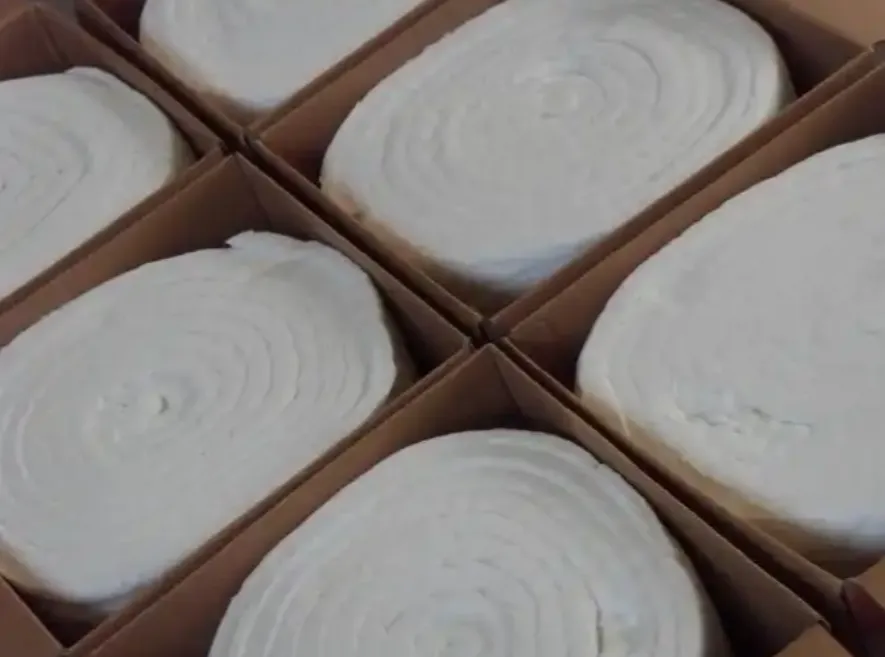
How does the UAE supply chain work, and who really holds the stock?
The UAE has one of the region’s strongest industrial trading and logistics networks. That is a major advantage, but it also creates confusion. Many companies can quote ceramic fiber blanket. Fewer can supply the exact grade with verified stock and clean documentation on time.
Which types of sellers operate in the UAE?
| Seller type | Main role | Strength | Weak point to check |
|---|---|---|---|
| Overseas mill with UAE channel | Produces the blanket and appoints local sales partners | Factory traceability and broad product family | Local stock may be limited |
| UAE stockist | Holds inventory in local warehouse | Fast dispatch and easier site delivery | Range may focus on common grades only |
| Industrial trader | Sources from several mills | Commercial flexibility | Origin consistency can vary |
| Insulation contractor | Supplies material with installation | Good application support | Product choice may be tied to contract package |
| GCC regional supplier | Holds stock outside UAE and ships in | Wider access to brands | “Ready stock” may not mean UAE stock |
Why does local stock matter so much in the UAE?
Because many shutdowns, vessel repairs, and maintenance interventions run on very short schedules. A supplier that can load from Jebel Ali, Dubai, Abu Dhabi, or Sharjah on the same or next day is very different from one that still needs customs processing or cross-border trucking.
What should we verify before trusting a stock claim?
We should request:
- Product code
- Quantity available now.
- Warehouse location.
- Batch labels
- Date-stamped inventory photos if needed.
- Delivery commitment to the actual site.
- Linked technical data sheet and safety data sheet.
This is especially important in urgent jobs. In real procurement, “available” sometimes means available from the mill after confirmation, which is not the same thing.
Also read: Ceramic Fiber Blanket Manufacturers in Qatar.
Which UAE locations matter most in supply logistics?
The strongest commercial movement often flows through:
- Jebel Ali
- Dubai industrial areas.
- Abu Dhabi industrial zones.
- ICAD
- Sharjah warehouses.
- Hamriyah and nearby logistics zones.
- Ruwais project supply channels.
- Fujairah marine and energy support routes.
For the buyer, this affects cost, delivery timing, and site coordination.
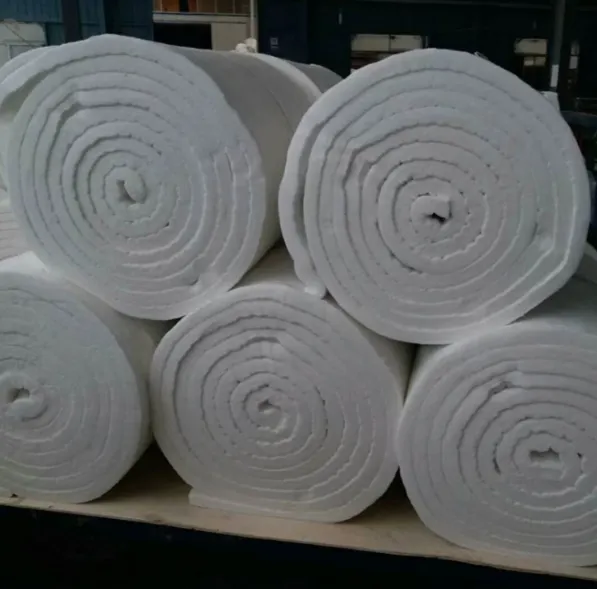
This question matters because it changes pricing logic, technical accountability, and lead time.
Signs of a real factory-backed source
A factory-backed seller should normally be able to provide:
- Factory address
- Brand ownership or official authorization.
- Stable product code system.
- Batch-linked technical documents.
- Consistent packaging.
- Mill-origin data sheets.
- Standard quality certificates.
Signs of a reliable local distributor
A serious local distributor should be able to provide:
- Immediate stock confirmation.
- Delivery history in UAE industrial projects.
- Warehouse access or stock photos.
- Fast quotation updates
- Site support or coordination with contractors.
- Commercial clarity on taxes and transport.
Warning signs of a weak trading chain
We should be cautious if the seller:
- Shares only a generic brochure.
- Avoids stating origin.
- Cannot confirm the stock location.
- Offers shifting lead times.
- Changes product code after order discussion.
- Has no safety data sheet.
- Cannot explain shrinkage, density, or temperature class properly.
Practical supplier qualification checklist
| Verification item | Why it matters | Good sign |
|---|---|---|
| Factory identity | Confirms origin | Clear plant details |
| UAE stock proof | Confirms immediate availability | Warehouse confirmation |
| Batch traceability | Protects quality control | Label and lot details |
| Technical support | Reduces application errors | Competent answers to engineering questions |
| HSE documentation | Required in industrial sites | Current SDS available |
| Delivery ability | Keeps schedule intact | Firm site delivery plan |
| Commercial transparency | Prevents hidden cost | Scope clearly stated |
What technical properties should engineers check before buying ceramic fiber blanket?
This is the point where good procurement separates itself from risky buying. Many sellers stop at thickness and temperature class. Engineers should go much deeper.
Is classification temperature enough?
No. Classification temperature is useful, but it is not the same thing as safe continuous service under every condition. Actual performance depends on the process atmosphere, peak temperature, cycling, gas velocity, contaminants, and whether the blanket is used as hot face, backup, or a removable lining component.
Which technical data points matter most?
| Technical property | Why engineers review it | Typical decision impact |
|---|---|---|
| Classification temperature | Basic screening | Helps narrow suitable grades |
| Recommended continuous use range | Practical service suitability | More useful than headline marketing |
| Linear shrinkage | Dimensional stability at heat | Critical in lining integrity |
| Thermal conductivity | Heat-loss performance | Needed in thermal calculations |
| Density | Physical structure | Affects compression and handling |
| Tensile behavior and resilience | Handling strength | Important in removable or compressed systems |
| Chemical composition | High-temperature behavior | Helps with severe service decisions |
| Shot content | Flexibility and texture | Affects quality feel and application |
| Fiber type | HSE and performance | Important in project approvals |
| Moisture and packaging | Condition on arrival | Important in yard storage and site use |
Why is shrinkage often overlooked?
Because many procurement teams focus on the visible commercial items first. Yet shrinkage is one of the most important technical indicators in high-temperature duty. If the blanket contracts too much after heat exposure, joints can open, hot spots can form, and shell temperatures can rise.
Does atmosphere change material choice?
Absolutely. Ceramic fiber blanket behaves differently in oxidizing, reducing, contaminated, or corrosive process conditions. Alkalis, phosphates, certain vapors, and mechanical abrasion can shorten service life. We should not assume that a catalog temperature alone tells the full story.
What about bio-soluble or low biopersistence alternatives?
In some applications, especially where occupational health requirements are strict, buyers may consider alkaline earth silicate or other low biopersistence fiber products, provided the temperature duty fits their capability. This should be judged case by case.
How do UAE buyers compare ceramic fiber blanket with mineral wool, calcium silicate, and aerogel blanket?
Ceramic fiber blanket is not the only thermal insulation product in the market. Selection should reflect service conditions, installation complexity, and operating economics.
| Material | Temperature capability | Main advantage | Main limitation | Typical UAE use |
|---|---|---|---|---|
| Ceramic fiber blanket | High to very high, depending on grade | Flexible, lightweight, rapid installation, strong thermal shock resistance | Fiber handling precautions, lower mechanical strength than rigid boards | Furnaces, kilns, doors, expansion joints, hot ducts |
| Mineral wool | Moderate temperature range | Cost-effective and good acoustic value | Not suitable in very high heat process zones | HVAC, building services, lower-temperature industrial work |
| Calcium silicate | Moderate to high | Rigid and durable under compression | Heavier and less adaptable to complex shapes | Pipe systems, rigid industrial insulation |
| Aerogel blanket | High efficiency at low thickness | Thin profile, very low conductivity | Higher cost | Space-constrained equipment and piping |
| Microporous insulation | Very high efficiency | Excellent thermal performance in limited thickness | Premium pricing and careful design needed | Specialized equipment and thermal barriers |
When is ceramic fiber blanket the best choice?
It becomes the preferred option when:
- Temperature is high.
- Geometry is irregular.
- Weight reduction matters.
- Maintenance speed is important.
- Thermal shock is expected.
- Multi-layer lining design is used.
When should another insulation type be considered?
If the system needs a rigid product, lower fiber release risk, or very thin insulation with aggressive energy-saving targets, another material may fit better.
What price factors shape ceramic fiber blanket sale offers in the UAE?
Price in the UAE is not only a factory number. Logistics, stock position, document demands, and project urgency all influence the final quotation.
Main commercial variables
| Price factor | Influence on cost | Buyer note |
|---|---|---|
| Temperature class | Higher class usually raises cost | Do not overspecify without reason |
| Density | Higher density may increase unit price | Compare cost per area and volume |
| Thickness | Thicker material costs more and changes freight loading | Confirm total coverage |
| Origin | Different mills have different price structures | Ask for origin declaration |
| Stock location | Local inventory may cost more but saves time | Check real availability |
| Delivery scope | Ex-warehouse and delivered-to-site are not equal | Normalize comparisons |
| Quantity | Bulk orders can reduce unit cost | Consolidate if possible |
| Testing and documentation | Project-specific requirements may add cost | Confirm document package early |
| Urgency | Shutdown demand can push price up | Secure stock ahead of outage |
| Packaging quality | Better packing reduces damage and waste | Valuable in long transport chains |
Why can the lowest quote become the most expensive purchase?
Because insulation delay can stop a job. If the rolls arrive late, arrive wet, arrive without approvals, or fail during installation, the cost of lost labor, access equipment, and plant downtime can be much higher than the difference between two supplier prices.
What is the best way to compare quotations?
Use a single comparison sheet with the same columns across all offers:
- Grade
- Density
- Thickness
- Total square meter coverage.
- Country of origin
- Stock location
- Delivery time
- Technical documents included.
- Transport scope
- Payment terms
- Replacement commitment in case of damage.
Without this structure, buyers often compare unlike items and think they are making a price decision when they are actually making a risk decision.
What documents, certificates, and compliance records should buyers ask for in the UAE?
In industrial procurement, documentation is not a formality. It is a quality control tool and a contract protection tool.
Minimum document package
| Document | Why it is needed |
|---|---|
| Technical data sheet | Defines declared performance |
| Safety data sheet | Supports safe handling and site approval |
| Certificate of origin | Confirms product source |
| Packing list | Confirms quantity and roll details |
| Commercial invoice | Commercial control |
| Batch or lot reference | Traceability |
| Conformity statement | Confirms supplied item matches order |
| Quality certificate | Supports vendor evaluation |
| Installation note, if available | Helps field teams reduce mistakes |
Which standards may appear in the market?
ASTM references are often used in ceramic fiber blanket discussions, especially in technical comparison and testing language. Certain EPCs, refineries, power operators, and industrial clients may also rely on internal approved vendor lists and project-specific specifications.
Why should labels on the rolls be checked?
Because the label ties the physical roll to the document package. If unlabeled rolls are delivered, it becomes harder to prove origin, lot identity, and compliance later. We strongly recommend checking this at goods receipt.
What about HSE review?
This is critical. Some ceramic fiber products require careful handling due to airborne fiber concerns during cutting, removal, and cleanup. UAE industrial sites usually expect SDS review, PPE use, dust control, and proper disposal practices. Procurement teams should build this into their material approval process.
Which applications in the UAE need different blanket selection logic?
Ceramic fiber blanket is not one single-use product. Selection should change with the equipment and service environment.
Furnace and kiln lining
These are classic applications. Blanket may work as hot face in certain designs, but more often it appears as backup insulation behind brick or castable. In these systems, thermal stability and shrinkage behavior matter more than a simple catalog claim.
Heater doors and removable covers
Compression recovery and handling strength become important. A blanket that looks fine on paper may lose practical value if it tears or compacts too quickly in repeated service.
Expansion joints
Flexibility is critical here. The product must accommodate movement while holding thermal integrity.
Petrochemical and refinery maintenance
Delivery speed, vendor documentation, and approval status often matter just as much as technical quality. A technically suitable roll is useless if it cannot pass submittal on time.
Marine and offshore work
Salt exposure, vibration, installation space, and project timing become more important. Packaging quality and logistics coordination often affect success in these jobs.
Typical application matching table
| Application | Usual blanket class | Common density | Key buying concern |
|---|---|---|---|
| Furnace backup | 1260°C or 1360°C | 96 or 128 kg/m³ | Shrinkage and thermal conductivity |
| Removable panel | 1260°C or 1360°C | 128 kg/m³ | Recovery after compression |
| Expansion joint packing | 1260°C to 1430°C | 96 or 128 kg/m³ | Flexibility and fit |
| Severe-temperature zone | 1430°C | 128 kg/m³ | Actual process atmosphere |
| Exhaust wrap | 1260°C | 96 or 128 kg/m³ | Fasteners and cladding |
| Temporary repair stock | Closest approved grade | Stock dependent | Lead time and traceability |
What installation practices help ceramic fiber blanket perform well in service?
Even high-grade material can fail if the installation work is poor. This is a common reality in plant maintenance.
What basic field rules should we follow?
- Keep rolls dry and clean before use.
- Avoid crushing the blanket beyond design intent.
- Stagger joints in multi-layer systems.
- Cut accurately to reduce gaps.
- Use suitable anchors, studs, washers, mesh, or cladding.
- Follow the design sequence rather than improvising on site.
- Keep mixed grades clearly separated.
Why is overcompression harmful?
Overcompression reduces effective thickness and can alter the designed insulation value. Installers sometimes try to force-fit material, thinking tighter is always better. In reality, controlled fit and correct layering are more important.
Should ceramic fiber blanket be exposed directly to service?
That depends on system design. Some installations keep it behind a protective layer. Others use surface treatments or rigidizers in selected cases. The correct method depends on temperature, gas flow, abrasion, and equipment geometry.
Why does first heat-up matter?
The initial heating cycle often reveals whether the installation was done properly. Poorly fitted joints, unsupported areas, and marginal hardware usually show up early. Controlled heat-up, when process conditions allow it, can help reduce stress on the lining.
Site handling precautions
| Practice | Reason |
|---|---|
| Use gloves and suitable workwear | Reduces skin irritation and dust contact |
| Wear respiratory protection during cutting and removal | Controls airborne fiber exposure |
| Avoid dry sweeping | Reduces dust dispersion |
| Use industrial vacuum cleanup where possible | Better housekeeping and HSE control |
| Store under cover | Protects product condition |
| Check packaging before issue to site | Avoids damaged stock entering workfront |
What mistakes do procurement teams most often make when buying ceramic fiber blanket in the UAE?
The same purchasing errors appear again and again. Most are avoidable.
Common procurement mistakes
- Buying by headline temperature only.
- Assuming “manufacturer” means UAE factory stock.
- Comparing quotations by roll count rather than covered area.
- Ignoring shrinkage data.
- Treating higher density like an automatic quality upgrade.
- Forgetting anchors and accessories in the total package.
- Accepting generic brochures instead of batch-linked records.
- Failing to verify actual stock location.
- Leaving approval and HSE documents too late.
- Ordering close to shutdown date without contingency stock.
We have also seen buyers approve one sample and receive a different production lot later. The best protection is to tie approval to the exact product code, origin, and batch traceability where possible.
How should we select the right ceramic fiber blanket in the UAE step by step?
A structured process is better than relying on habit or the last project’s material.
Step 1: Define the actual service conditions
We need the following data:
- Maximum operating temperature.
- Peak short-duration temperature.
- Continuous or cyclic duty.
- Atmosphere type.
- Chemical exposure.
- Mechanical vibration or impact.
- Space limitation.
- Target shell temperature or heat-loss level.
Step 2: Define the application role
Is the blanket serving as:
- Backup insulation.
- Main hot-face lining.
- Door fill
- Expansion joint material.
- Duct wrap
- Removable cover core.
- Repair stock.
The answer changes material selection.
Step 3: Match grade, density, and thickness
| Service need | Likely choice | Why |
|---|---|---|
| General high-temperature backup | 1260°C, 96 or 128 kg/m³ | Good availability and balanced cost |
| Hotter process zone with more margin | 1360°C, 128 kg/m³ | Better temperature headroom |
| Severe-temperature section | 1430°C, 128 kg/m³ | Higher class material |
| Flexible sealing or movement joint | 1260°C to 1430°C, 96 or 128 kg/m³ | Good fit and resilience |
| Space-limited insulation layer | Thin blanket or alternate material | Depends on thermal target |
Step 4: Confirm stock and commercial scope
Before purchase order issue, verify:
- Exact quantity in stock
- Location
- Delivery lead time.
- Included transport.
- Documents included.
- Origin
- Replacement policy if site damage occurs.
Step 5: Coordinate with installation planning
Material selection should align with:
- Anchors
- Cladding
- Mesh
- Studs and washers.
- Access window
- Labor plan
- Waste allowance.
This prevents the common mistake of buying blanket first and figuring out the rest later.
Where can buyers find ceramic fiber blanket stock in the UAE without adding supply risk?
The safest route is to shortlist industrial insulation suppliers and stockists that already serve oil and gas, petrochemical, marine, power, and heavy industrial maintenance work in the UAE. We should favor suppliers that can respond quickly with all of the following:
- Live stock confirmation.
- Technical data sheet.
- Safety data sheet.
- Product code and batch details.
- Clear origin statement.
- Delivery commitment into the job site.
- Experience with similar applications.
This matters in Dubai and Abu Dhabi, but it matters just as much in Ruwais, ICAD, and marine repair routes where job windows can be tight and site approval paths can be strict.
At AdTech, we would always advise buyers to ask one direct commercial question before moving ahead: “If we release this order today, what is the exact date and mode of delivery to our gate?” That single question often reveals the difference between genuine supply capability and marketing language.
Why does E-E-A-T style content matter when choosing a ceramic fiber blanket supplier in the UAE?
From a buyer’s perspective, trustworthy content is not just a search ranking issue. It is a risk filter. Good industrial content should show:
- Real application knowledge
- Honest limits of the material
- Technical depth beyond sales phrases
- Clear documentation expectations
- Practical buying advice linked with site reality
If a supplier page only repeats generic wording without discussing shrinkage, density logic, batch traceability, local stock, or handling safety, that page may rank temporarily, but it does not help serious engineers or buyers make sound decisions.
A strong supplier page should answer practical procurement and engineering questions in one place. That is exactly what industrial decision-makers want, and it is also the type of content that tends to perform well in modern search.
FAQs about ceramic fiber blanket manufacturer, stock, and supplier options in the UAE
Ceramic Fiber FAQ: UAE Industrial Standards
1. Is ceramic fiber blanket manufactured inside the UAE?
While many suppliers operate in the UAE, primary manufacturing (melting and spinning raw fiber) is limited. Most players in Ajman, Sharjah, and Umm Al Quwain function as specialized converters or secondary manufacturers who needle, cut, and package fiber blankets often sourced from large-scale international mills.
2. Most common ceramic fiber blanket grade in the UAE?
The 1260°C grade is the high-volume standard across the Emirates. However, for specialized refineries in Abu Dhabi and metal smelters in Dubai, the 1430°C (Zirconia) and Biosoluble (1200°C) grades are increasingly specified due to strict HSE and performance protocols.
3. Which density should we choose, 96 or 128 kg/m³?
In the UAE’s heavy industrial projects, 128 kg/m³ is the preferred choice for primary linings due to its superior mechanical strength and lower thermal conductivity at high heat. 96 kg/m³ is typically reserved for backup insulation or less demanding temperature control areas to optimize costs.
4. How to verify whether a supplier has real UAE stock?
Vague promises of “GCC availability” often mean the material is stuck at a border. For urgent maintenance, verify the physical warehouse location (e.g., Al Qusais, Jebel Ali Free Zone, or Sharjah Industrial Area). Request real-time photos of the batch labels and an invitation for a site inspection before finalizing.
5. Suitable for UAE refineries and petrochemical plants?
Absolutely. Ceramic fiber blankets are critical for reformer linings, crude oil heaters, and tube seals in the downstream sector. Given the high-pressure steam environments common in the UAE, selecting low-silica high-purity grades is essential to prevent equipment fouling.
6. What documents should come with the shipment?
Standard project compliance in the UAE requires:
- Certificate of Origin (COO): Verified by the local Chamber of Commerce.
- Technical Data Sheet (TDS): Outlining chemistry and density.
- Material Safety Data Sheet (MSDS): For HSE site entry.
- Third-party Test Reports: Confirming shrinkage and conductivity.
7. Can it be used outdoors in the UAE climate?
Direct exposure to the UAE’s extreme humidity and salt spray will destroy the blanket’s integrity. It must be protected by weather-proof cladding (Aluminum or SS316). Without a proper enclosure, the fiber will act as a sponge, leading to massive heat loss and potential “Corrosion Under Insulation” (CUI) on the piping.
8. What products are often purchased together?
Buyers usually package the blanket with SS310/SS316 lacing pins, washers, and clips. Other associated materials include ceramic fiber paper (for gaskets), ceramic fiber board (for rigid baffles), and high-temperature cloth or ropes for valve and flange covers.
9. Why is shrinkage data important?
10. Main mistake buyers make when comparing offers?
The biggest error is comparing price per roll without checking the roll area and thickness tolerance. A cheaper roll might be shorter or have inconsistent density, leading to a higher “cost per square meter” of effective insulation and increased energy bills during furnace operation.
What should buyers remember before placing the final order?
Ceramic fiber blanket in the UAE should be treated as a technical and logistical purchase, not a simple commodity item. The strongest source is usually the one that combines verified stock, reliable origin, practical engineering support, sound documentation, and timely site delivery. We should confirm the exact grade, density, thickness, shrinkage behavior, safety records, and warehouse position before issuing a purchase order. If we manage those checks carefully, we reduce downtime risk, improve thermal performance, and secure material that truly fits the job rather than merely matching a search term.
If the goal is to source ceramic fiber blanket manufacturer, stock, supplier, or sale-ready inventory in the UAE, the winning decision is clear: choose the supplier that can prove performance, prove availability, and prove accountability. That is the standard that serious engineers and procurement teams should expect.