

Alumina ball filter media refers to high-purity spherical ceramic balls—available as activated or inert alumina—designed for deep bed filtration, water treatment, and gas dehydration. They offer exceptional mechanical strength, high thermal resistance, and reliable particle retention. Ceramic alumina ball filter media works because it combines chemical stability, mechanical strength, and precise particle geometry into one supporting layer that most filtration systems simply cannot function properly without. After supplying these balls to water treatment plants, petrochemical facilities, and industrial gas scrubbers for well over a decade, if you need a support media that resists acid, alkali, high temperature, and mechanical crushing while maintaining consistent flow distribution, alumina ceramic balls in the 92% to 99% purity range remain the most cost-effective and durable choice on the market, provided the sizing and grade are matched correctly to your vessel and process conditions.
If your project requires the use of Alumina Ball Filter Media, you can contact us for a free quote.
What Is Ceramic Alumina Ball Filter Media?
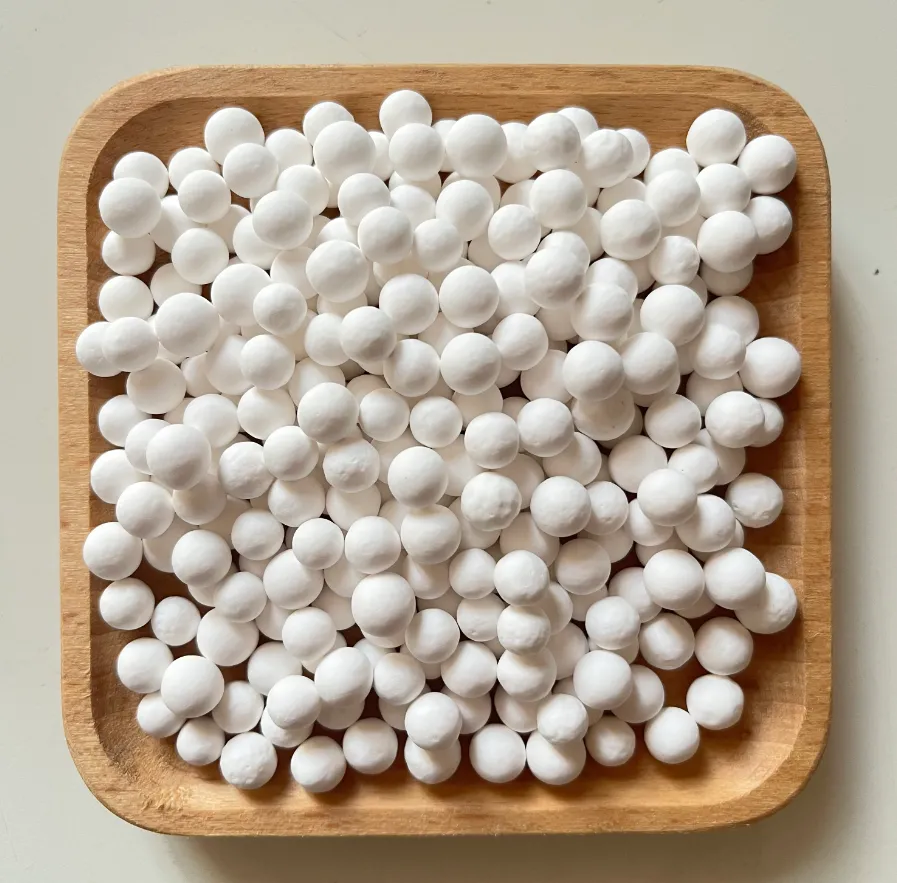
Ceramic alumina balls are inert, spherical support media manufactured from calcined or activated aluminum oxide (Al2O3), formed under high pressure and fired at temperatures often exceeding 1600°C. Unlike quartz sand or gravel, alumina balls do not degrade in acidic or alkaline environments, do not swell, and hold their shape under continuous mechanical load for years.
We manufacture these balls primarily for three purposes: acting as inert support media beneath catalyst beds, serving as packing media in distillation and absorption towers, and functioning as the bottom support layer in mechanical filters (sand filters, carbon filters, resin filters) where they prevent fine media from escaping through underdrain systems while promoting even liquid or gas distribution.
The term “filter media” here is slightly different from adsorptive media like activated carbon or zeolite. Alumina balls themselves don’t remove contaminants through adsorption in most low-alumina grades; they function mechanically, preventing channeling, protecting nozzles and strainers, and distributing flow evenly across the vessel cross-section. Higher purity grades (99%) are sometimes used as actual catalyst carriers or in high-temperature chemical reactions where the ball itself participates in heat transfer or acts as an inert catalyst bed support.
Why Purity Percentage Matters
The Al2O3 content directly determines density, hardness, and thermal resistance. A 23-30% low alumina ball behaves very differently from a 90%+ high alumina ball, both in cost and performance. We’ll cover this distinction in detail in the composition table below, because this single specification confuses more buyers than any other.
How Is Ceramic Alumina Ball Filter Media Manufactured?
Our production line follows a process that hasn’t changed fundamentally in decades, though equipment precision has improved significantly. Raw bauxite or industrial alumina powder gets blended with binding agents and, depending on the target grade, silica or other mineral additives. This mixture is then formed into spheres using either a rolling granulation method (pan pelletizer) or isostatic pressing for higher-precision balls used in catalyst support applications.
After forming, the green balls go through a drying stage to remove moisture, followed by sintering in tunnel kilns or shuttle kilns at temperatures ranging from 1200°C for lower grades to over 1700°C for high-purity 99% alumina. The firing process determines final density, porosity, and crush strength.
Quality control at this stage involves sampling batches for:
- Bulk density measurement
- Crush strength testing (typically using a compression tester rated in Newtons or kgf).
- Acid solubility testing (immersion in HCl solution to measure weight loss).
- Sphericity and dimensional tolerance checks using sieve analysis.
We run these tests on every production batch because even a small deviation in firing temperature can shift crush strength by 15-20%, which matters enormously when the balls sit at the bottom of a 3-meter filter bed carrying tons of load pressure.
Common Manufacturing Defects to Watch For
Buyers rarely see the production floor, so they need to know what defects to check for on arrival:
- Cracked or hairline-fractured balls from rapid cooling.
- Oversized or undersized balls outside tolerance due to worn dies in the pelletizer.
- Uneven surface texture indicating inconsistent binder distribution.
- Color inconsistency which can signal impurity contamination or firing temperature variance.
We always recommend customers request a certificate of analysis (COA) with each shipment, along with photos of the actual batch before it leaves the factory.
What Chemical Composition Makes Alumina Balls Effective?
The performance of ceramic alumina balls comes down almost entirely to their Al2O3 content and the secondary oxides present. Here is the composition breakdown we typically quote to customers:
| Grade Type | Al2O3 Content | SiO2 Content | Fe2O3 Content | Typical Use Case |
|---|---|---|---|---|
| Low Alumina Ball | 23-30% | 65-72% | <2% | Water filter support, low-cost tower packing |
| Medium Alumina Ball | 48-75% | 20-45% | <1.5% | General chemical tower packing, drying towers |
| High Alumina Ball | 90-92% | 5-8% | <0.5% | Catalyst bed support, high-temperature reactors |
| Ultra-High Alumina Ball | 95-99% | 1-3% | <0.3% | Precision catalyst carriers, extreme corrosion environments |
Lower alumina content balls cost less but tolerate less thermal shock and slightly weaker acid resistance. For a standard municipal water treatment filter bed, we generally recommend the 23-30% or 48-75% range because the operating environment doesn’t demand extreme chemical resistance, and the cost savings over a full vessel loading (which can require several tons of media) is substantial.
For petrochemical reactors handling strong acids or operating above 800°C, nothing below 90% alumina content should be considered. We’ve seen customers try to cut costs with medium-grade balls in high-temperature reformer applications, and the result was media breakdown within eighteen months instead of the expected five-to-seven-year service life.
Read more: 92 Alumina Ceramic Balls: High-Density Grinding Media with Low Wear Loss
Which Sizes and Specifications Are Available for Custom Orders?
This is where most inquiries land on our desk. Standard diameters we produce range from 3mm to 90mm, though the most commonly ordered sizes fall between 10mm and 50mm.
| Diameter (mm) | Typical Application | Bulk Density (g/cm³) | Crush Strength (N per ball, approx.) |
|---|---|---|---|
| 3-6mm | Fine catalyst bed support, small reactor packing | 2.2-2.4 | 150-250 |
| 8-13mm | Standard tower packing, mid-size filter support | 2.0-2.3 | 300-450 |
| 19-25mm | Bottom support layer in sand/carbon filters | 1.9-2.2 | 500-800 |
| 38-50mm | Heavy-duty vessel base layer, distributor protection | 1.8-2.1 | 900-1400 |
| 60-90mm | Large diameter tower base support, extreme load applications | 1.7-2.0 | 1500-2200 |
Custom sizing is genuinely one of the more flexible parts of our production capability, because the pan granulation process allows us to adjust die settings and rolling time to hit non-standard diameters, such as 22mm or 35mm, when a customer’s underdrain nozzle slot size demands a very specific media diameter to prevent leakage.
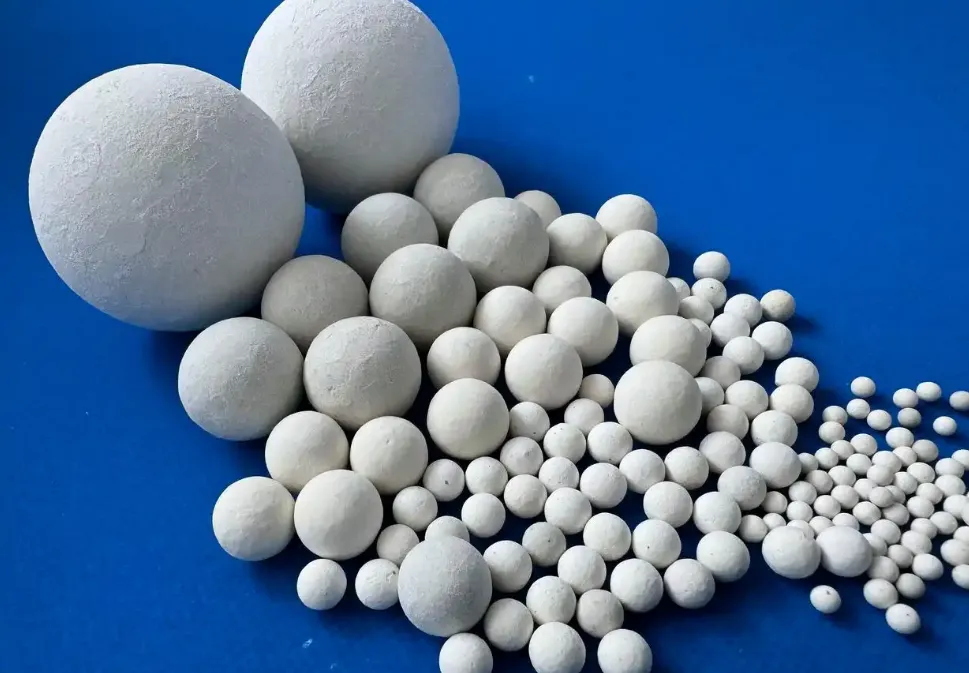
One point we always clarify with new buyers: filter bed support layers are almost never a single size. A typical multi-layer support bed for a sand filter looks like this from bottom to top:
- Bottom layer nearest the underdrain: 38-50mm balls (deepest, largest, protects nozzles).
- Middle layer: 19-25mm balls.
- Upper support layer: 8-13mm balls.
- Filtration media (sand, anthracite, GAC) sits on top.
Getting this layering wrong, either using uniform sizing throughout or reversing the gradient, causes media migration and premature filter failure. We’ve corrected this exact mistake for at least a dozen clients who purchased media elsewhere without proper layering guidance.
How Do Ceramic Alumina Balls Compare to Other Support Media?
Buyers frequently ask whether alumina balls are actually necessary compared to cheaper alternatives like gravel, quartz sand support layers, or plastic support grids. Here’s an honest comparison based on our field experience.
| Property | Ceramic Alumina Balls | Quartz Gravel | Plastic Support Grid | Porcelain Balls |
|---|---|---|---|---|
| Chemical resistance | Excellent (acid/alkali stable) | Moderate (dissolves slowly in strong alkali) | Good but temperature-limited | Good |
| Temperature tolerance | Up to 1700°C (high grade) | Up to 800°C | Under 100°C typically | Up to 1200°C |
| Mechanical strength | Very high | Moderate, prone to fracture over time | Low, can deform under load | Moderate |
| Uniformity of shape | Precise, consistent spheres | Irregular, variable sizing | Uniform but not spherical | Fairly consistent |
| Service life | 5-10+ years | 2-5 years | 2-4 years | 4-7 years |
| Cost per ton | Moderate to high | Low | Low to moderate | Moderate |
Quartz gravel remains popular for budget municipal projects because the upfront cost is lower, but we’ve inspected filter vessels where irregular gravel shapes created preferential flow channels within just two years, reducing filtration efficiency by an estimated 15-20% based on flow testing our engineers conducted on-site. Alumina balls, because of their precise sphericity, distribute flow far more evenly and resist the crushing that irregular gravel experiences under sustained bed weight.
Plastic support grids work well in low-temperature, low-pressure residential systems but have no place in industrial chemical processing where temperature and corrosive exposure would degrade them within months.
What Industries Actually Use This Media?
We’ve shipped ceramic alumina balls into a wider range of industries than most people expect. The common thread across all of them is the need for an inert, mechanically stable base layer.
Water and wastewater treatment: municipal filtration plants, industrial wastewater pretreatment systems, and reverse osmosis pretreatment filters all use alumina balls as underdrain protection beneath sand, anthracite, or granular activated carbon layers.
Petrochemical refining: catalyst bed support in hydrotreating units, reformers, and hydrocracking reactors, where the balls sit beneath expensive catalyst material and prevent it from falling into distribution piping.
Chemical processing towers: packing and support media in absorption columns, drying towers, and scrubber systems handling corrosive gases.
Fertilizer and gas industries: desulfurization towers and ammonia synthesis units, where high-alumina balls tolerate both chemical exposure and elevated operating temperatures.
Aquaculture and specialty filtration: smaller diameter, food-grade compliant balls used in biological filter systems for large-scale fish farming operations, where surface area also supports beneficial bacteria growth.
A practical note from our order history: nearly 60% of our custom size requests come from water treatment engineering firms retrofitting older filter vessels where original support media has degraded, while the remaining volume splits between petrochemical EPC contractors and specialty industrial buyers.
Read more: What Are Alumina Ceramic Balls Used For?
How Do You Choose the Right Size and Grade?
This decision genuinely determines whether a customer gets five years of trouble-free operation or has to replace media within eighteen months. We walk every new customer through the following checklist before finalizing an order.
Step one: identify your underdrain or nozzle slot width. The ball diameter of your bottom support layer must exceed the slot opening by at least 1.5 to 2 times to prevent media loss. If your nozzle slots are 10mm, your smallest support layer ball should not be under 15-20mm.
Step two: calculate bed depth and total load weight. Deeper beds and taller vessels place more crushing pressure on lower layers, requiring higher crush-strength media, which usually correlates with larger diameter and higher alumina content.
Step three: determine chemical exposure. pH extremes, oxidizing agents, and halogen exposure all push the decision toward higher alumina content grades, regardless of temperature.
Step four: confirm operating temperature range. Anything consistently above 600°C requires 90%+ alumina content to avoid gradual softening and dimensional shrinkage.
Step five: verify vessel diameter for layering calculations. Larger diameter vessels typically need a thicker graduated support bed (sometimes four layers instead of three) to properly distribute flow without dead zones near vessel walls.
We’ve found that skipping step one is the single most common and costly mistake. Buyers order media based on catalog convenience rather than measuring their actual nozzle slot dimensions, then wonder why fine media keeps leaking through within the first six months of operation.
Read more: Alumina Ceramic Ball Price: Bulk Rates and Market Cost Factors
What Physical and Mechanical Properties Should Engineers Verify?
Beyond chemical composition, several physical properties determine real-world performance, and we recommend engineers request test data on each before finalizing a purchase order.
| Property | Recommended Testing Method | Acceptable Range |
|---|---|---|
| Crush strength | Compression testing per ball (Newton or kgf) | Varies by diameter, see size table above |
| Water absorption rate | 24-hour immersion weight gain | Under 5% for high-grade balls |
| Acid solubility | HCl immersion loss test | Under 2% weight loss for premium grades |
| Bulk density | Standard cylinder fill and weigh method | 1.7-2.4 g/cm³ depending on grade |
| Sphericity | Visual and caliper measurement, tolerance ±0.5mm | Within stated diameter tolerance |
| Thermal shock resistance | Rapid heating/cooling cycle test | No visible cracking after 10 cycles for high-alumina grades |
Water absorption rate is a property buyers often overlook, but it matters significantly in freeze-thaw climates or systems with cyclic temperature swings. Balls with high porosity absorb more moisture, and repeated freeze-thaw cycling can eventually cause internal fracturing even in otherwise strong media.
We test every production lot for acid solubility because this figure correlates directly with long-term dimensional stability. A ball losing more than 3-4% weight after HCl immersion will likely show measurable erosion within two to three years of continuous acidic exposure, shortening service life considerably below the typical five-to-ten-year expectation.
How Should You Install and Maintain This Media in Filter Vessels?
Proper installation prevents most premature failures we’ve diagnosed over the years. The sequence matters as much as the media quality itself.
During installation, vessels should be loaded in dry conditions when possible, with each layer leveled carefully before the next is added. Uneven loading creates low spots where finer filtration media above can settle unevenly, leading to localized channeling once the system starts operating under flow.
We recommend backwashing new installations at a lower flow rate initially, gradually increasing to full design flow over the first 24-48 hours. This allows any loose fines from the manufacturing or shipping process to work through the system without disturbing the graduated bed structure.
For ongoing maintenance, periodic bed inspection (annually for most industrial systems) should check for:
- Media compaction or settling that reduces effective bed depth.
- Surface fouling or biological growth in water treatment applications.
- Visible cracking or fragmentation, particularly in the bottom support layer bearing the most load.
- Uneven distribution patterns visible during backwash cycles (uneven bubbling indicates channeling).
Alumina balls themselves rarely need replacement on the same schedule as the active filtration media above them (sand, carbon, resin). In most of our installations, the support layer outlasts two to three replacement cycles of the primary filtration media, provided the initial sizing and grade selection matched the application correctly.
What Should Buyers Look for in a Manufacturer?
Having operated on both the production and export side of this industry, we understand why sourcing decisions confuse buyers who aren’t chemical engineers by training. Here’s what genuinely separates a reliable supplier from a risky one.
Documented testing capability. Ask for actual lab test reports, not just marketing spec sheets. A manufacturer running in-house crush strength and acid solubility testing on every batch will happily share this data; one relying purely on stated specifications without verification usually won’t.
Custom sizing flexibility without massive minimum order quantities. We’ve adjusted die tooling for customers needing as little as two tons of a non-standard 22mm size, because retrofit projects often require exact matching to existing vessel geometry, not whatever size happens to be sitting in warehouse stock.
Consistent batch-to-batch quality. Request samples from at least two different production runs, months apart, and compare dimensional tolerance and crush strength. Genuine manufacturers with proper kiln temperature control show minimal variance; trading companies reselling from multiple unverified sources often show inconsistency.
Packaging and shipping practices suited to your logistics. Alumina balls are heavy and dense; poor packaging (thin woven bags versus reinforced jumbo bags) leads to breakage during transit, particularly for larger diameter balls that concentrate weight on fewer contact points per bag.
Willingness to provide application engineering support. A supplier who asks about your nozzle slot dimensions, bed depth, and operating temperature before recommending a size is thinking about your long-term outcome rather than just closing a transaction.
We’ve had customers switch to us specifically after a previous supplier shipped media with 8-10mm dimensional variance within a single “19mm” order, which threw off their entire graduated bed calculation and caused fine sand to migrate through gaps within the first month of operation.
Frequently Asked Questions
1. What is the typical lifespan of ceramic alumina ball filter media?
Under normal operating conditions with proper sizing and grade selection, alumina balls typically last five to ten years, significantly longer than quartz gravel or plastic support media, because they resist both chemical attack and mechanical crushing far better.
2. Can ceramic alumina balls be reused after removing them from a filter vessel for maintenance?
Yes, provided they show no visible cracking, significant surface erosion, or dimensional loss during inspection. We recommend washing and inspecting each batch before reloading, discarding any balls with hairline fractures since these will fail under future load stress.
3. What is the difference between alumina balls and porcelain balls?
Alumina balls contain higher Al2O3 content and generally offer superior chemical resistance and mechanical strength compared to porcelain balls, which contain more silica and clay content. Porcelain balls cost less but tolerate lower temperatures and weaker acid exposure over extended periods.
4. Do higher alumina content balls always perform better?
Not necessarily for every application. Higher alumina content increases cost and performance in high-temperature or highly corrosive environments, but for standard municipal water filtration at ambient temperature, medium or low-grade alumina balls perform adequately and offer better cost efficiency.
5. How do I calculate how much alumina ball media I need for my filter vessel?
Calculate the volume of each support layer based on vessel diameter and desired layer thickness (typically 100-150mm per layer), then convert to weight using the bulk density figures in the specification table, adding roughly 5-10% extra for settling and future top-off needs.
6. Can ceramic alumina balls be used in food-grade or aquaculture applications?
Yes, certain grades manufactured without heavy metal contaminants and tested for leaching are suitable for aquaculture biological filtration and food-grade water treatment, though buyers should specifically request compliance documentation for their regional food safety standards.
7. What causes ceramic alumina balls to crack during service?
The most common causes include thermal shock from rapid temperature changes, mechanical overload from excessive bed depth beyond the media’s crush strength rating, and manufacturing defects from improper firing or cooling during production.
8. Is there a minimum order quantity for custom sizes?
This varies by manufacturer, but our own minimum for genuinely custom diameters typically starts around two to three tons, since adjusting production tooling for non-standard sizes requires a production run large enough to justify the setup change.
9. How do ceramic alumina balls compare in cost to activated alumina used for adsorption?
Standard filter support alumina balls cost considerably less than activated alumina adsorbent media, because activated alumina undergoes additional processing to create high surface area and porosity for adsorption purposes, while support balls are optimized for strength and inertness rather than adsorptive capacity.
10. What documentation should I request before purchasing a bulk order?
Request a certificate of analysis showing Al2O3 content, crush strength test results, bulk density, acid solubility data, and dimensional tolerance verification, along with photos or samples from the actual production batch intended for shipment rather than generic catalog images.
Final Thoughts on Selecting the Right Media
After years of working directly with engineers troubleshooting failed filter beds and procurement teams comparing supplier quotes, our honest recommendation comes down to matching specifications precisely to your operating conditions rather than defaulting to whatever size or grade seems cheapest upfront. Ceramic alumina ball filter media earns its reputation through predictable, long-term performance, but only when nozzle slot dimensions, bed depth calculations, chemical exposure, and operating temperature all factor into the selection process before an order gets placed. We’ve seen enough failed installations caused by mismatched sizing to know that the extra week spent verifying specifications against actual vessel conditions saves years of premature media replacement and unplanned downtime down the line.