

Effective degassing is not optional; it is the single most critical pre-treatment step that directly separates high-integrity, structural aluminum components from scrap. Failure to reduce hydrogen content below a critical threshold (typically 0.15 mL of H₂ per 100g of Al) results in catastrophic porosity, drastically reduced mechanical properties (especially ductility and fatigue strength), and substantial financial loss. The industry standard, and the most efficient method, involves Rotary Impeller Degassing (RID), often utilizing an argon (Ar) and/or nitrogen (N₂) gas mixture, coupled with real-time Hydrogen Measurement using the Telegas or AlScan type systems for precise process control. For ADtech, achieving peak performance means adopting this integrated approach, ensuring minimal dissolved gas and maximum yield in demanding applications like automotive and aerospace.
Why Aluminum Requires Degassing
Aluminum has a unique metallurgical property: its solubility for hydrogen gas dramatically decreases as it transitions from its molten (liquid) state to its solid state.
| State | Hydrogen Solubility (approx. at atmospheric pressure) |
| Liquid (~700°C) | ~0.69 mL / 100g Al |
| Solid (~660°C) | ~0.04 mL / 100g Al |
As the metal cools and solidifies in the mold, the excess hydrogen, unable to remain in solution, precipitates out to form microscopic bubbles. This phenomenon, known as gas porosity, severely compromises the final component’s strength and surface finish. Sources of this dissolved hydrogen include moisture in the furnace atmosphere, humid flux materials, damp tools, and surface oxidation of the charge materials.
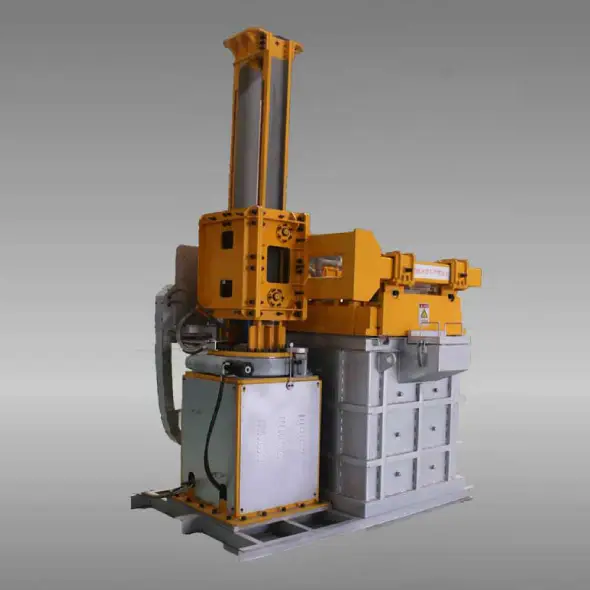
The Spectrum of Aluminum Degassing Methods
The primary goal of any degassing process is to introduce an inert gas (the scavenging gas) into the melt, where it can absorb the dissolved hydrogen and carry it to the surface.
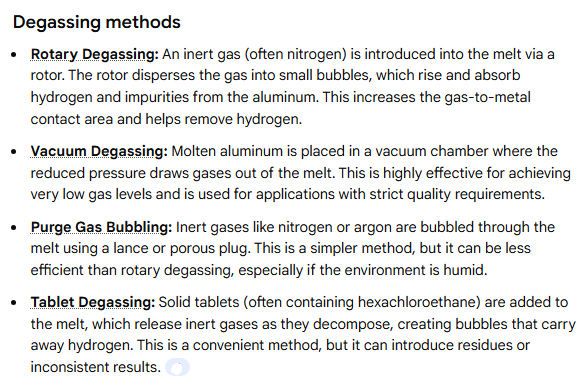
Hydrogen Elimination: Three Main Strategies
Flux Degassing (Historical and Complementary)
Historically, this involved plunging solid tablets or powders (fluxes) containing chlorine- or fluorine-bearing compounds (e.g., hexachloroethane, C₂Cl₆) into the melt. The chemical reaction releases nascent Cl₂ gas, which is an extremely effective scavenger but generates significant, harmful fuming (air pollution). While less common as a primary method today, specialized non-toxic fluxes are still used to complement mechanical methods, simultaneously removing oxides and minor gas traces.
Stationary Inert Gas Lancing (Basic Method)
This is the simplest method, involving bubbling an inert gas (usually N₂ or Ar) through a lance (tube) submerged into the melt.
-
Pros: Low capital cost, simple operation.
-
Cons: Low efficiency due to large, non-uniform bubble size. The large bubbles have a poor surface area-to-volume ratio, leading to poor gas-metal contact and long processing times. It also results in high metal turbulence and dross formation.
Rotary Impeller Degassing (RID) (Industry Standard)
This is the most effective and widely adopted method globally. An impeller, typically made of graphite or silicon carbide for corrosion resistance, is rotated at high speed while an inert gas (N₂, Ar, or a mixture) is pumped through a hollow shaft and into the melt.
-
Mechanism of Action: The rotation shears the input gas stream into thousands of microscopic bubbles (~50-200 microns). This massive increase in surface area facilitates rapid diffusion of dissolved hydrogen from the liquid aluminum into the bubble surface. The small, widely dispersed bubbles efficiently float the H₂ and non-metallic inclusions (oxides) to the surface where they are skimmed off as dross.
| Feature | Stationary Lancing | Rotary Impeller Degassing (RID) |
| Bubble Size | Large, non-uniform (mm to cm) | Microscopic, uniform (μm) |
| Efficiency | Low (long treatment time) | High (rapid H₂ removal) |
| Dross Formation | High (due to severe turbulence) | Low (gentle mixing action) |
| Process Time | 20 min or more | 5 to 10 min typically |
Advanced Degassing Control and Optimization
To achieve the stringent quality requirements of modern alloys, process parameters must be precisely controlled. Key parameters for RID are:
-
Rotor Speed: Higher speeds (e.g., 400 to 600 RPM) increase bubble shearing and efficiency, but excessively high speeds can reintroduce turbulence and dross. Optimal speed balances degassing efficiency with dross formation control.
-
Gas Flow Rate: Measured in liters per minute (LPM). The flow must be sufficient to establish the required bubble density without excessive melt agitation. A typical range for a 1000 kg crucible is 10-20 LPM.
-
Treatment Time: Directly dependent on initial hydrogen content and the alloy’s cleanliness. The process stops when the target hydrogen concentration is confirmed by measurement.
Process Optimization Note: The optimal temperature range for degassing is typically 710°C to 730°C. Treating at lower temperatures reduces the reaction rate but is sometimes necessary for specific alloys or thin-wall castings.
Measurement Techniques: Quantification of Dissolved Hydrogen
Degassing is useless without reliable, quantitative measurement of the dissolved hydrogen concentration both before and after treatment. These measurements provide the data required for process adjustment and quality assurance.
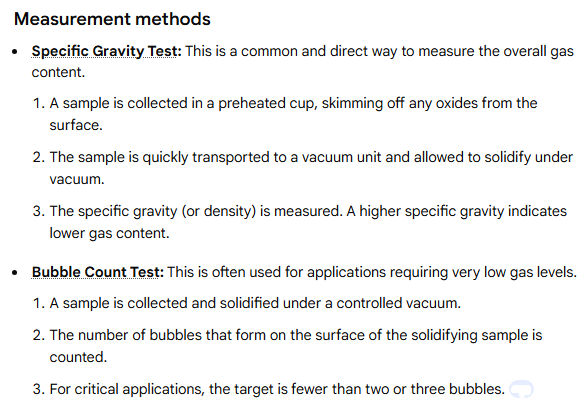
The Reduced Pressure Test (RPT) (Qualitative/Semi-Quantitative)
The RPT is a simple, cost-effective test used on the foundry floor to assess the effectiveness of the degassing treatment.
-
Method: A small sample of molten aluminum is poured into a steel crucible, which is then immediately placed inside a vacuum chamber. The pressure is reduced (typically to 80 millibar) and the sample is allowed to solidify under vacuum.
-
Result Interpretation: The reduced external pressure causes the dissolved hydrogen to come out of solution more aggressively, forming larger, visible pores within the solidifying sample.
-
High Porosity: Indicates poor degassing (high H₂ content).
-
Low Porosity/Smooth Surface: Indicates good degassing.
-
-
Limitation: It is a qualitative test; it only provides an index of gas content, not an exact numerical value (e.g., mL / 100g).
Direct Hydrogen Measurement (Quantitative: Telegas/AlScan)
These instruments provide precise, quantitative, and real-time readings of dissolved hydrogen, allowing for critical process control.
-
Mechanism (Principle): They utilize an inert carrier gas (often Ar) that is passed over a highly selective, molten Al-resistant solid electrolyte sensor (e.g., CaO-stabilized ZrO₂). The hydrogen gas dissolved in the aluminum diffuses into the carrier gas stream, and the sensor measures the partial pressure of H₂ in the carrier gas, which is directly proportional to the concentration of H₂ dissolved in the melt (Henry’s Law).
-
Advantages:
-
Precision: Provides a value in mL / 100g Al (e.g., 0.12 mL / 100g).
-
Speed: Measurements are taken in minutes, allowing for immediate feedback and process adjustments.
-
Calibration: Highly accurate when properly calibrated, meeting the needs of demanding specifications.
-
Inclusion Removal and Metallurgical Cleanliness
Degassing is intrinsically linked to inclusion removal, as the inert gas bubbles act as capture sites for non-metallic particles, such as aluminum oxide (Al₂O₃), magnesium oxide (MgO), and spinels. The focus here is on achieving superior metallurgical cleanliness.
The Role of Filters in Final Quality
While degassing removes floating inclusions, filters are essential for removing microscopic, suspended particles that could become detrimental defects in the final product.
-
Ceramic Foam Filters (CFF): The most common type, acting as deep-bed filters to trap particles. They are categorized by pore size (e.g., 30 PPI, 50 PPI).
-
Bonded Particle Filters (BPF): Used for extremely high-purity applications, providing superior filtration efficiency.
| Component Requirement | Initial Degassing/Fluxing | Filtration (CFF/BPF) |
| Hydrogen Removal | Primary Function | Secondary/None |
| Large Inclusions (Dross) | Primary Removal | Capture of Remaining |
| Micro-Inclusions | Secondary Removal (Scavenging) | Primary Function |
Case Study: Automotive Structural Component Manufacturing in the US Midwest
| Parameter | Detail |
| Location | US Midwest, large automotive component supplier (ADtech partner) |
| Time Period | Q3-Q4 2024 |
| Component | High-pressure Die Cast (HPDC) suspension tower (Aluminum Alloy A356) |
| Initial Challenge | 12% rejection rate due to subsurface porosity (Pinholes). |
| Pre-Treatment | Stationary Lancing (N₂ at 15 LPM for 20 min). |
| Hydrogen Reading (Pre-Change) | Average 0.28 mL / 100g |
| Solution Implemented | Switched to ADtech Rotary Impeller Degassing system. Parameters: N₂ at 12 LPM, Rotor Speed 450 RPM, Treatment Time 8 min. |
| Hydrogen Reading (Post-Change) | Average 0.11 mL / 100g |
| Result | Rejection rate due to porosity dropped to < 1.5%. Significant improvement in mechanical properties (e.g., 20% increase in ultimate tensile strength). |
This case demonstrates that the investment in precise, controlled Rotary Impeller Degassing is justified by the immediate and substantial reduction in waste and improvement in product quality. The ability to achieve a consistently low hydrogen content is paramount for casting quality.
Frequently Asked Questions (FAQs) on Aluminum Degassing
Q1: What is the main gas to remove from molten aluminum?
A: The primary gas that must be removed from molten aluminum is hydrogen (H₂). Aluminum’s high solubility for H₂ in the liquid state, combined with a drastic drop in solubility upon solidification, is the root cause of gas porosity in castings.
Q2: What is the target hydrogen level for high-quality aluminum castings?
A: The acceptable target level for high-quality, pressure-tight, and structural aluminum castings is generally below 0.15 mL of H₂ per 100g of Al. For highly critical aerospace or premium automotive parts, levels as low as 0.08 mL / 100g may be specified.
Q3: Does the temperature of the melt affect the degassing process?
A: Yes. Higher temperatures increase the solubility of hydrogen (making it harder to remove) but also lower the melt viscosity, which increases the rate of hydrogen diffusion and bubble mobility. Optimal degassing is usually performed just above the casting temperature, typically 710°C to 730°C.
Q4: What is dross and why is degassing linked to its removal?
A: Dross is the layer of metal oxides and entrapped matter (inclusions) that forms on the surface of molten aluminum. The inert gas bubbles generated during degassing, particularly by the Rotary Impeller method, collect these non-metallic inclusions and float them to the surface, where they become part of the dross layer, thus improving metallurgical cleanliness.
Q5: Which inert gas is better for degassing, Argon (Ar) or Nitrogen (N₂)?
A: Both are effective. Nitrogen is typically more cost-effective. Argon is sometimes preferred for Al-Mg alloys, as nitrogen can potentially react with magnesium to form nitrides (Mg₃N₂), though this is rare at standard degassing temperatures. Many foundries use a combination or switch based on cost and alloy type.
Q6: What is the LPM setting on a Rotary Degasser?
A: LPM stands for Liters Per Minute, and it is the measure of the inert gas flow rate into the molten aluminum. This flow rate is a critical process variable that must be adjusted based on the volume of the melt and the initial hydrogen content.
Q7: Can I over-degas aluminum?
A: While over-degassing is technically possible, the main risk is not gas removal, but unnecessary processing time, increased energy consumption, and excessive dross formation caused by prolonged agitation, which can entrap oxides back into the melt. The process should stop immediately when the target hydrogen content is confirmed by a quantitative measurement.
Q8: What is the biggest advantage of Rotary Impeller Degassing over fluxing?
A: The largest advantage is environmental and safety compliance. RID uses clean, inert gases (N₂ or Ar) and generates minimal air pollution, unlike chlorine-based fluxes which produce hazardous and corrosive fumes. RID is also significantly more efficient at removing hydrogen.
Q9: How do I test my degassing machine’s performance?
A: The machine’s performance is tested by measuring the dissolved hydrogen content before and after the treatment using a quantitative instrument (like a Telegas or AlScan probe) and calculating the hydrogen removal efficiency. Regular maintenance and calibration of the rotor and shaft are also key to sustained performance.
Q10: What are “pinholes” in aluminum casting?
A: Pinholes are tiny, typically spherical voids or pores within the cast metal, usually near the surface. They are the direct result of trapped, dissolved hydrogen gas precipitating during solidification, and their presence is the most common visual indicator of inadequate degassing.
The ADtech Commitment to Casting Integrity
For companies focused on high-specification components, particularly in the e-mobility and aerospace sectors, the adoption of best-in-class molten metal treatment is a competitive necessity. The combined utilization of high-efficiency, controlled Rotary Impeller Degassing and accurate direct hydrogen measurement offers the highest degree of quality control and operational efficiency. ADtech provides the advanced equipment and technical consultancy required to consistently push hydrogen content below industry-critical thresholds, guaranteeing superior mechanical properties and near-zero porosity-related defects. This dedication to metallurgical precision defines the new standard for aluminum casting integrity.