

Ceramic fiber paper is used mainly to create a thin, lightweight, high temperature thermal barrier and sealing layer in equipment that runs hot: furnaces, kilns, heaters, boilers, exhaust systems, foundry tooling, and many types of industrial process lines. In practical terms, it serves three primary jobs: reduce heat loss through walls and covers, block hot gas leakage at joints and doors, and electrically isolate hot components while staying stable at elevated temperature. Its combination of low thermal conductivity, compressibility, low heat storage, and easy converting (cutting, slitting, die cutting) explains why engineers specify it when a blanket or board would be too bulky, too rigid, or too slow to heat and cool.
If your project requires the use of Ceramic fiber paper, you can contact us for a free quote.
What is ceramic fiber paper and how is it manufactured?
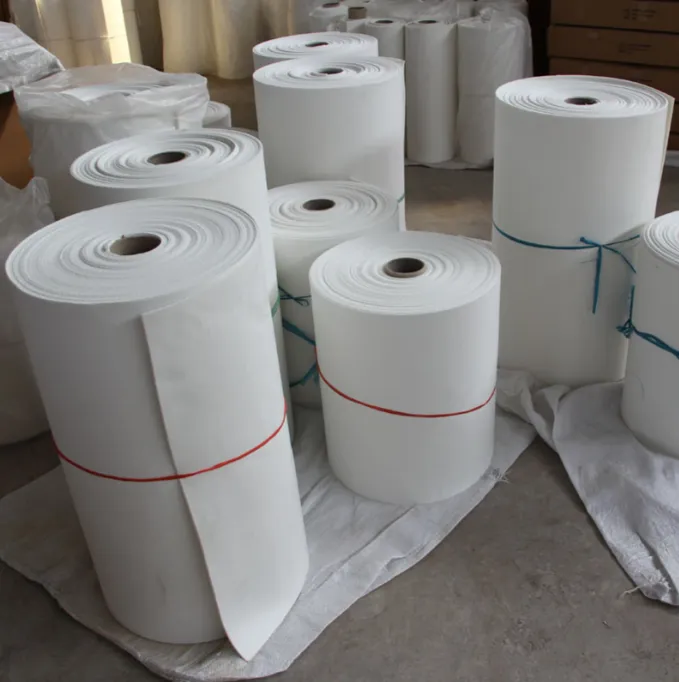
Ceramic fiber paper is a flexible sheet made from refractory ceramic fibers plus a small fraction of binders and processing aids. The most common chemistry is aluminosilicate (often called RCF in legacy documents). Many plants also supply low bio persistent (LBP) alkaline earth silicate variants to meet stricter health and regulatory expectations.
What raw materials are typically used?
- Refractory fibers
- Aluminosilicate fibers (traditional ceramic fiber).
- Alkaline earth silicate fibers (often marketed as low bio persistent).
- High alumina fibers or zirconia containing blends (higher temperature stability).
- Binders
- Organic binders (burn out during first heat up).
- Inorganic binders (improve hot strength and reduce shrinkage in selected grades).
- Additives
- Dispersants to keep fibers uniformly suspended during wet forming.
- Fillers in certain grades to modify density, handling, or dielectric properties.
How does the papermaking process create performance?
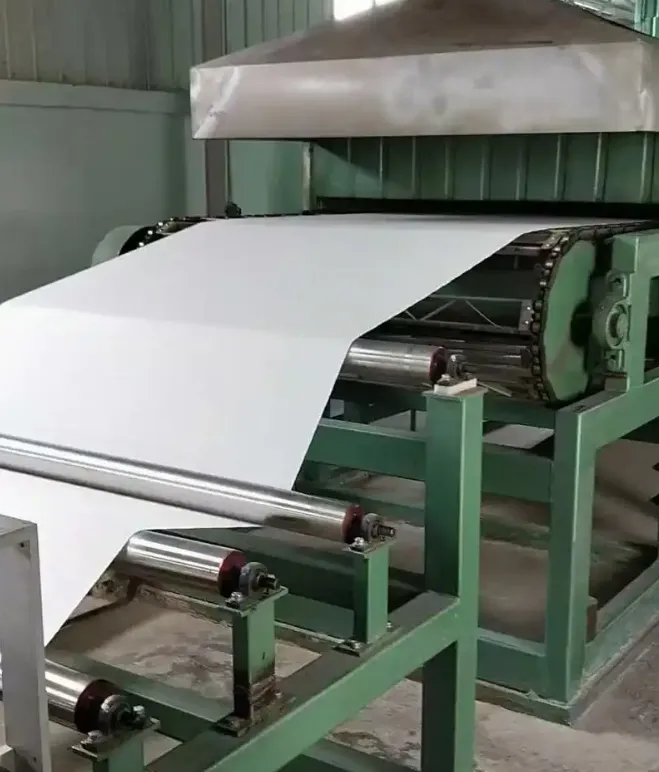
Most ceramic fiber paper is produced by a wet laid process similar to specialty papermaking:
- Fibers are dispersed in water to form a slurry.
- The slurry is deposited onto a forming screen, water is removed, then the sheet is pressed and dried.
- Calendering can adjust thickness and surface finish.
- Rolls are slit, rewound, or converted into sheets, gaskets, washers, and complex die cuts.
This method yields a controlled fiber network with predictable thickness and compressibility, which matters in gasket duty and insulation layering.
Also read: Ceramic Fiber Rope Price: 2026 Wholesale Bulk Cost Guide
Why does ceramic fiber paper work well in high temperature service?
The value comes from a set of physical mechanisms that align with real plant needs.
How does it reduce heat transfer?
- Low thermal conductivity: trapped air plus the fiber matrix interrupts heat flow.
- Low heat capacity: the sheet stores little heat, so equipment can ramp up and cool down faster compared with dense refractories.
- Radiant heat control: some grades accept coatings (graphite, alumina, reflective foils) to reduce radiative transfer in hot faces.
Why does a thin sheet still matter?
In many assemblies, available clearance is measured in millimeters. A paper grade may fit where a blanket cannot. It also reduces thermal bridging at flanges, door perimeters, burner blocks, observation ports, and instrument penetrations.
What happens during first heat up?
Organic binder burn out is normal. Engineers should expect:
- a slight odor or smoke during initial conditioning
- minor thickness change
- improvement in high temperature purity after burn out
Commissioning procedures often include controlled ramp rates and ventilation, particularly in enclosed ovens.
Which industries use ceramic fiber paper most often?
Demand concentrates in sectors that combine high temperature, frequent thermal cycling, and complex sealing geometry.
Furnace, kiln, and heat treatment equipment
- Door and access panel seals.
- Expansion joint layers behind metallic retainers.
- Hot face back up insulation in low mass designs.
- Strip linings in shuttle kilns and laboratory furnaces.
Metallurgy, foundry, and molten metal handling
- Die and mold thermal barriers
- Trough and launder covers
- Splash shields and heat curtains in selected stations.
- Gasket material in ladle lids and hot tooling interfaces.
Power generation and process heating
- Boiler access door seals.
- Burner quarls and inspection port packing.
- Thermal isolation in ducting interfaces.
Automotive, aerospace, and mobility supply chain
- Heat shields and thermal barriers in prototype and niche applications.
- Exhaust related insulation layers in test cells.
- Insulation in composite curing tools and high temperature fixtures.
Electronics and electrical insulation at elevated temperature
- Dielectric isolation in heaters, resistor banks, and thermocouple feedthrough stacks.
- Layer insulation inside high temperature test chambers.
What is ceramic fiber paper used to do in real assemblies?
This section maps common engineering intents to typical configurations.
How is it used as a gasket or seal?
Ceramic fiber paper compresses and conforms, so it can seal rough metal faces better than rigid board. Typical uses include:
- furnace doors, peep sights, and burner doors.
- flanged hot gas ducts
- inspection covers on process lines.
Design note: paper alone can extrude under high clamping load. Many gasket stacks use a retainer, washer pattern, or a laminate structure (paper plus foil plus wire mesh) depending on pressure and vibration.
How is it used as a thermal barrier layer?
Common patterns:
- Between hot face lining and steel shell to reduce shell temperature.
- Between dissimilar materials to reduce thermal stress and cracking.
- Under heating elements to reduce heat sink losses to frames and supports.
How is it used in expansion joints?
Paper grades often sit in expansion joints as a slip plane or filler in multilayer stacks:
- paper against metal to reduce abrasion.
- paper in conjunction with blanket to tune compressibility.
- paper wrapped around ceramic tubes or metallic bellows components.
How is it used to control heat in tooling?
Foundry and composite tool designers use it:
- to reduce heat loss at edges.
- to manage localized hot spots.
- to protect operators from radiant heat during handling.
Which properties matter when specifying ceramic fiber paper?
Procurement teams often receive vague requests such as “high temp paper”. Engineers can reduce rework by specifying measurable targets.
Key performance indicators
| Property | Why it matters in service | Typical test or reference |
|---|---|---|
| Thickness and tolerance | Fit in tight clearances, repeatable gasket compression | Micrometer, ISO or internal method |
| Density | Links to thermal conductivity, stiffness, compression | Calculated from mass and area |
| Tensile strength | Handling, die cutting yield | ASTM C892 (commonly referenced) |
| Shrinkage after heat | Dimensional stability at operating temperature | Heat soak method (supplier specific) |
| Thermal conductivity | Heat loss and shell temperature prediction | ASTM C201 or equivalent setup |
| Loss on ignition (LOI) | Binder content, burn out behavior | Furnace burn test |
| Dielectric strength | Electrical isolation | ASTM D149 style methods (adapted) |
| Shot content | Surface finish, cutting quality | Supplier internal method |
Values vary by fiber chemistry and density. Purchase specifications typically call out minimums and maximums rather than “standard”.
What temperature rating really means
A catalog may list a “classification temperature” (example: 1260 C, 1430 C). That number is not a guaranteed continuous operating limit under every condition. Real operating limit depends on:
- time at temperature
- thermal gradients
- mechanical load, vibration, gas velocity.
- atmosphere (oxidizing, reducing, steam, alkali vapors).
A conservative design uses margin, then validates via trial in the actual furnace zone.
How does ceramic fiber paper compare with blanket, board, and other insulation materials?
Selecting the right form avoids both overspend and premature failure.
| Material form | Strengths | Constraints | Typical use cases |
|---|---|---|---|
| Ceramic fiber paper | Thin, flexible, converts easily, low heat storage | Lower mechanical durability, can erode in high velocity gas | Door seals, gasket layers, slip planes, thin thermal breaks |
| Ceramic fiber blanket | Very low conductivity, thick insulation, resilient | Bulk, fiber release during handling, needs mechanical anchoring | Furnace backup insulation, expansion joint packs |
| Ceramic fiber board | Rigid, machinable, better erosion resistance | Less conformable, needs space | Baffles, burner blocks (light duty), structural insulation |
| Microporous panels | Ultra low conductivity at moderate thickness | Cost, fragility, edge damage | Tight space insulation in high efficiency systems |
| Calcium silicate board | Good mechanical strength, lower fiber concerns | Higher conductivity at high heat, slower response | Industrial pipe insulation, backup in moderate heat zones |
| Mica paper or mica sheet | Excellent dielectric and high temperature endurance | Thermal insulation weaker than ceramic fiber paper | Electrical heaters, dielectric barriers |
| Graphite sheet | Excellent sealability and thermal stability in inert atmospheres | Oxidation in air at elevated temperature | Flange gaskets in controlled atmospheres |
A frequent best practice: use ceramic fiber paper where geometry and sealing dominate, then use blanket or board where thickness and durability dominate.
What grades, thicknesses, and densities are common on the market?
Suppliers offer many SKUs, yet most fall into a few practical bands.
Typical thickness and density bands
| Grade family (generic) | Thickness range | Density range | Notes |
|---|---|---|---|
| Low density paper | 0.5 to 3 mm | 120 to 180 kg/m³ | Easy to wrap, good conformability |
| Medium density paper | 1 to 6 mm | 180 to 260 kg/m³ | Balanced handling and insulation |
| High density paper | 2 to 10 mm | 260 to 400 kg/m³ | Better gasketing, lower permeability |
| Inorganic binder paper | 1 to 6 mm | 180 to 320 kg/m³ | Better hot strength, less organic burn off |
Actual ranges differ by manufacturer. When a design relies on compression, thickness tolerance and density consistency often matter more than the nominal chemistry.
Common converting formats
- Master rolls and slit rolls.
- Sheets, typically packed flat.
- Die cut gaskets, washers, strips.
- Laminates: paper plus aluminum foil, stainless foil, glass cloth, wire mesh.
AdTech customers typically request roll stock plus a drawing based converting plan, since installation speed and fit are major cost drivers in shutdown windows.
How is ceramic fiber paper installed, cut, and sealed?
Field performance depends on workmanship as much as material selection.
Cutting and shaping
- Utility knife, shears, steel rule dies, water jet (depending on thickness and density).
- Use sharp blades to reduce fiber tear and dimensional drift.
- In gasket duty, keep clean edges to reduce leak paths.
Joining and sealing methods
- Mechanical compression within a retainer frame.
- High temperature adhesives or cements in selected zones.
- Stapling or wire tying in low stress wraps.
- Laminating to foil to reduce gas permeability.
Commissioning and conditioning
If the grade contains organic binders, schedule a controlled first heat cycle:
- gradual ramp
- ventilation to remove binder fumes.
- inspection after cool down to confirm seating and compression remain acceptable.
What failure modes occur and how can they be prevented?
High temperature paper rarely “melts”. It fails via mechanical and chemical pathways.
Erosion and fiber loss
In high velocity gas streams, surface fibers can erode, leading to thinning and dust. Mitigations:
- place paper behind a perforated metal shield or foil.
- switch to board in the hot gas path.
- apply a suitable coating when permitted.
Excessive shrinkage
Shrinkage rises with temperature and time. Risk increases near the classification limit. Mitigations:
- select a higher temperature chemistry.
- use inorganic binder grades.
- add installation allowances in gasket designs.
Chemical attack
Alkali vapors, boron compounds, fluxes, and some slags can attack aluminosilicate fibers. Mitigations:
- evaluate atmosphere chemistry early.
- consider zirconia containing blends in severe zones.
- use a sacrificial layer strategy in maintenance plans.
Compression set and leakage
In door seals, repeated cycling can reduce resilience. Mitigations:
- increase thickness slightly and use staged compression.
- add a resilient blanket behind paper.
- re torque schedules on bolted covers.
What health, safety, and regulatory points should buyers know?
A procurement decision often requires more than temperature rating and price.
Fiber type and bio persistence
Traditional refractory ceramic fiber has faced increasing scrutiny in several regions. Many operations have shifted toward low bio persistent fibers. A compliant approach includes:
- request Safety Data Sheet and region specific classification.
- confirm labeling and training requirements.
- control dust during cutting and removal.
Dust control and PPE
Common good practice in shops and maintenance crews:
- local exhaust ventilation during converting.
- wet methods or vacuum systems with HEPA filtration during cleanup.
- gloves, long sleeves, eye protection.
- appropriate respiratory protection based on risk assessment.
Waste handling during tear out
Used insulation can collect process contaminants. Disposal should follow site EH and S rules, plus local regulations.
Which standards and test methods appear in specifications?
Many buyers rely on established references to prevent ambiguity.
Commonly cited standards and norms include:
- ASTM C892: tensile strength and density related evaluation of ceramic fiber paper.
- ASTM C201: thermal conductivity by the guarded hot plate method (often used in insulation comparisons).
- ASTM C356: linear shrinkage at temperature (often referenced in ceramic fiber product data).
- Internal supplier methods: thickness tolerance, permeability, shot content, and conversion dimensional control.
When comparing suppliers, align test conditions. A thermal conductivity number measured at 200 C differs sharply from one measured at 800 C. Request the test curve or multi point table rather than a single headline value.
How should an engineer select ceramic fiber paper without over specifying?
Over specification raises cost and may reduce availability during critical outages. Under specification leads to leakage and downtime. A balanced selection process usually follows a short checklist.
Step 1: Define the duty conditions
- maximum and continuous temperature at the paper location.
- hot gas velocity and pressure differential.
- mechanical compression load and cycling frequency.
- atmosphere chemistry, presence of steam, alkalis, fluxes.
Step 2: Translate duty into measurable requirements
| Duty requirement | Specification lever |
|---|---|
| tight clearance | thickness and tolerance, compressibility |
| low leak rate | density, laminate barrier, joint design |
| thermal isolation | conductivity curve, thickness |
| electrical isolation | dielectric strength, ash content |
| minimal shrinkage | chemistry grade, heat shrink limit, inorganic binder option |
| rapid maintenance | roll width, die cut kit, labeling |
Step 3: Validate with a small trial
A short in situ trial often saves weeks of debate. Include:
- photos of installation
- torque and compression notes
- thermal images of shell temperature.
- leakage checks after several cycles.
AdTech often supports this step with cut patterns and installation notes aligned with the customer maintenance routine, since repeatability matters more than theoretical peak rating.
What questions do procurement teams ask during sourcing?
Procurement intent differs from engineering intent. The best supplier responses are objective and auditable.
Commercial and supply chain questions that affect total cost
- consistent roll length, width, and winding direction.
- packaging that prevents edge crush and moisture uptake.
- lead time stability during peak maintenance seasons.
- ability to provide die cut kits labeled by location.
- traceability: lot number, certificate of conformance, test summary.
Quality documents commonly requested
- Safety Data Sheet
- Certificate of Analysis or Certificate of Conformance.
- Declaration of compliance with relevant regional requirements.
- dimensional inspection reports on converted parts when used in critical seals.
What are the most common applications, mapped by function?
The table below summarizes where ceramic fiber paper shows up in the field, using functional language engineers and buyers both recognize.
| Function in assembly | Example components | Why paper fits |
|---|---|---|
| Door and cover sealing | furnace doors, inspection plates, peep sights | compressible, conforms to warped metal |
| Thin thermal break | flange spacers, instrument mounts | reduces thermal bridge with minimal thickness |
| Slip plane | expansion joint stacks | reduces abrasion, supports movement |
| Insulation wrap | ceramic tubes, thermocouple protection | flexible, easy to spiral wrap |
| Back up insulation | behind hot face modules in low mass linings | lowers shell temperature without bulky layers |
| Dielectric barrier | heater pads, electrical terminal isolation | stable at heat where polymers fail |
| Laminate core | foil faced heat shield sheets | provides insulation layer and improves handling |
FAQs about ceramic fiber paper
Ceramic Fiber Paper: 10/10 Technical FAQ
1. What is ceramic fiber paper used for in a furnace door?
It is primarily used as a thermal seal around the door perimeter. By providing a compressible barrier, it limits hot gas leakage (convection) and lowers the furnace shell temperature. Its flexibility allows it to tolerate repeated open/close cycles while maintaining an airtight fit.
2. Can ceramic fiber paper touch a heating element?
While ceramic fiber is an excellent electrical insulator, direct contact depends on the element type and temperature. You must ensure the paper does not cause localized overheating or mechanical abrasion on thin element coils. In many designs, it sits near elements as a backing, but electrical isolation requirements should always be double-checked.
3. Does ceramic fiber paper burn?
4. What thickness should I choose?
Thickness depends on the gap size and compression allowance:
- 1 to 3 mm: Ideal for slip planes, wraps, and tight gaskets.
- 3 to 6 mm: Standard for furnace door seals and expansion joints.
- Thicker: Only used when the design allows for significant compression travel to ensure a tight seal.
5. Is ceramic fiber paper safe to handle?
6. How do I cut ceramic fiber paper cleanly?
7. Can it be used as an exhaust gasket?
8. Paper vs. Blanket: What is the difference?
Blanket: Thicker (12mm to 50mm+), resilient, and “fluffy.” It is better suited for bulk cavity insulation and large-scale expansion joint packing.
9. Why did my paper shrink and leak after a few cycles?
Common causes include:
- Operating too close to the classification temperature (leading to linear shrinkage).
- Binder burnout leaving the structure too loose without enough compression reserve.
- Chemical attack from corrosive furnace atmospheres.
Upgrading to a higher temperature grade or increasing the initial compression often resolves this.
10. What documents should I request when buying?
- Safety Data Sheet (SDS): For EHS compliance.
- Certificate of Conformance (CoC): Verification of the temperature grade.
- Technical Data Sheet (TDS): Outlining density, tensile strength, and shrinkage.
- Lot Traceability: Especially for custom die-cut parts in critical applications.
Summary: when ceramic fiber paper is the right choice
Ceramic fiber paper earns its place when a design needs high temperature insulation and sealing in a thin, flexible, easily converted form. It is routinely specified in furnace doors, access covers, expansion joint stacks, thin thermal breaks, high temperature electrical isolation, and tooling thermal management. Correct grade selection hinges on temperature, atmosphere, gas velocity, compression mechanics, and dimensional tolerance. When those variables are written into a clear specification and validated with a short plant trial, ceramic fiber paper becomes a dependable, cost effective component rather than a consumable mystery item.