

A trough dam is a compact, replaceable refractory or mechanical plug used inside a molten-metal launder or trough to stop, meter, or control the flow of liquid aluminum at the casting line; when specified and installed correctly, trough dams reduce turbulence, prevent premature metal movement, enable automated cast starts, protect downstream filtration and degassing equipment, and lower scrap rates — making them an essential component of a modern aluminum casthouse and a natural fit with AdTech’s degassing, filtration and trough product lines.
1. What is Trough Dam?
A trough dam is an insert or gate positioned across the internal cross-section of a launder or trough to stop molten metal flow or to create an upstream holding pocket. In practice the device enables a controlled start of the casting cycle, isolates sections of a launder for maintenance, and provides a predictable head of metal for measuring flow to filters or molds. The immediate benefit is fewer casting interruptions, reduced turbulence at the filter interface, and safer hands-free operation during cast initiation.
Related video: Gating system and launder basics (animated explanation).
Why this matters to both engineers and buyers
-
Engineers: it provides flow control and reduces entrapment of oxides and dross into the filter or mold.
-
Buyers and procurement: it reduces scrap, improves cycle reliability, and can be integrated into automation to cut labor and safety risk.
2. Core functions and fluid-dynamics role
A trough dam influences three primary hydraulic qualities in a launder: flow rate, free-surface turbulence, and metal head. Properly designed dams create a stable upstream reservoir so that when the dam is opened the downstream flow is metered rather than impulsive. This minimizes vortex entrainment and slag carryover, which are major causes of inclusions in castings.
Key functional modes:
-
Positive shutoff for maintenance or emergency stops.
-
Metering release for step-start casting or to prime a filter.
-
Automatic cycling in conjunction with actuator systems to produce consistent fill profiles.
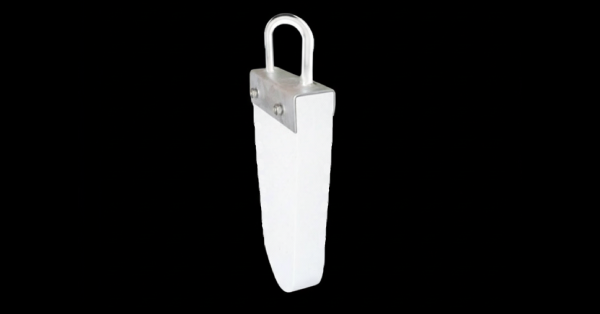
3. Materials, liners and mechanical construction
Materials are chosen for thermal shock resistance, chemical compatibility with molten aluminum, abrasion resistance, and ease of replacement. Common construction approaches:
Refractory inserts
-
Precast or moulded high-alumina boards, dense insulating castables, or shaped ceramic pieces that slide into the launder cross-section. These provide passive sealing against the refractory lining. Typical suppliers make gasketed or groove-mounted variants.
Mechanical gates
-
Steel-bodied dams with refractory faces or valve-like gates that close against a refractory seat. These can be manually operated, pneumatically actuated, or motorized and are often used where repeated cycling or partial gating is required.
Composite designs
-
Refractory core with a wrapped graphite or ceramic gasket for an improved seal; useful in launders that experience slight misalignment or wear.
Table 1 below summarizes common material options and their trade-offs.
| Material / Type | Advantages | Drawbacks | Typical lifetime (estimate) |
|---|---|---|---|
| High alumina castable dam | Excellent temperature and chemical resistance | Heavier, requires shaping | 6–18 months (depends on service) |
| Precast dense ceramic block | Fast replacement, consistent shape | Cost per unit higher | 3–12 months |
| Mechanical steel dam with refractory face | Rapid actuation, automation-ready | Requires gasketing, more maintenance | 12–36 months for mechanical parts; refractory face replaced separately. |
| Graphite-faced composite | Good thermal shock resistance | Oxidation concerns if exposed | Variable; typically shorter refractory life |
4. Types and configurations used in launders and troughs
Trough dams come in multiple configurations. Pick the style to match production rhythm and the layout of the casthouse.
Common types
-
Grooved insert dam: slide-in tile held by compression; minimal seal complexity.
-
Gasketed board dam: precut plate with a perimeter gasket to improve seal against worn linings.
-
Lift/piston dam: actuator-driven insert that lifts clear of the flow path for a rapid open cycle. Ideal for automated lines.
-
Swing or flap gate: pivoting closure for small launders. Faster, but less effective for complete sealing.
Placement strategies
-
Upstream of filtration: prevents cold metal from bypassing filters during setup.
-
At transfer junctions: isolates branches during maintenance.
-
Before molds: ensures the first metal shot is metered and filtered.
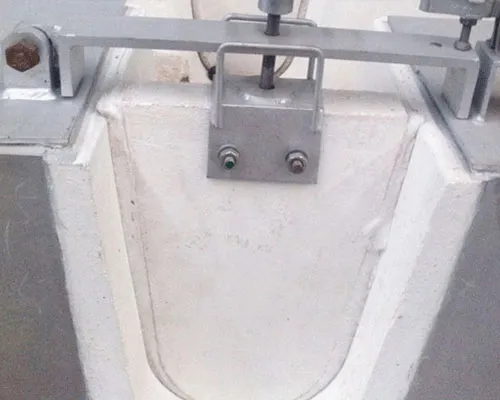
5. Manufacturing, installation and automation considerations
Practical implementation includes three layers: correct part geometry, secure mounting, and automation interface.
Geometry
-
A dam must match the launder’s internal profile with tolerances for thermal expansion. Many foundries specify dams to fit into a machined groove or to compress into a gasketed slot.
Mounting
-
Mechanical clamps, bolted frames, or actuator plates anchor the dam. Ensure anchorage takes thermal cycling into account to avoid stress cracking.
Automation
-
Pneumatic or electric actuators enable hands-free cast starts and can be tied into PLC logic for timed sequences with ladle positioning, filter engagement, and degassing units. Automated systems reduce operator exposure and increase repeatability. Pyrotek and similar vendors offer automated trough dam systems with lift assists and seals.
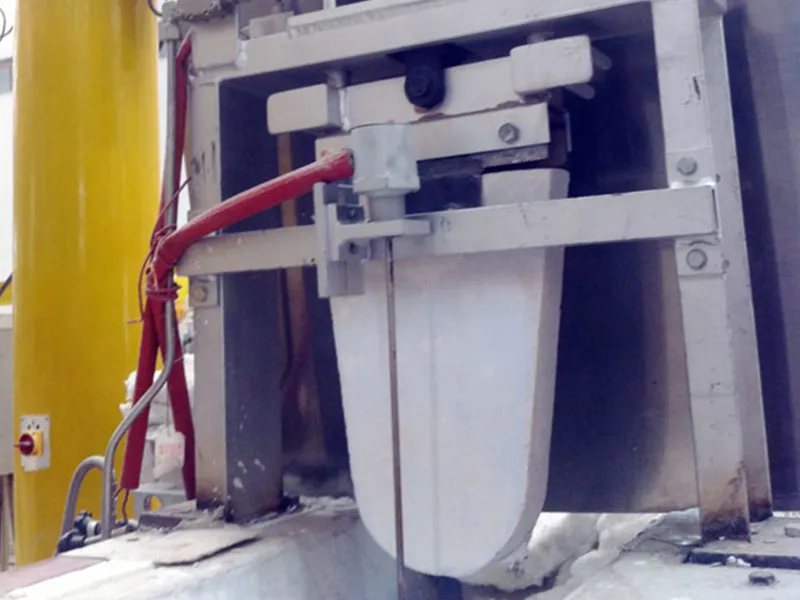
6. Integration with degassing, filtration, and AdTech product lines
A trough dam is most valuable when treated as a control point upstream of degassing and filtration. The best practice is to create a short, calm reservoir upstream of the filter so that the filter sees steady, low-velocity flow when the casting starts. This reduces shock loading on ceramic foam filters and gives degassing units a stable operating window.
How AdTech products complement dams
-
Degassing units: require predictable flow to maintain bubble residence time. A dam that meters flow helps keep bubble-removal efficiency consistent.
-
Ceramic foam filters and filter plates: sudden surges can damage foam cells or force slag past the filter. A dam-controlled start protects filter media and reduces replacement frequency.
-
Trough linings and hot-top accessories: dams reduce splatter and improve temperature control across the launder.
Engineering note: include a short pocket upstream of the filter that holds at least 1–2 liters per 100 mm of filter width to ensure a steady head during valve opening. Exact sizing depends on alloy, casting speed, and launder inclination.
7. Performance metrics, failure modes and preventive maintenance
Key metrics to monitor:
-
Sealing effectiveness measured as leak rate during downtime.
-
Cycle-to-cycle repeatability for automated dams.
-
Refractory wear rate in mm/month or life in casts.
-
Thermal shock events counted as rapid heat-up occurrences.
Common failure modes
-
Refractory spalling from thermal shock.
-
Gasket degradation leading to leakage.
-
Actuator failure from overtemperature or ingress of dust/dross.
-
Misfit from launder wear causing uneven sealing.
Maintenance checklist
-
Inspect seal face after every shift.
-
Check actuator operation and grease points weekly.
-
Record refractory thickness monthly and plan replacements when thickness falls below design minimum.
-
Keep spare insert dams sized and stored in a dry location for rapid swap.
8. Specification checklist and procurement tips
When specifying a trough dam for quotation, include the following minimum data to the supplier:
-
Launder internal dimensions and cross-sectional profile (drawings preferred).
-
Alloy and typical pouring temperature.
-
Flow rate or expected liters per minute.
-
Duty cycle: continuous vs intermittent; number of cycles per hour.
-
Desired operation: manual, pneumatic, electric.
-
Required automation interface and PLC I/O.
-
Environmental constraints: elevated ambient temperatures, corrosive fumes.
-
Delivery and spare parts lead time requirement.
-
Acceptance criteria: leakage rate, actuation speed.
-
Warranty and refractory replacement policy.
Table 2: Typical size guide and recommended dam type
| Launder width (mm) | Typical dam type | Automation recommended? | Notes |
|---|---|---|---|
| 100–200 | Grooved insert or gasketed board | Optional | Small launders may use simple inserts |
| 200–400 | Gasketed board or swing gate | Recommended | Balances seal and cost |
| 400–800 | Pneumatic lift dam with gasket | Strongly recommended | Larger flows benefit from actuated dams |
| >800 | Segmented dams or multiple gates | Required | Use redundant sealing and actuators |
9. Field examples and short case notes
-
Automated filter start: a medium-sized rolling mill integrated a pneumatic lift dam ahead of a ceramic foam filter. Result: first-pass yield rose by 4 percent and filter replacement intervals increased 25 percent.
-
Maintenance isolation: a foundry used grooved insert dams at multiple branch points to isolate launders during lining replacement without full system shutdown. Downtime per repair fell from 8 hours to under 3 hours.
10. Procurement example specification
Supplier shall provide a pneumatic lift trough dam sized to fit the provided launder cross-section. Dam face material shall be high-alumina castable with stainless-steel reinforced backing. Actuator shall be IP65 rated, with air-pressure regulation kit and adjustable speed control. Provide a spare refractory face and gasket. Include wiring diagrams for PLC integration and test report showing < 50 ml/min leakage at 700C.
11. Tables (materials comparison and typical lifetimes)
(See Table 1 earlier. Add a second table that shows approximate lifecycle costs.)
| Component | Initial cost | Replacement frequency | Approx annualized cost (example) |
|---|---|---|---|
| Precast ceramic dam | Medium | 6–12 months | Medium |
| Mechanical dam + actuator | High | 2–4 years (mechanical) + refractory faces | Medium-high |
| Manual grooved insert | Low | 3–12 months | Low-medium |
| Spare refractory faces (inventory) | Low per item | As needed | Low |
12. Frequently asked questions
1. What is the main difference between a trough dam and a launder gate?
2. Can trough dams be retrofitted into existing launders?
3. How do I size a dam for my alloy and flow rate?
4. Are gasketed dams better than groove-inserts?
5. How does a dam improve filtration life?
6. What maintenance is required for actuated dams?
7. Do trough dams affect melt temperature?
8. Are there automated safety interlocks recommended?
9. How quickly can a dam be replaced during a shift?
10. What are the procurement lead times for custom dams?
13. Closing recommendations
-
For new installations choose a gasketed pneumatic lift dam where casting speed exceeds 300 L/min per meter width.
-
For retrofits with budget constraints, start with precast grooved inserts and plan an upgrade path to actuated units.
-
Pair dams with a short upstream reservoir and a properly sized ceramic foam filter to optimize degassing residence time and minimize inclusions.
-
Include spare refractory faces and a simple replacement SOP in the procurement package.