

Alüminyum döküm için ön ısıtma sistemleri operasyonları - özellikle de yolluk ve pota ısıtma ekipmanları - termal şokun önlenmesi, hidrojen gözenekliliğinin en aza indirilmesi ve metal transferi sırasında eriyik bütünlüğünün korunması açısından kritik öneme sahiptir. Kuzey Amerika ve Avrupa'daki alüminyum dökümhanelerinde edindiğimiz doğrudan deneyimlere dayanarak, alüminyum potalar için en uygun ön ısıtma sıcaklık aralığının aşağıdaki aralıkta olduğunu söyleyebiliriz 150°C ve 400°C (302°F ila 752°F), pota ön ısıtması tipik olarak şunları gerektirir 200°C ila 500°C (392°F ila 932°F) alaşım bileşimine, pota geometrisine ve refrakter astar tipine bağlı olarak değişir. Bu adımın atlanması veya yetersiz uygulanması, feci eriyik kaybına, tehlikeli buhar patlamalarına ve nihai dökümde ölçülebilir kalite kusurlarına yol açar.
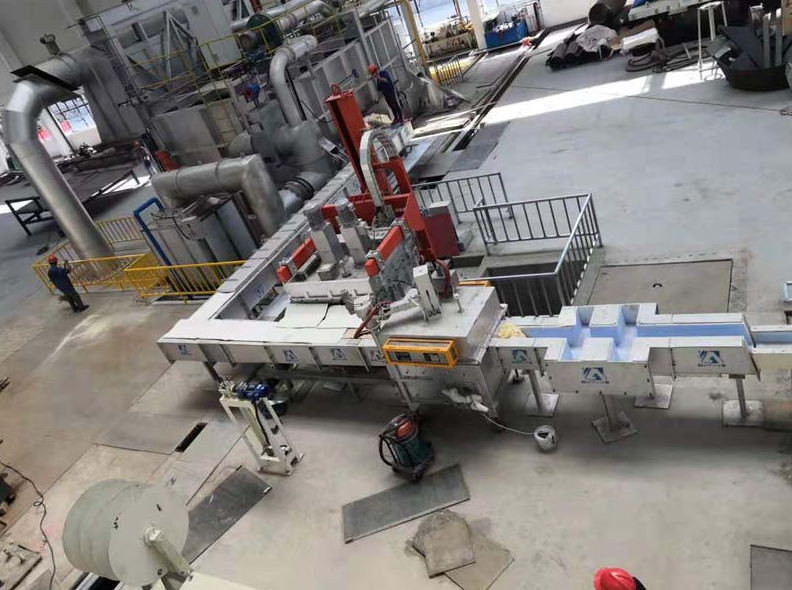
Alüminyum için Ön Isıtma Sistemi Nedir ve Neden Önemlidir?
Alüminyum dökümde, erimiş metalle temas eden tüm ekipmanlar döküm başlamadan önce minimum güvenli sıcaklığa ulaşmalıdır. Bir ön ısıtma sistemi aşağıdakilere kontrollü ısı uygular launders (metal aktarma kanalları), potalar (dökme kapları) ve ilgili aletlerde kalan nemi gidermek ve refrakter astarı çalışma sıcaklığına getirmek için kullanılır.
Tipik olarak 660°C ile 760°C (1220°F ile 1400°F) arasındaki sıcaklıklarda dökülen erimiş alüminyum soğuk veya ıslak bir refrakter yüzeye temas ettiğinde, sonuç hızlı buhar oluşumudur. Bu buhar refrakter matris içinden yeterince hızlı çıkamaz ve şiddetli basınç artışına neden olur. Sonuç, metal sıçraması ve kirlenmeden pota veya yıkama yapısının patlayıcı arızasına kadar değişir.
Sistematik ön ısıtma protokollerini ihmal eden dökümhanelerin nasıl tekrarlayan porozite kusurları, kısalan refrakter hizmet ömrü ve kabul edilemez hurda oranlarıyla karşı karşıya kaldıklarını ilk elden gördük. Doğru ön ısıtma isteğe bağlı değildir - temel bir metalürjik ve güvenlik gereksinimidir.
Alüminyum Ön Isıtma Sistemlerinin Temel İşlevleri
- Refrakter astarlardan nem giderimi.
- Yıkama ve pota duvarlarının ısıl şartlandırılması.
- Eriyikte hidrojen emiliminin önlenmesi.
- Refrakter malzemelerde termal döngü yorgunluğunun azaltılması.
- Transfer sırasında metal sıcaklığının stabilizasyonu.
Alüminyum Dökümde Yolluk Isıtma Sistemleri Nasıl Çalışır?
Yolluklar, sıvı alüminyumu fırından döküm istasyonuna aktarmak için kullanılan açık kanallı veya kapalı kanallı sistemlerdir. Tipik olarak yüksek yoğunluklu kalsiyum silikat levha, refrakter dökülebilir veya elyaf takviyeli seramik malzemelerden yapılırlar.
Çamaşır Ön Isıtma Yöntemleri
Brülör Bazlı Ön Isıtma
En yaygın yolluk ön ısıtma yöntemi, yolluk uzunluğu boyunca monte edilen gaz yakıtlı şerit brülörleri veya radyant tüp brülörleri kullanır. Doğal gaz veya LPG yanması, refrakter yüzey boyunca eşit ısı dağılımı sağlar.
- Şerit brülörler: alev genişliği 50 mm ila 150 mm, ısı girişi 5 kW/m ila 25 kW/m.
- Isıtma süresi: Yolluk uzunluğuna ve refrakter kütlesine bağlı olarak 2 ila 6 saat.
- Hedef ön ısıtma sıcaklığı: Minimum 300°C ila 400°C (572°F ila 752°F).
Elektrikli Rezistans Isıtma
Yıkama kapaklarına gömülü veya kanalın üzerine yerleştirilmiş rezistanslı ısıtma elemanları, yanma ürünleri olmadan temiz ve hassas ısı sağlar. Bu yöntem, katı emisyon standartlarına sahip tesislerde tercih edilir.
- Isıtma elemanı tipi: silisyum karbür (SiC) veya Kanthal FeCrAl alaşımı.
- Güç yoğunluğu: 15 kW/m² ila 40 kW/m².
- Kontrol hassasiyeti: PID kontrolörleri ile ±5°C.
İndüksiyon Ön Isıtma
Yolluk bölümlerinin etrafına yerleştirilen elektromanyetik indüksiyon bobinleri metal destekli refrakter yapıları hızla ısıtabilir. Bu yaklaşım yolluk ön ısıtması için daha az yaygındır ancak otomatik döküm hatlarında giderek yaygınlaşmaktadır.
Yıkama Isıtma Hızı Spesifikasyonları
| Aklama Parametresi | Spesifikasyon Aralığı |
|---|---|
| Ön Isıtma Başlangıç Sıcaklığı | Ortam (15°C ila 35°C) |
| Hedef Çalışma Sıcaklığı | 300°C ila 400°C |
| Isıtma Oranı | 50°C/saat ila 150°C/saat |
| Hedef Sıcaklıkta Bekletme Süresi | 30 dakika ila 2 saat |
| Yakıt Tüketimi (Gaz) | 0,5 m³/m/saat ila 2,5 m³/m/saat |
| Elektrik Enerjisi Talebi | 3 kW/m ila 15 kW/m |
| Termokupl Tipi | K Tipi (Krom-Alümel) |
Alüminyum Pota Ön Isıtma Teknik Özellikleri Nelerdir?
Alüminyum dökümde kullanılan potalar, 10 kg kapasiteli küçük elle dökülen şaftlardan 2.000 kg'ı aşan kapasitelere sahip büyük transfer potalarına kadar çeşitlilik gösterir. Her pota boyutu ve geometrisi, özel ısıtma ekipmanı ve sıcaklık profilleri gerektirir.
Pota Ön Isıtma Sistem Çeşitleri
Üstten Ateşlemeli Kepçe Isıtıcılar
Bu üniteler yüksek hızlı bir brülörü pota açıklığının üzerine konumlandırarak alevi aşağıya, potanın içine doğru yönlendirir. Bu, birincil alüminyum ve ikincil alüminyum ergitme tesislerinde en yaygın kullanılan konfigürasyondur.
- Brülör tipi: yüksek hızlı nozul karışımı veya ön karışım.
- Alev sıcaklığı: 1100°C ila 1500°C (brülör çıkışında)
- Kepçe hedef sıcaklığı: 350°C ila 500°C.
- 500 kg'lık kepçe için ısıtma süresi: 45 dakika ila 90 dakika.
- 2000 kg'lık kepçe için ısıtma süresi: 2 saat ila 4 saat.
Yandan Girişli Kepçe Isıtıcılar
Brülörler pota yan duvarındaki portlardan girerek pota çevresinde daha homojen bir ısı dağılımı sağlar. Bu tasarım, üstten ateşlemeli sistemlerin yeterli sıcaklık homojenliğini sağlayamadığı büyük kapasiteli potalar için tercih edilir.
Elektrikli Kepçe Isıtıcıları
Pota üzerine veya etrafına yerleştirilen rezistanslı veya kızılötesi elektrikli ısıtıcılar alevsiz ısıtma sağlar. Avantajları arasında hassas sıcaklık kontrolü, yanma yan ürünleri olmaması ve temiz oda döküm ortamlarıyla uyumluluk yer alır.
Kepçe Boyutuna Göre Kepçe Ön Isıtma Sıcaklığı Özellikleri
| Kepçe Kapasitesi (kg) | Min Ön Isıtma Sıcaklığı (°C) | Maksimum Ön Isıtma Sıcaklığı (°C) | Isıtma Süresi | Güç Girişi |
|---|---|---|---|---|
| 50 kg'a kadar | 150°C | 300°C | 15 to 30 min | 2 kW to 5 kW |
| 50 to 200 kg | 200°C | 380°C | 30 to 60 min | 5 kW to 15 kW |
| 200 to 500 kg | 250°C | 420°C | 60 to 90 min | 15 kW to 30 kW |
| 500 ila 1000 kg | 300°C | 450°C | 90 to 150 min | 30 kW to 60 kW |
| 1000 to 2000 kg | 350°C | 500°C | 120 to 240 min | 60 kW to 120 kW |
| Over 2000 kg | 400°C | 520°C | 240 to 360 min | 100 kW to 200 kW |
Refrakter Astarın Ön Isıtma Gereksinimleri Üzerindeki Etkisi
The type of refractory lining inside the ladle significantly affects preheating duration and temperature targets:
- Calcium silicate board linings: Lower thermal mass, faster preheating, minimum 200°C recommended.
- Castable refractory linings: Higher thermal mass and porosity, require longer preheating cycles (150°C to 300°C minimum for curing dry-out).
- Monolithic refractory (after repair): Requires staged dry-out: 110°C for 4 hours, then ramp to 350°C over 8 hours.
- Yalıtım ateş tuğlası: Moderate preheat, typically 250°C minimum.
Alüminyum Ön Isıtma Sistemlerinde Hangi Brülör Teknolojileri Kullanılır?
Burner selection is one of the most consequential engineering decisions in designing or specifying a preheating system. The wrong burner type leads to poor temperature uniformity, excessive fuel consumption, refractory damage from hot spots, and unreliable heating cycles.
Alüminyum Ön Isıtma için Gaz Yakıtlı Brülör Karşılaştırması
| Burner Type | Heat Input Range | Sıcaklık Tekdüzeliği | En İyi Uygulama |
|---|---|---|---|
| Ribbon Burner | 5 kW to 50 kW | ±15°C to ±30°C | Launder surface heating |
| High-Velocity Nozzle Mix | 20 kW to 500 kW | ±10°C to ±20°C | Large ladle top-firing |
| Radiant Tube Burner | 10 kW to 100 kW | ±5°C to ±15°C | Indirect launder heating |
| Flat Flame Burner | 15 kW to 200 kW | ±10°C to ±25°C | Ladle sidewall coverage |
| Premix Burner | 2 kW to 30 kW | ±5°C to ±10°C | Small ladle and tooling |
| Oxygen-Enriched Burner | 50 kW to 1000 kW | ±20°C to ±40°C | Rapid high-temp preheating |
Alüminyum Ön Isıtma için Yanma Havası ve Yakıt Oranları
Proper air-to-fuel ratio (AFR) control is essential. Aluminum is highly susceptible to oxidation, and excess oxygen in the heating zone accelerates refractory degradation while introducing oxidizing atmospheres that can affect metal quality.
- Recommended excess air level: 5% to 15% (lambda = 1.05 to 1.15).
- Natural gas (methane) stoichiometric AFR: 9.5:1 to 10.5:1 by volume.
- LPG stoichiometric AFR: 23.5:1 to 25.5:1 by volume.
- Oxygen-enriched combustion AFR: variable based on enrichment level.
Sıcaklık Kontrolleri ve İzleme Sistemleri Nasıl Entegre Edilir?
Modern aluminum preheating systems are not standalone heaters — they are integrated thermal management systems with closed-loop temperature control, data logging, and safety interlocks.
Ön Isıtma Sistemleri için Sıcaklık Ölçüm Cihazları
Termokupllar
Type K thermocouples (chromel-alumel) are the standard for aluminum launder and ladle preheating, covering the range -200°C to 1260°C with accuracy of ±1.5°C to ±2.5°C.
Type N thermocouples offer superior drift resistance at elevated temperatures and are increasingly preferred for applications above 600°C.
Infrared Pyrometers
Non-contact temperature measurement using infrared pyrometers allows real-time surface temperature monitoring without physical contact. This is particularly valuable for rotating ladles or launders where thermocouple wiring is impractical.
- Measurement range: 200°C to 1600°C
- Emissivity setting for refractory: 0.85 to 0.95
- Response time: 100 ms to 500 ms
Thermal Imaging Cameras
Infrared thermal cameras provide full surface temperature mapping, identifying cold spots, hot spots, and refractory degradation zones that point-measurement devices cannot detect.
Kontrol Sistemi Mimarisi
| Control Component | Fonksiyon | Typical Standard |
|---|---|---|
| PID Temperature Controller | Closed-loop burner or heater control | IEC 61511 |
| Programmable Ramp/Soak Controller | Staged preheating profiles | NFPA 86 |
| Safety Interlock System | Burner flame failure protection | EN 746-2 |
| Data Logger | Temperature history recording | ISO 9001 audit trail |
| HMI Display | Operator interface | SCADA integration |
| Remote Monitoring Module | IoT connectivity | Industry 4.0 compatible |
Alüminyum Yıkama ve Pota Ön Isıtması için Güvenlik Gereklilikleri Nelerdir?
Safety is non-negotiable in aluminum preheating operations. The combination of open gas flames, high temperatures, combustible insulation materials, and molten metal proximity creates a complex hazard environment.
Alüminyum Ön Isıtmada Birincil Güvenlik Tehlikeleri
Steam Explosion Risk
Even minimal residual moisture in a refractory lining — as little as 0.5% by weight — can generate sufficient steam pressure to cause explosive ladle failure when contacted by molten aluminum at 700°C+. Our recommendation: always verify refractory moisture content using a moisture meter before the first pour.
Gas Leak and Combustion Hazard
Unburned natural gas or LPG accumulation in confined spaces around launders and ladles is an ignition hazard. Required safeguards:
- Flame failure detection (UV scanner or flame rod).
- Gas pressure proving switches.
- Manual and automatic gas shutoff valves.
- Pre-purge of combustion chamber before ignition.
Thermal Runaway in Electric Systems
Over-temperature protection is mandatory for electric heating elements. SiC elements in particular can enter thermal runaway conditions if the controller fails in an open-loop state.
Uygulanabilir Güvenlik Standartları
| Standart | Yargı Yetkisi | Kapsam |
|---|---|---|
| NFPA 86 | ABD | Ovens and furnaces, combustion safety |
| EN 746-2 | Avrupa Birliği | Combustion equipment for heat treatment |
| EN 1539 | Avrupa Birliği | Dryers and ovens containing flammable substances |
| OSHA 29 CFR 1910.146 | ABD | Confined space entry near ladle stations |
| ISO 11612 | International | Protective clothing for heat and flame |
| AS/NZS 4600 | Australia/NZ | Cold-formed steel structures in ladle frames |
Refrakter Malzemeler Alüminyum Ön Isıtma Sistemi Tasarımını Nasıl Etkiler?
Refractory selection is deeply interconnected with preheating system design. The thermal conductivity, specific heat capacity, and maximum service temperature of the refractory material directly determine the required heat input, heating duration, and maximum allowable heating rate.
Alüminyum Lüleler ve Potalarda Yaygın Kullanılan Refrakter Malzemeler
| Refractory Material | Termal İletkenlik (W/m-K) | Maksimum Servis Sıcaklığı (°C) | Typical Thickness (mm) |
|---|---|---|---|
| Kalsiyum Silikat Levha | 0.13 to 0.22 | 900 to 1050 | 25 to 75 |
| Insulating Castable | 0.25 to 0.45 | 1100 to 1400 | 50 to 150 |
| Dense Castable | 1.0 to 2.5 | 1400 to 1600 | 50 to 200 |
| Seramik Elyaf Levha | 0.08 to 0.15 | 1000 to 1260 | 25 to 75 |
| Alumina-Silica Brick | 0.9 to 1.5 | 1250 to 1600 | 75 to 150 |
| Cordierite Castable | 0.5 to 1.2 | 1300 to 1450 | 50 to 125 |
Refrakter Kuruma Programları
Newly installed or repaired refractory linings require a formal dry-out schedule before service. Accelerated dry-out without following the correct ramp rate causes cracking, spalling, and premature failure.
Standard Refractory Dry-Out Schedule for Aluminum Ladles:
- Room temperature to 110°C at 25°C/hour — hold for 4 hours (free water removal).
- 110°C to 200°C at 20°C/hour — hold for 2 hours (bound water removal).
- 200°C to 350°C at 30°C/hour — hold for 2 hours (chemical water and organics).
- 350°C to target operating temperature at 50°C/hour — hold for 1 hour.
- Cool to handling temperature naturally (no forced cooling).
Modern Alüminyum Ön Isıtma Sistemlerinin Enerji Verimliliği Profili Nedir?
Energy consumption in aluminum preheating represents a significant operational cost, particularly for high-volume foundries running multiple casting lines simultaneously. We have benchmarked preheating energy costs across several facilities and found that regenerative and recuperative burner systems consistently deliver 30% to 50% energy savings compared to conventional open-flame systems.
Enerji Tüketimi Karşılaştırması
| Preheating System Type | Enerji Verimliliği | Fuel Consumption | CO2 Output |
|---|---|---|---|
| Conventional open-flame gas burner | 25% to 40% thermal efficiency | Yüksek | Yüksek |
| Recuperative gas burner | 45% to 60% thermal efficiency | Orta | Orta |
| Regenerative gas burner | 65% to 80% thermal efficiency | Düşük | Düşük |
| Electric resistance heating | 85% to 95% thermal efficiency | N/A (electric) | Depends on grid |
| Induction heating | 90% to 98% thermal efficiency | N/A (electric) | Depends on grid |
Atık Isı Geri Kazanım Seçenekleri
- Recuperator heat exchangers: recover flue gas heat to preheat combustion air.
- Regenerative burner pairs: alternating combustion chambers with ceramic heat storage.
- Heat pipe systems: passive transfer of exhaust heat to adjacent launder sections.
- Steam generation from waste heat: viable in very large launder preheating installations.
Alüminyum Alaşım Kaliteleri Ön Isıtma Sıcaklığı Seçimine Nasıl Etki Eder?
Different aluminum alloy series have distinct liquidus temperatures, fluidity characteristics, and sensitivity to hydrogen absorption. These differences affect the required preheating temperatures for launders and ladles.
Serilere Göre Alüminyum Alaşım Ön Isıtma Hususları
| Alaşım Serisi | Kompozisyon | Liquidus Range (°C) | Recommended Preheat Temp (°C) |
|---|---|---|---|
| 1xxx (Pure Al) | >99% Al | 660°C | 300°C to 380°C |
| 2xxx (Al-Cu) | Al + 3.8% to 5% Cu | 630°C to 660°C | 320°C to 400°C |
| 3xxx (Al-Mn) | Al + 1% to 1.5% Mn | 648°C to 660°C | 300°C to 380°C |
| 4xxx (Al-Si) | Al + 5% to 12% Si | 577°C to 638°C | 280°C to 360°C |
| 5xxx (Al-Mg) | Al + 0.5% to 5.5% Mg | 600°C to 650°C | 300°C ila 400°C |
| 6xxx (Al-Mg-Si) | Al + Mg + Si | 615°C to 654°C | 310°C to 390°C |
| 7xxx (Al-Zn) | Al + 1% to 8% Zn | 477°C to 635°C | 350°C to 450°C |
High-magnesium alloys (5xxx series) are particularly sensitive to oxide inclusion formation during transfer, making preheating temperature uniformity and controlled atmosphere conditions more critical than for other alloy groups.
Endüstriyel Dökümhanelerde Yolluk ve Pota Ön Isıtması için En İyi Uygulamalar Nelerdir?
Drawing on practical experience from foundry optimization projects, we have identified the following as the most impactful operational best practices:
Üretim Öncesi Denetim Protokolü
Before initiating any preheating cycle, technicians should complete a systematic inspection:
- Visual inspection of refractory surface for cracks, spalling, or contamination.
- Moisture content check using handheld refractory moisture meter (target: below 0.3% w/w).
- Thermocouple continuity check and calibration verification.
- Gas supply pressure verification (typical operating pressure: 20 mbar to 100 mbar).
- Burner nozzle inspection for blockage or wear.
- Safety interlock function test.
Isıtma Çevrimi Yönetimi
- Never exceed the refractory manufacturer’s maximum heating rate.
- Use ramp-and-soak temperature profiles rather than single-step heating.
- Monitor temperature at multiple points along launder length (minimum one thermocouple per 2 meters).
- Document every preheating cycle with time-stamped temperature records.
- Allow natural cooling after use — never quench with water or forced air.
Kullanım Sonrası Bakım
- Allow refractory to cool to below 100°C before any repair work.
- Remove metal skull (frozen aluminum) carefully using mechanical tools — never with flame cutting near refractory.
- Inspect refractory after each campaign for penetration depth and crack formation.
- Replace calcium silicate board sections when thickness loss exceeds 20% of original.
Otomatik Ön Isıtma Sistemleri Alüminyum Döküm Kalitesini Nasıl İyileştirir?
The shift from manual to automated preheating control is one of the most significant quality improvements available to modern aluminum foundries. Automated systems eliminate operator-to-operator variability, enforce consistent ramp profiles, and provide audit-ready temperature records for quality management systems.
Modern Ön Isıtma Sistemlerinde Otomasyon Özellikleri
Recipe-Based Heating Profiles
Operators select the appropriate recipe from a library stored in the controller. The system automatically executes the ramp, soak, and readiness check sequence. This eliminates the common problem of under-preheating caused by time pressure during production.
Integration with Casting Line Control Systems
Advanced preheating systems communicate with the casting line PLC via OPC-UA or Modbus protocols. The ladle or launder does not receive metal until the preheating system signals that the target temperature has been reached and maintained for the required soak period.
Predictive Maintenance Capabilities
Burner combustion analyzers, element resistance monitoring, and thermocouple drift detection enable condition-based maintenance schedules rather than fixed calendar-based replacement.
Alüminyum Yıkama ve Pota Ön Isıtması Hakkında Sıkça Sorulan Sorular
1: What is the minimum safe preheat temperature for an aluminum ladle before pouring?
The minimum safe preheat temperature depends on ladle size and refractory type, but the general industry standard is 200°C minimum for all aluminum ladles. For ladles with castable refractory linings, 300°C to 350°C is more appropriate. Below these thresholds, residual moisture poses steam explosion risk.
2: How long does it take to preheat a 1,000 kg aluminum ladle?
A properly equipped top-fired ladle heater can bring a 1,000 kg ladle from ambient to 400°C in approximately 90 to 150 minutes. Factors that extend this time include high ambient humidity, new or repaired refractory, and lower burner capacity installations.
3: Can electric preheating systems replace gas burners for aluminum ladles?
Yes, electric systems are fully viable and preferred in facilities with renewable energy access or strict emissions limits. The main practical consideration is installed electrical capacity — a 2,000 kg ladle may require 100 kW to 150 kW of electric heating capacity, which requires significant electrical infrastructure investment.
4: What type of thermocouple is best for aluminum launder temperature monitoring?
Type K thermocouples are the most widely used for aluminum launder monitoring due to their wide temperature range (up to 1260°C) and low cost. Type N offers better stability above 600°C but at higher cost. Both use standard IEC 60584 calibration.
5: How does hydrogen porosity relate to inadequate preheating of launders?
Cold launder surfaces cause localized solidification of aluminum in contact zones, which slows metal flow and creates turbulence. This turbulence increases the surface area of the melt exposed to atmosphere, promoting hydrogen absorption. Additionally, moisture on launder surfaces directly introduces hydrogen into the melt via the reaction: 2Al + 3H2O = Al2O3 + 3H2.
6: What is the correct heating rate for a newly repaired ladle with castable refractory?
For freshly installed or repaired castable refractory, the maximum heating rate during dry-out is 20°C to 25°C per hour up to 250°C. After the 250°C hold (minimum 2 hours), the rate can increase to 50°C per hour up to the target temperature. Exceeding these rates causes steam pressure cracking.
7: Are there portable preheating solutions for aluminum ladles in smaller foundries?
Yes, portable propane or LPG burner heater units are commercially available and widely used in smaller foundries. These typically have heat outputs of 5 kW to 50 kW and can be positioned over standard ladle openings. Temperature control on portable units is often manual, requiring experienced operators to interpret thermocouple readings.
8: What safety certifications should a ladle preheating system carry?
At minimum, gas-fired preheating systems should comply with NFPA 86 (USA) or EN 746-2 (Europe), with CE marking for European markets. Burner components should carry FM or CSA approval (North America) or CE marking per EN 676 (Europe). The overall system should include documented risk assessment per ATEX directives if installed in potentially explosive atmospheres.
9: How do you calculate the required heat input for aluminum launder preheating?
The basic calculation uses the formula: Q = m × Cp × ΔT / efficiency, where Q is heat input in kJ, m is refractory mass in kg, Cp is specific heat capacity in kJ/kg·°C, and ΔT is the temperature rise required. For calcium silicate board with Cp = 0.85 kJ/kg·°C, heating 50 kg of refractory from 20°C to 350°C at 60% burner efficiency requires approximately 23,400 kJ of fuel energy input.
10: What is the difference between launder preheating and launder drying?
Launder drying specifically targets the removal of residual moisture from refractory after washing, cleaning, or installation. It typically operates at lower temperatures (100°C to 200°C) for extended periods. Launder preheating is the operational warm-up before each production run, bringing the launder to production-ready temperatures. New launder installations require both sequential processes.
Alüminyum Ön Isıtma Sistemleri için Satın Alma Hususları
For procurement engineers and capital equipment buyers, specifying a preheating system requires balancing several competing factors: total cost of ownership, heating capacity, fuel type compatibility, control system integration, and after-sales support.
Ekipman Satın Alma Tekliflerine Dahil Edilmesi Gereken Temel Özellikler
| Specification Category | Parameters to Define |
|---|---|
| Heat Output Capacity | kW rating, minimum and maximum modulation range |
| Fuel Type | Natural gas, LPG, electric, dual-fuel |
| Çalışma Sıcaklık Aralığı | Minimum and maximum target temperatures |
| Heating Rate Capability | °C/hour at rated conditions |
| Sıcaklık Kontrol Doğruluğu | ±°C requirement |
| Safety Compliance | Required certifications (NFPA 86, EN 746-2, CE) |
| Control System Interface | Analog, digital, Modbus, OPC-UA |
| Physical Dimensions | Burner head size, hose length, weight |
| Operating Lifetime | Expected service hours before overhaul |
| Warranty Terms | Parts and labor coverage period |
Toplam Sahip Olma Maliyeti Faktörleri
When comparing gas versus electric preheating systems over a 10-year operational period, the following cost components must be included:
- Equipment purchase price and installation.
- Annual fuel or electricity costs (based on operating hours).
- Maintenance parts and labor (burner tips, thermocouples, ignitors, elements).
- Refractory replacement costs influenced by heating quality.
- Downtime costs for equipment failures.
- Emissions compliance costs (carbon pricing, permits).
In regions with high natural gas costs and competitive electricity rates — particularly where renewable power is available — electric systems increasingly show favorable lifetime economics despite higher initial equipment cost.
Sonuç ve Teknik Özet
Preheating systems for aluminum launders and ladles are among the most technically critical and operationally significant systems in any aluminum casting facility. Getting the specifications right — temperatures, heating rates, burner types, refractory compatibility, and control systems — directly affects casting quality, equipment longevity, worker safety, and energy costs.
The key technical benchmarks to remember:
- Launder preheat: 300°C to 400°C minimum, 50°C to 150°C/hour heating rate.
- Ladle preheat: 200°C to 500°C depending on capacity and refractory type.
- New refractory dry-out: staged schedule starting at 20°C to 25°C/hour maximum.
- Thermocouple standard: Type K or Type N, IEC 60584 calibration.
- Safety compliance: NFPA 86 (USA), EN 746-2 (Europe).
- Energy efficiency: regenerative burners or electric systems for high-utilization applications.
We strongly recommend that foundries implement documented preheating procedures, automated temperature logging, and formal refractory inspection protocols as part of their quality management systems. These steps move preheating from an informal operator practice to a controlled, auditable process that consistently delivers superior casting quality and measurably extended ladle and launder service life.