

The most reliable way to remove scum from molten metal is to combine correct melt preparation, the right flux chemistry, and efficient surface removal equipment so that oxide films and entrained inclusions are separated from the metal with minimal metal loss and low risk to product quality. In practical terms, this means controlling furnace temperature and charge practice, applying an appropriate salt or gas flux to convert sticky scum into a dry, skim-able layer, and using skilled mechanical or automated skimming to remove that layer promptly. When these elements are implemented together, yield improves and casting defects caused by surface oxides fall sharply.
1. What is scum, dross and slag on molten metal
In foundries and melt shops, surface contaminants that collect on molten metal are commonly called scum, dross or slag depending on metal system and composition. For light metals like aluminum the common term is dross. Scum refers to the floating film of oxides, trapped flux residues, and foreign inclusions that sit on the melt surface. For ferrous melts the equivalent is often called slag. The target of scum removal is to extract this undesired material while preserving as much metallic liquid as possible.
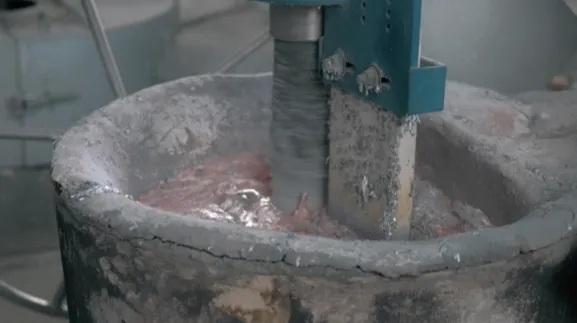
Liquid Aluminum Cleaning, Molten Metal On Modern Factory
2. Why removal matters: quality, safety, and economics
Removing scum is not cosmetic. Left in place, scum causes:
-
Inclusions and pores in castings, reducing mechanical properties.
-
Surface defects that increase scrap and rework.
-
Lower thermal transfer and furnace inefficiency through insulating layers.
-
Safety hazards when reactive dross contacts moisture or when operators handle unstable hot oxide masses.
-
Economic loss from metal locked in the scum layer and from time lost to secondary treatment.
Because of these factors, many modern melt shops treat skimming and fluxing as an integral part of yield management and process control.
3. How scum forms — oxide chemistry and mechanical entrainment
Scum results from two broad mechanisms:
-
Oxidation at the metal–air interface: Metals like aluminum and magnesium form stable oxides almost instantly on exposure to oxygen. Those oxide films fold, trap metal droplets and coalesce into a floating mass.
-
Mechanical entrainment: Turbulence during charging, pouring or stirring can trap flux, refractory particles, or slag fragments in the melt and carry them to the surface where they join oxide films.
In aluminum melts, common oxide phases include Al₂O₃, spinel phases such as MgAl₂O₄, and mixed oxides that trap metallic aluminum droplets. That trapped metal represents a direct yield loss unless recovered. Understanding oxide chemistry helps choose fluxes and process conditions that promote metal recovery rather than metal loss.
4. Detection and inspection of surface scum
Operators detect scum by visual inspection, noting color, texture and thickness. Best practice includes periodic documented checks and a short checklist:
-
Visual: color, porosity, wetting behavior.
-
Temperature check: scum behavior changes with melt superheat.
-
Sampling: small skims examined under magnification can reveal trapped metal and refractory fragments.
-
Process records: frequency of formation correlates to charge material, melt time, and flux usage.
Simple inspection combined with routine data logging creates the basis for process improvements.
5. Preventive practices in melt preparation
Good prevention reduces scum formation rate and makes removal easier. Recommended steps:
-
Minimize turbulence during charging and bump heating.
-
Use clean, low-moisture scrap, and preheat where feasible.
-
Keep furnace and ladle refractory in good shape; failure of lining often produces fragments that enter the melt.
-
Control superheat carefully; excessive superheat increases oxidation and gas pick-up, while too low a temperature reduces metal fluidity.
-
Implement scheduled skimming rather than waiting for heavy dross layers.
These practices reduce formation rate and the metal entrained in any resulting scum.
6. Chemical approaches: fluxes and active gases
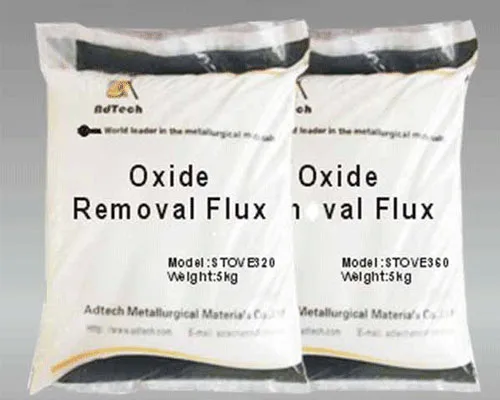
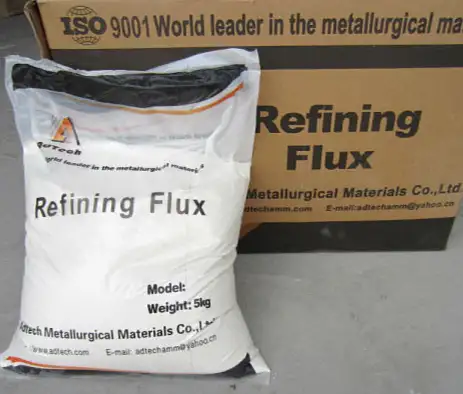
Two chemical strategies dominate: salt-based fluxes and active flux gases. Salt fluxes are blends of chlorides and fluorides formulated to react with oxide films and to promote coalescence of entrapped metal back into the bath, or to convert sticky, wet dross into a more powdery, dry ash that can be skimmed easily. Gas fluxing methods use reactive or inert gases to float fine oxides to the surface and to produce conditions favorable to skim removal.
Key points:
-
Drossing fluxes often contain chlorides with controlled fluoride content to free metallic particles from oxide films. Correct dosing and mixing make the difference between recovery and further metal loss.
-
Cover fluxes create a protective layer that reduces new oxidation and makes skimming easier.
-
Chlorine-containing gas treatments can remove alkali elements by producing their chlorides that float and can be skimmed. Gas fluxing requires careful handling due to corrosive byproducts and safety issues.
Industry reviews and materials science studies document the reliance on proper flux formulation to balance effective oxide treatment with operator safety and downstream environmental handling.
7. Mechanical approaches: hand skimming, rakes and scrapers
Fundamental mechanical removal remains widely used:
-
Hand skimming: operators use a flat skimmer or paddle to remove the surface layer. Best for small furnaces or targeted cleanup.
-
Rakes and scrapers: longer tools allow safer reach and better leverage on thicker scum.
-
Suction and vacuum heads: specialized heads remove powdery treated dross or fine slag without dipping a tool into the metal.
Good mechanical practice aims to remove the scum layer with minimal metal entrapment. Operators should remove scum promptly and concentrate on collecting a thin, dry layer rather than scooping deep and capturing metal.
8. Automated and semi-automated skimming equipment
Large melt shops use mechanized skimmers, skimming arms and dedicated skimming machines to reduce operator exposure and improve consistency. Automated systems offer:
-
Consistent skimming frequency and depth control.
-
Integration with tilting furnaces and skimming stations to collect scum into pots for hot processing.
-
Reduced metal loss through controlled contact.
-
Improved safety because operators are not holding tools close to molten surfaces.
Machine examples include robotic skimming arms, continuous skimming attachments on tilting ladles and integrated slag skimmers for steelmaking. Studies of industrial installations show improved throughput and reduced human exposure when skimmers are paired with proper fluxing and process controls.
9. Special techniques: suction, vacuum and filtration interplay
Beyond surface skimming, several supplementary techniques apply:
-
Vacuum and suction extraction: patented methods use gas flow and suction to carry skim to a collector and to remove fine particles while minimizing metal removal. Equipment can treat skim to reduce metallic content before collection.
-
Filtration: passing molten metal through filters or ceramic foam removes inclusions that are not easily skimmed. Filtration complements skimming because it captures entrained particles within the flow rather than just the surface.
Integrated strategies often combine fluxing, surface skimming and inline filtration to reach the highest metal purity levels.
10. Handling, treatment and recovery of skimmed material
Skimmed scum often contains valuable metallic droplets that can be recovered. Common pathways:
-
Hot dross processing: feeding hot skim into a dross processor that separates metal from oxides using mechanical and inert-gas quenching techniques. This recovers trimmed aluminum and reduces waste.
-
Aging and chemical treatment: some sites let scum cool and treat the residue chemically to recover metal content.
-
Safe storage: store scum dry, protect from moisture to avoid violent reactions, and segregate reactive dross types.
Recovering metal from scum improves yield and reduces environmental footprint.
11. Equipment selection: decision matrix and maintenance tips
Choosing the right solution depends on melt size, metal type and production rhythm. Use this quick decision matrix to match needs.
Table 1: Scum removal method selection matrix
| Melt scale | Typical metal | Recommended primary method | Typical benefit |
|---|---|---|---|
| Small bench melting | Alloys for lab | Hand skimming + cover flux | Low capital, flexible |
| Medium furnace (tilting) | Aluminum & alloys | Mechanical skimmer + flux dosing | Improved yield |
| High-volume mill | Large billets, continuous | Automated skimming + hot dross processor | Best consistency, safety |
| Steel ladle | Steel melts | Slag skimmer + ladle treatment | Faster slag removal, fewer inclusions |
| Specialty alloys | Sensitive chemistries | Filtration + controlled flux/gas | Highest purity, low metal loss |
Maintenance points:
-
Inspect skimming blades, seals and automation linkages daily.
-
Store fluxes dry; moisture in flux causes violent reactions.
-
Log skimming events for trend analysis.
12. Environmental, health and regulatory considerations
Fluxes with chlorides and fluorides create airborne or water-soluble byproducts when processed. Handling notes:
-
Use local exhaust ventilation and PPE when applying fluxes.
-
Capture and treat effluent from hot dross processing following local regulations.
-
Keep records for waste classification because dross residues may be regulated by hazardous waste rules depending on constituents.
-
Train operators on safe flux handling and emergency quench procedures.
Regulatory requirements vary regionally. Consult local environmental authorities for disposal rules.
13. Typical process parameters and troubleshooting checklists
Common control parameters and quick checks:
-
Melt temperature: maintain within recommended range for alloy; overheating increases oxidation.
-
Flux dose: follow manufacturer recommendations by mass per ton of metal; underdose leaves sticky scum; overdose wastes flux and can add contaminants.
-
Skim frequency: schedule frequent thin skims rather than rare heavy skims.
-
Tool angle and speed: slower, shallow passes recover scum with less metal.
-
Record keeping: track skimming volume, metal recovery and defect rates.
Troubleshooting quick list:
-
If scum is wet and yields high metal loss, check flux type and dosing.
-
If scum reforms rapidly, reduce turbulence during charging and inspect refractory.
-
If skimming removes excessive metal, reduce tool penetration and increase flux quality or dosage.
14. Practical case examples and recommended workflows
A typical effective workflow for an aluminum melting line:
-
Preheat scrap and minimize moisture.
-
Charge furnace using low-turbulence practice.
-
Maintain correct superheat.
-
Add cover flux after melt stabilizes and mix according to practice.
-
Skim using a trained operator or automated skimmer at scheduled intervals.
-
Collect skim into hot dross processor for metal recovery.
-
Filter tapped metal for remaining inclusions prior to casting.
For steel ladles, synchronous slag skimming at tapping combined with ladle furnace slag treatment yields better final cleanliness.
15. Tables: chemistry, flux types, equipment pros/cons
Table 2: Typical scum/dross composition by metal system
| Metal system | Dominant oxide phases | Common entrained inclusions |
|---|---|---|
| Aluminum | Al₂O₃, MgAl₂O₄ spinel | Metallic Al droplets, refractory dust |
| Magnesium-containing alloys | MgO, mixed spinels | Mg droplets, oxides with high melting points |
| Steel | CaO-SiO₂-MgO rich slag | Slag phases, oxidized scale |
| Copper & bronze | CuO, Cu₂O and mixed oxides | Sand, flux residues, scale |
Table 3. Flux families and quick notes
| Flux family | Typical composition | Role in scum control | Downsides |
|---|---|---|---|
| Cover flux | Chlorides with limited fluorides | Protect surface from oxygen | Can trap moisture if stored poorly |
| Drossing flux | Higher fluoride content with chlorides | Convert dross to powdery ash and free metal | Fluoride content can be corrosive |
| Reactive gas fluxing | Cl₂-containing or chlorine donors in gas | Remove alkali and form separable salts | Corrosive gases, require controls |
| Inert gas bubbling | Argon, nitrogen | Float inclusions to surface | Less effective for stubborn oxide films |
Table 4: Skimming equipment: pros and cons
| Equipment | Advantages | Limitations |
|---|---|---|
| Hand skimmer | Low cost, flexible | Operator exposure, inconsistent |
| Mechanical rake | Better reach, repeatable | Needs trained operator, manual control |
| Automated skimmer arm | Consistent, safer | Capital cost, requires maintenance |
| Suction/vacuum system | Removes fine powdery skim | Equipment complexity, initial cost |
| Hot dross processor | Recovers metal, reduces waste | Additional capital, energy use |
Skimming & Dross Management: Melt Yield Optimization FAQ
1. What is the difference between dross and scum?
2. Why does skimming sometimes remove too much good metal?
3. When should I use a cover flux vs. a drossing flux?
- Cover Flux: Use during idle periods or melting to create a barrier against oxidation and hydrogen pickup.
- Drossing Flux: Use just before skimming to react with oxide films and free entrapped aluminum droplets, improving your overall metal yield.
4. Can I recover metal from skimmed dross?
5. Are automated skimmers worth the investment?
6. Does filtration replace the need for skimming?
7. How do I minimize scum/dross formation?
- Managing superheat (avoiding temperatures over 780°C).
- Reducing melt turbulence during transfer and stirring.
- Ensuring charge materials are clean and dry.
- Keeping furnace refractories clean to prevent oxide buildup.
8. What safety rules apply to flux handling?
9. Is gas fluxing dangerous?
10. How often should skimming occur?
17. Quick troubleshooting checklist
-
Excessive metal loss in skims: check flux type, reduce skimming depth.
-
Rapid reformation of scum: reduce turbulence and check charge materials.
-
Sticky, wet scum that is hard to remove: verify flux freshness and dosing.
-
Frequent operator exposures: evaluate automation options and safety training.
18. Recommended readings and reputable resources
For technical details on flux formulations, skimming patents, and industrial skimming equipment consult peer-reviewed reviews and manufacturer technical sheets. Practical and up-to-date guidance comes from metallurgical suppliers, specialist vendors and academic reviews that describe flux chemistry and skimming best practice. Representative technical sources are industry reviews and patents covering skimming and flux technologies.
19. Final pragmatic checklist for implementation
-
Assess the metal system and production scale.
-
Run a short audit of charging practice and refractory condition.
-
Trial a recommended flux with controlled dosing and record results.
-
Implement scheduled skimming and capture data for yield and defect rates.
-
If losses or safety issues persist, evaluate automated skimming or hot dross processing.