

Refractory protective coatings form a thin engineered barrier over bricks, castables, ceramic fiber modules, graphite, or metal surfaces that prevents molten-metal penetration, chemical attack, abrasion, and premature surface failure. Proper selection, correct application, and scheduled maintenance of these coatings extend lining life, reduce unplanned downtime, and improve thermal performance and product yield.
What are refractory protective coatings
A refractory protective coating is a formulated material applied over a refractory lining or hot surface to deliver targeted surface properties. Typical aims include resistance against molten metal infiltration, reduction of abrasive wear, blocking chemical attack, improvement of thermal emissivity, and sealing of porosity in castable or brick linings. By performing these surface-level roles, a coating slows the rate of working-face degradation, increases the number of production cycles between repairs, and often improves energy use by altering radiant heat behavior.
Industry experience shows that the right coating can prevent common failure paths in aluminum and steel melting equipment, glass tanks, kilns, and other high-temperature vessels. Major technology vendors and foundry specialists publish technical bulletins that document both energy and operational advantages when coatings receive correct specification and application.
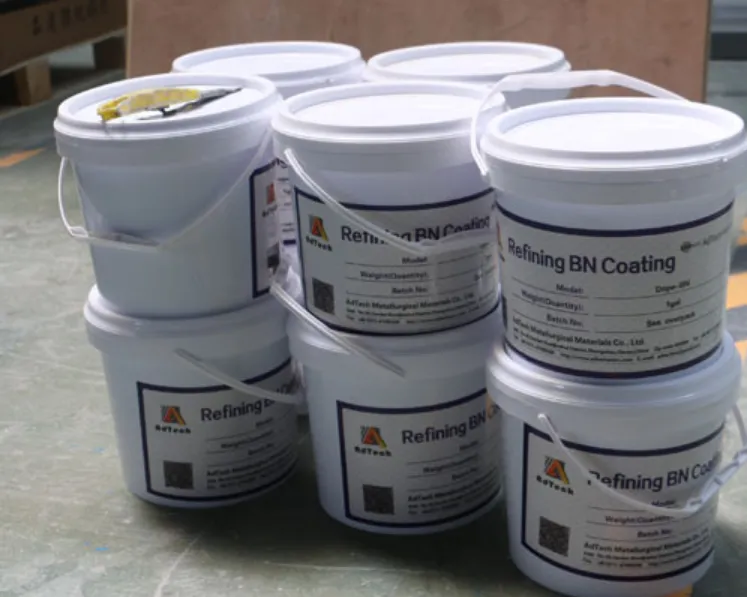
Core functions and performance drivers
Primary functions
-
Form a non-wetting barrier that limits metal penetration into porous refractories.
-
Resist chemical attack from slags, fluxes, or combustion byproducts.
-
Lower abrasion and erosion rates where flow or solids movement contacts the working face.
-
Modify surface emissivity to influence furnace heat balance and thermal efficiency.
-
Fill surface porosity in castables or bricks, creating a more uniform process surface.
Performance drivers
-
Composition and particle size distribution of the refractory filler in the coating.
-
Binder chemistry and its thermal decomposition path.
-
Adhesion strength to the substrate and flexibility under thermal cycling.
-
Wetting properties versus the molten metal or slag in contact.
Main chemistries and product families
Refractory protective coatings fall into several broad categories. Each family brings tradeoffs between temperature capability, toughness, thermal shock resistance, chemical resistance, and ease of application.
1. Ceramic-particle waterborne or solventborne coatings
These combine high-melting ceramic powders such as alumina, zirconia, magnesia, or fused silica with a binder that burns off at service temperature, leaving a dense ceramic-rich film. Strong in non-wetting and chemical resistance when designed correctly.
2. Non-wetting release coatings and sacrificial paints
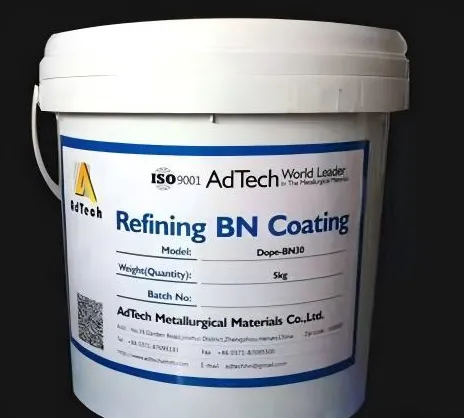
Formulated to repel molten metal and slag through specific additives like boron nitride, graphite, or proprietary polymer-ceramic blends. These products can be sacrificial but provide economical protection in medium-wear areas.
3. High-emissivity or reflective coatings
Designed to manipulate radiant heat. Some coatings raise reflectivity to speed heat-up or to return radiative heat to the process, improving fuel efficiency. Others increase emissivity where radiative exchange must increase for process control.
4. Cementitious and refractory mortars used as thin protective layers
Satanite-style mortars and low-cement castable slurries can be troweled or sprayed to create a hard protective face. These products deliver mechanical resistance and are often used where a robust surface is required.
5. Ceramic fiber-compatible coatings
Soft or flexible coatings tailored for fiber modules that bond strongly without inducing localized stress on the insulation. These maintain fiber integrity while reducing dusting and erosion.
Typical industrial uses and case contexts
-
Aluminum melting furnaces: protect against molten aluminum infiltration and dross adhesion.
-
Steel ladles and tundishes: reduce molten steel penetration and abrasion.
-
Glass tanks: protect refractory floors and weirs from corrosive glass chemistry.
-
Kilns and furnaces for heat treatment: manage radiant heat and protect ceramic fiber modules.
How coatings protect against molten-metal wetting and penetration
Molten metals wet porous refractory surfaces and then infiltrate interstitial spaces. Once penetration begins, replacement of lining material becomes likely. Protective coatings interrupt this chain in three ways:
-
Supply a low-wetting surface chemistry that reduces the contact angle between metal and solid surface. Less wetting reduces penetration probability.
-
Seal open porosity so that capillary pathways disappear. Proper pore sealing blocks metal capillarity.
-
Provide a sacrificial skin that can be refreshed rapidly, allowing scheduled recoating in high-wear zones.
Practical note: selection must consider the specific molten alloy chemistry, temperature range, and fluxing agents used in the process. A coating that works well for one metal or process may fail in a different chemistry.
Selection criteria and matching to base lining materials
When specifying a coating, cross-check these properties against the lining and process conditions:
-
Maximum continuous service temperature and transient peak tolerance.
-
Compatibility with base refractory (alumina, magnesia, corundum, silica, silicon carbide, ceramic fiber).
-
Resistance against process-specific chemicals, for example, chlorides in some fluxes or alkalis in glass operations.
-
Required mechanical toughness to resist abrasion and impact from charge materials.
-
Coating thickness and whether that thickness changes dimensional tolerances at the working face.
-
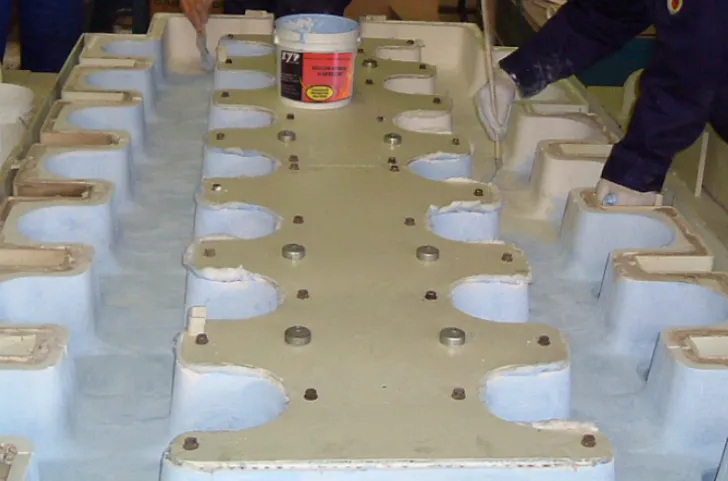
Method of application supported by the site: brush, spatula, spray, trowel, or pneumatic ram.
-
Cure schedule and heat-up sequence required to drive off binders without causing surface spall.
Application methods and installation best practices
Surface preparation
-
Remove loose scale, dust, and scaling from the lining.
-
Repair major voids or spalls with appropriate patching materials.
-
Achieve an acceptable surface profile for mechanical keying where required.
Typical application techniques
-
Brushing or rolling for small repairs and thin-film products.
-
Airless or conventional spray for consistent, thicker films.
-
Trowel application for mortar-based protective layers.
-
Pneumatic ramming or gunning for thicker patch-like coatings.
Cure and heat-up
Many products require staged drying and controlled furnace heat-up to avoid blistering. Follow vendor cure curves; rapid heating might force binder gases to expand, creating porosity, which undermines the protective function.
Quality checks during and after application
-
Visual uniformity and coverage to specification.
-
Thickness measurement by wet film gauges or end-of-cure checks.
-
Adhesion testing on sample areas where practical.
Inspection, maintenance, and recoat strategies
A scheduled inspection program reduces emergency repairs. Practical schedule example:
| Frequency | Task |
|---|---|
| Daily | Visual check for spall, hot spots, or heavy metal buildup |
| Weekly | Targeted inspection of high-wear zones and measurement of coating thickness in accessible areas. |
| Monthly | Record thermal behavior changes and evaluate emissivity-related performance |
| Annual shutdown | Full relining inspection and recoat of sacrificial layers |
Regular maintenance typically focuses on high-impact zones: charging doors, lip areas, slag contact zones, and metal flow channels. Recoat intervals vary from weeks to years depending on service severity.
Safety, handling, environmental concerns, regulatory notes
-
Many refractory coatings contain fine ceramic powders and binders that pose inhalation risk during mixing and dry handling. Use respiratory protection and local exhaust during preparation.
-
Binder decomposition during initial heat-up can emit volatiles. Provide sufficient ventilation during cure.
-
Some non-wetting additives contain boron compounds that have exposure limits. Check MSDS for each product.
-
Waste from spent coatings and brush cleaning can be abrasive; handle according to local solid-waste rules.
Manufacturers publish safety data sheets and handling recommendations that must be followed. Regulatory requirements vary by region and process.
Comparative performance tables
Table 1: Typical coating families and primary merits
| Coating family | Peak service temperature | Key merit | Typical weakness |
|---|---|---|---|
| Ceramic-particle waterborne | 1200 to 1800°C depending on filler | Excellent chemical resistance and pore sealing | Requires careful cure; binder burnout needed |
| Non-wetting release coatings | Up to 800 to 1100°C | Strong molten-metal repellency | Often sacrificial; needs frequent recoat |
| Cementitious thin faces | 1000 to 1700°C | Mechanical toughness and abrasion resistance | Heavier; may alter dimensions |
| Fiber-compatible soft coats | 800 to 1400°C | Protects fragile insulation from erosion | Lower abrasion resistance |
| High-emissivity reflective coats | Wide range | Energy optimization through radiation control | Must match process emissivity needs |
Table 2: Example selection matrix for aluminum melting line
| Zone | Typical substrate | Recommended coating family | Primary reason |
|---|---|---|---|
| Melt bath zone | High-alumina castable | Non-wetting sacrificial or ceramic-particle seal | Prevent aluminum penetration |
| Spout and launder | Silicon carbide or corundum brick | Tough cementitious face or ceramic-particle coat | High abrasion and flow |
| Charging door | Fiber module backed by brick | Fiber-compatible soft coat plus thin trowel patch | Prevent fiber abrasion and seal edges |
| Holding zone | Castable lining | Ceramic-particle with high alumina | Chemical resistance and seal |
Troubleshooting common failure modes and remedies
Failure: blistering or delamination during first heat-up
Cause: rapid binder burnout or trapped moisture. Remedy: staged heat-up and verify surface dryness before full-temperature reach.
Failure: rapid wear in high-impact area
Cause: improper product family or insufficient thickness. Remedy: nominate mortar-style or higher-toughness coating and maintain thicker sacrificial layer.
Failure: molten-metal penetration despite coating
Cause: coating chemistry incompatible with alloy or coating voids. Remedy: test alternate non-wetting additives and improve substrate pre-sealing.
Failure: unexpected chemical attack
Cause: exposure to flux or slag not covered by product test data. Remedy: engage vendor for bespoke formulation or add sacrificial overcoat that resists that chemistry.

Performance testing and quality verification methods
A robust qualification program should include:
-
Thermo-mechanical cycling test of coated-substrate specimens.
-
Wetting tests with molten metal or slag simulants to measure contact angle and penetration.
-
Abrasion testing to quantify material loss under simulated flow impact.
-
Adhesion pull-off testing after full cure and following thermal cycle.
-
Emissivity measurement where thermal performance matters.
Economic evaluation and lifecycle benefits
Short-term costs for premium coatings often offset long-term savings from fewer relines, reduced scrap, and lower energy consumption. A simplified lifecycle model should compare:
-
Annualized coating cost plus installation labor
-
Savings linked to longer lining life and fewer unplanned outages
-
Energy changes related to emissivity differences
-
Yield gains through reduced metal sticking and dross formation
In many industrial cases, coatings yield positive ROI within a few months when service conditions are severe. Vendor case studies often document these gains and can provide tailored calculations for a specific plant.
Practical specification checklist for procurement
-
Define process temperatures and transient peaks.
-
List substrates and their chemistry.
-
Record chemical exposures including flux and slag composition.
-
Describe mechanical stresses: abrasion, impact, charge loading.
-
State preferred application methods and onsite capabilities.
-
Request MSDS, technical data sheets, and test reports.
-
Ask for adhesion, wetting, and abrasion test data that match your process.
-
Include staging cure requirements in acceptance criteria.
Multiple supporting tables
Table 3: Quick reference: which coating family for which problem
| Problem | Coating family likely best | Quick justification |
|---|---|---|
| Molten metal infiltration | Non-wetting coating or ceramic-particle seal | Low wettability and pore sealing reduce capillarity |
| High abrasion | Cementitious thin-face or trowel mortar | Higher toughness and impact resistance |
| Fiber erosion | Fiber-compatible soft coating | Flexible bond that does not damage insulation |
| Energy inefficiency | High-emissivity or reflective coating | Alters radiative heat balance |
| Frequent maintenance windows | Sacrificial, fast-apply coatings | Allows quick turnarounds between campaigns |
Table 4. Example lab test parameters for vendor qualification
| Test | Method | Acceptance note |
|---|---|---|
| Contact angle with molten metal | Sessile drop on coated sample in controlled furnace | Contact angle above threshold indicates non-wetting |
| Abrasion loss | ASTM-style rotating disc or pin abrasion | Loss below spec for given cycles |
| Adhesion after thermal cycle | Pull-off test after 10 cycles to service peak | No delamination permitted |
| Emissivity | IR emissometer at operating temperature | Match expected emissivity within tolerance |
| Chemical attack | Immersion or exposure to slag simulant | No mass loss above spec |
Refractory Coatings: Surface Protection & Armor FAQ
1. What distinguishes a non-wetting coating from a sealing coating?
2. Can every refractory lining accept any coating?
3. How thick should a protective coating be applied?
- Thin-film non-wetting layers: Typically <0.5 mm.
- Protective mortars/mastics: Can range from 2 mm to several centimeters.
Always balance the protection level with the required dimensional tolerances of your furnace or launder.
4. What is the usual cure schedule for these coatings?
5. Does a coating change the furnace’s thermal behavior?
6. How quickly can a coating be reapplied during a short outage?
7. Are ceramic fiber modules coated differently than brick faces?
8. What tests should procurement require from suppliers?
- Adhesion Strength (Post-thermal cycling).
- Contact Angle with your specific alloy.
- Abrasion Resistance indices.
- Emissivity values at operating temperatures (T > 700℃).
9. What are the most common mistakes during application?
- Poor surface preparation (grease or dust contamination).
- Insufficient drying time.
- Rapid heat-up causing steam spalling.
- Wrong product choice for the specific alloy chemistry.
10. Is coating disposal regulated?
Final checklist for engineers before specifying a coating
-
Confirm maximum operating and transient temperatures.
-
Identify molten-metal chemistry and slag composition.
-
Define abrasion and impact loads.
-
Confirm substrate type and existing lining condition.
-
Specify application methods available onsite.
-
Set measurable acceptance tests and schedule.
-
Ask vendor for trial on a representative mock-up.
-
Integrate maintenance intervals into the plant TPM plan.
Closing summary
Refractory protective coatings provide a cost-effective layer of defense for high-temperature process equipment. They protect linings from infiltration, wear, and chemical attack while offering opportunities to improve energy performance through surface-emissivity management. Choosing the right chemistry and applying it under controlled conditions yields compelling reductions in downtime and lifecycle costs. Work closely with coating specialists and plan qualification tests that reflect real plant conditions before full-scale deployment.