

Ceramic launders are specialized refractory channels designed for the safe, high-efficiency transport of molten aluminum and other non-ferrous metals, offering exceptional thermal insulation, erosion resistance, and non-wetting properties. After working with foundries and aluminum smelters across three continents for over a decade, we can state plainly: refractory ceramic launders remain the single most cost-effective and thermally reliable method for transporting molten aluminum from furnace to casting station. Unlike steel troughs that require constant relining or graphite systems that carry oxidation risks at high temperatures, properly engineered ceramic launder systems deliver service life exceeding 18 months in continuous operation while maintaining metal temperature loss below 15°F per 20 feet of travel.
If your project requires the use of Refractory Ceramic Launders Systems, you can contact us for a free quote.
What Exactly Is a Refractory Ceramic Launder System?
A launder, in metallurgical terms, is simply a channel or trough that guides molten metal by gravity flow from one point to another. When we talk about refractory ceramic launders specifically, we mean troughs constructed from castable or precast ceramic materials engineered to withstand sustained contact with molten aluminum at temperatures typically ranging from 1300°F to 1450°F.
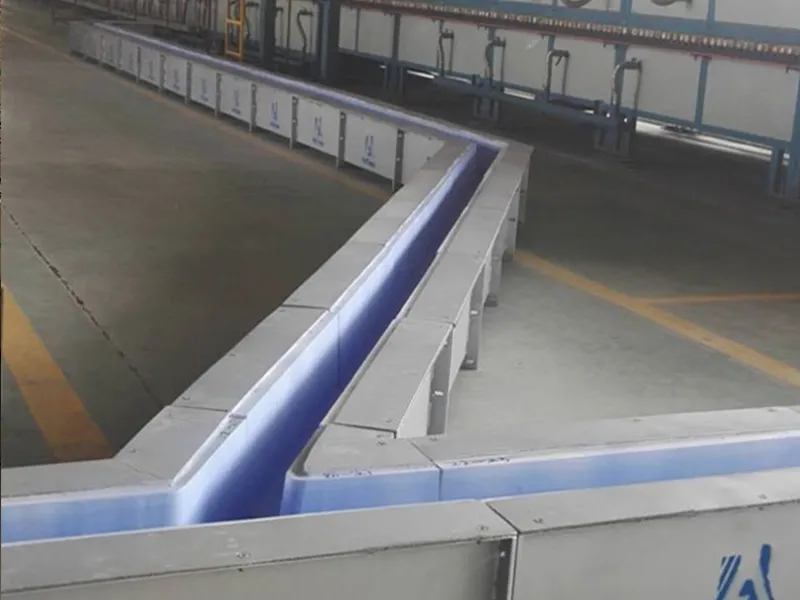
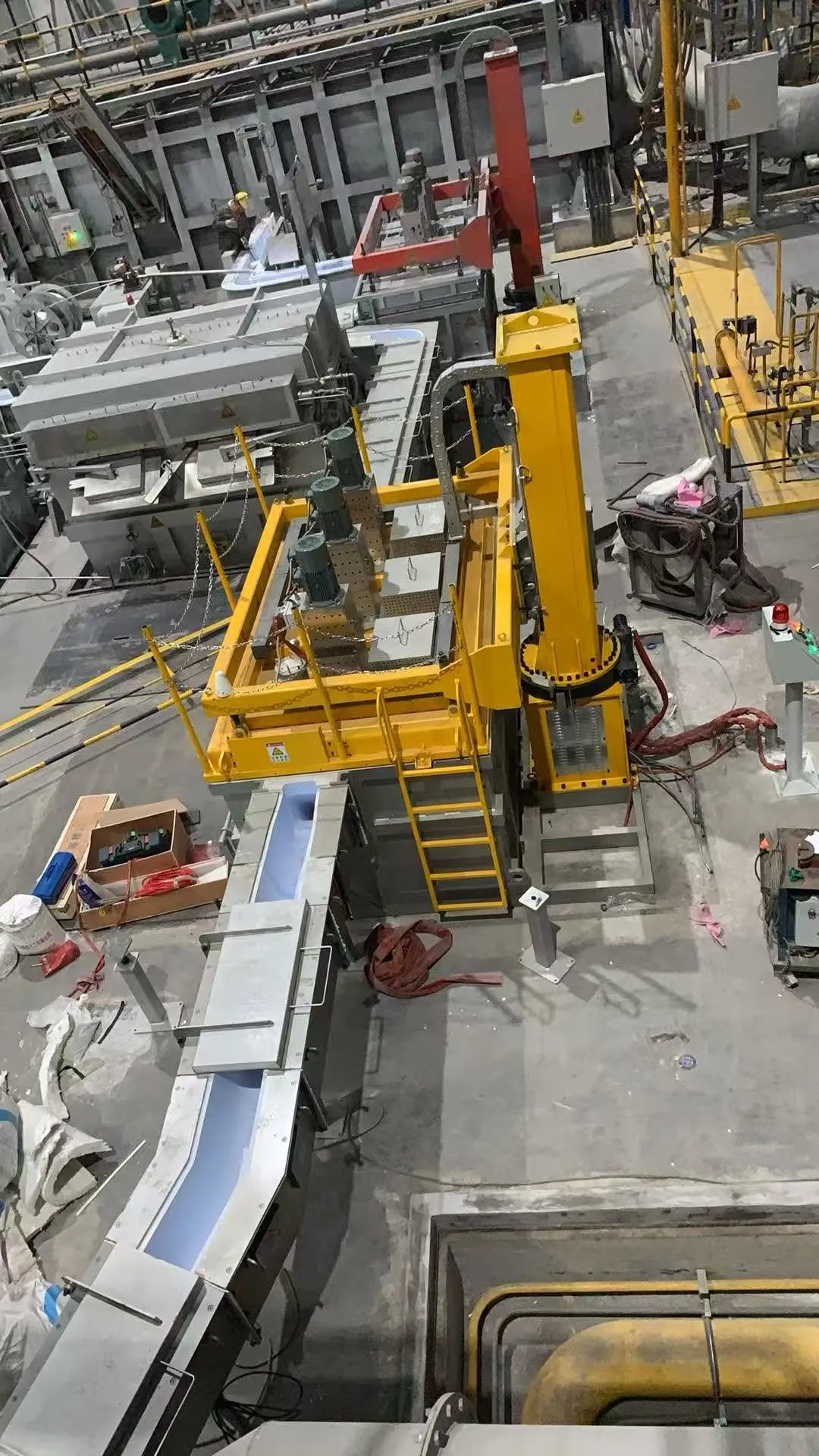
The system isn’t just the trough itself. A complete launder assembly includes:
- The channel body (the trough that carries the metal).
- Support structures and stands.
- Cover systems to reduce oxidation and heat loss.
- Gate mechanisms or dams for flow control.
- Insulation backing layers.
- Sometimes heating elements for temperature maintenance.
We’ve seen plants make the mistake of purchasing only the trough component and then wondering why their metal temperature drops too fast or why oxide buildup happens faster than expected. The whole assembly matters.
Read more: Custom Molten Aluminum Transfer Launder System: AdTech Engineering.
Why Aluminum Producers Choose Ceramic Over Other Materials
Steel launders were the industry standard for decades, but aluminum’s aggressive chemical behavior at molten temperatures creates real problems with metallic transport systems. Molten aluminum readily alloys with iron, which means steel troughs suffer from erosion, contamination of the melt, and eventual failure that often happens without warning.
Here’s a comparison table we put together based on field data from multiple installations:
| Material Type | Average Service Life | Metal Contamination Risk | Heat Loss Rate | Relative Cost |
|---|---|---|---|---|
| Mild Steel | 2-4 weeks | High (iron pickup) | Moderate | Low |
| Cast Iron | 4-8 weeks | High | Moderate | Low-Medium |
| Graphite | 6-12 months | Low | Low | High |
| Refractory Ceramic (Castable) | 12-18 months | Very Low | Low | Medium |
| Refractory Ceramic (Precast Fused Silica) | 18-24 months | Minimal | Very Low | Medium-High |
The numbers tell a clear story. Even though the upfront investment for ceramic systems runs higher than steel, the total cost of ownership favors ceramic once you factor in downtime for relining, contamination-related scrap losses, and labor costs for constant maintenance.
We worked with a secondary aluminum recycler in Kentucky a few years back who was replacing steel launders every three weeks. After switching to a fused silica ceramic system, they went eleven months before their first required maintenance. The math on that alone justified the switch within the first quarter.
Common Refractory Materials Used in Launder Construction
Not all “ceramic” launders are created equal, and this is where buyers often get confused during procurement. The base material composition dramatically affects performance, cost, and suitability for specific applications.
Fused Silica Refractories
Fused silica has become something of a gold standard for aluminum transport applications because of its extremely low thermal expansion coefficient. This matters enormously in practice because launders undergo constant thermal cycling as metal flow starts and stops. Materials with high thermal expansion crack under this stress; fused silica shrugs it off.
Calcium Silicate Board Systems
These are typically used as insulation backing rather than the wetted surface itself, but some lower-temperature applications use calcium silicate directly. We don’t recommend this for primary aluminum transport where temperatures regularly exceed 1380°F, as the material begins losing structural integrity.
Alumina-Based Castables
High-alumina castable refractories offer excellent mechanical strength and are often chosen for high-wear areas like launder junctions, gates, and areas experiencing turbulent flow. They cost less than fused silica but come with a tradeoff: higher thermal expansion means more susceptibility to thermal shock cracking.
Composite/Hybrid Systems
Many modern launder manufacturers now combine materials strategically. A typical hybrid design might use fused silica for the wetted lining (the part touching molten metal) backed by lighter, more insulating castable or fiber board layers. This approach optimizes both performance and cost.
| Refractory Type | Max Service Temp | Thermal Shock Resistance | Typical Application Area |
|---|---|---|---|
| Fused Silica | 1600°F | Excellent | Primary wetted lining |
| High-Alumina Castable | 1800°F+ | Fair to Good | High-wear zones, gates |
| Calcium Silicate | 1200°F | Poor | Backup insulation only |
| Insulating Firebrick | 1500°F | Moderate | Support structure |
| Ceramic Fiber Board | 2000°F+ | Excellent | Insulation backing |
Design Considerations That Actually Matter in the Field
We’ve reviewed hundreds of launder installations, and the ones that perform well share certain design characteristics that don’t always show up in sales brochures.
Channel Geometry and Flow Dynamics
The cross-sectional shape of the launder channel affects flow velocity, turbulence, and oxide formation. A trough that’s too narrow forces metal to flow faster, which increases turbulence and traps more oxides into the melt. Too wide, and you get slower flow with more surface exposure to air, accelerating oxidation and heat loss.
Most experienced designers aim for a flow velocity between 0.5 and 1.5 feet per second depending on the alloy and application. Semi-circular or trapezoidal channel shapes tend to outperform rectangular designs because they minimize dead zones where metal can stagnate and solidify.
Slope and Gradient Requirements
Gravity does the work in a launder system, so slope matters enormously. Too shallow a gradient (under 2%) risks metal freezing before reaching its destination, especially in longer runs. Too steep (over 6%) creates splashing and turbulence at transition points. Our field recommendation sits between 3% and 4% for most standard aluminum transport applications, adjusted based on total run length and ambient conditions.
Cover and Insulation Strategy
An open launder loses heat dramatically faster than a covered one. We measured temperature drops on an uncovered 30-foot run at nearly 40°F, compared to just 12°F on an identical covered system. Beyond heat retention, covers reduce oxide formation and improve worker safety by limiting radiant heat exposure and splash risk.
Preheating Provisions
New or freshly relined launders require careful preheating before metal contact. Thermal shock from introducing hot metal into a cold refractory system is one of the leading causes of premature cracking and failure. Most manufacturers specify a preheat curve, typically raising temperature at 100°F per hour until reaching operating range, held for several hours before first use.
Installation Best Practices We’ve Learned the Hard Way
Getting the design right on paper doesn’t guarantee good performance if installation goes wrong. Here are practices that separate successful installations from problematic ones.
Support structure leveling matters more than most installation crews realize. Even a slight misalignment in support stands creates uneven stress distribution across the ceramic body, leading to localized cracking that seems mysterious until you check the substructure.
Joint sealing between sections needs particular attention on longer runs requiring multiple launder segments. Poor joint sealing allows metal seepage that not only wastes material but can cause dangerous breakout situations if left unaddressed.
Anchor system selection should match the specific refractory type. Metallic anchors embedded in castable refractories need to account for differential thermal expansion between the metal anchor and the ceramic body, otherwise you get anchor-related cracking patterns that spread throughout the structure.
We always recommend a dry run with the actual metal flow rate before committing to full production use. This catches design flaws while they’re still cheap to fix.
Maintenance Protocols That Extend Service Life
Plants that get the longest service life from their launder systems follow disciplined maintenance schedules rather than reactive repairs.
Daily Inspection Points
- Visual check for surface cracking or spalling.
- Metal buildup or dross accumulation at flow restriction points.
- Cover integrity and seal condition.
- Temperature readings at multiple points along the run.
Weekly and Monthly Checks
Beyond daily visual inspection, we recommend thermal imaging surveys on a weekly basis for high-throughput operations. Thermal cameras reveal hot spots indicating refractory thinning long before visual cracking appears, giving maintenance teams a window to plan repairs during scheduled downtime rather than dealing with emergency failures.
Repair Versus Replacement Decision Framework
| Damage Type | Repair Feasibility | Recommended Action |
|---|---|---|
| Surface hairline cracks (under 1/8 inch) | High | Patch with matching castable |
| Localized erosion at flow points | Moderate | Reline affected section |
| Through-wall cracking | Low | Full section replacement |
| Widespread spalling | None | Complete system replacement |
| Joint failure between segments | High | Reseal or replace joint material |
We’ve found that plants trying to stretch repairs too far often end up with catastrophic failures that cost far more than a planned replacement would have. There’s a psychological tendency to keep patching a system that “still works,” but the risk profile changes dramatically once structural integrity is compromised.
Sizing and Capacity Planning for Different Operations
Procurement teams frequently ask us how to determine the right launder size for their specific throughput requirements. This isn’t a one-size-fits-all calculation.
Flow capacity depends on channel cross-section, slope, and the metal’s viscosity at operating temperature. A rough field formula many engineers use starts with determining required throughput in pounds per minute, then working backward to determine minimum channel dimensions that maintain safe flow velocity without excessive turbulence.
| Furnace Capacity | Typical Launder Width | Typical Depth | Recommended Slope |
|---|---|---|---|
| Under 10 tons | 6-8 inches | 4-5 inches | 3-4% |
| 10-30 tons | 8-12 inches | 5-7 inches | 3-4% |
| 30-60 tons | 12-16 inches | 7-9 inches | 2.5-3.5% |
| Over 60 tons | 16-24 inches | 9-12 inches | 2.5-3% |
These figures represent general starting points from our project experience rather than rigid engineering specifications. Actual alloy composition, ambient plant temperature, and specific casting process requirements all influence final sizing decisions.
Common Failure Modes and Root Cause Analysis
Understanding why launder systems fail helps both purchasers and maintenance teams make better decisions. We’ve catalogued failure patterns across numerous plant visits and consulting engagements.
Thermal shock cracking typically results from either inadequate preheating procedures or from sudden temperature swings during operation, such as when production stops and starts erratically without proper temperature management protocols.
Chemical attack and erosion occurs when the refractory composition isn’t well-matched to the specific aluminum alloy being processed. Certain alloying elements, particularly magnesium in higher concentrations, react more aggressively with standard refractory linings than pure aluminum does.
Mechanical damage from tools, cleaning equipment, or accidental impact during maintenance activities accounts for a surprising percentage of premature failures we’ve investigated. Operator training on proper cleaning techniques prevents much of this damage.
Structural settling happens when support systems aren’t adequately designed for the combined weight of the refractory system plus the metal load during operation, leading to gradual misalignment and stress cracking over time.
Cost Analysis: Total Ownership Perspective
Purchasing decisions based solely on upfront quotation prices often lead to worse long-term outcomes. We encourage every procurement conversation to include total cost of ownership calculations spanning at least a two-year horizon.
Direct costs include the launder system purchase price, installation labor, and any custom engineering fees. Indirect costs that often get overlooked include production downtime during installation and replacement, scrap losses from contamination or temperature-related quality issues, energy costs associated with reheating metal that’s lost temperature in transit, and labor costs for ongoing maintenance and inspection activities.
A mid-sized aluminum casting operation we consulted for calculated that switching from steel to ceramic launders, despite a 35% higher upfront cost, reduced their annual launder-related expenses by approximately 60% once all factors were included. The break-even point arrived within seven months.
Industry Standards and Quality Certifications
Buyers should look for manufacturers who comply with relevant industry standards, though it’s worth noting that refractory products for aluminum transport don’t always carry the same rigorous certification requirements seen in other industrial sectors.
Relevant standards to reference during procurement conversations include ASTM C401 for classification of alumina and alumina-silicate castable refractories, and ASTM C860 for determining density of prepared refractory castable mixtures. Manufacturers with ISO 9001 quality management certification generally demonstrate more consistent product quality across production batches, which matters significantly for maintaining predictable service life expectations.
We also recommend requesting material test reports and thermal expansion data specific to the exact product formulation being purchased rather than relying on general product category specifications.
Emerging Trends in Launder Technology
The refractory industry hasn’t stood still, and several developments worth tracking are changing how plants approach molten metal transport.
Improved fiber-reinforced castables now offer better crack resistance while maintaining reasonable cost profiles, narrowing the performance gap between premium fused silica systems and more affordable alternatives.
Modular launder designs allow faster replacement of damaged sections without requiring complete system shutdown, reducing the production impact of maintenance activities.
Sensor-integrated systems that embed temperature monitoring directly into the refractory structure are gaining adoption among larger operations, providing real-time data that supports predictive maintenance scheduling rather than reactive repair approaches.
Environmentally conscious formulations reducing crystalline silica content address growing workplace safety concerns around refractory dust exposure during installation and demolition activities.
Selecting a Manufacturer or Supplier
Procurement decisions benefit from evaluating suppliers across several dimensions beyond simple price comparison.
Technical support availability matters considerably, particularly for plants without extensive in-house refractory engineering expertise. Suppliers willing to visit sites, review specific application requirements, and provide custom design recommendations typically deliver better long-term value than those offering only catalog products.
Lead time reliability affects production planning significantly. We’ve seen plants get burned by suppliers quoting attractive prices but then failing to deliver on schedule, forcing emergency production shutdowns or expensive rush orders from alternative sources.
Reference checking with existing customers, particularly those in similar production environments, provides insight that specification sheets simply cannot capture. Ask potential suppliers for contacts at facilities running similar alloy compositions and throughput volumes.
Frequently Asked Questions
How long does a typical refractory ceramic launder system last before requiring replacement?
Service life varies based on material selection, operating conditions, and maintenance quality, but well-designed fused silica systems in properly maintained operations commonly achieve 18 to 24 months of continuous service. Lower-grade castable systems might need replacement or major relining every 8 to 12 months.
Can existing steel launder systems be retrofitted with ceramic linings rather than complete replacement?
Yes, this is a common approach for plants looking to improve performance without full capital replacement. Ceramic castable can be applied as a lining within existing steel shells, though this requires careful engineering to accommodate differential thermal expansion between the two materials.
What causes premature cracking in newly installed ceramic launders?
The most frequent culprit is inadequate preheating before initial metal contact. Rapid temperature increases create thermal stress exceeding the material’s tolerance, causing cracks that often aren’t visible until later inspection reveals structural compromise.
Does the aluminum alloy composition affect launder material selection?
Absolutely. Alloys with higher magnesium content require refractory formulations with better chemical resistance, as magnesium reacts more aggressively with standard silica-based refractories than pure aluminum. Consulting with your refractory supplier about specific alloy chemistry helps avoid premature chemical attack failures.
How do covered launder systems compare to open designs in terms of practical benefits?
Covered systems typically reduce heat loss by 60-70% compared to open channels of similar length, while also significantly reducing oxide formation and improving workplace safety by limiting radiant heat and splash exposure to operators.
What’s the typical price range for a complete launder system installation?
Pricing varies enormously based on length, capacity requirements, and material selection, ranging from a few thousand dollars for small operation short-run systems to well over $100,000 for extensive multi-station systems at large primary aluminum facilities. We recommend requesting detailed quotes based on specific facility requirements rather than relying on general pricing benchmarks.
How often should launder systems undergo full inspection versus routine visual checks?
Daily visual inspection should be standard practice for all operations. Comprehensive inspection including thermal imaging and structural assessment should occur at minimum monthly, with more frequent checks recommended for high-throughput or older systems approaching expected end of service life.
Can launder systems be designed for multiple alloy production without dedicated systems for each alloy?
Generally yes, provided proper cleaning procedures occur between alloy changes to prevent cross-contamination. However, facilities running significantly different alloy families, particularly those with notably different magnesium content, often benefit from dedicated systems to avoid chemical compatibility issues affecting refractory life.
What safety considerations should plants prioritize around launder system operation?
Beyond standard molten metal handling protocols, specific launder-related safety priorities include regular structural inspection to prevent unexpected metal breakout, proper cover systems limiting radiant heat exposure, adequate clearance zones around support structures, and clear emergency procedures for potential leak or failure scenarios.
How does ambient plant temperature affect launder system design and performance?
Facilities in colder climates or with less controlled ambient conditions typically require more robust insulation strategies and may need steeper slope gradients to prevent premature metal solidification during transport, particularly for longer runs or lower-temperature alloy processing.
Final Thoughts From Our Experience in the Field
Refractory ceramic launder systems represent a mature but continuously evolving technology within aluminum production infrastructure. The fundamental physics haven’t changed, molten aluminum still needs to move from furnace to casting point while maintaining temperature and avoiding contamination, but material science improvements keep pushing service life and reliability expectations higher.
Our consistent recommendation to plants evaluating launder options centers on resisting the temptation to purchase based solely on lowest upfront quotation. The operations achieving the best long-term results treat launder system selection as an engineering decision requiring input from refractory specialists, production engineers, and maintenance teams together, rather than a pure procurement transaction.
Whether you’re specifying a new system for a greenfield facility or replacing an aging installation, the principles outlined here, proper material selection matched to your specific alloy chemistry, appropriate sizing for your actual throughput requirements, disciplined installation practices, and consistent maintenance protocols, will determine whether your investment delivers the service life and reliability your operation needs.