
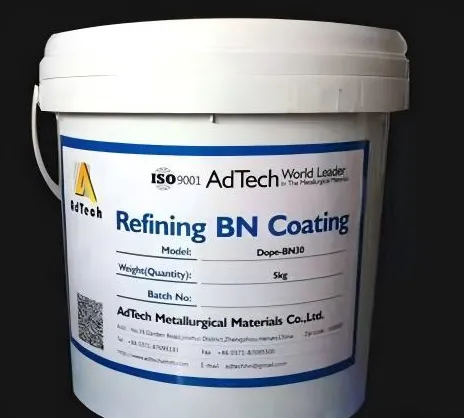
Boron nitride coating stands as the premier “white graphite” solution for aluminum casting, delivering a 100% non-wetting interface that prevents molten metal adhesion, extends refractory lifespan by up to 300%, and ensures zero-defect surface finishes in high-precision metallurgy.
For modern aluminum foundries, the interaction between molten metal and substrate surfaces is the critical fracture point where quality is either secured or lost. AdTech’s advanced boron nitride (BN) coatings fundamentally alter this dynamic. By creating an inert, high-temperature stable barrier that remains effective up to 1000°C in oxidizing atmospheres (and 1800°C in inert gas), these coatings eliminate the common “sticking” and oxidation issues plaguing traditional graphite or silicate-based release agents. The immediate result for facility operators is a measurable reduction in downtime for cleaning and a significant drop in scrap rates caused by inclusions or surface imperfections.
Why Boron Nitride is the “White Graphite” of Choice
Boron Nitride (BN) is often termed “white graphite” because it shares a similar hexagonal crystal structure with graphite, granting it exceptional lubricity. However, unlike graphite, which is black, messy, and electrically conductive, BN is white, chemically inert, and an electrical insulator. This distinction is vital for aluminum processing where contamination and conductivity can compromise the final alloy quality.
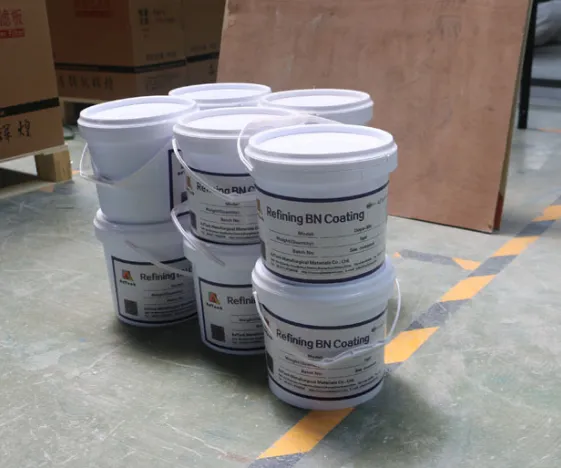
The Physics of Non-Wetting
The primary value proposition of applying boron nitride coating on aluminum processing equipment lies in its “non-wetting” behavior. Molten aluminum has a high affinity for most metallic and ceramic surfaces, leading to aggressive adhesion. When a launder, ladle, or mold is coated with AdTech BN, the contact angle of the molten aluminum exceeds 150 degrees. This causes the liquid metal to bead up and roll off rather than spreading and sticking. This physical property prevents the formation of “build-up” or dross that typically requires mechanical chipping to remove—a process that damages refractory linings.
Thermal Conductivity and Heat Management
AdTech’s boron nitride coatings are engineered to facilitate efficient thermal transfer while blocking chemical reaction. In operations like direct chill (DC) casting, managing the heat extraction rate is paramount. BN coatings allow for a consistent heat transfer coefficient, ensuring that the aluminum solidifies uniformly. This prevents “hot spots” that lead to shrinkage defects or cracks in the final billet or ingot.
Core Applications in Aluminum Foundries
The versatility of boron nitride allows it to be deployed across various critical touchpoints in a casting plant.
1. Refractory Protection (Launders and Troughs)
Launders and distribution troughs transport molten aluminum from the furnace to the casting pit. Without protection, the refractory material absorbs aluminum, leading to contamination and rapid erosion. Applying a layer of AdTech BN coating seals the porosity of the refractory. This not only extends the service life of the runners but also ensures that the temperature of the melt is maintained during transport, as the coating acts as a thermal barrier against rapid heat loss to the substrate lining.
2. Billet and Slab Casting (Transition Plates)
In DC casting, the transition plate (or hot top ring) connects the refractory reservoir to the water-cooled mold. This is a high-stress zone where freezing molten metal can cause “hang-ups” or tears in the ingot shell. A precise application of BN coating lubricates this interface, allowing the solidifying skin of the aluminum to slip smoothly into the mold without tearing.
3. Ceramic Foam Filter Boxes
Filter boxes are subjected to extreme thermal shock and potential clogging. Coating the interior walls of the filter box with boron nitride prevents aluminum from freezing onto the sides, making it significantly easier to swap out filters between casts without extensive cleaning.
4. Ladles and Skimmers
Hand tools and robotic ladles used for skimming dross or transferring melt are notorious for accumulating layers of solidified aluminum. A daily application of BN spray or brush-on coating ensures that these tools can be cleaned with a simple tap, rather than vigorous hammering.
Comparative Analysis: Boron Nitride vs. Traditional Coatings
To understand the Return on Investment (ROI) of switching to AdTech Boron Nitride, it is helpful to compare it directly with the industry standard: graphite.
Table 1: Performance Comparison of Boron Nitride vs. Graphite
| Feature | AdTech Boron Nitride (BN) | Traditional Graphite | Impact on Aluminum Casting |
| Color | White | Black | BN prevents black inclusions/spots on casting surface. |
| Electrical Properties | High Electrical Insulator | Conductive | BN is safe for use near induction heaters and electrical sensors. |
| Oxidation Resistance | Stable up to 1000°C (Air) | Oxidizes > 450°C (Air) | BN lasts longer in open-air casting environments. |
| Wettability | Excellent Non-Wetting (Beads up) | Moderate (Can stick over time) | BN minimizes drag and build-up, reducing cleaning time. |
| Chemical Inertness | High (No reaction with Al, Mg) | Reacts with some alloys | BN prevents chemical contamination of the melt. |
| Hardness | Soft, lubricious | Soft | Both provide lubrication, but BN is cleaner. |
Technical Specifications of AdTech Boron Nitride Coating
AdTech formulates its coatings to meet specific viscosity and adhesion requirements suitable for brushing, spraying, or dipping.
Table 2: AdTech BN Coating Technical Data
| Parameter | Specification | Notes |
| Main Component | Hexagonal Boron Nitride (h-BN) | The crystal structure responsible for lubricity. |
| Binder System | Inorganic Alumina/Sol-Gel | Ensures strong adhesion to ceramic and metal substrates. |
| Solid Content | 20% – 40% (Adjustable) | Higher solids for brushing; lower for spraying. |
| pH Value | Neutral (7-8) | Safe for operators and non-corrosive to equipment. |
| Service Temperature | ≤ 1000°C (Air) / ≤ 1800°C (Inert) | Covers all aluminum casting temperature ranges (660°C – 750°C). |
| Dilution | Distilled Water | Typical ratio 1:3 to 1:5 depending on application method. |
| Shelf Life | 12 Months | Store in a cool, dry place (5°C – 30°C). |
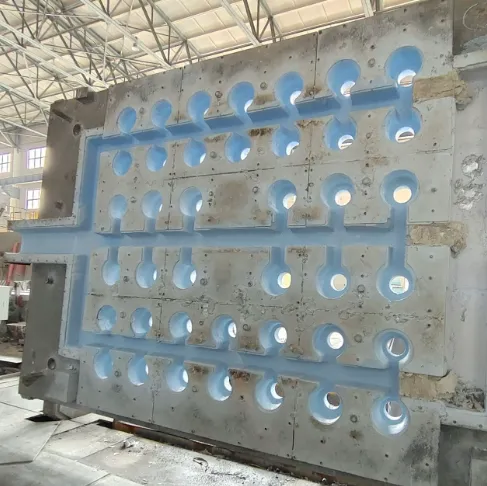
Case Study: Efficiency Overhaul at Vietnam Aluminum Casting Factory
Time: November 2023
Region: Ho Chi Minh City, Vietnam
Client: Large-scale Aluminum Billet Casting Facility
Problem: High scrap rate due to billet bending and surface tearing.
The Challenge
A prominent aluminum foundry in Vietnam was facing a critical operational bottleneck. Their output of 6000-series aluminum billets was suffering from a 15% rejection rate. The primary defect was “billet bending”—where the aluminum log would warp upon exiting the mold—and severe surface tearing. The facility managers initially suspected their graphite rings were defective and contacted AdTech to purchase 2,000 replacement rings, believing a sheer volume of consumables would solve the wear issue.
The AdTech Intervention
AdTech’s technical sales team analyzed the request and realized that simply replacing the graphite rings wouldn’t solve the root cause. A 15% scrap rate indicated a fundamental failure in the lubrication and release process, not just worn parts. AdTech dispatched a team of casting experts from China to the Vietnam facility for an on-site audit.
Upon inspection, the team discovered that the release agent being used on the casting tables and refractory linings was an inferior, oil-based graphite mixture. This mixture was burning off too quickly at casting temperatures (approx. 720°C), leaving the refractory surfaces sticky. This caused the molten aluminum to drag against the mold walls, creating uneven cooling stresses that bent the billets and tore the surface.
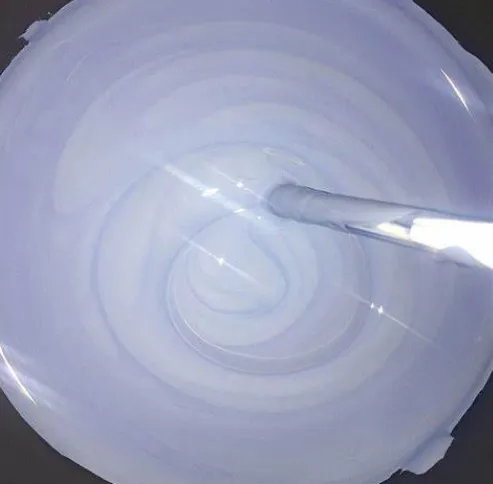
Boron Nitride Coating for Aluminium Metallurgy
The Solution and Results
The AdTech team immediately implemented a transition to AdTech Boron Nitride Coating (Water-Based).
-
Preparation: The refractory runners and hot-top transition plates were thoroughly cleaned of old graphite residue.
-
Application: A 1:4 dilution of AdTech BN coating was sprayed onto the launders and brushed onto the transition plates.
-
Curing: The parts were preheated to 300°C to ensure the coating was completely dry and bonded.
The Outcome:
-
Zero Bending: The superior lubricity of the BN coating allowed the billets to slip through the mold with zero friction drag, eliminating the stress that caused bending.
-
Scrap Reduction: The rejection rate dropped from 15% to under 1% within 48 hours.
-
Cost Savings: The facility saved an estimated $45,000 USD per month in remelting costs and lost production time. The client canceled the panic order for 2,000 graphite rings, realizing that proper coating maintenance extended the life of their existing rings significantly.
Step-by-Step Application Guide
Correct application is just as important as the material itself. A poorly applied coating can flake off, leading to inclusions.
Phase 1: Surface Preparation
Before applying boron nitride, the substrate (whether ceramic, steel, or iron) must be pristine.
-
Clean: Remove all traces of old coating, aluminum dross, oil, or rust. Sandblasting is recommended for metal tools; stiff wire brushing works for refractories.
-
Preheat: Warm the substrate to approximately 60°C – 80°C. This helps the water content in the coating evaporate quickly upon contact, preventing runs or drips.
Phase 2: Dilution and Mixing
AdTech BN coating often comes as a concentrate.
-
Agitate: Boron nitride particles settle over time. Mechanical stirring for 5-10 minutes is mandatory before use.
-
Dilute: Mix with distilled water.
-
Brushing: 1 part coating to 3 parts water.
-
Spraying: 1 part coating to 5 parts water.
-
-
Note: Never use tap water if it has high mineral content, as this can affect adhesion.
Phase 3: Application
-
Technique: Apply in thin, even layers. Multiple thin coats are superior to one thick coat. A thick coat is prone to “mud-cracking” when it dries.
-
Target Thickness: The ideal dry film thickness is between 50 to 100 microns. It should look like a solid white eggshell finish.
Phase 4: Drying and Curing
-
Air Dry: Let the coated part sit for 30 minutes at ambient temperature.
-
Baking: Force dry the part at 100°C – 300°C.
-
Crucial Rule: Never let molten metal touch a wet coating. The rapid expansion of steam will cause an explosion or “spalling,” destroying the coating and potentially injuring operators.
Troubleshooting Common Casting Defects with BN
Even with the best materials, issues can arise if parameters are off. Here is how to diagnose problems using the coating as a variable.
Table 3: Troubleshooting Guide
| Defect Observation | Probable Cause | Corrective Action |
| Coating Flaking Off | Substrate was dirty or oily before application. | Clean surface thoroughly with solvent or sandblast before recoating. |
| Bubbling in Coating | Applied too thick or substrate was too hot during spray. | Apply thinner layers; cool substrate to <100°C before application. |
| Aluminum Sticking | Coating has worn off or was diluted too much. | Re-apply coating; check dilution ratio (reduce water). |
| Rough Surface Finish | Coating surface was rough/brush marks. | Buff the dried BN coating with a soft cloth to polish it before casting. |
| Inclusions in Casting | Loose coating particles washed into melt. | Ensure coating is fully sintered/dried; blow off loose dust before use. |
Semantic Expansion: Enhancing Process Reliability
To fully optimize the aluminum casting process, one must consider factors beyond just the release agent. The integration of boron nitride is often part of a larger metallurgical strategy involving degassing units, ceramic foam filters, and fluxes.
Interaction with Ceramic Foam Filters
When using AdTech Ceramic Foam Filters (CFF), applying a rim of boron nitride paste around the filter’s gasket seat helps verify a tight seal. This prevents “bypass”—where molten aluminum sneaks around the filter frame—ensuring 100% filtration efficiency.
Role in Grain Refining
In processes using Al-Ti-B (Aluminum-Titanium-Boron) grain refiners, the chemical inertness of the BN coating is vital. Unlike silicate coatings which might react with the titanium, BN remains passive, ensuring that the grain refiner functions as intended to nucleate the aluminum crystals.
Environmental and Safety Advantages
-
Is Boron Nitride toxic? No. It is chemically inert and non-toxic.
-
Does it produce fumes? AdTech’s water-based formulations produce no volatile organic compounds (VOCs) or hazardous smoke, unlike oil-based graphite which releases heavy smoke and polycyclic aromatic hydrocarbons (PAHs) upon contact with liquid metal. This creates a cleaner, healthier working environment for foundry staff.
AdTech Boron Nitride (BN) Coatings: Technical FAQ
1. How long does the boron nitride coating last on a launder?
2. Can I apply boron nitride coating to hot surfaces?
3. Is boron nitride better than graphite for aluminum casting?
4. How do I remove old boron nitride coating?
5. Can this coating be used for magnesium or zinc alloys?
6. What is the shelf life of AdTech Boron Nitride Coating?
7. Why is my coating cracking after drying?
8. Does the coating affect the electrical conductivity of the aluminum?
9. Can I dilute the coating with tap water?
10. Is boron nitride coating electrically conductive?
Conclusion
For ADtech, the mission is clear: to provide the metallurgical industry with materials that not only solve immediate casting problems but also elevate the overall efficiency of the plant. The transition to Boron Nitride coating is more than just a change in consumables; it is an upgrade to a cleaner, more precise, and more profitable casting process. Whether you are dealing with billet bending in Vietnam or dross buildup in Ohio, the physics of boron nitride remain the same—unyielding protection and superior release.