

Inert alumina ceramic balls provide a robust, chemically stable support medium that preserves catalyst integrity, ensures uniform flow distribution, and extends operational life in high temperature industrial reactors and packed towers. Their high mechanical strength, controlled porosity options, and stable alumina chemistry make these spheres a preferred choice when a stable deep bed support is required to protect active catalyst particles, minimize pressure drop, and prevent media migration.
If your project requires the use of Inert Alumina Ceramic Balls, you can contact us for a free quote.
What are inert alumina ceramic balls?
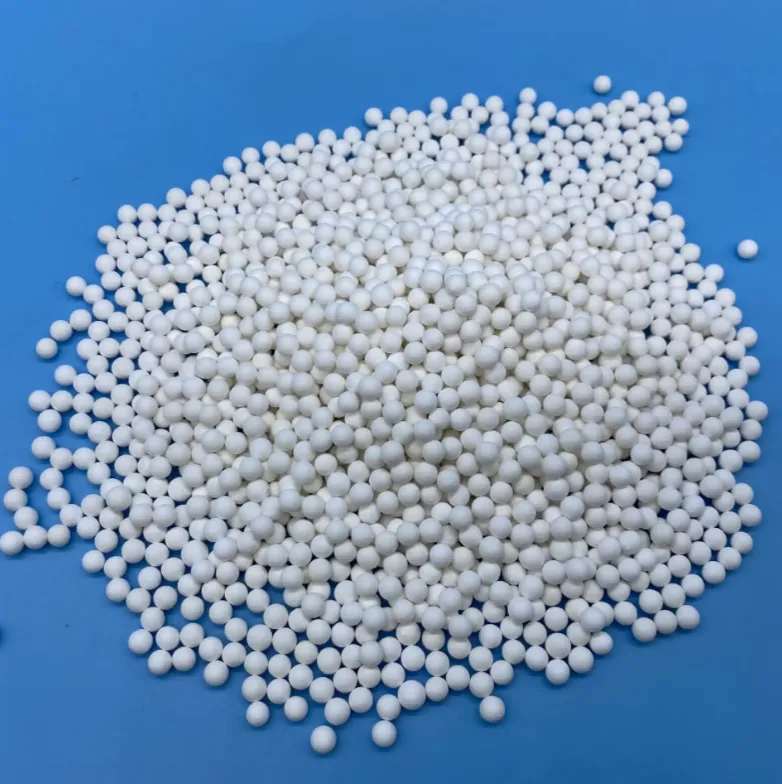
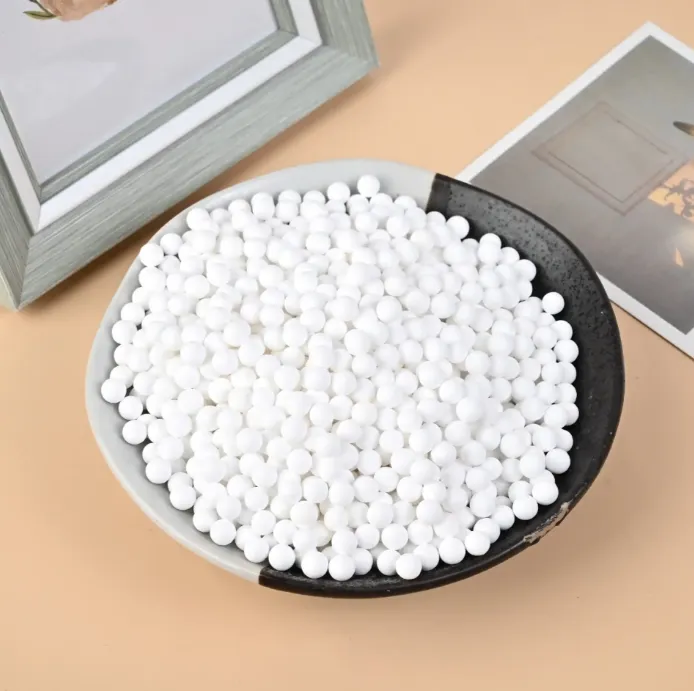
Inert alumina ceramic balls are manufactured spherical supports composed primarily of aluminum oxide. They are chemically neutral relative to typical catalyst formulations and do not contribute active catalytic activity. Their role is mechanical: provide a stable base that supports active catalyst layers or random packing, ensure even gas or liquid distribution through the bed, and reduce bed movement or breakthrough of fines into downstream equipment. Typical industrial use cases include secondary reformer supports, adsorbent beds in dryers, desulfurization stages, and support layers beneath structured packing in column systems.
Material science and manufacturing pathways
Alumina phases and implications
Alumina exists in multiple crystallographic forms. Transition aluminas such gamma and theta appear at intermediate calcination temperatures while alpha alumina denotes the thermodynamically stable phase achieved after high temperature sintering. Alpha alumina provides superior thermal stability and mechanical strength, which translates into lower attrition rates during prolonged service. Where high steam presence or elevated temperatures occur, high purity alpha-phase spheres are preferred because they minimize silica leaching and downstream catalyst poisoning risks.
Forming methods and sintering regimes
Common forming techniques include pressing and extrusion followed by tumble rounding, droplet gelation techniques, and specialized casting methods that produce hollow or porous beads. After shaping, controlled sintering consolidates the material, densifies grain boundaries, and sets mechanical properties. Parameters such as peak temperature, dwell time, and heating rate determine final density and grain size. Manufacturers tune these variables to reach target crush strength and thermal shock resistance. Research-scale methods show that gelcast spheres and hollow porous architectures can yield high surface area while keeping acceptable strength for particular catalytic support tasks.
Porosity control and surface area tuning
There are two broad categories useful for industry: inert dense spheres with low open porosity and porous or activated alumina beads with higher internal surface area. Dense inert balls provide mechanical support and low water uptake, while porous variants act partly as adsorbents when moisture removal or trace impurity capture adds process value. Porosity control is achieved through pore-forming agents, sintering profile modulation, or sacrificial templates. Engineers choose density and porosity depending upon whether mechanical support or supplementary adsorption is more important.
Also read: High Purity Alumina Ceramic Balls for Molten Aluminum Filtration
Core physical and chemical properties
| Property | Typical range or value | Relevance to application |
|---|---|---|
| Main chemistry | Al2O3 (alumina) with optional SiO2 trace | Chemical inertness, low reactivity with catalysts |
| Phase | alpha-phase preferred; transition phases possible | Thermal stability and resistance to phase change |
| Bulk density | 2.4 to 3.9 g/cm³ depending on porosity | Bed weight, support layer design |
| Apparent porosity | <1% (dense) up to 50% (porous beads) | Liquid hold-up, adsorption capacity |
| Crush strength (single sphere) | 50 N up to >1000 N depending on grade | Resistance to mechanical breakage |
| Thermal shock resistance | Good when grain size controlled and density optimized | Minimizes cracking during startup/shutdown |
| Operating temperature | Up to 1200°C for high purity alpha alumina | Suitable for reformers, shift reactors |
| Chemical stability | Resistant to acids, alkalis, organic solvents | Low contamination, long service life |
| Water absorption | Very low in dense grade, higher in porous grade | Impacts use in desiccant beds |
| Abrasion / attrition | Low when alpha-phase, controlled grain growth | Reduces dust generation and catalyst contamination |
Technical datasheets from established suppliers report that engineered alumina balls deliver consistent crush strength and low attrition when manufactured under strict process controls. Typical industrial test reports form the basis for vendor acceptance testing during procurement.
Sizes, shapes, bed packing and design considerations
Alumina balls are supplied in a range of diameters. Engineers commonly use a graded support bed concept with progressively smaller diameter layers upward in the vessel. This avoids particulate migration and ensures that downstream catalyst layers remain isolated from bed settling.
| Layer position | Typical nominal diameter (mm) | Purpose |
|---|---|---|
| Bottom support | 25 to 50 | Primary structural support, bulk load bearing |
| Intermediate layer | 16 to 25 | Transition between large base and small top support |
| Top buffer | 6 to 16 | Prevents fine packing or catalyst from falling into support |
| Filter layer | 3 to 6 | Final barrier, protects catalyst and ensures uniform flow |
Packing design must consider void fraction, single-sphere hydraulic diameter, and expected flow regime. Uniformity in sphericity and narrow size distribution help minimize pressure drop and dead zones. Packing calculators and pilot testing remain essential during scale up to validate predicted pressure drop and residence time distributions.
Industrial applications and typical process placements
-
Catalyst bed support in reformers and shift reactors
In high temperature reforming units, inert alumina spheres provide a stable base under catalyst loads. High purity alpha alumina is preferred when steam is present in high partial pressure so silica carryover remains minimal. -
Adsorbent and desiccant systems
Porous alumina beads serve in drying towers to capture moisture from monomers and synthesis gas streams. Dense inert balls often act as support beneath active desiccant layers to prevent channeling and particle migration. -
Packed tower and column packing support
In distillation and absorption columns, inert spheres stabilize structured or random packing, mitigate erosion on startup, and preserve packing geometry. Typical towers use layered ball beds to handle sudden high flow events during upset conditions. -
Fluidized and fixed beds in petrochemicals
Served as buffer layers to prevent catalyst entrainment. When used in ammonia plants and sulfur recovery units, balls sustain mechanical loads and maintain even distribution. -
Molten metal filtration support
Porous alumina structures appear in filtration stacks used in non-ferrous metallurgy, providing thermal stability under high molten metal temperatures. Design must prevent direct contact when chemistry could cause reactions.
Each application has distinct requirements that influence selection of chemistry, size, and porosity.
Selection criteria for engineers and procurement teams
Choose based upon engineering demands and economic constraints. Below is a compact selection checklist summarizing critical decision points.
| Consideration | What to check |
|---|---|
| Process temperature | Maximum service temp of chosen alumina grade |
| Steam presence | High purity alpha alumina when steam contact is likely |
| Mechanical load | Single-sphere and bed crush strength tests |
| Attrition tolerance | Vendor attrition test data under realistic flow |
| Chemical resistance | Compatibility with process fluids and solvents |
| Porosity needs | Dense support versus porous adsorbent beads |
| Size distribution | Narrow tolerance to avoid void fraction variability |
| Certification | Material traceability and batch QA reports |
| Delivery lead time | Manufacturer stock and logistics capacity |
| Cost of ownership | Replacement frequency, downtime risk, handling cost |
Selecting an inappropriate grade increases downtime risk and overall life cycle cost because replacement and contamination events are expensive in industrial plants.
Also read: Alumina Ceramic Ball Price: 2026 Wholesale Bulk Cost, Factory Quote
Performance metrics and engineering calculations
Pressure drop and void fraction
Pressure drop across a packed bed of spheres depends upon void fraction, sphere diameter, fluid viscosity, and superficial velocity. Ergun equation remains the industrial standard to estimate packed bed pressure loss when flow is laminar or transitional. Use measured void fraction from the vendor or calculate using standard packing geometry corrections. Trial runs or pilot columns sharpen predictions prior to full scale installation.
Bed support mechanics and crush strength
Crush strength gives the allowable compressive load a single sphere tolerates. Bed design must include a safety margin between maximum expected static plus dynamic loads and measured crush strength. A common engineering practice uses a factor of safety of 3 to 5 when sizing support layers beneath heavy catalyst loads.
Attrition and dust generation
Attrition rate measured under simulated flow and vibration gives expected dust generation rate. High attrition raises fouling risk and catalyst contamination, therefore low attrition grades and careful handling procedures are essential in long duration campaigns.
Installation, commissioning, testing and quality assurance
Incoming inspection checklist
-
Verify certificate of analysis and batch traceability.
-
Check nominal size distribution using sieving or laser sizing.
-
Run crush strength test on random sample units.
-
Conduct water absorption and porosity spot checks.
-
Confirm chemical composition against specification.
Commissioning steps
-
Clean vessel internals and ensure drain lines are clear.
-
Lay geotextile or wire mesh where specified to prevent ball migration.
-
Place large diameter base balls, then intermediate layers, then smaller top buffer balls following the design sequence.
-
Monitor pressure drop during initial flow ramp-up; compare with predicted values.
-
Take sample scans for fines during early operation to detect unexpected attrition.
Periodic monitoring
-
Periodic pressure drop trend analysis to detect bed packing changes.
-
Scheduled visual inspection during shutdowns to identify cracked spheres.
-
Catalyst sampling downstream when possible to detect alumina dust contamination.
Quality assurance practices adopted by reputable suppliers include batch numbering, traceable raw material sources, and routine mechanical property testing reports included with shipments.
Operational risks, mitigation and lifecycle management
Thermal cycling and shock
Rapid temperature swings can induce thermal stress leading to cracking. Mitigation strategies include controlled heating ramps during startup, using thermally matched bed layers, and selecting spheres with engineered grain size distribution that resist shock.
Chemical contamination
If process streams contain reactive silica or alkali vapors, downstream catalyst layers may experience deactivation. Use high purity alumina when process chemistry suggests potential for leachable contaminants.
Physical migration and bridging
Poorly graded size distribution can lead to channeling, bridging, or fines migration. Use sieved batches and correct installation protocols to reduce risk.
Replacement planning
Schedule replacement windows during major turnarounds, and maintain spare inventory to limit downtime when inspection reveals unacceptable levels of cracked or deformed spheres.
Comparison with alternative support media
| Attribute | Inert alumina ceramic balls | Ceramic saddles / Raschig rings | Metal support grids |
|---|---|---|---|
| Chemical inertness | High | Moderate to high depending on ceramic | Susceptible to corrosion without coating |
| Thermal stability | Excellent up to high temps | Good | Depends on alloy; limited at extreme temp |
| Attrition/dust | Low in high grade spheres | Higher due to thin walls | Low structural attrition, possible erosion |
| Pressure drop impact | Predictable low when spherical | Higher due to irregular shape | Low, but offers less fine filtration |
| Cost | Moderate to high depending on purity | Typically lower | Material and fabrication costs vary |
| Ease of installation | Very simple layered approach | Requires careful packing | Structural installation work needed |
In many cases inert alumina balls provide the best balance between mechanical performance and chemical stability, though project specific constraints might favor alternatives.
Environmental, safety and disposal considerations
Alumina ceramic balls are inert and non-toxic. Disposal considerations include:
-
Recycling options: Spent balls often can be recycled into abrasive media or crushed and reused in non-critical construction uses.
-
Landfill: If regulatory limits permit, inert ceramic material may be disposed of in industrial landfill; consult local regulations.
-
Contamination: If spent balls are coated with hazardous catalyst residues, handle under hazardous waste protocols and arrange licensed disposal.
Appropriate PPE during handling includes dust masks, eye protection, and gloves to prevent inhalation or abrasion injuries if ball breakage creates fine dust. Environmental regulations vary; confirm with local authorities.
Procurement tips and vendor due diligence
-
Request complete technical datasheets, including chemical composition, phase content, and sintering profile.
-
Ask for sample batches and run internal acceptance tests matching plant conditions.
-
Confirm batch traceability and quality control certs.
-
Negotiate minimum order quantities and stocking arrangements to reduce lead time risk.
-
Get written documentation on attrition test method and results.
-
Define warranty terms covering premature failure or excessive dust generation.
-
Consider a trial order and small pilot run prior to plantwide adoption.
Reputable vendors provide test data and support technical evaluation prior to sale.
Frequently asked questions
Industrial Alumina: Support vs. Activated Beads
1. What is the difference between inert alumina balls and activated alumina beads?
Think of the Inert Ball as a bowling ball—dense, solid, and built for heavy mechanical support and flow distribution. The Activated Bead is more like a high-tech sponge; it possesses massive internal porosity and surface area, allowing it to “adsorb” (trap) moisture and trace chemical impurities from gas or liquid streams.
2. Which alumina phase should be chosen when high steam is present?
MATERIAL STABILITY
In high-temperature, steam-rich environments, High Purity Alpha Alumina (alpha-Al2O3) is the superior choice. Unlike lower-phase aluminas, the alpha phase is chemically inert and minimizes “leachable silica,” which could otherwise migrate downstream and foul sensitive equipment or catalysts.
3. How should support layers be graded in a reactor?
The goal is to prevent “migration” and ensure uniform flow. You should use progressively smaller diameters toward the top of the stack. A typical base might use 25 mm to 50 mm balls to support the weight, transitioning to 13 mm, and finally 6 mm layers at the interface with the actual catalyst pellets.
4. How is attrition measured and what is an acceptable rate?
5. Can inert alumina balls contact molten non-ferrous metal?
6. What tests should procurement demand from the supplier?
For industrial-grade assurance, demand a COA (Certificate of Analysis) covering:
- Chemical Composition: Al2O3, SiO2, and Fe2O3 levels.
- Phase Analysis: Confirmation of Alpha or Gamma phase.
- Crush Strength: Mean and distribution values.
- Water Absorption: Critical for activated grades.
- Apparent Porosity: For density verification.
7. Do alumina balls reduce pressure drop in columns?
8. How often must the support bed be inspected?
MAINTENANCE CYCLE
Inspections should be synchronized with scheduled plant turnarounds. However, if your monitoring equipment detects an unexplained trend in rising pressure drop or if sampling shows “dusting” in the outlet, an early inspection and possible top-layer skimming may be necessary.
9. Are there standard coatings applied to alumina balls?
10. What leads to premature failure of support balls?
The three most common “killers” are:
- Rapid Thermal Cycling: Causing micro-cracks and eventual disintegration.
- Mechanical Overload: Dropping heavy loads directly onto a support bed during loading.
- Chemical Incompatibility: Exposure to reactive vapors (like hydrofluoric acid) that the specific grade was not designed to handle.
Final notes to engineers and procurement professionals
When specifying inert alumina ceramic balls, treat the decision like other long lead rotating or static equipment choices. Require data, run representative pilot trials, and include a robust acceptance test in the purchase order. Proper selection and competent installation reduce unplanned downtime and raise overall plant reliability.