

AdTech’s Tap-Out Cone (Graphite/Ceramic hybrid options) is engineered to deliver precise melt control, long service life and low-maintenance operation for aluminum melting and holding furnaces. Designed for foundry engineers and procurement professionals, our cones combine high-purity, low-ash graphite or high-alumina ceramic fiber construction, advanced anti-oxidation surface treatments, and precision CNC finishes so you get predictable tap performance, reduced metal loss and easier, faster changeouts. These cones are suitable for 1xxx–8xxx aluminum alloy series and are available in custom dimensions to match your launder or furnace outlet.
Graphite Cone Technical Parameters & Material Properties
Below is a compact technical specification table intended for engineers.
| Property | Typical Value / Range | Notes |
|---|---|---|
| Bulk Density | ≥ 1.85 g/cm³ | High-purity molded graphite; non-impregnated typical maximum ≈1.90 g/cm³. |
| Compressive Strength | ≥ 65 MPa | Depends on graphite grade; engineered grades can exceed 100 MPa. |
| Shore Hardness | 55–65 (Shore) | Balance of machinability and wear resistance |
| Maximum Working Temperature | 1300°C (air) / 3000°C (inert) | Graphite performs much better in inert atmospheres; ceramic fiber cones rated for air service at high temperatures. |
| Ash Content | ≤ 500 ppm | Low ash minimizes contamination of molten aluminum and downstream filters. |
Notes on sources and context: the table values above reflect typical engineering targets used for high-purity industrial graphites and tap-out components; individual part datasheets (grade-specific) should be consulted for exact numbers. For example, industry grade datasheets report bulk densities in the 1.6–1.9 g/cm³ range and compressive strengths that vary by manufacturing route and impregnation.
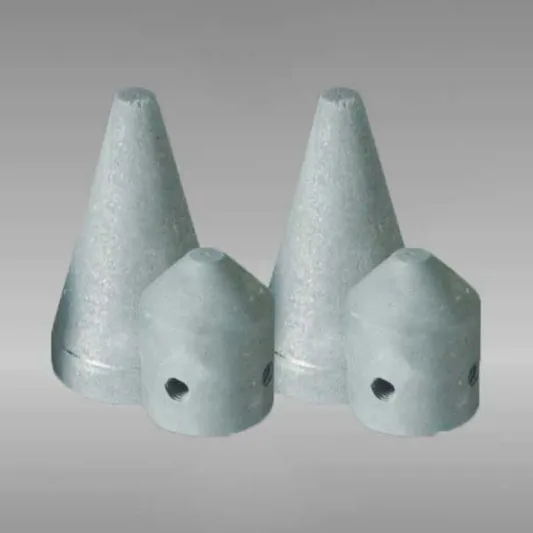
Why Choose AdTech Graphite Cones for Your Foundry?
Engineers and purchasers prioritize reliability, predictable flow control, and minimal contamination. AdTech cones are specified to meet those needs:
-
Anti-Oxidation Coating: Proprietary surface treatments reduce oxidative mass loss when cones see intermittent oxygen exposure, extending service life compared with uncoated inserts. Coated cones also lower the rate of cavity growth at the tap hole.
-
Precision CNC Machining: True concentricity and controlled surface finish ensure tight sealing at the tap face and predictable erosion characteristics. Reduced gap equals less metal leakage and fewer filter changes downstream.
-
Non-Wetting / Low Adhesion: High-purity graphite formulations present a surface that molten aluminum does not readily wet, reducing dross buildup and cleaning downtime. This non-wetting behavior protects filter media and improves yield.
-
High Thermal Stability & Shock Resistance: Properly selected graphite grades and vacuum-formed ceramic fiber parts resist thermal shock during rapid temperature swings common in modern foundries. This reduces cracking and unplanned tap interruptions.
Advanced Production of Graphite Tap Out Cones
AdTech’s manufacturing pathway is designed to control porosity, density and mechanical uniformity from raw material to finished cone:
-
Raw material selection: We start with high-purity, low-ash petroleum coke or needle coke feedstocks blended for consistent particle size and carbon content. Low ash content (≤500 ppm target) is critical to avoid contaminating aluminum melts.
-
Forming methods: Depending on the geometry and required properties, we use isostatic pressing for highly isotropic molded graphite parts or vibration molding / cold pressing for shapes where tooling and throughput favor those processes. Isostatic pressing reduces internal stress and produces very uniform density — a major benefit for components exposed to high thermal gradients.
-
Baking & Graphitization (as required): After forming, parts are baked and — for graphitic components — may undergo heat treatment to develop the graphitic microstructure that provides thermal conductivity and mechanical strength. Ceramic fiber cones follow a vacuum forming and binder cure route to achieve lightweight, insulating shapes.
-
Impregnation & coating: Optional resin or pitch impregnation reduces open porosity; anti-oxidation and non-wetting coatings are applied and cured to match service conditions (air vs inert). Coatings are tuned to maintain low ash and not contaminate melts.
-
CNC machining & inspection: Final machining establishes tap face geometry and concentricity; parts are inspected for dimensional tolerance, density uniformity and surface finish before packaging.
By specifying the forming route (isostatic vs vibration) and any post-process impregnation/coatings up front, we tailor cones to either maximum mechanical strength or maximum thermal insulation depending on the furnace design and tapping practice.
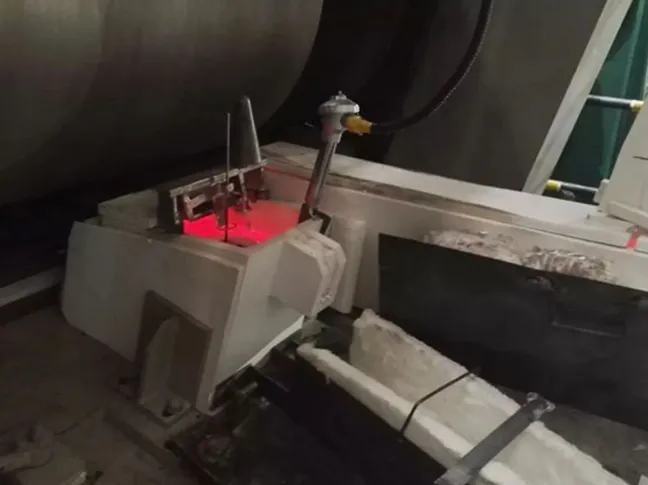
Applications in Aluminum Smelting & Casting
AdTech cones are engineered for the typical operational touchpoints in aluminum melt shops:
-
Melting Furnaces (pit, crucible, reverberatory): Cones seal and control the taphole until planned tapping; when the cone is removed/drilled, it enables smooth flow into ladles or transfer launder.
-
Holding Furnaces & Launders: They provide controlled downstream isolation and are compatible with launder systems where a predictable, repeatable flow rate is required for downstream casting or alloy mixing.
-
Compatibility with Alloy Families: Designed to perform across the common aluminum series (1xxx–8xxx). Specific alloys (e.g., high Mg 5xxx or heat-treatable 6xxx series) can affect dross behavior; our cones are low-ash and non-wetting to minimize alloy contamination.
-
Secondary operations: Useful in degassing lines, filtration trains and in situations where controlled metallurgical sampling or small batch tapping is required.
Practical note for plant engineers: part geometry and coating selection should be aligned with your tapping method (mechanical punching vs drilling vs manual removal), melt temperature and atmosphere (air vs protective cover gas) to optimize life and performance.
Maintenance & Replacement Guide — How to Extend the Life of Your Graphite Plugs?
A short, actionable checklist for operations teams:
-
Preheat before installation: Remove moisture and prevent steam-induced cracking by preheating cones to a modest dwell temperature consistent with your furnace practice. Sudden temperature differentials are the leading cause of early failures.
-
Correct alignment & seating: Ensure the cone is concentric and fully seated to the tap bore. Misalignment concentrates mechanical stress and accelerates erosion. CNC-machined faces help simplify correct seating.
-
Controlled oxidation exposure: If the process exposes cones to air at high temperatures, prefer anti-oxidation coated graphite or ceramic fiber cones rated for air service. Replace components proactively when coating wear becomes visible.
-
Monitor for dross buildup: Regular visual checks of the tap face and downstream filter pressure will indicate if non-wetting properties and surface finish are still performing; excessive dross suggests replacement or reconditioning.
-
Spare-parts program: Keep an inventory of cones sized to your most common furnace outlets; consider a scheduled replacement interval based on cycles rather than waiting for catastrophic failure.
These practical steps reduce unplanned stoppages and protect downstream filtration and degassing equipment, which together drive yield and lower per-ton metal loss.
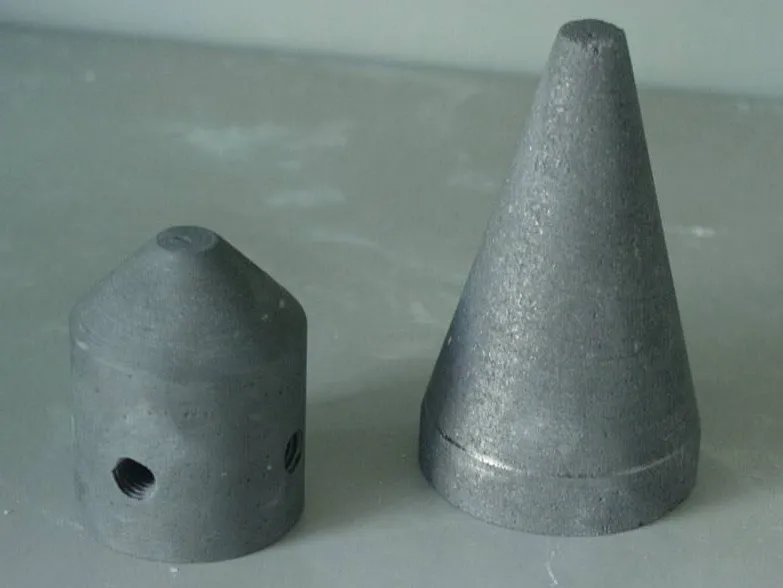
Key Benefits: What Procurement & Engineering Teams Should Know
-
Lower Total Cost of Ownership (TCO): Longer usable life, fewer emergency replacements, and reduced downstream filter changes lower per-ton cost even if unit price is slightly higher.
-
Custom Fit Minimizes Leakage: Tailored dimensions eliminate gap-related leakage that causes contamination and yield loss. CNC finishing further reduces the risk of misfit.
-
Process Stability: Predictable erosion curves and consistent tap geometry contribute to control of casting fill rates and improved product quality.
LSI keywords included here: tap hole plug life, total cost of ownership, custom graphite cone, CNC finished plug, foundry yield.
Graphite vs Ceramic Tap Out Cones
When considering materials, choose based on the specific service envelope:
Graphite Cones
-
Pros: Excellent thermal conductivity (helps avoid localized overheating), good non-wetting behavior for aluminum, high thermal shock resistance in inert atmospheres, amenable to precision machining and coatings.
-
Cons: Susceptible to oxidation in air at high temperatures if uncoated — coating or protective atmospheres are advisable; some graphite grades are more porous without impregnation.
Ceramic Fiber Cones
-
Pros: Very lightweight, inherently insulating, good performance in direct air service (depending on binder), generally lower thermal conductivity which can help maintain tap-face temperature under some tactics. Often lower cost for simple, high-turnover applications.
-
Cons: Generally less machinable, can be more brittle under mechanical impact, and may not match graphite’s non-wetting characteristics for some alloys.
Recommendation: For precision, longer-life tap control with minimal contamination, high-purity graphite cones with anti-oxidation coatings are frequently the better choice in modern aluminum operations; ceramic fiber cones remain competitive where cost and insulation are the priority.
Customization Options & Ordering Guide
AdTech offers the following customization levers so the cone you receive matches your process exactly:
-
Dimensional fitment: Inner/outer diameters, cone angle and length to match your tap hole geometry and launder interface.
-
Material grade: Choice of molded isostatic graphite grades or vacuum-formed ceramic fiber composites depending on service needs.
-
Surface finish & tolerance: CNC face finishes and concentricity tolerances as requested.
-
Coatings & impregnation: Anti-oxidation, non-wetting coatings, and resin/pitch impregnation options to reduce porosity and ash.
-
Packaging & traceability: Each part can be serialized and shipped with material certificates and recommended handling/installation instructions.
Ordering tip for procurement: provide a sample or a detailed drawing and operating parameters (melt temperature, tapping method, atmosphere) — this lets AdTech recommend the best grade and forming method (e.g., isostatic pressing for high-strength requirements).
Graphite Tap Out Cones: Performance & Maintenance FAQ
1. How long does a graphite cone last in an aluminum furnace?
2. What is the difference between Graphite and Ceramic Tap Out Cones?
3. Can AdTech provide customized sizes for specific furnace outlets?
4. What coating options reduce oxidation and dross?
5. Are graphite cones compatible with all aluminum alloys?
6. How should cones be stored and handled?
7. Can cones be reconditioned or recoated on-site?
8. What inspection criteria indicate it’s time for replacement?
Inspect for:
- Visible coating loss exposing the raw graphite.
- Deep erosion or pitting at the tap face.
- Cracking or any dimensional drift outside of your sealing tolerance.
9. Do you provide material certificates and testing data?
10. What packaging options are available for global delivery?
We use industrial-grade packaging, including wooden crates and protective foam inserts, to ensure cones arrive without micro-cracks or surface damage. Lead times vary depending on the complexity of the custom dimensions.
Case Notes
A mid-sized casting plant that switched from uncoated ceramic fiber cones to CNC-finished, coated graphite cones reported reduced downstream filter changes and fewer emergency tap-hole interventions over a six-month trial. The combination of tighter sealing and non-wetting surface reduced metal loss at the tap and improved cast quality.
Safety & Handling
-
Thermal safety: Always follow furnace manufacturer procedures for tap interventions. Preheat cones to recommended temperatures to avoid spalling.
-
Health: Handling high-temperature components should use thermal gloves and eye protection; graphite dust is an inhalation hazard — avoid dry machining without local extraction.
Final Notes — How AdTech Differentiates
AdTech pairs material science (low-ash graphite grades, controlled porosity) with manufacturing discipline (isostatic pressing where beneficial, precision CNC finishing, coating recipes tailored for aluminum) and a pragmatic spare-parts approach for foundry operations. Compared with typical commodity cones, our combination of coatings, grade control and finishing narrows the gap between engineering performance and shop-floor reliability — reducing surprises, protecting filtration and degassing hardware, and keeping production flowing.