

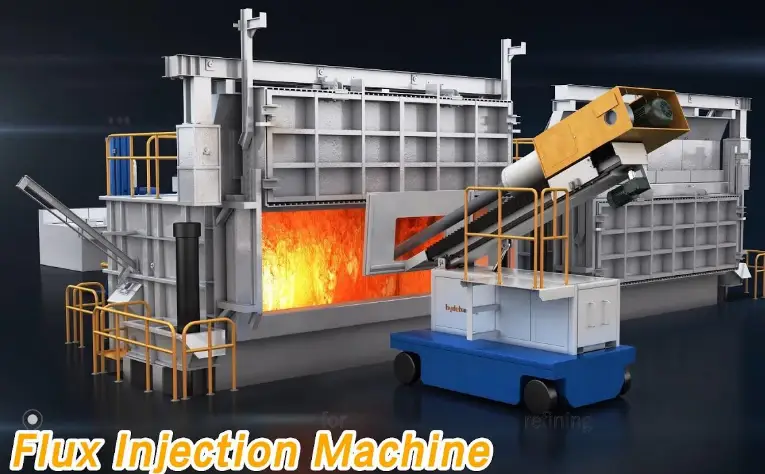
The AdTech flux injection machine for aluminum serves as the definitive solution for modern cast houses seeking to automate molten metal purification. This equipment functions by combining precise granular flux metering with an inert carrier gas—typically nitrogen or argon—to inject refining agents deep into the melt. The result is a consistent, automated process that removes hydrogen and non-metallic inclusions with efficiency rates exceeding 95%. By replacing manual surface fluxing with sub-surface injection, foundries utilizing AdTech systems reduce metal loss in dross by approximately 30% while ensuring uniform chemical reaction throughout the furnace. This technology is not optional for facilities targeting zero-defect casting; it is the industry requirement.
Principles of Automated Metal Refining
Achieving high-grade aluminum alloys requires strict control over hydrogen content and alkali metals. Manual methods fail to address the physics of molten aluminum. When operators throw flux onto the surface, the reaction remains superficial.
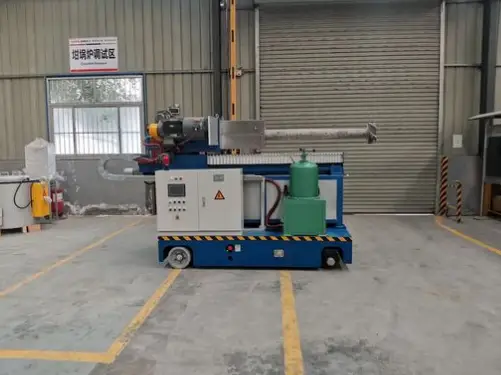
The AdTech injection system changes this dynamic. It utilizes a pressurized tank and a precision screw feeder. The feeder pushes a calculated amount of granular flux into a stream of inert gas. This gas stream travels through a lance, delivering the refining agent to the bottom of the furnace or ladle.
The Carrier Gas Mechanism
Nitrogen and argon act as the vehicles for the flux. These gases do not react with aluminum but perform a vital physical function. As the gas exits the lance, it forms thousands of tiny bubbles. These bubbles rise through the melt, capturing hydrogen gas dissolved in the liquid metal.
Simultaneously, the flux particles dispersed by the gas contact oxides and inclusions. The chemical reaction lowers the melting point of the dross and separates it from the aluminum. This separation allows clean metal to sink while dry, powder-like dross floats to the top for easy skimming.
Powder Flow Dynamics
Consistency defines quality. A fluctuating flow rate causes uneven refining. The AdTechAdTech machine employs a stepper motor-driven screw feeder. This ensures the gram-per-minute output remains constant regardless of the tank pressure.
Traditional systems often suffer from “pulsing,” where flux comes out in bursts. Our engineering team resolved this by optimizing the tank geometry and the carrier gas pressure ratios. A smooth, continuous stream ensures every kilogram of molten metal receives the exact dosage of refining agent required.
| Feature | Manual Fluxing | Flux Injection Machine |
| Flux Usage Saving | 0% | 20% – 30% |
| Degassing Efficiency | Average | Excellent (90%+) |
| Process Control | High Variation | PLC Automated Precision |
| Environmental Impact | High Smoke/Dust | Controlled & Minimal |
Why Molten Metal Purity Dictates Profitability
Foundries often view refining equipment as a cost center. In reality, it drives profitability. Dirty metal leads to porosity in castings. Porosity leads to rejected parts.
The Cost of Inclusions
Hard inclusions—mostly aluminum oxides—destroy machining tools. When a client machines a cast part and hits an inclusion, it breaks their drill bit or inserts. This damages the reputation of the foundry.
ADtech systems remove these oxides before pouring. By injecting flux, the chemicals wet the oxides, effectively scrubbing them from the melt.
Reducing Metal Loss in Dross
Rich dross is a major financial leak. Rich dross contains trapped aluminum. When using manual fluxing, the thermite reaction is often uncontrolled, creating wet dross that holds onto good metal.
Injection refining creates “dry dross.” The chemical separation is so efficient that the waste material on top of the bath contains very little metallic aluminum. Foundries recover more metal per melt, directly impacting the bottom line.
ADtech Technical Specifications and Performance
We engineer our machines to withstand the harsh environment of a cast house. Heat, dust, and vibration are constant factors. The table below outlines the core specifications of our standard operational unit.
Table 1: ADtech Flux Injection Machine Specifications
| Feature | Specification | Operational Benefit |
| Flux Capacity | 45kg / 100 lbs | Reduces refill frequency during shifts |
| Gas Pressure | 0.3 – 0.6 MPa | Compatible with standard plant air/gas lines |
| Flow Rate | 0 – 3000 g/min (Adjustable) | Precise control for different furnace sizes |
| Feeding Accuracy | ± 2% | Guarantees consistent metallurgical results |
| Gas Type | Nitrogen (N2) or Argon (Ar) | Flexibility based on alloy requirements |
| Power Supply | 220V / 110V Single Phase | Easy integration into existing grids |
| Mobility | Heavy-duty Casters | Easily moves between multiple furnaces |
Comparing Refining Methods
Understanding where injection fits in the hierarchy of refining is crucial. Many plant managers hesitate to upgrade from manual methods due to perceived complexity. However, the data proves that manual methods are unsustainable for high-quality production.
Table 2: Manual Fluxing vs. ADtech Injection System
| Parameter | Manual Surface Fluxing | ADtech Sub-Surface Injection |
| Reagent Contact | Surface only (Poor) | Throughout the melt (Excellent) |
| Material Usage | High (Wasteful) | Low (Optimized) |
| Fume Generation | Heavy, concentrated spikes | Controlled, minimal emissions |
| Metal Purity | Inconsistent | Uniform and repeatable |
| Operator Safety | Low (Close proximity to heat) | High (Remote operation possible) |
| Dross Quality | Wet, high aluminum content | Dry, low aluminum content |
Operational Benefits for Foundries
Implementing an ADtech machine transforms the daily workflow. The benefits extend beyond metallurgy into safety and compliance.
Environmental Compliance
Regulations regarding factory emissions are tightening globally. Manual fluxing releases sudden, thick clouds of smoke and fluorides. This often triggers air quality alarms.
Our injection system introduces the flux gradually. The reaction is spread over time, significantly reducing the density of smoke. This helps facilities meet local environmental protection standards without installing expensive secondary filtration systems.
Operator Safety Integration
Molten aluminum reaches temperatures above 700°C. Requiring workers to stand next to the furnace door to throw bags of chemicals is a liability.
The ADtech machine operates with a long lance. The operator stands back, managing the controls from a safe distance. The tank is sealed, preventing accidental spills of flux powder, which can be slippery or hazardous to breathe.
Case Study: 2024 Project in Ohio, USA
Location: Cleveland, Ohio
Date: March 2024
Client: Tier-1 Automotive Component Supplier
The Challenge:
The client manufactures engine brackets using A380 alloy. In early 2024, their rejection rate due to gas porosity spiked to 8%. They were using manual fluxing and rotary degassing separately. The process bottlenecked production, and the scrap rate was eating into their margins.
The Solution:
AdTech engineers deployed two High-Capacity Flux Injection units. We integrated the flux injection into their existing rotary degassing stations. This allowed for simultaneous degassing and fluxing.
The Implementation:
-
Time: 3 days for installation and training.
-
Parameters: Nitrogen carrier gas at 0.4 MPa. Flux feed rate set to 500g/min.
-
Flux Used: AdTech Granular Refining Flux No. 2.
The Results:
By April 2024, the data showed a dramatic shift.
-
Rejection Rate: Dropped from 8% to 0.5%.
-
Dross Weight: Reduced by 22%. The dross was noticeably drier and powdery.
-
Cycle Time: Reduced by 5 minutes per batch because the injection method reacted faster than the manual stir method.
Client Feedback:
The plant manager noted that the ROI on the machines was achieved within three months solely based on the aluminum units saved from the dross.
Installation and Maintenance Protocols
Proper setup ensures longevity. The AdTech machine is plug-and-play, but specific protocols prevent premature wear.
Installation Steps
-
Gas Line Connection: Ensure the gas source (N2 or Ar) is dry. Moisture in the gas line is the enemy of aluminum. Install a dryer if necessary.
-
Grounding: Static electricity can build up due to powder friction. Secure grounding protects the electronic control unit.
-
Lance alignment: The graphite or steel pipe used for injection must be straight. Misalignment causes back-pressure.
Maintenance Schedule
-
Daily: Blow out the injection hose with pure gas to prevent clogging. Check the tank lid seal.
-
Weekly: Inspect the screw feeder for wear. Check the casters for mobility.
-
Monthly: Calibrate the flow meter. Inspect electrical connections for corrosion.
Advanced Chemistry: Choice of Fluxes
The machine is the delivery vehicle; the flux is the passenger. Using the correct flux composition is vital.
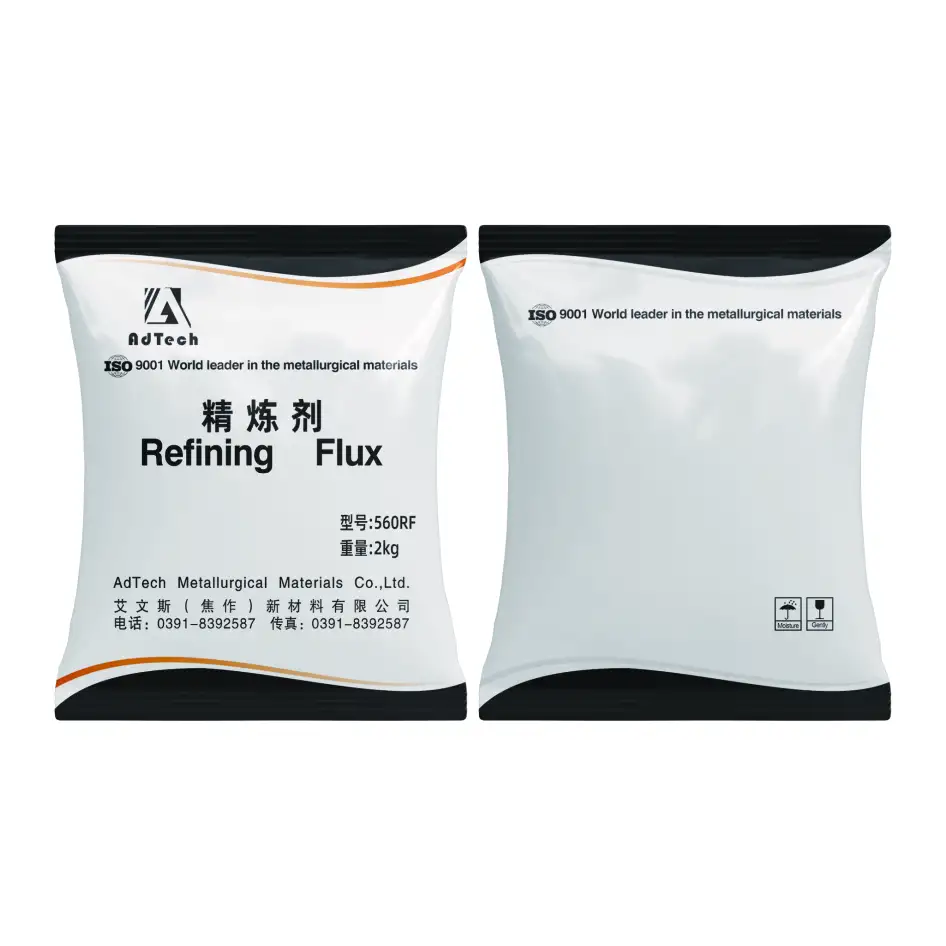
Refining Flux: Used for removing hydrogen and oxides. Typically contains chloride and fluoride salts. The injection machine disperses these salts effectively.
Modifying Flux: Used to change the silicon structure in Al-Si alloys. Injecting modifiers (like Strontium-based fluxes) ensures the modifier is not lost to oxidation on the surface but interacts deep in the melt.
Grain Refining Flux: Titanium and Boron salts are injected to refine the grain structure, improving the mechanical strength of the billet or ingot.
Troubleshooting Common Injection Issues
Even the best equipment encounters variables. Here is a guide to resolving common operational issues.
Table 3: Troubleshooting Guide
| Symptom | Probable Cause | Corrective Action |
| No Powder Flow | Clogged Hose / Wet Air | Clear hose with high pressure; Check air dryer. |
| Surging / Pulsing | Tank pressure too low | Increase carrier gas pressure. |
| Flux Leakage | Worn Seals | Replace O-rings on the tank lid. |
| Motor Stalls | Foreign object in screw | Empty tank and clean the feeder mechanism. |
| High Dross Aluminum | Flux rate too low | Increase g/min setting; check flux type. |
FAQs
1. What is the primary function of a flux injection machine for aluminum?
The machine automates the introduction of refining salts into molten aluminum to remove hydrogen gas and non-metallic inclusions (oxides), improving metal quality.
2. Can this machine work with both Nitrogen and Argon?
Yes. The AdTech system is compatible with both Nitrogen and Argon. The choice depends on your specific alloy requirements and budget, though Nitrogen is more common.
3. How does injection differ from rotary degassing?
Rotary degassing primarily removes hydrogen using gas bubbles. Flux injection adds chemical cleaning agents to remove solid oxides. The best results come from using both or a combined system.
4. What is the typical lifespan of the machine?
With proper maintenance, the main unit lasts over 10 years. Wear parts like hoses and seals require annual replacement.
5. Does the machine reduce the amount of flux needed?
Yes. Because injection is more efficient than surface spreading, you typically use 20-30% less flux to achieve the same or better refining results.
6. Can I use granular flux from other suppliers?
The ADtech machine is designed for granular fluxes. While we recommend ADtech fluxes for optimal performance, the machine accommodates most standard granular fluxes from other vendors.
7. How do I prevent the lance from clogging?
Always keep the gas flowing before inserting the lance into the melt and keep it flowing until after you remove it. This prevents metal from entering the tube.
8. Is the machine suitable for large holding furnaces?
Yes. We have models with higher flow rates designed for furnaces holding up to 50 tons or more.
9. Does the process affect the temperature of the melt?
The cooling effect is negligible. The mass of the flux and gas is very small compared to the mass of the aluminum bath.
10. How quickly can I see a return on investment (ROI)?
Most foundries report an ROI within 4 to 6 months. This calculation includes savings from reduced metal loss in dross and lower scrap rates from cast parts.
Conclusion
The AdTech flux injection machine for aluminum is the engineer’s choice for superior metal quality. By moving away from inconsistent manual processes and adopting automated, sub-surface injection, foundries secure their position in a competitive market. The reduction in dross, the elimination of inclusions, and the improvement in mechanical properties provide a tangible advantage.
Investing in AdTech technology means investing in the reliability of your final product. Clean metal is the foundation of every successful casting, and our injection systems ensure that foundation is solid. Contact our technical team today to configure a unit that fits your specific furnace dimensions and alloy requirements.