

The correct Harmonized System (HS) Code for most ceramic foam filters is 6903.90. This specific code covers other refractory ceramic goods, which accurately describes the high-temperature resistance required for molten metal filtration. However, depending on the specific material composition (Silicon Carbide, Alumina, or Zirconia) and the destination country’s specific tariff schedule (HTS), you may also see classifications under 6909.19 (Ceramic wares for laboratory, chemical, or other technical uses) or 6815.99 (Articles of stone or other mineral substances).
For the vast majority of ADtech’s industrial clients importing filters for foundry applications, 6903.90 is the standard international root code used for customs clearance to ensure the lowest applicable tariff rates and compliance with international trade regulations.
Why Correct HS Classification Matters for Foundries
Accurate classification determines your profit margins. A misclassified container can result in stuck shipments, heavy fines, or paying a 25% duty rate when you should be paying 0%.
This document serves as the operational manual for ADtech partners, logistics managers, and procurement officers. We examine the specific codes, the reasoning behind them, and how to navigate global customs for Alumina, Silicon Carbide (SiC), and Zirconia foam filters.

The Core HS Codes Explained
The Harmonized System is a standardized numerical method of classifying traded products. For ceramic foam filters, the distinction lies in the material’s “refractory” nature (ability to withstand heat) versus its “technical” use.
1. HS Code 6903.90 (The Refractory Standard)
-
Description: Other refractory ceramic goods (e.g., retorts, crucibles, muffles, nozzles, plugs, supports, cupels, tubes, pipes, sheaths, and rods), other than those of siliceous fossil meals or of similar siliceous earths.
-
Why it fits: Ceramic foam filters are designed to withstand molten metal temperatures (up to 1700°C for Zirconia). They are functional refractory components.
-
Usage: Most common for steel and iron foundry imports.
2. HS Code 6909.19 (The Technical Alternative)
-
Description: Ceramic wares for laboratory, chemical, or other technical uses; other.
-
Why it fits: Some customs officers view the “filter” function as a technical or chemical process usage rather than a purely refractory application.
-
Usage: Often seen in European imports where “technical ceramics” has a specific duty preference.
3. HS Code 6815.99 (The Catch-All)
-
Description: Articles of stone or of other mineral substances (including carbon fibers, articles of carbon fibers, and articles of peat), not elsewhere specified or included.
-
Usage: Rare. Used sometimes for Silicon Carbide filters if the ceramic content is disputed, though ADtech advises against this code unless specified by a local broker due to higher inspection risks.
Detailed Classification by Material Type
Different ADtech filters utilize different base materials. These materials can slightly alter the suffix of the HS code depending on the importing nation.
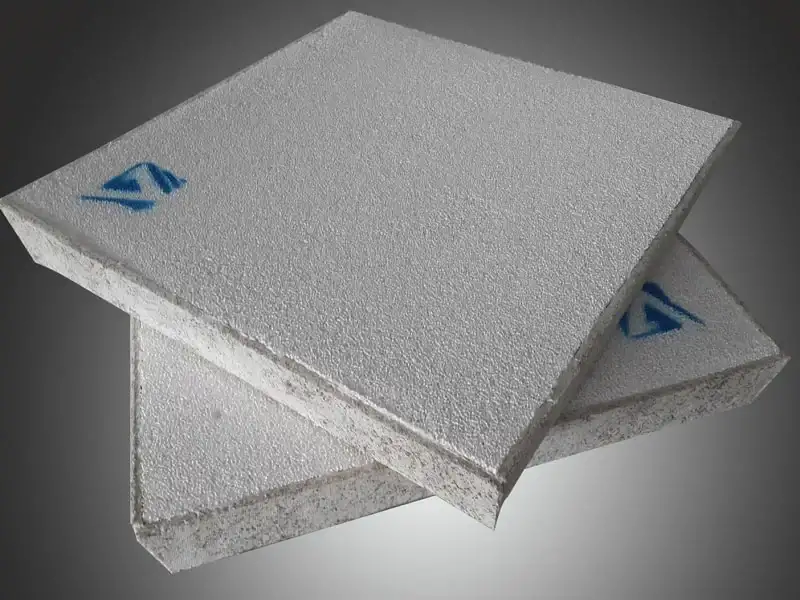
Alumina Ceramic Foam Filters (Al2O3)
Used primarily for aluminum filtration. These are white in color and handle temperatures up to 1100°C.
-
Recommended Code: 6903.20 (containing by weight more than 50% of alumina) or 6903.90.
-
Notes: If the alumina content exceeds 50%, many countries (like the US) have a specific breakout code that might offer duty-free status.
Silicon Carbide Ceramic Foam Filters (SiC)
Used for iron and copper filtration. These are grey/black.
-
Recommended Code: 6903.90.
-
Notes: SiC is a carbide, but for customs purposes, it falls under refractory ceramics when sintered. Avoid classifying as “Carbon products” (Chapter 38) as duties are higher.
Zirconia Ceramic Foam Filters (ZrO2)
Used for steel filtration. Yellow/brown color, highest heat resistance.
-
Recommended Code: 6903.90.
-
Notes: Due to the high value of Zirconia, customs officers often inspect these shipments to ensure value declaration matches the goods.
Global Tariff & Duty Rates Table (2025 Estimates)
Tariff rates fluctuate based on trade agreements. The table below represents the standard Most Favored Nation (MFN) rates for goods classified under 6903.90.
| Importing Region | HS Code Used | Standard Duty Rate | VAT / GST (Approx) | Notes |
| United States | 6903.90.00 | 0% (Free) | N/A | Review Section 301 tariffs if importing from specific Asian origins. |
| European Union | 6903.90.90 | 5.0% | 19-25% | GSP status may reduce this to 0% for some nations. |
| India | 6903.90.90 | 7.5% – 10% | 18% | BIS certification often required alongside the HS code. |
| Vietnam | 6903.90.00 | 0% – 5% | 10% | ASEAN trade pacts often allow 0%. |
| Brazil | 6903.90.99 | 10% – 14% | 17% | Highly complex; requires accurate NCM code. |
| Russia | 6903.90.90 | 12% | 20% | Sanctions compliance check mandatory. |
ADtech Case Study: Resolving Customs Delays in Hamburg
Date: March 15, 2024
Location: Hamburg Port, Germany
Client: A mid-sized automotive iron casting foundry.
The Situation:
An ADtech client in Germany ordered two full containers of Silicon Carbide (SiC) foam filters. The client’s previous logistics provider declared the goods under HS Code 6815.10 (Non-electrical articles of graphite or other carbon).
The Problem:
German customs flagged the shipment. Code 6815.10 triggered an anti-dumping investigation related to graphite electrodes, which was not relevant to foam filters. The containers were held for 12 days, incurring demurrage charges of €4,500.
The ADtech Solution:
Our logistics compliance team intervened immediately. We provided:
-
A technical datasheet proving the “Sintered Ceramic” nature of the SiC filter (removing it from the “Carbon/Graphite” category).
-
A formal ruling reference showing precedent for 6903.90 classification for foundry filters.
-
A revised Commercial Invoice.
The Result:
Customs accepted the re-classification to 6903.90. The anti-dumping flag was removed. The duty rate dropped from the threatened punitive rate to the standard 5%. The client saved approximately €18,000 in potential duties and fines, securing their production line schedule.
Factors Influencing Customs Classification
Understanding why we pick a code is vital for your compliance documentation. Customs agents look at three physical properties.
1. Porosity and Density
Ceramic foam filters are highly porous (open-cell structure). Some agents mistakenly identify them as “filtering blocks” (which might fall under machinery parts). You must clarify on the invoice: “Passive refractory component, not a mechanical part.”
2. Firing Temperature
To be classified under Chapter 69 (Ceramics), the product must be “fired after shaping.” ADtech filters undergo sintering at high temperatures. If a product is merely chemically bonded without firing, it cannot use Chapter 69 codes. Our manufacturing process ensures clear eligibility for Chapter 69.
3. Chemical Composition
-
Alumina > 50%: Pushes towards 6903.20.
-
Zirconia/SiC: Pushes towards 6903.90.
How to Document ADtech Filters for Customs
To guarantee smooth entry into your country, ADtech recommends the following descriptions on your Commercial Invoice and Packing List. Do not use vague terms.
Bad Description:
-
“Foam Filters” (Too generic, sounds like plastic).
-
“Foundry Parts” (Might be taxed as machinery).
-
“Ceramics” (Too broad).
Good Description (Copy This):
-
“Ceramic Foam Filters (Refractory Grade) for Molten Metal Filtration. HS Code: 6903.90. Material: Silicon Carbide. Non-hazardous, fired ceramic ware.”
Table: Recommended Invoice Descriptions
| Filter Type | Suggested Invoice Wording | Key Attribute to Mention |
| Alumina | Porous Ceramic Filter Plate (Al2O3 > 80%) | High Alumina Content |
| SiC | Refractory Ceramic Silicon Carbide Filter | Thermal Shock Resistance |
| Zirconia | High-Temp Zirconia Ceramic Filter (ZrO2) | Steel Filtration Application |
HS Codes are just the first step. When importing ADtech products, be aware of non-tariff regulations linked to these codes.
Certificate of Origin (CoO)
Many countries require a CoO to prove the goods are not from a sanctioned region. ADtech provides certified CoO documents to help clients leverage Free Trade Agreements (FTAs). For example, importing into Australia or Korea from certain origins with a CoO can drop the duty to 0%.
Pre-Shipment Inspection (PSI)
Nations like Indonesia or countries in Africa may require PSI for goods under 6903. The inspector checks the quantity and the code. If the physical product looks like “foam,” they might doubt the “ceramic” classification. We always provide samples to inspectors to demonstrate the rigid, brittle nature of the ceramic.
Technical Specifications Linking to HS Codes
The “Essential Character” rule in customs law dictates the classification. For ADtech filters, the essential character is heat resistance.
-
Refractoriness: >1700°C (Zirconia).
-
Compressive Strength: >1.5 MPa.
-
Bulk Density: 0.4 – 0.6 g/cm³.
These specs confirm the product is an industrial refractory good (6903) and not household ceramic (6911) or construction ceramic (6902).
Common Mistakes in Import Declarations
We see these errors frequently. Avoid them to keep your supply chain moving.
1. Using the “Machine Part” Code (8421)
Some importers use 8421.99 (Parts for filtering or purifying machinery).
-
Risk: While the duty might be low, this code implies the filter is a spare part for a specific machine. ADtech filters are consumables used in a process, not parts of a machine. If customs asks for the “machine model” it fits, you cannot answer, leading to audits.
2. Ignoring Anti-Dumping Duties (ADD)
Certain HS codes for ceramics from specific countries carry massive ADD taxes (up to 300%). Always verify the combination of Origin + HS Code. ADtech’s supply chain team monitors these global alerts to protect our partners.
3. Weight Discrepancies
Code 6903 is often tracked by net weight. Ceramic foam is light. If the gross weight (including pallets) is significantly higher than net weight, customs may suspect hidden goods. We ensure accurate weight listings on all Bills of Lading.
Frequently Asked Questions (FAQs)
1. What is the universal HS Code for Ceramic Foam Filters?
The most widely accepted root code is 6903.90. It applies to refractory ceramic goods used in high-temperature environments.
2. Does the pore size (PPI) change the HS Code?
No. Whether you import 10 PPI (coarse) or 60 PPI (fine), the HS classification remains based on material and usage, not pore density.
3. Can I use HS Code 8421 for ADtech filters?
We advise against it. 8421 applies to mechanical filters (like oil filters in a car). Ceramic foam filters are static refractory media. Using 8421 opens you up to unnecessary scrutiny.
4. Is there a difference in code between Alumina and SiC filters?
Usually, no. Both fall under 6903.90 in most countries. However, check your local tariff book; some countries separate high-alumina products into 6903.20.
5. Do I need a specific license to import these under 6903.90?
Generally, no. These are non-hazardous industrial consumables. However, some regions require a standard importer’s license.
6. What is the import duty for ceramic filters in the USA?
As of 2025, the general rate for 6903.90.00 is Free (0%). Always check for additional Section 301 duties depending on the country of origin.
7. How does ADtech package filters to satisfy customs inspections?
We use fumigated wooden crates or plywood cases (ISPM 15 compliant). The packaging allows for easy opening and re-sealing if a physical inspection occurs.
8. Why did my broker classify this as “Artificial Stone” (6815)?
Brokers sometimes default to 6815 if they don’t see the word “fired” or “refractory” in the description. Instruct them to use 6903.90 and provide the technical datasheet.
9. Can ADtech provide a specific HS code for my country?
Yes. Our logistics team can provide the specific 8-digit or 10-digit code for your destination (e.g., NCM code for Brazil, HSN for India, TARIC for EU).
10. What happens if I use the wrong HS code?
You may overpay duties, or worse, face retroactive fines and shipment seizures. Consistency is key. Once you establish 6903.90, stick with it.
Future Trends in Filtration Trade Compliance
Customs authorities are digitizing rapidly. The introduction of blockchain in logistics means that the HS code you enter at the factory level must match the final entry exactly.
Green Customs Initiatives
We notice a trend where “Environmentally Friendly” industrial consumables get “Green Lane” priority. Since ADtech filters reduce scrap rates (saving energy), we are working on labelling strategies that highlight this environmental benefit to smooth customs clearance.
Stricter Material Audits
Authorities are testing ceramics more often to verify chemical composition. Ensure your supplier (ADtech) provides a Chemical Analysis Report (COA) with every shipment to prove the material matches the HS code declaration.
Optimize Your Supply Chain with ADtech
Correct HS classification is not just paperwork; it is a strategic component of your procurement cost. By utilizing 6903.90, you align with global standards for refractory materials, ensuring your foundry receives critical filtration supplies without unexpected costs or delays.
ADtech stands ready to support your logistics team. We provide not just the product, but the full documentation suite required for hassle-free importation.