
Ceramic fiber blankets are primarily used for high-temperature thermal insulation in industrial furnaces, kilns, boilers, pipes, heating equipment, and other thermal-processing systems. They help reduce heat transfer, limit heat storage in suitable lining systems, and insulate equipment that may need flexible, lightweight materials. In aluminum foundries, potential uses include furnace insulation, furnace-door insulation, and protected backup insulation, provided the selected grade and installation design are suitable for the operating conditions. A ceramic fiber blanket is an insulation material, not a substitute for a refractory lining designed for direct contact with molten aluminum.
The correct application depends on more than the product’s nominal temperature rating. Operating temperature, exposure duration, thermal cycling, mechanical support, chemical environment, and installation location all influence performance.
What Is a Ceramic Fiber Blanket?
A ceramic fiber blanket is a flexible, fibrous refractory insulation material manufactured from high-temperature ceramic fibers. Alumina and silica are common constituents, although composition varies by product grade. Some specialized grades incorporate additional oxides to improve temperature capability or thermal stability.
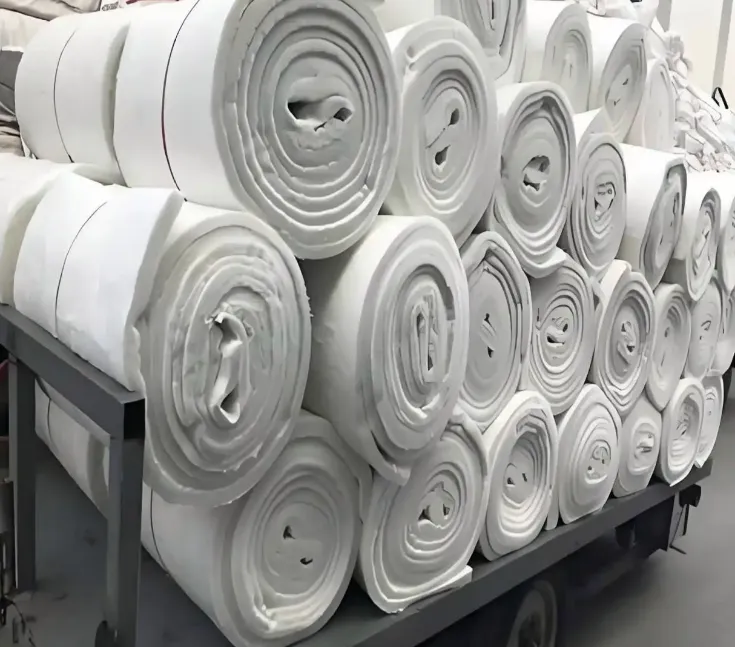
During manufacturing, fibers are formed into a mat and mechanically needled to create a blanket with sufficient integrity for handling, cutting, and installation. The finished product is generally supplied in rolls of different thicknesses, densities, and widths.
Unlike a conventional refractory brick, a blanket can conform to suitable flat or curved surfaces. It can also be cut into sections or incorporated into an engineered multilayer insulation assembly.
According to the CeraMaterials ceramic fiber blanket technical data sheet, typical applications include furnace and kiln linings, furnace-door seals, boiler insulation, high-temperature gaskets, and expansion-joint seals. Specific applications depend on the product grade and installation design.
How does ceramic fiber blanket insulation work?
The fibrous structure contains many small spaces that reduce heat transfer through the material. Together with its relatively low mass, this structure makes ceramic fiber blanket useful in insulation applications where rapid heating and cooling or limited lining weight are important.
Its principal functions are to:
-
Reduce heat transfer through suitable equipment walls and covers.
-
Limit heat storage in the insulation layer compared with some heavier refractory constructions.
-
Help control outer-surface temperatures when incorporated into a properly designed assembly.
-
Accommodate irregular shapes and selected moving or removable components.
-
Provide insulation in locations where a flexible material is easier to fit than a rigid refractory product.
Actual thermal performance depends on temperature, material composition, density, thickness, compression, joint design, and operating conditions. A blanket should therefore be evaluated using grade-specific thermal conductivity and shrinkage data rather than a general description of its insulating properties.
Main Ceramic Fiber Blanket Uses
Ceramic fiber blankets serve several industries because many high-temperature systems require effective insulation without the weight or rigidity of a complete brick lining.
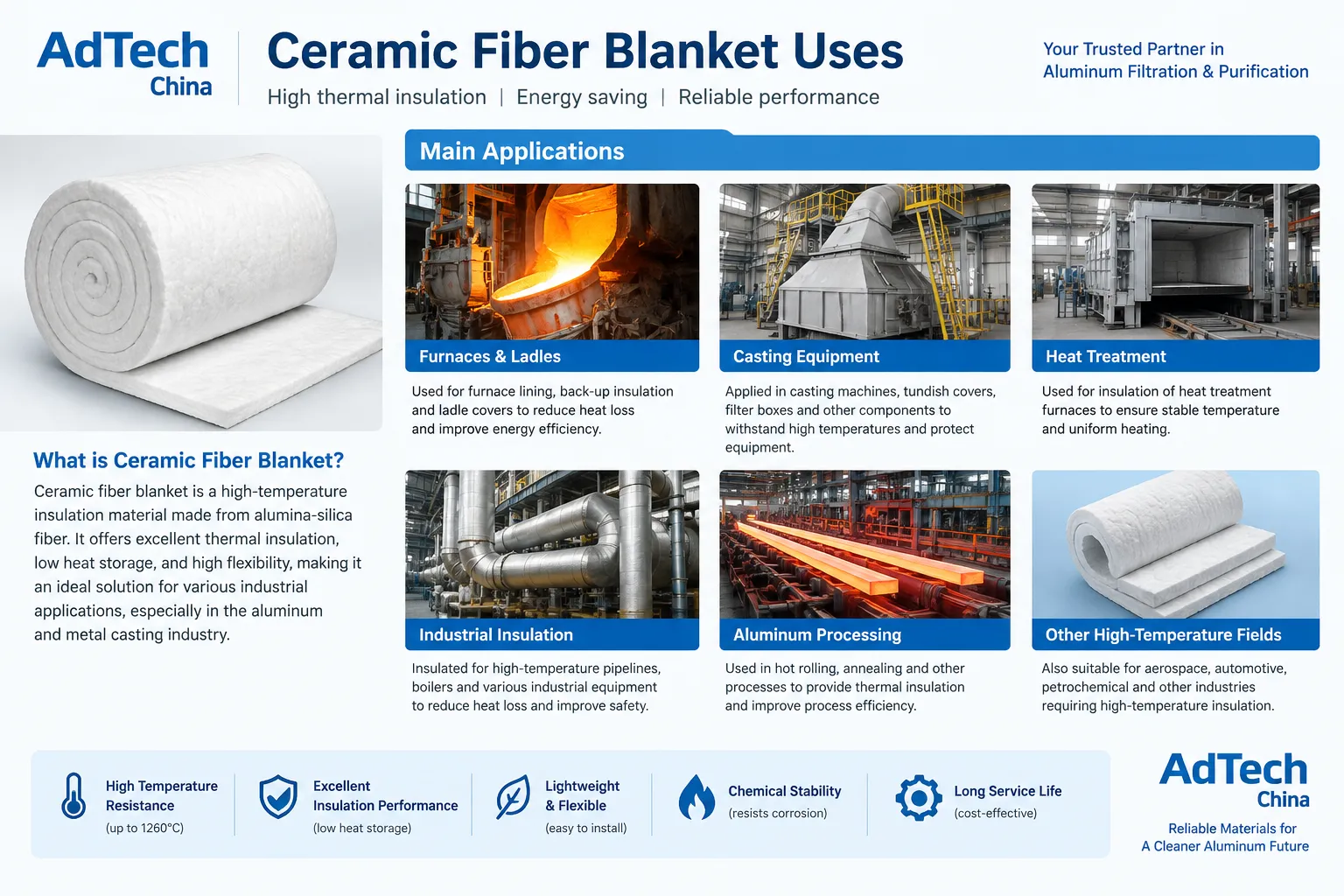
The table below summarizes common applications and the main considerations for each.
| Application | Typical purpose | Main selection consideration |
|---|---|---|
| Industrial furnaces | Wall, roof, and backup insulation | Operating temperature and lining design |
| Furnace doors | Insulation and suitable sealing areas | Movement, compression, and abrasion |
| Aluminum foundries | Selected furnace and equipment insulation | Protection from molten metal and flux |
| Industrial kilns | Thermal insulation and maintenance repairs | Thermal cycling and dimensional stability |
| Boilers and heating systems | Insulation of suitable surfaces and doors | Temperature, attachments, and service environment |
| Pipes and ducts | High-temperature thermal insulation | Temperature, geometry, and protective facing |
| Petrochemical equipment | Furnace and heater insulation | Chemical environment and equipment design |
| Expansion joints and gaskets | Compressible insulation or thermal sealing | Compression, movement, and temperature |
| Maintenance and refurbishment | Replacement of damaged insulation | Compatibility with the existing lining |
These are established categories of industrial application, but they do not mean that every ceramic fiber blanket can be installed in every application. Product specifications and the insulation assembly must match the actual service conditions.
1. Industrial furnace insulation
Industrial furnaces are among the most common applications for ceramic fiber blankets.
Depending on the furnace design and selected grade, the blanket may be installed behind a protective refractory layer, used in suitable lining sections, or fitted into other approved insulation locations.
Typical applications include:
-
Aluminum melting and holding furnaces.
-
Heat-treatment furnaces.
-
Annealing furnaces.
-
Reheating furnaces.
-
Industrial heating chambers.
-
Selected process-heating enclosures.
The principal objective is to reduce heat transfer through the insulated surfaces.
However, an insulation blanket does not automatically replace the entire refractory lining. Some furnace surfaces are exposed to flame, high-velocity gases, abrasion, mechanical impact, or corrosive materials. These conditions may require a protective layer or another refractory solution specifically designed for the hot face.
Practical consideration: Before replacing an existing lining with a blanket system, confirm whether the original lining provides mechanical protection, chemical resistance, structural support, or other functions beyond insulation.
2. Furnace-door insulation and sealing
Furnace doors are frequently opened and closed, exposing their insulation assemblies to mechanical movement and temperature fluctuations.
Ceramic fiber blankets may be used in suitable door panels and protected sealing areas because their flexibility helps accommodate equipment geometry.
Applications include industrial furnace doors, kiln doors, inspection openings, and selected removable covers.
The main installation challenges are different from those of a stationary furnace wall.
The insulation must remain in position during repeated operation, and the joints must avoid creating significant heat-leak paths. If the blanket is compressed excessively or inadequately secured, its performance and service life may deteriorate.
Where the assembly experiences rubbing, gas erosion, or repeated mechanical movement, the supplier or equipment designer should specify the appropriate attachment method and protective surface.
3. Ceramic fiber blanket uses in aluminum foundries
Aluminum foundries use thermal insulation to manage heat loss around furnaces and selected casting equipment.
Ceramic fiber blankets may be suitable for certain furnace insulation layers, furnace-door assemblies, and protected backup insulation applications. The exact application must be evaluated against the equipment design and the blanket’s verified working-temperature rating.
There are three important distinctions for aluminum-processing buyers.
First, insulation and melt purification are different functions.
A ceramic fiber blanket reduces heat transfer. It does not perform the inclusion-removal function of a ceramic foam filter and does not replace an online degassing unit used for hydrogen removal.
AdTech’s ceramic foam filter and degassing equipment serve distinct molten-aluminum purification purposes.
Second, classification temperature is not the same as continuous working temperature.
A blanket advertised with a high classification temperature may have a lower recommended working-temperature limit. Buyers should confirm the rating for the actual product grade rather than relying on the largest temperature printed in a catalogue.
Third, proximity to molten aluminum requires particular care.
A blanket should not be assumed suitable for direct molten-metal contact. In areas exposed to aluminum, dross, or flux, a suitable refractory barrier or other engineered protection may be necessary. The material supplier and equipment designer should confirm suitability for the specific location.
These distinctions prevent a common purchasing mistake: selecting a high-temperature insulation material without evaluating what it will encounter during operation.
4. Kiln insulation and refractory maintenance
Ceramic fiber blankets are used in suitable industrial kilns and ceramic-processing equipment.
Potential applications include backup insulation, selected lining sections, kiln-door insulation, and repair of damaged insulation layers.
Their flexibility can make them convenient for irregular shapes or locations where cutting and fitting are required.
For equipment operating through repeated heating and cooling cycles, the buyer should consider permanent linear shrinkage and the method used to secure the blanket.
If a lining develops gaps, the resulting local heat-transfer paths may create hot spots or reduce insulation effectiveness. Replacement should therefore address the cause of damage, not merely cover the visible gap.
For example, if deterioration resulted from gas erosion or inadequate support, installing a new blanket without correcting those conditions may lead to similar damage.
5. Boiler, pipe, and duct insulation
Ceramic fiber blankets may be used to insulate selected high-temperature pipes, ducts, boilers, and related industrial equipment.
The material can be cut and fitted around suitable components, while an external protective layer may be required depending on environmental and mechanical conditions.
For pipework, relevant considerations include:
-
Operating temperature and temperature variations.
-
Pipe diameter and surface geometry.
-
Required insulation thickness.
-
Outdoor exposure and moisture protection.
-
Vibration and maintenance access.
-
Mechanical protection and external cladding.
Insulation selection should also account for the operating environment and the applicable equipment requirements.
A blanket suitable for a stationary furnace wall may not automatically be suitable for a vibrating pipe, exposed outdoor installation, or area subject to mechanical damage.
6. Petrochemical and process-heating equipment
Selected ceramic fiber blanket grades are used in high-temperature process equipment, including furnace and heater linings in petrochemical facilities.
Potential applications include reformer heaters, pyrolysis furnaces, crude-oil heaters, and related thermal-processing systems.
The selection process must consider more than nominal temperature resistance. The operating atmosphere, gas velocity, chemical exposure, mechanical support, and potential contamination of the process environment can all influence suitability.
A product should not be selected for a particular heater simply because it is described as suitable for high temperatures.
The equipment designer or qualified insulation engineer should establish the required material properties and installation details for the application.
7. Expansion joints, gaskets, and removable insulation covers
Flexible ceramic fiber products can also be used in certain high-temperature sealing applications.
Potential uses include expansion-joint assemblies, thermal gaskets, selected equipment joints, and removable insulation covers.
These applications differ from ordinary furnace-wall insulation because they may involve movement or compression.
The important questions are whether the material can tolerate the expected movement, whether compression will remain within the design limits, and whether the installation will maintain its seal during thermal cycling.
A blanket may be suitable as part of an engineered assembly, but it should not be assumed to provide all the mechanical or gas-sealing functions required by the equipment.
Why Is Ceramic Fiber Blanket Used Instead of Other Insulation Materials?
The principal reasons for using ceramic fiber blanket are flexibility, low mass, and suitability for high-temperature insulation applications.
Its advantages are most relevant when the application benefits from a conformable insulation material that can be cut to size.
Main advantages
Low thermal mass: Compared with some heavier refractory constructions, a blanket can reduce the mass of the insulation system. This may benefit equipment that undergoes frequent heating and cooling.
Flexible installation: The material can be fitted around suitable irregular surfaces and used in selected door, cover, and backup-insulation assemblies.
Adaptability: Different grades, thicknesses, and densities allow the insulation to be selected for different equipment requirements.
Repair convenience: Blanket sections can be replaced where the equipment design allows localized repair, although the cause of the original damage must also be addressed.
Thermal insulation: The blanket helps reduce heat transfer when its properties and installation are suitable for the operating conditions.
These benefits do not guarantee a specific energy saving, surface temperature, or service life. Those outcomes depend on the complete insulation system, equipment design, operating schedule, and condition of the existing lining.
Ceramic Fiber Blanket Temperature Ratings: What Buyers Should Know
Temperature specifications are among the most important factors in selecting ceramic fiber blanket.
A classification temperature should not be interpreted as a universal continuous-use limit.
For example, AdTech’s current ceramic fiber blanket product page lists two principal classification-temperature grades and the following reference working temperatures. These are published product-page values, not a substitute for confirming the data sheet applicable to a specific order.
| AdTech product grade | Classification temperature | Published reference working temperature |
|---|---|---|
| 1260°C grade | 1260°C | 1050°C |
| 1430°C grade | 1430°C | 1350°C |
The difference matters because the material may undergo physical and chemical changes during prolonged exposure to elevated temperatures.
Actual suitability depends on the grade, operating atmosphere, exposure duration, thermal cycling, mechanical loading, and the conditions of the complete installation.
What should buyers verify?
Before selecting a temperature grade, confirm:
-
The normal operating temperature.
-
The maximum expected temperature.
-
How long the material remains at each temperature.
-
Whether the equipment is continuously operated or repeatedly heated and cooled.
-
Whether the blanket experiences gas erosion, vibration, compression, or chemical exposure.
-
The applicable continuous-use recommendation and shrinkage data.
For applications involving prolonged operation close to a grade’s working-temperature limit, ask the supplier to assess the service conditions rather than selecting solely by the nominal classification.
Ceramic Fiber Blanket vs. Ceramic Fiber Board vs. Refractory Brick
These products serve related but different functions. The correct choice depends on whether the equipment primarily needs flexible insulation, a rigid insulating component, or a refractory structure that must withstand mechanical and chemical loading.
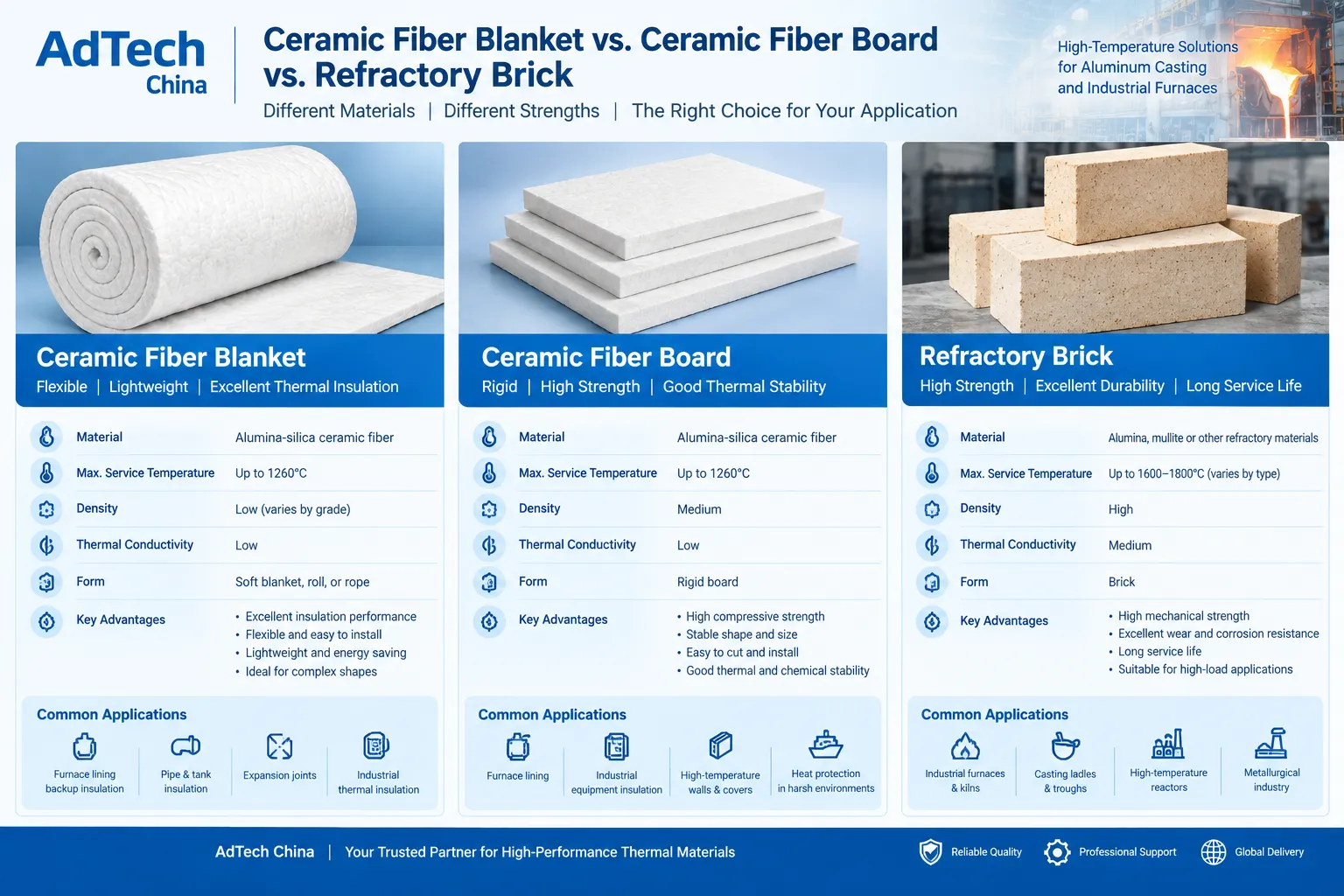
| Selection factor | Ceramic fiber blanket | Ceramic fiber board | Refractory brick |
|---|---|---|---|
| Physical form | Flexible roll or cut sheet | Rigid board | Rigid masonry unit |
| Conformability | High | Limited | Low |
| Mechanical rigidity | Limited without support | Greater rigidity | Generally high, depending on grade and construction |
| Typical role | Flexible insulation and suitable backup layers | Rigid insulation sections and lining components | Structural or protective refractory lining |
| Common selection factors | Grade, density, thickness, support | Grade, thickness, fixing method | Thermal, chemical, and mechanical loading |
| Main limitation | Can require protection and mechanical support | Less adaptable to irregular shapes | Typically heavier and less flexible to install |
The comparison reflects the typical forms and functions described in AdTech’s product-selection guide. Individual product grades and installation systems can differ.
When should you choose a ceramic fiber blanket?
Consider a blanket when the installation requires flexible, lightweight insulation and the material can be adequately secured and protected.
When is ceramic fiber board preferable?
Consider a board where a more rigid insulating component is needed, particularly when the equipment design specifies a board-shaped section or demands greater dimensional stability.
When should you choose refractory brick?
Consider refractory brick where the lining must provide structural support or withstand mechanical, chemical, and thermal loads that a flexible blanket cannot handle on its own.
These options are not always mutually exclusive. An engineered lining may combine materials to provide insulation, mechanical protection, and resistance to the operating environment.
How to Select the Right Ceramic Fiber Blanket
The appropriate product is the one whose verified specifications match the equipment and application. The highest temperature rating or highest density is not automatically the best choice.
1. Confirm the operating temperature
Record the normal and maximum temperatures, exposure duration, and thermal cycles.
Ask the supplier to confirm the recommended working temperature for the exact grade being quoted.
2. Select the density
Density influences the blanket’s handling characteristics, compressibility, mechanical stability, and thermal behavior.
AdTech lists several density options for its two principal grades:
| Classification grade | Published density options |
|---|---|
| 1260°C | 64, 96, 128, and 160 kg/m³ |
| 1430°C | 96, 128, and 160 kg/m³ |
Availability and final specifications should be confirmed before ordering. Higher density should not automatically be interpreted as better insulation performance under every operating condition. Compare thermal conductivity at the relevant temperatures.
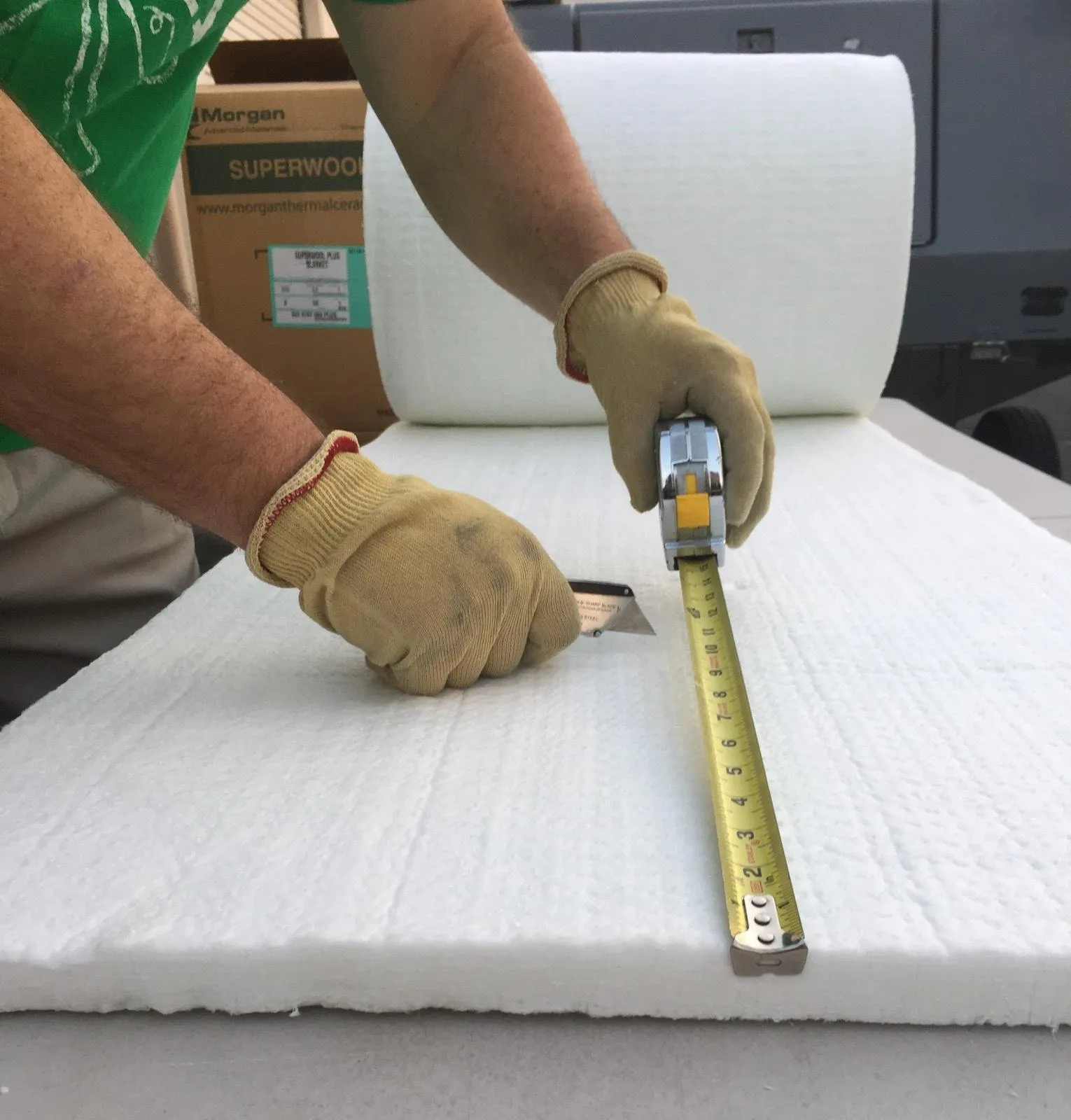
3. Determine the thickness
Thickness affects the overall thermal resistance of the insulation layer.
The required thickness depends on the operating temperature, desired external surface temperature, available installation space, thermal conductivity, and any additional lining materials.
Request temperature-dependent thermal conductivity data where available. For an engineered installation, use these data in the appropriate heat-transfer calculation rather than choosing thickness by appearance or habit.
4. Check the installation environment
Determine whether the blanket will be installed vertically, horizontally, overhead, or around a moving component.
Assess the potential for abrasion, gas erosion, vibration, moisture, chemical attack, direct contact with hot materials, and mechanical loading.
These conditions affect fixing methods and the need for protective layers.
5. Confirm dimensions and quantity
Before requesting a quotation, provide:
-
Required thickness and density.
-
Roll width and length.
-
Total coverage area.
-
Equipment drawings or installation dimensions, where relevant.
-
Required quantity and delivery destination.
These details allow the supplier to check the product configuration and calculate the material quantity more accurately.
6. Request technical documentation
For a serious industrial purchase, ask for the applicable technical data sheet and safety data sheet.
Relevant documents may include temperature ratings, density, thickness tolerances, thermal conductivity, permanent linear shrinkage, and recommended handling procedures.
Where formal acceptance criteria apply, specify the required test methods and documents before placing the order.
Common Mistakes When Using Ceramic Fiber Blankets
Mistake 1: Selecting by classification temperature alone
A classification temperature does not establish the material’s recommended continuous-use temperature.
Better practice: Confirm the grade-specific working-temperature limit and the actual exposure conditions.
Mistake 2: Assuming the blanket can contact molten aluminum
A blanket designed for high-temperature insulation is not necessarily resistant to direct molten-metal contact.
Better practice: Use a material and installation assembly approved for the specific contact conditions. Obtain engineering confirmation where aluminum, dross, or flux may reach the insulation.
Mistake 3: Treating density as the only measure of quality
Higher density can change handling strength and thermal behavior, but density alone cannot establish overall suitability.
Better practice: Compare the relevant thermal conductivity, shrinkage, mechanical, and installation requirements.
Mistake 4: Ignoring joints and fixing methods
Poorly secured insulation can shift, sag, or leave gaps. Gaps can reduce the effectiveness of the lining even when the blanket itself is appropriate.
Better practice: Follow the equipment design for anchoring, joint placement, compression, and protective facing.
Mistake 5: Replacing damaged insulation without identifying the cause
If a blanket has deteriorated because of abrasion, gas flow, chemical attack, or inadequate support, installing another blanket without correcting the problem may not resolve the failure.
Better practice: Inspect the installation conditions and establish why the material failed before choosing a replacement.
Mistake 6: Ignoring occupational safety
Some refractory ceramic fibers can pose inhalation hazards when airborne fibers are released during cutting, installation, removal, or maintenance. High-temperature exposure can also change the material.
Better practice: Review the applicable safety data sheet, use appropriate engineering controls and personal protective equipment, and follow local occupational-health and waste-handling requirements. NIOSH provides a technical review of occupational exposure to refractory ceramic fibers in its publication, Criteria for a Recommended Standard: Occupational Exposure to Refractory Ceramic Fibers.
How to Prepare a Ceramic Fiber Blanket RFQ
A useful request for quotation gives the supplier enough information to evaluate the intended application, not just the requested material name.
For industrial insulation, provide the following information wherever available.
| RFQ field | Information to provide |
|---|---|
| Application | Furnace, kiln, boiler, pipe, door, or other equipment |
| Operating conditions | Normal temperature, maximum temperature, and exposure duration |
| Classification grade | Required grade or request for a technically suitable recommendation |
| Density | Required value in kg/m³, if specified |
| Thickness | Required thickness in mm |
| Dimensions | Roll width, roll length, or drawings |
| Installation conditions | Fixed or moving, vertical or horizontal, protected or exposed |
| Quantity | Number of rolls or total coverage area |
| Required documentation | Technical data sheet, SDS, and any specified test records |
| Delivery requirements | Destination, requested delivery date, and applicable shipping terms |
If you do not know the required grade or density, explain the application and operating conditions first. That is generally more useful than selecting an arbitrary specification and asking the supplier to quote it.
Before comparing quotations, verify that suppliers are quoting equivalent grades, dimensions, densities, and documentation. A lower unit price may reflect a different configuration rather than a better commercial offer.
Ceramic Fiber Blanket Uses in AdTech’s Aluminum-Processing Context
AdTech provides products for aluminum foundry operations, including ceramic foam filters, online degassing equipment, filtration equipment, flux systems, and launder systems.
Ceramic fiber blanket serves a different role from these products: it provides insulation in suitable high-temperature applications.
For example:
-
Insulation: Ceramic fiber blanket may be suitable for selected furnace insulation or protected equipment components.
-
Filtration: A ceramic foam filter is used to remove non-metallic inclusions from molten aluminum.
-
Degassing: Online degassing equipment is used to reduce hydrogen in molten aluminum.
-
Molten-metal transfer: Launder systems are designed to transfer molten aluminum under defined operating conditions, with configurations that may include heating and temperature-retention features.
AdTech’s official product range describes its filtration products, while its degassing equipment page explains the role of online degassing. These products address different process requirements and should be selected accordingly.
For ceramic fiber blanket procurement, AdTech’s Ceramic Fiber Blanket product page provides the starting point for reviewing available grades and configurations.
The most useful inquiry includes the intended application, normal and maximum operating temperatures, required dimensions, quantity, and any special environmental or installation conditions. Where the application involves molten aluminum, the proposed installation must also be checked for direct-contact risks and required refractory protection.
FAQ
1. What are ceramic fiber blankets used for?
Ceramic fiber blankets are used for high-temperature thermal insulation in industrial furnaces, kilns, boilers, selected pipes and ducts, furnace doors, and other thermal-processing equipment. They can also be used in suitable backup insulation and sealing applications.
2. Can ceramic fiber blankets be used in aluminum foundries?
Yes, selected grades can be considered for suitable furnace insulation, furnace-door insulation, and protected backup insulation. The installation must match the actual operating temperature and environmental conditions. Direct molten-aluminum contact should not be assumed suitable without specific approval.
3. What is the difference between classification temperature and continuous working temperature?
Classification temperature is a product’s stated temperature classification, while continuous working temperature is the recommended limit for sustained service under the supplier’s specified conditions. Buyers should verify both values for the exact grade before purchasing.
4. Is ceramic fiber blanket better than refractory brick?
Neither is universally better. A blanket is often preferable where flexible, lightweight insulation is required. Refractory brick may be more appropriate where structural support or greater resistance to mechanical and chemical loading is required. The correct choice depends on the lining design and operating conditions.
5. How does density affect ceramic fiber blanket performance?
Density influences handling strength, compressibility, mechanical stability, and thermal behavior. Higher density does not automatically provide better insulation in every application. Compare grade-specific thermal conductivity and mechanical properties at the intended service conditions.
6. How do I choose the thickness of a ceramic fiber blanket?
Thickness should be selected using the operating temperature, desired surface temperature, thermal conductivity, available installation space, and the properties of other lining layers. An engineering heat-transfer calculation is preferable for demanding industrial applications.
7. Can ceramic fiber blankets be used for direct contact with molten aluminum?
Do not assume that a ceramic fiber blanket is suitable for direct molten-aluminum contact. The material and complete installation must be specifically approved for the intended conditions. Where necessary, use a suitable refractory barrier or other engineered protection.
8. Can ceramic fiber blankets be cut to size?
Yes, blankets can generally be cut to suitable dimensions for installation. Cutting and fitting must follow the product’s handling guidance, including the appropriate controls for airborne fiber exposure.
Conclusion
Ceramic fiber blanket uses extend across industrial furnaces, kilns, heating systems, suitable pipes and ducts, furnace doors, selected sealing applications, and aluminum foundry insulation systems.
The material is most useful where flexible, lightweight, high-temperature insulation is required. Its suitability, however, depends on the actual operating conditions and installation design.
Before purchasing, confirm the recommended working temperature, density, thickness, thermal properties, and mechanical requirements. For aluminum foundries, verify that the blanket will be protected from any direct molten-metal exposure that the product has not been approved to withstand.
A technically complete specification and a clear description of the application are more valuable than choosing a product solely by its advertised temperature rating.