
The top ceramic fiber blanket manufacturers in the USA offering 2300F-rated products include Unifrax, Morgan Thermal Ceramics, Insulfrax, and several regional wholesale suppliers — all capable of delivering custom densities (4–10 lb/ft³), thicknesses (1–4 inches), and large-format rolls for industrial insulation, furnace lining, petrochemical, and refractory applications at competitive 2025–2026 wholesale pricing.
If your project requires the use of Ceramic Fiber Blanket, you can contact us for a free quote.
At AdTech, we have spent years working alongside procurement engineers, plant managers, and refractory contractors across North American markets. The sourcing decisions around ceramic fiber blankets are rarely straightforward. Temperature class, density, binder content, fiber chemistry, and lead time all create a web of tradeoffs that purchasing teams must navigate carefully.
What Is a 2300F Ceramic Fiber Blanket and Why Does Temperature Rating Matter
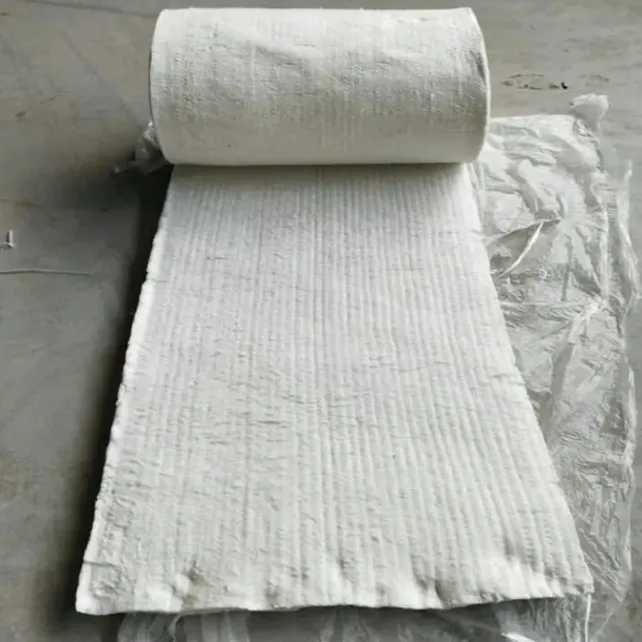
Ceramic fiber blankets are lightweight, flexible refractory insulation products manufactured from spun or blown alumina-silica fibers. The “2300F” designation refers to the continuous service temperature limit — specifically 1260°C (2300°F) — above which the fibers begin to undergo excessive shrinkage, crystalline phase transformation, and eventual structural degradation.
Understanding this rating is not merely a spec-sheet formality. We have seen projects where procurement teams selected a 2300°F blanket for a furnace operating at 2200°F peak, only to find that radiant heat zones and hot spots pushed localized temperatures well above that ceiling. The result was premature ceramic fiber shrinkage, increased heat loss through furnace walls, and unplanned maintenance downtime.
The 2300F classification sits at the mid-range of the ceramic fiber temperature spectrum. Below it are 2000°F and 2100°F grades (economical choices for lower-heat processes), and above it are 2600°F and 3000°F grades (high-alumina and polycrystalline products for extreme heat environments). The 2300F tier is, without question, the highest-volume selling grade in the US industrial market — balancing thermal performance, fiber availability, and cost.
Also read: Ceramic Fiber Blanket Manufacturer in UAE: EGA Smelter Grade, Fire-Rated Stock.
How Classification Systems Vary Between Manufacturers
Not all manufacturers use identical rating systems. Unifrax labels its standard 2300°F product as “Insulfrax S Blanket.” Morgan Thermal Ceramics markets a similar product under the “Superwool Plus” brand for similar service ranges. Some Chinese-origin imports sold through US distributors carry “2300°F” labels that are calculated using short-term peak exposure rather than continuous service temperature — a critical distinction that affects long-term performance.
When we evaluate a blanket’s temperature rating, we look at three factors simultaneously:
- Continuous use temperature (the standard 2300F spec).
- Classification temperature per ASTM C892 (which defines quality grades).
- Linear shrinkage percentage at rated temperature (should be under 2% over 24 hours per ASTM test).
Major Ceramic Fiber Blanket Manufacturers Based in the USA
The US ceramic fiber blanket industry is anchored by a small number of large producers and supported by a broader network of regional distributors, toll converters, and specialty fabricators.
Tier 1: Domestic Production Leaders
1. Unifrax LLC (Tonawanda, NY)
Unifrax is arguably the most recognized name in North American ceramic fiber production. Their manufacturing facilities in Tonawanda, New York, and Niagara Falls operate continuous fiber-spinning lines producing both standard and specialty alumina-silica blankets. Their 2300F product line includes standard Fiberfrax blankets in densities from 4 to 8 lb/ft³. Unifrax also produces bio-soluble fiber alternatives under the Isofrax brand for environments where RCF regulations are a concern.
2. Morgan Advanced Materials (USA operations)
Morgan Thermal Ceramics maintains production and distribution infrastructure across the US, including facilities in Augusta, Georgia. Their product portfolio spans 2300F standard grades up to polycrystalline fiber products rated at 3000°F+. Morgan’s strength lies in technical engineering support — their applications team frequently collaborates with industrial furnace OEMs to design complete lining systems.
3. ITM (Insultek / Thermal Ceramics Division)
ITM operates as both a manufacturer and a toll converter, taking customer-supplied fiber and processing it into finished blanket form. They are particularly active in the Gulf Coast petrochemical corridor, where demand for high-temperature pipe insulation and expansion joint materials is consistent.
4. Almatis and Imerys (Specialty Grades)
For very high alumina content fiber (70%+ Al₂O₃) required in 2600F+ classifications, Almatis and Imerys supply raw fiber that US blanket converters process into finished products. These are not mainstream 2300F products, but understanding the raw material supply chain explains why 2300F pricing is less volatile than higher-temperature grades.
Tier 2: Regional Distributors with Wholesale Capabilities
Several regional players operate as stocking distributors for major manufacturers and offer value-added services including custom cutting, kitting, and rapid fulfillment. Key names include:
- Refractory Metals Supply (Midwest distribution hub)
- Global Industrial Ceramics (Southeast/Gulf Coast focus)
- Aadvanced Insulations Inc. (West Coast distribution)
- BNZ Materials (Colorado-based; custom fabrication specialty)
These distributors typically maintain 50,000–200,000 linear feet of 2300F blanket in stock across multiple densities, enabling next-day or 2-day fulfillment for urgent industrial orders.
Manufacturer Comparison Table
| Manufacturer | Location | 2300F Densities Available | Custom Cutting | MOQ (Wholesale) | Lead Time |
|---|---|---|---|---|---|
| Unifrax LLC | Tonawanda, NY | 4, 6, 8 lb/ft³ | Yes | 1 pallet | 5–10 business days |
| Morgan Advanced Materials | Augusta, GA | 4, 6, 8 lb/ft³ | Yes | 1 pallet | 7–14 business days |
| BNZ Materials | Lakewood, CO | 6, 8 lb/ft³ | Yes | 50 sq ft | 3–5 business days |
| Aadvanced Insulations | Los Angeles, CA | 4, 6, 8 lb/ft³ | Yes | 100 linear ft | 2–3 business days |
| Global Industrial Ceramics | Houston, TX | 6, 8 lb/ft³ | Yes | 1 roll | 1–2 business days |
Density and Thickness Selection Logic for Different Industrial Applications
This is where we see the most purchasing errors in the field. Density and thickness are not interchangeable performance levers — they control different aspects of blanket behavior, and choosing incorrectly creates either waste (overengineering) or failure (underperformance).
Understanding Density: 4 lb/ft³ vs. 6 lb/ft³ vs. 8 lb/ft³
Ceramic fiber blanket density is expressed in pounds per cubic foot (lb/ft³) or kilograms per cubic meter (kg/m³).
- 4 lb/ft³ (64 kg/m³): The lightest standard density. Suitable for backup insulation layers where the primary refractory handles direct heat contact. Also used in residential/commercial kiln repairs, pizza oven insulation, and low-vibration environments. Lower cost per square foot, lower thermal mass, but also lower compression resistance and tensile strength.
- 6 lb/ft³ (96 kg/m³): The most widely specified density in US industrial applications. This density provides a balanced combination of thermal conductivity, compressive strength, and handleability. The majority of furnace lining systems in the chemical processing and metals industries specify 6 lb/ft³ as the working layer.
- 8 lb/ft³ (128 kg/m³): Higher density means greater fiber packing, which improves erosion resistance, reduces fiber fallout in high-velocity gas streams, and increases the blanket’s ability to hold its shape under mechanical stress. Gas turbine exhaust ducts, rotary kiln seals, and expansion joints frequently call for 8 lb/ft³.
- 10 lb/ft³ (160 kg/m³): Less common in blanket form; more frequently seen in board or module products. When specified in blanket form, typically used in vibrating conveyor systems or areas with significant mechanical abrasion.
Thickness Selection Guidelines
Thickness primarily controls total thermal resistance (R-value equivalent for high-temperature applications). The relationship between blanket thickness and surface temperature on the cold face is governed by the material’s thermal conductivity profile, which changes with temperature.
| Blanket Thickness | Typical Application | Cold Face Temp at 2300°F Hot Face | Suitable Furnace Type |
|---|---|---|---|
| 1 inch (25mm) | Backup/secondary layer | ~500–700°F | Low-temperature ovens |
| 1.5 inch (38mm) | Moderate duty lining | ~350–500°F | Box furnaces, kilns |
| 2 inch (50mm) | Standard working layer | ~250–400°F | Industrial furnaces, boilers |
| 3 inch (76mm) | High-efficiency lining | ~180–280°F | Continuous process lines |
| 4 inch (100mm) | Maximum insulation | ~120–200°F | High-temp batch furnaces |
Combined Density-Thickness Selection Matrix
| Application Type | Recommended Density | Recommended Thickness | Key Reason |
|---|---|---|---|
| Forge/heat treat furnace lining | 6 lb/ft³ | 3–4 inches | Balance of thermal resistance and heat-up speed |
| Petrochemical vessel insulation | 8 lb/ft³ | 2 inches | Erosion resistance in gas flow |
| Ceramic kiln backup layer | 4 lb/ft³ | 2 inches | Weight reduction, cost optimization |
| Boiler door seals | 8 lb/ft³ | 1.5 inches | Compression set resistance |
| Aluminum melting furnace | 6 lb/ft³ | 3 inches | Molten metal splash resistance |
| Rotary kiln end seal | 8 lb/ft³ | 2 inches | Abrasion and mechanical flex |
| Pipe insulation (high temp) | 6 lb/ft³ | 1–2 inches | Wrappability, conformability |
Raw Material Chemistry: Alumina-Silica Composition and Its Effect on Performance
The fundamental chemistry of 2300F ceramic fiber blankets is alumina-silica (Al₂O₃-SiO₂). The ratio of these two oxides determines the fiber’s refractoriness, crystallization behavior at temperature, and chemical resistance.
Standard 2300F Fiber Chemistry
Most 2300F blankets produced in the USA fall within the following composition ranges:
- Al₂O₃: 43–47%
- SiO₂: 52–56%
- Fe₂O₃ + TiO₂ + other impurities: <1%
This near-equal ratio positions the material close to the mullite composition zone (3Al₂O₃·2SiO₂), which provides good thermal stability up to approximately 1260°C. Beyond this temperature, the amorphous fiber structure begins converting to crystalline mullite and cristobalite phases — a transformation that causes irreversible shrinkage and embrittlement.
High-Alumina Fiber Chemistry (2600F Grade Reference)
For comparison, 2600F-rated blankets typically contain:
- Al₂O₃: 52–55%
- SiO₂: 44–47%
The higher alumina content delays crystallization onset, which is precisely why higher-temperature grades cost significantly more — higher-purity alumina raw materials carry a price premium.
Effect of Iron Oxide Contamination
Iron oxide (Fe₂O₃) is a known flux in ceramic systems. Even at <0.5% concentration, elevated iron content accelerates the formation of low-melting glass phases at the fiber surface, reducing effective service temperature. When we evaluate off-brand 2300F blankets for procurement clients, iron oxide content is one of the first data points we request from the mill test certificate.
Wholesale Pricing Structure and 2026 Market Rate Benchmarks
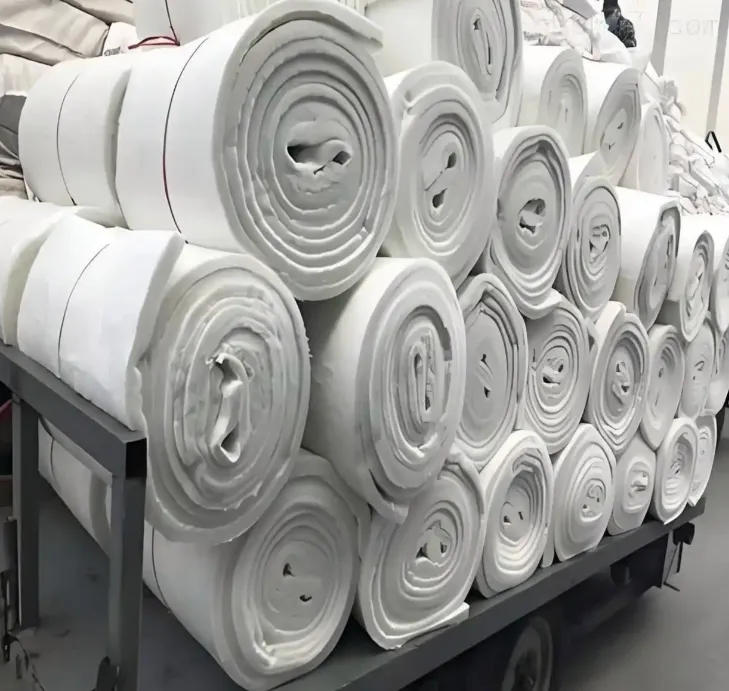
Ceramic fiber blanket pricing in the US wholesale market is quoted primarily in dollars per square foot ($/sq ft) or dollars per linear foot for standard roll widths. Some suppliers quote by the roll or pallet for large-volume buyers.
Standard Roll Dimensions for US Market
| Standard Roll Spec | Dimensions (W × L × T) | Coverage | Typical Weight |
|---|---|---|---|
| Standard 1″ roll | 24″ × 25′ × 1″ | 50 sq ft | ~13 lbs (6 lb density) |
| Standard 2″ roll | 24″ × 25′ × 2″ | 50 sq ft | ~25 lbs (6 lb density) |
| Wide format 1″ | 48″ × 25′ × 1″ | 100 sq ft | ~26 lbs (6 lb density) |
| Wide format 2″ | 48″ × 25′ × 2″ | 100 sq ft | ~52 lbs (6 lb density) |
| Large format 2″ | 48″ × 50′ × 2″ | 200 sq ft | ~104 lbs (6 lb density) |
2025–2026 Wholesale Price Benchmarks
Prices below reflect Q1-Q2 2026 market conditions for US domestic wholesale purchases at pallet quantities (minimum 10 rolls per order). Prices are approximate and fluctuate with raw material costs and freight conditions.
| Product Spec | Density | Retail (Small Qty) | Wholesale (Pallet) | High-Volume (FCL) |
|---|---|---|---|---|
| 2300F, 1″ × 24″ × 25′ | 6 lb/ft³ | $18–22/roll | $12–15/roll | $9–12/roll |
| 2300F, 2″ × 24″ × 25′ | 6 lb/ft³ | $32–38/roll | $22–27/roll | $17–22/roll |
| 2300F, 1″ × 48″ × 25′ | 6 lb/ft³ | $34–40/roll | $24–29/roll | $18–23/roll |
| 2300F, 2″ × 48″ × 25′ | 6 lb/ft³ | $62–72/roll | $44–52/roll | $34–42/roll |
| 2300F, 2″ × 48″ × 25′ | 8 lb/ft³ | $74–86/roll | $52–64/roll | $40–50/roll |
| 2300F, 3″ × 24″ × 25′ | 6 lb/ft³ | $46–56/roll | $33–40/roll | $25–32/roll |
Note: Pricing above does not include freight. LTL freight from Midwest distribution hubs to major US metro areas adds approximately $80–$180 per pallet depending on distance and carrier selection.
Price Drivers to Monitor in 2026
Several macroeconomic factors are shaping ceramic fiber pricing as we move through 2026:
- Alumina raw material pricing: Bauxite processing costs and alumina availability (particularly from Australia and Guinea) affect fiber production economics. We saw a 6–9% spike in alumina-related fiber costs during 2024, and partial normalization has occurred.
- Natural gas costs for fiber spinning: Electric resistance furnaces and gas-fired spinning ovens consume significant energy. Regional natural gas pricing in the US Midwest and Gulf Coast directly affects production costs at domestic mills.
- Freight and logistics: The return of LTL freight surcharges and diesel cost fluctuations affect delivered pricing meaningfully.
- Tariff environment: Section 301 tariffs on Chinese ceramic fiber imports (which carry 25–45% duties in most categories) have protected domestic producers and kept pricing relatively firm despite import competition.
Custom Manufacturing Options: Binder, Needling, and Cut-to-Size Services
Standard ceramic fiber blankets are unbonded or lightly bonded fiber webs. For specialized applications, US manufacturers and fabricators offer a range of value-added processing options.
Organic Binder Addition
An organic binder (typically acrylic latex or colloidal silica) is applied to one or both faces of the blanket to improve handleability, reduce fiber fallout during installation, and provide a temporarily stiffer surface for cutting and routing. The binder burns out cleanly during initial heat-up (below 600°F), leaving the base ceramic fiber structure intact.
Applications: Furnace lining installation where overhead or angled mounting creates fiber drape issues; custom-cut shapes that need to hold form during transit.
Needled Blanket (Needle-Punched Construction)
In standard blanket production, fibers are held together primarily by entanglement from the spinning process. Needled blankets undergo a secondary mechanical process where barbed needles penetrate perpendicular to the blanket face, mechanically interlocking fibers through the thickness. This dramatically improves:
- Tensile strength (can increase by 3–5× over standard)
- Delamination resistance
- Vibration resistance in rotating equipment applications
Needled 2300F blankets command a 20–35% price premium over standard grades but are essential for rotary kiln seals, vibrating furnace hearths, and turbine exhaust applications.
Cut-to-Size and Custom Shape Fabrication
Most US fabricators offer waterjet cutting, die cutting, band saw cutting, and CNC routing services for ceramic fiber blankets. Common custom shapes include:
- Circular gaskets and rings for flange insulation
- Custom-width rolls for specialized furnace dimensions
- L-shaped or stepped profiles for corner and edge insulation
- Pre-formed pipe insulation segments (half-shells)
Typical minimum order quantities for custom-cut shapes range from 10–50 pieces depending on complexity. Setup fees for new tooling (die cutting dies, CNC programs) typically range from $50–$300 depending on the fabricator.
Flexible Supply Chain Features for US Buyers: Lead Time, MOQ, and Regional Distribution
One of the most common pain points we hear from procurement managers is inflexibility in ceramic fiber supply chains — specifically, manufacturers that impose large minimum order quantities or cannot accommodate urgent requests. The US market has evolved significantly in this regard over the past decade.
Understanding MOQ Tiers in the US Market
| Order Volume | Classification | Typical MOQ | Price Tier | Fulfillment Speed |
|---|---|---|---|---|
| 1–10 rolls | Small order / retail | 1 roll | Retail | Same-day to 3 days |
| 10–50 rolls | Small wholesale | 10 rolls | Small wholesale | 2–5 business days |
| 50–200 rolls | Pallet quantity | 1 pallet | Standard wholesale | 5–10 business days |
| 200+ rolls | High-volume | Per agreement | Volume pricing | 7–21 business days |
| Full container | Import/direct mill | 500+ rolls | Mill direct | 30–60 days |
Regional Distribution Network in the USA
The US has a reasonably mature regional distribution infrastructure for ceramic fiber products. Major distribution hubs include:
- Chicago, IL / Milwaukee, WI area: Serving the Great Lakes industrial corridor (steel, automotive, foundry applications)
- Houston, TX / Baton Rouge, LA corridor: Gulf Coast petrochemical and refinery market
- Atlanta, GA: Southeastern US furnace and ceramics manufacturing market
- Los Angeles, CA / Phoenix, AZ: Western US aerospace, semiconductor, and food processing markets
- Pittsburgh, PA / Cleveland, OH: Rust Belt industrial and metals processing applications
Buyers in these regions can typically access stocking inventory within 48–72 hours for standard 2300F grades. For buyers in less-served markets (Northern Plains, Mountain West), adding 1–3 business days is realistic.
Import Supply Chain Considerations
Some US buyers source 2300F blankets directly from manufacturers in China (primarily Shandong, Zhengzhou, and Hebei provinces) through direct import or via importing distributors. Key considerations include:
- Lead time: 30–45 days ocean freight, plus customs processing (add 5–10 business days)
- Tariff exposure: Current Section 301 tariffs add 25–45% to landed cost, significantly narrowing the price advantage versus domestic sources
- Quality verification: Third-party inspection (SGS, Bureau Veritas) recommended for first-time import orders
- Minimum order: Typically 1 full container (FCL), approximately 2,000–4,000 rolls depending on thickness
For most US buyers purchasing fewer than 200 rolls at a time, domestic or regional distribution is more cost-effective after accounting for tariffs and freight from Chinese mills.
Certifications, Safety Standards, and Regulatory Compliance in the USA
ASTM Standards for Ceramic Fiber Blankets
The primary governing standard for ceramic fiber blanket products in the USA is ASTM C892 – Standard Specification for High-Temperature Fiber Blanket Thermal Insulation. This standard establishes:
- Density classifications (from 2 to 12 lb/ft³)
- Temperature classification grades
- Physical property requirements (tensile strength, specific gravity)
- Test methods for thermal conductivity (per ASTM C177 or C1113)
- Linear shrinkage testing protocol at rated temperature
When evaluating a supplier’s product, always request mill test certificates referencing ASTM C892. Any supplier unwilling or unable to provide this documentation should be disqualified from serious consideration.
OSHA and Health Regulations
Refractory ceramic fibers (RCF) are classified by OSHA under its General Duty Clause and by IARC (International Agency for Research on Cancer) as a Group 2B carcinogen (possibly carcinogenic to humans). This classification has driven significant regulatory activity in the US:
- OSHA PEL: The general industry permissible exposure limit (PEL) for nuisance dust (15 mg/m³) applies, but OSHA has noted that more protective measures are prudent given IARC classification
- NIOSH REL: The National Institute for Occupational Safety and Health recommends exposures be kept below 1 f/cc (fiber per cubic centimeter) as a precautionary limit
- Refractory Ceramic Fiber Industry Panel: The major manufacturers participate in ongoing epidemiological studies; current data suggests exposure-related risk is meaningfully controlled by industry guidelines
Bio-soluble fiber alternatives (Unifrax Isofrax, Morgan Superwool) have been developed specifically to address health concerns. These fibers dissolve in lung fluid, significantly reducing biopersistence compared to standard RCF. For new installations in manned working environments, we increasingly recommend bio-soluble alternatives for the working layer.
Required PPE for Ceramic Fiber Handling
| Task | Minimum PPE Required |
|---|---|
| Unrolling and cutting blanket | Long-sleeve clothing, nitrile gloves, P100 respirator, safety glasses |
| Overhead installation | Full face shield, P100 respirator, coveralls with hood |
| Removal of used/spent blanket | P100 respirator, coveralls, double-bag disposal |
| Module stacking or compression fitting | Gloves, P100 respirator, eye protection |
California Proposition 65 Compliance
Ceramic fiber products sold in California must carry Proposition 65 warning labels due to classification as a potential carcinogen. Any supplier marketing into California without Prop 65 labeling is operating outside compliance.
Ceramic Fiber Blanket vs. Other High-Temperature Insulation Materials
Ceramic fiber blankets do not exist in isolation — procurement decisions always involve comparison against competing materials. We regularly field questions about where ceramic fiber blanket truly outperforms alternatives, and where it falls short.
Comparative Performance Table
| Property | Ceramic Fiber Blanket (2300F) | Castable Refractory | Firebrick | Microporous Board | Mineral Wool Blanket |
|---|---|---|---|---|---|
| Max Service Temp | 2300°F (1260°C) | 2500–3000°F | 2800°F+ | 1832°F (1000°C) | 1800°F (982°C) |
| Thermal Conductivity | Low (0.15–0.35 W/mK) | Medium-High | High | Very Low | Low-Medium |
| Weight | Very Light | Heavy | Very Heavy | Light | Light |
| Installation Speed | Fast (blanket/module) | Slow (cure time) | Slow | Medium | Fast |
| Flexibility | Excellent | None | None | Good (rigid) | Good |
| Thermal Mass | Very Low | High | Very High | Low | Low |
| Cost (relative) | Medium | Medium | Low-Medium | High | Low |
| Vibration Resistance | Medium (needled: High) | Low (cracks) | Low (cracks) | High | Medium |
When to Choose Ceramic Fiber Blanket
Ceramic fiber blanket is the optimal choice when:
- Fast furnace heat-up and cool-down cycles are operationally important (low thermal mass)
- Furnace lining weight must be minimized (light-gauge furnace shell designs)
- Complex or curved surfaces require conformable insulation
- Installation time is limited (blankets install in hours vs. castable’s days-long cure)
- Energy efficiency is a priority (low thermal conductivity + low thermal mass = faster cycle, less fuel)
When Alternatives May Be Preferable
- Abrasion-intense environments (e.g., fluidized bed combustors): Castable refractory resists erosion better
- Molten metal direct contact: Dense refractory brick or castable is required
- Very low-temperature applications (<800°F): Mineral wool provides equivalent performance at lower cost
- Extreme precision tolerances in furnace geometry: Rigidized ceramic fiber boards may outperform flexible blanket
Installation Best Practices and Common Application Errors
Blanket-to-Shell Attachment Methods
Ceramic fiber blankets are attached to furnace shells and structures using several methods, each with specific applications:
1. Welded Anchors + Lacing Wire
The most common method for horizontal furnace walls. Carbon steel or stainless steel J-anchors or Y-anchors are welded to the shell, and blanket layers are compressed and secured using stainless wire lacing. For 2300F service, 304SS anchors are acceptable; at higher temperatures, 310SS or Alloy 800 is required.
2. Ceramic Button Anchors
For temperatures exceeding metal anchor capability on the hot face, ceramic fiber button anchors provide an insulating standoff. These are used in conjunction with stainless steel studs welded to the shell.
3. Module System Installation
Ceramic fiber modules (pre-compressed blanket folded and formed into blocks) are self-supporting once compressed and stud-mounted. Modules are faster to install than layer-by-layer blanket installation and provide inherent expansion compensation.
4. Blanket + Refractory Coating (Rigidizer)
For environments with moderate gas velocity, blanket surfaces are coated with colloidal silica rigidizer to prevent surface erosion. This adds minimal thermal resistance while dramatically extending surface life.
Layer Installation Sequence
For multi-layer 2300F blanket lining systems, the correct sequence matters:
- Install backup layer first (lower density, 4 lb/ft³) against the furnace shell
- Install primary working layer (6 or 8 lb/ft³) over backup with joints staggered
- Offset all joints between layers by at least 6 inches to prevent thermal bridging
- At corners, fold or miter-cut blanket rather than butting two pieces — folded corners resist joint opening under thermal cycling
Common Installation Errors We See in the Field
Error 1: Butt-jointing blanket layers without offset
When both inner and outer layer joints align, a clear thermal bridge forms, creating a hot spot that accelerates local degradation.
Error 2: Over-compressing the working layer
Ceramic fiber blanket achieves its insulation value through the air trapped within the fiber matrix. Compressing blanket beyond 25% of its original thickness meaningfully increases thermal conductivity and defeats the purpose of a thicker specification.
Error 3: Using carbon steel anchors in high-temperature zones
Carbon steel oxidizes rapidly above 900°F. Corroded anchors lose grip and release blanket sections. Always specify stainless steel hardware.
Error 4: Installing wet blankets
Blankets stored outdoors or in humid environments can absorb moisture. Installing wet ceramic fiber and immediately firing the furnace causes steam generation within the lining, which can blow out sections of blanket. Dry blankets before installation or allow a controlled slow-fire initial heating.
Environmental and Health Considerations When Handling Ceramic Fiber
Occupational Exposure Management
The primary route of ceramic fiber exposure is inhalation of airborne fibers generated during cutting, tearing, and installation. Fibers with diameter below 3 micrometers are respirable and represent the primary health concern. Bulk fiber in blanket form has a much lower release rate than loose fiber or used/degraded blanket.
Best practice recommendations for US facilities:
- Perform cutting operations using wet methods or in ventilated enclosures when possible
- Place cut ceramic fiber scrap immediately into poly bags — do not allow it to dry-fragment on the shop floor
- Implement workplace air monitoring if employees install ceramic fiber daily
- Annual medical surveillance (pulmonary function testing) for workers with regular heavy exposure
Disposal Regulations in the USA
Ceramic fiber blanket waste is not classified as hazardous waste under RCRA (Resource Conservation and Recovery Act) for standard alumina-silica RCF. Disposal is generally to lined landfills with appropriate waste manifesting. However:
- California has additional disposal requirements under CalRecycle
- Some states (notably Minnesota and New Jersey) have stricter guidance on RCF disposal
- Used ceramic fiber from processes involving hazardous material contact (lead, chromium) may require hazardous waste disposal regardless of the fiber itself
Environmental Product Claims and EPDs
Morgan Advanced Materials and Unifrax have published Environmental Product Declarations (EPDs) for select ceramic fiber product lines. These documents, prepared per ISO 14044 and verified by third parties, provide life cycle assessment data including embodied energy, global warming potential, and end-of-life considerations. For LEED projects or sustainability-reporting clients, these EPDs provide documented environmental credibility.
Frequently Asked Questions (FAQs)
Ceramic Fiber Blanket Technical Guide
Professional FAQ for Industrial Insulation Procurement
1. What does “2300F” mean on a blanket — is it continuous or peak?
The 2300°F rating refers to the continuous service temperature. This is the maximum temperature at which the blanket can operate indefinitely without exceeding the linear shrinkage threshold (typically under 2–3% per ASTM standards). Always design your systems based on this continuous rating, as relying on “peak” or “intermittent” temperatures (which can be 100-200°F higher) can lead to premature lining failure.
2. What is the difference between 6 lb/ft³ and 8 lb/ft³ density?
Density reflects the fiber mass packed per unit volume. An 8 lb/ft³ blanket contains about 33% more fiber than a 6 lb/ft³ version. This increased density provides superior erosion resistance against gas flow, higher compressive strength, and slightly lower thermal conductivity. While it costs 20–35% more, it is essential for high-velocity environments where fiber “fallout” must be minimized.
3. Can ceramic fiber blankets be used in direct contact with flames?
4. How do I verify a ceramic fiber blanket supplier’s quality claims?
Before placing bulk orders, insist on:
- Mill Test Certificate (MTC): Referencing ASTM C892 compliance.
- Third-Party Test Data: For thermal conductivity (ASTM C177/C1113).
- Linear Shrinkage Results: Specifically at the rated temperature.
- Safety Documentation: SDS detailing fiber chemistry and RCF classification.
5. What is the standard MOQ for wholesale orders in the US?
6. How long does a ceramic fiber blanket typically last?
Under ideal conditions (stable temperature, no chemical attack), a lining system can last 5 to 15 years. Lifespan is significantly shortened by frequent thermal cycling above the rated limit, high-velocity gas erosion, or chemical contaminants like alkali metals and molten slag.
7. Are bio-soluble ceramic fiber blankets available at 2300F?
Yes. High-performance bio-soluble fibers (like Superwool or Isofrax) are available with 2300°F ratings. These are designed to dissolve more quickly in lung fluids, reducing health risks. While they carry a 15–30% price premium, they are often mandated by industrial hygiene programs in refining and chemical sectors.
8. Can I cut ceramic fiber blanket with standard tools?
9. Does ceramic fiber blanket shrink permanently after heating?
Yes. All ceramic fibers experience permanent linear shrinkage (typically 1–2%) during the initial heat-up cycle as the amorphous fiber matrix equilibrates. Engineers account for this by installing the blanket under slight compression or using folded module systems.
10. What are the US import duties on Chinese ceramic blankets?
Summary and Final Recommendations
Sourcing 2300F ceramic fiber blankets in the USA involves more than finding the lowest price per roll. The right decision integrates temperature rating verification, density and thickness selection for your specific application, supply chain flexibility (regional stock vs. direct-from-mill), compliance documentation (ASTM C892, SDS, OSHA PPE requirements), and health/environmental considerations.
At AdTech, we recommend that procurement teams:
- Always verify the continuous service temperature, not peak — and design with a minimum 10% safety margin below the rated limit
- Default to 6 lb/ft³ for standard furnace lining applications, move to 8 lb/ft³ for erosion-exposed or mechanically stressed applications
- Match thickness to required cold-face temperature, not intuition
- Request mill test certificates with every wholesale order — do not accept product without documentation
- Evaluate bio-soluble alternatives for manned installation environments
- Build relationships with regional distributors for operational agility; supplement with direct-from-manufacturer orders for large planned projects
- Factor current Section 301 tariffs into any cost comparison between domestic and import supply options
The US ceramic fiber blanket market in 2026 is well-supplied, technically sophisticated, and increasingly responsive to custom requirements. Buyers who understand the technical parameters and supply chain structure will consistently find better value and fewer field performance surprises than those who treat ceramic fiber as a commodity purchase.