

The Philippines has no domestic ceramic fiber blanket spinning production, meaning all ceramic fiber blanket products sold in the country are imported — primarily from China, with additional supply from Japan, India, and through Singapore-based regional distributors — with the market served by authorized brand distributors, industrial insulation trading companies concentrated in Metro Manila (Caloocan, Quezon City, Pasig), Cebu, and Davao, offering 1260°C standard grade blanket at wholesale prices ranging from PHP 350 to PHP 1,800 per roll depending on density, thickness, temperature rating, and order volume, making supplier qualification and quality verification the most critical steps in Philippine ceramic fiber procurement.
If your project requires the use of Ceramic Fiber Blanket, you can contact us for a free quote.
At AdTech, we have spent considerable time working with procurement engineers, plant managers, and refractory contractors across the Philippine industrial landscape — from sugar mills and distilleries in Negros Occidental, to cement plants in Bulacan and Cebu, geothermal power facilities in Leyte and Bicol, petrochemical operations in Batangas, and semiconductor and electronics manufacturing in Laguna and Cavite. The recurring challenge we hear from these buyers is not about product availability — ceramic fiber blanket reaches the Philippines reliably — but about quality consistency, supplier transparency, and navigating an import-dependent supply chain where documentation standards vary widely between suppliers.
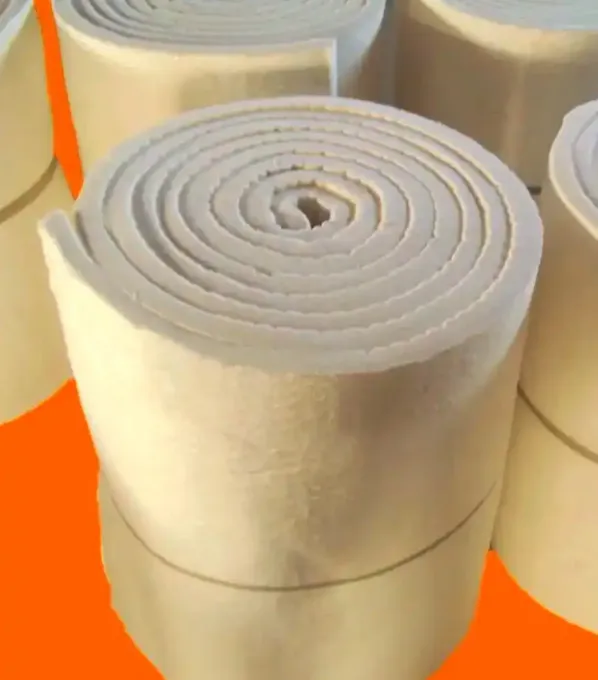
Why the Philippines Is a 100% Import-Dependent Ceramic Fiber Market
Understanding the structural reality of the Philippine ceramic fiber supply chain is the first step toward making better procurement decisions. Unlike China, India, or Japan — which operate large-scale domestic ceramic fiber spinning facilities — the Philippines has never developed a domestic production base for alumina-silica ceramic fiber. The capital intensity of fiber-spinning production lines, combined with the relatively modest scale of Philippine industrial demand compared to its larger ASEAN neighbors, has made domestic manufacturing economically unviable.
This import dependency creates several characteristics that define the Philippine market:
Pricing is USD-driven. Even when quoted in Philippine Peso (PHP), ceramic fiber blanket pricing is fundamentally anchored to USD-denominated import costs. PHP/USD exchange rate fluctuations (the Peso has traded between PHP 54 and PHP 58 per USD over 2023–2025) directly affect local MRP and wholesale prices. Buyers who understand this dynamic can time larger purchases during periods of Peso strength.
Lead times include import clearing. Unlike markets with large domestic production, Philippine buyers sourcing non-stocked grades or quantities beyond local distributor inventory face lead times that include ocean freight (8–18 days from China, 5–10 days from Singapore) plus Bureau of Customs clearance at Manila’s Manila International Container Terminal (MICT) or Batangas Port. Customs processing adds 3–7 business days under normal conditions, longer during port congestion periods.
Quality documentation requires active management. When a product is manufactured in China, warehoused in Singapore, shipped to Manila, and sold by a local trading company, the documentation chain can become fragmented. Mill test certificates get separated from product batches, product substitution between similar-specification products from different mills occurs, and density verification by the buyer becomes essential.
The Philippine industrial profile shapes demand patterns. The country’s ceramic fiber consumption is driven by:
- Sugar and bioethanol industries (Visayas and Mindanao): boiler and evaporator insulation in sugar mills.
- Cement manufacturing (Lafarge Holcim Philippines, Republic Cement, Eagle Cement): rotary kiln and preheater insulation.
- Geothermal power generation (PNOC-EDC in Leyte, Bicol, Negros): turbine and steam line insulation.
- Petrochemical and refinery operations in Batangas (Petron, Shell).
- Semiconductor and electronics manufacturing in Laguna, Cavite, and Batangas CALABARZON zone.
- Glass manufacturing in Bataan and Cebu.
- Copper smelting at Pasar Corporation (Isabel, Leyte).
- Ceramic tile and sanitary ware manufacturing in Meycauayan and Mandaue.
Each of these sectors has specific temperature grade and density requirements, which explains why the Philippine distributor landscape stocks a wider product range than a simple market size analysis would suggest.
Ceramic Fiber Blanket Suppliers and Distributors Operating in the Philippines
Authorized International Brand Distributors
1. Morgan Advanced Materials Philippine Distribution
Morgan Thermal Ceramics maintains authorized distribution presence in the Philippines, primarily through industrial supply partners in Metro Manila. Kaowool 1260°C and Superwool bio-soluble fiber products are the most commonly specified Morgan products in Philippine industrial engineering documents. Morgan’s authorized channel provides traceable product with full mill documentation — important for clients like Shell Tabangao and Petron Batangas refinery operations that require strict material certification.
2. Unifrax Philippine Distribution
Unifrax Fiberfrax products are distributed through authorized Philippine trading partners, concentrated in the Caloocan-Valenzuela industrial area of Metro Manila. Standard 1260°C Fiberfrax blanket in 96 and 128 kg/m³ densities represents the core stock.
3. Nutec Fibratec Distribution
Nutec Fibratec products reach the Philippine market through authorized regional distributors, serving the oil and gas and cement sectors primarily.
4. Japanese Brand Trading Channels
Nichias, IBIDEN, and Isolite brand ceramic fiber products enter the Philippines through Japanese trading companies (Sojitz, Marubeni affiliates) that supply Japanese-invested manufacturing facilities (Toyota, Honda, Denso, and electronics component manufacturers) requiring Japanese-standard materials.
Philippine Trading Companies and Industrial Suppliers
The majority of ceramic fiber blanket volume sold in the Philippines moves through industrial trading companies rather than direct brand distributors. These companies import from Chinese mills and from Singapore-based regional stockists.
Major trading company concentration areas:
- Caloocan and Malabon (Metro Manila): Highest density of industrial materials traders; traditional hub for construction and industrial supply.
- Pasig and Mandaluyong (Metro Manila): Commercial and light industrial supply companies.
- Mandaue City (Cebu): Central Visayas industrial supply hub; serves Cebu manufacturing corridor and Negros sugar industry.
- Davao City: Mindanao distribution hub serving Davao del Sur industrial and agro-processing sector.
- Batangas City: Local supply for Batangas petrochemical and manufacturing zone (LIMA, Malvar, San Jose).
- General Santos City: Tuna processing and agro-industrial supply for southern Mindanao.
Philippine Supplier Overview Table
| Supplier Category | Primary Locations | Products Carried | Min Order | Price Tier | Lead Time |
|---|---|---|---|---|---|
| Morgan Authorized Distributor | Metro Manila | Kaowool, Superwool | 1 pallet | Premium | 5–14 days |
| Unifrax Authorized Agent | Caloocan, Metro Manila | Fiberfrax | 1 pallet | Premium | 7–14 days |
| Established Industrial Trader | Metro Manila, Cebu, Davao | Chinese Grade A brands | 5–10 rolls | Mid-range | 2–7 days |
| General Insulation Supplier | Metro Manila, regional cities | Mixed brands | 1 roll | Variable | Same–5 days |
| Singapore Re-distributor | Metro Manila (via import) | Multiple international brands | 20+ rolls | Mid-premium | 10–18 days |
| Direct Import (buyer-arranged) | Chinese mills to Manila port | Chinese brands | Full container | Lowest | 25–45 days |
Temperature Grades and Product Specifications Available in the Philippine Market
Temperature Grade Range Stocked in the Philippines
Philippine distributors typically maintain active inventory across several temperature grades, with 1260°C as the overwhelmingly dominant specification. The following grades are regularly available, though stocking depth varies significantly by supplier:
| Temperature Grade | Continuous Service Temp | Philippine Market Share (estimated) | Typical End Use |
|---|---|---|---|
| 1000°C grade | 1000°C / 1832°F | 8–10% | Low-temp ovens, food processing |
| 1260°C grade | 1260°C / 2300°F | 65–70% | Furnaces, kilns, boilers, general industry |
| 1400°C grade | 1400°C / 2552°F | 18–22% | Cement kilns, petrochemical, geothermal |
| 1600°C grade | 1600°C / 2912°F | 3–5% | Specialized high-temp processes |
Distinguishing Genuine 1260°C Products from Misrepresented Economy Grades
A practical concern in the Philippine market — and one we address directly with procurement clients — is the risk of purchasing misrepresented product. This occurs when a supplier labels a 1100°C or lower-rated blanket as “1260°C” to access a higher price point, or when product rated for peak (short-term) temperature at 1260°C is sold as continuous service rated.
Simple verification steps that any buyer can perform:
- Density check by weighing: A 96 kg/m³ blanket in standard 610mm × 7.3m × 50mm roll configuration should weigh approximately 21 kg ±2 kg. Significantly lighter rolls indicate lower actual density than labeled.
- Shrinkage test reference: Request ASTM C356 test data. Legitimate 1260°C blanket should show ≤2.5% linear shrinkage after 24 hours at 1260°C.
- Mill certificate cross-reference: The batch or lot number on the product label should match a traceable mill test certificate. Ask the supplier to provide the certificate specific to the batch you are purchasing, not a generic product data sheet.
- Fiber chemistry analysis: Al₂O₃ content for 1260°C grade should be 44–47%. Higher alumina content (52%+) suggests a 1400°C grade product (higher quality, higher cost); lower alumina or elevated impurity levels suggest potential quality issues.
Technical Properties: Density, Thickness, Fiber Chemistry, and Performance Data
Physical Properties Table for 1260°C Ceramic Fiber Blanket
| Property | Test Method | 64 kg/m³ | 96 kg/m³ | 128 kg/m³ | 160 kg/m³ |
|---|---|---|---|---|---|
| Classification Temp | ASTM C892 | 1260°C | 1260°C | 1260°C | 1260°C |
| Density (nominal) | ASTM C167 | 64 kg/m³ | 96 kg/m³ | 128 kg/m³ | 160 kg/m³ |
| Linear Shrinkage @ 1260°C | ASTM C356 | ≤3.0% | ≤2.5% | ≤2.0% | ≤2.0% |
| Tensile Strength | ASTM C1454 | 20–30 kPa | 35–55 kPa | 50–75 kPa | 70–100 kPa |
| Thermal Conductivity @ 400°C | ASTM C177 | 0.14 W/mK | 0.12 W/mK | 0.11 W/mK | 0.10 W/mK |
| Thermal Conductivity @ 800°C | ASTM C177 | 0.28 W/mK | 0.24 W/mK | 0.22 W/mK | 0.20 W/mK |
| Thermal Conductivity @ 1000°C | ASTM C177 | 0.42 W/mK | 0.38 W/mK | 0.34 W/mK | 0.31 W/mK |
| Mean Fiber Diameter | Microscopy | 2.5–3.5 µm | 2.5–3.5 µm | 2.5–3.0 µm | 2.0–3.0 µm |
| Specific Heat | Calorimetry | ~1.0 kJ/kgK | ~1.0 kJ/kgK | ~1.0 kJ/kgK | ~1.0 kJ/kgK |
Standard Roll Dimensions Available in the Philippine Market
Most Philippine suppliers stock the following standard roll configurations. Custom dimensions require ordering through fabricators or importing on specific requirements.
| Roll Configuration | Width × Length × Thickness | Area Coverage | Weight (96 kg/m³) |
|---|---|---|---|
| Small standard (1 inch) | 610mm × 7.3m × 25mm | 4.45 m² | ~4.3 kg |
| Small standard (2 inch) | 610mm × 7.3m × 50mm | 4.45 m² | ~8.6 kg |
| Wide format (1 inch) | 1220mm × 7.3m × 25mm | 8.9 m² | ~8.6 kg |
| Wide format (2 inch) | 1220mm × 7.3m × 50mm | 8.9 m² | ~17.2 kg |
| Long roll (1 inch) | 610mm × 14.6m × 25mm | 8.9 m² | ~8.6 kg |
| Large industrial (2 inch) | 1220mm × 14.6m × 50mm | 17.8 m² | ~34.4 kg |
Alumina-Silica Composition and Phase Behavior
Standard 1260°C ceramic fiber blanket sold in the Philippine market contains:
- Al₂O₃: 44–47%
- SiO₂: 52–55%
- Fe₂O₃ + TiO₂ + alkali oxides: combined < 1%
The amorphous glass-phase structure created by this composition provides thermal shock resistance, flexibility, and low thermal conductivity — all critical for the rapid thermal cycling conditions common in Philippine batch-process industries (sugar mill boilers that cycle seasonally, batch heat-treatment furnaces in Laguna and Cavite electronics manufacturing zones).
Phase crystallization begins at approximately 900–1000°C under prolonged exposure and accelerates near the 1260°C classification temperature. In Philippine sugar mill boiler applications where operating temperatures typically reach 900–1100°C, crystallization proceeds slowly — contributing to the relatively long service life (6–10 years) that plant engineers report from well-installed ceramic fiber lining systems in these applications.
Chemical Resistance Relevant to Philippine Industrial Environments
| Chemical / Environment | Performance of 1260°C RCF | Philippine Application Context |
|---|---|---|
| Sugarcane combustion gases | Moderate (potassium-rich) | Sugar mill boilers; alkali attack risk |
| Sulfur-containing combustion gases | Moderate | Bunker fuel-fired boilers; geothermal steam |
| Reducing atmospheres (CO, H₂) | Good | Copper smelter atmosphere at Pasar, Isabel |
| Steam at 300–600°C | Good | Geothermal steam line insulation |
| Steam below 300°C | Moderate | Condensation risk; protect cold face |
| Chloride-containing environments | Limited | Coastal plant environments |
| Molten glass contact | Not suitable | Glass furnace hot face (use dense refractory) |
| Alkali metal compounds | Poor | Cement kiln atmosphere; upgrade to 1400°C |
Wholesale Pricing in the Philippines: PHP and USD Benchmarks for 2025–2026
Pricing by Brand Tier (PHP per roll, 610mm × 7.3m × 50mm, 96 kg/m³, 1260°C)
| Brand Tier | Representative Products | Retail (1–4 rolls) | Small Wholesale (5–19 rolls) | Standard Wholesale (20–99 rolls) | Volume (100+ rolls) |
|---|---|---|---|---|---|
| Premium International | Kaowool, Fiberfrax | PHP 1,400–1,800 | PHP 1,150–1,450 | PHP 950–1,200 | PHP 800–1,000 |
| Mid-Tier (Chinese Grade A) | Verified Chinese brands | PHP 850–1,100 | PHP 680–900 | PHP 560–740 | PHP 460–620 |
| Economy / Unbranded | Generic Chinese import | PHP 420–620 | PHP 340–510 | PHP 280–420 | PHP 220–350 |
Pricing by Density (PHP per roll, 610mm × 7.3m × 50mm, mid-tier brand, 1260°C)
| Density | PHP per Roll (20+ rolls wholesale) | Relative to 96 kg/m³ Baseline |
|---|---|---|
| 64 kg/m³ (4 lb/ft³) | PHP 420–560 | -25% to -30% |
| 96 kg/m³ (6 lb/ft³) | PHP 560–740 | Baseline |
| 128 kg/m³ (8 lb/ft³) | PHP 720–970 | +28% to +35% |
| 160 kg/m³ (10 lb/ft³) | PHP 940–1,250 | +65% to +75% |
Temperature Grade Pricing Premium (PHP per roll, 610mm × 7.3m × 50mm, 96 kg/m³, mid-tier)
| Temperature Grade | PHP per Roll (Wholesale) | Premium vs. 1260°C |
|---|---|---|
| 1000°C grade | PHP 380–500 | -30% to -35% |
| 1260°C grade | PHP 560–740 | Baseline |
| 1400°C grade | PHP 920–1,250 | +60% to +70% |
| 1600°C (polycrystalline) | PHP 2,800–4,500 | +400% to +510% |
USD Equivalent Pricing for International Reference (PHP 56 per USD, 2026 approximate)
| Product Specification | USD per Roll (Wholesale 20+ rolls) | USD per m² |
|---|---|---|
| 1260°C, 25mm, 610mm × 7.3m, 96 kg/m³ | USD 5.00–8.50 | USD 1.10–1.90 |
| 1260°C, 50mm, 610mm × 7.3m, 96 kg/m³ | USD 10.00–13.20 | USD 2.25–2.97 |
| 1260°C, 50mm, 1220mm × 7.3m, 96 kg/m³ | USD 18.50–25.00 | USD 2.08–2.81 |
| 1260°C, 50mm, 610mm × 7.3m, 128 kg/m³ | USD 12.85–17.30 | USD 2.89–3.89 |
| 1400°C, 50mm, 610mm × 7.3m, 96 kg/m³ | USD 16.40–22.30 | USD 3.69–5.01 |
Philippine Market Pricing Dynamics
Bureau of Customs import duty: Ceramic fiber blanket imported into the Philippines under HS Code 6806.10.00 is subject to a 3–7% Most Favoured Nation (MFN) import duty (the specific rate depends on tariff schedule updates; verify current rate with a licensed customs broker). Additionally, 12% Value Added Tax (VAT) applies on the customs value plus duty. The combined duty and VAT adds approximately 15–20% to the FOB cost, which flows into local wholesale pricing.
ASEAN Free Trade Agreement (AFTA) benefits: Ceramic fiber blanket imported from ASEAN member countries (notably Singapore and Malaysia, which serve as regional distribution points for Chinese-manufactured products) may qualify for reduced ASEAN Common Effective Preferential Tariff (CEPT) rates. Buyers importing through Singapore or Malaysian distributors should verify whether their specific product and shipment qualify for AFTA preferential rates, which can reduce import duty to 0–5%.
Seasonal demand patterns: Philippine ceramic fiber demand shows a notable seasonal pattern linked to the sugar industry. Sugar mills in Negros, Cebu, and Iloilo typically schedule major boiler and furnace overhauls between May and September (inter-crop / off-season period), creating a demand surge for ceramic fiber and refractory materials from Q1 to Q2 each year. Procurement teams should plan ahead and secure material commitments before December if relining projects are scheduled for the inter-crop season.
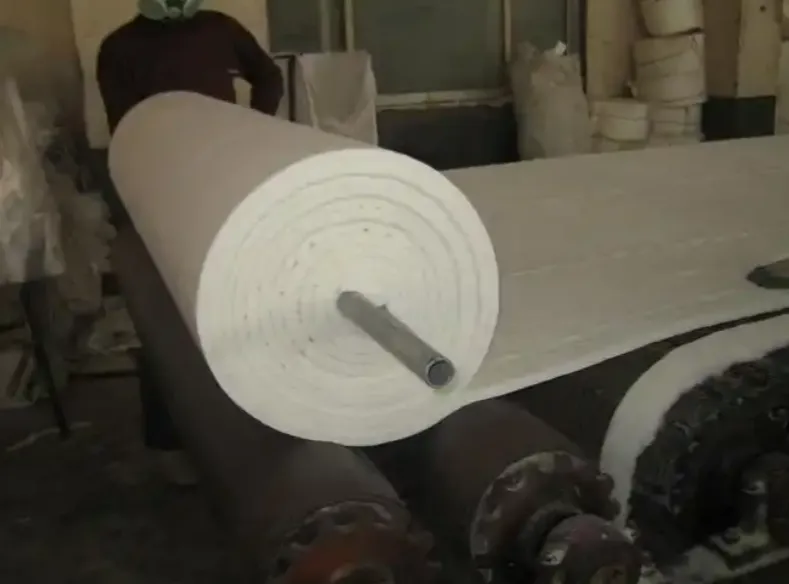
Density and Thickness Selection Logic for Philippine Industrial Applications
The Two-Variable Decision Framework
Density and thickness control fundamentally different aspects of ceramic fiber blanket performance. Conflating them leads to specification errors that cost money either through over-engineering or premature failure.
Thickness is the thermal resistance variable. Increasing thickness reduces cold-face temperature and heat loss proportionally (though not linearly, due to changing thermal gradient). The decision is: what cold-face shell temperature is acceptable given worker safety and energy efficiency requirements?
Density is the mechanical durability variable. Higher density resists erosion, compression, and vibration better than lower density. The decision is: what mechanical stresses does the installed blanket face during service?
Philippine Climate Correction Factor
The Philippines’ tropical climate (average ambient temperatures of 28–34°C in most industrial regions, with high humidity) affects insulation design in two ways:
First, higher ambient temperature raises the baseline from which heat transfer calculations start, reducing the driving force for heat conduction through the furnace shell. This is a minor beneficial effect.
Second, higher ambient temperatures mean that a furnace shell operating at 55°C creates a significantly more uncomfortable working environment for maintenance crews than the same 55°C shell would in a temperate climate. Philippine plant engineers should target a maximum shell temperature of 50°C in areas with regular worker proximity — often requiring one additional 25mm blanket layer compared to European design standards.
Philippine Industry Application Selection Matrix
| Industry / Application | Recommended Density | Recommended Thickness | Rationale |
|---|---|---|---|
| Sugar mill boiler furnace walls | 96 kg/m³ | 75mm (2 layers) | Biomass combustion, seasonal cycle |
| Sugar mill evaporator insulation | 64 kg/m³ | 50mm | Below 800°C; weight sensitivity |
| Cement rotary kiln backup layer | 128 kg/m³ | 50mm | Alkali atmosphere; thermal cycling |
| Geothermal steam turbine insulation | 96 kg/m³ | 50–75mm | High-humidity steam environment |
| Petron/Shell refinery heater lining | 128 kg/m³ | 75–100mm | High velocity gas; erosion resistance |
| Semiconductor diffusion furnace | 96 kg/m³ | 50mm | Low contamination requirement |
| Copper smelter ANODE furnace | 128 kg/m³ | 75mm | Reducing atmosphere; mechanical stress |
| Glass furnace backup insulation | 128 kg/m³ | 50–75mm | Thermal stability; radiation environment |
| Ceramic tile kiln lining | 96 kg/m³ | 75mm | Fast cycling; low thermal mass priority |
| Industrial laundry / dryer (below 700°C) | 64 kg/m³ | 25–50mm | Economy; conformability |
| Biomass power boiler (bagasse fuel) | 96 kg/m³ | 75mm | Potassium-rich combustion gas |
| Food processing oven | 64 kg/m³ | 25–50mm | Clean environment; moderate temperature |
Sugar Mill Application: A Philippine-Specific Use Case
The Philippine sugar industry represents the largest single end-market for ceramic fiber blanket in the Visayas region. Philippine sugar mills operate bagasse-fired boilers that burn fibrous sugarcane waste at combustion temperatures of 900–1100°C. These boilers run continuously during the milling season (approximately October to May) and are shut down during inter-crop for maintenance.
The key challenge in sugar mill boiler insulation is potassium-rich combustion gas. Bagasse contains significant potassium (K₂O precursors) that becomes concentrated in combustion gases, attacking standard alumina-silica ceramic fiber surfaces. We have seen rapid surface degradation in sugar mill applications where 1260°C blanket was specified without accounting for alkali attack.
Our recommendation for sugar mill boiler furnace walls: specify 96 kg/m³ density, 75mm total thickness (two 38mm layers staggered), with colloidal silica rigidizer applied to the hot face. Plan for hot face layer replacement every 4–5 years and backup layer inspection every 8 years.
Also read:
Ceramic Fiber Blanket Manufacturers in Malaysia
Ceramic Fiber Blanket Manufacturers in Indonesia
Ceramic Fiber Blanket Manufacturers in USA
Supply Chain Structure: MOQ, Island-Wide Delivery, and Import Logistics
The Philippine Island Archipelago Logistics Challenge
With over 7,600 islands across a 1,800-km north-south span, the Philippines presents one of the most geographically complex logistics environments in Southeast Asia. Metro Manila serves as the dominant entry point and distribution hub, but reaching industrial customers in Negros Occidental, Leyte, Davao, or Palawan requires multi-modal logistics that adds both time and cost.
Regional Distribution Coverage and Transit Times
| Region / Industrial Hub | Primary Supply Route | Typical Transit from Manila | Freight Mode |
|---|---|---|---|
| Metro Manila (NCR) | Local distributor | Same to next day | Van/truck |
| Batangas (Petron, Shell, LIMA) | Manila to Batangas | 1–2 days | Truck |
| Laguna / Cavite (CALABARZON) | Manila to Laguna | 1–2 days | Truck |
| Cebu / Mandaue | Manila to Cebu | 2–4 days | RORO + truck |
| Negros Occidental (sugar mills) | Manila to Bacolod | 3–5 days | Air or RORO |
| Leyte / Isabel (Pasar copper) | Manila to Tacloban | 3–6 days | RORO + truck |
| Davao / General Santos | Manila to Davao | 4–7 days | RORO or air |
| Cagayan de Oro | Manila to CDO | 3–5 days | RORO + truck |
| Pampanga / Bulacan | Manila to Clark | 1–2 days | Truck |
| Palawan | Manila to Puerto Princesa | 3–5 days | Air or boat |
MOQ Tiers in the Philippine Market
| Order Tier | Typical MOQ | Price Category | Fulfillment from Manila Stock |
|---|---|---|---|
| Emergency / retail | 1 roll | Retail | Same day (pickup) |
| Small project | 5 rolls | Small trade | 1–3 days |
| Standard wholesale | 20 rolls | Trade pricing | 2–5 days |
| Volume purchase | 50–200 rolls | Volume pricing | 3–7 days |
| Project/shutdown supply | 200+ rolls | Best trade pricing | 5–14 days |
| Direct container import | 500+ rolls | Mill pricing + import cost | 25–45 days |
Import Logistics Specifics for Philippine Buyers
Philippine buyers considering direct import from Chinese mills should factor in the following:
Ocean freight routing: Chinese ceramic fiber mills are primarily in Shandong (Zhangqiu, Zibo), Zhengzhou (Henan), and Hebei provinces. Finished product ships from Qingdao, Tianjin, or Shanghai ports to Manila’s MICT or Batangas Port. Transit time is approximately 8–14 days.
Bureau of Customs clearance: Philippine customs clearance at MICT typically takes 3–7 business days for properly documented shipments. Required documentation includes: commercial invoice, packing list, Bill of Lading, Certificate of Origin (important for AFTA rate claims), and Material Safety Data Sheet (MSDS). Shipments lacking complete documentation face delays of 2–4 additional weeks.
Customs broker requirement: Philippine Bureau of Customs requires a licensed customs broker to process import declarations. Budget PHP 8,000–25,000 in customs brokerage fees per container depending on the broker and shipment complexity.
ATRIG (Authority to Release Imported Goods): Certain industrial chemical products require ATRIG from relevant Philippine government agencies. Standard ceramic fiber blanket (alumina-silica composition, non-hazardous under DENR classification) typically does not require ATRIG, but confirm with your broker before the shipment arrives.
Quality Standards, Certifications, and Supplier Verification in the Philippines
Philippine Standards Framework
The Bureau of Philippine Standards (BPS) under the Department of Trade and Industry (DTI) manages Philippine National Standards (PNS). Currently, no dedicated PNS exists specifically for refractory ceramic fiber blanket. Philippine industrial specifications reference international standards, predominantly ASTM (for US-aligned specifications in petrochemical and semiconductor sectors) and ISO.
Key International Standards Referenced in Philippine Procurement
| Standard | Issuing Body | Philippine Market Application |
|---|---|---|
| ASTM C892 | ASTM International | Standard blanket classification; most widely cited |
| ASTM C167 | ASTM International | Density verification |
| ASTM C356 | ASTM International | Linear shrinkage at temperature |
| ASTM C177 / C1113 | ASTM International | Thermal conductivity measurement |
| ISO 10635 | ISO | Thermal insulation test methods |
| JIS A 9504 | Japanese Industrial Standards | Japanese-brand products; some semiconductor specs |
| GB/T 3003 | Chinese National Standard | Referenced for Chinese-origin products |
Supplier Qualification Checklist for Philippine Buyers
Given the quality verification challenges in the Philippine import-dependent market, we recommend the following supplier qualification process before placing wholesale orders:
Step 1: Documentation review
Request product data sheet, mill test certificate for the specific batch, ASTM C892 compliance statement, and Safety Data Sheet (SDS). Cross-check the batch number on product labels against the mill certificate.
Step 2: Physical verification
Weigh a sample roll from the delivery and calculate actual density. Compare against the labeled specification (±10% tolerance is acceptable under ASTM C167).
Step 3: Reference checks
Request contact information for 2–3 Philippine industrial customers the supplier has served with the same product grade. Legitimate suppliers serving industrial clients are generally comfortable providing references.
Step 4: Third-party testing (for large orders)
For first-time orders exceeding 100 rolls or projects where quality failure would have significant consequences, engage SGS Philippines or Bureau Veritas Philippines to test a sample roll against ASTM C892 requirements. Test cost is typically PHP 15,000–40,000 depending on the test scope — a small fraction of the total order value for significant purchases.
DENR and Environmental Import Requirements
The Philippine Department of Environment and Natural Resources (DENR) manages the Chemical Control Order (CCO) under RA 6969 (Toxic Substances and Hazardous and Nuclear Wastes Control Act). Standard alumina-silica ceramic fiber blanket is not currently listed as a Priority Chemical List (PCL) substance under DENR CCO requirements, but buyers should verify current DENR priority chemical lists before importing new product types, as regulatory classifications are periodically updated.
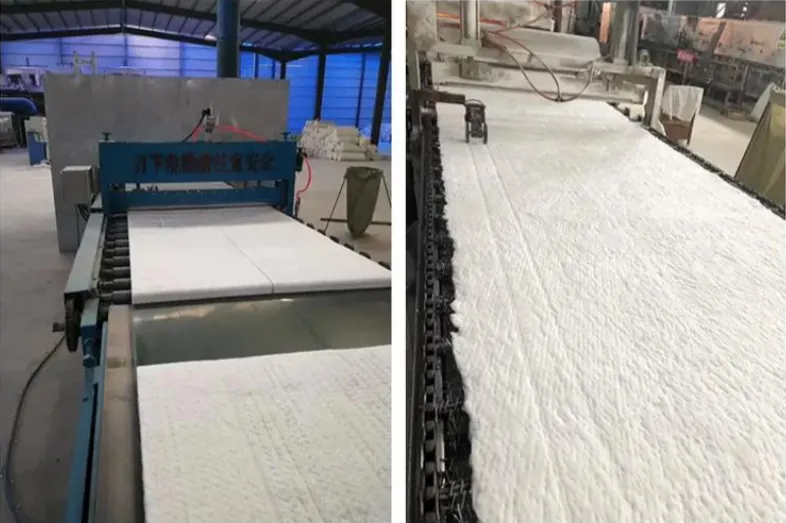
Ceramic Fiber Blanket vs. Competing Insulation Materials Used in the Philippines
The Philippine High-Temperature Insulation Landscape
Philippine industrial buyers regularly choose between ceramic fiber blanket and several alternative materials. The decision framework differs somewhat from Western markets due to local production availability of certain alternatives and the specific requirements of Philippine industries.
Comprehensive Comparison Table
| Property | Ceramic Fiber Blanket 1260°C | Dense Castable Refractory | Lightweight Castable | Calcium Silicate Board | Rock Wool Blanket | Fire Brick |
|---|---|---|---|---|---|---|
| Max Service Temp | 1260°C | 1400–1800°C | 1100–1400°C | 900–1000°C | 700–850°C | 1200–1400°C |
| Thermal Conductivity @ 800°C | 0.24 W/mK | 1.0–1.8 W/mK | 0.40–0.70 W/mK | 0.25–0.35 W/mK | Not rated | 0.90–1.5 W/mK |
| Weight / Density | Very Light | Very Heavy | Medium | Light | Light | Very Heavy |
| Installation Speed | Fast | Very slow | Slow | Medium | Fast | Slow |
| Flexibility | Excellent | None | None | Limited | Good | None |
| Thermal Mass | Very Low | Very High | Medium-High | Low | Low | Very High |
| Local Philippines Availability | Good (imported) | Good (local + imported) | Good | Good | Good | Good (local) |
| Relative Cost | Medium | Low-Medium | Medium | Low-Medium | Low | Low-Medium |
| Alkali Resistance | Poor | Good | Moderate | Poor | Poor | Good |
Philippine-Specific Material Choice Considerations
Rock wool in the Philippines: Rock wool insulation (mineral wool) is widely available in the Philippines from local manufacturing (Rockwool-Rockfon Philippines) and imports, at competitive pricing. For applications below 700°C, rock wool is almost always more cost-effective than ceramic fiber blanket. The dividing line between rock wool and ceramic fiber territory in the Philippine market sits at approximately 700–800°C.
Calcium silicate board: Cal-sil board is produced locally in the Philippines and widely used in industrial insulation. It is frequently specified as a backup or secondary layer behind ceramic fiber blanket in Philippine boiler and kiln applications, taking advantage of cal-sil’s structural properties and relatively low cost while using ceramic fiber for the thermally critical primary layer.
Dense castable refractory: Local Philippine refractory manufacturers (including Siam Concrete Products Philippines and imported products from Thailand and China) supply castable refractory for applications requiring direct mechanical abrasion resistance, molten material contact, or structural loads. In Philippine sugar mill and cement applications, a hybrid design using dense castable in high-wear zones with ceramic fiber blanket backup insulation is standard practice.
Firebrick: Traditional fired refractory brick is available locally and from imports. While its high thermal mass is a disadvantage for energy efficiency and heat-up time, Philippine furnace operators with older equipment sometimes retain brick linings for their familiarity and ease of local repair without specialized materials.
Installation Methods and Field Practice Notes for Philippine Conditions
Common Attachment Systems Used by Philippine Refractory Contractors
Stud welding with speed clip anchoring: The dominant installation method across Philippine industrial facilities. Steel studs are CD-welded or arc-welded to the furnace shell, and ceramic fiber blanket is pushed over studs and secured with stainless steel speed clips or ceramic fiber board washers. SS304 studs are specified for hot-face temperatures below 950°C; SS310 or Alloy 800 for higher temperatures.
Wire mesh facing in erosive environments: Filipino refractory contractors working in sugar mill and cement plant applications routinely apply expanded metal or stainless steel wire mesh over ceramic fiber blanket surfaces to protect against high-velocity particulate-laden combustion gases. Mesh is secured at edges and seams using stainless tie wire.
Module installation for fast shutdowns: Pre-compressed ceramic fiber modules are gaining adoption in Philippine cement plants where maintenance shutdowns are compressed to 5–7 days. Module installation rates are significantly faster than layer-by-layer blanket installation, and the compressed module design inherently compensates for thermal expansion.
Tropical Climate Installation Considerations
Several installation challenges are amplified by Philippine tropical conditions:
Moisture management: Philippine humidity (70–90% RH in most regions year-round) means that ceramic fiber rolls stored in non-climate-controlled warehouses or outdoor laydown areas absorb significant moisture. We consistently advise Philippine plant engineers to: (1) store rolls elevated on pallets under cover, (2) inspect rolls before installation by weighing against expected dry weight, and (3) conduct a controlled slow heat-up (50°C/hour ramp to 300°C, 2-hour hold) on any furnace relined during or after the wet season.
Typhoon-season scheduling: Philippine industrial plants in typhoon-prone regions (Central Luzon, Eastern Visayas, Bicol) should avoid scheduling outdoor-exposed furnace relinings during June–November typhoon season. Typhoon exposure can saturate ceramic fiber installations before initial heat-up, causing steam-driven delamination damage during initial firing.
Salt-air environment in coastal facilities: Many Philippine industrial facilities are located in coastal areas (Cebu port area, Batangas Bay, Manila Bay waterfront). Salt-air environments can accelerate corrosion of carbon steel anchor hardware. Specify SS304 minimum for all anchor components in coastal-location facilities, even in applications where shell temperatures would otherwise permit carbon steel.
Initial Heat-Up Protocol for Philippine Conditions
Given the higher ambient humidity typical of Philippine conditions, we recommend a more conservative initial heat-up ramp than international standard tables suggest:
| Temperature Stage | Ramp Rate | Hold Time | Purpose |
|---|---|---|---|
| Ambient to 150°C | 25°C/hour | 2 hours at 150°C | Surface moisture removal |
| 150°C to 300°C | 35°C/hour | 2 hours at 300°C | Internal moisture removal |
| 300°C to 600°C | 50°C/hour | 1 hour at 600°C | Organic binder burnout |
| 600°C to operating temp | Normal rate | None required | Standard operation |
Health, Safety, and Regulatory Compliance Under Philippine Law
DOLE and OSHC Framework for Ceramic Fiber Handling
The Department of Labor and Employment (DOLE) through its Occupational Safety and Health Center (OSHC) governs workplace health and safety in the Philippines under the Occupational Safety and Health Standards (OSHS), recently strengthened by Republic Act 11058 (An Act Strengthening Compliance with Occupational Safety and Health Standards) and its Implementing Rules and Regulations (DO 198-18).
Under this framework, ceramic fiber is addressed as a fibrous dust hazard. Philippine employers with workers regularly handling ceramic fiber blanket are required to:
- Conduct workplace hazard assessment and document chemical exposure risks.
- Implement appropriate engineering controls (ventilation, wet cutting methods).
- Provide appropriate PPE and ensure its correct use.
- Conduct periodic medical examinations for heavily exposed workers.
- Maintain records of chemical exposure monitoring.
The DOLE Bureau of Working Conditions (BWC) conducts workplace inspections and can issue compliance orders and fines for inadequate chemical hazard management.
IARC Classification and Its Meaning for Philippine Employers
Refractory ceramic fiber (RCF) is classified by IARC as a Group 2B carcinogen (possibly carcinogenic to humans). While this classification does not automatically trigger specific Philippine regulatory requirements beyond the general OSHS duty of care obligations, it is increasingly referenced in Philippine corporate HSE programs — particularly those operating under multinational parent company standards (Shell Philippines, Petron joint ventures, Ayala-linked manufacturing companies).
Philippine Occupational Exposure Guidance for Ceramic Fiber
The Philippines OSHS references the ACGIH (American Conference of Governmental Industrial Hygienists) Threshold Limit Values (TLVs) as guidance where specific Philippine limits are not established. ACGIH recommends a TLV of 1 fiber/cm³ for refractory ceramic fibers (time-weighted average). Philippine industrial hygienists working with clients in the oil and gas and electronics sectors typically apply this limit as their compliance target.
PPE Requirements for Philippine Workplace Conditions
| Activity | Minimum PPE per DOLE OSHS | Notes for Philippine Conditions |
|---|---|---|
| Unrolling and basic cutting | P2 respirator, safety glasses, gloves, long sleeves | High ambient temp makes full coverage uncomfortable; schedule work in cooler hours |
| Overhead installation | P2/P3 respirator, full face shield, coveralls | Tropical heat increases fatigue; rotate crews |
| Confined space work | Supplied air respirator, gas monitor | Standard confined space permit required |
| Demolition of used blanket | P100 respirator, coveralls, double gloves | Double-bag waste immediately |
| High-volume cutting operations | P100 respirator, local exhaust ventilation preferred | Wet cutting reduces airborne fiber significantly |
Environmental Disposal Under Philippine Law
The Philippine Republic Act 6969 and its implementing rules (DENR Administrative Order 2013-22) govern hazardous waste management. Standard alumina-silica ceramic fiber blanket waste is not listed as a hazardous waste under current Philippine regulations, provided it is not contaminated with hazardous process materials (heavy metals, toxic chemicals).
Spent ceramic fiber blanket from standard industrial applications is typically disposed of as non-hazardous solid waste in permitted sanitary landfill facilities. However, ceramic fiber waste from processes involving heavy metal contamination (copper smelter, semiconductor processing with heavy metal precursors) may require evaluation as potentially hazardous waste under RA 6969.
For DENR compliance, maintain records of disposal method and receiving facility for all quantities of ceramic fiber waste generated during plant maintenance activities.
Frequently Asked Questions (FAQs)
Q1: Is there any local manufacturer of ceramic fiber blanket in the Philippines?
No — as of 2025–2026, there is no domestic ceramic fiber blanket spinning manufacturer in the Philippines. All ceramic fiber blanket sold in the Philippine market is imported, primarily from China (60–70% of market volume), with additional supply from Japan, India, and through Singapore and Malaysian regional distributors. Several Philippine companies offer value-added fabrication services (cutting, module assembly, shaped gaskets) using imported blanket as input material, but they are not manufacturers of the fiber or blanket itself.
Q2: Where can I buy ceramic fiber blanket in the Philippines?
The highest concentration of ceramic fiber blanket suppliers is in Metro Manila’s industrial areas, particularly Caloocan, Valenzuela, Quezon City (Balintawak and Commonwealth areas), and Pasig. For Visayas buyers, Mandaue City in Metro Cebu is the main distribution hub. In Mindanao, Davao City and Cagayan de Oro have established industrial supply companies that stock standard grades. For specialized or high-volume requirements, engaging a Metro Manila distributor and arranging freight to provincial locations is often the most cost-effective approach.
Q3: What import duties apply when buying ceramic fiber blanket in the Philippines?
Ceramic fiber blanket falls under HS Code 6806.10.00 in the Philippine Customs Modernization and Tariff Act (CMTA). The standard MFN import duty rate is currently 3–7% (verify current rate with a licensed customs broker as tariff schedules are periodically revised). An additional 12% Value Added Tax applies on the landed cost (customs value plus duty). Imports from ASEAN member countries may qualify for 0–5% duty under the ASEAN CEPT scheme, provided proper Certificate of Origin documentation accompanies the shipment.
Q4: What is the price of 1260°C ceramic fiber blanket per roll in the Philippines in 2026?
For the most common specification (610mm × 7.3m × 50mm, 96 kg/m³, 1260°C grade) at wholesale quantities of 20+ rolls, Philippine market pricing in 2025–2026 ranges from approximately PHP 560–740 per roll for mid-tier Chinese Grade A products, PHP 950–1,200 per roll for premium international brands such as Kaowool or Fiberfrax, and PHP 280–420 per roll for unbranded economy-grade imports. Actual pricing depends on current exchange rates, freight costs, and the specific supplier relationship.
Q5: How do I verify the quality of ceramic fiber blanket from a Philippine trading company?
Request a mill test certificate referencing ASTM C892 for the specific production batch (not a generic product data sheet). Verify density by weighing a sample roll and calculating: density = roll weight / (width × length × thickness in meters). A 96 kg/m³ roll measuring 610mm × 7.3m × 50mm should weigh approximately 21.4 kg. Also request linear shrinkage test data at rated temperature (should be ≤2.5% for 1260°C, 96 kg/m³ grade per ASTM C356). For large orders from new suppliers, engage SGS Philippines or Bureau Veritas Philippines for independent product testing.
Q6: Can ceramic fiber blanket withstand the conditions in a Philippine sugar mill bagasse boiler?
Yes, with appropriate specification and installation. 1260°C ceramic fiber blanket at 96 kg/m³ density and 75mm total thickness (two 38mm layers, joints staggered) is suitable for sugar mill bagasse boiler furnace walls. The key risk factor is potassium-rich combustion gas from bagasse, which causes alkali attack on the ceramic fiber surface over time. Mitigate this by applying colloidal silica rigidizer to the hot face, monitoring for surface discoloration during annual inspections, and planning hot-face layer replacement every 4–6 milling seasons depending on observed degradation rate.
Q7: What is the delivery time for ceramic fiber blanket from Manila to Negros Occidental?
For standard 1260°C grades in stock with Metro Manila distributors, delivery to Bacolod or the Negros Occidental sugar mill corridor takes approximately 3–5 business days via RORO sea freight from Batangas Port to Bacolod Port, plus local truck delivery. Air freight from Manila to Bacolod Airport reduces transit to 1–2 days but adds significantly higher freight cost per kilogram — typically only justified for urgent maintenance situations. For planned projects, order material with a minimum 10-day lead time from Manila suppliers.
Q8: Is bio-soluble ceramic fiber blanket available from Philippine suppliers?
Bio-soluble ceramic fiber blanket (such as Morgan Superwool, rated to approximately 1200–1260°C continuous service) is available in the Philippines through Morgan’s authorized distribution partners, though at a 20–35% price premium over standard refractory ceramic fiber blanket. Philippine adoption of bio-soluble fiber is growing, particularly in multinational-operated facilities (Shell, Petron, semiconductor manufacturers) that apply parent company HSE standards requiring bio-soluble fiber specifications for manned working environments. For smaller Philippine manufacturers, standard RCF with appropriate PPE controls remains the dominant market choice.
Q9: What PPE is required when installing ceramic fiber blanket in Philippine industrial facilities?
Under DOLE OSHS requirements and ACGIH guidance applied in Philippine industrial hygiene practice: at minimum, workers must wear a P2 class respirator, safety glasses or goggles, long-sleeve clothing, and protective gloves when handling ceramic fiber blanket. For overhead installation, a full face shield replaces safety glasses, and a P3 class respirator is recommended. For confined space ceramic fiber work, a supplied-air respirator is required along with standard confined space entry permits under DOLE OSH regulations. Schedule demanding ceramic fiber work during early morning hours to reduce heat stress in the Philippine tropical climate.
Q10: How long does ceramic fiber blanket last in Philippine cement kiln applications?
In Philippine cement rotary kilns (operated by Lafarge Holcim Philippines, Republic Cement, Eagle Cement), ceramic fiber blanket used in preheater cyclone ducts, riser ducts, and kiln transition zone backup insulation typically achieves 3–7 year service life under normal operating conditions. Factors shortening service life in Philippine cement kiln environments include: alkali-rich clinker chemistry (common in Philippine limestone feedstocks), high thermal cycling from frequent kiln trips, and mechanical vibration from kiln drive gear. Specifying 128 kg/m³ needled blanket (rather than standard construction) in high-mechanical-stress zones extends service life meaningfully, and is generally worth the 30–40% unit cost premium in critical zones.
Summary and Practical Recommendations for Philippine Buyers
The Philippine ceramic fiber blanket market, while entirely import-dependent, is functionally well-served by a network of Metro Manila-based distributors and regional trading companies that stock the most common specifications and can access broader product ranges through Singapore and direct import channels.
Key conclusions from AdTech’s assessment of the Philippine ceramic fiber market:
For sourcing: Metro Manila distributors with established supplier relationships in China or with international brand authorization represent the best balance of quality reliability, product breadth, and reasonable pricing for most Philippine buyers. Direct import from China makes sense only for container-scale orders with sufficient lead time for customs clearance.
For specification: Default to 1260°C / 96 kg/m³ for most Philippine boiler and kiln applications. Upgrade to 128 kg/m³ for gas-erosion environments (petroleum process heaters, high-velocity combustion systems). Specify 1400°C grade for cement kiln primary zone backup and petrochemical high-temperature reactor insulation.
For quality: Never accept ceramic fiber blanket without a batch-specific mill test certificate. Density verification by weighing is a fast, no-cost quality check available to every buyer. For significant first-time orders from new suppliers, third-party testing through SGS or Bureau Veritas Philippines provides confidence at modest cost relative to total order value.
For logistics: Account for Philippine archipelago complexity when planning project supply chains. For Visayas and Mindanao projects, add 3–7 days to Manila-based lead times and build buffer stock for any application where unplanned maintenance would require emergency resupply.
For compliance: Ensure DOLE OSHS requirements for ceramic fiber handling are reflected in site-specific safety procedures. Confirm disposal arrangements with a licensed waste collector and document disposal for DENR compliance records.