

As Oman accelerates its industrial growth through the Sohar Industrial Zone and the Duqm Special Economic Zone (SEZAD), the demand for high-tier thermal insulation has become a priority. AdTech is a specialized manufacturer of ceramic fiber blankets designed to meet the rigorous Petroleum Development Oman (PDO) specifications. Our 1260℃ (2300℉) blankets provide the thermal stability required for Oman’s expanding steel mills, aluminum smelters, and downstream petrochemical plants.
If your project requires the use of Ceramic Fiber Blanket, you can contact us for a free quote.
Unlike generic imports, AdTech’s refractory solutions are engineered for the high-intensity heat cycles found in Sohar’s metal clusters. By focusing on In-Country Value (ICV) principles, we ensure that our supply chain supports the Sultanate’s local manufacturing goals while delivering world-class Al2O3 purity and superior tensile strength for furnace linings and reformer insulation.
Featured Industry Grades:
For Oman’s energy and heavy industry sectors, we recommend the following high-performance insulation:
-
The Vitcas 1430°C Zirconia Grade Blanket is specifically designed for the extreme temperatures of refining and petrochemical processes. Its 15%+ Zirconia content ensures minimal shrinkage in aggressive chemical environments.
-
For general smelting and kiln applications, the High-Purity 1260°C Insulation Roll offers excellent handling strength and low thermal conductivity, ideal for Sohar’s aluminium launders.
-
The 8lb Density Refractory Blanket provides maximum heat retention for power generation boilers and steam turbines across the Sultanate.
Oman-Specific Supply & Project Capabilities:
-
PDO & OQ Compliance: Materials formulated to align with the technical standards of Oman Energy (OQ) and PDO.
-
Sohar & Salalah Logistics: Strategic inventory management for rapid delivery to Sohar Freezone, Salalah, and Sur.
-
Duqm Refinery Support: Specialized Zirconia-grade blankets for crude heater linings and catalytic reformer units.
-
Environmental Resilience: Low-shot technology to prevent contamination in sensitive chemical and metallurgical processes.
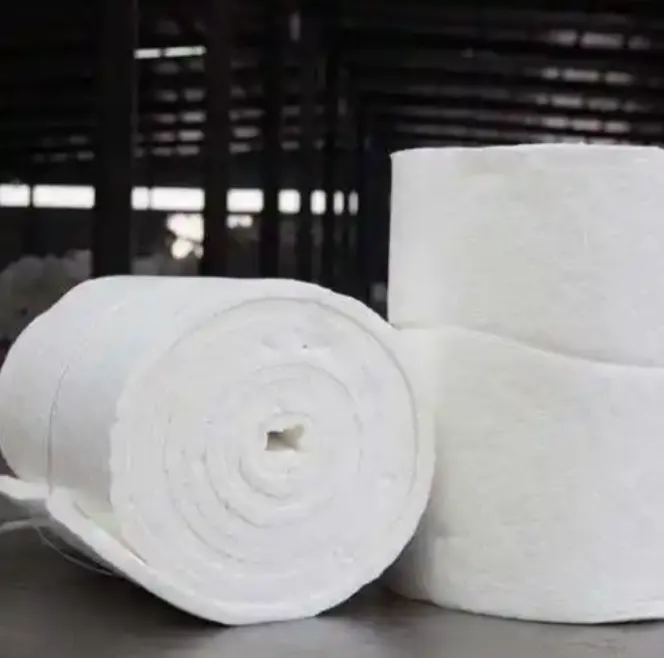
What is 1260℃ ceramic fiber blanket and how does it work?
Ceramic fiber blanket is a flexible refractory insulation product made mainly from alumina and silica fibers. The blanket is usually needle-punched into a continuous mat, supplied in rolls, and used in thermal systems where low heat storage and easy installation matter.
What does 1260℃ really mean?
The 1260℃ value is a classification temperature, not a promise that the material should run continuously at that exact level in every operating condition. Actual service performance depends on several variables:
- Process atmosphere.
- Continuous operating temperature.
- Peak temperature exposure.
- Heating and cooling cycle.
- Mechanical vibration.
- Gas velocity.
- Chemical contamination.
- Lining design.
This distinction matters. We should never approve a blanket only because the headline number looks high enough.
What are the core properties of 1260℃ blanket?
| Property | Typical market range in Oman | Why it matters |
|---|---|---|
| Classification temperature | 1260℃ | First screening point |
| Density | 64, 96, 128 kg/m³ | Affects resilience, handling, and lining design |
| Thickness | 6 mm, 12.5 mm, 25 mm, 38 mm, 50 mm | Controls heat-loss performance |
| Roll width | Usually 610 mm | Important in take-off and cutting waste |
| Roll length | Varies by thickness | Impacts coverage and commercial comparison |
| Form | Needle-punched blanket roll | Flexible and easy to cut |
| Main chemistry | Alumina silica fiber | Determines thermal behavior |
Why do engineers prefer blanket instead of heavier products in many jobs?
We often choose ceramic fiber blanket because it gives several practical advantages:
- Lower weight on equipment casing.
- Faster installation during outages.
- Better fit around curved surfaces.
- Lower heat storage than dense refractory.
- Faster heat-up and cool-down in many systems.
- Easier field cutting on complex shapes.
These points matter a great deal in Oman, where industrial sites often work under tight maintenance windows.
Also read: Ceramic Fiber Blanket Manufacturer in UAE.
Why do Sohar and Duqm matter so much in the Oman supply chain?
Sohar and Duqm are not just geographic references. They are major industrial and logistics points that shape how insulation materials move inside Oman.
Why is Sohar important?
Sohar has a strong industrial base linked with port logistics, metals, petrochemicals, refining activity, fabrication, storage, and heavy industrial support. Ceramic fiber blanket demand in Sohar usually comes from:
- Process plants
- Furnace maintenance.
- Metal and fabrication activity.
- Industrial service contractors.
- Storage terminals
- Repair projects with short lead times.
A supplier with stock in or near Sohar can often support urgent industrial demand more effectively than a seller relying on remote transit.
Why is Duqm important?
Duqm has become increasingly significant due to port development, industrial expansion, marine activity, energy-linked projects, and large infrastructure growth. In Duqm, buyers often need material that can arrive on schedule despite long distances and project-specific logistics controls. Stock planning matters even more there.
How do Sohar and Duqm differ in buying behavior?
| Location | Typical demand pattern | Main buying priority |
|---|---|---|
| Sohar | Ongoing industrial maintenance and process support | Fast stock turnover and local dispatch |
| Duqm | Project-linked demand, marine work, heavy industry build-out | Planned logistics and reliable delivery timing |
| Muscat and nearby hubs | Mixed commercial and industrial demand | Documentation and flexible distribution |
What should buyers ask when sourcing near Sohar or Duqm?
We recommend asking the supplier these direct questions:
- Is the blanket physically inside Oman now?
- Is the stock in Sohar, Muscat, Duqm, or a GCC warehouse?
- How many rolls are immediately available?
- What is the exact roll size and total coverage?
- Can delivery reach our gate within the needed window?
- Are batch labels and technical documents ready now?
These questions separate real stock from marketing language.
Which sizes, densities, and roll formats are commonly stocked in Oman?
The Omani market does not move every possible ceramic fiber blanket specification at equal speed. Most stockholding suppliers carry fast-moving industrial grades.
Typical stock items seen in Oman
| Product type | Typical specification | Common use in Oman |
|---|---|---|
| Standard blanket roll | 1260℃, 96 kg/m³, 25 mm | General backup insulation, duct wrapping |
| Heavy-duty blanket roll | 1260℃, 128 kg/m³, 25 mm | Tougher service and better handling strength |
| Thick blanket roll | 1260℃, 128 kg/m³, 50 mm | Multi-layer heat-loss reduction |
| Thin blanket roll | 1260℃, 96 kg/m³, 12.5 mm | Layering, seals, fit-up correction |
| Light blanket | 1260℃, 64 kg/m³ | Selected lighter-duty insulation jobs |
Which roll dimensions are usually quoted?
Roll dimensions vary by thickness, yet common commercial patterns include:
| Thickness | Typical roll length | Width | Market note |
|---|---|---|---|
| 6 mm | Longer rolls | 610 mm | Used in thin wrapping and special fit-up |
| 12.5 mm | Around 7.2 m | 610 mm | Frequent maintenance item |
| 25 mm | Around 3.6 m | 610 mm | Common industrial standard |
| 50 mm | Around 1.8 m | 610 mm | Used where greater thermal build-up is needed |
Why should we compare square meter coverage instead of roll count?
A lower roll price can be misleading if the covered area is smaller. This is one of the most common procurement mistakes. Buyers should compare:
- Total square meters.
- Total cubic volume.
- Density
- Thickness
- Delivered cost to site.
Not just the number of rolls.
Is higher density always better?
No. Density should match application duty. A 128 kg/m³ blanket may offer stronger recovery and handling in some cases, but a 96 kg/m³ blanket may suit many backup insulation systems very well. Selection should come from design needs, not habit.
How does ceramic fiber blanket reach buyers in Oman?
The Oman market is supply driven. True local manufacturing capacity is limited, so most ceramic fiber blanket is imported and then distributed through local channels.
Which supplier types exist?
| Supplier type | Typical role | Main strength | Risk point |
|---|---|---|---|
| Overseas mill with Oman channel | Produces blanket and appoints local sales partner | Factory traceability and broader range | Longer lead time if local stock is thin |
| Oman stockist | Holds blanket in warehouse | Faster dispatch | Range may focus on standard items only |
| GCC regional stockholder | Keeps goods in nearby Gulf hub | Access to multiple brands | “Ready stock” may not mean Oman stock |
| Project trader | Sources after order confirmation | Flexible commercial sourcing | Timing and origin can shift |
| Insulation contractor | Supplies material with installation package | Strong site support | Product choice may follow contract margin |
Why is stock location so important in Oman?
Because distance and transport timing can affect shutdown schedules. Material sent from a nearby Oman warehouse is not the same as material still sitting in another Gulf country or waiting at a port.
What is the safest supply model?
In most urgent industrial jobs, the safest model is a supplier that combines:
- Confirmed Oman stock.
- Clear technical documentation.
- Local commercial support.
- Delivery coordination into site.
- Replacement ability if material is damaged during work.
We often find that this combination is more valuable than a slightly lower ex-warehouse rate from a remote trader.
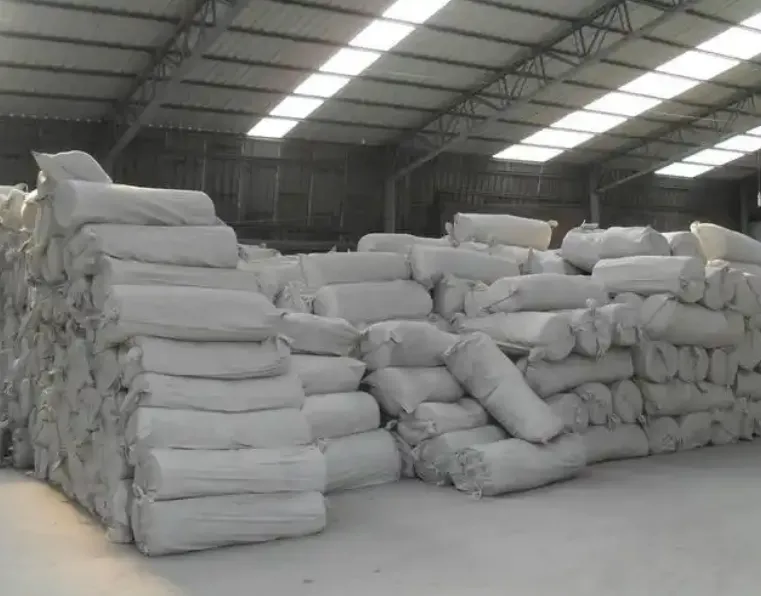
What technical properties should engineers review before buying?
Engineers should go well beyond grade and thickness. Many product pages stop there, but field performance depends on a deeper set of technical factors.
Which data points matter most?
| Technical property | Why we check it | Buying impact |
|---|---|---|
| Classification temperature | Basic suitability filter | Helps screen product family |
| Recommended continuous use range | Real service relevance | More useful than headline number |
| Thermal conductivity | Heat-loss evaluation | Needed in thermal design |
| Linear shrinkage | Dimensional stability after heating | Critical in lining integrity |
| Density | Compression and physical structure | Influences installation and performance |
| Tensile behavior and resilience | Handling strength | Important in removable covers and door panels |
| Chemical composition | Service compatibility | Important in severe process conditions |
| Shot content | Flexibility and texture | Affects quality feel and handling |
| Moisture condition | Product state at delivery | Influences site acceptance |
| Packaging quality | Damage resistance in storage and transport | Very important in coastal and yard environments |
Why is linear shrinkage a major issue?
Shrinkage is often ignored until a lining develops gaps. Once joints open, heat leakage rises, shell temperature can increase, and service life drops. A blanket with weak dimensional stability may create more problems than a cheaper material appears to save.
Does process atmosphere matter?
Very much. Ceramic fiber blanket can face accelerated degradation in certain chemical environments, especially where alkalis, phosphates, contamination, abrasion, or aggressive vapors are present. We should always match the material to the actual service environment.
Should we rely only on the brochure?
No. Brochures are useful, yet they are not enough. We should request data that links clearly to the exact product code and, when possible, to the batch being supplied.
Which industries in Oman use 1260℃ ceramic fiber blanket most often?
The demand base in Oman is broad. 1260℃ ceramic fiber blanket appears across many sectors because it is easy to deploy and suits a wide thermal range.
Key industrial sectors
- Refineries and petrochemical units.
- Power generation plants.
- Cement and mineral processing.
- Metals and fabrication shops.
- Marine and ship repair facilities.
- Desalination and utility systems.
- Process heaters and combustion units.
- Industrial maintenance contractors.
- Port-linked repair and fabrication operations.
Application-based demand map
| Industry | Typical application | Why 1260℃ blanket is chosen |
|---|---|---|
| Refining and petrochemical | Heater casing, duct lining, door insulation | Flexible, lightweight, quick maintenance material |
| Power generation | Boiler access areas, exhaust paths, turbine covers | Good thermal shock behavior and easy handling |
| Cement and minerals | Kiln support insulation, hot gas zones | Reliable backup insulation in many systems |
| Marine and offshore support | Exhaust shielding, thermal wraps | Adaptable to curved and tight spaces |
| Fabrication and metalwork | Furnace repair, process heat insulation | Easy cutting and fast installation |
| Utilities | Hot duct and equipment wrapping | Efficient heat retention with low weight |
Why is Oman a strong market in this product segment?
Oman combines industrial development, coastal logistics, heavy maintenance demand, and project-driven procurement. In this type of market, a versatile insulation roll with stable availability remains highly valuable.
How should buyers compare supplier stock offers in Sohar and Duqm?
Commercial comparison should be disciplined. Many quotations look similar at first glance, but key differences hide in the details.
What should a quotation comparison sheet include?
| Comparison point | Why it matters |
|---|---|
| Product grade | Confirms correct temperature class |
| Density | Prevents mismatched offers |
| Thickness | Direct impact on performance and coverage |
| Roll dimensions | Needed to calculate true quantity |
| Total area per roll | Stops misleading low-price comparison |
| Country of origin | Helps evaluate quality consistency |
| Stock location | Determines delivery timing |
| Lead time to site | Protects project schedule |
| Included documents | Supports technical approval |
| Transport scope | Prevents hidden cost |
| Payment terms | Affects procurement planning |
Why can the cheapest quote become the costliest choice?
Because project delay, wrong grade selection, or rejected submittals can cost far more than the difference between two blanket prices. In shutdown work, one day of delay may exceed the value of the full insulation package.
How do we verify real stock?
We advise buyers to request:
- Current quantity by roll count.
- Warehouse location.
- Product code
- Roll labels
- Date-stamped stock photos if needed.
- Delivery date confirmation.
- Data sheet tied to the offered item.
If the supplier cannot answer these points clearly, there is a strong chance the “stock” is only a future sourcing promise.
What documents and compliance records should Omani buyers request?
Documentation is a key quality layer, not a paperwork exercise. Good records protect engineers, buyers, and site teams.
Minimum document set
| Document | Why it is important |
|---|---|
| Technical data sheet | Core performance declaration |
| Safety data sheet | Site handling and HSE review |
| Certificate of origin | Confirms source |
| Packing list | Quantity and roll control |
| Commercial invoice | Commercial record |
| Batch or lot reference | Traceability |
| Quality certificate or conformity statement | Confirms supply matches order |
| Installation note, if available | Helps field execution |
What should we look at during goods receipt?
At receiving stage, we should check:
- Roll labels
- Batch consistency
- Packaging damage..
- Moisture exposure.
- Quantity against packing list.
- Thickness and density markings.
- Delivery note details.
Why is HSE documentation especially important?
Some ceramic fiber products require careful handling because airborne fibers can become an occupational health concern during cutting, removal, or cleaning. Omani industrial sites usually expect suitable PPE, dust control methods, and proper waste handling. A missing or outdated safety data sheet is a red flag.
How does 1260℃ ceramic fiber blanket compare with other insulation materials used in Oman?
No insulation product wins in every duty. Ceramic fiber blanket has strong advantages, yet it should be compared with other common choices.
| Material | Temperature capability | Main strength | Main limitation | Typical Oman use |
|---|---|---|---|---|
| Ceramic fiber blanket 1260℃ | High temperature service | Flexible, low weight, fast installation | Lower mechanical rigidity than board or block products | Furnaces, ducts, doors, wraps, backup insulation |
| Mineral wool | Moderate temperature range | Cost-effective and widely available | Not suitable in very high temperature zones | HVAC and lower-temperature industrial service |
| Calcium silicate | Moderate to high | Rigid and durable under compression | Heavier and less adaptable to irregular shapes | Pipe sections and rigid equipment insulation |
| Aerogel blanket | High efficiency at low thickness | Excellent where space is tight | Higher cost | Compact piping and energy-saving retrofits |
| Microporous board or panel | Very high thermal efficiency | Strong thermal performance in thin sections | Premium price and design sensitivity | Specialty thermal barriers |
When is 1260℃ ceramic fiber blanket the right choice?
It is often the best option when we need:
- High heat capability
- Lightweight lining
- Fast outage installation.
- Curved or awkward geometry handling.
- Flexible thermal packing.
- Lower heat storage than dense materials.
When should another material be considered?
We should look at other options when the system needs:
- High compressive strength.
- Very thin insulation with maximum efficiency.
- Lower fiber release preference.
- Rigid structural shape.
What installation practices help ceramic fiber blanket perform well?
Even a good blanket can fail if the field work is weak. Installation quality often decides whether a system gives long service or early trouble.
Which site practices matter most?
- Store rolls under cover
- Keep material dry and clean.
- Cut accurately to limit gaps.
- Stagger joints in multi-layer systems.
- Avoid excessive compression.
- Use correct anchors, mesh, or cladding.
- Keep mixed grades separated.
- Follow the thermal design, not site improvisation.
Why is overcompression harmful?
Installers sometimes squeeze blanket too tightly to “make it fit.” That can reduce the effective thickness and alter the designed insulation value. Controlled fit is usually better than excessive force.
What about first heat-up?
The first heating cycle often reveals joint quality, support quality, and alignment issues. When plant conditions allow, a controlled heat-up can help reduce stress on the lining.
Practical installation checklist
| Installation point | Why it matters |
|---|---|
| Dry storage | Prevents product condition loss |
| Clean cutting | Improves joint accuracy |
| Correct overlap or layer staggering | Reduces heat leakage paths |
| Suitable hardware | Maintains lining position |
| Controlled compression | Preserves thermal thickness |
| HSE compliance during cutting | Protects workers |
| Final inspection before closure | Catches fit-up errors early |
What mistakes do buyers and contractors make most often in Oman?
The same errors appear repeatedly, especially when ceramic fiber blanket is treated like a simple commodity rather than a technical insulation product.
Common procurement mistakes
- Approving a blanket only by classification temperature.
- Ignoring the actual stock location.
- Comparing prices by roll instead of by area and volume.
- Failing to request shrinkage data.
- Assuming higher density is always superior.
- Forgetting anchors, mesh, and installation accessories.
- Accepting generic brochures without lot traceability.
- Delaying document review until shipment stage.
- Ordering too close to shutdown date.
- Ignoring HSE handling requirements.
Common site mistakes
- Installing wet or contaminated rolls.
- Crushing blanket beyond design intent.
- Leaving aligned joints through multiple layers.
- Using weak fastening systems.
- Mixing grades on the same job front.
- Poor cleanup and fiber control practices.
These mistakes are avoidable with a simple review process.
How should we choose a ceramic fiber blanket supplier in Sohar or Duqm step by step?
A structured buying method helps both engineers and procurement teams.
Step 1: Define the operating duty
We should record:
- Continuous temperature.
- Peak temperature
- Thermal cycle
- Chemical atmosphere.
- Mechanical stress.
- Required cold-face performance.
- Available space
Step 2: Define the application role
Is the blanket meant to be:
- Backup insulation
- Main lining layer
- Door panel fill
- Expansion joint packing.
- Duct wrap
- Removable cover core.
- Emergency repair stock.
Step 3: Match grade, density, and thickness
| Duty type | Likely specification | Note |
|---|---|---|
| General backup insulation | 1260℃, 96 kg/m³, 25 mm | Very common stock item |
| Tougher handling zones | 1260℃, 128 kg/m³, 25 mm | Better resilience in many cases |
| Greater thermal build-up | 1260℃, 128 kg/m³, 50 mm | Lower heat loss in thicker system |
| Layering and seals | 1260℃, 12.5 mm | Useful in detail work |
| Temporary emergency repair | Nearest approved stock grade | Delivery timing may drive final choice |
Step 4: Verify commercial and technical support
Before purchase order release, confirm:
- Stock quantity
- Location
- Delivery date
- Origin
- Data sheet
- Safety sheet
- Batch labels
- Replacement availability.
Step 5: Coordinate with installation planning
Blanket should be purchased together with the wider installation logic, including:
- Anchors
- Washers
- Mesh
- Cladding
- Labor plan
- Waste allowance.
- Site access schedule.
That approach reduces delay and rework.
Why does supplier credibility matter more than marketing language?
Industrial buyers need proof, not slogans. A serious supplier should be able to answer technical and logistical questions without hesitation. If a seller only repeats broad claims like “premium quality” or “best price,” that tells us very little.
What does credible supplier content look like?
It should include:
- Real product data.
- Stock clarity
- Application-specific discussion.
- Honest handling notes.
- Practical delivery details.
- Clear product dimensions and density options.
- Compliance readiness.
This type of content helps engineers, buyers, and project teams make decisions with less risk. It also aligns with the type of information modern search systems tend to reward, since it offers expertise, experience, authority, and trust in one place.
FAQs about ceramic fiber blanket in Oman, Sohar, and Duqm
Ceramic Fiber FAQ: Oman Market Insights
Sohar Logistics, Duqm Projects, and Industrial Standards
1. Is 1260°C ceramic fiber blanket commonly stocked in Oman?
Yes. It is the most ubiquitous grade in the Sultanate. Due to constant demand from steel mills in Sohar and refineries in Duqm, 1260°C standard blankets (especially 25mm and 50mm) are widely stocked by major industrial suppliers across the country.
2. What densities are most requested in Sohar and Duqm?
The industry standards for Oman’s heavy projects are 96 kg/m³ and 128 kg/m³. While 96 kg/m³ is great for general insulation, the 128 kg/m³ density is highly preferred in Duqm’s marine and oil-and-gas sectors for its better resilience and resistance to high-velocity gas flows.
3. Can we get same-day or next-day delivery in Sohar?
This depends entirely on the actual warehouse location. If the stock is already within Oman (Muscat or Sohar Industrial Area), fast delivery is possible. However, if the material is coming from across the border (e.g., UAE or overseas), you must account for customs clearance at the Khatmat Malaha or Wajajah borders.
4. Why is 1260°C blanket so popular compared with higher grades?
5. Suitable in marine and port-related projects in Duqm?
Absolutely. In Duqm’s shipyards and ports, ceramic fiber blankets are essential for exhaust insulation and thermal wrapping on high-temperature engine components. Note that for marine use, proper weather-proofing and protective jacketing are mandatory to resist the corrosive salt-air environment.
6. What documents should come with the shipment?
For project compliance in Oman, never accept a delivery without:
- Technical Data Sheet (TDS): Confirming 1260°C rating.
- Safety Data Sheet (SDS): For HSE on-site records.
- Certificate of Origin (COO): Critical for customs and Omani local content rules.
- Batch/Lot Identification: Ensuring traceability for quality audits.
7. How do we verify that the supplier really has stock?
PROCUREMENT CHECK
Vague lead times often indicate “virtual stock.” Always ask for a specific roll count, the physical warehouse location in Oman, and real-time photos of the batch labels. A reliable supplier should be able to provide these within an hour.
8. Does higher density mean a better blanket?
9. Is ceramic fiber blanket safe to handle?
Yes, provided HSE protocols are followed. Workers must wear P2/N95 masks, gloves, and protective clothing. In Oman’s high-heat summers, ensuring proper ventilation during installation is also vital to prevent worker fatigue while wearing full PPE.
10. What is the main buying mistake in Oman?
The biggest mistake is chasing the lowest unit price per roll without factoring in the delivered cost and technical compliance. A cheaper roll from an unknown source may have poor density consistency, leading to “hot spots” in your furnace that cost thousands more in repairs than the initial savings.
What should buyers remember before the final order is placed?
Ceramic fiber blanket in Oman, especially 1260℃ stock linked with Sohar and Duqm supply demand, should be treated as a technical and logistical purchase, not a simple commodity line item. We should verify density, thickness, shrinkage behavior, roll coverage, stock location, documentation, HSE records, and delivery timing before any order is released. In most cases, the strongest supplier is the one that can prove local or near-local availability, support the technical review, and deliver to site without uncertainty.