

The universally accepted Harmonized System (HS) code for Ceramic Fiber Blankets is 6806.10. This classification falls under “Slag wool, rock wool and similar mineral wools (including intermixtures thereof), in bulk, sheets or rolls.” However, critical regional variations exist: India and Vietnam frequently utilize 6903.90.30 (Other refractory ceramic goods), while China often exports under 6806.10.00. For United States imports, the specific HTS code is 6806.10.0090, attracting a general duty rate of approximately 3.9%, though Section 301 tariffs for Chinese origin goods may apply. Correct classification depends heavily on the aluminum-silicate content and whether the product is needled or chemically bonded.
What is the Harmonized System (HS)
The Harmonized Commodity Description and Coding System is the international naming and numbering system used to classify traded goods. The World Customs Organization maintains the six-digit headings; member countries expand those six digits to produce national tariff lines (for duties, statistics and other legal matters). Because the six-digit code is the shared reference point, getting the correct six-digit heading is the first step toward consistent, legal classification. The WCO provides explanatory notes that help interpret headings and subheadings.
Why ceramic fiber blankets are commonly classified under HS 6806.10
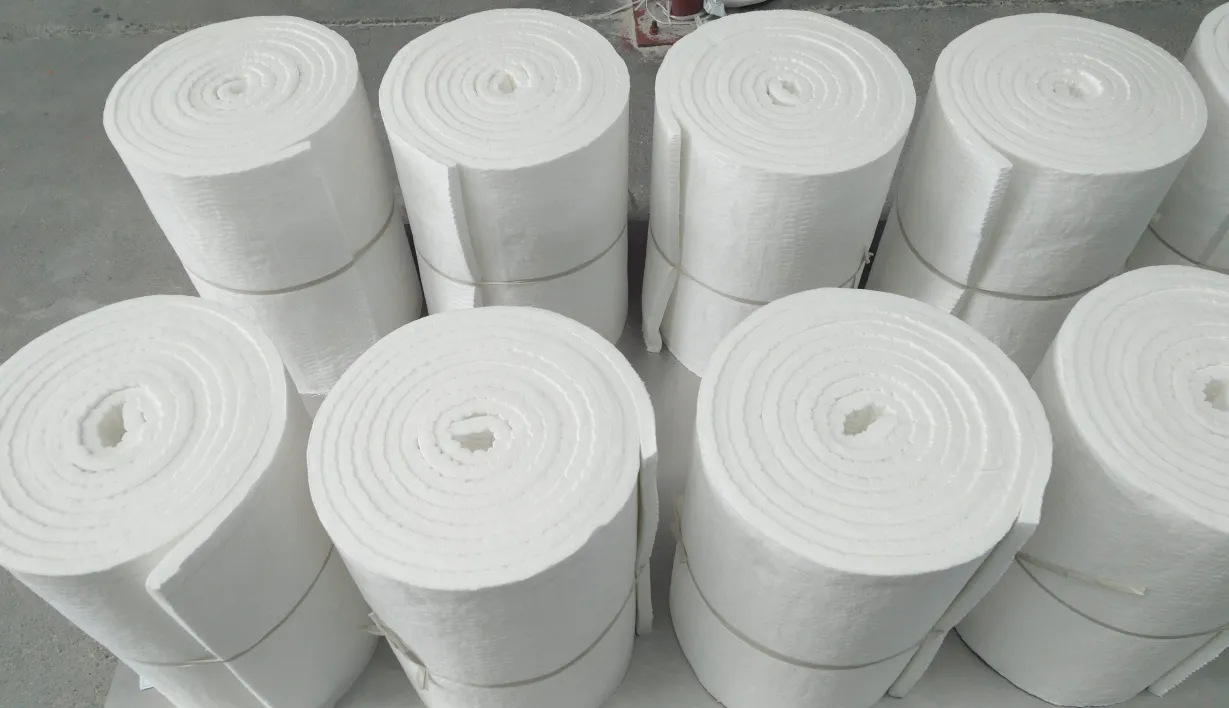
Heading 68.06 covers “slag wool, rock wool and similar mineral wools;… articles of heat-insulating, sound-insulating or sound-absorbing mineral materials.” Ceramic fiber blankets made from refractory ceramic fibers (alumina-silicate fibers or similar man-made ceramic fibers) frequently share functional and physical characteristics with mineral wools: they are fibrous mats or rolls used for thermal insulation, produced in batt, blanket, sheet or roll form. Multiple customs rulings in practice have placed ceramic fiber blankets within subheading 6806.10 for “slag wool, rock wool and similar mineral wools, in bulk, sheets or rolls.” Those rulings examine the product’s fiber type, binder content, density, format and intended use to reach a decision.
Country-level code examples (common national forms)
Different countries append digits to the six-digit HS heading to form national tariff lines. Below is a compact reference mapping typical codes used by traders and customs practitioners.
Table 1. Common national codes and quick notes
| Jurisdiction | Typical national code (example) | Short note |
|---|---|---|
| World (WCO) | 68.06.10 (heading / subheading) | Six-digit WCO heading = authoritative starting point. |
| United States (HTSUS) | 6806.10.00 (often shown with 6806100020 etc.) | US Customs rulings classify some ceramic fiber blankets under HTS 6806.10.00; sub-lines distinguish width/form. |
| China (CN) | 68061000 or 68061010 (varies by product and supplier declarations) | Chinese tariff pages and exporters commonly list 68061000 or variants in product specs. |
| European Union (TARIC) | TARIC entries built from 6806.10 plus two additional digits | TARIC gives duty measures and additional rules per CN code and origin. |
| India (HSN/ITC) | Often indicated under 6806 series (local four/6/8 digit variants) | National nomenclature may separate “mineral wools” and other insulating fibrous products. |
| Trade databases (imports/exports) | 68061000 frequently used in shipment records | Trade flow portals show ceramic fiber blankets grouped under 68061000 for many shipments. |
Note: exact digits and additional subheadings vary by country and calendar year. Always confirm with the importing country’s current tariff schedule or a binding ruling.
How customs decide the correct heading — practical criteria
Classification is fact-driven. Customs officers and courts use the Harmonized System’s General Rules of Interpretation plus explanatory notes and binding rulings. The following checklist captures the most decisive elements:
Table 2. Classification Checklist (practical)
| Criterion | Why it matters | How it is tested / documented |
|---|---|---|
| Primary material | Some headings cover mineral wool, others ceramic fibres | Lab analysis, manufacturer specification (composition by % alumina, silica) |
| Physical form | Bulk vs batt vs board vs paper changes subheading | Photos, shipping format, measurements (width, length, thickness) |
| Manufacturing method | Differences between spun mineral wool and refractory ceramic fibre | Technical production description, MSDS, process flow |
| Intended use | Heat insulation vs decorative or filtration use | Commercial invoices, technical data sheet, end-use declarations. |
| Presence of binder/coatings | A binder or facing might change classification | Product specification, chemical analysis |
| Existing binding ruling | Prior customs rulings carry weight in many jurisdictions | Search national rulings database (example US rulings cited) |
Practical tip: submit a full technical file to customs (materials test reports, production photos, TDS, MSDS, bills of lading) with the import declaration. This cuts classification back-and-forth and reduces the chance of retrospective reclassification.
Representative customs rulings and real-world precedent
Authoritative rulings help predict outcomes. The U.S. Customs and Border Protection database contains rulings that explicitly classify ceramic fiber blankets under HTS subheading 6806.10.00; one published ruling for a ceramic fiber blanket found the product to be within “slag wool, rock wool and similar mineral wools” when the blanket’s properties matched mineral wool characteristics. Another ruling distinguished batt width when assigning sub-subheadings. These rulings are commonly cited by customs brokers and importers.
Duty rates, trade flows and commercial considerations
Duty rates vary by country, origin and any preferential trade agreements. For example, many HTS lines in chapter 68 carry modest ad valorem rates for industrial mineral wool products, sometimes around a few percent in the United States, though preferential treatment or free trade agreements can reduce duties to zero. Importers should consult the importing country’s tariff schedule and the origin country’s status under trade agreements. Trade databases and shipping portals show hundreds to thousands of shipments of ceramic fiber blankets recorded under 68061000 and similar national codes, indicating that this classification is widely used in commercial trade.
Practical documentation and declaration checklist
When declaring ceramic fiber blankets, prepare the following to substantiate the chosen code:
Table 3. Documents to prepare
| Document | Purpose |
|---|---|
| Commercial invoice with detailed product description | Shows trade value and declared code |
| Technical Data Sheet (TDS) | Demonstrates composition, max service temperature, density |
| Material Safety Data Sheet (MSDS / SDS) | Confirms chemical constituents |
| Production photos and roll/batt dimensions | Supports claims about form (roll, blanket, batt) |
| Laboratory composition report | Independent verification of ceramic vs mineral content |
| Packing list and bill of lading | Confirms shipment form and quantities |
| Previous binding ruling (if available) | Institutional precedent to present to customs |
Common misclassifications and how to avoid them
Typical errors include:
-
Declaring a blanket under a ceramic product chapter (chapter 69) when it is fibrous insulating material — this can trigger higher duties or delays.
-
Using a generic “insulation material” code without supporting specs — invites audits.
-
Relying solely on manufacturer’s declared HS code without independent verification — customs prefer evidence.
Best practice: if business volumes warrant it, request a binding ruling from the importing country’s customs authority. Where time is short, ensure the commercial invoice includes an explanatory product description and attach the TDS and MSDS.
Examples of product descriptions that support accurate classification
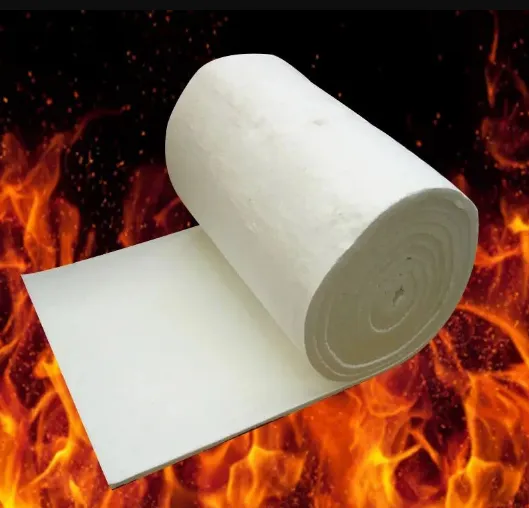
A compliant product description should state:
-
Base chemistry (e.g., alumina-silicate refractory fibre, typical Al₂O₃/SiO₂ ratio)
-
Density range (kg/m³) and typical thickness (mm)
-
Form (blanket, roll, batt, board) and maximum continuous working temperature (°C)
-
Typical applications (kiln lining, furnace repair, thermal insulation)
-
Presence of facing or binder
Include those facts in commercial invoices and technical packs to make the case for classification under 6806.10 or the importing country’s equivalent.
Trade data snapshot (what shipment records show)
Trade-tracking portals and market platforms frequently show ceramic fiber blankets recorded under 68061000 or similar subheadings. These records are useful for benchmarking pricing and shipment frequencies during customs valuation or audit.
Multiple tables (detailed reference)
Table 4. Typical HS/HTS lines and short descriptions (example lines)
| HS/HTS | Short description |
|---|---|
| 6806.10 | Slag wool, rock wool and similar mineral wools, in bulk, sheets or rolls. |
| 6806.10.00 (US) | HTSUS subheading used for mineral wool type blankets and rolls (duty examples apply per schedule). |
| 68061000 (CN / common export declaration) | Frequently used by Chinese exporters for ceramic fibre blankets. |
| 6806.90 / 6806.99 | Other articles of insulating mineral materials (used if product has special finishing or nonstandard composition). |
| 6903 / 6904 / 6914 (Chapter 69) | Ceramic articles chapter — typically not appropriate for fibrous insulating blankets. |
Frequently asked questions
Ceramic Fiber Blanket: HS Code & Compliance FAQ
1. What is the standard HS code for ceramic fiber blanket?
2. Can ceramic fiber blankets be classified in Chapter 69?
3. Do duty rates differ widely between countries?
4. What technical tests support proper classification?
5. Does a foil facing or binder change the HS code?
6. Is the exporter’s declared HS code final?
7. How can I ensure certainty before shipping?
8. Are there specific labeling or safety requirements?
9. What are the penalties for misclassification?
Keeping a complete technical file for every batch reduces the risk of these penalties during a customs audit.
10. Where can I search for previous customs rulings?
Final recommendations
-
Treat the six-digit HS code 6806.10 as the default starting hypothesis for ceramic fiber blankets but validate with evidence.
-
Assemble a technical pack (TDS, MSDS, lab report, photos) and attach it to commercial invoices and import declarations.
-
If shipment volume or regulatory risk is significant, request a binding ruling from the importer’s customs authority. Use existing rulings as precedent in the request.
-
Work with an experienced customs broker who can search national tariff notes and confirm the exact national subheading (e.g., 68061000, 68061010 or an HTSUS sub-line).
-
Maintain consistent nomenclature across commercial documents to avoid mismatches that trigger audits.