

For aluminum foundries that require lightweight, flexible insulation with proven performance in extreme heat, a polycrystalline 3000°F (≈1649°C) ceramic fiber blanket delivers the best balance of thermal resistance, low heat storage, low thermal conductivity, fast installation, and long service life when specified and installed correctly. AdTech recommends polycrystalline-grade ceramic blankets for furnace door seals, kiln liners, ladle covers, recuperator wraps, and furnace repair work, paired with complementary products such as ceramic foam filter plates, rigid ceramic insulation boards, ceramic fiber rope, and ceramic wool insulation for a complete thermal management solution.
1. What the term “3000 Degrees” means for ceramic fiber blankets
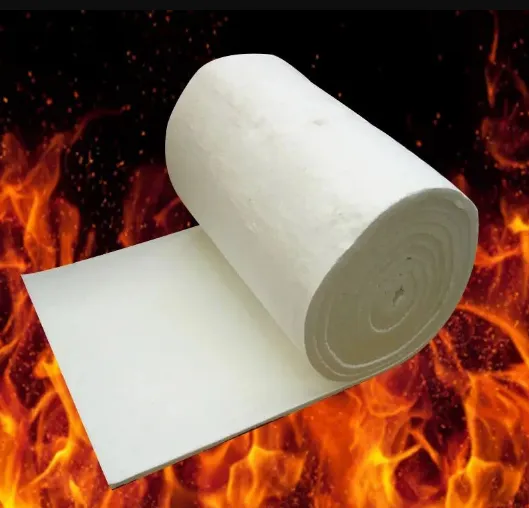
When a blanket is labeled “3000°F”, that label refers to a rated temperature performance for certain grades of polycrystalline ceramic fiber that resist continuous exposure near 3000 degrees Fahrenheit and retain structural integrity during short thermal excursions toward the material melting or softening point. In practical engineering terms, 3000°F-grade polycrystalline blankets offer continuous service performance in very high temperature environments typical of specialized industrial furnaces and heavy process equipment.
2. Material formulation and manufacturing methods
2.1 Polycrystalline mullite wool (PCW) and high-alumina fiber types
High-temperature ceramic blankets rated toward 3000°F are normally manufactured from polycrystalline mullite or high-alumina fibers. The fiber chemistry commonly contains high percentages of alumina with controlled silica and mullite phases to boost softening temperature and reduce long-term shrinkage. These products typically avoid organic binders, shot, or volatile additives that might outgas during first heat-up or operational cycling.
2.2 Needling and needled mat construction
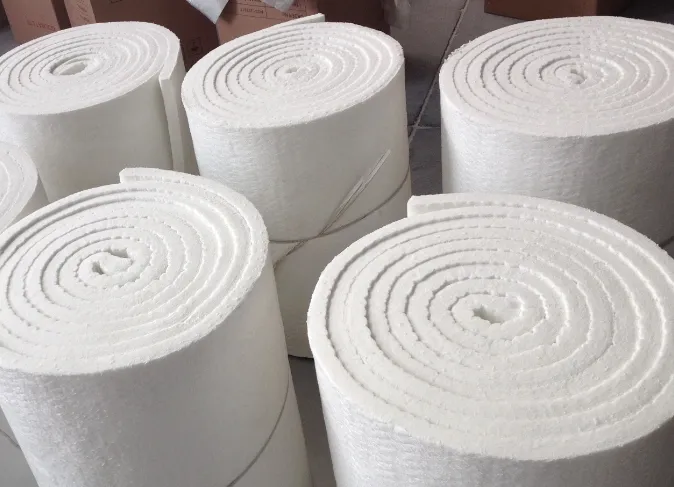
To produce robust, flexible blankets, manufacturers use a needling process that mechanically interlocks fibers, which improves tensile strength, handling durability, and dimensional stability. The resulting product is lightweight, compressible for conformal sealing, and manageable for field cutting and fitting without lengthy curing times.
2.3 Density grades and finished formats
Common densities offered for 3000°F blankets include roughly 6 lb/ft³ and 8 lb/ft³ (approx 96 and 128 kg/m³). Densities influence thermal conductivity, mechanical strength, and required thickness. Typical formats are blankets, needled mats, modules, and preformed shapes.
3. Key thermal performance metrics and limits
3.1 Rated temperature and melting point
-
Rated continuous-use temperature for polycrystalline 3000°F blankets is listed at roughly 3000°F (1649°C).
-
Melting point for the base fibers generally sits above 3200°F, which provides margin for short-duration thermal spikes.
3.2 Thermal conductivity and heat storage
Thermal conductivity is density and temperature dependent. Typical values reported in manufacturer technical sheets for common densities are within the ranges that make these blankets highly effective at reducing heat loss and lowering external skin temperatures when compared with dense refractory bricks. Concrete examples and test values are included in the technical table later in this document.
3.3 Permanent linear shrinkage under soak conditions
Permanent linear shrinkage is a critical metric for high temperature insulation. High-quality polycrystalline blankets show low shrinkage during extended high-temperature soaks, often under 1% for a 24-hour soak at temperatures in the service range specified by producers. Engineers must verify specific TDS values for the chosen product and density.
4. Mechanical, physical, and handling properties
4.1 Tensile strength and handling toughness
Needled blankets have sufficient tensile strength to permit cutting, wrapping, and fastening without excessive fiber loss. Higher densities yield improved mechanical strengths, which makes heavier blankets the preferred choice for applications with mechanical abuse potential.
4.2 Compressibility and sealing performance
Blankets compress to form tight seals around irregular geometries, a reason foundry maintenance teams frequently use them for door seals, joint packing, and ladle lip protection. Compression limits must be respected; excessive compression can reduce insulating thickness and increase heat transfer.
4.3 Fastening and protection options
Common fastening methods include staples, pins, retainer plates, and mechanical anchors. For wear zones, engineering teams add protective facing layers or attach a rigid ceramic board over the blanket to protect it from mechanical damage and erosion.
5. Why this product matters to aluminum foundries and casting operations
Aluminum melts near 660°C (1220°F), which is well below the service temperatures of 3000°F-grade insulation. The real value of 3000°F-grade ceramic fiber blankets in foundries and continuous casting installations lies in these points:
-
Lower furnace external skin temperatures increase personnel safety and reduce building HVAC loads.
-
Low bulk and surface conductivity reduce fuel or electrical energy required to maintain melt and holding temperatures.
-
Rapid thermal response minimizes startup cycles and downtime, enabling tighter process control during casting.
-
Flexibility allows simple retrofit repairs without replacing heavy bricks or full linings.
For aluminum operations that run multiple processes, including melting, holding, heat treatment ovens, and certain heat-treat cycles in downstream operations, polycrystalline ceramic blankets provide a unified insulation approach that simplifies spare parts and maintenance methods.
6. Installation methods and recommended hardware
6.1 Surface preparation and cutting
Use a sharp knife or high-temperature shears. Cut panels with a margin for compression. Ensure the base surface is clean and free from loose scale. For retrofits, remove loose refractory that would trap moisture or oils.
6.2 Anchoring techniques
-
Use mechanical anchors with washers and retainer plates in high-stress zones.
-
For seams, overlap by a recommended amount (manufacturer guidance often 1 to 2 inches).
-
Where direct flame contact occurs, consider protective facing or a ceramic board cover to shield from particle impingement.
6.3 Joint sealing and secondary protection
Use ceramic fiber ropes or braided seals at door jambs, removable panels, and ladle lips. For exposed edges, a rigid ceramic insulation board can take mechanical loads while the blanket provides the thermal barrier beneath.
AdTech provides ceramic fiber rope and ceramic wool insulation that match the thermal performance of 3000°F blankets, making system integration simpler and warranty paths easier.
7. Health, safety, and compliance considerations
7.1 Refractory Ceramic Fibers versus polycrystalline alternatives
Some older refractory ceramic fiber (RCF) products have regulated designations in certain jurisdictions due to respirable crystalline silica concerns. Polycrystalline wool (PCW) blankets for 3000°F ratings are often produced to be RCF free and engineered to minimize respirable fiber release. Engineers should confirm the product TDS and safety data sheet for fiber classification and handling requirements.
7.2 Handling precautions
-
Use appropriate PPE: respirator with particulate filter, gloves, eye protection, and long sleeves.
-
Wetting fiber materials is not recommended for long-term storage because moisture can drive bonding or affect thermal performance; follow manufacturer storage guidance.
-
Obtain and keep current SDS documents for every insulation product on site.
7.3 Regulatory and environmental controls
Local regulations can influence which fiber types are permitted. Consult local safety standards and publish inspection schedules for installed blanket systems.
8. Longevity, inspection, and maintenance best practices
8.1 Expected service life
Service life depends on operating temperature, mechanical stress, and exposure to chemical attack. When used in a protected role within furnace modules or behind protective boards, blankets typically last multiple seasons under steady operating conditions.
8.2 Periodic inspection checklist
-
Check for compression zones that reduce effective thickness.
-
Inspect for erosion at gas or flame impingement points.
-
Verify anchors and retainer hardware for corrosion or loosening.
-
Replace any severely abraded or burnt sections promptly to avoid core lining damage.
8.3 Repair techniques
Small damage patches can be field-repaired with replacement blanket sections or ceramic adhesive mortars and mechanical pins. For larger repairs, remove and replace whole modules to restore thermal performance predictably.
9. Comparative matrix: 3000°F ceramic blanket versus other insulation types
-
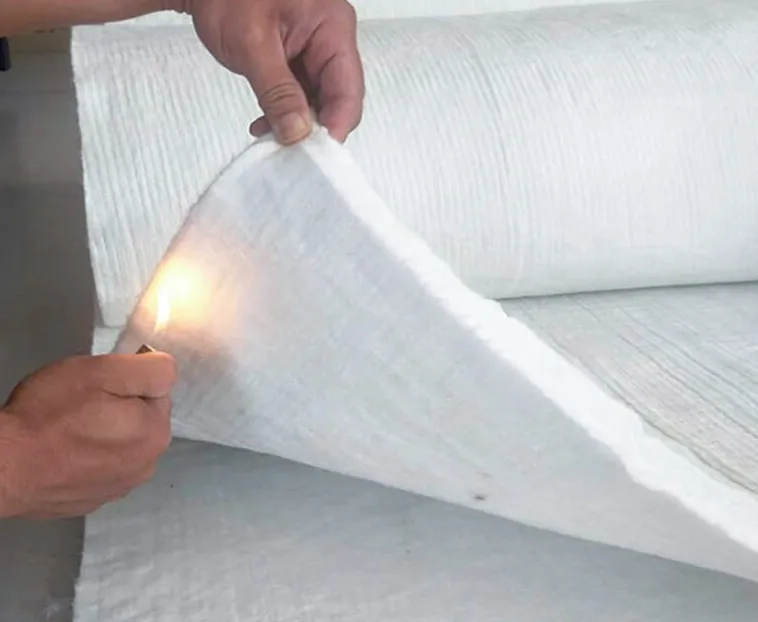
Ceramic fiber blanket: Highest insulation-per-thickness; lightweight; fast to install; flexible sealing ability.
-
Rigid ceramic insulation board: Better mechanical protection; used in tandem with blankets.
-
Firebrick and dense refractories: High durability under abrasion and direct slag attack; much heavier; longer installation and cure times.
-
Ceramic wool and other lower temperature fibers: Cost-effective for lower-temperature zones, but inadequate for extreme-temperature components.
10. How to specify the right blanket for your application
10.1 Choose density by balancing strength and insulation
-
Low density (4 to 6 lb/ft³): Best thermal barrier per weight, good for jackets and non-abrasive zones.
-
Medium density (6 to 8 lb/ft³): Balanced strength and conductivity; common for door seals and modules.
-
High density (>8 lb/ft³): For high-wear zones and where compressive loads exist.
10.2 Thickness selection
Calculate required thickness from heat loss targets, maximum permissible external surface temperature, and available space. Manufacturer thermal tables or finite element models provide precise thickness values for target skin temperatures.
10.3 Facing and protective options
Specify protective facing when particulate erosion, chemical attack, or heavy mechanical contact is expected. Facing choices include stainless wire mesh, thin ceramic board, or mineral-based coverings.
11. How AdTech’s product family can be combined for full-system solutions
AdTech manufactures products that integrate effectively with 3000°F ceramic blankets:
-
Ceramic foam filter plates: Use upstream in melt transfer to remove inclusion and reduce rework. These do not replace insulation tools, but they complete the melt-line quality system.
-
Ceramic insulation board: Use on exposed faces where mechanical wear occurs, with blanket underneath to maintain thermal efficiency.
-
Ceramic fiber rope: Ideal for sealing doors, ladle lips, and flanges that need braided, compressible sealing material.
-
Ceramic wool insulation: For lower temperature zones or for transitional layers between brick and blanket materials.
System design suggestion: in furnace door assemblies, specify a 6 to 8 lb/ft³ 3000°F blanket installed behind a 1/2 inch ceramic board face plate, with braided ceramic rope used to seal the door jamb. AdTech’s engineers can provide cut-to-size modules, pre-formed shapes, and installation guidance to minimize downtime.
12. Typical costs and procurement checklist
Costs will vary by density, thickness, format, and finished module complexity. For budgeting, polycrystalline 3000°F blankets typically carry higher unit costs than lower-grade fiber blankets because of raw material and manufacturing processes. Purchasing teams should request datasheets, sample pieces, performance test reports, and SDS documents.
Procurement checklist
-
Confirm rated continuous temperature and melting point.
-
Obtain thermal conductivity data across temperature range.
-
Verify density options and typical thicknesses stocked.
-
Request permanent linear shrinkage and tensile strength figures.
-
Confirm material classification and worker safety documentation.
-
Ask for example case studies or references for foundry use.
13. Technical tables and charts
Table 1. Typical technical comparison for common 3000°F polycrystalline blankets
| Property | Typical Value or Range | Notes and engineering context |
|---|---|---|
| Rated continuous temperature | 3000°F (1649°C) | Manufacturer rating for PCW grade. |
| Fiber melting point | ≈3200°F (1760°C) | Provides spike margin |
| Common densities | 6 lb/ft³, 8 lb/ft³ | Density affects conductivity and strength. |
| Thermal conductivity at 600°C | ~0.14 W/m·K (6 lb/ft³ example) | Values depend on density and temperature; check TDS for exact figures. |
| Permanent linear shrinkage (24 hr soak) | <1.0% typical at specified temperatures | Typical engineering target; verify per product. |
| Typical form factors | Blanket, modules, preformed shapes | Choose based on installation needs. |
| Common applications | Furnace doors, kiln liners, ladle covers, sealing | High-value thermal barrier in foundry operations. |
Table 2. Quick selection matrix for foundry zones
| Zone type | Typical peak exposure | Recommended blanket density | Protection/facing |
|---|---|---|---|
| Door seal | 1200°F to 2000°F | 6 lb/ft³ | Ceramic fiber rope for gasket |
| Direct flame exposure | 1800°F to 2600°F | 8 lb/ft³ | Add ceramic board facing |
| Hot face behind bricks | 1500°F to 2000°F | 6 lb/ft³ | Blanket only |
| Ladle lip protection | 1200°F to 2000°F | 8 lb/ft³ | Braided rope plus board |
Table 3. Performance trade-offs
| Priority | Appliance | Recommended configuration |
|---|---|---|
| Maximum insulation per thickness | Minimize losses | Low-density blanket, greater thickness |
| Mechanical durability | Resist wear | Higher density and protective board |
| Fast repairability | Minimize downtime | Blanket modules with mechanical anchors |
| Lowest initial cost | Budget sensitive | Lower-grade fiber or thinner blankets (only for low-temp zones) |
3000°F (1650°C) Ultra-High Temp Blanket: Technical FAQ
1. Can a 3000°F ceramic fiber blanket be used in direct contact with molten aluminum?
2. What density should I choose for furnace door seals?
3. Do these blankets require curing or dry-out time after installation?
4. How much shrinkage should I expect after prolonged exposure?
5. Are all 3000°F blankets non-hazardous to workers?
6. Can I retrofit a brick-lined furnace with ceramic blanket modules?
7. How does blanket thickness translate to external skin temperature?
8. Which protective facings extend blanket life in abrasive service?
9. Is fiber release an issue during cutting and fitting?
10. Can AdTech supply preformed modules or custom shapes?
Final recommendations and next steps for procurement teams
-
Obtain TDS and SDS from the supplier for the specific PCW blanket product under consideration. Verify continuous service temperature, melting point, thermal conductivity by temperature, shrinkage data, and fiber composition.
-
For foundry door seals, specify 6 to 8 lb/ft³ blankets with braided rope seals and protective ceramic board facings to balance performance, durability, and repairability.
-
Build small pilot assemblies for any retrofit projects, instrument them to record external skin temperatures, and confirm expected energy savings in one furnace or module before wide rollout.
-
Incorporate AdTech’s insulation boards, ceramic fiber ropes, and foam filter plates into the specification to ensure compatibility and consolidated supply support. AdTech engineering can provide recommended cut lists, mounting hardware kits, and installation drawings to speed maintenance tasks.
Sources and references
Key manufacturer technical pages and datasheets used while preparing this document include product pages and technical bulletins for polycrystalline 3000°F ceramic fiber blankets, product technical data sheets for thermal conductivity and shrinkage, and industry product catalogs for Fiberfrax and similar high-temperature blankets. Representative sources used for temperature rating, composition, and TDS examples include CeraMaterials, Nutec, Fiberfrax product pages, and manufacturer datasheets.