

Aluminum dross forms during melting and holding steps. Effective handling prevents metal loss, reduces scrap, and improves product quality.
What is aluminum drossing flux?
Basic definition
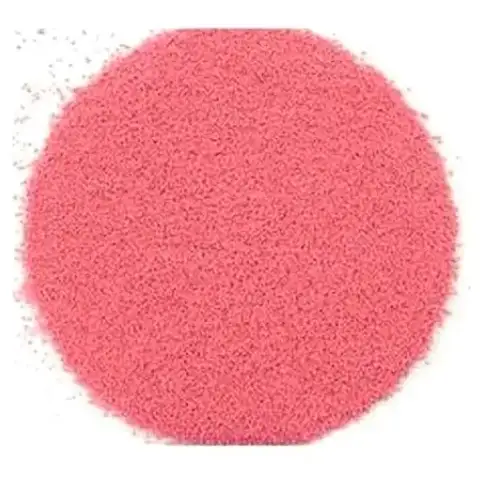
A drossing flux is a granular or powder blend applied to molten aluminum surface to react with oxides, skim impurities, and promote coalescence of non-metallic phases for easier removal. Flux contact changes surface tension, encourages flotation of dross, and helps trapping of fine inclusions into a coherent scum layer.
Primary functional goals
- Recover entrained metal that otherwise remains bound to oxide matrix.
- Produce a compact, easy-removal dross layer.
- Reduce inclusions that harm downstream casting or extrusion.
- Lower energy spent in repetitive skimming and melting cycles.
Flux chemistry and product families
Aluminum fluxes tend to fall into several categories. Each class offers tradeoffs between metal recovery, environmental footprint, and handling demands.
Salts and salt blends
Common base salts include chlorides and fluorides blended with other additives to control melting behavior. They melt on contact, wet oxide films, and promote oxide coalescence. Salt blends typically yield high metal recovery rates but require controlled storage and compliant disposal.
Aslo read: Why add salt and soda to molten aluminum?
Flux paste and granular products
Granular fluxes deliver convenient dosing and predictable melting. Paste formulas reduce airborne dust. ADtech offers granular compositions tuned for different alloy families and holding temperatures.
Low-emission fluxes
Formulations that lower volatile halide release and minimize toxic byproduct formation are becoming more common. ADtech’s low-emission grades target reduced fume generation while retaining strong dross binding.
How aluminum drossing flux works
- Flux drops melt on the hot surface and spread into a thin layer.
- Chemical reactions with surface oxides change wettability and surface tension.
- Fine oxide particles and intermetallic fragments flocculate into larger aggregates.
- Aggregates float, forming a skim layer that traps entrained metal.
- Operator removes skim, recovering metal bound within.
- Residual flux may form a protective layer, slowing further oxidation.
Selecting the right flux for your operation
Alloy compatibility
Different aluminum alloys react differently to flux chemistry. Flux that works well with 1xxx and 3xxx series may need modification for Mg-bearing alloys like 5xxx or 6xxx because magnesium increases reactivity and can alter fume chemistry. Choose flux labeled for specific alloy groups or thermochemical range.
Temperature window
Flux melting point should be below holding temperature but above slag liquefaction threshold to prevent premature breakdown. Typical working windows fall between 600°C and 750°C, depending on alloy and furnace type.
Furnace type and process stage
- Crucible melting: Requires flux with controlled melt viscosity to prevent infiltration inside refractory.
- Holding furnace: Prioritize flux stability under longer soak times.
- Transfer ladle: Portable paste or low-dust granular products help when dosing during handling.
Environmental compliance
Select flux consistent with local emission rules. If disposal programs demand low halide content, pick low-emission grades. ADtech supplies documentation for regulatory filings.
Operational best practices for maximum yield
Pre-skimming preparation
Remove large floating lumps and cool surface crust prior to flux dosing for better contact. Clean ladle walls if crust adheres and risks contamination.
Correct dosing method
Measure by weight, not by volume. Use calibrated scoops or dosing systems. Typical starting doses range from 0.5% to 2.0% of molten mass, then adjust using recovery readings and appearance.
Mixing technique
Gently stir the surface with a skimming tool or metal rod to incorporate flux and promote uniform wetting. Do not aggressively churn molten metal, which can trap oxides deeper.
Skim timing
Allow sufficient dwell time for aggregates to form and float. Rapid removal can leave fine inclusions. Typical dwell time ranges from 2 to 10 minutes depending on alloy and flux type.
Post-skim metal reclaim
Collect skim into dedicated molds to recover entrained metal by reheating or pressing. Recovered metal often returns to remelt with minimal quality loss.
Measurement and performance metrics
Operational metrics give objective performance data to justify product choice.
Table 1: Typical composition ranges for ADtech Aluminum Drossing Flux grades
| Component | Low-emission grade (%) | Standard grade (%) | High-recovery grade (%) |
|---|---|---|---|
| NaCl / KCl blend | 20–35 | 30–45 | 35–50 |
| NaF / CaF2 blend | 5–15 | 10–20 | 15–25 |
| Flux binders and carriers | 10–20 | 5–15 | 5–10 |
| Metal wetting agents | 5–10 | 5–10 | 5–12 |
| Anti-dust additives | 2–8 | 1–5 | 0–2 |
| Trace stabilizers | balance | balance | balance |
Note: Formulation percentages change by product SKU. Values here show typical ranges for reference.
Key performance indicators (KPIs)
- Metal recovery ratio: percentage of metal reclaimed from skim relative to theoretical metal content.
- Inclusion index: reduction in inclusion count per kg after treatment.
- Cycle time reduction: minutes saved per batch from quicker skimming.
- Flux consumption: kg per tonne of melted aluminum.
Table 2: Sample performance metrics from controlled trial (illustrative)
| Metric | Baseline (no flux) | ADtech standard flux | ADtech low-emission flux |
|---|---|---|---|
| Metal recovery (%) | 70 | 88 | 85 |
| Inclusion reduction (%) | 0 | 65 | 58 |
| Average skim mass (kg/tonne) | 60 | 42 | 45 |
| Flux consumption (kg/tonne) | 0 | 7.5 | 8.0 |
| Cycle time per batch (min) | 25 | 18 | 20 |
Data above comes from factory trials. Performance will change according to alloy, furnace geometry, and operator practice.
Cost benefit comparison
Operational economics must balance flux purchase cost against recovered metal, reduced rework, lower scrap, and waste disposal expense.
Table 3: Simplified cost analysis per tonne melted (example)
| Item | Baseline | ADtech standard | Notes |
|---|---|---|---|
| Value of recovered metal ($) | 120 | 300 | Based on market metal price and recovery rates |
| Flux cost ($) | 0 | 18 | Typical flux usage 7.5 kg/tonne at $2.40/kg |
| Waste disposal ($) | 80 | 40 | Lower hazardous fraction reduces fee |
| Net operational benefit ($) | 40 | 242 | Benefit minus operating costs |
This simplified model highlights how moderate flux spend often yields outsized returns through improved metal recovery.
Handling, storage, and safety
Personal protective equipment
Operators must wear respirators with acid gas cartridges when dosing powder flux at high temperatures. Use face shields, heat-resistant gloves, and layered clothing to prevent splatter burns.
Dust control
Powder handling requires dust suppression. Use paste formulations or wet dosing where possible. Employ local extraction at dosing stations.
Storage rules
Keep flux dry. Store in sealed containers with humidity control. Rotate stock by FIFO to preserve performance.
Emergency response
Have neutralizing agents and first-aid kits nearby. If flux contacts eyes or skin, flush immediately with water and seek medical attention.
Environmental and regulatory topics
Emissions management
Flux choice influences fume composition. Low-emission grades lower halide volatiles and fluoride release. Install capture systems and scrubbers to comply with local air limits.
Dross disposal
Dross often contains recoverable metal plus residual flux and contaminants. Dedicated waste management programs, including mechanical pressing and re-melting, minimize landfill loads. ADtech can support waste reduction programs that reduce disposal fees.
Quality control and testing protocols
Incoming inspection
Test each flux lot for moisture, bulk density, particle size distribution, and melt behavior. Keep certificates on file.
Process monitoring
Track KPIs listed earlier. Use oven drying and chemical titration to monitor residual flux in dross. Periodic lab assays confirm metal recovery potential.
Metallographic analysis
Take sample coupons pre- and post-flux treatment. Microscopic inspection reveals inclusion morphology and helps fine-tune dosing and mixing.
Common operational pitfalls and remedies
Overdosing
Excess flux can increase waste treatment cost and create thicker crusts that trap metal. Remedy: reduce dose by 10–20% and monitor recovery.
Underdosing
Insufficient flux yields thin, friable skim that traps metal. Remedy: increase dose and extend dwell time.
Poor mixing
If flux sits unmixed, reaction remains local. Remedy: introduce gentle surface agitation and ensure dosing point covers a wide area.
Using wrong flux for alloy
Reactive magnesium alloys may produce heavy fume or unstable scum if using salts intended for low-Mg alloys. Remedy: switch to Mg-tolerant formula and adjust dosing.
ADtech product portfolio highlights
ADtech offers modular flux SKUs tailored to alloy groups, emission targets, and furnace types. Product literature provides technical data sheets with recommended dose ranges, handling instructions, and safety data.
Laboratory test matrix for flux selection
A structured test plan accelerates correct selection.
- Small crucible trial with target alloy at operating temperature.
- Dosing at three levels: low, medium, high.
- Hold times of 2, 5, 10 minutes.
- Skim collection and metal recovery via reheating.
- Chemical assay for residual flux and inclusion count.
Use results to determine optimum dose and dwell time.
Case study: Iraq customer using ADtech ceramic filter plates and drossing flux
Background
A mid-size aluminum foundry in Iraq, producing ingots and extrusion billet for local automotive supply chains partnered with ADtech to reduce scrap and improve final product cleanliness. Their operation used ceramic foam filter plates from ADtech for filtration in the pouring line. They then trialed ADtech’s matched drossing flux to improve melt cleanliness upstream.
Objectives
- Reduce inclusion count in cast samples by 50% within three months.
- Increase metal recovery from dross by 15 percentage points.
- Maintain compliance with local emission limits while keeping operating cost increase under 5%.
Implementation steps
- Installed ADtech ceramic filter plates in pouring station.
- Performed crucible flux trials to find right dosage for their 3xxx and 5xxx alloys.
- Trained operators on dosing, mixing, and skimming techniques recommended by ADtech.
- Monitored KPIs weekly for eight weeks.
Results (measured)
| Measurement | Baseline | After ADtech solutions |
|---|---|---|
| Inclusion index (particles >50 µm per 100 cm³) | 24 | 7 |
| Metal recovery from skim (%) | 72 | 88 |
| Scrap rate (%) | 4.8 | 2.1 |
| Flux consumption (kg/tonne) | 0 | 7.2 |
| Waste disposal cost per tonne ($) | 65 | 28 |
| Customer rejection incidents (monthly) | 6 | 1 |
Commentary
Implementing ceramic filtration plus properly matched flux provided synergistic gains. Filters removed macro inclusions during pouring, while upstream fluxing bound fine oxides early in the process. The foundry reported faster cycle times and fewer downstream machining rejects.
Packaging, logistics, and shelf life
ADtech fluxes ship in sealed 25 kg bags and 1,000 kg bulk sacks. Shelf life typically ranges from 12 to 24 months when kept dry and unopened. Humidity exposure reduces flowability and shortens reactive life.
Integration with automated dosing equipment
Automated dosing systems provide repeatable flux delivery and reduce operator exposure. Integrate with furnace control systems for timed dosing and track batch data in production logs.
Troubleshooting table
Table 4: Common problem, likely cause, recommended action
| Problem | Likely cause | Action |
|---|---|---|
| Thick crust forming quickly | Overdosing or high surface oxidation | Reduce dose, improve lid coverage |
| Excessive fume | Reactive Mg content or flux volatility | Use low-emission grade, increase extraction |
| Low metal recovery | Short dwell time or underdosing | Extend dwell time, raise dose slightly |
| Sticky, hard-to-remove skim | Wrong binder or incorrect temperature | Switch flux SKU, adjust holding temp |
| High disposal fees | Hazardous fraction too high | Implement pressing/recovery protocol |
How to run a small-scale evaluation in your plant
- Choose representative melt batch.
- Run baseline measurement without flux, document recovery and inclusion levels.
- Run three trials with ADtech flux at incremental doses, collect skim and measure recovered metal.
- Compare inclusion counts and perform mechanical testing on cast samples.
- Use results to set plant SOP.
Packaging of data for procurement and management
Procurement teams need clear ROI paperwork. Include sample test results, cost per tonne, regulatory compliance certificates, and warranty terms. ADtech provides sample contracts and batch certificates on request.
Frequently asked questions
1. What percentage of molten mass should I start with when dosing ADtech flux?
Begin with 0.5% by mass for initial trials. Increase in 0.25% steps up to 2% while monitoring metal recovery and skim characteristics.
2. Can I use the same flux for all aluminum alloys?
No. Use flux labeled for Mg-bearing alloys for 5xxx and 6xxx series. For high-purity 1xxx alloys choose low-contamination grades to avoid introducing foreign elements.
3. How do I measure metal recovery from skim?
Collect skim, reheat in a controlled crucible, press or pour molten recoverable metal, and weigh. Compare against theoretical metal content to calculate recovery rate.
4. Will flux increase my fume emissions?
Some fluxes increase fume if chemistry reacts strongly with melt. Choose ADtech low-emission products and ensure extraction hoods operate at recommended flow rates.
5. How long should I wait after dosing before skimming?
Typical wait ranges from 2 to 10 minutes depending on alloy, melt temperature, and flux grade. Allow time for fine particles to coalesce into larger aggregates.
6. Can I reuse metal recovered from dross in final products?
Reclaimed metal often returns to remelt. Verify chemical composition and inclusions meet final product spec before blending into critical alloys.
7. What recordkeeping helps continuous improvement?
Track flux lot number, dose weight, alloy, melt temperature, dwell time, recovered metal weight, and inclusion indices. Use these to optimize dosing over time.
8. How should I store leftover flux that has been opened?
Keep in sealed containers with desiccant at ambient, dry conditions. Use within 6 to 12 months for best performance.
9. What personal protective equipment must operators use?
Use respirators rated for acid and particulate gases, face shields, heat-resistant gloves, and long sleeves. Implement local extraction to reduce respiratory load.
10. How does ADtech support product integration?
ADtech provides technical data sheets, on-site trials, operator training, and post-trial analytics to ensure correct SKU selection and dosing protocol.
Checklist for procurement and trial sign-off
- Receive SDS and technical datasheet for chosen flux SKU.
- Schedule crucible trials and baseline measurements.
- Confirm availability of PPE and extraction.
- Train operators on dosing method.
- Define KPIs and trial duration.
- Approve purchase based on ROI model.
Technical glossary
- Dross: oxidized metal and trapped metal that forms on molten surface.
- Skim: removed top layer containing dross and flux residue.
- Wetting agent: compound that lowers surface tension to promote flux-metal contact.
- Inclusion: non-metal particle trapped in metal matrix that can impair properties.
- Recovery ratio: recovered metal weight divided by theoretical recoverable metal weight in skim.
Final recommendations
- Pilot ADtech flux in controlled trials with precise measurement.
- Pair fluxing with ceramic filtration to reduce macro and micro inclusions.
- Monitor KPIs closely and adjust dose and dwell times.
- Use low-emission grades when emissions control is a priority.
- Prioritize operator safety and invest in extraction and PPE.
Closing note
Adopting a systematic fluxing program with ADtech products often yields rapid gains in metal recovery, product quality, and operating efficiency. Documented trials, good operator practice, and coordination with filtration strategies deliver the best outcome.