

For safe, efficient aluminium melting, choose a crucible made from silicon carbide graphite or clay graphite for typical foundry and small industrial furnaces, and use pure graphite only for specific induction applications where its conductivity and thermal performance suit the process. Match crucible selection to furnace type, alloy chemistry, charge condition and melting cadence; control dross with appropriate fluxing and handling; preheat, protect and inspect crucibles to maximise service life; and follow The Aluminum Association safety practices for charging and handling molten aluminium.
Crucible fundamentals and why choice matters
A crucible is the containment vessel where aluminium is melted, held and sometimes transferred. The crucible is central to melt quality, energy consumption and operational safety. Poor material choice or poor handling creates higher dross formation, contamination of the metal, shorter crucible life, higher energy bills and safety risks during charging and pouring. Practical selection balances thermal conductivity, thermal shock resistance, chemical compatibility with the aluminium alloy and the heating method. Leading foundry technical references show that crucible selection affects both metallurgical integrity and business metrics such as energy cost and downtime.

1000KG 980C Aluminum Melting Furnace Crucible For Melting Aluminum
Crucible materials and how they behave
Below is a compact comparison of the crucible families commonly used for aluminium melting.
Material comparison table — quick reference
| Material family | Typical composition | Key strengths | Typical limits for aluminium | Typical industries |
|---|---|---|---|---|
| Clay bonded graphite (clay graphite) | Graphite mixed with clay/ceramic binder | Good thermal shock resistance, affordable | Excellent for aluminium alloys up to typical casting temperatures; moderate life under heavy cycling | Small foundries, die casters, educational labs |
| Carbon bonded graphite (pure graphite) | High purity graphite, carbon bonded | Very high thermal conductivity, good for induction | High performance for many alloys; careful with oxidising environments | Induction melting, precision melting |
| Silicon carbide graphite (SiC-graphite, reinforced SiC) | SiC particles embedded in carbon/graphite matrix | Very good wear resistance, long life, high temperature tolerance | Excellent for aluminium and zinc; robust under abrasive loading | Industrial melt shops, continuous operations |
| Oxide ceramics (alumina, zirconia) | Al₂O₃, ZrO₂ and engineered refractories | Chemical inertness, very high melting points | Lower thermal conductivity, risk of cracking under shock | Laboratory crucibles, specialized applications |
| Metal-lined or steel crucibles (rare for aluminium) | Steel shells with refractory lining | Mechanical strength | Risk of attack, thermal mismatch; seldom recommended for high-frequency aluminium melting | Some reclamation or custom rigs only |
(References: Foseco crucible guidance and manufacturer catalogues for non-ferrous crucibles.)
Graphite based crucibles
Graphite crucibles are widely used for non-ferrous metal melting. Their advantages include high thermal conductivity, even heat distribution and generally long life when protected from oxidation and inappropriate flux chemistries. They are highly compatible with aluminium because graphite does not alloy with aluminium under normal melting conditions. Graphite options split into ceramic-bonded (clay) and carbon-bonded (higher purity) grades. Carbon-bonded graphite tends to be stronger and more thermally efficient. Crucible life depends heavily upon handling, furnace atmosphere, flux chemistry and whether the crucible is used for charging wet or dirty scrap.
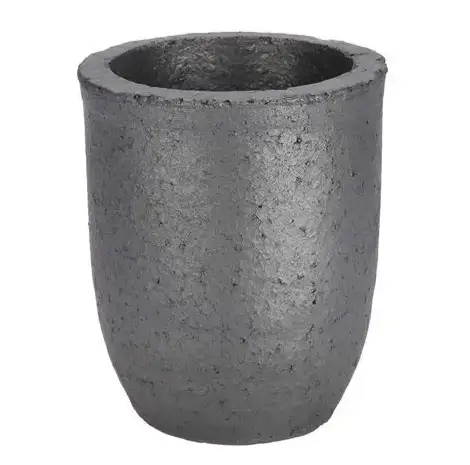
Silicon carbide reinforced crucibles
Silicon carbide reinforced crucibles combine SiC particles with carbon matrix or ceramic bond. They have excellent erosion resistance when aggressive fluxes are used and tolerate higher temperatures and mechanical wear. They are common in industrial aluminium melting and are promoted for their long service life and lower energy usage in continuous operations. These crucibles are recommended where rapid cycling, heavy scrap loading or more aggressive cleaning fluxes are in use.
Ceramic and oxide crucibles
Alumina and zirconia crucibles are chemically inert and resist many corrosive environments, but have lower thermal conductivity and are more brittle. For routine aluminium foundry work they are generally reserved for laboratory, small-scale melting of alloys where contamination must be strictly controlled. Their limited thermal shock resistance makes operational technique critical.

High Heat Resistance Aluminum Oxide Ceramic Alumina Zirconia Ceramic Crucibles
Matching crucible to furnace type and alloy
Different furnaces couple with crucible materials in different ways.
-
Induction furnaces: are frequently paired with graphite crucibles because graphite transmits heat effectively and suits the magnetic/induction coupling in many designs. Some induction systems use SiC or other retorts when particular process reasons require them. Confirm compatibility with the furnace maker.
-
Resistance and electric furnaces: resistive heat can be used with clay graphite or SiC-graphite crucibles; thermal insulation and lid design matter to avoid top smothering and thermal shock.
-
Fuel fired crucible furnaces: clay-graphite crucibles are common; protect from flame impingement and ensure good pedestal support.
-
Reverberatory or rotary furnaces: typically use refractory lined hearths and transfer into ladles; crucibles are less dominant in large-scale continuous melts, but SiC-graphite components can appear in hearths and retorts.
Alloy chemistry matters. For aluminium containing magnesium or other reactive elements, flux selection and crucible atmosphere have higher importance. When magnesium content increases the risk of reactive dross and crucible attack can increase. Follow alloy-specific recommendations and consult crucible suppliers for borderline cases.
Thermal performance, energy efficiency and heat flow
A crucible with higher thermal conductivity reduces the energy required to melt the same charge by evening out the heat and reducing local superheating. However, that must be balanced with thermal mass and heat loss. Well-chosen crucible geometry and correct pedestal support reduce conduction losses and lower overall fuel or electrical demand. Industry reports show correctly matched crucibles reduce energy consumption and carbon emissions for non-ferrous melts.
Factors that influence thermal performance:
-
Wall thickness and geometry of the crucible
-
Thermal conductivity of the crucible material
-
Furnace insulation and lid design
-
Preheating procedure and soak time
Chemical interaction, contamination and alloy integrity
Crucible material may introduce contaminants if it reacts with molten aluminium or if particles are mechanically dislodged. Graphite is generally chemically benign for most aluminium alloys, but oxide- forming contaminants can arise from fluxes or from refractory dust. SiC crucibles are engineered to limit iron pickup and other contaminants. To protect alloy quality:
-
Avoid steel tools striking the crucible wall
-
Prevent furnace atmosphere with free oxygen contacting hot graphite without protective cover
-
Use flux types recommended for the alloy and crucible combination.
Typical operational life and factors that shorten it
Crucible life estimates vary greatly with use case. Typical ranges given by suppliers and foundry experience:
-
Clay graphite crucibles: tens to a few hundred melt cycles for aluminium under moderate use
-
High-quality graphite or SiC-graphite crucibles: hundreds of cycles in moderate service, potentially longer in careful operation
-
Lifespan shortens quickly with rapid thermal cycling, mechanical shock, poor preheating, corrosive flux chemistries and wet charge.
Key life-reduction mechanisms:
-
Thermal shock cracking during rapid heat-up or contact with wet/cold charge
-
Chemical erosion from inappropriate fluxes or slag reactions
-
Mechanical damage during transport, seating or pouring
Installation, preheating and conditioning procedures
Proper installation and conditioning are among the most effective ways to extend crucible life.
Crucible preheat and installation checklist
| Step | Purpose | Typical action |
|---|---|---|
| Inspect new crucible | Find shipping cracks or defects | Visual check, tap test for soundness |
| Dry storage | Avoid moisture that causes explosive steam on charge | Store in dry place, use desiccant or warm room |
| Pedestal match | Even support prevents stress points | Use supplier recommended pedestal or support ring |
| Preheat schedule | Drive off residual moisture and bond fluids slowly | Ramp to 200 300 °C, hold, then proceed to working temperature per supplier |
| Initial seasoning | Form thin protective lining and reduce porosity | Perform a controlled first melt with clean ingots, avoid fluxing in first cycles |
| Lid or cover usage | Minimise oxidation and top smothering | Use internal lid or blanket recommended by system |
(Reference: Foseco crucible care recommendations and Vesuvius crucible catalogue.)
Common failure modes and troubleshooting
Troubleshooting table
| Symptom | Likely cause | Immediate action |
|---|---|---|
| Sudden crack or split when heating | Wet charge or trapped moisture, or pre-existing hairline crack | Stop heating, cool slowly, inspect; replace if crack penetrates wall |
| Rapid increase of dross | Excess oxygen exposure, contaminated charge, insufficient fluxing | Check furnace lid seal, examine scrap, add recommended flux, reduce melt temperature |
| Wall thinning or spalling | Chemical erosion from flux or aggressive cleaning | Change flux, consult supplier, consider switching crucible grade |
| Porosity or inclusions in poured castings | Crucible lining degradation or refractory inclusions | Skim dross thoroughly, change crucible if internal lining compromised |
| Shorter than expected life | Thermal shocks, mechanical mishandling or wrong pedestal | Review handling SOPs and preheat schedule |
For actionable mitigation follow supplier steps for lining repair or replacement and always involve crucible manufacturer for root cause analysis when life falls below expected ranges.
Dross, fluxing and melt cleaning techniques
Dross is the oxide rich surface layer that forms during aluminium melting. It contains entrapped metal droplets and oxide films. Proper handling recovers metal, reduces inclusions and prevents crucible contamination.
Operational practices:
-
Skim dross early and regularly to avoid entrapment of metal in stabilised oxide films.
-
Use dry covering fluxes for crucible and induction melting when appropriate. Liquid fluxes are used in larger reverberatory systems. Choose a flux with melting point below the pouring temperature and that is compatible with crucible chemistry.
-
Mechanical skimming, vacuum degassing and rotary degassing may be used depending on the required product cleanliness.
Practical caution: some fluxes are exothermic and can locally raise temperatures; mixing and application technique must be controlled to avoid localized thermal or chemical attack on the crucible.
Safety controls, charging rules and best practices
Safe charging and handling are critical. The Aluminum Association documents industry guidelines covering charging of cold or wet material into molten aluminium and prevention of molten metal explosions. Key rules:
-
Never charge visibly wet or frozen scrap into molten metal. Use drying ovens or preheating.
-
Use controlled charge rates to minimise splash and steam formation.
-
Maintain a clean, designated area and PPE that includes face shields, aluminised aprons and heat resistant gloves.
-
Maintain appropriate ventilation and flux handling controls because flux fumes can be hazardous.
Inspection, record keeping and replacement criteria
Keep a crucible log for each unit. Record melt cycles, incidents (drops, dross events, excessive flux usage), preheat temperatures and observed defects. Replace crucible when:
-
Through-wall cracking observed
-
Wall thinning exceeds supplier allowable limits
-
Recurrent contamination affects product quality despite cleaning
Inspection checklist table
| Frequency | What to inspect | Accept/reject criteria |
|---|---|---|
| Each shift | Visual wall inspection for hairline cracks, flaking or deposits | No through-cracks, no spalled wall exceeding vendor tolerance |
| Weekly | Measure wall thickness at agreed points | Thickness >= minimum vendor spec |
| After abnormal event | Full NDT where practical, document condition | Replace if any through-wall breach or unstable cracks |
(Reference: Supplier recommendations; see Vesuvius and Foseco crucible care literature.)
Sourcing, storage and handling recommendations
Buy crucibles from reputable suppliers with clear material specifications and a traceable batch history. Store in dry warehouses, avoid stacking that causes impact and use lifting equipment designed for the crucible form factor. Do not roll crucibles. Use cradle or pallet designed for correct support.
Suppliers usually offer sizing tables and matching pedestals; request technical datasheets and recommended preheat schedules when purchasing.
Environmental and cost considerations
Crucible choice affects energy consumption and scrap recovery. More thermally efficient crucibles reduce melting time and lower fuel or electrical energy per tonne. Longer-life crucibles reduce waste and procurement frequency but may cost more per unit. Evaluate total cost of ownership including expected cycles, downtime cost to change crucibles and energy consumption when selecting.
Appendix: practical specification snippets and sample crucible schedule
Typical operating parameters table (example ranges)
| Parameter | Typical value for aluminium melts |
|---|---|
| Melting temperature range | 650 °C to 750 °C depending on alloy |
| Typical crucible wall temp during operation | Manufacturer specified working range |
| Preheat ramp | 50 100 °C per hour to 200 300 °C then to work temp per supplier |
| Flux melting point selection | ~50 °C below pouring temperature for liquid fluxes |
(Actual values must be set from supplier datasheets and alloy pouring temperatures.)
Aluminium Melting Crucibles & Handling FAQ
1. Which crucible material gives the longest service life for aluminium?
2. Can I use a steel container for aluminium melting?
3. What is the main cause of sudden crucible cracking?
4. How should I remove dross safely from the crucible?
5. Are graphite crucibles safe for use in induction furnaces?
6. How often should a crucible be inspected?
- Daily: Visual checks for exterior cracks or “glaze” oxidation.
- Weekly: Thickness measurements of the crucible wall.
- Immediate: Full inspection after any power outage or unusual mechanical impact.
7. Can flux damage a crucible?
8. What preheat routine is safe for a new crucible?
9. When should I consider changing my crucible type?
10. How do crucible choices affect furnace energy use?
Closing practical checklist before you melt
-
Inspect crucible for hairline cracks and packaging damage.
-
Confirm pedestal and seating match vendor instructions.
-
Execute supplier preheat schedule.
-
Use designated flux and verify MSDS and compatibility.
-
Charge only dry, preheated scrap or ingots.
-
Keep dross removal tools available and follow skimming rhythm.
-
Record cycles, incidents and maintenance actions in crucible log.
-
Replace crucible at first through-crack or unacceptable thinning.
Supplier technical literature stresses working with your crucible vendor to tune selection, preheat and handling to your furnace, alloy mix and production rhythm. That collaboration is the single most effective route to reduce costs and improve melt quality.