

High-purity alumina ceramic grinding balls provide superior wear resistance, low contamination risk, thermal stability, and longer service life when used in aluminum casting preparation and related milling tasks, making them the preferred choice where product purity and reduced maintenance are priorities. For most aluminum foundry milling duties, selecting alumina with 92 percent Al₂O₃ content or higher strikes the best balance between durability and cost.
What are alumina grinding balls?
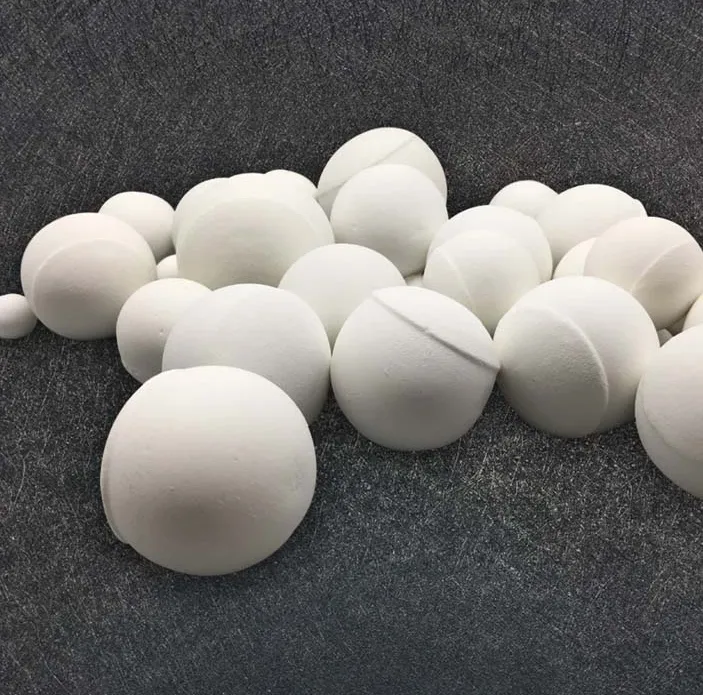
Alumina ceramic grinding balls are spherical or near-spherical milling media manufactured from aluminum oxide powder (Al₂O₃). Producers offer different purity levels, commonly labeled by Al₂O₃ content such as 65, 75, 92, 95, and 99 percent. Higher purity correlates with higher density, higher hardness, lower porosity, and lower wear. Typical production routes include isostatic pressing, dry pressing, and sintering at high temperature to develop a dense microstructure.
Why use alumina balls in aluminum casting workflows
Practical foundry reasons to choose alumina media include:
-
Low contamination: Alumina releases negligible metallic contaminants into milled fluxes, slags, or ceramic coatings, preserving melt chemistry. High-purity grades keep impurity transfer minimal.
-
Superior wear life: Very hard material surfaces reduce media loss. Longer service life reduces downtime for media replacement.
-
Thermal resilience: Alumina tolerates elevated temperatures often present near furnace charging, ladle handling, or hot milling environments, keeping geometry stable.
-
Chemical stability: Resistance to common refractories, flux chemicals, and alkaline corrosion makes alumina a robust choice in diverse process chemistries.
When process purity, long run time, and reduced media turnover matter, alumina tends to outperform lower-cost alternatives. These performance advantages often yield lower total cost of ownership even if unit price is higher.
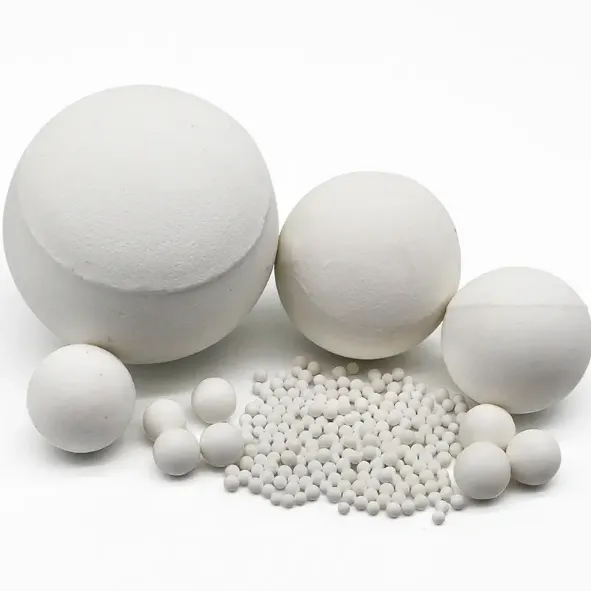
Industrial High Alumina Al2O3 Ceramic Grinding Media Balls
Material grades and how to read technical specs
Alumina grinding media are categorized by Al₂O₃ percentage. Common commercial grades:
-
Low-to-medium purity: 65 to 75 percent Al₂O₃. Lower cost, used when contamination tolerance is higher.
-
High-purity: 92 to 99 percent Al₂O₃. Preferred for critical metallurgy, electronics, and specialized coatings.
Important specs on product sheets and what they mean:
-
Bulk density (g/cm³) — indicates mass per unit volume; higher density improves grinding energy transfer. Typical range 2.95 to 3.8 g/cm³.
-
Mohs hardness / Vickers — resistance to abrasion; alumina often rates near Mohs 9.
-
Water absorption (%) — proxy for porosity; lower values signal higher density and lower contamination risk. Typical values drop below 0.05 percent for high-quality types.
-
Compressive strength (MPa) — important for impact resistance inside ball mills; higher for high-purity grades.
Quick specification chart (typical ranges)
| Grade (Al₂O₃) | Bulk density g/cm³ | Hardness (Mohs) | Water absorption % | Typical compressive strength (MPa) |
|---|---|---|---|---|
| 65 | ≥2.95 | ~8 | ≤0.05 | ≥1650 |
| 75 | ≥3.25 | 8–9 | ≤0.05 | ≥1700 |
| 92 | ≥3.55 | 9 | ≤0.02 | ≥1900 |
| 95 | ≥3.65 | 9 | ≤0.02 | ≥2250 |
| 99 | ≥3.80 | 9 | ≤0.01 | ≥2500 |
| Source: composite of manufacturer technical sheets. |
Manufacturing methods and their influence on performance
Different fabrication paths yield distinct microstructures and performance traits:
-
Isostatic pressing followed by high-temperature sintering produces uniformly dense bodies with minimal internal flaws. These parts show high compressive strength and low porosity. Typical for premium 92–99 percent media.
-
Dry pressing is economical for larger volumes and moderate-purity grades. Finished parts may show slightly higher porosity when compared to isostatically pressed parts.
-
Injection molding or casting methods can create complex shapes or non-spherical media, useful in specific mill configurations. Final heat treatment controls crystallinity and strength.
Selecting manufacturing type matters if your process involves heavy-impact milling, thermal shock, or requires ultra-low contamination.
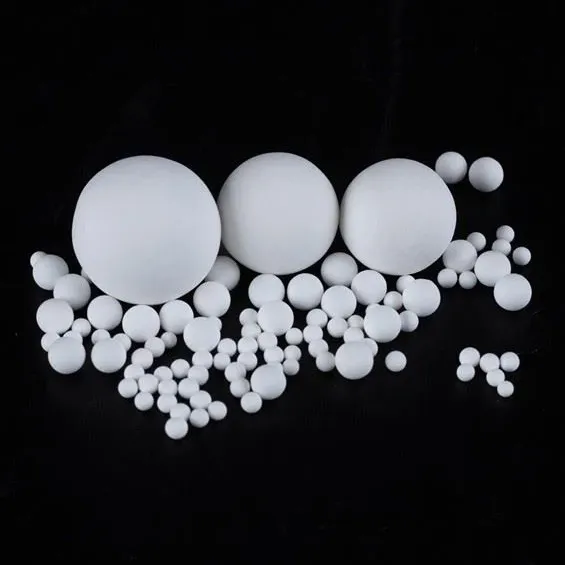
China Customized Alumina Grinding Media Balls Manufacturers, Suppliers, Factory
Mechanical, thermal, and chemical properties
Below is a consolidated technical table useful for specification and vendor comparison.
Properties table. typical values for alumina grinding balls
| Property | Typical value (range) | Relevance to aluminum casting application |
|---|---|---|
| Chemical composition | Al₂O₃ 65–99% | Purity determines contamination risk and wear performance |
| Bulk density | 2.95–3.80 g/cm³ | Higher density increases impact energy and milling efficiency |
| Hardness | Mohs ~8–9; Vickers up to ~1800 HV | High hardness reduces abrasive wear, prolonging media life |
| Water absorption | ≤0.05% down to ≤0.01% | Low porosity reduces trapping of contaminants and chemical ingress |
| Thermal stability | Stable above 1000 °C | Maintains shape and hardness when exposed to heat near furnace zones |
| Corrosion resistance | Excellent to many fluxes and refractories | Minimizes chemical breakdown under process exposures |
| Typical sizes | 1 mm up to 100 mm | Size selection determines surface contact area and energy per collision |
How alumina media interacts with molten aluminum and casting process inputs
Alumina does not dissolve significantly in molten aluminum under normal holding conditions. That trait keeps particulate contamination from media quite low when media contact occurs through ancillary processes such as grinding of fluxes, refractory powders, or coating slurries. Two practical considerations:
-
Indirect contact: When grinding powders used to treat molten aluminum, media wear particles enter the powder rather than the liquid metal directly, making control of powder-to-melt transfer critical.
-
Direct contact avoidance: Never allow ceramic grinding media to become entrained in charge material where whole pieces could be introduced into the melt. Screening and sieving policies prevent accidental inclusion.
These operational controls reduce the chance of media-derived defects in castings. Manufacturer literature supports low transfer rates for high-purity alumina, though process controls must remain strict.
Comparative performance: alumina versus steel and silicon carbide media
Alumina offers specific trade-offs versus other popular media.
Comparison summary table
| Characteristic | Alumina ceramic balls | Steel balls | Silicon carbide media |
|---|---|---|---|
| Hardness | Very high (Mohs ~9) | Moderate (steel hardness variable) | High (SiC very hard) |
| Wear rate | Low | Higher in abrasive tasks | Low but brittle |
| Contamination concern | Low non-metallic contamination | Can shed iron into milled product | Little chemical contamination but fragments can be sharp |
| Thermal stability | Excellent | Good to fair | Variable, can oxidize under some conditions |
| Electrical insulation | Yes | No | Yes |
| Typical cost | Higher per unit | Lower per unit | Medium to high |
| Best use case | High-purity milling, low contamination need | Heavy-duty crushing where metallic input tolerated | Abrasive non-metallic grinding tasks |
Sources support alumina’s lower wear and reduced contamination profile relative to steel, plus different operating envelopes when compared to silicon carbide.
Typical sizes, packing, and mill-loading practices
Media size selection depends on mill type and desired grinding outcome. Smaller diameters increase surface area contact and produce finer particle sizes, whereas larger diameters raise impact energy for coarse breakage.
Operational table: sizing, typical use, and mill loading
| Ball diameter (mm) | Typical use in aluminum casting prep | Mill loading guidance |
|---|---|---|
| 1–5 | Fine powders, slurries, dispersions used in coatings and fluxes | High filling ratio with staged feed; monitor for overgrinding |
| 6–20 | General milling of refractory powders, filters, degassing agents | Standard loading 30–50 percent by volume depending on mill type |
| 25–50 | Crushing large granules, pre-breakdown of agglomerates | Use for initial passes then switch to finer media for finish milling |
| 50–100 | Rare in high-purity operations; used for bulk crushing | Heavy duty mills only; check mill liners and kinematics |
Sizes are commonly available from 1 mm to 50 mm or larger, with spherical tolerance important to keep mill performance predictable.
Selection checklist for foundries and metal processing plants
When procuring alumina grinding balls, use this checklist to ensure fit for purpose:
-
Required Al₂O₃ purity level linked to contamination tolerance.
-
Preferred manufacturing process and evidence of microstructural density (low water absorption).
-
Target diameter(s) and sphericity tolerance to fit existing mills.
-
Manufacturer technical data sheet with density, hardness, and compressive strength values.
-
Warranty terms and sample wear test data under representative conditions.
-
Supplier quality control records and batch traceability.
-
Shipping, packaging, and storage recommendations to avoid moisture uptake.
-
Price quotes including freight and any minimum order quantities.
Following these parameters will reduce surprises after deployment.
Installation, handling, wear monitoring, and replacement criteria
Practical recommendations:
-
Initial inspection: Check delivered media for cracks, chips, or deformed spheres. Reject batches showing visual damage.
-
Loading: Use appropriate cranes, screw feeders, or vacuum transfer units fitted with soft liners to minimize impact damage during handling.
-
Wear monitoring: Implement a mass-balance procedure where media mass entering the mill is tracked against media mass removed. Record monthly wear rates.
-
Replacement triggers: When average diameter shrinks by a specified percentage or wear rate exceeds vendor-specified thresholds, replenish. Typical end-of-life criteria include diameter reduction beyond 10 to 20 percent or increased generation of fines that affect product quality.
-
Storage: Keep in dry, climate-controlled warehouses to guard against humidity and contamination.
Vendors often publish expected wear rates under laboratory conditions; verify these with pilot testing under your plant’s operating conditions.
Common failure modes and mitigation techniques
Failure modes include fracture from impact, surface spalling, chemical pitting, and accelerated abrasion. Mitigation measures:
-
Fracture: Avoid sudden heavy impacts during loading; choose an appropriate manufacturing route and grade for impact resistance.
-
Spalling: Monitor mill dynamics; overloaded or improperly baffled mills increase collision severity.
-
Chemical attack: Review compatibility between your fluxes, solvents, and alumina grade; use higher density, lower-porosity grades when chemical exposure is significant.
-
Accelerated abrasion: Substitute a higher-grade alumina or increase average media diameter to reduce collisions per unit mass.
Root cause analysis of media failure is essential. Collect failed pieces and send microstructure samples to the supplier for metallographic analysis when warranted.
Environmental, safety, and contamination control notes
-
Dust control: Milling operations generate fine dust. Use local extraction and filtration. Particle control helps avoid cross-contamination of charge materials.
-
Disposal: Worn ceramic media is inert, yet local regulations determine disposal or recycling routes. Investigate any reuse options with suppliers.
-
Health: Alumina dust has low toxicity compared to heavy metals, yet inhalation of respirable dust must be prevented with PPE and engineering controls.
Costing considerations: upfront price versus life-cycle cost
Unit price differences between media types tell only part of the story. Total cost evaluation should include:
-
Purchase price per tonne
-
Expected service life under your operating conditions (in kg of media lost per tonne of product)
-
Downtime for changeouts and labor costs
-
Product yield effects from contamination or fines
Alumina often wins in total cost when lower wear and lower contamination yield fewer interruptions and higher finished-product quality. Supplier-provided wear test data is valuable, but on-site validation under production loads gives final answers.
Case notes and recommended specifications for aluminum casting applications
For typical aluminum casting feedstock preparation, these recommendations reflect common foundry priorities:
-
Standard recommended grade: 92 percent Al₂O₃ minimum for mixed duties where contamination control matters. Move to 95 percent or 99 percent when product purity is critical.
-
Standard sizes: Use 6–20 mm media for general refractory powder and flux grinding. Employ staged grinding that starts with larger media then finishes with finer sizes when a narrow particle distribution is required.
-
Surface finish control: Choose low-porosity, low water-absorption media to limit adsorption of process chemicals and to minimize unexpected reactions when powders contact molten aluminum.
Vendor validation and sample testing protocol
-
Request technical data sheet and recent batch test records.
-
Ask for a sample package and run an in-plant abrasion test replicating mill load, speed, media-to-powder ratio, and processing time.
-
Measure mass loss and particle size distribution of milled product. Compare with supplier claims.
-
If possible, run a small-scale melt trial to confirm no adverse casting effects from milled additives.
-
Approve procurement only after acceptance criteria are met.
Multiple tables summary
Table A. Typical vendor spec excerpt (condensed)
| Parameter | Value range | Acceptable threshold for foundries |
|---|---|---|
| Al₂O₃ | 65–99% | ≥92% for critical feedstock |
| Water absorption | ≤0.05% to ≤0.01% | ≤0.02% preferred |
| Density | 2.95–3.80 g/cm³ | ≥3.55 g/cm³ recommended |
| Hardness | Mohs 8–9 | Mohs 9 preferred |
| Sizes | 1–100 mm | 6–25 mm common |
Data aggregated from manufacturer datasheets and technical notes.
Table B. Typical wear test outline to request from supplier
| Test parameter | Unit | Reason to request |
|---|---|---|
| Mill type | description | Matching dynamics influences wear |
| Rotational speed | rpm | Affects collision energy |
| Media size and mass | mm, kg | Determines contact geometry |
| Feed material | description | Abrasiveness affects wear |
| Duration | hours | Allows comparison to production rates |
| Reported mass loss | g or % | Primary performance metric |
Alumina Grinding Media & Milling Operations FAQ
1. Why choose 92 percent Alumina over 75 percent for feedstock milling?
2. Will alumina media introduce oxygen or contaminants that harm liquid aluminum?
3. How often should grinding media be replaced?
4. Are alumina balls compatible with all fluxes and refractories?
5. Can I switch from steel balls to alumina without modifying my mill?
6. Which manufacturing method gives the best life for grinding balls?
7. What particle sizes of milled product are achievable using alumina media?
8. How should I test vendor claims about wear rates?
9. What packaging and handling precautions are needed?
10. Is alumina grinding media environmentally friendly?
Final recommendations and procurement language
For an aluminum casting plant seeking a reliable, low-contamination grinding media, request samples of 92 percent Al₂O₃ isostatically pressed balls, size range 6–20 mm, density ≥3.55 g/cm³, water absorption ≤0.02 percent, and compressive strength above 1900 MPa. Require a wear test conducted under your mill conditions, and obtain batch traceability documentation. Doing so minimizes surprises and accelerates qualification.