

A 40 PPI ceramic foam filter removes non-metallic inclusions from molten aluminum and other non-ferrous alloys by forcing melt through a network of interconnected pores measuring roughly 0.6mm to 0.8mm in diameter. We’ve worked with foundries across multiple continents, and this specific porosity grade sits at the sweet spot for aluminum sand casting and low-pressure die casting where medium-fine filtration is required without excessive flow restriction. If you’re sourcing filters for wheel production, engine blocks, or structural automotive components, the 40 PPI grade typically delivers the best balance between inclusion capture rate and casting yield.
If your project requires the use of 40 PPI Ceramic Foam Filter, you can contact us for a free quote.
What Does PPI Actually Mean in Ceramic Filter Terminology?
PPI stands for pores per linear inch, a measurement borrowed from the reticulated foam industry back when ceramic foam filters were first adapted from polyurethane foam templates in the 1970s. The number gets counted by examining a one-inch cross-section of the filter and tallying visible pore openings.
Here’s something manufacturers rarely explain clearly: PPI isn’t an exact science. Two filters both labeled 40 PPI from different production batches can show pore counts varying by 3-5 pores depending on measurement angle and foam cell uniformity. We always recommend requesting a certificate of analysis with actual pore count data rather than relying solely on the printed specification.
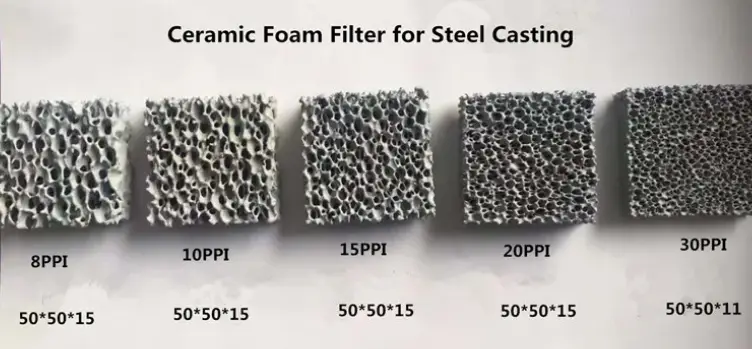
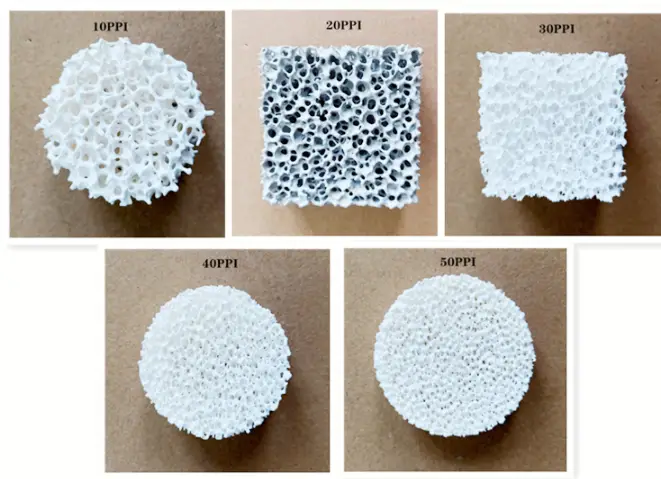
The relationship between PPI and actual pore size works inversely. Higher PPI numbers mean smaller, more numerous pores. A 10 PPI filter has large, coarse openings suitable for removing big slag chunks, while an 80 PPI filter has extremely fine pores that catch microscopic oxide films but restrict flow significantly.
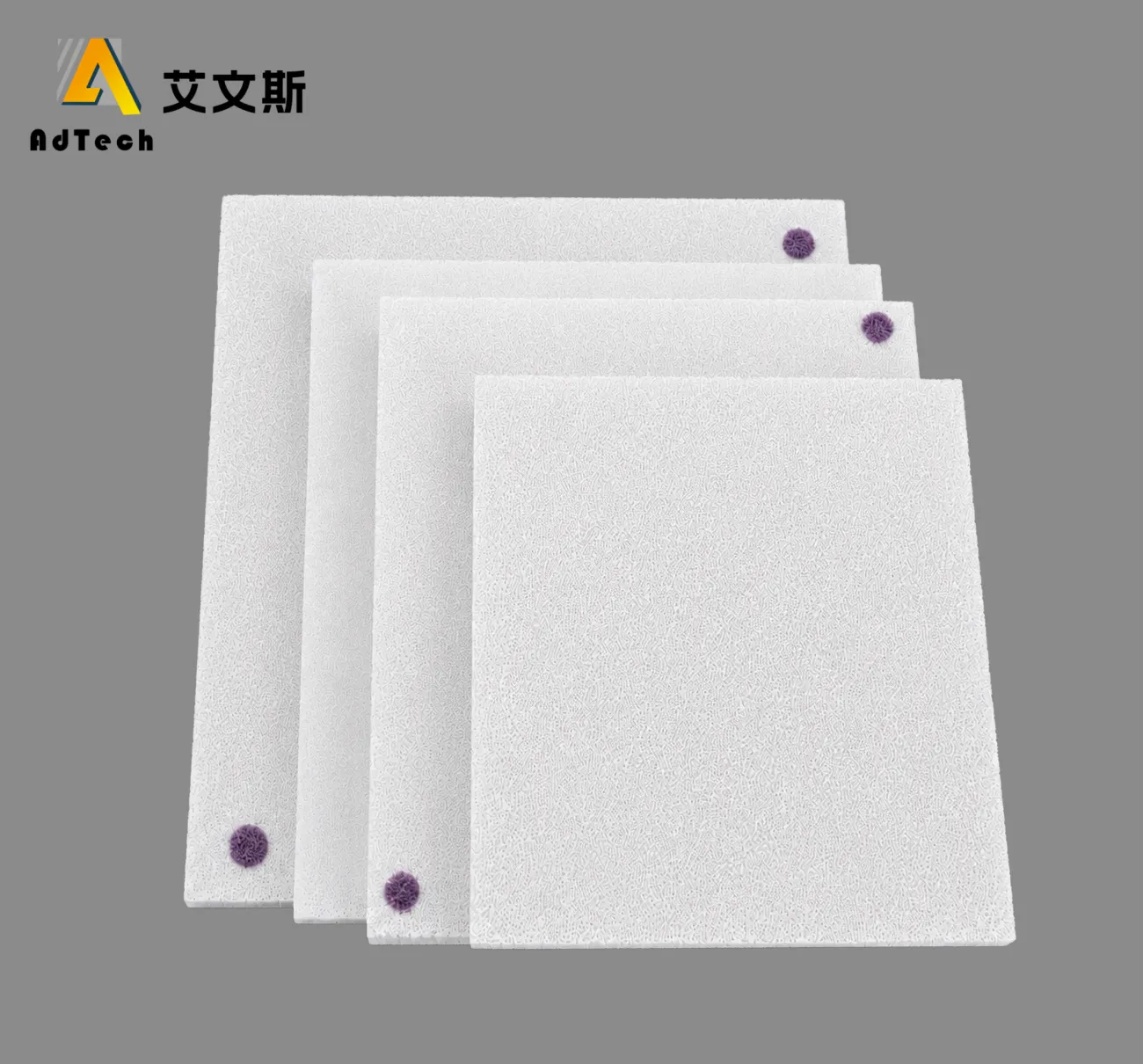
Technical Specifications and Physical Properties
| Parameter | Specification |
|---|---|
| Pore Density | 38-42 pores per linear inch |
| Average Pore Diameter | 0.6mm – 0.8mm |
| Porosity Percentage | 80% – 88% |
| Bulk Density | 0.4 – 0.6 g/cm³ |
| Cold Crushing Strength | ≥ 0.6 MPa |
| Maximum Service Temperature | 1000°C – 1650°C (alloy dependent) |
| Thermal Shock Resistance | Withstands rapid heating from room temp to 800°C |
| Standard Thickness | 15mm, 20mm, 22mm, 40mm, 50mm |
We’ve seen crushing strength values quoted differently across suppliers, and this matters more than most buyers realize. A filter with insufficient cold crushing strength can crack during handling before it ever touches molten metal, leading to breakthrough contamination that ruins an entire casting batch.
Also read: What is a Ceramic Foam Filter?
Composition and Manufacturing Materials
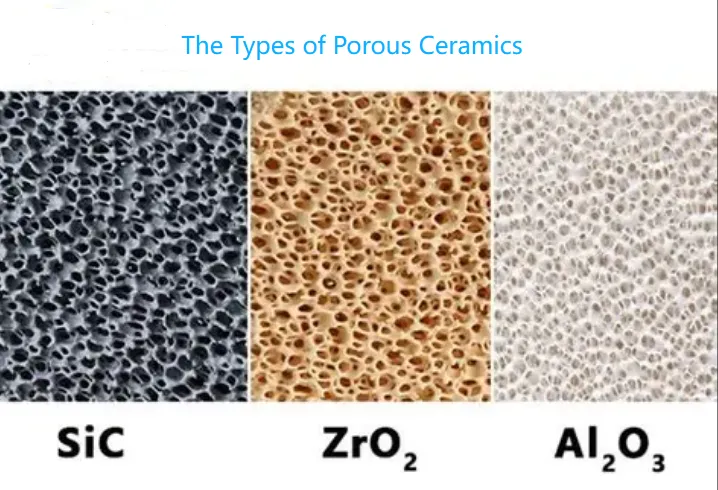
Three primary ceramic material systems dominate 40 PPI filter production, and each brings distinct performance characteristics to specific casting applications.
Silicon Carbide (SiC) Foam Filters
Silicon carbide filters handle higher thermal conductivity applications and work well for aluminum alloys containing higher silicon content. The dark grey to black coloring makes them visually distinguishable from alumina-based alternatives. We generally recommend SiC filters when dealing with A356 or A380 alloys where thermal cycling resistance becomes critical.
Alumina (Al2O3) Foam Filters
Alumina represents the workhorse material for general aluminum casting. It offers solid mechanical strength at reasonable cost and handles the majority of standard aluminum foundry work. Most 40 PPI filters shipped globally use this composition.
Zirconia-Alumina Composite Filters
For applications involving higher pouring temperatures or more aggressive alloy chemistry, zirconia-toughened filters provide extended service life. These cost more but reduce the risk of erosion-related filter degradation during longer pours.
| Material Type | Best Application | Relative Cost | Max Temp Rating |
|---|---|---|---|
| Alumina | General aluminum casting | Baseline | 1000°C |
| Silicon Carbide | High-Si aluminum alloys | 1.3-1.5x | 1400°C |
| Zirconia Composite | Extended pour times, harsh alloys | 1.8-2.2x | 1650°C |
How Filtration Actually Occurs Inside the Foam Structure
Molten metal filtration through ceramic foam works through two distinct mechanisms operating simultaneously, and understanding both helps explain why 40 PPI performs differently from coarser or finer alternatives.
Mechanical Sieving happens at the pore openings where particles larger than the pore diameter physically cannot pass through. This straightforward mechanism catches larger inclusions like refractory fragments, oxide skins, and larger intermetallic compounds.
Depth Filtration occurs throughout the tortuous internal pathway of the foam structure. As melt travels through the three-dimensional network of interconnected struts and windows, smaller particles collide with pore walls and adhere due to surface tension effects and van der Waals forces. This mechanism captures particles considerably smaller than the nominal pore diameter, which explains why a 40 PPI filter can remove inclusions well below its 0.6-0.8mm pore size.
Flow behavior through the filter also creates a settling effect. As melt velocity decreases while passing through the resistance of the foam matrix, some heavier inclusions settle out due to density differences before ever reaching the pore structure itself. This is one reason filter box design and gate placement matter as much as filter selection.
We’ve observed in plant trials that roughly 60-70% of total inclusion removal in a properly sized 40 PPI filter comes from depth filtration rather than simple sieving, which surprises many process engineers who assume pore size alone determines capture efficiency.
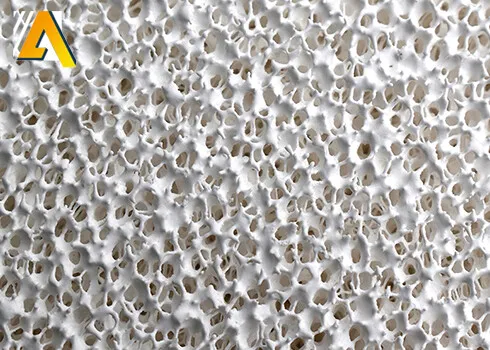
Comparing 40 PPI Against Other Common Grades
Choosing between PPI grades requires balancing flow rate against filtration fineness. Here’s how 40 PPI stacks up against neighboring options.
| PPI Grade | Pore Size (mm) | Flow Rate | Filtration Fineness | Typical Application |
|---|---|---|---|---|
| 10 PPI | 2.3-3.0 | Very High | Coarse | Rough slag removal, gravity casting |
| 20 PPI | 1.2-1.5 | High | Medium-Coarse | General sand casting |
| 30 PPI | 0.8-1.0 | Medium-High | Medium | Automotive components |
| 40 PPI | 0.6-0.8 | Medium | Medium-Fine | Wheels, engine parts, LPDC |
| 50 PPI | 0.4-0.5 | Medium-Low | Fine | High-integrity castings |
| 60 PPI | 0.3-0.4 | Low | Very Fine | Aerospace, critical structural parts |
In our experience running production trials, dropping from 30 PPI to 40 PPI typically reduces flow rate by 15-20% while improving inclusion capture efficiency by a comparable margin. Foundries producing safety-critical components like steering knuckles or wheel hubs generally find 40 PPI hits the necessary quality threshold without creating excessive back-pressure that leads to mold filling problems.
Applications Across Different Alloy Systems
Aluminum Wheel Production
Wheel casting represents perhaps the single largest application for 40 PPI filters globally. Automotive wheels demand both structural integrity and surface finish quality, since any inclusion trapped near the visible face of a finished wheel becomes a cosmetic and safety rejection point. Low-pressure die casting wheel plants typically install 40 PPI filters at the base of the riser tube or in the runner system.
Engine Block and Cylinder Head Casting
Engine components experience thermal cycling and pressure loading throughout their service life, making internal porosity and inclusions particularly dangerous. Many engine foundries specify 40 PPI as their standard filtration grade for A319 and A356 alloy systems, sometimes stepping up to 50 PPI for critical combustion chamber areas.
Structural Automotive Castings
Suspension components, control arms, and subframe castings increasingly use 40 PPI filtration as vehicle manufacturers push for lighter aluminum structures replacing steel. These applications demand consistent mechanical properties throughout the casting, which requires thorough inclusion removal.
Sand Casting Applications
Green sand and resin-bonded sand molds benefit from 40 PPI filtration when producing mid-complexity aluminum parts. The filter typically sits in the gating system, often within a specially designed filter print cavity that positions the filter perpendicular to metal flow direction.
Installation Best Practices We’ve Learned From Plant Experience
Getting filter installation right prevents the majority of filtration-related casting defects we encounter during troubleshooting visits.
Filter Print Design
The cavity holding the filter needs proper sealing to prevent metal bypass around the filter edges rather than through it. We’ve seen foundries lose 30% of theoretical filtration benefit simply because the filter print allowed a thin metal channel to form around the filter perimeter during the pour. Adding a slight interference fit or ceramic fiber gasket around the filter edge solves this reliably.
Preheating Considerations
Cold filters dropped into a hot gating system create thermal shock risk and can also cause localized freezing of the melt front, leading to misruns. We recommend preheating filters to at least 150-200°C before insertion whenever cycle time allows, though many high-volume operations skip this step successfully with properly formulated filters rated for thermal shock resistance.
Flow Direction and Orientation
Ceramic foam filters work in either flow direction, but consistency matters for predictable flow rate calculations. Mark and maintain a standard orientation across your production run rather than installing filters randomly, since minor manufacturing variations in pore structure can create slightly asymmetric flow characteristics.
First-Flow Considerations
The initial metal contacting a fresh filter experiences the highest resistance as the filter’s internal structure hasn’t yet been “primed” with a thin metal film that actually improves subsequent flow characteristics. Gating system design should account for this initial resistance spike, particularly in automated pouring systems with fixed pour rates.
Common Problems and Practical Troubleshooting
Filter Breakage During Pour
This typically traces back to three causes: excessive pouring height creating impact stress, inadequate filter seating in the print cavity, or filters with insufficient cold crushing strength for the application. We generally advise reducing free-fall pour height to under 100mm directly above the filter and verifying supplier crushing strength data against actual test certificates rather than marketing specifications.
Premature Filter Blocking
When filters clog before completing a full pour, the root cause usually involves either excessive inclusion loading in the melt (indicating upstream melt treatment problems) or selecting too fine a PPI grade for the alloy’s actual cleanliness level. Before switching to a coarser filter, we recommend reviewing degassing and fluxing practices, since filter selection should complement rather than compensate for poor melt treatment.
Inconsistent Flow Rates Between Filters
Batch-to-batch variation in flow characteristics often stems from inconsistent manufacturing quality control. Request pressure drop testing data from suppliers and consider running incoming inspection sampling if your operation experiences unexplained casting defects that correlate with specific filter batches.
Erosion and Filter Degradation
Extended pour times or higher-than-specified pour temperatures accelerate filter erosion, particularly with standard alumina filters. Signs include enlarged pore structure near the melt-contact face and inclusion levels that increase toward the end of longer pours. Switching to silicon carbide or zirconia-composite filters addresses this for applications with pour times exceeding standard filter service ratings.
Standard Sizes and Shapes Available
| Shape | Common Dimensions | Typical Application |
|---|---|---|
| Round | 50mm, 60mm, 70mm, 80mm, 90mm, 100mm, 125mm, 150mm diameter | Riser filtration, gravity casting |
| Square | 50x50mm to 230x230mm | Sand casting gating systems |
| Rectangular | Custom sizing based on gate design | High-volume production lines |
Thickness across all shapes generally ranges from 15mm to 50mm, with 22mm representing the most commonly stocked dimension for aluminum applications. Custom sizing is available from most manufacturers, though minimum order quantities for non-standard dimensions typically run higher than standard catalog sizes.
Quality Verification and Testing Standards
Reputable manufacturers test 40 PPI filters against several international standards, though we’ve found significant variation in how rigorously different suppliers actually apply these tests.
Cold crushing strength testing follows procedures similar to ASTM C133, measuring the compressive force required to fracture the filter. Thermal shock resistance testing typically involves heating samples to operating temperature then subjecting them to rapid quenching, checking for crack formation or structural failure.
Flow rate testing using standardized water models or actual metal trials provides the most practical performance data for purchasing decisions. We always recommend requesting this data specifically, since pore count alone doesn’t guarantee consistent flow performance across different manufacturing batches.
Visual inspection remains surprisingly important despite advances in testing technology. Filters should show uniform pore distribution without visible cracks, chips, or density variations across the face. Color consistency also indicates proper firing temperature control during manufacturing, with uneven coloring sometimes signaling inconsistent kiln conditions.
Storage and Handling Guidelines
Ceramic foam filters are more fragile than their appearance suggests, and improper storage causes more field failures than most quality managers realize.
Store filters in original packaging in a dry environment away from temperature fluctuations. Humidity absorption into the ceramic structure can create steam generation during preheating or initial metal contact, potentially causing filter cracking. Stack height should stay limited to prevent crushing damage to filters at the bottom of storage containers, particularly for larger square and rectangular formats.
Handle filters by their edges rather than pressing on the face structure, since finger pressure can compress and damage the delicate foam matrix even when it appears rigid. Foundries running high volumes often develop dedicated handling fixtures that transport filters from storage directly to the filter print without manual face contact.
Environmental and Cost Considerations
We’re increasingly asked about the total cost picture beyond the per-unit filter price. A 40 PPI filter typically costs 15-25% more than an equivalent 30 PPI filter due to more complex manufacturing requirements achieving the finer pore structure.
However, the cost calculation needs to include downstream savings from reduced scrap rates. Foundries switching from 30 PPI to properly implemented 40 PPI filtration commonly report scrap rate reductions of 1-3% on inclusion-sensitive castings, which typically outweighs the filter price difference many times over on any reasonable production volume.
Disposal considerations remain minor since spent ceramic filters are inert and don’t require special hazardous waste handling in most jurisdictions, though local regulations should always be verified.
Frequently Asked Questions
What’s the difference between 40 PPI and 50 PPI ceramic foam filters?
The primary difference lies in pore size and resulting filtration fineness. 40 PPI filters have larger pores (0.6-0.8mm) allowing higher flow rates but slightly coarser filtration, while 50 PPI filters have smaller pores (0.4-0.5mm) that capture finer inclusions at the cost of reduced flow rate and higher pressure drop across the filter.
Can 40 PPI filters be used for cast iron applications?
Standard alumina 40 PPI filters aren’t typically recommended for cast iron due to the higher pouring temperatures involved. Iron casting generally requires specialized filter formulations with higher temperature ratings, often using different ceramic compositions specifically engineered for ferrous metal service.
How long does a 40 PPI filter remain effective during a single pour?
Effective service life depends on melt cleanliness and pour volume, but standard 40 PPI filters typically handle pours ranging from 50kg to 500kg depending on filter size before showing significant flow restriction. High-inclusion melts will reduce this capacity considerably.
What causes a ceramic foam filter to crack before use?
Pre-use cracking usually results from mechanical damage during shipping or handling, moisture absorption creating internal stress during preheating, or manufacturing defects from inconsistent firing. Proper storage and gentle handling practices prevent most pre-use failures.
Is preheating always necessary for 40 PPI filters?
Preheating isn’t strictly mandatory for all applications, but it significantly reduces thermal shock risk and prevents localized metal freezing at the filter face. High-volume automated operations sometimes skip preheating when using filters specifically rated for cold installation, but manual or lower-volume operations benefit from the practice.
Why does my filter show higher rejection rates near the end of production runs?
This pattern typically indicates gradual filter degradation from extended thermal exposure or progressive pore blocking from accumulated inclusions throughout the run. Consider filter replacement schedules based on total throughput rather than time alone.
Do all 40 PPI filters from different manufacturers perform identically?
No, manufacturing quality varies significantly between suppliers despite identical PPI ratings. Actual pore size distribution, material composition, and manufacturing consistency all affect real-world performance, making supplier qualification testing worthwhile before committing to large volume purchases.
What alloy types benefit most from 40 PPI filtration?
Aluminum casting alloys used in structural and safety-critical automotive applications, including A356, A357, and A380 series alloys, commonly specify 40 PPI as their standard filtration grade due to the balance between flow characteristics and inclusion removal these applications require.
How does filter shape selection affect casting quality?
Round filters work well for riser and sprue filtration in gravity and low-pressure applications, while square and rectangular filters integrate more naturally into horizontal gating systems common in sand casting. Shape selection should match your existing tooling and gating design rather than assuming one shape universally outperforms others.
Can spent ceramic foam filters be reused?
Ceramic foam filters are single-use consumables designed for one pour cycle. The internal structure becomes progressively loaded with captured inclusions during use, and attempting reuse compromises both flow rate and filtration effectiveness while risking filter failure during subsequent pours.
Final Thoughts From Our Foundry Floor Experience
Selecting the right ceramic foam filter involves more variables than the PPI number alone suggests. We’ve walked through the technical specifications, material options, and practical installation guidance that separates successful filtration programs from those generating recurring quality headaches. The 40 PPI grade earns its widespread adoption across automotive aluminum casting because it genuinely balances competing priorities that pure technical specifications sometimes obscure.
Working directly with your filter supplier on application-specific testing, rather than relying solely on catalog specifications, consistently produces better outcomes than treating filter selection as a simple ordering decision. Every foundry’s melt chemistry, gating design, and quality requirements create a slightly different optimal solution, even when the general PPI recommendation remains consistent across the industry.