

Degassing aluminum is a fundamental metallurgical process designed to remove dissolved hydrogen gas and non-metallic inclusions (like oxides and dross) from molten aluminum alloys before casting. This process is crucial because hydrogen, absorbed during melting from moisture in the atmosphere, furnace refractories, or charge materials, has a sharply reduced solubility when aluminum transitions from a liquid to a solid state. As the metal cools and solidifies, the excess hydrogen precipitates out, creating microscopic or macroscopic pores—a defect known as porosity—which severely compromises the final casting’s mechanical properties, density, and surface finish. Effective degassing, most commonly achieved using rotary inert gas injection, is mandatory for producing high-quality, structurally sound aluminum castings that meet stringent industry specifications.
The Critical Importance of Molten Aluminum Purification
The quality of the final aluminum casting is irrevocably determined by the purity of the molten metal. Aluminum, being highly reactive, readily absorbs hydrogen and forms stable oxide films when exposed to ambient air and moisture at elevated temperatures. These contaminants are the root cause of most casting defects.
Understanding the Hydrogen Menace in Aluminum
Hydrogen is the single most significant gaseous contaminant in molten aluminum. Its behavior is dictated by a massive difference in solubility between the liquid and solid states.
-
Liquid State: Molten aluminum can dissolve a substantial amount of hydrogen. At the melting point (approximately 660°C for pure aluminum), the solubility can be as high as 0.69 mL of H2 per 100 g of Al.
-
Solid State: Upon solidification, the solubility drops drastically—to approximately 0.036 mL of H2 per 100 g of Al.
This approximately 20:1 ratio means that as the metal solidifies, the vast majority of the dissolved hydrogen is violently rejected from the solution. If this rejected hydrogen cannot escape the solidifying metal rapidly, it forms bubbles that become trapped, resulting in internal or surface porosity.
The Detrimental Effects of Porosity
Hydrogen-induced porosity directly translates into defective and weaker products. The issues include:
-
Reduced Mechanical Strength: Porosity acts as stress concentration points, significantly lowering tensile strength, yield strength, and elongation.
-
Leakage in Pressure-Tight Castings: Automotive components, such as engine blocks or transmission cases, must be pressure-tight. Porosity creates paths for fluids or gases to leak, rendering the part useless.
-
Poor Surface Finish: Sub-surface porosity can become visible after machining or polishing, leading to a pitted or flawed surface appearance.
-
Increased Scrap Rate: Castings with excessive porosity fail quality checks, increasing production costs and decreasing efficiency.
How the Degassing Process Works: Scientific Principles
The core mechanism of aluminum degassing relies on the principle of partial pressure difference and gas flotation.

Henry’s Law and Partial Pressure
The amount of a gas dissolved in a liquid is proportional to the partial pressure of that gas above the liquid. In the degassing process, an inert gas, such as high-purity nitrogen (N2) or argon (Ar), is injected into the melt.
-
Inert Gas Bubble Creation: The inert gas bubbles, when introduced, contain almost no hydrogen. The partial pressure of hydrogen (P-H2) inside these bubbles is near zero.
-
Concentration Gradient: The dissolved hydrogen in the molten aluminum exists at a much higher concentration and partial pressure. This creates a steep concentration gradient between the melt and the inside of the bubble.
-
Diffusion and Absorption: Driven by this partial pressure difference, the dissolved hydrogen diffuses from the high-concentration liquid phase into the low-concentration inert gas bubbles. The bubbles effectively “scavenge” the hydrogen.
The Role of Flotation and Inclusion Removal
As the gas bubbles rise through the molten aluminum, a secondary but equally vital effect occurs: the flotation of non-metallic inclusions.
-
Surface Adsorption: The rising gas bubbles provide a large surface area that attracts and adheres to solid inclusion particles (primarily aluminum oxide, Al2O3).
-
Slag Formation: The bubbles carry these inclusions to the surface of the melt, where they coalesce with the existing dross layer (slag), making them easy to skim off and remove.
The smaller the size of the injected gas bubbles, the greater the total surface area available for hydrogen diffusion and inclusion adsorption, leading to dramatically higher degassing efficiency.
ADtech‘s Solutions: Primary Methods for Aluminum Degassing
The industry employs several methods, but modern foundries prioritize the efficiency, consistency, and environmental benefits of the Rotary Degassing technique.

1. Rotary Inert Gas Degassing (RIGD)
Rotary Inert Gas Degassing is the current industry standard and the most effective method for large-scale and high-quality production.
The Rotary Degasser Mechanism
A Rotary Degasser unit consists of a motor-driven shaft and a specialized impeller (rotor), typically made of high-density graphite, which is resistant to thermal shock and chemical attack.
| Component | Material | Function |
| Shaft & Rotor | Graphite/Silicon Carbide | Immersed in the melt; rotates to shear gas and circulate metal. |
| Purge Gas | Nitrogen (N2) or Argon (Ar) | Inert gas introduced through the hollow shaft; acts as the scavenging medium. |
| Drive System | Electric Motor | Provides precise and adjustable rotational speed for the impeller. |
Process Steps and Advantages:
-
Gas Introduction: The inert gas is fed through the hollow shaft and exits through orifices in the rotating impeller.
-
Bubble Shearing: The high-speed rotation of the impeller instantly shears the gas stream into a vast quantity of extremely fine, micro-sized bubbles (ideally <1 mm in diameter).
-
Melt Circulation: The impeller’s design actively pumps and circulates the molten metal, ensuring that the tiny bubbles are distributed uniformly throughout the entire bath volume, eliminating “dead zones.”
-
Efficient Purification: The small bubbles maximize the gas/liquid interface area and increase the bubble residence time, leading to rapid and complete hydrogen removal and inclusion flotation.
2. Flux Degassing
This is a more traditional method, often used in smaller operations or as a supplementary treatment.
-
Method: A chemical flux—usually a salt mixture containing chlorine (Cl) or fluorine (F) compounds—is plunged into the melt, often in tablet or powder form.
-
Chemical Reaction: The flux reacts with the aluminum to generate reactive gas compounds (like aluminum chloride, AlCl3) in situ. These gases bubble up through the melt, carrying hydrogen and inclusions to the surface.
-
Drawbacks: This method is less controllable, less efficient than RIGD, and often generates hazardous fumes (like chlorine gas) which pose environmental and safety concerns. Modern practice increasingly avoids chlorine-bearing fluxes for environmental compliance.
Table 1: Comparison of Degassing Methods
| Feature | Rotary Inert Gas Degassing (RIGD) | Flux Degassing |
| Efficiency (Hydrogen Removal) | High (90%+ achievable) | Moderate to Low |
| Purity of Gas | Inert N2 or Ar (Non-polluting) | Chemically active fumes (Cl, F compounds) |
| Inclusion Removal | Highly effective via flotation | Effective but less consistent |
| Process Control | Excellent (flow rate, RPM, time adjustable) | Poor (depends on reaction rate) |
| Environmental Impact | Low | High (Hazardous fumes/residue) |
Designing for Excellence: Best Practices for Degassing Aluminum
Achieving optimal melt quality requires strict adherence to process parameters and equipment maintenance. ADtech specialists focus on fine-tuning every aspect of the degassing cycle.
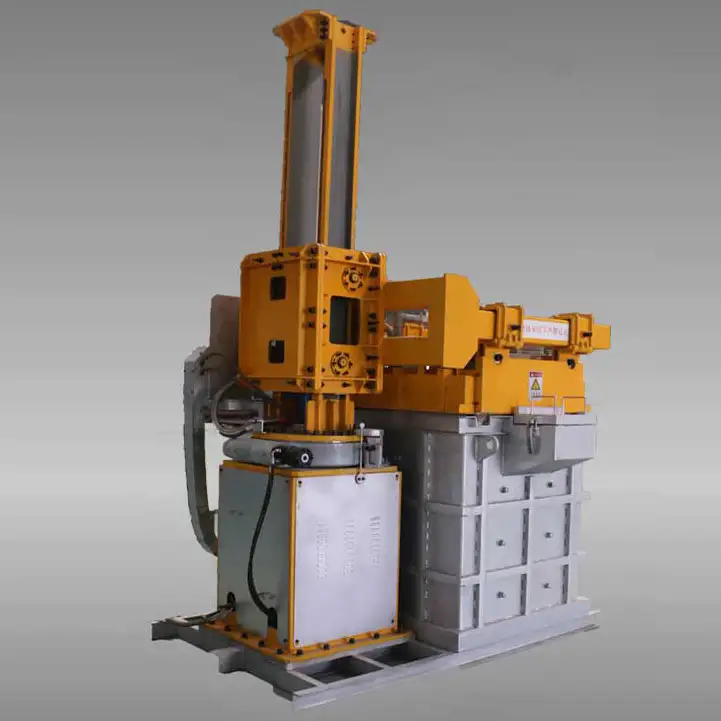
Process Parameter Optimization
The effectiveness of RIGD is highly dependent on controlling three primary variables:
| Parameter | Impact on Degassing | Optimization Goal |
| Gas Flow Rate | Controls the number of bubbles and agitation. | Use the lowest flow rate that achieves target bubble size to minimize turbulence and surface oxidation. |
| Rotor Speed (RPM) | Controls bubble shearing and melt circulation. | High enough to create fine bubbles and circulate the melt, but low enough to avoid excessive surface turbulence. |
| Treatment Time | Determines the duration of gas-melt contact. | Adequate time is necessary for diffusion equilibrium. Typically 5 to 15 minutes, depending on melt volume and initial hydrogen level. |
A well-designed graphite impeller is the heart of the rotary degassing system. It ensures high-shear forces to generate sub-millimeter bubbles, maximizing the surface area for hydrogen transfer.
Monitoring Melt Quality: Hydrogen Measurement
To ensure the degassing treatment is successful, the residual hydrogen level in the molten metal must be measured. Common methods include:
-
The Reduced Pressure Test (RPT): A simple, rapid test where a sample of molten metal is solidified under a partial vacuum. The degree of porosity in the solidified sample is a visual indicator of hydrogen content.
-
Hydrogen Measurement Systems: Specialized instruments use a carrier gas to extract the hydrogen from a sample, which is then measured electronically, providing a precise quantitative result (e.g., mL H2/100 g Al).
Maintenance and ADtech Equipment Longevity
Regular maintenance of the rotary unit is vital for sustained performance.
-
Rotor Life: Graphite rotors and shafts degrade over time due to wear, oxidation, and chemical attack. ADtech materials are engineered for maximum durability and thermal shock resistance.
-
Preheating: Before immersion, the shaft and rotor must be preheated to prevent thermal shock and premature failure, a key best practice.
-
Gas Purity: Utilizing only high-purity inert gas (e.g., 99.999% pure) is non-negotiable. Impure gas can introduce contaminants, defeating the purpose of degassing.
Case Study: Defect Reduction and Production Optimization
This case study demonstrates the substantial positive economic impact of implementing a robust, ADtech-engineered rotary degassing system in a high-volume foundry.
Case Study: Precision Automotive Castings Foundry
| Company | Location | Time Period | Initial Product | Degassing System |
| Midwest Precision Metals | Detroit, Michigan, USA | Q3 2024 – Q1 2025 | High-pressure die-cast (HPDC) aluminum transmission casings. | ADtech Rotary Degassing Unit (RIGD) Model X-1000 |
The Challenge:
Midwest Precision Metals was experiencing a consistent 11% internal scrap rate on a critical transmission casing due to excessive porosity, leading to consistent failures during post-casting pressure testing. Their existing setup relied on a suboptimal combination of manual fluxing and a basic lance-based nitrogen purge.
The ADtech Solution and Results:
ADtech installed a fully automated RIGD system with a custom impeller design to match their large holding furnace geometry.
-
Calibration: The system was calibrated to operate at a controlled nitrogen flow rate of 30 liters per minute and an impeller speed of 650 RPM for a 12-minute cycle.
-
Initial Hydrogen: Initial RPT results indicated a high hydrogen level, approximately 0.4 mL H2/100 g Al.
-
Post-Degassing Hydrogen: After treatment, the RPT showed a clear, minimal-porosity sample, with the hydrogen measurement system confirming a reading of 0.08 mL H2/100 g Al.
| Metric | Before ADtech RIGD | After ADtech RIGD Implementation | Improvement |
| Average Scrap Rate (Porosity) | 11.0% | 1.5% | 86.4% Reduction |
| Pressure Test Failure Rate | 14% | 2% | 85.7% Reduction |
| Material Cost Savings/Month | N/A | $\approx$ $22,000 | Significant ROI |
The implementation of the ADtech RIGD system resulted in a rapid return on investment and allowed the foundry to secure a new contract requiring stringent quality control standards.
A visual comparison showing the difference between an untreated aluminum casting (high porosity) and a properly degassed casting (minimal, uniformly dispersed micro-porosity), highlighting the success of the process.
Related Concepts in Aluminum Melt Treatment
Degassing vs. Filtering: A Dual-Action Approach
While both aim to purify the melt, degassing and filtering serve different primary functions. A complete melt treatment system employs both.
-
Degassing (Primary Function: Hydrogen Removal): Focuses on removing dissolved gaseous hydrogen using inert gas partial pressure. It also aids in removing fine solid inclusions via flotation.
-
Filtering (Primary Function: Inclusion Removal): Involves passing the molten aluminum through a Ceramic Foam Filter (CFF) or a fiberglass mesh to physically trap solid inclusions, particularly non-metallic oxides and dross particles, just before casting.
ADtech specializes in providing integrated solutions where the RIGD unit works synergistically with high-performance CFF systems to achieve maximum melt cleanliness.
Thermal Considerations and Quality Assurance
Molten metal temperature control is a critical factor in degassing.
-
Temperature Effect: Hydrogen solubility decreases as the temperature of the molten metal decreases. However, degassing is typically performed at a temperature slightly above the liquidus of the alloy (e.g., 720°C to 750°C). Performing the process at the lowest practical temperature reduces the overall energy required for the process and helps mitigate hydrogen re-absorption from the atmosphere.
-
Holding Time: The time between degassing and pouring must be minimized. The longer the degassed metal is held in the furnace, the higher the risk of re-contamination (re-gassing) from moisture in the atmosphere or furnace linings.
The Future of Aluminum Degassing: Automation and AI Integration
The trend in advanced metallurgy is toward full automation and data-driven process control.
Smart Degassing Systems
Modern ADtech RIGD systems incorporate sophisticated sensors and software:
-
Real-time Hydrogen Monitoring: Automated systems can provide continuous, real-time feedback on hydrogen concentration.
-
Adaptive Control: Software adjusts the rotor RPM and gas flow rate automatically based on the measured hydrogen level, ensuring a consistent, optimized final melt quality regardless of the initial contamination level. This minimizes inert gas consumption and reduces cycle time.
A clear, labeled image of the modern, automated control interface for an ADtech Rotary Degasser, showing digital readouts for RPM, gas flow, and treatment time.
Frequently Asked Questions (FAQs)
Q1. Why is nitrogen (N2) or argon (Ar) used instead of air?
Answer: Nitrogen and argon are inert gases, meaning they do not chemically react with aluminum. Air contains oxygen and moisture, which would lead to rapid oxidation and increased hydrogen pickup, actively contaminating the melt instead of purifying it.
Q2. What is the ideal temperature range for degassing aluminum?
Answer: The ideal range is typically between 700°C and 750°C (1292°F and 1382°F). Degassing should be done at the lowest temperature necessary for good fluidity to minimize heat loss and prevent re-gassing at high temperatures.
Q3. How long does the rotary degassing process typically take?
Answer: Treatment time varies based on the melt volume and initial hydrogen content, but it typically ranges from 5 to 15 minutes for a standard holding furnace or ladle. Real-time hydrogen measurement optimizes this time.
Q4. Can degassing remove all types of inclusions?
Answer: Degassing is very effective at removing fine, sub-micron inclusions through flotation. However, it is primarily a gas removal process. Coarser solid inclusions (like large dross particles) require a secondary step, such as filtering with a Ceramic Foam Filter (CFF).
Q5. What is the primary difference between a degassing flux and a covering flux?
Answer: A degassing flux chemically reacts to generate gas bubbles for hydrogen and inclusion removal within the melt. A covering flux forms a protective layer on the melt surface to prevent oxidation and hydrogen absorption from the atmosphere.
Q6. What happens if I degas the aluminum too violently (too high RPM)?
Answer: Excessive rotor speed or gas flow creates high surface turbulence. This turbulence increases the surface area exposed to the surrounding atmosphere, paradoxically increasing the rate of oxidation and re-absorption of hydrogen (re-gassing), counteracting the purification effort.
Q7. Does degassing affect the chemical composition of the aluminum alloy?
Answer: No. Inert gas degassing only removes dissolved gas and non-metallic inclusions. Because the gases (N2 or Ar) are inert, they do not react with the elemental components of the alloy, thus preserving its chemistry.
Q8. What are the signs of poor degassing?
Answer: Signs include visible pinholes on the casting surface after cooling, leakage in pressure-tight parts, poor mechanical test results (low elongation), and high porosity ratings in Reduced Pressure Test (RPT) samples.
Q9. How often should the graphite rotor be replaced?
Answer: Replacement frequency depends on the operating temperature, duration of use, and the abrasiveness of the alloy. In continuous use, a high-quality, ADtech-grade rotor can last from several weeks to months. Regular visual inspection is necessary.
Q10. Is degassing necessary for all aluminum casting processes?
Answer: While critically important for pressure-tight and high-strength parts (die casting, permanent mold, sand casting), it is a best practice for virtually all quality-critical aluminum casting applications to minimize defects and maximize mechanical properties.
Final Conclusion and Path Forward
Degassing is not merely an optional step in the aluminum casting process; it is a non-negotiable quality gate that separates high-integrity components from scrap. The transition from traditional, less efficient fluxing to modern, highly controlled Rotary Inert Gas Degassing (RIGD) is essential for any foundry seeking to meet contemporary industrial demands for strength, reliability, and low defect rates. ADtech provides the precision-engineered equipment and technical expertise necessary to achieve consistently low residual hydrogen levels, ensuring your molten aluminum meets the highest standards of purity.