

Ceramic filters used in molten metal filtration normally consist mainly of high-purity refractory oxides such as alumina and silica, often combined into mullite or bonded bodies, with porosity controlled by organic pore formers and binders. These materials deliver mechanical strength, thermal stability, chemical resistance, and controlled pore size that remove nonmetallic inclusions from liquid aluminum and other alloys while withstanding casting temperatures.
What are ceramic filters made of?
Ceramic filtration media remove slag, dross, oxide films, and other contaminants from molten metal. Manufacture centers on three ingredient classes: the primary refractory powder, the temporary pore former that creates open channels, and the binder that holds green shapes together before firing. Common refractory powders include high-purity alpha alumina, fused silica, and mixtures that form mullite. Additives such as silicon carbide or zirconia appear in specialized products to improve thermal shock tolerance or abrasion resistance. Organic materials burn out during firing to produce the pore network needed for filtration.
Key terms you will see repeatedly
Pore former
A material that burns away during heat treatment to create pore channels.
Green body
The shaped, unfired filter that contains binder and pore former.
Sintering
High-temperature heating that bonds ceramic particles into a rigid network.
Main raw ingredients and their roles
Alumina (Al₂O₃)
Alumina is the most widely used ingredient for filters intended for aluminum casting. High-purity alpha alumina yields mechanical strength at elevated temperatures and resistance to chemical attack by molten aluminum. Variants range from tabular alumina with coarse grains to fine powders used for surface strength.
Silica (SiO₂)
Fused silica contributes dimensional stability and thermal shock resistance. When combined with alumina in suitable ratios and sintered, silica forms mullite phases that enhance strength while maintaining workable porosity.
Mullite
Mullite is an alumino-silicate phase that forms when alumina and silica react under heat. It provides an excellent balance of thermal stability and low thermal expansion.
Bonded alumina
Some filters use a refractory bonding phase produced from a reactive liquid binder or from sintering aids that cement alumina grains together without needing full vitrification. This permits porous structures that still carry loads and survive handling.
Silicon carbide and zirconia
These are reinforcement components added for very high wear or thermal shock needs. Silicon carbide raises thermal conductivity and toughness. Zirconia increases fracture resistance in certain formulations.
Organic pore formers
Common pore formers include starch, polymer beads, sawdust, or other burnable organics. Particle size and concentration control pore size distribution and open porosity percentage.
Binders and plasticizers
Water-soluble binders such as methylcellulose or specific ceramic binders are used to give the unfired body green strength. They are chosen to burn out cleanly without leaving residues that might contaminate the metal.
How composition maps to performance
Table 1: Typical materials, their main effect, and common use cases
| Material | Primary performance effect | Typical cast metal use |
|---|---|---|
| High-purity alumina | Strength, corrosion resistance | Aluminum alloys |
| Fused silica | Thermal shock tolerance, dimensional control | Aluminum, ferrous alloys where low expansion needed |
| Mullite (formed in firing) | Balanced strength and stability | High-temperature filtration |
| Silicon carbide | Toughness, abrasion resistance | Heavy-duty casting, high flow rates |
| Organic pore former | Pore creation, controls filtration rate | All types; adjustable pore sizes |
| Water-soluble binders | Green strength, shape retention | All manufacturing routes |
Common product categories and composition differences
Ceramic foam filters
These look like an open-cell sponge. Manufacture typically follows a replication method where a polymer foam template receives a ceramic slurry coating. After drying and firing, polymer burns away leaving an interconnected ceramic network. Composition often uses alumina or silica-based slurries. Foam filters give high tortuosity and capture efficiency without large pressure drop.
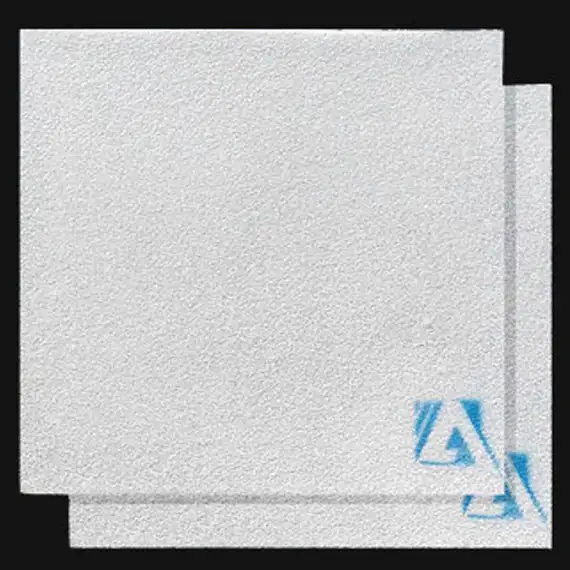
Ceramic plate filters
These are flat or corrugated plates produced by tape casting, extrusion, or pressing. They often use a bonded alumina matrix with controlled channel geometry. Plate filters suit continuous or modular filtration housings.
Candle and tube filters
Cylindrical items that fit into filter assemblies. They can be made by extrusion with pore formers that control radial pore distribution. Material sets mirror plate filters.
Table 2 Typical physical properties for common materials
| Property | Range for alumina-based filters | Range for silica-rich filters |
|---|---|---|
| Bulk porosity (%) | 40–80 | 30–70 |
| Pore size (µm) | 50–2000 (tailored) | 20–1000 |
| Maximum continuous temperature (°C) | 1200–1600 | 1000–1400 |
| Thermal expansion (10⁻⁶ /°C) | 6–9 | 0.5–3 |
| Compressive strength (MPa) | 5–60 | 3–40 |
Manufacturing methods and how they shape composition
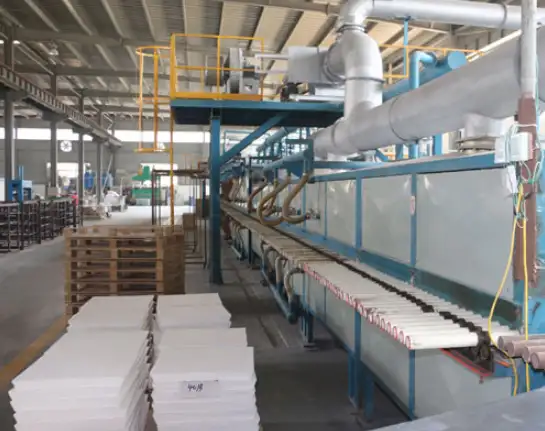
Ceramic Foam Filter Manufacturing Process
Foam replication
A slurry of ceramic powder, binder, and dispersant coats a sacrificial polymer foam. After drying, controlled burnout removes polymer while furnace firing causes particle bonding. Final structure retains the foam morphology with ceramic struts. Pore former choice determines final pore throat size.
Extrusion
Wet ceramic paste forces through a die to form tubes or plates. Extrusion suits long continuous runs. Plasticizers keep the paste workable during shaping. Subsequent drying and firing create the porous matrix.
Pressing and sintering
Powder is pressed in a mold with binder. Controlled burn-off of binder produces interconnected pores if pore former particles were included. This route is common for flat plates.
Additive manufacturing
Ceramic printing can build complex internal architectures layer by layer. Current industrial use remains niche for mass filtration, but prototypes show strong potential to tune internal channels precisely.
Also read: How to Make a Ceramic Filter?
Controlling pore structure: ingredients and process variables
Pore size distribution controls filtration efficiency and pressure loss. Manufacturers tune these variables:
- Pore former particle size and volume fraction set mean pore diameter.
- Slurry viscosity and solids loading influence coating thickness on foam struts.
- Sintering temperature and dwell time control neck growth between particles, which reduces open porosity when higher.
- Use of sacrificial spacers can create graded porosity from one face to another.
A carefully engineered recipe yields high capture of inclusions while minimizing melt turbulence and pressure drop.
Table 3: Example formulations for three filter types
| Formulation name | Main refractory | Pore former content (%) | Typical firing temp (°C) | Notes |
|---|---|---|---|---|
| Standard foam | Alpha alumina powder | 45 | 1200 | Balanced strength and porosity |
| High thermal shock | Alumina + 15% SiC | 40 | 1250 | Better shock tolerance, higher conductivity |
| Fine-pore plate | Mullite-forming mix | 35 | 1300 | Narrow pore distribution for fine filtration |
Why composition matters for molten aluminum
Molten aluminum reacts easily with oxygen to form oxide films that float in the melt. Filters must trap these inclusions without initiating chemical reactions or introducing contaminants. High-purity refractory oxides limit reactions. Low solubility in aluminum reduces filter erosion. Thermal expansion mismatch between filter and metal can produce breakage under pouring conditions, so material selection must balance expansion against strength.
Testing and quality control parameters
Manufacturers run multiple tests to validate composition and structure:
- Porosimetry to measure pore size distribution.
- Bulk density and open porosity by immersion or gas methods.
- Phase analysis using X-ray diffraction to confirm mullite formation or presence of unwanted phases.
- Chemical purity checks for residual organics or soluble contaminants.
- Thermal shock cycles to simulate pouring conditions.
- Filtration trials with molten metal to quantify inclusion removal efficiency and flow resistance.
Routine batch checks ensure consistency between lots.
Environmental, safety, and handling considerations
Raw powders can be respirable. Production includes dust control, proper PPE, and controlled burnout to limit emissions. Burnout gasses must pass through thermal oxidation or filtration. Spent filters demand correct disposal because they may contain metal residues. Recycling depends on local regulations and on separation feasibility between ceramic and trapped metal.
Selection recommendations for foundries
When choosing a ceramic filter, consider these functional trade-offs:
- Capture efficiency versus flow resistance: finer pores trap smaller inclusions but reduce flow rate.
- Thermal shock tolerance: aluminum pours can induce rapid temperature changes; select compositions with low expansion or higher toughness if pours are rough.
- Chemical compatibility: high-purity alumina minimizes reaction risk.
- Filter geometry: foam products yield low pressure drop, plates give predictable installation.
Smaller castings may benefit from thin plates with fine pores. Large pours needing high throughput may select coarser foam filters or reinforced formats.
Production troubleshooting linked to composition
Problem: Filter disintegration during pour
Possible causes: insufficient green strength, incomplete sintering, wrong binder burnout schedule. Remedies: adjust binder type, extend sintering hold, reduce pore former fraction.
Problem: Metal seepage through filter
Possible causes: pore sizes too large, damaged filter, poor seating in filter housing. Remedies: verify porosity specifications, inspect filters for cracks, redesign seating geometry.
Problem: Contamination transferred to casting
Possible causes: residual carbon from incomplete burnout, binder residues, low-purity raw powders. Remedies: optimize burn cycle, switch to binders that leave volatile-free residues, upgrade raw material purity.
Standards and specifications
Several foundry and material standards reference ceramic filter performance and testing methods. Typical specification items include porosity, pore size range, dimensional tolerances, and chemical composition limits. When purchases depend on certified performance, request test certificates for each lot.
Practical installation notes for foundry teams
- Preheat some ceramic filters gently to remove adsorbed moisture and reduce thermal shock when first exposed to molten metal.
- Ensure even seating and full contact with gating hardware to prevent bypass.
- For high-volume pouring, incorporate filter housings that permit straightforward replacement with minimal disturbance to flow.
Why ADtech filters may matter to your operation
ADtech focuses on manufacturing ceramic products tailored for aluminum casting. Composition control, tight process parameters, and batch testing combine to produce filters that reduce inclusion counts while keeping pressure drops manageable. If you require tailored compositions for specific alloys or pour profiles, request lab-scale trials to confirm performance.
Frequently asked questions
1. What is the difference between ceramic foam and ceramic plate filters?
Ceramic foam provides an open network of interconnected pores formed from a replicated polymer foam template. Foam gives low pressure loss and good capture of larger inclusions. Plate filters are shaped by pressing or extrusion; they can control channel geometry more precisely and often provide narrower pore size distributions.
2. Which ceramic material resists molten aluminum best?
High-purity alpha alumina shows excellent resistance to chemical attack by molten aluminum, due to low solubility and stable surface chemistry at typical pouring temperatures.
3. Can ceramic filters be reused?
Filters that have contacted molten metal pick up trapped inclusions and may retain metal residues. Reuse presents contamination risk and is generally not recommended. Check local recycling options instead.
4. How does pore size affect filtration performance?
Smaller pores trap finer inclusions but increase pressure drop. Optimal pore size balances capture efficiency with acceptable flow resistance for a given pour rate.
5. What temperature can ceramic filters withstand?
Typical alumina-based filters survive continuous temperatures above 1200°C. Exact limits depend on composition and microstructure.
6. Are ceramic filters safe for food-contact aluminum parts?
Filters themselves do not contact final machined surfaces if used correctly. Still, for food-contact parts, confirm that filter materials and processing do not introduce impurities that remain in the casting after normal machining and finishing.
7. How are pore sizes specified?
Manufacturers provide mean pore diameter or a distribution curve. Some supply ASTM or equivalent test results showing D10, D50, and D90 pore diameters.
8. What causes filter breakage during pouring?
Rapid thermal gradients, mechanical shock, or poor support in the gating system can break brittle ceramic filters. Composition choices that increase toughness, such as silicon carbide reinforcement, lower breakage probability.
Filters remove nonmetallic inclusions but do not directly change dissolved hydrogen levels. Good melt handling and degassing are required to reduce hydrogen porosity.
10. How is quality checked in production?
Quality checks include porosimetry, phase analysis, bulk density measurement, thermal shock tests, and filtration trials with representative melts.
Extended technical notes
Pore topology and tortuosity
Tortuosity indicates how winding the path through the material is. High tortuosity increases capture by giving inclusions more surface encounters. Foam replication tends to produce high tortuosity relative to straight-channel plate designs.
Chemical interactions in the melt
Aluminum can reduce certain oxides if temperature and local chemistry permit. Choosing oxides with low chemical reactivity and limiting eye-catching impurities limits interaction.
Additives that reduce fouling
Some formulations include small amounts of additives that alter wetting characteristics between metal and ceramic, improving filtration throughput. Additive selection must avoid residues that could contaminate cast metal.
Comparative performance summary
A short checklist when comparing suppliers and compositions:
- Purity of refractory powders.
- Pore size distribution data.
- Mechanical strength at room temperature and hot conditions.
- Thermal shock cycling results.
- Batch-to-batch consistency records.
- Filtration trial outcomes with your alloys.
Maintenance, disposal, and environmental stewardship
After use, filters contain metal residues. Recovery of trapped metal may be feasible in some setups; otherwise, dispose according to hazardous waste regulations where relevant. Used ceramic fragments can sometimes be downcycled into refractory backfill if they meet chemical and physical criteria.
Small foundry practical table
| Check before purchase | Why it matters | What to request from supplier |
|---|---|---|
| Certificate of porosity | Ensures expected capture properties | Test report with porosimetry data |
| Phase analysis | Confirms mullite or expected phases formed | XRD report |
| Thermal shock test result | Predicts survival during pour | Test cycles with pass/fail |
| Grain size of pore former | Controls pore throat distribution | Particle size distribution |
Troubleshooting table
| Symptom | Likely cause | Suggested action |
|---|---|---|
| High pressure drop | Too fine pores, clogged filter | Use coarser grade or pre-filtering |
| Poor inclusion removal | Wrong pore size or bypass | Check installation, switch pore grade |
| Filter cracks | Thermal shock or handling damage | Adjust preheat; use tougher composition |
| Contamination in castings | Residual binder or low-purity feedstock | Audit burn schedule; improve raw material purity |
Final summary and next steps for foundry engineers
Material composition determines filter lifetime, capture performance, and influence on metal quality. For aluminum casting, high-purity alumina or mullite-forming mixes deliver the best balance. Tune pore former size and volume to match required inclusion sizes. Validate proposed filters with small-scale melts before full adoption. When precision or specialty needs arise, consult manufacturers for custom formulation trials and request full test data.
If you want, ADtech can provide technical datasheets, trial samples, or joint testing with your alloy and pouring parameters.
Additional frequently asked technical points
Q: How does firing temperature alter final properties?
Firing temperature controls particle neck growth. Higher temperature typically reduces porosity and increases strength. Choose a sintering profile that achieves needed mechanical properties while keeping desired open porosity.
Q: What inspection should be performed before use?
Visually check for cracks, measure dimensions to ensure proper fit, verify lot number against certificate, and preheat if supplied conditions recommend.
Q: Is there value in graded porosity filters?
Yes. Graded porosity can trap larger inclusions near the inlet, then finer particles deeper inside, reducing clogging and maintaining flow.
Concise purchase questions
- Should my filter be alumina or silica-based?
Choose alumina-based for chemical resistance when filtering aluminum; pick silica-rich mixes if very low thermal expansion is crucial. - Is higher porosity always better?
No; higher porosity may lower pressure drop but reduce capture efficiency. - How quick is delivery for custom compositions?
Times vary by supplier; include lead time in procurement specs. - Do I need certification for aerospace castings?
Yes; request material certification and test evidence that match aerospace standards. - Can filters handle preheated metal above typical range?
Check maximum continuous temperature listed for the composition. - Does filter thickness matter?
Thicker filters offer more capture path length but increase pressure drop. - What causes filter clogging other than inclusions?
Oxide build-up, slag entrainment, or resin residues can block pores. - Can I test filters without melting metal?
Yes; gas permeation or water flow tests give comparative data, though not identical to melt trials. - Are ceramic filters compatible with vacuum casting?
Many are, but decreased pressure may alter flow behavior; run a test. - What documentation should arrive with a lot?
Porosimetry, phase analysis, firing profile, and test results for thermal shock and filtration trials if available.