

In practical furnace work, refractory mortar and refractory cement perform different roles: refractory mortar is a preblended jointing material intended to bond and level shaped refractory bricks and components, while refractory cement is a hydraulic binder used to make castable or concrete-style monolithic refractories that form continuous linings or repair mixes. For bricklaying and thin joints use a mortar formulated to match brick chemistry and thermal expansion. For structural pours, patches, or monolithic linings choose a cement-bonded castable or refractory cement grade with the appropriate alumina content and curing regime.
1. Plain-language definitions
Refractory mortar
A mortar is a preblended powder that becomes a workable paste when mixed with water or a liquid binder, intended mainly to fill thin joints between shaped refractory bricks and to provide intimate contact and load transfer between them. Mortar formulations are fine-graded for good spread, adhesion, and to match the thermal expansion of the bricks.
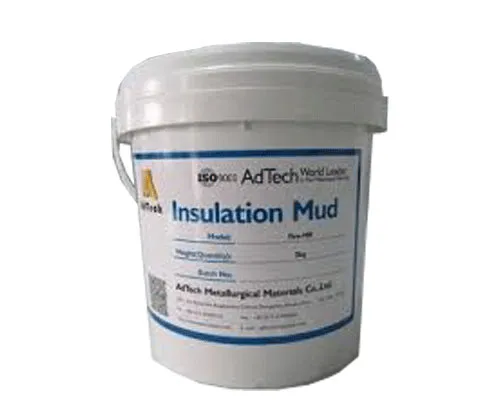
Refractory cement
Refractory cement usually refers to a hydraulic alumina-based cement (often called high-alumina cement or calcium aluminate cement) supplied either as a powder or used inside castable mixes. When combined with refractory aggregates and additives, it becomes a castable refractory or concrete that can be poured, pumped, troweled, or gunned to create monolithic linings and repairs. High-alumina cements have trade labels like CA50, CA70, CA80 that indicate typical Al2O3 content.

Quick practical rule
If you will lay bricks and need a bedding/joint material, use mortar. If you will form an integral, jointless lining or carry out a structural repair, use a cement-bonded castable or refractory cement.
2. Typical chemistry and particle-size differences
Refractory mortars are usually fine-graded mixes of high-alumina powders, fine refractory fillers, and small fractions of hydraulic binder or organic binders depending on the product. Mortar particle sizes are kept small to ensure thin, uniform joints.
Refractory cements are concentrated hydraulic binders. High-alumina or calcium aluminate cements (CA series) are produced by calcining bauxite with lime. Typical grades (CA50, CA70, CA80) indicate increasing alumina content and greater refractory performance. When mixed with coarse aggregates and alumina fillers, they form castables with different service temperature and strength profiles.
3. Side-by-side technical comparison
Table 1: Quick comparison matrix
| Feature | Refractory mortar | Refractory cement (and cement-bonded castables) |
|---|---|---|
| Primary role | Bedding and joining shaped bricks | Binder for castables, poured linings, repairs |
| Typical grain size | Very fine | Cement powder; castables include coarse aggregates |
| Main chemistry | Fine alumina, clays, small binder | Calcium aluminate (high-alumina cement), alumina fillers |
| Application thickness | Thin joints (1–12 mm common) | Thick pours, trowel layers, gunning, ramming |
| Setting mechanism | Hydraulic or chemical binders, sometimes phosphates | Hydraulic setting (calcium aluminate) and hydration |
| Thermal limit | Depends on grade; often up to 1600°C for high-alumina mortars | Depends on castable formulation; can exceed 1700°C for high-alumina systems |
| Typical use | Brickwork, seam filling, joint leveling | Monolithic linings, floor pours, repairs, anchor blocks |
(Compiled from product datasheets and refractory reference sources.)
4. How products are made and packaged
Mortars are manufactured by grinding selected refractory powders and blending them with fine binders, small amounts of admixtures, and sometimes organic additives to control workability and open time. They are bagged in small to medium sizes for masons to mix on site.
Cements are clinker-based materials produced by calcining bauxite and lime, then grinding to fine powder. They are marketed by chemical specification (CA numbers). Cements are often packaged in 25–50 kg bags or larger bulk options; when used in castables, the cement is blended with aggregates at a plant or on site. Industry suppliers provide technical data on setting times, fineness, and recommended castable recipes.

5. Application methods and workmanship differences
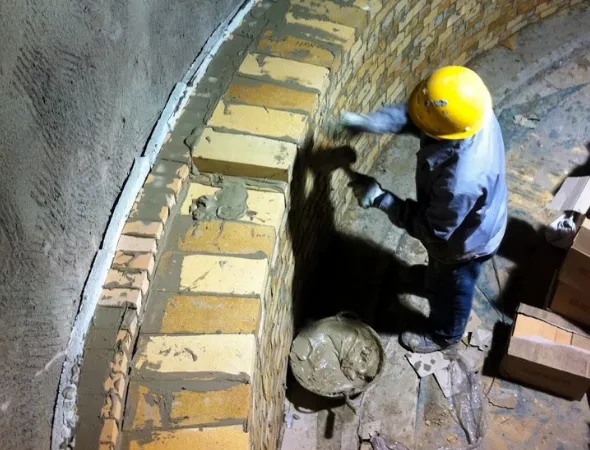
Mortar application
-
Mix to a paste with the specified water content or liquid binder.
-
Apply with trowel at the recommended joint thickness, usually thin and uniform.
-
Ensure full bed contact and avoid voids that will trap hot gases.
-
Mortar performance depends heavily on brick fit and masons’ skill.
Cement and castable application
-
For castables: mix with water at plant or on site, then pour, pump, gunned, or trowel.
-
For patch repairs: use trowelable cement mixes or preblended repair mortars with cement binder.
-
Strict curing and controlled dry-out are critical; improper drying leads to steam generation and cracking.
-
Large monolithic pours require staging, forms, and often mechanical vibration.
Workmanship differences matter. Mortar joints tolerate small movements but are sensitive to thinness and cleanliness. Castables require temperature-controlled curing and careful mix design.
6. Property table: thermal, mechanical, and practical differences
Table 2. Typical property ranges (indicative values; verify with product datasheet)
| Property | Refractory mortar (high-alumina) | Refractory cement / cement-bonded castable |
|---|---|---|
| Refractoriness (°C) | 1500–1650+ depending on grade | 1600–1800+ for high-alumina castables |
| Cold modulus of rupture (24–72 h) | 4–8 MPa | 6–15 MPa depending on mix and curing |
| Thermal shock resistance | Good if matched to brick type | Variable; aggregate selection critical |
| Recommended joint thickness | 1–12 mm typical | Individual cast height variable; castable thickness from few mm to >100 mm |
| Workability window | Short to moderate | Controlled by mixing water and retarder; longer for large pours |
| Shrinkage | Low to moderate | Depends on formulation; some shrinkage during drying and firing |
These are guideline ranges. Use manufacturer data for design and engineering calculations.
7. Matching material to service conditions
When deciding between mortar and cement-bonded castable, run through these questions and pick the material that best matches the answers:
-
Will the lining be made from shaped bricks or poured in place?
-
Bricks: choose mortar for joints.
-
Poured/monolithic: use refractory cement + aggregates (castable).
-
-
What is the maximum continuous temperature and peak temperature?
-
For >1600°C consider high-alumina grades or specialty castables.
-
-
Will the lining see strong mechanical abrasion or impact?
-
For floors and abrasion zones use denser castables with suitable aggregates.
-
-
Is thermal cycling or shock frequent?
-
Select materials with good thermal shock resistance and match expansion coefficients between brick and joint.
-
-
Is the repair small or large?
-
Small seam repairs can use mortar. Large patches should be castable with controlled curing.
-
-
Can you enforce a controlled dry-out (slow heat-up)?
-
Castables require careful dry-out; if controlled heating is impossible, choose materials with low free water and suitable binders.
-
8. Installation steps and curing/dry-out recommendations
Mortar jointing procedure (summary)
-
Clean brick faces, remove dust.
-
Mix mortar to manufacturer water ratio.
-
Apply full bed mortar, seat bricks firmly, remove excess.
-
Keep joints consistent; strike or finish to specified profile.
-
Allow initial set; perform controlled heat-up per datasheet.
Castable / cement repair procedure (summary)
-
Prepare substrate, remove loose material, apply bonding slurry where specified.
-
Mix castable or cement mix with measured water and mixing equipment.
-
Place by pouring, pumping, or troweling. Compact to remove voids.
-
Cover and cure: protect from rapid evaporation; many cement-bonded castables require 24–72 hours of moist curing before controlled heat-up.
-
Follow a staged dry-out and heat-up schedule to avoid steam explosions.
Curing and dry-out are the most common sources of failure in cement-bonded systems. Proper wet-curing or autoclave curing where specified will increase strength and dimensional stability.
9. Compatibility with brick types and thermal expansion control
Good practice dictates selecting a mortar chemistry closely matched to the brick type. For example:
-
Fireclay bricks: use fireclay mortars or mortars with similar silica-alumina ratio.
-
High-alumina bricks: use high-alumina mortar with matching expansion.
-
Insulating bricks: use lightweight mortars designed for low thermal conductivity.
Using a castable in thin joint applications may lead to rigid joints with different expansion behavior and cause brick cracking. Conversely, using a mortar in a structural pour will not provide the density or strength of a castable. Verify coefficient of thermal expansion and choose a product family meant to work together.
10. Common failure modes and troubleshooting
Cracking during dry-out or first heat-up
-
Cause: rapid steam generation from free water or trapped moisture.
-
Fix: improve ventilation, slow controlled heat-up, ensure proper curing.
Bond loss between joint and brick
-
Cause: contamination, poor mixing, wrong mortar chemistry, or thermal mismatch.
-
Fix: remove failed mortar and repoint with matching mortar; ensure substrate is clean.
Spalling under abrasion
-
Cause: wrong aggregate selection, low density, or chemical erosion.
-
Fix: use a denser castable with suited aggregate and higher mechanical strength.
Shrinkage-related gaps
-
Cause: improper aggregate grading or too much water.
-
Fix: follow product water limits; use low-shrinkage formulations for thin joints.
Most field failures trace back to one of two issues: poor selection (mortar vs castable) or incorrect curing/dry-out. Address both in the design phase.
11. Cost, logistics, and inventory considerations
-
Mortars usually cost less per bag and are convenient for brickwork. They require less on-site equipment.
-
Cement and castables are more economical for large volumes and where jointless linings reduce maintenance. Bulk handling, mixers, and pumps can add equipment cost but reduce labor for large pours.
-
Inventory tip: keep a small stock of compatible mortar types for routine repointing, and a castable system for scheduled repairs and lining works. Supplier technical support is often available for mix design and cure schedules.
12. Short practical case patterns
-
Residential wood stove refractory: Use a purpose-made refractory mortar for brick seams. Avoid dense cement castables for narrow joints.
-
Industrial furnace floor: Use cement-bonded castable with abrasion-resistant aggregates cast to required thickness. Ensure staged curing and controlled heat-up.
-
Patch on hot face with shaped bricks: Remove loose brick; if the area is small, repoint with matching mortar; for larger collapse or deep damage, use a cement-cast repair with proper bonding slurry.
13. Technical tables (composition and application)
Table 3. Typical composition examples
| Product type | Main binder | Typical aggregate/fillers | Typical Al2O3 range |
|---|---|---|---|
| Fireclay mortar | Clay + small hydraulic binder | Fine alumina, silica | 30–50% |
| High-alumina mortar | Fine alumina powder + binder | Micro alumina | 40–70% |
| CA-cement (CA70) | Calcium aluminate cement | N/A (cement only) | Al2O3 ~68–71% in CA70 grade |
| Cement-bonded castable | CA cement + coarse alumina aggregates | Bauxite, corundum | Depends on mix; castable Al2O3 40–80% possible |
For exact chemical tables consult supplier technical data. CA series compositions and specifications are standardized in industry datasheets.
14. Practical recommendations
-
Match mortar chemistry to brick type and operating temperature.
-
Use mortar for joints and bedding, use cement-castable for pours and structural repairs.
-
Follow manufacturer water ratios strictly; excess water reduces strength and increases drying time.
-
Implement staged dry-out: low temperature first to remove free water, then ramp to service temperature slowly.
-
Keep technical datasheets and safety data sheets on site.
-
When in doubt, consult the refractory supplier or a materials engineer and perform a mock patch or sample cure.
Refractory Cement, Mortar & Casting FAQ
1. Can I use refractory cement for brick joints?
2. Is high-alumina mortar the same as high-alumina cement?
3. What does “CA70” mean on a refractory cement bag?
4. How thin can I make a refractory mortar joint?
5. Do refractory castables need moist curing?
[Image showing the hydration process and moist curing of a refractory castable lining]
6. Which is better for thermal shock resistance: Cement or Mortar?
7. Can I mix mortar with cement to save money?
8. How long before I can heat up a cement-based repair?
9. What causes mortar to fall out from between bricks?
- Poor initial adhesion (dirty bricks).
- Thermal mismatch between the brick and mortar.
- Excessive vibration or structural movement.
- Improper water-to-powder ratio during mixing.
10. Which product is best for a furnace floor with high abrasion?
16. Final summary and recommended action plan
-
For masonry brick linings, buy a purpose-designed refractory mortar matched to the brick and service temperature. Mortar keeps maintenance simple and provides compliant joints.
-
For monolithic linings, floors, and large repairs, design a cement-bonded castable system based on CA-cement grade and aggregate selection; ensure controlled mixing, curing, and dry-out.
-
Always consult supplier technical data sheets and, for high-risk or critical linings, perform trial panels and get engineering sign-off. Proper selection and workmanship prevent the majority of field failures.