

For most industrial furnaces, selecting the correct refractory brick depends on the furnace operating temperature, the chemical nature of slags and gases present, mechanical load, and thermal cycling. High-alumina bricks perform best in high-temperature, oxidizing atmospheres; silica bricks are suited to silica-rich, acidic environments; magnesia and magnesia-carbon bricks excel in basic, slag-rich steel environments; insulating firebricks provide energy savings when placed behind dense linings. Proper material choice, correct installation, controlled dryout, and scheduled maintenance extend refractory lining life and cut operating costs.
1. What refractory bricks are and why they matter
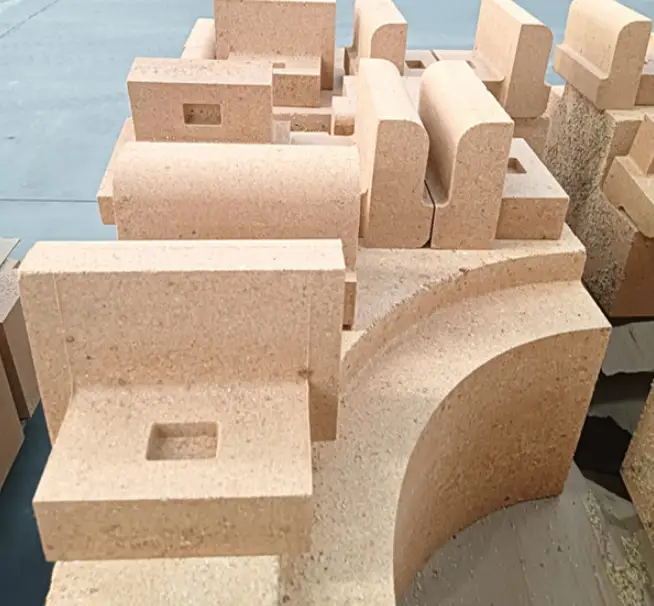
Refractory bricks are engineered ceramic masonry units designed to withstand extremely high temperatures while resisting chemical attack, mechanical erosion, and thermal shock. In furnace design, the refractory lining determines heat containment, operating efficiency, product purity, and the interval between major shutdowns. A poor lining choice or poor installation leads to frequent repairs, unplanned outages, safety risks, and higher fuel consumption. The combination of material chemistry, porosity, and installation quality controls both short-term performance and total lifecycle cost.
2. Chemical classification and why chemistry dictates performance
Refractories are often categorized by their dominant chemical oxides, which in turn define whether a product behaves as acidic, basic, or neutral in service. That categorization matters because slags and furnace atmospheres interact chemically with the lining:
-
Acidic refractories contain high silica or alumino-silicate phases. These are resistant to acidic slags but vulnerable to basic compounds.
-
Basic refractories (magnesia, magnesia-carbon) resist basic slags and calcium-rich environments while being attacked by acidic components.
-
Neutral refractories (e.g., chromite, zirconia) show relative chemical stability against both acidic and basic melts.
Selecting chemistry that is compatible with expected slags, fluxes, and furnace atmosphere reduces dissolution, infiltration, and chemical spalling.
3. Common brick types, composition, and typical furnace uses
Below are the primary refractory brick families and their usual industrial roles.
Fireclay bricks
-
Composition: Hydrated aluminum silicates, typical Al₂O₃ content ~25–48% with substantial SiO₂.
-
Strengths: Cost effective, suitable for moderate temperatures and general furnace zones.
-
Typical use: Boilers, lower temperature furnace zones, backup insulation.
High-alumina bricks
-
Composition: Al₂O₃ content commonly 48% to over 90% by grade.
-
Strengths: High refractoriness, good mechanical strength, stable in oxidizing and reducing atmospheres.
-
Typical use: Steel reheating furnaces, heat treatment, glass tank crown and regenerator linings.
Silica bricks
-
Composition: Very high SiO₂, often >90%.
-
Strengths: High thermal stability where silica is compatible; good resistance to acidic slags; large thermal expansion must be handled carefully.
-
Typical use: Coke ovens, glass furnace regenerator walls.
Magnesia bricks (basic)
-
Composition: MgO-rich; sometimes fused magnesia or sintered magnesia.
-
Strengths: Excellent resistance to basic slags and lime; good for steelmaking vessels.
-
Typical use: Linings in basic oxygen furnaces, converters, cement kilns.
Silicon carbide (SiC) bricks and SiC-bonded
-
Composition: High silicon carbide content, sometimes with carbon additives.
-
Strengths: High thermal conductivity, resistance to abrasion and erosion, good thermal shock resistance.
-
Typical use: Hearths, rotary kilns, areas needing abrasion resistance.
Carbon and carbon-bonded bricks
-
Composition: High carbon content with binders; often used in combination with refractory oxides.
-
Strengths: Excellent resistance to metal penetration and thermal shock, used in steelmaking.
-
Typical use: Electric arc furnaces, ladle shrouds, zones where metal contact occurs.
Insulating firebricks (IFB)
-
Composition: Lightweight, porous alumino-silicate bodies.
-
Strengths: Low thermal conductivity, used to reduce heat loss; lower mechanical strength.
-
Typical use: Backing insulation behind dense brickwork or in kilns where rapid heat up is desired.
4. Critical physical properties that control performance
Understanding the following parameters helps predict how a brick will behave in service.
-
Refractoriness (max temperature stability): Indicates deformation resistance; higher Al₂O₃ typically raises refractoriness.
-
Thermal conductivity: Lower values favor insulation; higher values help spread heat and reduce local hot spots. Balance needed between energy efficiency and mechanical durability.
-
Apparent porosity: High porosity lowers thermal conductivity but may permit slag infiltration; low porosity increases strength and chemical resistance.
-
Bulk density: Correlates with mechanical strength; heavier bricks often last longer under abrasion but increase structural load.
-
Cold crushing strength (CCS): Indicates compressive load capacity during shutdowns and rebuilds.
-
Thermal expansion and shock resistance: Differential expansion between brick and structure or between different brick layers generates stresses leading to cracks and spall.
-
Chemical resistance: Describes susceptibility to slags; depends on chemistry and impurity levels.
5. Selection strategy by furnace type and operating regime
Choose a lining by matching service demands to material strengths:
-
Glass furnaces: High temperatures, corrosive glass melts; prefer high-alumina bricks for crowns, silica or specialized bricks where silica compatibility is required, and insulating bricks for superstructure backing.
-
Steel furnaces (EAF, ladles): Basic slag chemistry rules. Magnesia-carbon and magnesia bricks resist penetration and mechanical wear; SiC-carbon mixes provide thermal shock resistance for EAF roofs.
-
Cement kilns: Large length, abrasive, basic slags; magnesia refractories and special monolithic linings are common.
-
Heat-treatment and forging furnaces: High alumina for hot zones; insulating bricks used where rapid cycles and reduced fuel use are priorities.
Selection must include lifecycle cost modeling (initial material cost, installation man-hours, thermal losses, maintenance intervals). Choose slightly more expensive bricks if they reduce downtime or increase process stability.
6. Installation methods and workmanship factors that determine life
Material choice alone does not ensure performance. Installation quality defines whether a lining achieves expected life.
Key practices
-
Surface preparation: Remove loose scale, paint, oils, and contaminants that interfere with brick bonding.
-
Joint control: Use thin, even mortar joints (commonly 1–2 mm for precision linings) to avoid gas leakage and uneven stress concentration.
-
Bonding materials: Use mortars matched chemically to brick type; mismatched mortar creates weak layers.
-
Laying patterns: Staggered joints, interlocking headers and stretchers, and provision of expansion joints prevent long continuous weak planes.
-
Anchoring: Mechanical anchors or steel anchors are often necessary for heavy linings or where differential movement is expected.
-
Tolerances: Maintain flatness and alignment; small misfits lead to local stress concentrations.
Installation options
-
Dry brick work: Preformed bricks set in mortar. Good for accurate shapes and modular repairs.
-
Castable + brick combination: Castables fill awkward geometry while bricks provide wear surfaces.
-
Shotcrete or gunning: Useful for rapid repairs or areas where access is challenging. Proper equipment and trained operators are mandatory to achieve required density.
7. Preheating, curing, and dryout best practices
Improper dryout is one of the most common causes of early failure. Water trapped in mortar or body pores can vaporize, causing explosive spalling.
-
Controlled heat ramp: Use staged temperature increases to allow moisture escape without rapid vapor pressure buildup. Industry references recommend specific ramp rates tied to lining thickness and material.
-
Vent planning: Provide vents and controlled openings to permit steam escape during initial heat-up.
-
Monitoring: Use thermocouples at critical points and record temperatures. Stop or slow the ramp if anomalous spikes appear.
-
Post-heat stabilization: After reaching operating temperature, allow a period of steady operation so binders and phases equilibrate before applying full mechanical or thermal loads.
8. Common failure modes and diagnostic clues
Understanding failure patterns helps select remedies that prevent recurrence.
-
Chemical wear (dissolution): Smooth recession of the working face with chemistry matching issues; samples and slag analysis reveal incompatibility.
-
Thermal spalling: Flaking or large pieces detaching due to trapped moisture or rapid temperature changes; typically a dryout/control problem.
-
Erosion/abrasion: Rough, pitted surfaces where mechanical flow or solids impinge; SiC or denser bricks resist this.
-
Cracking from differential expansion: Regular crack patterns at interfaces or corners where different materials meet;改 design to include expansion joints or compatible adjacent materials.
-
Metal or slag penetration: Dark staining, channels, or internal weakening; indicates low porosity is needed or carbon additions required. ssfbs.com+1
9. Maintenance, inspection, and repair tactics that save money
Planned inspections and minor periodic repairs prevent catastrophic failures.
-
Inspection schedule: Visual checks weekly, close condition monitoring monthly while the furnace is offline, and full lining surveys during scheduled shutdowns.
-
Wear mapping: Track wear rates and locations by measuring thickness at fixed points; trend analysis predicts replacement windows.
-
Patch repair techniques: Use castables or premade bricks for small holes; ensure bonding surfaces are clean and that repairs receive appropriate curing.
-
Spare inventory: Maintain a small stock of the most common brick types, anchor hardware, and mortars to allow quick temporary repairs.
-
Data logging: Correlate process incidents with lining degradation; often operational anomalies cause accelerated wear.
10. Safety, handling, and environmental considerations
Refractory materials and their installation bring occupational hazards that require controls.
-
Dust hazards: Cutting, grinding, or handling dry bricks generates respirable dust, potentially containing silica or other regulated particulates. Proper respiratory protection and dust control systems are mandatory.
-
Thermal risks: Work on hot equipment requires permit systems, lockout procedures, and thermal protective gear.
-
Chemical exposures: Some refractories contain elements that can produce hazardous fumes during extreme conditions; follow material safety data sheet (MSDS) guidance.
-
Waste handling: Spent refractory disposal must follow local environmental rules; recycling options exist for some materials.
11. Comparative tables and quick specification references
Table 1 Quick comparison of common refractory bricks
| Brick family | Typical composition | Max service temperature (approx) | Strengths | Typical drawbacks |
|---|---|---|---|---|
| Fireclay | Al₂O₃ 25–48%, SiO₂ balance | 1200–1600°C | Cost effective, general use | Lower high-temp strength |
| High-alumina | Al₂O₃ 48–90% | 1500–1800°C+ | High strength, high temp stability | Cost, higher thermal conductivity |
| Silica | SiO₂ >90% | 1500–1700°C | Acidic slag resistance | High thermal expansion |
| Magnesia | MgO rich | 1600–2000°C | Basic slag resistance | Attacked by acidic fluxes |
| SiC / SiC-bonded | SiC matrix | 1400–1700°C | Abrasion resistance, thermal shock | Higher thermal conductivity |
| Insulating firebrick | Porous alumino-silicate | 800–1400°C | Low heat loss | Low mechanical strength |
(Values are typical ranges; check supplier datasheets for exact numbers.)
Table 2. Property ranges to check on datasheets
| Property | Typical acceptable range | Why it matters |
|---|---|---|
| Apparent porosity | 5–30% depending on type | Influences thermal conductivity and slag penetration |
| Bulk density | 1.2–3.2 g/cm³ | Correlates to mechanical strength and heat capacity |
| Cold crushing strength | 20–200 MPa | Resistance to compressive loads |
| Thermal conductivity | 0.4–6 W/m·K | Determines insulation performance |
| Refractoriness (°C) | 1200–1800+ | Defines operating limits |
(Exact values depend on brick class and grade.)
Table 3: Typical installation checklist
| Step | Minimum acceptance | Notes |
|---|---|---|
| Surface prep | Clean, dry, free of contaminants | Scales and coatings reduce bond strength |
| Mortar match | Same chemical family when possible | Prevents weak joints |
| Joint thickness | 1–2 mm for precision linings | Use spacers for consistent joints |
| Anchors | As specified per drawing | Verify torque and embed depth |
| Dryout plan | Written ramp with thermocouple points | Include contingency for slower ramping |
(Adjust for local codes and engineering drawings.)
Refractory Bricks & Furnace Lining Maintenance FAQ
1. Which brick type gives the longest service in an electric arc furnace (EAF) roof?
2. How does “apparent porosity” affect the service life of a brick?
3. Can insulating bricks replace dense bricks entirely in a furnace?
4. What causes early spalling of bricks immediately after a rebuild?
5. How thick should a furnace lining be designed?
6. Is brick grade more important than installation quality?
7. How often should refractory inspections occur?
- Daily/Weekly: Visual exterior checks for “hot spots.”
- Monthly: Internal camera/drone surveys during short stops.
- Annually: Full structural survey and residual thickness measurement (Laser Scanning).
8. What PPE is essential during refractory installation?
- Respirators (P100): To protect against crystalline silica dust.
- Heavy-duty Gloves: To prevent alkaline chemical burns from mortar.
- Impact-resistant Eyewear: Essential during brick cutting.
- Hearing Protection: For environments with pneumatic ramming.
9. Are there eco-friendly refractory options available?
10. When should I choose monolithic castables instead of bricks?
13. Practical selection checklist
-
Define maximum operating temperature and transient peaks.
-
Sample and analyze slag and atmosphere chemistry.
-
Choose chemistry family compatible with slags.
-
Decide on working face vs backup insulation layering.
-
Specify porosity, density, and CCS targets.
-
Plan installation method, mortar type, and venting.
-
Create dryout and thermocouple monitoring plan.
-
Schedule inspection intervals and spares inventory.
-
Document safety, dust controls, and MSDS references.
-
Track wear rates and adjust materials when operating changes occur.
14. Final recommendations
-
Use a systems approach: material selection, installation quality, and operation form a triad that controls life and cost.
-
For high-duty zones exposed to basic slags, prefer magnesia or magnesia-carbon bricks; for oxidizing hot zones choose high-alumina bricks; where silica compatibility exists, carefully controlled silica brick installations offer superior chemical resistance.
-
Invest in training for installers and enforce strict dryout protocols; most early failures relate to workmanship rather than intrinsic material defects.
-
Keep data: measure wear, record incidents, and use trend analysis to make smarter material choices on subsequent rebuilds.