
Aluminum billet casting thimbles are small, precision ceramic inserts that play a decisive role in controlling molten metal flow, reducing turbulence, and protecting larger refractory components, which leads to improved billet surface finish, fewer inclusions, and longer overall equipment life. Choosing the right thimble material, geometry, and installation routine tailored to your casting line will often yield immediate quality gains and lower total casting cost.
What a thimble is and where it fits in billet casting
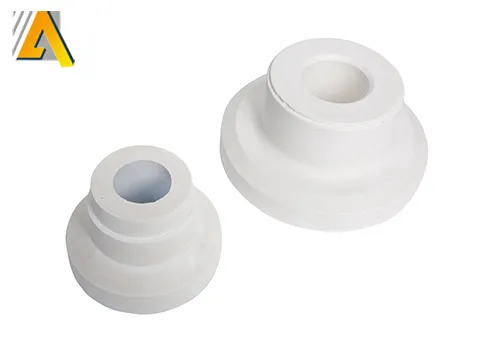
A thimble is a cylindrical, replaceable ceramic or refractory sleeve that sits in the metal delivery path between the distribution plate or tundish and the transition plate or header of a billet casting mold. Its presence creates a controlled passage for molten aluminum, which helps regulate flow velocity into the mold and isolates more costly parts from direct erosion. This component is used in vertical direct chill and horizontal direct chill billet casting setups, as well as in hot-top billet delivery systems.
Primary functions and process benefits
Thimbles perform several specialist functions that together influence cast quality and operational efficiency:
-
Flow control and velocity modulation, which reduces turbulence inside the mold and lowers the chance of gas entrapment and oxide formation.
-
Wear protection for tabletop refractory, transition plates, and distribution plates. A properly selected thimble absorbs erosive energy from high-velocity metal, preventing costly damage to primary components.
-
Thermal insulation and thermal shock buffering, which limit rapid temperature swings at critical interfaces. Certain materials provide superior resistance to thermal shock and maintain geometry at elevated temperatures.
-
Serviceability and lower downtime because thimbles are intended to be replaced frequently during maintenance, which reduces the need for replacing or machining larger cast parts.
Those benefits translate into measurable yield improvements, longer run cycles between major maintenance, and fewer surface defects on billets.
Typical billet casting configurations that use thimbles
There are two main casting configurations where thimbles are commonplace:
Vertical Direct Chill (VDC)
In VDC systems, thimbles are inserted between the tabletop refractory and the transition plate in the top region of the billet mold. They focus the metal stream and are engineered to withstand repeated cleaning cycles and high-velocity flow.
Horizontal Direct Chill (HDC)
In HDC layouts, thimbles are fitted between the tundish and header plates, often in launder assemblies that feed multiple molds. The thimble geometry and materials may differ from VDC types due to varied erosion patterns and thermal loading.
Both configurations demand thimbles that balance erosion resistance with precise internal geometry to maintain consistent flow patterns.
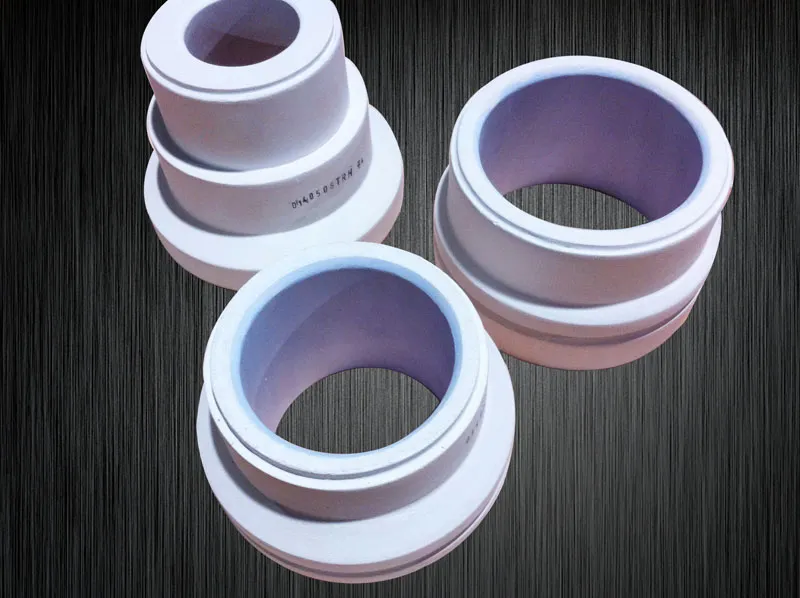
Materials used for thimbles and material tradeoffs
Thimbles are manufactured from several refractory compositions, each providing a mix of properties. The main categories include fused silica (high purity), aluminum titanate, high-silica alumino-silicate, and proprietary sintered compositions tailored for wear resistance.
Key material characteristics
-
Fused silica: Very inert to molten aluminum, excellent dimensional stability, good thermal shock resistance, and high purity that minimizes metal contamination. This material is widely used in OEM precast thimbles for premium casting systems.
-
Aluminum titanate: Good thermal shock tolerance and reduced thermal expansion. Often used in low pressure or specialized runners where thermal cycling occurs frequently.
-
High-silicon or Al-Si ceramic composites: These can provide improved erosion resistance under high metal velocity, useful in production lines with abrasive inclusions. Some suppliers offer specially formulated Al-Si materials optimized for long service life.
Table 1: Material comparison for thimbles (quick reference)
| Material type | Typical benefits | Typical limits | Best fit casting lines |
|---|---|---|---|
| Fused silica | High purity, low contamination, good thermal shock resistance | Lower mechanical toughness vs some composites | High-end VDC systems, OEM replacements. |
| Aluminum titanate | Low thermal expansion, good shock tolerance | Can be more costly, limited suppliers | Low pressure die casting, cyclical operations. |
| High-silicon Al-Si ceramics | Strong erosion resistance, durable surface | Potential for higher thermal expansion, requires careful sealing | HDC lines, abrasive or inclusion-prone melts. |
| Proprietary sintered blends | Tunable wear and thermal properties | Performance varies by vendor | Custom applications with tight spec demands. |
Geometry, dimensions, and flow dynamics
Thimble performance is strongly influenced by internal bore geometry, length, wall thickness, and surface finish. Important design variables include:
-
Bore diameter and taper. Smaller or tapered bores increase local metal velocity; larger bores decrease shear and turbulence. The optimal bore dimension is dictated by desired volumetric flow rate and casting speed.
-
Length. Longer thimbles provide a longer controlled run-out for the metal, which can stabilize flow but may increase pressure drop. Shorter thimbles minimize residence time but can expose downstream components to higher erosion.
-
Surface finish. Smooth internal surfaces reduce nucleation points for oxide formation and make cleaning between casts easier. Some manufacturers supply precision-machined or sintered surfaces to minimize turbulence.
Table 2. Typical thimble dimension bands used in industry
| Parameter | Typical industry range | Notes |
|---|---|---|
| Inner diameter | 8 mm to 60 mm | Depends on machine throughput and nozzle design |
| Outer diameter | 20 mm to 90 mm | Allows for sufficient wall thickness for wear resistance. |
| Length | 30 mm to 150 mm | Longer lengths found in specialty flow control applications. |
| Wall thickness | 4 mm to 20 mm | Thicker walls when erosive flow is expected. |
Wear modes, failure signs, and inspection routines
Thimbles fail in predictable ways. Common wear modes include:
-
Erosive wear from high velocity liquid metal, which thins the wall and changes bore geometry.
-
Thermal shock cracking due to rapid temperature swings during start-up or cleaning procedures.
-
Chemical attack from alloying elements or contaminants that can degrade some ceramic chemistries.
Practical inspection checklist (daily to weekly)
-
Visual check for surface chips and longitudinal cracks.
-
Measure internal bore diameter at multiple points to track erosion rate.
-
Confirm seating accuracy to distribution plate and transition plate to avoid metal leakage.
-
Inspect for spalling on the internal surface that would increase inclusion risk.
-
Record number of casts and cleaning cycles per thimble for life tracking.
Manufacturers recommend replacing thimbles proactively when wear reaches manufacturer-defined tolerances rather than waiting for catastrophic failure. Proactive replacement prevents sudden quality loss and secondary damage to adjacent parts.
Selection checklist for purchasing thimbles
When buying thimbles, evaluate the following items in vendor quotes and technical data sheets:
-
Material composition and purity certification. High-purity fused silica often carries compositional certificates.
-
Dimensional tolerances and surface finish specification. Look for vendors that supply dimensional drawings with tolerances.
-
Compatibility with your casting equipment model, including any OEM preferences or approvals for Wagstaff, Rodabell, or other systems. OEM-approved precast thimbles often deliver reliable fit and performance.
-
Expected life and warranty terms. Ask for life data under conditions similar to your operation, not only in lab tests.
-
Ease of replacement and part numbering for inventory control. Standardized part numbers reduce downtime during maintenance.
Installation, handling, and maintenance best practices
Careful handling and correct installation extend thimble life. Practical tips from experienced casting engineers include:
-
Store thimbles on padded racks to avoid chipping. Ceramic materials can be brittle.
-
Preheat refractory surfaces gently during start-up to avoid thermal shock from cold thimbles meeting hot metal. Use ramp profiles recommended by the thimble vendor.
-
Clean thimbles between casts using manufacturer-approved procedures; avoid heavy mechanical scraping that can introduce microcracks.
-
Maintain tight seating tolerances to avoid metal bypass which increases erosion on parts not designed for direct flow.
-
Keep records of each thimble: installation date, number of casts, cleaning cycles, and measured bore wear. That data helps forecast replacements and total life-cycle costs.
These practices reduce unexpected quality issues and support predictable maintenance scheduling.
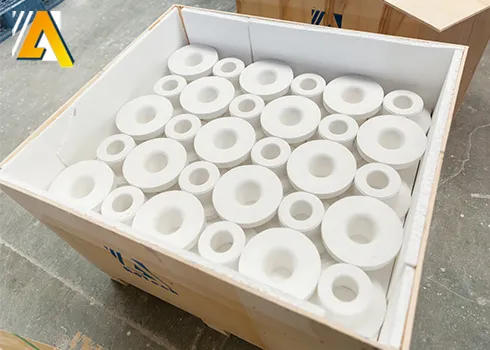
Compatibility with casting systems and OEMs
Certain casting system OEMs specify preferred thimble materials or approved suppliers. For example, Permatech precast fused silica thimbles are a preferred OEM option for some Wagstaff billet casting tables. Using OEM-recommended components often simplifies warranty and support interactions. When using third-party thimbles, confirm mechanical compatibility and request performance data relevant to your machine.
Quality control and testing methods
Vendors should provide at least some of the following quality assurances:
-
Chemical analysis certificate for raw material composition.
-
Dimensional inspection reports showing conformance to drawing tolerances.
-
Thermal shock and erosion test data that replicate real casting conditions when possible.
-
Traceability documentation linking the batch of thimbles to raw material lots and production records.
When possible, run side-by-side trials with a small batch of vendor thimbles before full line adoption. Collect metrics on surface finish, inclusion rates, and thimble life.
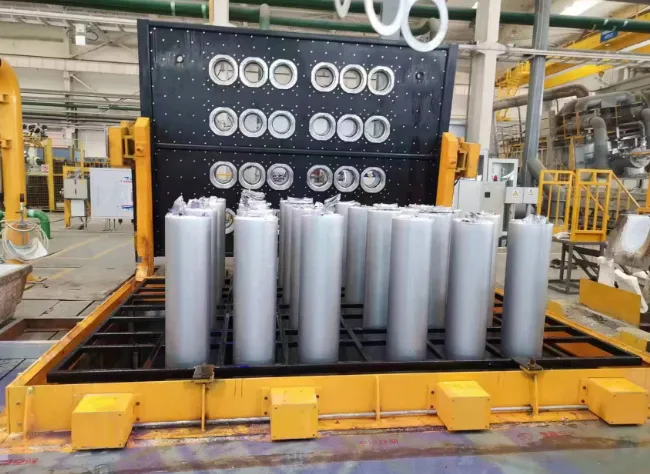
Cost factors, life-cycle cost calculation, and procurement tips
Purchase price per thimble is only one component of cost. Consider the following when calculating total cost:
-
Purchase price. Bulk discounts may apply.
-
Installation downtime cost during replacement. Faster-change designs lower this cost.
-
Impact on billet quality. Reduced defects lower scrap and rework costs.
-
Replacement frequency. Higher durability materials may cost more initially but lower annual spend.
-
Shipping and inventory holding costs.
Table 3: Example life-cycle cost model (simplified)
| Cost element | Low-price thimble | Premium thimble | Notes |
|---|---|---|---|
| Unit price | $8 | $28 | Indicative online ranges. |
| Expected life (casts) | 200 | 1,200 | Varies by alloy and flow conditions. |
| Cost per 1,000 casts | $40 | $23.33 | Unit price divided by life scaled to 1,000 casts. |
| Downtime and handling | Higher | Lower | Premium parts often fit better and need fewer interventions. |
| Net total cost per period | Might be higher | Usually lower | Run real data to confirm. |
Numbers above are illustrative. Use measured life data from your line to compute real comparisons.
Maintenance schedule and record table
Keeping a structured record leads to better procurement decisions.
Table 4. Suggested maintenance and inspection schedule
| Frequency | Activity | Responsible party | Record kept |
|---|---|---|---|
| Daily | Visual check for chips, leaks | Operator | Light log entry |
| Weekly | Measure bore diameter, record cast count | Maintenance tech | Wear tracking sheet |
| Monthly | Replace thimbles nearing wear limits | Maintenance supervisor | Replacement log |
| Quarterly | Review life data, adjust specs if needed | Process engineer | Supplier feedback |
| On major outage | Full audit of thimble condition | Engineering team | Detailed report |
Real-world performance indicators to measure
Track these KPIs to quantify thimble impact:
-
Inclusion rate per 1,000 billets.
-
Reject rate due to surface defects.
-
Average number of casts per thimble.
-
Downtime per replacement event.
-
Cost per 1,000 billets attributable to thimble-related maintenance.
When benchmarking vendors, insist on providing data in these formats.
Vendor landscape and supply considerations
There are well-known suppliers and many regional manufacturers that provide thimbles in a range of materials. Large technical suppliers offer engineered precast thimbles that match OEM systems and provide dimensional traceability. Regional vendors and foundries may provide competitive pricing, custom geometries, and rapid lead times. Evaluate vendors on technical documentation, prior references, and their willingness to conduct trial runs under your process conditions.
Practical examples and troubleshooting tips
-
If your billets show surface streaking or porosity near the head region, measure thimble bore diameter and surface condition. Eroded bores often increase turbulence which produces those defects.
-
If you notice sudden spikes in nonmetallic inclusions, check for spalling on the internal thimble surface and for contaminant sources upstream in the tundish or launder.
-
If thimbles crack during start-up, revise your thermal ramp procedures and confirm the thimble material matches the thermal shock demands of your schedule.
Refractory Thimbles for Billet Casting: Technical FAQ
1. What is the main role of a thimble in billet casting?
2. Which material delivers the best purity for high-grade aluminum billets?
3. How often should thimbles be replaced?
4. Can I use a third-party thimble on OEM equipment?
5. What are common signs a thimble is failing?
6. Is Aluminum Titanate better than Fused Silica?
7. How important is thimble surface finish?
8. Do thimbles affect casting speed capability?
9. What documentation should suppliers provide for thimbles?
10. How to run a vendor trial with minimal risk?
Final recommendations and next steps for buyers
-
Start with a baseline audit of current thimble life, defect rates, and downtime. That dataset will enable meaningful vendor comparisons.
-
Prioritize material purity when producing high-grade billets for aerospace or automotive applications. Fused silica is often the best choice in those settings.
-
For heavy production lines where erosion dominates, request erosion testing data and consider Al-Si reinforced ceramics.
-
Standardize part numbers and maintain a rotation of spare thimbles to reduce replacement time.
-
Work with a vendor willing to perform a short, instrumented trial under your process conditions before committing to large orders.
Closing technical note
Thimbles are small components that produce outsized effects on billet quality and operating cost. Investing in the correct material specification, handling practices, and record-keeping yields steady returns through fewer defects, longer refractory life, and smoother maintenance cycles.