

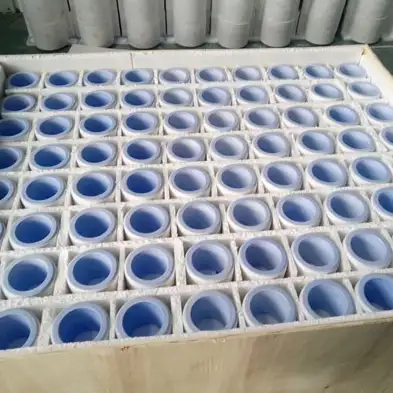
Adtech Sprue Bushes, engineered from high silicon melting 140 materials and advanced Al-Si composites, provide superior thermal insulation and corrosion resistance specifically for aluminum foundries. These components prevent molten aluminum adhesion, significantly extend service life in Low Pressure Die Casting (LPDC) machines, and ensure cleaner metal flow for high-integrity parts like alloy wheels.
The Critical Role of Sprue Bushings in Aluminum Foundries
In the precise world of Low Pressure Die Casting (LPDC), the sprue bush serves as the critical interface between the molten metal holding furnace and the mold cavity. It is not merely a funnel. It is a thermal gatekeeper.
For aluminum foundries manufacturing alloy wheels, cylinder heads, or complex suspension parts, the stability of this component dictates the quality of the casting. Traditional cast iron or lower-grade ceramic bushings often fail due to thermal shock or chemical erosion. Adtech has addressed this industry-wide bottleneck by utilizing a proprietary blend of high silicon melting 140 materials. This composition creates a component that withstands the extreme temperature cycles of modern foundries without cracking or degrading.
Why Material Selection Dictates Casting Yield
The primary failure mode for sprue bushings is aluminum adhesion (soldering) and carbonization. When molten aluminum sticks to the bush, it creates blockage and turbulence.
Adtech utilizes a specific Al-Si (Aluminum-Silicate) material matrix. This material is chemically inert to molten aluminum. It essentially repels the liquid metal. This non-wetting property means the bushing remains clean throughout its service life. Operators spend less time cleaning residue and more time casting parts.
Industry Note: A consistent flow path provided by a clean sprue bush reduces turbulence. Reduced turbulence leads to fewer oxide inclusions in the final product.
Technical Composition: High Silicon 140 & Al-Si Materials
The Adtech Sprue Bush is defined by its unique material structure. We move beyond standard refractory ceramics to a composite designed specifically for the thermal dynamics of aluminum.
The “High Silicon Melting 140” Advantage
The term “140” refers to a specific grade of high-purity silicon processing. This material offers low thermal expansion. When a foundry cycles from room temperature to 700°C (1292°F) repeatedly, materials expand and contract.
If the expansion is too high, the bush cracks. The Adtech 140 material has a near-zero coefficient of thermal expansion in the operating range. This ensures dimensional stability. The bushing fits tighter and lasts longer.
Al-Si Composite Benefits
-
Non-Wetting Surface: Molten aluminum does not wet the surface. It flows over it like water over a hydrophobic coating.
-
High Strength: Despite being a ceramic composite, it retains high flexural strength to resist mechanical stress during installation.
-
Thermal Insulation: It keeps the heat in the metal. This prevents premature solidification (freezing) in the gate area.
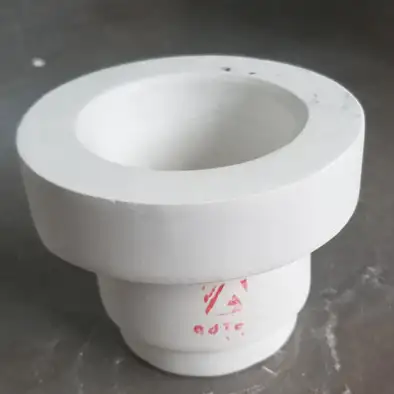
Detailed Technical Specifications
Foundry engineers require precise data to validate equipment compatibility. The table below outlines the physical properties of the Adtech Sprue Bush.
Table 1: Physical and Chemical Properties
| Property | Value / Specification | Unit |
| Main Component | High Silicon Melting 140 / Al-Si | – |
| Density | 1.8 – 2.2 | g/cm³ |
| Color | White / Off-White | – |
| Thermal Conductivity | < 0.4 (at 700°C) | W/(m·K) |
| Coefficient of Thermal Expansion | < 2.5 x 10⁻⁶ | /°C |
| Compressive Strength | > 60 | MPa |
| Maximum Service Temperature | 1100 | °C |
| Service Life (Average) | 30 – 60 (varies by usage) | Days |
Comparison: Adtech Al-Si Bush vs. Traditional Metal/Titanate
Many foundries still utilize cast iron with coatings or aluminum titanate bushings. While functional, they lack the efficiency of the Adtech High Silicon 140 solution.
Table 2: Performance Comparison
| Feature | Adtech Sprue Bush (Al-Si) | Cast Iron Bushing | Aluminum Titanate (Standard) |
| Aluminum Adhesion | Extremely Low (Non-wetting) | High (Requires constant coating) | Low |
| Thermal Shock Resistance | Excellent (No micro-cracking) | Poor (Warps over time) | Good |
| Maintenance Frequency | Low (Daily inspection only) | High (Coating every shift) | Medium |
| Durability | High | High | Low (Brittle) |
| Cost per Cast | Lowest (Due to longevity) | Medium | High |
| Impurity Introduction | None | High (Iron contamination) | None |
Installation and Operational Best Practices
Proper installation ensures the Adtech Sprue Bush reaches its maximum service life. Improper handling is the leading cause of premature failure in ceramic components.
Step 1: Inspection and Cleaning
Before installation, inspect the steel shell or holder. It must be clean. Any residue from the previous bushing will create pressure points. These pressure points can snap a ceramic bush once heat is applied.
Step 2: The Gasket Seal
Use a high-quality fiber blanket or sealing gasket between the Adtech Sprue Bush and the mounting plate. This absorbs mechanical vibration from the LPDC machine.
Step 3: Pre-heating
This is the most critical step. Do not introduce molten aluminum to a cold sprue bush.
-
Slowly heat the nozzle and bush assembly.
-
Target temperature: 300°C to 400°C.
-
Time: 30 to 60 minutes.
-
Use an electric heater or gas burner designed for mold pre-heating.
Troubleshooting Common Casting Defects Related to Sprue Bushes
When casting defects occur, the sprue bush is often an overlooked culprit. Here is how to diagnose issues related to the gate system.
Table 3: Defect Diagnosis Guide
| Defect Symptom | Potential Sprue Bush Issue | Solution |
| Cold Shuts | Heat loss in the sprue area. | Switch to Adtech Al-Si material for better insulation. |
| Oxide Inclusions | Turbulence caused by a rough bush surface. | Replace with Adtech 140 material (smoother finish). |
| Iron Contamination | Degradation of a metal sprue bush. | Upgrade to Ceramic Al-Si to eliminate iron pickup. |
| Gate Freezing | High thermal conductivity of the bush. | The Adtech bush has low conductivity to keep metal hot. |
| Leaking at Flange | Poor seal or cracked bush. | Check installation torque and gasket integrity. |
Economic Impact for Wheel Hub Manufacturers
The automotive wheel industry operates on tight margins. Scrap rates determine profitability.
Using Adtech Sprue Bushes directly impacts the bottom line.
-
Reduced Scrap: By maintaining a constant temperature and reducing inclusions, the first-pass yield increases.
-
Energy Savings: The insulating properties of the 140 material mean the holding furnace requires less energy to maintain temperature at the gate.
-
Downtime Reduction: A longer lifespan means fewer machine stoppages for bushing changes.
For a foundry producing 1,000 wheels per day, reducing the scrap rate by just 0.5% results in massive annual savings. The investment in high-quality Adtech consumables pays for itself within weeks.
What Engineers Are Asking
Is Boron Nitride Coating Necessary?
With traditional materials, Boron Nitride (BN) is mandatory to prevent sticking. With Adtech’s Al-Si material, the non-wetting nature is intrinsic. However, applying a thin layer of BN coating can further extend the life of the bush during the initial break-in period. It acts as a secondary insurance policy.
Thermal Fatigue in LPDC
Low Pressure Die Casting involves cyclic pressurization. The sprue bush is under internal pressure from the metal and external pressure from the mounting. The high silicon melting 140 material is engineered to have a high modulus of rupture. It resists the mechanical fatigue that causes other ceramics to crumble over time.
Extending Service Life: Maintenance Protocols
To get the most out of your Adtech Sprue Bush, follow this maintenance schedule:
-
Every Shift: Visually inspect the top surface for damage from the mold closing.
-
Daily: Check for any aluminum buildup. If found, remove it gently while the unit is hot. Do not use a hammer. Use a soft scraper.
-
Weekly: Check the sealing gasket. If the gasket degrades, the bush will vibrate and crack.
Adtech Sprue Bushings (High-Silicon 140): Technical FAQ
1. What is the exact lifespan of an Adtech Sprue Bush?
2. Can this sprue bush be used for zinc or copper casting?
3. Does the “High Silicon Melting 140” material require special storage?
4. How does this product compare to Silicon Nitride (Si3N4)?
5. Can I machine the sprue bush if the size is slightly off?
6. What is the maximum pressure this bushing can withstand?
7. Why did my sprue bush crack immediately upon first use?
8. Is the material susceptible to flux corrosion?
9. How do I clean the sprue bush without damaging it?
10. Does Adtech offer different sizes?
Conclusion: The Smart Choice for Aluminum Casting
The Adtech Sprue Bush represents a convergence of material science and practical foundry engineering. By utilizing high silicon melting 140 materials and Al-Si composites, Adtech delivers a consumable that solves the two biggest headaches in casting: sticking and cracking.
For aluminum foundries, the choice is clear. Switching to Adtech is not just a purchase of a spare part. It is an upgrade to the efficiency of your entire casting line.