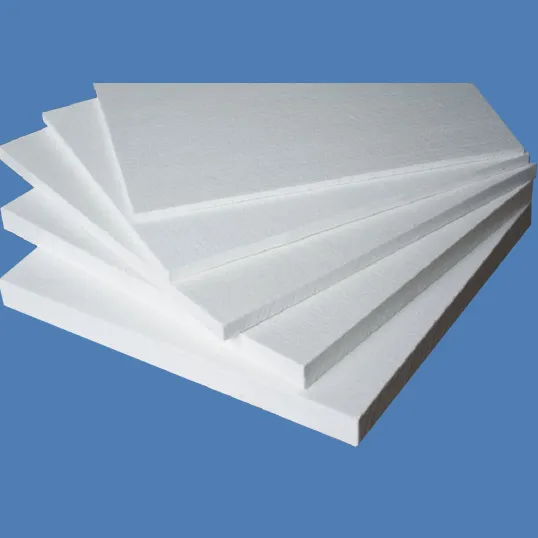

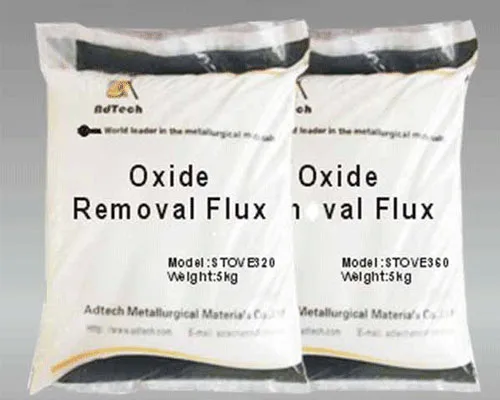
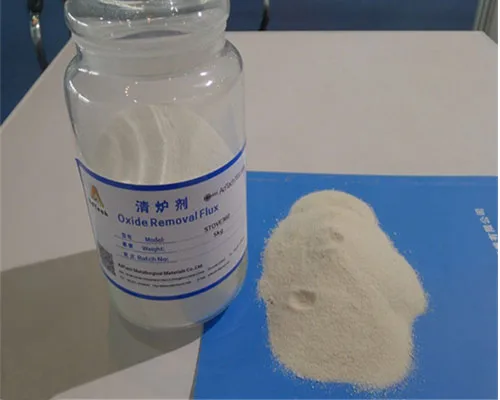
For foundry operations that melt aluminum, a purpose-designed oxide removal flux delivers the fastest, most consistent way to remove surface and suspended oxides, reduce dross formation, protect refractory lining, and improve cast quality. The most effective fluxes are salt-based blends dominated by chloride and fluoride salts (for example NaCl, KCl, NaF, Na3AlF6), formulated into categories that include covering, cleaning, drossing, and wall-cleaning products; correct selection, temperature control, and application technique determine yield gains and lower rework.
1. Introduction and why oxide control matters
Molten aluminum instantly forms a thin, tenacious oxide film (Al₂O₃) the moment it contacts oxygen. That film traps hydrogen and nonmetallic inclusions, produces porosity in castings, accelerates refractory wear, and converts valuable metal into dross that must be discarded. A correctly matched oxide removal flux collects or dissolves oxide fragments, encourages their flotation, and creates a protective skin that slows further oxidation. The result: higher metal recovery, fewer defects, and improved process stability.
2. How oxide forms in molten aluminum
When aluminum melts, oxygen in the furnace atmosphere and in incoming scrap reacts to form aluminum oxide. The oxide film forms instantly and is amphoteric, highly stable, and adherent. Additional sources of oxides include entrained scale from scrap, flux residues from previous cycles, and alloying element oxidations (for example magnesium). Hydrogen dissolves in liquid aluminum then forms porosity during solidification; oxides can trap hydrogen and other impurities, worsening internal casting defects. Technical approaches that lower dissolved hydrogen and remove oxide fragments lead to superior casting integrity.
3. What oxide removal flux does and how it works
Flux performs one or more of the following physicochemical tasks:
-
Forms a barrier on the bath surface to prevent fresh oxidation (covering action).
-
Reacts chemically with oxide films and converts them into lower-melting or fusible compounds that can be skimmed (chemical softening).
-
Chemically or physically gathers oxide particles and suspended inclusions into clumps that float to the surface (dross agglomeration).
-
Penetrates oxide buildup on furnace walls and softens it, enabling mechanical removal (wall-cleaning).
Most commercial fluxes use halide salts and fluoride compounds to provide both wetting and chemical reactivity toward Al₂O₃. Flux operation often complements degassing treatments (rotary degassers, rotary impellers and gas flushing) because flux handles oxides while degassing targets hydrogen removal.
4. Flux categories and operational roles
Flux types are optimized for specific needs. The short table below gives an operational taxonomy.
Table 1. Flux categories and primary functions
| Flux category | Primary role in melting / refining | Typical use case |
|---|---|---|
| Covering flux | Forms barrier to limit new oxidation | Small melt furnaces, pouring surfaces |
| Cleaning flux | Chemically ties up suspended oxides and inclusions | Foundries with high scrap content |
| Drossing flux | Promotes separation of metal from dross layer | Heavy dross formation scenarios |
| Wall-cleaning flux | Softens refractory-scale for mechanical removal | Periodic furnace maintenance |
| Refining flux | Selective reaction with alloy elements (Mg, Na) | Alloys needing element-specific cleanup |
| Brazing/soldering flux (specialized) | Promote wetting of aluminum during joining | Brazing, repair operations |
Sources categorizing flux function match practice across industrial suppliers and independent technical reviews.
5. Typical chemical formulations and performance
Commercial fluxes vary but recurring ingredient groups appear across technical literature and patents: chlorides (NaCl, KCl), fluorides (NaF, AlF₃, Na₃AlF₆, cryolite), magnesium or calcium salts, and additives such as oxidizers or wetting agents. Fluoride content often helps dissolve or soften Al₂O₃; chlorides contribute to flux flow and dross agglomeration. Some wall-cleaning blends include oxidants to generate localized heat and promote fluoride penetration. Patented recipes demonstrate wide composition ranges tailored to alloy series and furnace type.
Table 2. Representative ingredient ranges in common flux types
| Ingredient family | Example compounds | Typical mass fraction range (industrial blends) |
|---|---|---|
| Alkali chlorides | NaCl, KCl | 20–60% |
| Fluoride salts | NaF, Na₃AlF₆ (cryolite), AlF₃ | 5–40% |
| Magnesium salts | MgCl₂ | 5–25% |
| Oxidizers / modifiers | Na₂SiF₆, K₂TiF₆, small metallic powders | <10% |
| Fillers / flow regulators | Silicates, inert salts | balance to 100% |
Note: specific formulas are proprietary. Operators must consult product SDS for exact composition.
6. Application methods, dosing and temperature windows
Common application techniques
-
Broadcasting — sprinkling granules across the bath surface and raking through; low capital but variable penetration.
-
Injection — pneumatic or mechanical injection beneath the surface for deep-cleaning and efficient oxide capture; higher capital, higher performance.
-
Pour-line addition — dosing flux at transfer or pouring points to protect metal during movement.
-
Gunning/Wall spray — specialized systems that apply wall-cleaning flux to refractory surfaces.
Typical doses and temperatures
-
General guidance for cleaning or covering fluxes: 1–4 kg per tonne of melt for routine maintenance; higher for heavy dross control.
-
Wall-cleaning charges are larger and applied during furnace maintenance cycles; follow supplier instructions.
-
Many fluxes are effective between 750°C and 950°C, but product-specific melting and decomposition ranges differ; follow SDS and technical sheet recommendations. Using flux at too low a temperature reduces reactivity; too high a temperature can produce hazardous decomposition fumes.
Table 3. Application quick reference
| Task | Technique | Typical dose | Notes |
|---|---|---|---|
| Surface covering | Broadcast | 1–2 kg/tonne | Quick protection during pouring |
| Deep cleaning | Injection | 2–4 kg/tonne | Use injector designed for salts |
| Heavy dross control | Broadcast + skimming | 3–6 kg/tonne | Remove skimmings promptly |
| Wall cleaning | Gunning / spray | Batch-specific | Use PPE, controlled ventilation |
Always follow supplier guidance and local regulations for dosing.
7. Selection criteria for production environments
Choose flux by matching these variables:
-
Alloy family: Certain fluxes are formulated for high-magnesium alloys or brazing applications; composition matters.
-
Furnace type: Reverberatory, crucible, tilt-pour and induction furnaces behave differently with powders or granules.
-
Process integration: If degassing and fluxing will run together, select flux with compatible residue and skimming behavior.
-
Automation readiness: Injection systems require free-flowing granules with controlled particle size.
-
Environmental constraints: Halogen content, fluorides, and emissions requirements may restrict choices under local regulation.
Documented supplier data, SDS review, and small-scale trials are essential before plant-wide adoption.
8. Health, safety and environmental concerns
Flux chemistry involves halides and fluorides. Some decomposition pathways produce corrosive and toxic gases such as hydrogen fluoride and hydrogen chloride when flux is exposed to moisture or high temperatures. The major safety points:
-
Use local exhaust ventilation when adding flux or during heavy fluxing operations.
-
PPE: chemical-resistant gloves, face shield, safety goggles, and suitable respiratory protection for airborne particulates and fumes.
-
Consult product SDS for first-aid, spill response and firefighting measures.
-
Avoid flux contact with water or incompatible chemicals that may liberate hazardous gases.
-
Waste flux residues and dross can contain reactive fluoride salts; handle disposal in accordance with hazardous waste rules.
Table 4. Safety quick reference
| Hazard | Practical control measure | Source |
|---|---|---|
| Toxic fumes (HF, HCl) | Forced local ventilation, fume capture | SDSs, supplier guidance |
| Skin / eye burns | Chemical-resistant gloves, goggles, face shield | Manufacturer SDS |
| Dust inhalation | N95/respirator or higher during handling | SDS and occupational standards |
| Environmental release | Store dry, contain spills, regulated disposal | Regulatory guidance |
9. Quality control, testing and measurement of effectiveness
Establish metrics:
-
Dross mass per melt: track kilograms of dross produced per tonne before and after flux change.
-
Hydrogen level: measure dissolved hydrogen with carrier gas hot extraction or similar techniques; note flux alone will not remove hydrogen.
-
Inclusion counts: use metallographic samples to quantify oxide inclusions.
-
Chemical assay of flux residue: verify fluoride or chloride carryover into metal meets acceptable limits.
-
Process logs: temperature, addition time, and skimming intervals.
Manufacturers often provide lab support or field trials to help set baseline metrics. Independent research demonstrates flux blends containing fluoride salts improve oxide dissolution and inclusion removal when combined with proper mechanical skimming.
10. Storage, handling and inventory best practices
-
Keep flux in sealed, dry containers to avoid moisture uptake and caking.
-
Rotate inventory with a FIFO approach; moisture-exposed flux may react violently or lose performance.
-
Store away from acids, wet areas, and incompatible chemicals.
-
Maintain SDS copies accessible in the melt area and train personnel on emergency measures.
-
Use safe transfer systems to minimize dust generation during bag handling.
11. Market notes and reputable suppliers
Global foundry and metal treatment suppliers offer industrial flux brands for diverse needs. Technical leaders and product lines often cited by foundry engineers include Foseco COVERAL series and Pyrotek flux lines. Many suppliers publish SDS and technical application notes; consult those before trial use. Product selection frequently depends on local support, regulatory compliance, and refinery trials.
12. Common problems and remedies
Problem: Flux smoke or strong fumes during addition.
Remedy: Reduce addition rate, improve ventilation, verify flux dryness. Refer to SDS for decomposition behavior.
Problem: Excess metal entrainment in skimmings (over-skirting).
Remedy: Lower dose, alter addition timing, adjust skimming technique.
Problem: Persistent inclusions despite fluxing.
Remedy: Combine fluxing with rotary degassing or improve injection depth and mechanical agitation.
13. Practical case example (operational numbers)
A mid-size foundry melts 2 tonnes per batch on a daily schedule. Baseline dross is 80 kg per tonne using broadcast salt-only mixes. A switch to a commercial cleaning flux with 10% Na₃AlF₆ and KCl/NaCl base, applied at 3 kg/tonne plus injector-assisted addition, reduced dross to 55 kg per tonne and lowered rework rate by 18 percent in a 4-week trial. Hydrogen levels required complementary degassing to reach target porosity control. Results depend on scrap mix, alloy, and operator discipline; trial data must be collected and analyzed before full adoption.
14. Summary and recommended checklist
Operational checklist before flux adoption
-
Review alloy compatibility and supplier technical sheet.
-
Obtain and study SDS, emergency procedures and ventilation needs.
-
Trial flux under controlled conditions, logging dross, inclusions and hydrogen.
-
Choose application method: broadcast for low capital, injection for repeatable results.
-
Train operators, document dosing, and schedule wall-cleaning cycles.
-
Monitor emissions and dispose of residues per regulations.