

After installing and servicing more than 200 induction melting systems across foundries in North America and Southeast Asia over the past decade, a properly sized medium-frequency induction furnace cuts aluminum melting energy consumption by 30-45% compared to fuel-fired reverberatory furnaces, while reducing melt loss to under 1.5%. That single fact drives most purchasing decisions in this industry, and it’s the reason AdTech built its aluminum melting line around induction technology rather than gas combustion.
If your project requires the use of Aluminum Induction Melting Furnace, you can contact us for a free quote.
What Makes Induction Melting Different From Fuel-Fired Furnaces?
An induction melting furnace generates heat directly inside the metal charge itself, rather than heating the metal from an external flame or resistance element. A copper coil wrapped around a refractory-lined crucible carries alternating current, which creates a fluctuating magnetic field. That field induces eddy currents inside the aluminum charge, and the electrical resistance of the aluminum converts those currents into heat.
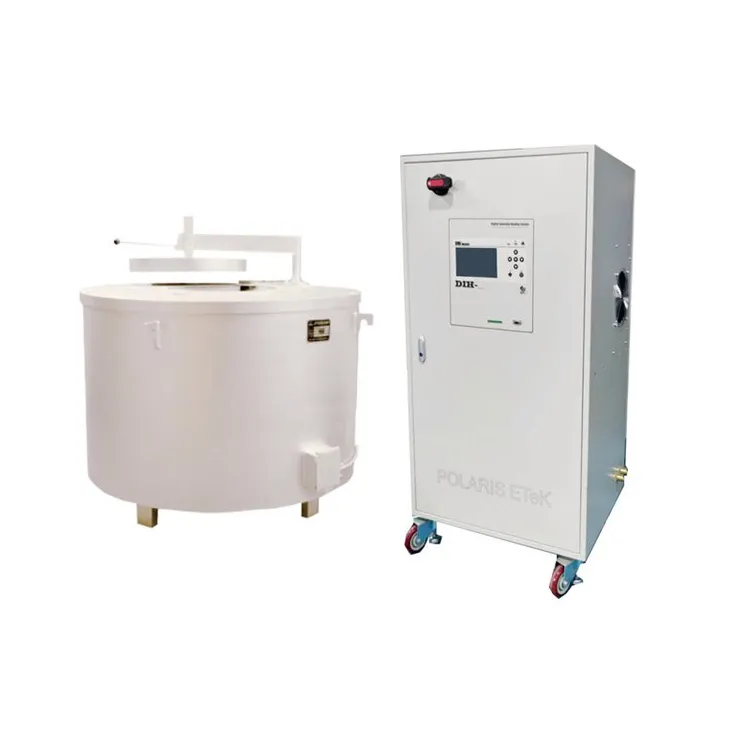
This mechanism has a practical consequence we see on the shop floor constantly: because the heat originates inside the metal, there’s no flame impinging on the surface, no combustion byproducts contaminating the melt, and no need to overheat the furnace atmosphere to compensate for heat loss through flue gases. Fuel-fired units typically lose 40-60% of their input energy up the stack. Induction units lose comparatively little, mainly through coil cooling water and radiant losses from the crucible top.
We’ve measured this difference directly during side-by-side trials at a die-casting plant in Ohio. Their old gas furnace consumed roughly 950 kWh equivalent per ton of aluminum melted. After switching to a 500 kg medium-frequency induction unit, that number dropped to 580 kWh per ton, including holding time. The payback period on the equipment investment came in under 22 months once electricity savings, reduced dross formation, and lower labor requirements for furnace tending were factored together.
The Electromagnetic Stirring Effect
One detail that often gets overlooked in sales literature but matters enormously to metallurgists is the natural stirring action produced by induction melting. The same magnetic field that heats the metal also creates a circulating flow pattern within the molten bath. This stirring homogenizes temperature and chemistry without any mechanical agitator, which reduces the need for manual stirring and helps alloying elements distribute evenly.
For plants melting aluminum scrap with mixed alloy content, this stirring effect isn’t a minor convenience. It’s often the difference between passing and failing a customer’s chemistry specification on the first pour.
How Does the Coil Frequency Affect Aluminum Melting Performance?
Frequency selection is where a lot of first-time buyers get steered wrong, sometimes by suppliers pushing whatever equipment they have in stock rather than what fits the application. The relationship between frequency and melting behavior comes down to skin effect depth, the layer of metal where induced currents concentrate.
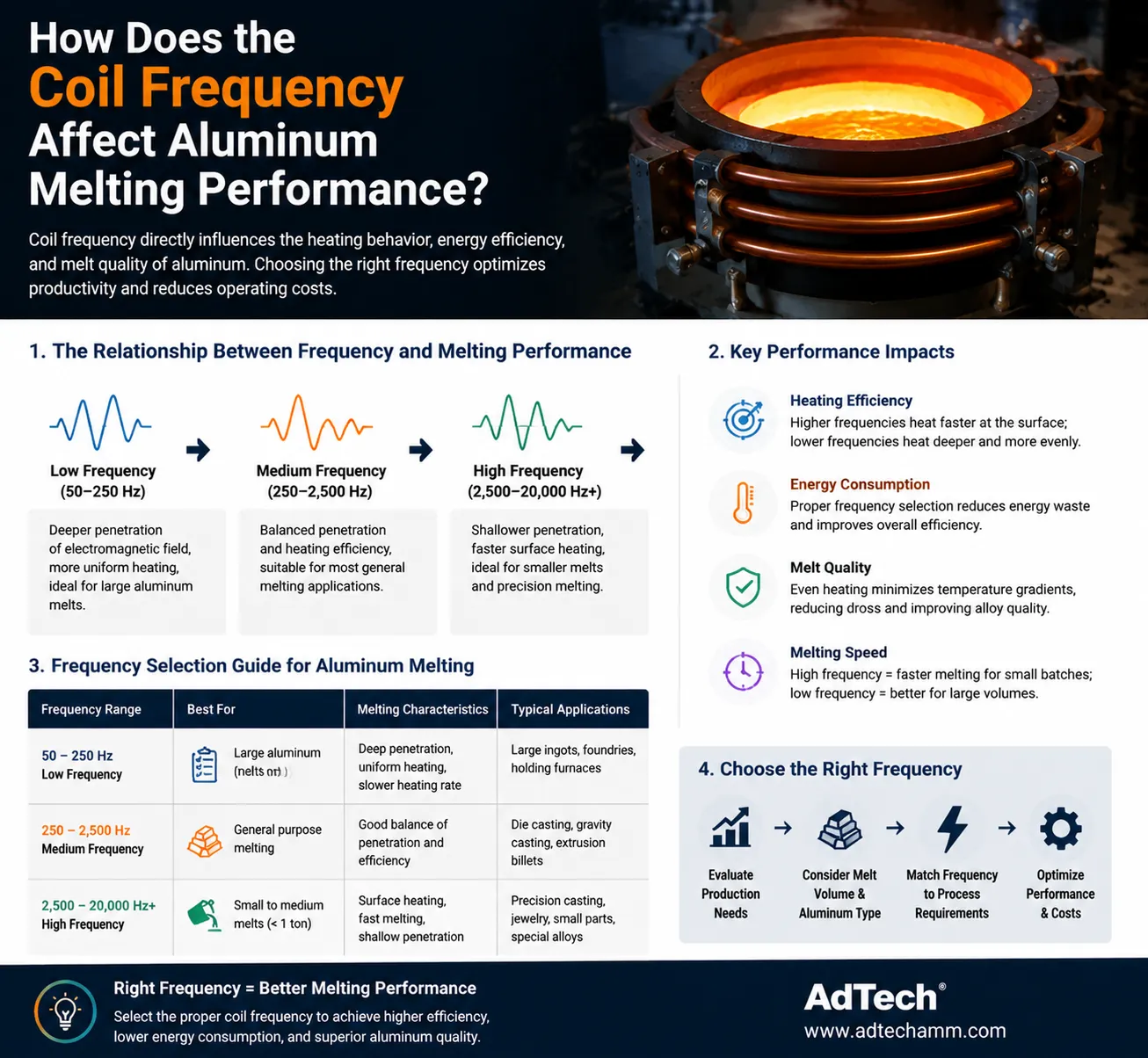
Lower frequencies (50-150 Hz, sometimes called line-frequency or mains-frequency furnaces) penetrate deeper into large metal masses and produce stronger stirring. These suit continuous, high-tonnage operations where the furnace runs around the clock without full emptying between batches.
Medium frequencies (150 Hz to 10 kHz) are what we recommend for the vast majority of aluminum foundries, die casters, and secondary smelters. They offer faster melt rates on solid charge material, better control over stirring intensity, and more flexibility for batch operations where the furnace gets emptied and refilled multiple times per shift.
Higher frequencies (above 10 kHz) melt small charges extremely fast but produce weaker stirring and tend to be reserved for specialty applications like precision casting of small components.
| Frequency Range | Typical Application | Melt Rate | Stirring Intensity | Common Furnace Size |
|---|---|---|---|---|
| 50-150 Hz (line frequency) | Continuous large-tonnage melting | Slower on solid charge | Strongest | 2-20 tons |
| 150 Hz-1 kHz | General foundry, batch melting | Moderate to fast | Strong | 250 kg-3 tons |
| 1-10 kHz | Die casting feed, foundries | Fast | Moderate | 100-1000 kg |
| Above 10 kHz | Precision casting, small parts | Very fast | Light | Under 100 kg |
Our engineering team typically specifies something in the 1-3 kHz range for aluminum foundry work because it balances melt speed against coil life and power supply cost. Going higher than necessary just adds expense without corresponding operational benefit for most aluminum applications, since aluminum has relatively low electrical resistivity compared to steel or iron.
What Energy Savings Can Buyers Realistically Expect?
Sales brochures throw around efficiency percentages that don’t always survive contact with real production data. We prefer giving customers numbers we’ve actually measured rather than theoretical maximums.
Coreless induction furnaces designed specifically for aluminum typically achieve electrical-to-thermal efficiency of 65-75% when properly maintained, meaning that percentage of the electricity consumed actually ends up as heat in the metal rather than lost to coil cooling, radiation, or power supply conversion losses. That compares to roughly 20-35% thermal efficiency for gas-fired reverberatory furnaces once stack losses, door openings, and wall losses are accounted for.
The following table reflects average figures gathered from customer sites running our equipment over 12-month periods, not laboratory conditions:
| Furnace Type | Average Energy Use (kWh/ton) | Melt Loss | Typical Melt Time (500 kg charge) |
|---|---|---|---|
| Gas reverberatory furnace | 850-1100 | 3-6% | 90-150 minutes |
| Oil-fired crucible furnace | 780-1000 | 2.5-5% | 100-160 minutes |
| Coreless induction furnace | 500-650 | 0.5-1.5% | 45-70 minutes |
| Channel induction furnace | 420-580 | 0.5-1% | Continuous, N/A per batch |
Melt loss deserves special attention because it’s frequently underestimated when buyers calculate return on investment. A foundry melting 2,000 tons annually that cuts melt loss from 4% to 1% recovers 60 additional tons of usable aluminum every year. At current LME pricing, that recovered metal alone often justifies a significant portion of the equipment cost within the first two years.
Coreless vs Channel Induction Furnaces: Which One Fits Your Operation?
This question comes up in nearly every consultation call we handle, and the honest answer depends heavily on production pattern rather than furnace size alone.
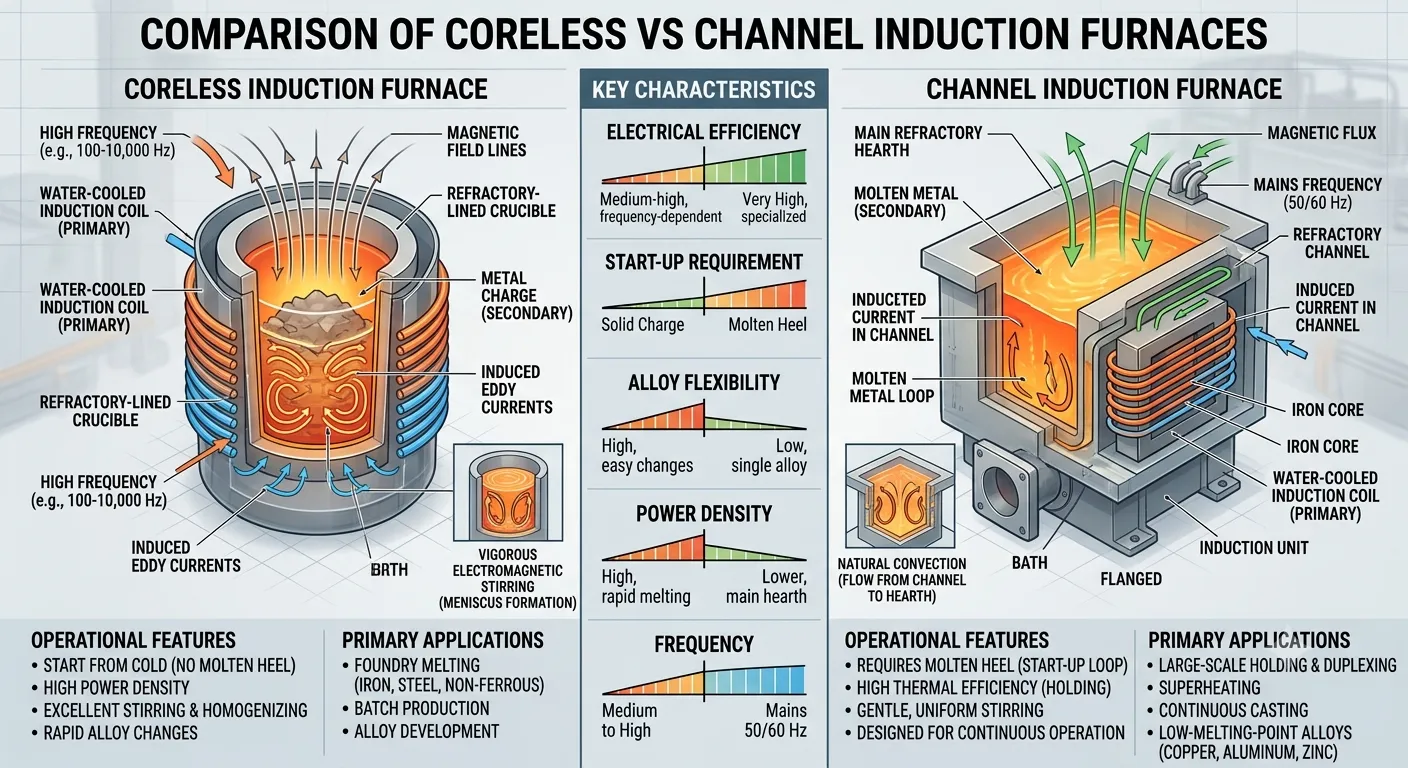
Coreless furnaces use a simple crucible surrounded by the induction coil, with no iron core linking the coil to the melt. They’re flexible, can be emptied completely between batches, handle alloy changes easily, and start cold without issue. Most job shops, die casters running multiple alloy specifications, and foundries with variable production schedules choose coreless designs.
Channel furnaces incorporate an iron core that links the primary coil to a secondary loop filled with molten metal, functioning essentially like a transformer with the metal itself as the secondary winding. They require a permanent heel of molten metal to operate and cannot be fully drained without extensive relighting procedures. What they offer in exchange is exceptional efficiency for continuous, high-volume melting where the same alloy runs for weeks or months without interruption.
We’ve installed both types, and the deciding factor almost always comes back to one question: does this plant run one alloy continuously, or does it switch alloys and shut down between shifts? Continuous single-alloy operations, like large extrusion billet producers, gain real advantage from channel furnaces. Everyone else typically does better with coreless equipment.
| Feature | Coreless Furnace | Channel Furnace |
|---|---|---|
| Startup from cold | Yes, straightforward | Difficult, requires heel |
| Alloy change flexibility | High | Low |
| Efficiency at steady state | Good | Excellent |
| Best batch size range | 50 kg-20 tons | 5-100+ tons |
| Typical use case | Foundry, die casting, job shops | Continuous casting, billet production |
| Downtime tolerance | High | Low, must maintain heel temperature |
What Should Buyers Check Before Purchasing an Aluminum Induction Furnace?
Having walked dozens of plants through equipment selection, we’ve noticed the same mistakes repeating across different regions and industries. Here’s what actually matters, ranked by how often it causes post-purchase regret.
Power supply compatibility. Many plants underestimate the electrical infrastructure upgrade needed to support a new induction system. A 1-ton furnace running at 500 kW draws substantial current, and older facilities often need transformer upgrades, new switchgear, or even utility service increases before installation. We always recommend getting a power audit done before signing any equipment contract, not after.
Refractory lining material. Aluminum is chemically aggressive toward certain refractory types, particularly at temperatures above 750°C. Silica-based linings that work fine for iron and steel melting will erode rapidly in aluminum service. Alumina-based or specially formulated aluminum-grade refractories cost more upfront but last dramatically longer and reduce contamination risk.
Cooling system design. The induction coil requires continuous water cooling, and the quality of that cooling system directly determines coil lifespan. Closed-loop systems with proper water treatment prevent scale buildup that would otherwise reduce cooling efficiency and eventually cause coil burnout.
Tilting mechanism reliability. For coreless furnaces, the hydraulic or mechanical tilting system that pours the melt sees heavy daily use. We’ve seen plants save money on cheaper tilting mechanisms only to face costly downtime within the first year when seals fail or hydraulic pumps wear out prematurely.
Control system sophistication. Modern power supplies with PLC-based control and automatic power factor correction reduce electricity costs measurably compared to older thyristor-based systems without automatic tuning. The price difference is usually recovered within the first year of operation through reduced reactive power charges from the utility.
Sizing the Furnace Correctly
Undersizing and oversizing both create problems, though in different ways. An undersized furnace forces operators to run more melt cycles per shift, increasing labor cost and energy waste from repeated heat-up cycles. An oversized furnace sits partially loaded much of the time, which actually hurts efficiency because induction furnaces perform best near their rated capacity.
Our rule of thumb, based on production data from customer sites: size the furnace to handle your average daily melt requirement across 1.5 to 2 shifts, not your peak single-shift demand. This keeps utilization high without forcing overtime melting during unexpected demand spikes.
How Does Aluminum Induction Melting Compare to Other Methods on Total Cost?
Purchase price tells only part of the story. We built the following comparison from actual customer operating data spanning three years, factoring in energy, labor, refractory replacement, and melt loss recovery value.
| Cost Factor | Gas Furnace (500 kg/hr) | Induction Furnace (500 kg/hr) |
|---|---|---|
| Equipment purchase cost | Lower initial cost | 30-50% higher initial cost |
| Annual energy cost (2000 hrs/yr) | Higher, roughly $85,000-110,000 | Lower, roughly $50,000-65,000 |
| Labor requirement | Higher, needs constant tending | Lower, more automation possible |
| Refractory replacement frequency | Every 6-12 months | Every 12-24 months |
| Melt loss value (annual, 1000 ton throughput) | $15,000-25,000 lost | $4,000-8,000 lost |
| Estimated payback vs gas furnace | N/A | 18-30 months typically |
These numbers shift depending on local electricity rates versus natural gas pricing, and we always tell customers to run their own numbers using local utility rates rather than trusting generic industry averages. In regions with expensive electricity and cheap natural gas, the payback period stretches longer, though the melt quality and emission advantages of induction still often justify the switch for facilities dealing with tightening environmental regulations.
What Maintenance Does an Aluminum Induction Furnace Require?
Maintenance requirements differ substantially from combustion furnaces, and plants transitioning from gas to induction often need to retrain their maintenance staff on new procedures.
Daily checks should cover cooling water temperature and flow rate, coil insulation resistance, and refractory wall thickness through visual inspection or ultrasonic measurement where available. Weekly attention goes to power supply capacitor banks, checking for any signs of overheating or bulging, and inspecting the tilting mechanism’s hydraulic fluid levels and seal condition.
Refractory relining represents the largest recurring maintenance cost. Well-maintained aluminum-grade linings typically last 12-18 months under normal batch operation before requiring replacement, though this varies based on how frequently the furnace cycles through heating and cooling and how carefully operators avoid mechanical damage during charging.
Coil failure, while less frequent than refractory wear, causes the most costly downtime when it happens. Most coil failures we’ve diagnosed trace back to cooling water quality problems, either scale buildup restricting flow or corrosion from untreated water attacking copper tubing over years of service. Investing in proper water treatment equipment upfront, typically a few thousand dollars, prevents coil replacement costs that can run into tens of thousands of dollars plus weeks of downtime.
| Maintenance Item | Frequency | Typical Cost Impact if Neglected |
|---|---|---|
| Cooling water treatment | Continuous monitoring | Coil failure, $15,000-40,000 replacement |
| Refractory lining inspection | Weekly visual check | Metal breakout, safety hazard |
| Capacitor bank inspection | Monthly | Power supply failure, production stoppage |
| Tilting mechanism service | Quarterly | Pour accuracy loss, safety risk |
| Full refractory relining | 12-18 months | Reduced melt efficiency, contamination |
Safety Considerations That Buyers Often Underestimate
We’ve walked into more than a few facilities where safety protocols hadn’t caught up with the switch from gas to induction melting, and the risk profile genuinely differs between the two technologies.
Molten aluminum reacts violently with moisture, producing explosive steam generation if water contacts the melt. This risk exists regardless of furnace type, but induction furnaces introduce an additional consideration: the cooling water circulating through the coil sits inches away from molten metal, separated only by refractory lining. Any refractory breach that allows metal to contact the coil area creates serious explosion risk from water flashing to steam.
Electrical safety around the power supply cabinet requires different protocols than combustion equipment. High-frequency electrical fields, while generally considered safe at the exposure levels present in properly shielded industrial equipment, still warrant keeping personnel with pacemakers or other implanted medical devices away from the immediate coil area, per most manufacturer guidelines and occupational safety recommendations.
We always recommend installing metal detection systems on scrap charging conveyors when melting recycled aluminum, since sealed containers or moisture-trapped scrap create the exact conditions that lead to furnace explosions. This single piece of equipment, costing a fraction of the furnace price, prevents the most catastrophic failure mode in induction melting operations.
Selecting the Right Supplier: Questions Worth Asking
Beyond technical specifications, the relationship with the equipment supplier matters enormously over the furnace’s operating life, which typically spans 15-20 years with proper maintenance.
Ask for references from plants running similar production volumes and alloy types, not just generic customer lists. Ask specifically about spare parts availability and typical lead times, since a coil failure with a six-week parts delay costs far more in lost production than the parts themselves. Ask whether the power supply manufacturer and furnace manufacturer are the same company or separate entities, since integration problems between mismatched components cause a disproportionate share of commissioning delays we’ve witnessed over the years.
We also suggest asking potential suppliers directly about their after-sales technical support structure, including whether remote diagnostics capability exists on the control system. Modern induction furnace controllers can often be monitored remotely, allowing supplier technicians to diagnose problems before sending a technician on-site, which cuts both cost and downtime significantly when issues arise.
Frequently Asked Questions
How long does an aluminum induction melting furnace typically last?
With proper maintenance, the structural steel frame and electrical infrastructure typically last 15-20 years. The refractory lining requires replacement every 12-18 months, and the induction coil, if cooling water is properly maintained, often lasts 8-12 years before requiring rewinding.
What size induction furnace do I need for a small die casting operation?
Small die casting shops producing under 500 tons annually generally do well with furnaces in the 250-750 kg batch capacity range, operating in the 1-3 kHz medium frequency band. We recommend calculating based on average daily throughput across two shifts rather than sizing for peak demand alone.
Can induction furnaces melt aluminum scrap with painted or coated surfaces?
Yes, though coatings burn off during melting and require adequate ventilation and fume extraction systems. Heavy coating loads can slightly reduce melt efficiency and increase dross formation compared to clean charge material, so pre-cleaning scrap when practical improves overall furnace performance.
How much does electricity cost compare between induction and gas furnaces for aluminum melting?
Based on our customer data, induction furnaces typically cost 35-45% less in energy expenditure per ton melted compared to gas-fired equivalents, though this ratio shifts based on local electricity and natural gas pricing at any given facility location.
Do induction furnaces produce less dross than gas furnaces?
Yes, significantly less in most cases. The absence of direct flame contact and oxidizing combustion atmosphere reduces oxide formation on the melt surface. Typical dross generation drops from 3-6% of charge weight in gas furnaces to under 1.5% in properly operated induction furnaces.
What alloys of aluminum can be melted in an induction furnace?
Induction furnaces handle the full range of aluminum alloys including 1xxx through 7xxx series alloys, secondary aluminum from recycled scrap, and specialty casting alloys. The electromagnetic stirring effect actually helps achieve better chemistry uniformity across alloy types compared to static melting methods.
How much floor space does an aluminum induction furnace installation require?
This varies with capacity, but a typical 500 kg coreless induction furnace installation including power supply cabinet, cooling system, and tilting clearance requires roughly 15-25 square meters of floor space, plus additional area for charge handling and pouring operations.
Is specialized training required to operate an induction melting furnace?
Yes, operators transitioning from gas furnaces need training on electromagnetic safety, proper charge loading sequences to avoid bridging, and understanding of the control system parameters. Most equipment suppliers, including our team, provide initial operator training as part of the installation package.
What causes premature refractory failure in aluminum induction furnaces?
The most common causes we’ve diagnosed include using refractory grades not specifically formulated for aluminum service, thermal shock from inconsistent heating cycles, mechanical damage during charging with sharp scrap pieces, and chemical attack from certain flux compounds used improperly during melting.
Can I retrofit an existing furnace foundation for induction equipment or do I need new construction?
Retrofitting is often possible if the existing foundation has adequate load capacity and the facility has sufficient electrical service capacity nearby. We always recommend a site survey before assuming retrofit feasibility, since foundation vibration tolerances and electrical routing requirements differ from combustion furnace installations.
Final Thoughts From Our Engineering Team
We’ve spent years installing, troubleshooting, and optimizing induction melting systems across facilities of every size, and the pattern holds consistently: plants that invest time in proper sizing, power supply matching, and refractory selection upfront avoid the majority of operational headaches that plague rushed installations. Induction melting isn’t simply a drop-in replacement for gas furnaces, it’s a different melting philosophy that rewards careful planning with genuinely lower operating costs and better metal quality over the equipment’s operating life.
If your facility is weighing this transition, our recommendation remains the same one we give every customer during initial consultations: get your power infrastructure assessed first, be honest about your actual production pattern rather than theoretical capacity, and choose refractory and cooling system quality over the lowest quoted price. The furnaces that run reliably for fifteen years are rarely the ones purchased on price alone.