

For consistently clean molten aluminum, combine rotary inert-gas degassing with controlled flux injection and deep-bed filtration using ceramic foam filters, supported by strict temperature control and clean melting practices. This combined approach removes dissolved hydrogen and oxides, captures nonmetallic inclusions, and yields repeatable melt quality suitable for high-integrity castings.
Why refining molten aluminum matters
Refinement improves casting integrity, reduces porosity, and prevents mechanical failures in finished parts. Impurities such as dissolved hydrogen, native alumina, and foreign inclusions weaken structure and create scrap. Clean metal increases yield from each melt, shortens downstream machining, and raises customer satisfaction for demanding markets such as automotive, aerospace, and high-performance industrial components. Key quality metrics include hydrogen level, inclusion count, and surface cleanliness prior to pouring.
Aslo read:How to Remove Impurities from Molten Aluminum.
How to refine molten aluminum?
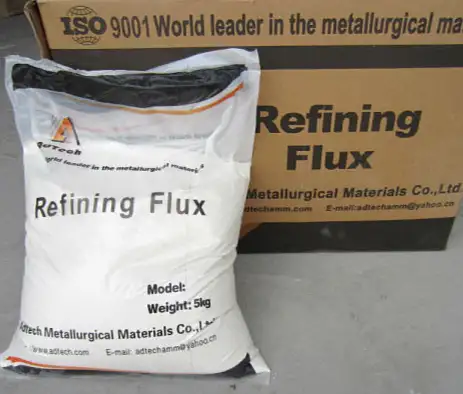
Fluxing
- How it works: A mixture of salts (like chlorides and fluorides) is added to the molten aluminum. These salts react with oxide impurities, creating a slag that floats to the surface and is then physically removed.
- Benefits: It’s a widely used, simple, and inexpensive method.
- Application:
- Mix salts (e.g., sodium fluoride, sodium chloride) and sprinkle them on the melt, or inject them using an inert gas.
- Ensure the flux is fully dispersed through proper agitation or gas injection to be effective.
Gas purging
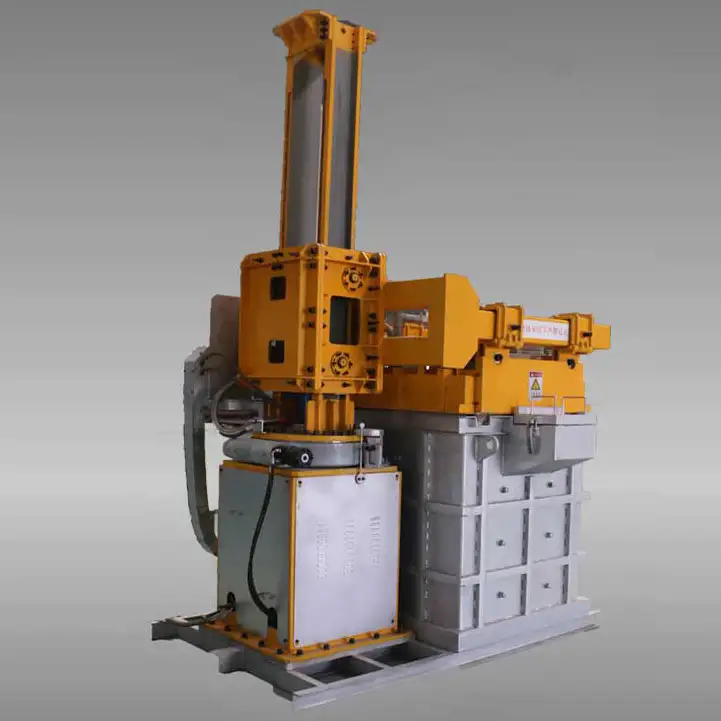
- How it works: An inert gas like argon or nitrogen is bubbled through the melt, or a reactive gas like chlorine is used. This process removes dissolved gases (mainly hydrogen).
- Benefits: It is very effective at removing hydrogen and can also help separate some oxides.
- Application:
- Spin degassing: A rotating impeller injects fine bubbles of an inert gas into the melt.
- Tablet flux: Tablets containing chlorine compounds are dropped into the melt, releasing bubbles that remove gas and inclusions.
- Bottom blowing: Inert gas is introduced from the bottom of the furnace through a gas-permeable plug.
Filtration
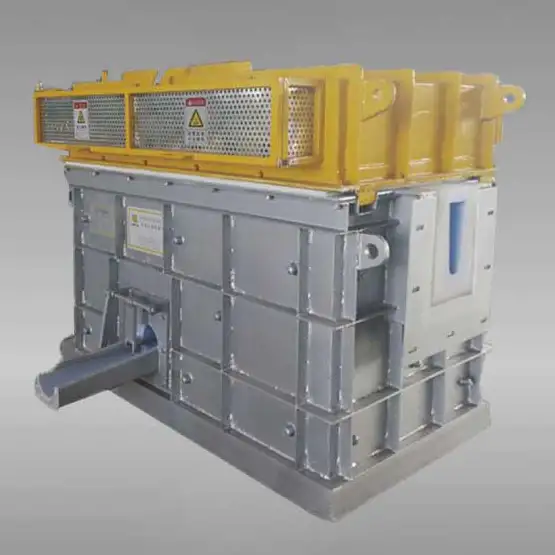
- How it works: Molten aluminum passes through filters that physically trap solid non-metallic inclusions.
- Benefits: It can remove very fine inclusions that are not removed by other methods.
- Application:
- Ceramic foam filters (CFFs): These are a common and effective type of filter used in the industry.
- Granular bed filtration: Uses a bed of granular material to filter the melt.
- Deep bed filtration: Involves a type of filtration where inclusions are captured throughout the depth of the filter.
Other methods
- Vacuum degassing: For high-purity applications, exposing the molten aluminum to a vacuum draws out dissolved gases.
- Electromagnetic stirring: Uses electromagnetic forces to stir the melt, which can help improve the effectiveness of other purification methods.
Primary contaminants in molten aluminum
Dissolved hydrogen
Hydrogen dissolves into aluminum from moisture or humid air contact during melting. When pressure drops during solidification, hydrogen forms porosity that reduces mechanical strength. Controlling hydrogen content is essential for dense castings.
Oxide films and alumina particles
Molten aluminum forms thin oxide films that trap impurities or fold into the liquid during transfer. These films, plus brittle alumina fragments, create inclusions that produce defects in castings.
Nonmetallic inclusions and tramp elements
Sand, refractory particles, scale from charge materials, and other foreign matter contaminate melts when charge handling, furnace lining maintenance, or skimming are inadequate. Preventive housekeeping helps reduce introduction of these contaminants.
Overview of proven refinement methods
Principal techniques include inert-gas flotation, rotary degassing, flux treatment, vacuum processing, ultrasonic treatment, tablet flux tools, and filtration using ceramic media. Each technique targets certain contaminant types, so selection depends on alloy, casting method, and quality goal. Combination methods produce the best results for demanding castings.
Degassing techniques: principles and practical notes
Purge gas bubbling
Inert gas such as argon or nitrogen is introduced into the melt through a lance or porous plug. Rising bubbles collect hydrogen and carry it to the surface. This technique is simple and economical for many foundries. Control factors include gas purity, bubble size, and immersion depth.
Rotary degassing (rotor-based)
Rotary units spin a rotor immersed in the melt, creating intense mixing and a high density of fine bubbles. High surface area from those bubbles accelerates hydrogen transfer into the gas phase, improving efficiency compared to static lancing. Rotary units also mix flux particles into the melt when flux injection is used, providing a twofold benefit: degassing and inclusion treatment. Modern rotary systems often operate online between furnace and casting line for continuous processing.
Vacuum processing
Applying vacuum above the melt reduces dissolved gas partial pressure, prompting hydrogen to leave the liquid. Vacuum systems work well for ultra-low hydrogen targets, though they require significant capital and strict operating safety for pressure changes.
Ultrasonic degassing
High-frequency sound waves cause cavitation in the melt, producing microbubbles that scavenge dissolved gas and encourage coalescence of inclusions. This method shows promise for specific alloys and specialty casting needs.
Tablet flux and flux injection
Chlorinated tablet fluxes or granular fluxes injected with carrier gas break up oxide layers and bind inclusions into a slag layer at the metal surface or into floating particles. Flux injection by lance or combined rotor/flux systems creates better dispersion and higher contact with inclusions. Choose flux chemistry based on alloy compatibility and environmental or regulatory constraints.
Filtration strategies that remove nonmetallic inclusions
Mechanical filtration captures solid inclusions that degassing cannot remove. Deep-bed ceramic foam filters capture particles across the cross-section rather than only at the surface of the filter media, producing efficient, consistent removal of oxides and dross. Filters also promote laminar flow into molds, reducing turbulence that traps gas or folds oxide films. Ceramic foam media with controlled pore sizes provide predictable capture efficiency, making them a cornerstone of modern melt refinement.
Where to place filtration
Install filters in the pouring system between the ladle and the mold or inside the gating system. Inline, hot-top, or permanent filter housings each offer tradeoffs in changeover time, thermal loss, and footprint. For continuous casting or large volume runs, consider cartridge or modular filter systems that work with automatic pour heads.
Combining methods for best results
Combining rotary degassing, flux injection, and ceramic foam filtration yields superior cleanliness. Rotary degassing reduces dissolved gases quickly, flux treats oxides and alkali residues, then filtration captures remaining solid contaminants before metal enters molds. Online units that integrate degassing and heating provide continuous quality control between furnace and casting equipment. Industry case studies show combined systems produce lower scrap rates and improved mechanical properties.
Equipment selection: what to evaluate
- Degassing method suitability for the alloy and final product quality.
- Rotor material compatibility and service life under molten aluminum conditions.
- Gas supply purity and flow control capability.
- Filter material chemistry and pore rating for target inclusion size.
- Process control and sampling capability to demonstrate results.
- Maintenance requirements and spare parts availability.
Recommended control parameters and practical ranges
Precise settings vary by alloy, melt size, and furnace arrangement. Use the following tables as starting templates and adapt during process validation.
| Method | Primary effect | Strengths | Limitations |
|---|---|---|---|
| Purge gas bubbling | Hydrogen removal | Low capital, simple | Less efficient for quick throughput |
| Rotary degassing | Hydrogen removal plus mixing | High efficiency, works well with flux injection | Higher maintenance, higher initial cost |
| Vacuum processing | Ultra-low hydrogen | Best for tight specifications | Expensive equipment, slower cycles |
| Ultrasonic degassing | Microbubble formation, inclusion coalescence | Non-chemical, targeted | Specialty equipment, limited scale |
| Flux treatment | Oxide removal, inclusion binding | Effective for oxide-rich melts | Chemical handling, potential residues |
| Parameter | Suggested starting range | Notes |
|---|---|---|
| Rotor speed (rotary degasser) | 300 to 1200 rpm | Choose lower speeds for large volumes, higher speeds for rapid mixing |
| Inert gas flow | 0.5 to 5 L/min per kg of melt (scale dependent) | Optimize bubble size; use plasma-grade gas for best results |
| Flux dosage | 0.1 to 1.0 wt% (depends on flux type) | Start low, monitor slag formation and sampling |
| Filter pore rating | 10 to 40 pores per inch equivalent | Finer pores give better capture yet increase pressure drop |
| Melt temperature control | Maintain alloy-specific hold temps within ±10°C | Avoid superheating that increases dissolution of gases |
| Media | Best for | Durability | Typical capture mechanism |
|---|---|---|---|
| Ceramic foam filter | Deep-bed capture of oxides and dross | High thermal resistance | Mechanical trapping, cake formation |
| Woven mesh | Coarse trap for heavy dross | Lower thermal life | Surface sieving |
| Sand bed | Temporary, low-cost trials | Varies | Surface capture |
Process flow: step-by-step practical sequence
- Charge preparation and sorting of scrap to reduce tramp elements and refractory contamination.
- Controlled melting with dry flux cover where needed to limit moisture contact.
- Skimming of visible dross and surface oxides prior to degassing.
- Rotary degassing with inert gas to reduce hydrogen content. Use controlled rotor immersion and offset positioning to avoid vortex formation.
- Flux injection or tablet application timed to reach remaining oxide clusters.
- Inline ceramic foam filtration just before pouring into mold or casting machine.
- Sample testing of hydrogen and inclusion count with standard metallographic or gas measurement methods.
- Adjust parameters for next batch based on results.
Online degassing units installed between furnace and casting line make continuous purification practical. These units combine heating, rotary rotor action, and options for flux delivery, enabling stable melt quality for long production runs.
Sampling and quality verification
Routine sampling ensures that process choices deliver target cleanliness. Use reduced-pressure test methods or hydrogen meters to estimate dissolved hydrogen. For inclusion measurement, take mold samples and perform metallographic examination. Track key performance indicators such as hydrogen ppm, percent clean metal, and scrap rate per melt to build historical control charts.
Common defects, diagnosis, and fixes
Pores in castings
Likely cause: elevated dissolved hydrogen. Fix: increase degassing intensity, check for moisture sources in charge, improve cover flux handling.
Surface slag inclusions
Likely cause: incomplete skimming or insufficient flux action. Fix: refine skimming practice, adjust flux dosage or delivery method, confirm rotor mixing dispersion.
Flow disturbances in molds
Likely cause: turbulence folding oxide films into the pour. Fix: use filtration to promote laminar flow, slow pour speed, use bottom-pour systems where practical.
Safety and environmental considerations
Certain traditional flux chemistries contain chlorinated compounds that create corrosive gases if mishandled. Minimize operator exposure with local exhaust ventilation and enclosed injection systems. Consider rotor-based flux injection that reduces open handling. Follow local regulations for flux selection and disposal. Use gas monitors and training to manage oxygen or chlorine hazards during degassing operations.
Maintenance and operational tips for long-term reliability
- Inspect rotor and shaft for wear each shift and replace seals before failure.
- Maintain gas supply purity filters to prevent nozzle fouling.
- Stock ceramic filters in appropriate pore ratings to match scheduled pours.
- Schedule preventive maintenance on drive systems to avoid unscheduled downtime.
- Keep scrap sorting and charge handling procedures documented and enforced.
How ADtech products fit into modern refinement workflows
ADtech manufactures online degassing units engineered for integration between furnace and casting lines. These units apply rotor-driven inert-gas flotation while supplying controlled heat and options for flux injection to achieve rapid hydrogen removal and better inclusion treatment. ADtech’s deep-bed filtration solutions use ceramic foam filter plates tailored for aluminum alloys, providing high capture efficiency of oxides and nonmetallic particles right before mold entry. For foundries seeking predictable quality, pairing an ADtech rotary degasser with ceramic foam filtration produces measurable reductions in scrap and rework.
| Benefit | Expected impact | How achieved |
|---|---|---|
| Lower hydrogen | Fewer porosity defects | Rotor degassing with controlled carrier gas |
| Reduced inclusion count | Better mechanical properties | Ceramic foam filtration at pour point |
| Stable production runs | Lower scrap rate | Online continuous degassing and heating |
Cost considerations and ROI
Initial capital for rotary degassers and vacuum equipment can be higher than for simple lancing. Operating cost includes gas, flux, power, and maintenance. Savings come from higher yield, reduced scrap, less machining time, and improved customer acceptance. Evaluate total cost of ownership using trial runs and record scrap reduction per melt to estimate payback period.
Recent technical trends and research directions
Recent research highlights improvements in rotor geometry, process modeling of bubble size distribution, and optimized ceramic foam microstructure that raise filtration efficiency without large pressure drops. New flux chemistries and carrier-gas injection techniques improve distribution while reducing environmental burden. Ultrasonic-assisted degassing shows potential for microstructure control in specialty alloys. Industry literature recommends combining flotation-based degassing with deep-bed filtration for the broadest contaminant removal.
Checklist for validating a refined melt process
- Documented charge sorting and drying procedures.
- Degassing recipe with rotor speed, gas flow, and time.
- Flux type and dosage records per alloy.
- Filtration media selection and change log.
- Sampling protocol and acceptance thresholds.
- Operator training records and safety checks.
Frequently asked questions
- Q: What is the single most effective step to reduce pores?
A: Implementing controlled degassing using a rotary rotor with inert gas typically yields the fastest reduction in dissolved hydrogen and therefore the largest decrease in porosity. - Q: Can filtration remove dissolved hydrogen?
A: No. Filtration captures solid inclusions and oxides. Degassing techniques remove dissolved hydrogen from the melt. - Q: When should flux be used?
A: Use flux when oxide films or alkali residues persist after skimming and degassing. Flux helps bind and float oxide particles for removal. - Q: How often should filters be changed?
A: Change frequency depends on melt volume and inclusion load. Monitor pressure drop and visual inspection to determine replacement intervals that avoid flow restriction. - Q: Is chlorine mandatory for good degassing?
A: Chlorine-containing tablets historically improved degassing, but modern rotary systems with inert gas deliver high efficiency without reliance on chlorine. Select flux chemistry while keeping environmental and safety rules in mind. - Q: What measurement proves improvement?
A: Hydrogen ppm measurement from standard reduced-pressure testers and metallographic evaluation of inclusion count provide objective proof of improvement. - Q: Can ultrasonic methods replace rotary degassing?
A: Ultrasonic techniques complement rotary degassing for specialty applications. For high-volume industrial casting, rotary units remain the mainstream choice due to throughput and robustness. - Q: How do ceramic foam filters compare with woven filters?
A: Ceramic foam provides deep-bed capture across the media, capturing a broader range of inclusion sizes while maintaining high thermal resistance. Woven filters trap mainly at the surface and may pass finer particles. - Q: Is there an industry standard for hydrogen level?
A: Acceptable hydrogen levels depend on the casting requirement. Structural parts typically demand lower hydrogen than noncritical castings. Set acceptance criteria during product qualification with mechanical testing. - Q: What initial test should a foundry run when upgrading refinement equipment?
A: Run bracketed trials where one variable changes at a time, record hydrogen levels and inclusion metrics, then compare yield and scrap rate. Use controlled sampling to validate improvements before full deployment.
Case note: continuous online degassing benefits
Continuous online degassing units installed between furnace and casting equipment offer steady-state melt quality for long runs. They reduce cycle-to-cycle variation by processing metal just before pour, while providing heating to maintain pouring temperature. Companies that adopted continuous units report improved product consistency and lower overall cost per good casting.
Practical startup recipe for trialing combined processes
To run a controlled trial, follow this starter recipe:
- Prepare a clean charge batch free from contaminated scrap.
- Bring melt to alloy-specific hold temperature within a ±10°C band.
- Skim thoroughly to remove surface dross.
- Run rotary degasser for a defined time window, tuning rotor speed to produce fine bubbles without vortexing. Offset rotor position slightly from centerline to prevent vortex formation.
- Inject flux at low initial dosage while rotor runs, then check slag formation.
- Filter through ceramic foam chosen for expected inclusion size.
- Sample using reduced-pressure method and perform metallography.
- Adjust settings and repeat until targets are achieved.
Summary and final recommendations
To achieve reliable refinement, combine techniques that attack different contaminant classes: flotation removes dissolved gas, flux handles oxides, and filtration traps solids. Invest in process control, sampling, and operator training for sustained quality. For production environments, consider integrated online degassing units paired with ceramic foam filters to secure repeatable results and measurable return on investment. For many foundries, ADtech solutions present a practical path to integrate rotary degassing and deep-bed filtration into production lines, achieving lower scrap and more predictable castings.
If you want, a tailored action plan for your alloy mix and production volumes can be prepared using sample melt data, scrap statistics, and target specifications. This plan will include recommended degassing recipe, filter pore specification, flux type, maintenance schedule, and cost estimate for equipment payback.