

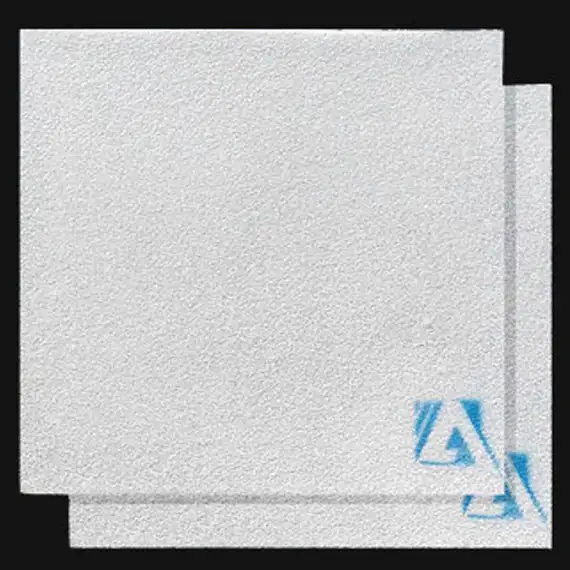
Making a high-performance ceramic filter relies principally on the polymeric sponge replication technique. This industrial process involves impregnating a reticulated open-cell polyurethane foam with a thixotropic ceramic slurry (usually Silicon Carbide, Alumina, or Zirconia). After the foam is thoroughly coated and excess material is removed to prevent blockage, the unit undergoes drying and strictly controlled firing. During the sintering phase, the internal polymer foam burns off completely, leaving behind a ceramic replica with a precise network of interconnected voids. This structure allows molten metal to pass through while physically trapping impurities and smoothing flow turbulence.
The Engineering Behind Ceramic Foam Filters
Manufacturing porous ceramics for molten metal filtration is not merely about shaping clay. It is a precise chemical and thermal engineering challenge. At ADtech, we view the production of ceramic filters as a balance between rheology (flow of matter) and thermodynamics.
The goal is to create a structure that can withstand extreme thermal shock—often rising from room temperature to over 1500°C in seconds—without cracking. To achieve this, the manufacturing line must control variables down to the micron level.
Why the Sponge Replication Method Dominates
While there are other methods like direct foaming or adding pore-forming agents to a solid mix, the sponge replication method remains the industry standard. It offers the most consistent control over Pore Size (measured in PPI or Pores Per Inch) and total porosity. This method ensures that the final product has the mechanical strength to resist the ferro-static pressure of molten metal.
Step 1: Raw Material Selection and Preparation
The foundation of any high-quality filter is the powder. We cannot simply use generic ceramic powder. The particle size distribution (PSD) must be calculated to ensure tight packing during sintering.
The Aggregates
The choice of aggregate defines the filter’s application.
-
Silicon Carbide (SiC): Used primarily for iron and copper alloys. It has excellent thermal shock resistance.
-
Aluminum Oxide (Al2O3): Ideal for aluminum filtration. It is chemically stable and resists corrosion from molten aluminum.
-
Zirconia (ZrO2): Necessary for steel applications where temperatures exceed 1600°C.
The Binders and Rheological Agents
The “glue” that holds the ceramic particles together before firing is critical. We use a combination of phosphate binders or colloidal silica. However, the secret to a perfect coating lies in the rheological modifiers. These additives control the viscosity of the slurry. If the slurry is too thick, it clogs the inner pores. If it is too thin, it runs off the sponge, resulting in a weak filter skeleton that collapses under molten metal pressure.
Table 1: Material Composition and Application Matrix
| Base Material | Main Component | Firing Temp (°C) | Primary Application | Thermal Shock Resistance |
| Alumina | Al₂O₃ (>85%) | 1100 – 1350 | Aluminum Alloys | Good |
| Silicon Carbide | SiC (>70%) | 1150 – 1450 | Iron, Grey Iron, Bronze | Excellent |
| Zirconia | ZrO₂ (>95%) | 1600 – 1700 | Carbon Steel, Stainless Steel | High |
| Mullite | 3Al₂O₃·2SiO₂ | 1300 – 1500 | Lower Temp Iron | Moderate |
Step 2: The Critical Slurry Preparation
This stage distinguishes a mediocre filter from an ADtech premium filter. Preparing the slurry is a multi-stage mixing process.
Mixing Protocols
-
Dry Mixing: The ceramic powders and solid additives are tumbled to ensure a homogeneous distribution of particle sizes.
-
Liquid Addition: Water is rarely used alone. We use a mix of water, defoamers, and dispersants. The liquid is added slowly to the powder while under high-shear mixing.
-
De-airing: Air bubbles in the slurry are fatal. If an air bubble forms a pocket in the ceramic coating, it creates a weak point that will crack when molten metal hits it. We utilize vacuum de-airing chambers to remove entrained gas from the slurry before it ever touches the sponge.
Thixotropy Control
The slurry must be thixotropic. This means it becomes fluid when agitated (during the coating process) but solidifies quickly when at rest. This property ensures that once the sponge is coated, the ceramic stays on the strands of the foam and does not drip down to pool at the bottom of the filter.
Step 3: Carrier Preparation (The Sponge)
The polyurethane (PU) foam acts as the sacrificial template. It determines the PPI of the final product.
Cutting and Inspection
The large buns of PU foam are sliced into the specific dimensions required by the foundry, such as 7×7 inches or 23×23 inches.
Crucial Check: The foam must be “reticulated.” This means the cell membranes (windows) between the foam struts must be completely open. If the foam has closed windows (glinting surfaces), the ceramic slurry cannot penetrate, resulting in a blocked filter. We utilize thermal reticulation chambers to blast open any remaining cell membranes in the raw foam.
Step 4: Impregnation and Excess Removal
This is the physical heart of the “how to make a ceramic filter” process.
The Immersion
The cut foam pieces are submerged into the prepared slurry. In an automated line, plungers compress the foam multiple times while submerged. This repeated compression and relaxation forces the air out of the sponge and sucks the heavy ceramic slurry into every void.
Roll Pressing (Presetting Porosity)
A soaked sponge is essentially a block of mud. It has zero porosity. To restore the open structure, the wet foam passes through preset rollers.
-
Gap Distance: The distance between rollers determines how much slurry remains on the struts.
-
Pressure: Too much pressure damages the delicate foam ligaments. Too little leaves the pores clogged.
-
Air Blasting: For high PPI filters (like 50 or 60 PPI), rollers alone are insufficient. We employ precision air nozzles that blow compressed air through the wet filter to clear the smallest pathways without stripping the coating from the struts.
Step 5: Controlled Drying
You cannot throw a wet filter into a kiln. The water must evaporate slowly. If water turns to steam inside the ceramic coating rapidly, it will explode the coating from the inside out (spalling).
-
Tunnel Dryers: Filters travel through humidity-controlled tunnels.
-
Temperature Gradient: We start at low temperatures (40°C) and high humidity, gradually increasing heat and lowering humidity. This wicks moisture from the center of the filter to the surface.
-
Duration: This process typically takes 12 to 24 hours depending on the filter thickness.
Step 6: Sintering and the Burn-off Phase
The firing process creates the final ceramic bond. This happens in high-temperature tunnel kilns or shuttle kilns.
Stage A: Volatilization (The Smoke Stage)
Between 300°C and 600°C, the polyurethane sponge inside the ceramic coating begins to decompose. This is a delicate moment. The sponge must turn to gas and escape through the porous ceramic coating without expanding so much that it cracks the unfired shell. ADtech kilns use an oxygen-rich atmosphere in this zone to ensure clean combustion of the polymer.
Stage B: Ceramic Bond Formation
As the temperature rises past 1000°C, the sintering aids in the slurry activate. The individual powder particles begin to fuse.
-
For Silicon Carbide: The silica binder creates a vitreous (glassy) bond that locks the SiC particles together.
-
For Alumina: Solid-state sintering occurs, where grain boundaries merge.
Stage C: Cooling
Cooling must be just as slow as heating. Rapid cooling induces thermal stress. The filters are brought down to room temperature over several hours to lock in their structural integrity.
Section 7: Quality Control and Performance Metrics
Making the filter is only half the battle. Verifying its performance is mandatory before shipping to a foundry.
Physical Inspection
Automated vision systems scan every filter. They look for:
-
Blocked Pores: Areas where slurry bridged the gap and didn’t clear.
-
Cracks: Hairline fractures from drying.
-
Dimensions: Ensuring the filter fits the casting gate perfectly.
Destructive Testing
We pull random samples from every batch for destruction.
-
Cold Crushing Strength: We crush the filter to measure how much weight it can hold. A standard 50x50x22mm filter should withstand significant pressure.
-
Thermal Shock Test: We heat the filter to 1200°C and drop it into cold water. It must remain intact. If it shatters, the batch is rejected.
Table 2: Common Defects and Manufacturing Causes
| Defect Type | Appearance | Root Cause in Manufacturing |
| Blind Pores | Solid ceramic blocking airflow | Slurry viscosity too high; Insufficient air blowing |
| Web Cracks | Small fissures on struts | Drying too fast; Binder migration issues |
| Low Strength | Crumbles easily | Sintering temperature too low; Poor binder ratio |
| Core Blackening | Dark center after firing | Incomplete sponge burnout (oxygen starvation in kiln) |
Case Study: Solving Scrap Issues in Vietnam
Client: Mid-sized Aluminum Foundry
Location: Hai Phong, Vietnam
Date: March 2023
The Challenge:
The foundry was producing intricate motorcycle engine components. They were experiencing a 22% scrap rate due to non-metallic inclusions and oxide films in their castings. They were using a basic fiberglass mesh for filtration, which was melting and failing under the heat of larger pours.
The ADtech Solution:
We analyzed their pouring temperature (720°C) and flow rate requirements. We transitioned them from mesh to ADtech Alumina Ceramic Foam Filters (40 PPI).
-
Placement: We redesigned their gating system to accommodate the rigid ceramic filter media.
-
Selection: We chose 40 PPI to capture fine oxides without restricting the flow speed required to fill the mold before solidification.
The Outcome:
Within 30 days of implementation, the scrap rate dropped from 22% to 7%. The ceramic structure smoothed the metal flow, reducing turbulence (which causes more oxides). The client reported cleaner machining surfaces and reduced tool wear downstream.
Why “Home Made” Filters Fail
Search queries often ask about making ceramic filters at home. While hobbyists can attempt this, the results rarely withstand molten metal.
-
Kiln Limitations: Most hobby kilns do not have the precise atmosphere control needed to burn off the PU foam without cracking the shell.
-
Slurry Chemistry: Without industrial dispersants, homemade slurries separate. The heavy particles sink, leaving a weak coating at the top of the filter.
-
Safety Hazard: If a homemade filter fails during a pour, it can cause the mold to overflow or explode due to moisture retention. For industrial safety, certified ADtech filters are the only viable option.
Technical Specifications for ADtech Filters
When ordering or manufacturing filters, understanding the standard specifications helps in selecting the right machinery or product.
Table 3: ADtech Standard Production Specifications
| Property | Alumina (Al2O3) | Silicon Carbide (SiC) | Zirconia (ZrO2) |
| Pore Density (PPI) | 10, 20, 30, 40, 50, 60 | 10, 20, 30, 40 | 10, 20, 30 |
| Porosity (%) | 80 – 90% | 80 – 85% | 75 – 85% |
| Bulk Density (g/cm³) | 0.35 – 0.55 | 0.35 – 0.50 | 0.80 – 1.0 |
| Compressive Strength | > 1.0 MPa | > 1.2 MPa | > 1.5 MPa |
| Max Working Temp | 1200°C | 1500°C | 1700°C |
Advanced Considerations: Ecological Manufacturing
Modern manufacturing requires attention to environmental impact. At ADtech, we focus on:
-
Recycling Excess Slurry: The drip-off from the impregnation stage is collected, monitored for density, and reintroduced into the mixer.
-
Scrubber Systems: The burn-off phase releases isocyanates from the polyurethane foam. We utilize high-temperature afterburners and scrubbers to neutralize these gases before they exit the factory stack.
Frequently Asked Questions (FAQs)
Here are the most common questions regarding the production and application of ceramic filters.
1. What is the primary material used to make the “sponge” inside the filter?
The internal sponge is made of reticulated polyurethane (PU) foam. It is chosen because it burns away cleanly (volatilizes) at high temperatures, leaving very little ash residue inside the ceramic structure.
2. How do you control the pore size of the ceramic filter?
The pore size is determined entirely by the PPI (Pores Per Inch) of the PU foam used as the base. If we start with a 30 PPI sponge, the final ceramic filter will be roughly 30 PPI, though the coating thickness slightly reduces the opening size.
3. Can I use these filters for filtering water?
While the mechanism is similar, metallurgical filters are designed for molten metal. Their pores are too large to catch bacteria or fine sediments in water. Water filters usually use microporous ceramics with sub-micron openings, made via a different pressing process.
4. What happens if the sintering temperature is too low?
If the temperature is too low, the ceramic bond will not form completely. The filter will look correct but will have low mechanical strength. It will likely crumble or wash away when struck by the heavy stream of molten metal.
5. Why are some filters pink and others gray?
The color indicates the material. Pink or white usually indicates Alumina (for aluminum). Gray or black usually indicates Silicon Carbide (for iron/copper). Yellowish or tan usually indicates Zirconia (for steel).
6. How long does the manufacturing process take?
From mixing the slurry to the final quality check, the cycle takes approximately 3 to 4 days. This accounts for the necessary resting times for the slurry, slow drying curves, and the long firing cycle.
7. What is the shelf life of a ceramic foam filter?
If stored in a dry environment, they can last for years. However, because ceramics are hygroscopic (they absorb moisture from air), we recommend using them within 1 to 2 years or drying them in an oven before use if they have been sitting in humid conditions.
8. Can the ceramic filter be reused?
No. Once used in metal casting, the filter is filled with solidified metal and trapped impurities. It becomes part of the foundry scrap (gating system) and is usually remelted (with the ceramic floating to the top as dross) or discarded.
9. What is “Thermal Shock” in this context?
Thermal shock refers to the rapid expansion caused by the temperature difference between the cold filter (25°C) and the molten metal (700°C – 1500°C). The manufacturing process must ensure the ceramic has a low coefficient of thermal expansion to survive this instant spike.
10. Why choose ADtech filters over cheaper competitors?
Cheap filters often suffer from “blind pores” (internal blockages) or weak skeletons that break and contaminate the casting. ADtech uses automated impregnation and strict firing curves to ensure every filter has consistent flow rates and structural integrity.
Conclusion
Mastering how to make a ceramic filter is a convergence of material science and mechanical precision. It requires exact slurry rheology to coat the foam without clogging it, and precise thermal profiling to sinter the ceramic without cracking it. For foundries, the quality of the filter dictates the quality of the final casting.
At ADtech, we have refined this process to deliver filtration solutions that improve yield and reduce scrap. Whether you are casting aerospace aluminum or heavy iron machinery, relying on a professionally manufactured filter is the safest path to quality.