

High temperature ceramic fiber board delivers the best balance of thermal insulation, low heat storage, and resistance to thermal shock for furnace linings, kiln panels, heat-treatment fixtures, and high-temperature equipment where keeping surface temperature low and cycle time short are top priorities. When selected with the proper grade, density, and mechanical backup, this material can cut heat loss, reduce refractory thickness, and speed maintenance cycles, while meeting workplace safety controls for fiber handling.
What is High temperature ceramic fiber board?
High temperature ceramic fiber board is a rigid panel formed from alumina-silica ceramic fibers combined with inorganic binder. The wet forming or vacuum pressing method yields a flat, machinable board that keeps its shape under mechanical load in insulation layers. Typical supply grades carry continuous service ratings from near 1050°C up to specialist boards rated above 1400°C, with some engineered products rated for brief exposure to even higher temperatures.
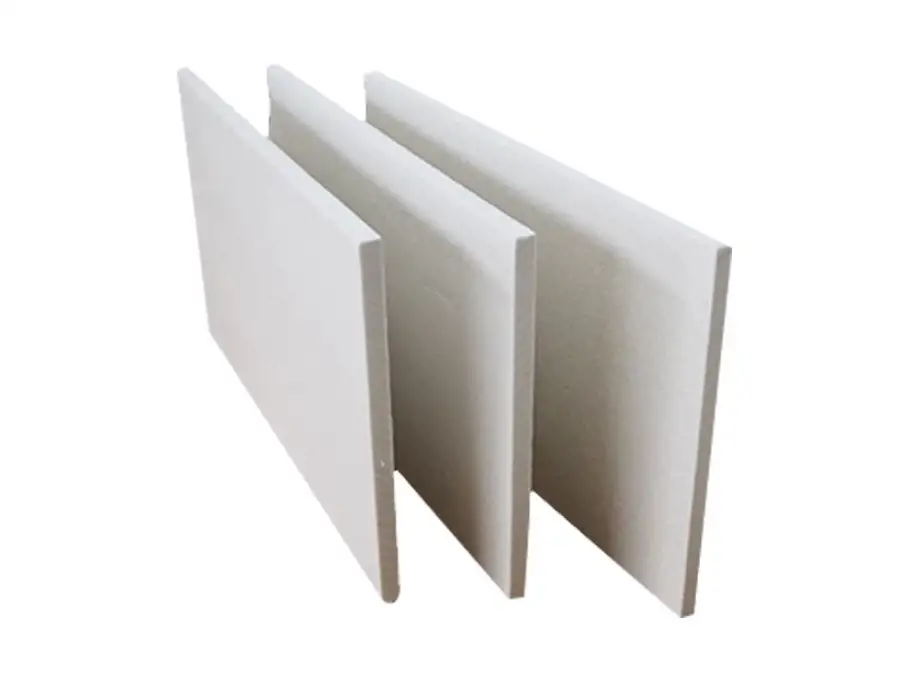
Key material highlights users demand
- Excellent thermal insulation paired with very low heat storage.
- Good resistance to rapid heating and cooling cycles.
- Machinable: cut, drill, rout to receive anchors or create flanges.
Temperature grades, what they mean, and typical selection rules
Manufacturers classify ceramic fiber products by a maximum-use temperature. Typical classification bands include 1050°C, 1260°C, 1400°C, with specialty formulations that withstand higher peak temperatures. Choose a grade that provides a margin between expected operating temperature and material maximum; for continuous service do not run a grade at or above its rated limit.
Quick rule of thumb for grade selection
- Continuous operating temperature under 1000°C: use 1050°C grade for cost efficiency.
- Continuous operating temperature between 1000°C and 1200°C: select 1260°C grade.
- Continuous operating temperature above 1200°C or frequent thermal cycling: consider 1400°C grade or higher specialty boards.
Three comparative tables buyers use when choosing a board
Table 1 Typical thermal performance (representative figures)
| Property | Low-temp board (1050°C) | Mid-temp board (1260°C) | High-temp board (1400°C+) |
|---|---|---|---|
| Continuous rating °C | 1050 | 1260 | 1400+ |
| Peak short-term °C | 1150 | 1500 | 1650+ |
| Typical bulk density (kg/m³) | 300–400 | 400–800 | 500–1200 |
| Thermal conductivity at 200°C (W/m·K) | 0.06–0.12 | 0.08–0.14 | 0.09–0.16 |
| (Values vary by maker and compaction). |
Table 2 Mechanical and handling parameters
| Property | Low density board | High density board |
|---|---|---|
| Rigidity | Medium | High |
| Machinability | Very good | Good |
| Resistance to gas velocity | Moderate | High |
| Recommended where drilling or bolting needed | Yes | Preferable |
| *(High density boards suit machining and higher erosive gas flows). |
Table 3: Material choice checklist for three common use cases
| Use case | Best board type | Typical backing or support | Notes |
|---|---|---|---|
| Kiln hot-face panels | High temp ceramic fiber board | Steel anchors with ceramic bolts | Use dense board on hot face for dimensional stability. |
| Boiler or duct lining | 1260°C ceramic fiber board | Metallic mesh or anchors | Board resists high gas velocity better than blanket. |
| Light industrial furnace | 1050°C board | Mild steel frame | Cost effective while meeting thermal needs. |
Why this material often outperforms rigid calcium silicate panels
Ceramic fiber boards hold a thermal advantage where operating temperatures or thermal cycling are elevated. They usually show lower thermal conductivity and lower heat storage, which means faster heat up and less retained heat during shutdowns. By contrast, calcium silicate boards provide superior compressive strength and moisture resistance, but they are brittle under thermal shock and more prone to cracking when cycles are frequent. Choosing between the two often depends on whether thermal efficiency or structural strength is the primary requirement.
Detailed manufacturing notes that affect field performance
Ceramic fiber board properties depend on three manufacturing variables:
- Fiber chemistry and mean diameter: controls thermal stability and dust generation.
- Binder type and quantity: affects green strength and shrinkage during first heating.
- Forming density and pressing technique: determines rigidity and erosive resistance.
High density, vacuum-pressed boards give best machinability. Specialty boards that undergo post-curing or sintering to limit shrinkage will show smaller dimensional changes after prolonged high temperature exposure.
Installation, mechanical anchoring, cutting, and sealing
Cutting and shaping
- Use hand saws with fine teeth or cordless jigsaws with HEPA-equipped extraction when cutting.
- Wet cutting is not recommended; use controlled vacuum extraction instead.
Anchors and fastening
- When fastening to metal, use ceramic anchors or high-temperature bolts through pre-routed holes.
- Avoid point loading without a backing plate. High density boards take screws and bolts better than low density ones.
Joints and seals
- For hot face joints, use high temperature ceramic mortar or thin ceramic fiber rope packed into seams.
- Avoid standard portland based cements on hot faces because they may spall under thermal shock.
Thermal performance: design calculations users apply
A compact approach to estimate required thickness uses thermal conductivity, target surface temperature, and operating temperature. Designers often treat ceramic fiber board as a multi-layer component. Below is a simplified example formula and calculation.
Simple steady-state heat flux approximation
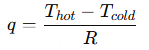
( R = d/k ) where d is board thickness and k is thermal conductivity.
Example
If board k = 0.12 W/m·K, d = 0.05 m, T_hot = 1000°C, T_cold target = 80°C:
R = 0.05 / 0.12 = 0.417 K/W·m², q = (1000 − 80) / 0.417 ≈ 2222 W/m².
This calculation gives an initial thickness estimate. For final design, include convection coefficients and backing materials. (Consult a thermal engineer for validated designs).
Long term performance: shrinkage, strength loss, and maintenance
Ceramic fiber boards may experience controlled shrinkage during the first heat cycles. Well-engineered products report shrinkage under 1.5% after extended soak at rated temperatures. Specialty boards built for very high peaks control shrinkage through binder chemistry and sintering steps. Regular inspection for cracking and anchor integrity is essential.
Water, moisture, and wet environments
Fiber boards are not inherently moisture resistant. Prolonged exposure to wet conditions can lower mechanical strength and increase friability. For humid or wet locations, pair ceramic fiber boards with moisture barriers, or choose calcium silicate where moisture attack is likely.
Health, safety, and regulatory notes that buyers must address
Ceramic fiber in respirable form carries health risks. Regulatory bodies have concluded that respirable refractory ceramic fibers are reasonably anticipated to increase cancer risk. Employers must adopt engineering controls, respiratory protection, and safe housekeeping. Recommended measures include local exhaust extraction, HEPA vacuums for cleanup, disposable coveralls for dusty work, and respirators that meet P100 or equivalent filtering where fiber dust may be airborne. NIOSH and OSHA materials provide exposure limits and monitoring guidance.
Practical site controls
- Restrict hot cutting to well ventilated zones with local exhaust.
- Use HEPA vacuums for cleanup.
- Provide training about dust control and safe removal.
Cost drivers and sourcing considerations
Price varies with grade, density, panel size, and certification. Higher temperature grades with tighter shrinkage specs cost more. Dense, machining-friendly boards command a premium. Bulk orders for standard sizes reduce unit cost. When procuring, ask for technical data sheets showing continuous rating, shrinkage after soak, thermal conductivity curve, density, and MSDS/SDS for health controls.
Common technical performance metrics explained
- Bulk density: heavier boards are stronger, more erosion resistant, and often tolerate mechanical fastening better.
- Thermal conductivity: lower numbers mean greater insulation. Values vary with temperature; most data sheets provide k(T) curves.
- Linear shrinkage: measured after a defined soak period. Lower shrinkage indicates dimensional stability.
Case studies and applied examples
Example: kiln refurbishment
A ceramic manufacturer replaced 100 mm of older refractory with 50 mm high density ceramic fiber board on the hot face plus 75 mm insulating backing. The retrofit cut warm-up time by 30 percent while keeping internal setpoints stable. The installation used stainless mesh anchors on a steel frame to protect the board. (Illustrative example based on common industrial practices).
boiler stack lining
Where gas velocities were high, operators switched from blanket to vacuum-pressed board to reduce erosive wear. The board resisted gas flow better, lowering replacement frequency.
Maintenance checklist (practical steps)
- Inspect anchors and visible joints every scheduled outage.
- Check for dusting or fiber loss at access points.
- Replace boards that show cracks wider than 5 mm or that have lost more than 5% thickness.
- Use HEPA vacuums; do not dry sweep.
Environmental and disposal considerations
Removed boards are classified by local rules. Because of potential respirable fiber content, many jurisdictions require controlled disposal. Follow SDS guidance and local regulations for waste characterization. Minimize waste through careful cutting and consider recycling scrap for nonstructural uses where permitted.
Selecting a supplier: questions to ask
- What is the continuous service temperature rating?
- What test report shows linear shrinkage after 24 to 168 hours at temperature?
- Can the vendor provide thermal conductivity data versus temperature?
- What density options are available?
- Are technical support and installation guidance supplied?
Three additional tables with practical data
Table 4: Typical dimensions and packing
| Thickness (mm) | Typical sheet size (mm) | Pack count per pallet |
|---|---|---|
| 12, 25, 50 | 600 × 1200 | 40–200 |
| 75, 100 | 800 × 1200 | 20–80 |
| Custom | Up to 1500 × 3000 | By order |
| *(Sizes vary by maker; always confirm). |
Table 5: Quick selection matrix by priority
| Priority | Recommended board feature |
|---|---|
| Lowest heat loss | Low thermal conductivity, higher density |
| Fast cycling | Low heat storage, controlled shrinkage |
| Machining/bolting | High density, tight thickness tolerance |
| Moist environments | Consider alternate material or moisture barrier |
| *(Use this matrix during early design). |
Table 6: Typical inspection thresholds
| Property | Action threshold | Recommended action |
|---|---|---|
| Visible crack width | > 5 mm | Replace board |
| Loss of thickness | > 5% | Replace board |
| Dusting at seam | Any persistent dust | Improve sealing, exhaust |
| Anchor corrosion | Any significant loss | Replace anchor, inspect board |
What is the difference between ceramic fiber board and blanket?
Boards are rigid, easier to machine, and resist higher gas velocities. Blankets give better formability and lower bulk density.
Can ceramic fiber board be used in pizza oven construction?
Premium boards rated for high face temperatures are sometimes used for hot faces. Moisture and abrasion concerns often make calcium silicate or insulating concrete preferred for some oven floors.
How to cut ceramic fiber board safely?
Use hand tools with HEPA extraction, wear appropriate respirator and disposable coveralls. Avoid dry sweeping.
What is the best board thickness?
Thickness depends on operating temperature and allowable surface temperature. Typical ranges run from 12 mm to 100 mm.
Frequently asked questions
- What is the usual continuous service temperature for these boards?
Typical continuous service bands include 1050°C, 1260°C, 1400°C. Choose a grade that offers margin over the expected operating temperature. - Can I bolt things directly into the board?
High density boards accept mechanical fastening better than low density ones. Use backing plates or anchors to prevent point failure. - Do boards burn or char?
Ceramic fiber boards are inorganic and do not burn. They resist direct flame at rated temperatures. - How much shrinkage should I expect?
Quality products report shrinkage under roughly 1–2% after prolonged soak at rated temperature. Check data sheets for exact numbers. - Are these boards safe to handle without protection?
No. Take protective measures to limit inhalation of dust. Use respirators with P100 filters in dusty conditions. - Can boards be used outdoors?
They tolerate heat but do not resist moisture well. Protect from rain and condensation or use moisture-resistant backing. - Which performs better under thermal shock?
Ceramic fiber boards generally outperform calcium silicate in rapid heating and cooling. - What maintenance will keep boards lasting longer?
Inspect anchors, replace cracked panels, avoid abrasion, and control gas velocities. Use HEPA cleaning. - Can boards be reused after removal?
If panels remain intact with acceptable thickness and no major cracks, reuse may be possible. Reuse depends on application criticality. - How do I choose between blanket, board, and calcium silicate?
If top priority is thermal efficiency and thermal cycling resistance, favor ceramic fiber board or blanket. If structural strength and moisture resistance are crucial, consider calcium silicate. Often, hybrid stacks yield best performance.
Short procurement checklist
- Confirm continuous service temperature rating.
- Request thermal conductivity vs temperature.
- Verify linear shrinkage test results.
- Obtain SDS/MSDS and PPE recommendations.
- Ask for sample pieces for trial fitting.
Final practical recommendations and quick summary
- Select grade with margin above steady operating temperature.
- Use high density boards when machining or bolting will occur.
- Enforce strict dust control and PPE during cutting and maintenance.
Ceramic fiber board remains a top choice for thermal efficiency and rapid cycling environments when installed with proper mechanical support and safety practices. For final designs, pair vendor technical data with a thermal engineer review to ensure compliance with system performance targets.