

AdTech high purity alumina ceramic balls used in molten aluminum filtration deliver cleaner metal, lower inclusion count, fewer casting defects, and more stable filtration performance at aluminum melt temperatures, while minimizing secondary contamination thanks to tightly controlled chemistry and dense microstructure.
If your project requires the use of Alumina Ceramic Balls, you can contact us for a free quote.
What exactly are high purity alumina ceramic balls used in molten aluminum filtration?
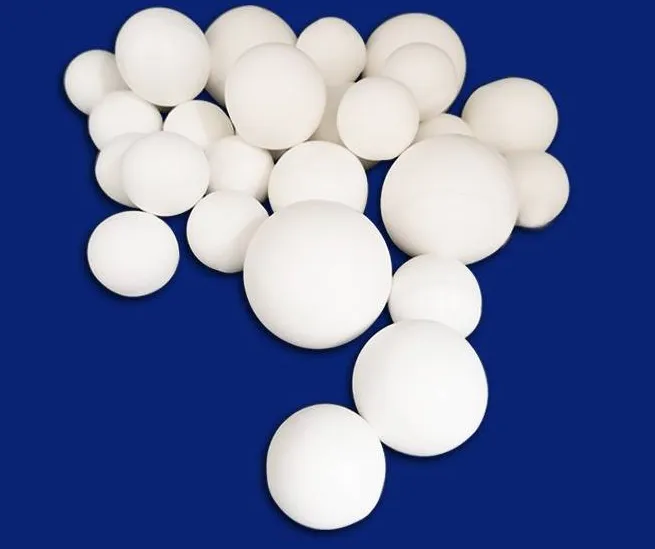
High purity alumina ceramic balls are dense, near inert spheres manufactured primarily from alpha phase aluminum oxide (Al₂O₃). In molten aluminum filtration equipment, these spheres operate as a packed bed medium that physically captures nonmetallic inclusions while resisting chemical attack and thermal stress.
In industry literature, this application is frequently described using related terms:
- deep bed filtration media.
- packed bed filter balls.
- ceramic ball filter bed.
- alumina media used in aluminum melt purification.
- inclusion removal media used in casting launders or in line filtration units.
AdTech supplies high purity alumina ceramic balls engineered around three core targets:
- Chemical cleanliness: very low silica, alkalis, iron, and boron, reducing the chance of melt contamination.
- Structural integrity: low porosity, high bulk density, strong grain bonding, stable spherical geometry.
- Thermal robustness: controlled thermal expansion and good thermal shock tolerance when handled correctly.
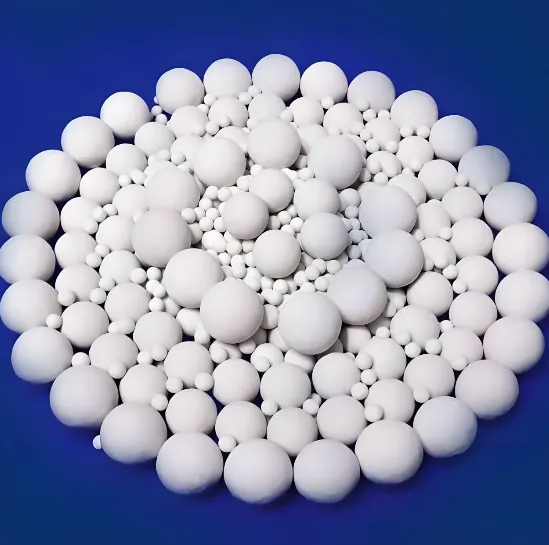
What “high purity” means in practice
Different markets use different thresholds. In aluminum melt service, “high purity” typically implies alumina content above 99 percent, with strict limits on SiO₂, Na₂O, K₂O, CaO, Fe₂O₃, TiO₂, and other oxides that can influence corrosion, wetting, or interfacial reactions.
Why does molten aluminum require filtration even in well managed melt shops?
Even well controlled melting and transfer practices cannot fully eliminate inclusion generation. Aluminum is reactive, and oxide formation occurs rapidly whenever liquid metal contacts oxygen or turbulent air entrainment. Magnesium containing alloys create additional reaction paths.
Key drivers that raise inclusion levels:
- Surface oxidation at melt surface, launders, and transfer points.
- Turbulence during pouring, pumping, and launder turns.
- Charge contamination from scrap, coatings, dirt, or moisture.
- Refractory wear introducing fragments or fines.
- Fluxing side effects generating residues if chemistry and skimming are not optimized.
- Alloying additions creating dross or intermetallic debris.
- Magnesium related spinel formation (MgAl₂O₄) on refractories and within oxide films.
What inclusions typically appear in aluminum melts?
Common nonmetallics include:
- alumina films (folded oxide skins)
- alumina clusters
- magnesium oxide
- spinel (MgAl₂O₄)
- carbides (Al₄C₃) in specific operating conditions.
- flux residues
- refractory particles, including aluminosilicate fragments.
These defects can cause:
- pinholes and porosity acting as stress concentrators.
- reduced fatigue life and ductility.
- leakage in pressure tight components.
- poor surface finish and streaking
- anodizing defects and cosmetic rejects.
- die soldering and tool wear in high pressure die casting.
- higher scrap rates and rework cost.
Packed deep bed filtration using alumina ceramic balls is one method used to reduce these risks, often paired with degassing and foam ceramic filters in multi stage systems.
How does a ceramic ball bed filter remove inclusions in liquid aluminum?
A packed bed of ceramic spheres creates a tortuous pathway. Liquid metal must pass through interstitial channels formed by contacting spheres. Inclusions are captured by several mechanisms operating simultaneously.
Primary capture mechanisms in molten aluminum
- Interception
Particles following streamlines touch the sphere surface and adhere or become immobilized in stagnant zones. - Inertial impaction
Larger inclusions cannot follow curved flow paths and collide with media surfaces. - Sedimentation in low velocity regions
Flow decelerates in micro cavities near contact points, enabling heavier clusters to settle. - Agglomeration and bridging
Once initial inclusions adhere, they create roughness that increases the probability of additional capture, building “filter cake” behavior within the bed. - Surface interaction and wetting behavior
Oxide inclusions may be less wetted than molten aluminum; this mismatch can promote adhesion on ceramic surfaces, depending on temperature, alloy chemistry, and oxide type.
Why spherical media is widely used
Spheres provide:
- predictable void fraction and repeatable flow distribution.
- stable packing, less prone to channeling than irregular gravel.
- manageable pressure loss at industrial flow rates.
- lower risk of sharp edges that can fragment and create fines.
Which alumina purity levels matter, and what impurities create risk?
In molten aluminum service, chemical impurities are not only a “spec sheet” detail. They influence corrosion, reaction products, and the likelihood of contaminating the melt.
Impurity risks relevant to aluminum filtration
- Silica (SiO₂)
Silica can react with molten aluminum, producing aluminum oxide and dissolved silicon, potentially shifting alloy chemistry and generating additional reaction products. - Alkalis (Na₂O, K₂O)
Alkalis can reduce refractoriness and contribute to glassy phases at grain boundaries, weakening mechanical strength and thermal shock resistance. - Calcia (CaO) and other fluxing oxides
These can form low melting phases in ceramics, raising creep risk under thermal exposure. - Iron oxide (Fe₂O₃)
Indicates raw material contamination and can alter corrosion behavior in contact with molten metal.
Table 1. Typical chemical composition targets (illustrative procurement values)
| Component | Typical target level | Practical meaning in melt service |
|---|---|---|
| Al₂O₃ | 99.0 to 99.7% | High chemical stability, low contamination risk |
| SiO₂ | ≤ 0.10% | Reduced reaction tendency with molten aluminum |
| Na₂O | ≤ 0.20% (often tighter) | Better high temperature strength, less glassy phase |
| K₂O | ≤ 0.05% | Supports thermal stability |
| CaO | ≤ 0.05% | Limits low melting grain boundary phases |
| Fe₂O₃ | ≤ 0.05% | Cleaner raw material control |
| TiO₂ | ≤ 0.05% | Consistency indicator |
Values depend on supplier process, ball size, and sintering route. Buyers should request a lot specific certificate of analysis.
Which physical properties determine filtration efficiency and service life?
Performance depends on geometry plus microstructure. Two media beds can share the same chemistry yet behave differently in thermal cycling or under metal flow.
Key property categories
1) Density and open porosity
High density and very low open porosity reduce infiltration of molten aluminum into the ceramic body. Infiltration can lead to:
- weight gain and internal stress
- cracking during cooldown
- frozen metal trapped inside pores
- accelerated spalling
2) Crushing strength and abrasion resistance
Balls experience:
- static load from bed height
- localized contact stress at sphere touch points.
- vibration from pumping systems.
- abrasion during loading, unloading, and thermal expansion movements.
Higher crushing strength reduces breakage, which otherwise creates fines that raise pressure loss and cause downstream clogging.
3) Thermal shock resistance
Thermal shock damage can occur during:
- start up with insufficient preheat.
- accidental water contact
- sudden flow of colder metal into a hot bed, or hot metal into a cold bed.
- unplanned stoppages followed by rapid reheating.
Thermal shock tolerance depends on:
- microcrack control
- grain size distribution
- elastic modulus
- coefficient of thermal expansion.
- presence of glassy phases.
4) Surface finish and sphericity
A consistent spherical profile supports predictable packing, reduces channel formation, and stabilizes hydraulic behavior. Surface texture impacts inclusion adhesion and cake growth rate.
Table 2. Typical physical property ranges used in specifications
| Property | Typical range | Why engineers care |
|---|---|---|
| Bulk density | 2.1 to 2.4 g/cm³ | Indicates packing behavior and void fraction |
| Apparent density | 3.6 to 3.9 g/cm³ | Reflects sintering quality |
| Open porosity | ≤ 2.0% (often ≤ 1.0%) | Lower infiltration risk |
| Water absorption | very low | Proxy measurement linked to open porosity |
| Crushing strength (per ball) | size dependent, often multi kN | Breakage resistance |
| Refractoriness | suitable beyond aluminum melt temperatures | Margin against softening |
| Max service temperature | well above 1000°C | Safety margin |
Exact acceptance values should match filter housing design and operating discipline.
How do ball size, grading, and bed depth change pressure drop and capture rate?
Ball diameter influences void fraction, specific surface area, and hydraulic resistance.
- Smaller balls increase surface area per unit volume, generally improving inclusion capture, yet increase pressure loss.
- Larger balls reduce pressure loss yet may reduce capture of fine inclusions unless bed depth increases.
Practical approach to sizing
Most industrial packed bed filters use graded layers:
- coarse layer at inlet to distribute flow.
- intermediate layer to begin capture and stabilize cake.
- finer layer toward outlet to increase final cleanliness.
The exact arrangement depends on:
- target cleanliness level (critical aerospace castings vs general foundry).
- metal flow rate
- allowable head loss
- expected inclusion loading.
- alloy family and melt temperature.
Table 3. Example ball size schemes used in packed bed filtration (illustrative)
| Application context | Typical flow behavior | Example grading concept |
|---|---|---|
| Holding furnace transfer to casting line | steady flow, moderate inclusion load | inlet 20 to 30 mm, middle 10 to 20 mm, outlet 6 to 10 mm |
| High inclusion scrap melting line | high inclusion load, variable flow | thicker coarse inlet zone plus replaceable top layer |
| Precision casting line | strict cleanliness, stable operation | multi layer grading ending at smaller outlet media with careful preheat |
Engineers should validate grading using pressure drop measurements and inclusion counts at target throughput.
Pressure drop notes used by process engineers
Packed bed pressure loss often correlates with:
- superficial velocity
- metal viscosity (temperature dependent).
- void fraction (linked to sphericity and size distribution).
- bed depth
Many engineers apply Ergun type relationships as a starting point, then calibrate using plant trials. Stable media geometry makes scale up easier.
Where are alumina ceramic ball beds installed in typical aluminum process lines?
High purity alumina ceramic balls can be installed in several points depending on plant layout and quality targets.
Common installation locations
- In line filtration unit in a launder
A dedicated chamber holds the media bed. Metal flows by gravity from furnace to caster. - Between degassing and final filtration
Degassing reduces hydrogen and floats some inclusions; the ball bed then captures residual solids. - Upstream of ceramic foam filters
A ball bed can reduce load on foam filters, extending foam service life and reducing clogging events. - In transfer systems feeding continuous casting
Stability and consistent throughput matter; ball beds can help smooth inclusion spikes.
What this media does not replace
A ball bed is not a substitute for:
- good melt handling discipline
- controlled turbulence and proper launder design.
- skimming practices
- degassing when hydrogen control is required.
- alloy chemistry management
It is one element in an integrated melt quality system.
How should operators handle installation, drying, preheating, and start up?
Operational discipline frequently determines whether a packed bed runs smoothly or becomes a maintenance issue. Many field problems trace back to moisture, insufficient preheat, or poor loading practices.
Handling and storage
- Keep balls in sealed packaging until loading.
- Store in dry indoor conditions; avoid rain exposure.
- Avoid mixing sizes unintentionally; grading matters.
Loading procedure
- Inspect the chamber lining and support grid.
- Remove dust and loose refractory particles.
- Load coarse layer first, then intermediate, then fine.
- Prevent segregation by pouring slowly and distributing evenly.
Drying and preheating
Moisture is a major hazard. Water trapped in voids can flash to steam at metal contact, causing spatter plus ceramic cracking.
Typical plant practice includes:
- staged heating of the filter box and bed.
- dwell time at intermediate temperatures to drive out moisture.
- controlled ramp to operating temperature.
Exact ramp schedule depends on equipment design. Many facilities target a preheat region in the several hundred degree Celsius range, held long enough to stabilize temperature throughout the bed.
Start up and stabilization
- Start with a low flow rate to establish a stable thermal state.
- Increase throughput gradually while monitoring differential pressure.
- Track metal level upstream; sudden surges may indicate channeling or clogging.
How long do alumina ceramic balls last, and what drives replacement cycles?
Service life varies widely. Some plants replace media on a fixed schedule; others use condition based criteria.
Main factors that limit service life
- Inclusion loading
High oxide load builds internal deposits, raising pressure loss and triggering change out. - Thermal cycling frequency
Repeated heat up and cool down accelerates microcracking. - Mechanical shock and vibration
Pump vibration, sudden flow changes, or tool impact during maintenance can crack balls. - Alloy chemistry
High magnesium alloys can increase spinel formation and refractory interaction, influencing deposit nature and bed behavior. - Start up quality
Poor drying and rapid heat up cause early failures.
Replacement indicators used in plants
- rising differential pressure at constant throughput.
- reduced metal flow rate at constant head.
- observed increase in inclusion count downstream.
- visible breakage or fines accumulation during inspection.
- increased casting reject rate correlated with filtration stage.
Condition based replacement often reduces total cost, though it requires consistent measurement practices.
What quality control tests should engineers and buyers request from suppliers?
EEAT aligned procurement emphasizes traceability, repeatable testing, and a clear link between measured properties and process performance. A supplier should provide not only a data sheet, but also lot specific documentation.
Recommended documents
- certificate of analysis (lot specific chemistry).
- certificate of conformity with internal specification.
- manufacturing batch traceability code.
- dimensional inspection report (size distribution, sphericity criteria).
- SDS and compliance statements (REACH, RoHS when applicable).
- packaging list with net weight and lot number on each pallet.
Recommended test methods and acceptance concepts
The exact method names differ across regions; the principle remains consistent.
Table 4. Quality control checklist used in industrial purchasing
| Test item | Typical measurement | Why it matters |
|---|---|---|
| Al₂O₃ content and impurity oxides | XRF or wet chemistry | Predicts corrosion risk and contamination potential |
| Bulk density and apparent density | standardized density tests | Links to porosity and packing |
| Open porosity / absorption | standardized method | Lower infiltration risk |
| Crushing strength | compression test | Predicts breakage and fines generation |
| Thermal cycle test | repeated heating and cooling | Screens thermal shock sensitivity |
| Size distribution | sieve analysis | Controls pressure loss and capture performance |
| Visual defects | cracks, chips, out of round | Reduces early failures |
What buyers should request in supplier audits
- raw material source control strategy.
- kiln sintering temperature uniformity records.
- dust control and cleaning steps prior to packing.
- calibration records on lab equipment.
- nonconformance handling procedure.
Suppliers that can answer these topics clearly tend to deliver more consistent field performance.
How do alumina ceramic balls compare with other molten metal filtration media?
Packed bed alumina balls occupy a middle ground between disposable surface filters and large granular media. Selection depends on cleanliness target, flow rate, and operating cost model.
Table 5. Comparison of common aluminum filtration approaches
| Filtration approach | Strengths | Limitations | Typical use case |
|---|---|---|---|
| High purity alumina ceramic ball bed | High throughput, deep bed capture, stable geometry | Requires careful preheat and monitoring; change out requires downtime | Continuous casting lines, launder filtration units |
| Ceramic foam filter (CFF) | High removal efficiency of fine inclusions, compact | Can clog rapidly under heavy oxide load; disposable | Final filtration near mold or caster |
| Woven cloth / screen | Simple, low cost hardware | Limited capture, can tear or bypass | Basic foundry practice |
| Granular tabular alumina (irregular) | High surface area, sometimes strong capture | Higher pressure loss, packing variability | Niche packed bed designs |
| Fluxing and skimming only | Low capital cost | Limited repeatability, operator dependent | Non critical castings |
Many high quality lines combine degassing, a packed bed stage, then a foam filter at the end. The packed bed acts as a stabilizer, reducing spikes in inclusion load.
How should procurement evaluate total cost, packaging, logistics, and compliance?
Engineering teams often focus on purity and strength, while purchasing teams focus on delivered cost. A robust buying decision uses total cost of ownership.
Total cost elements that matter
- media cost per ton of cast metal.
- downtime cost during change out.
- scrap reduction value tied to inclusion removal.
- pressure loss impact on throughput.
- waste handling cost on spent media.
- variability cost when lots fluctuate in quality.
Packaging and delivery considerations
Packed bed media is heavy and prone to chipping during rough handling. Professional packaging typically includes:
- strong bags or cartons with internal cushioning.
- pallets with edge protection.
- clear labeling showing size, net weight, lot number, and production date.
- moisture barrier options when shipping through humid ports.
Compliance topics frequently requested
- ISO 9001 certification (supplier quality system).
- REACH statement
- RoHS statement when required by customer policy.
- conflict minerals statement when requested in automotive or electronics related chains.
- origin documentation and HS code support.
AdTech can align documentation with buyer compliance checklists to simplify vendor qualification.
What failure modes occur in service, and how can they be prevented?
Packed bed filtration is reliable when the surrounding system is engineered correctly. Most recurring issues fall into a short list.
1) Rapid pressure rise
Symptoms: upstream metal level increases, throughput drops, differential pressure climbs.
Common causes:
- excessive oxide load from turbulence upstream.
- undersized media (too fine) relative to flow.
- fines generated by breakage or rough loading.
- insufficient pre filtration step in heavy scrap melts.
Mitigation:
- adjust grading to include a thicker coarse inlet zone.
- reduce turbulence upstream, improve launder turns and drop heights.
- add a skimming step or upstream settling chamber.
- verify ball strength and loading method.
2) Channeling and bypass
Symptoms: low pressure loss yet poor cleanliness, inconsistent downstream inclusion counts.
Common causes:
- poor loading distribution.
- segregation of sizes during filling.
- damaged support grid causing preferential paths.
- thermal gradients creating voids after cycling.
Mitigation:
- controlled loading and verification of bed height.
- use of graded layers with clear boundaries.
- inspection of grates and refractories during each shutdown.
3) Ball cracking and fines
Symptoms: dust accumulation, higher pressure loss, media bed compaction, metallic penetration into cracks.
Common causes:
- moisture exposure followed by hot metal contact.
- fast heating rate
- mechanical impact during maintenance.
- low quality sintering leading to weak grain boundaries.
Mitigation:
- strict dry storage and staged preheat.
- training on handling procedures.
- supplier qualification based on crushing strength and thermal cycling tests.
4) Chemical interaction in aggressive alloys
Symptoms: unusual deposits, sintered crust, altered bed behavior.
Common causes:
- high magnesium content with spinel growth.
- flux residues interacting with deposits.
- contamination from upstream refractory wear.
Mitigation:
- improve upstream refractory selection.
- reduce flux carryover and improve skimming.
- monitor deposit chemistry during root cause studies.
Alumina Ceramic Balls: 10/10 Technical FAQ
Advanced Filtration for Molten Aluminum & Non-Ferrous Alloys
1. What is the benefit of high purity alumina balls in molten aluminum?
The primary benefit is lower inclusion content combined with stable metal throughput. Using high-purity chemistry (low silica) reduces the risk of introducing unwanted oxides into the melt, ensuring the final aluminum product meets high-end automotive or aerospace cleanliness standards.
2. Which alumina purity level should be specified?
3. Do alumina ceramic balls change aluminum alloy composition?
4. Which ball sizes are used in packed bed filters?
ENGINEERING NOTE
Industrial systems typically use layered grading. Larger spheres are placed at the inlet to capture coarse debris, while smaller spheres near the outlet provide fine filtration. The exact size distribution is designed to balance filtration efficiency against the allowable metal head loss (pressure drop).
5. How should the media bed be preheated?
6. What indicates that the media needs replacement?
Key performance indicators for replacement include:
- Rising differential pressure: Indicating the bed is saturated.
- Reduced flow: At a constant head of metal.
- Downstream inclusions: An increase in particles detected by PoDFA or LiMCA tests.
- Physical breakage: Visible fines during routine filter inspections.
7. Can alumina balls be reused after cleaning?
8. How does a packed bed compare with ceramic foam filters (CFF)?
Ceramic foam filters (CFF) are excellent for “point of use” fine filtration but can clog quickly. Packed bed filters act as “deep bed” filters; they handle much higher mass loadings of inclusions and stabilize the melt upstream, often significantly extending the life of downstream foam filters.
9. What documents should be included with each shipment?
To ensure traceability and quality, request:
- Lot-Specific COA (Certificate of Analysis): Detailing chemical purity.
- COC (Certificate of Conformity): Confirming size and physical specs.
- Packing List: Clearly cross-referenced with lot numbers.
- Compliance Statements: Such as REACH/RoHS or industry-specific safety standards.
10. What should buyers check during supplier qualification?
QUALITY CHECKLIST
Evaluate the supplier’s consistency in sintering control and raw material sourcing. Request data for Crushing Strength (to ensure durability), Porosity (for surface area), and Thermal Cycling Validation to ensure the balls won’t disintegrate during preheating.
Closing technical summary
High purity alumina ceramic balls used in molten aluminum filtration function as a repeatable deep bed medium that captures inclusions through interception, impaction, and deposit growth while maintaining structural integrity under high temperature operation. When specified with tight impurity limits, low porosity, strong mechanical performance, and correct size grading, AdTech alumina ceramic balls help foundries and casters achieve cleaner metal, improved downstream quality, and more predictable filtration economics.