

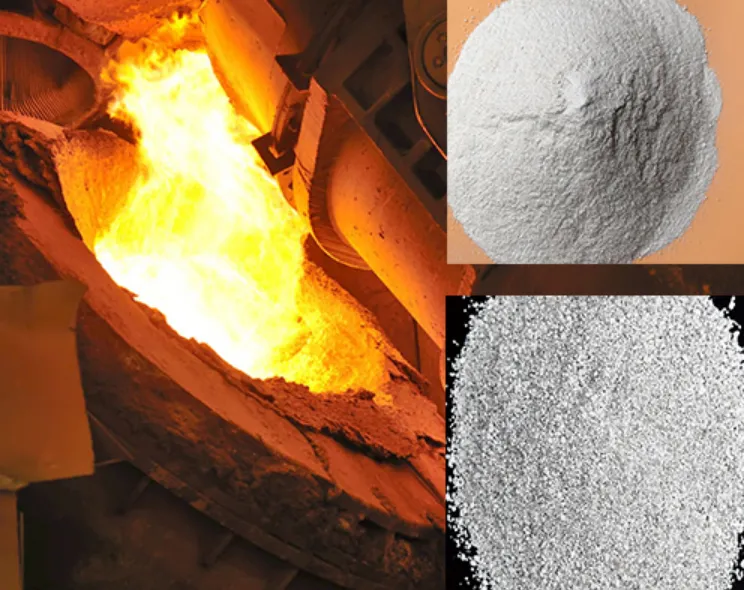
Flux recycling is an eco-friendly industrial process designed to recover, clean, and reprocess used refining or welding flux to separate unburnt flux from fines, slag, and impurities, achieving up to 90%+ material reuse and significant cost reduction. Flux recycling works because submerged arc welding consumes far less flux than it deposits on the joint, meaning a substantial percentage of every kilogram poured onto a weld seam never actually melts and remains perfectly reusable once separated from slag and fines. a properly maintained flux recycling system typically recovers 60% to 80% of unused flux per welding pass, cutting consumable costs by a meaningful margin while reducing dust exposure and waste disposal volume. This article walks through every practical detail we’ve learned about recovery equipment, separation methods, contamination limits, and the real economics behind flux reclamation, drawn from equipment we’ve specified, installed, and troubleshot across dozens of welding operations.
If your project requires the use of Flux Recycling, you can contact us for a free quote.
What Is Flux Recycling and Why Does It Matter?
Flux recycling refers to the process of collecting unmelted or partially used welding flux from submerged arc welding (SAW) operations, separating it from slag, spatter, and metallic debris, then returning the cleaned material to the flux hopper for reuse. In a typical SAW pass, only a fraction of the flux poured onto the joint actually fuses into slag or gets consumed in the arc; the rest sits on the plate surface waiting to be vacuumed up.
Without a recovery system, that unused flux either gets swept into scrap bins or, worse, left on the shop floor where it becomes a slip hazard and a housekeeping headache. We’ve walked into fabrication shops where flux consumption records showed nearly double the theoretical usage rate simply because operators had no way to reclaim material, and every bag got treated as single-use.
The practical importance goes beyond cost. Flux dust contains fine particulates that create respiratory hazards over prolonged exposure, and loose flux on walkways contributes to workplace injuries. A functioning recovery system pulls this material directly into a collection unit rather than letting it accumulate around the weld station.
Why Manufacturers Underestimate Flux Consumption
Most cost estimates for SAW projects use a flux-to-wire consumption ratio somewhere between 1:1 and 1.5:1 by weight, but this figure assumes zero recovery. Once you factor in recycling equipment recovering 60-80% of unused material, actual net consumption drops significantly, and this single variable changes procurement budgeting more than almost any other factor in high-volume SAW operations.
How Does Submerged Arc Welding Flux Recovery Actually Work?
The basic mechanism behind flux recovery hasn’t changed much over the decades, though automation and filtration precision have improved considerably. A vacuum or pneumatic conveying system pulls unmelted flux and lightweight slag fragments off the plate surface immediately after the welding head passes, transporting the mixture through hoses into a collection hopper.
From there, the material passes through a separation stage that removes slag particles, spatter, and metallic fines from the reusable flux granules. Screening, magnetic separation, and sometimes air classification work together to isolate clean flux, which then either returns automatically to the feed hopper or gets stored in a holding tank for manual reintroduction.
The entire cycle, from vacuum pickup to return into the active flux supply, typically completes within seconds on automated systems mounted directly to the welding carriage. This near-instant recovery keeps the welding operator supplied with continuously replenished flux without needing to stop and manually refill hoppers every few passes.
The Core Steps in Any Recovery Cycle
- Pickup: vacuum nozzle or pneumatic suction head collects flux and slag mixture from the weld seam.
- Transport: hose or ducting carries material to the separation unit.
- Separation: screening and magnetic filtration divide reusable flux from slag, spatter, and fines.
- Storage or return: cleaned flux returns to the active hopper or holding bin.
- Waste discharge: separated slag and unusable fines exit into a waste collection container.
Each of these steps has failure points we’ve diagnosed repeatedly over the years, and we’ll cover the most common ones later in the troubleshooting section.
What Types of Flux Recovery Systems Are Available?
Flux recovery equipment ranges from simple hand-operated vacuum units to fully integrated automatic systems built into multi-head submerged arc welding lines. Choosing between them depends heavily on production volume, budget, and how many welding stations need coverage.
| System Type | Recovery Method | Typical Recovery Rate | Best Suited For |
|---|---|---|---|
| Manual vacuum recovery | Hand-held vacuum wand, manual screening | 40-55% | Small shops, low-volume production |
| Semi-automatic recovery | Fixed vacuum pickup with manual sieve/return | 55-70% | Medium-volume fabrication, single welding station |
| Fully automatic recovery | Integrated vacuum, automated screening, direct hopper return | 70-85% | High-volume production lines, pipe mills, shipyards |
| Central vacuum recovery | Ducted system serving multiple welding stations from one central unit | 65-80% | Multi-station facilities with several SAW booths |
| Portable cart recovery | Mobile unit moved between stations | 50-65% | Facilities with rotating or temporary weld setups |
Manual systems cost the least upfront but require operator time to run the vacuum wand and periodically sieve collected material before reuse. We generally recommend these only for shops running SAW occasionally rather than as a primary production process.
Fully automatic systems mount directly onto the welding carriage or tractor and handle pickup, separation, and return without operator intervention beyond periodic maintenance. These cost considerably more but pay for themselves quickly in high-volume operations where flux consumption runs into hundreds of kilograms daily.
Manual vs Automatic Flux Recovery: Which One Fits Your Operation?
This question comes up in nearly every consultation we do with fabrication shops evaluating whether to upgrade their flux handling process. The honest answer depends on daily flux consumption volume more than any other factor.
For shops using under 50kg of flux per shift, manual recovery with a simple vacuum wand and screen sieve usually makes financial sense. The equipment investment stays low, and operators can manage the recovery process without significantly slowing production.
Once daily consumption climbs past 100-150kg, the labor time spent manually vacuuming and screening flux starts costing more than an automated system would in equipment payments. We’ve calculated break-even points for several clients, and in most cases, facilities consuming over 200kg of flux daily recover their automatic system investment within 12-18 months purely through labor savings and reduced flux purchasing.
| Factor | Manual Recovery | Automatic Recovery |
|---|---|---|
| Upfront equipment cost | Low ($500-$3,000) | High ($8,000-$40,000+ depending on scale) |
| Labor requirement | High, requires dedicated operator time | Low, mostly automated with periodic checks |
| Recovery efficiency | 40-55% | 70-85% |
| Best for daily flux use | Under 50kg | Over 150kg |
| Maintenance complexity | Low | Moderate to high |
| Contamination control | Depends heavily on operator diligence | More consistent, built-in screening stages |
There’s also a middle ground many shops overlook: semi-automatic units that handle pickup and initial screening automatically but still require manual return of flux to the hopper. These bridge the gap for operations growing past manual capacity but not yet ready for full capital investment in a complete automated line.
What Equipment Components Make Up a Flux Recycling System?
Understanding the individual components helps buyers evaluate quotes and specifications more critically, since suppliers often bundle different combinations under similar product names.
Vacuum or pneumatic pickup head: mounted behind the welding torch, this component collects the flux and slag mixture immediately after deposition. Pickup head design affects how much fine dust versus larger slag chunks gets collected, which impacts downstream separation efficiency.
Transport hose or ducting: connects the pickup head to the separation unit. Hose diameter and material matter more than most buyers realize; undersized hoses clog frequently with larger slag fragments, while wrong material choice leads to static buildup that attracts fine flux dust to the interior walls.
Primary separator (cyclone or screen): this stage removes the bulk of slag and larger contaminants from the flux stream. Cyclone separators use centrifugal force to separate heavier slag particles from lighter flux granules, while vibrating screen separators rely on mesh size differences.
Magnetic separator: removes ferrous spatter and metallic fines that would otherwise contaminate the flux and potentially cause weld defects if reintroduced into the arc.
Secondary fine screening: some systems include a finer mesh stage after primary separation to catch smaller contamination particles that pass through the initial screen.
Storage hopper and return mechanism: holds cleaned flux and either gravity-feeds or pneumatically returns it to the active welding hopper.
Dust collection filter: captures airborne fine particulates during the vacuum and separation process, protecting both air quality and preventing fine dust loss that would otherwise reduce recovery yield.
Component Specifications We Typically Recommend
| Component | Recommended Specification | Reason |
|---|---|---|
| Pickup nozzle diameter | 25-40mm | Balances suction power with clog resistance |
| Transport hose material | Anti-static reinforced rubber or PU | Prevents dust adhesion and static discharge |
| Primary screen mesh size | 8-12 mesh | Removes larger slag while passing standard flux granules |
| Magnetic separator strength | 3,000-5,000 gauss | Effectively captures fine ferrous spatter |
| Dust filter rating | 99% capture at 1 micron | Meets most industrial air quality standards |
How Do You Separate Slag From Reusable Flux?
Separation quality determines whether recycled flux performs as well as virgin material or introduces defects into subsequent welds. We’ve seen operations skip proper separation and pay for it later with porosity issues traced directly back to slag inclusions in recycled flux.
The most common separation method combines mechanical screening with density-based sorting. Slag particles, having fused during the welding arc, typically differ in size, shape, and sometimes density compared to unmelted flux granules. Vibrating screens with appropriately sized mesh catch oversized slag chunks while allowing properly sized flux through.
Magnetic separation handles the metallic contamination that screening alone misses, particularly fine spatter particles that match flux granule size but carry ferrous content. Running collected material past a magnetic drum or plate pulls these particles out before the flux returns to active use.
Some higher-end systems incorporate air classification, using controlled airflow to separate particles by weight and aerodynamic properties rather than size alone. This catches contamination that both screening and magnetic separation might miss, particularly non-ferrous fine particles.
Separation Method Comparison
| Method | What It Removes | Effectiveness | Equipment Complexity |
|---|---|---|---|
| Vibrating screen | Oversized slag chunks, large debris | High for size-based contamination | Low to moderate |
| Magnetic separation | Ferrous spatter and metal fines | High for magnetic contamination | Moderate |
| Air classification | Density-based contaminants, dust | Very high, catches fine particles | High |
| Manual visual sorting | Large visible slag pieces | Low, labor-intensive | Very low |
We generally recommend combining at least screening and magnetic separation as a baseline for any operation serious about flux recovery. Air classification adds cost but becomes worthwhile for critical welding applications like pressure vessel or pipeline fabrication where weld quality tolerances leave no room for contamination-related defects.
What Is the Difference Between Fused and Agglomerated Flux Recycling?
Flux chemistry type affects how well material survives the recycling process, and this distinction trips up buyers who assume all SAW flux behaves identically once run through a recovery system.
Fused flux gets manufactured by melting raw ingredients together, cooling the mixture, then crushing it into granules. Because of this manufacturing process, fused flux is generally more resistant to moisture absorption and mechanical breakdown during recycling, making it well suited to repeated recovery cycles without significant quality degradation.
Agglomerated flux, sometimes called bonded flux, gets manufactured by binding powdered ingredients together with a chemical binder rather than fusing them at high temperature. This type offers certain welding performance advantages, including better alloy transfer capability, but tends to be more fragile mechanically and more prone to moisture pickup, which affects how well it holds up through multiple recycling passes.
| Flux Type | Recycling Durability | Moisture Sensitivity | Typical Recycle Passes Before Quality Drop |
|---|---|---|---|
| Fused flux | High, granules resist crushing | Low | 8-10+ passes |
| Agglomerated flux | Moderate, granules can fracture during vacuum handling | High, requires careful storage | 4-6 passes |
For operations recycling agglomerated flux, we always emphasize strict moisture control during storage between uses, typically recommending sealed hopper systems with desiccant or heated storage bins to prevent hydrogen-related weld defects from moisture-contaminated flux re-entering the arc.
How Much Flux Can Actually Be Recovered and Reused?
Buyers evaluating recovery system investments want concrete numbers, and this is genuinely one of the most misunderstood aspects of flux recycling. Recovery rate depends on joint geometry, welding position, travel speed, and equipment quality, so there’s no single universal figure, but we can offer ranges based on actual production data we’ve collected.
For flat position, straight-line SAW welding on thick plate, typical flux recovery rates run 70-85% with a properly functioning automatic system. Recovery drops for out-of-position work, tight-radius pipe welding, or applications where flux tends to scatter beyond the pickup head’s collection radius.
| Welding Application | Typical Recovery Rate | Notes |
|---|---|---|
| Flat plate, straight seam | 75-85% | Highest recovery due to consistent flux placement |
| Circumferential pipe welding | 60-75% | Curvature affects pickup consistency |
| Multi-pass groove welding | 65-80% | Recovery varies by pass number and joint depth |
| Fillet welds | 55-70% | Flux scatter increases with joint angle |
| High travel speed welding (over 80cm/min) | 50-65% | Faster travel reduces pickup head dwell time |
We also track how many times flux can cycle through recovery before quality degrades enough to require replacement with fresh material. Most fused flux tolerates 8-10 recycling passes before particle size distribution shifts enough to affect arc stability, at which point we recommend blending in 20-30% fresh flux to restore proper granule sizing and chemistry balance.
What Are the Cost Savings and ROI of Flux Recycling Systems?
Numbers matter more than general claims when justifying equipment purchases to management, so we built out a simplified cost model based on actual client data from a mid-size fabrication shop consuming approximately 180kg of flux daily across two SAW stations.
| Cost Factor | Without Recovery System | With Automatic Recovery System |
|---|---|---|
| Daily flux consumption | 180kg | 65kg (after 65% average recovery) |
| Annual flux cost (at $2.20/kg) | $103,950 | $37,538 |
| Annual savings | — | $66,412 |
| Equipment investment | — | $28,000 (mid-range automatic system) |
| Approximate payback period | — | 5-6 months |
This example uses conservative pricing and a mid-range recovery rate. Facilities running higher-volume operations or paying more per kilogram for specialty alloy flux see even faster payback periods. We’ve worked with pipe mill clients where payback occurred in under four months simply because their daily consumption volume was several times higher than this example.
Beyond direct material savings, reduced waste disposal costs and lower dust-related workplace safety incidents contribute additional savings that don’t always appear in straightforward ROI calculations but matter significantly over a multi-year equipment lifespan.
What Quality Control Checks Ensure Recycled Flux Performs Properly?
Recycled flux needs verification before reintroduction into production welding, particularly for critical applications governed by welding procedure specifications (WPS) that may restrict flux reuse percentages.
Particle size distribution check: sieve analysis confirms recycled flux still falls within the manufacturer’s specified granule size range. Flux that has broken down into excessive fines changes arc characteristics and can cause porosity.
Moisture content testing: particularly critical for agglomerated flux, moisture testing (often using a Karl Fischer titration or simple bake-and-weigh method) confirms flux hasn’t absorbed enough humidity to risk hydrogen-induced cracking in the finished weld.
Contamination visual inspection: periodic sampling and visual check under magnification for slag fragments, metal spatter, or foreign debris that separation equipment may have missed.
Chemical consistency verification: for critical structural or pressure vessel work, some facilities send recycled flux samples for spectroscopic analysis to confirm alloy transfer elements haven’t shifted from repeated recycling cycles.
Many welding codes and procedure specifications place limits on how much recycled flux can blend with virgin material, commonly capping recycled content around 50% for critical applications. We always recommend checking applicable codes (AWS D1.1, ASME Section IX, or relevant project specifications) before assuming unlimited recycling is acceptable for a given job.
What Common Problems Occur in Flux Recovery Systems and How Do You Fix Them?
Every recovery system eventually develops operational issues, and having diagnosed dozens of these problems across client facilities, certain patterns show up repeatedly.
| Problem | Likely Cause | Solution |
|---|---|---|
| Weak vacuum suction | Clogged hose, worn vacuum motor, air leak in ducting | Inspect and clear hose blockages, check motor performance, seal connection points |
| Flux contaminated with fine slag | Screen mesh too coarse, worn screen material | Replace screen with correct mesh size, inspect for tears or wear |
| Excessive flux dust in shop air | Undersized or failing dust collection filter | Upgrade filter capacity, check filter seal integrity |
| Recovered flux clumping | Moisture contamination during storage | Improve hopper sealing, add desiccant or heating element |
| Inconsistent arc stability using recycled flux | Particle size degradation from repeated cycling | Blend with 20-30% fresh flux, run sieve analysis to confirm size distribution |
| Pickup head skipping sections of flux | Incorrect nozzle height or travel speed mismatch | Adjust pickup head height relative to plate surface, sync travel speed with welding carriage |
| Magnetic separator losing efficiency | Magnet degradation or buildup of ferrous debris | Clean magnetic surfaces regularly, replace magnets showing weakened field strength |
We’ve found that roughly 70% of recovery system complaints trace back to inadequate maintenance rather than fundamental equipment failure. Screens wear out, hoses develop leaks, and magnets accumulate debris that reduces their effective pull, but these are all preventable with a basic maintenance schedule rather than expensive repairs.
How Do You Choose the Right Flux Recycling System for Your Facility?
Selecting appropriate equipment requires honest assessment of production volume, budget constraints, and quality requirements rather than simply choosing the most advanced system available.
Assess daily and monthly flux consumption first. This single number drives most other decisions, since it determines whether manual, semi-automatic, or fully automatic recovery makes financial sense based on the payback calculations discussed earlier.
Consider your welding position variety. Facilities running exclusively flat-position, straight-seam production can use simpler pickup head designs, while those handling pipe welding, out-of-position work, or varied joint geometry need more adaptable pickup systems, sometimes requiring multiple nozzle configurations.
Evaluate your flux type. Agglomerated flux users need systems with gentler handling to reduce granule fracturing, along with better moisture control storage, while fused flux users have more flexibility in equipment choice given the material’s mechanical durability.
Factor in facility layout for centralized versus station-specific systems. Multi-station shops sometimes benefit from a central vacuum system serving several welding booths rather than individual units per station, though this requires more extensive ducting installation.
Verify supplier support and spare parts availability. Recovery systems have wear components (hoses, screens, magnets, filters) that need periodic replacement, and a supplier without readily available parts creates downtime risk that offsets the equipment’s cost benefits.
We generally advise new buyers to start with a slightly more conservative system than their theoretical maximum need, since operational learning curves and unexpected maintenance requirements tend to reveal themselves within the first six months of use, and it’s easier to scale up a working system than to troubleshoot an oversized one that was never properly commissioned.
What Maintenance and Safety Practices Keep Recovery Systems Running Properly?
Long-term reliability depends heavily on maintenance discipline, and we’ve built out a basic schedule that most of our clients follow successfully.
| Maintenance Task | Recommended Frequency |
|---|---|
| Inspect and clear transport hoses | Weekly |
| Check screen mesh for wear or tears | Bi-weekly |
| Clean magnetic separator surfaces | Weekly |
| Replace dust collection filters | Monthly or per manufacturer guidance |
| Full system inspection and calibration | Quarterly |
| Moisture testing of stored recycled flux | Before each major reuse batch |
On the safety side, operators handling flux recovery equipment should wear appropriate respiratory protection during manual screening or filter maintenance, since fine flux dust poses inhalation risks similar to other industrial particulates. Grounding and static discharge protection on transport hoses also matters, particularly in dry environments where static buildup could create ignition risk near welding operations.
Frequently Asked Questions
1. Can all types of welding flux be recycled?
Most granular SAW flux, both fused and agglomerated types, can be recycled to some degree, though fused flux generally tolerates more recycling cycles due to its mechanical durability, while agglomerated flux requires more careful moisture control and typically supports fewer reuse cycles before quality degrades.
2. How many times can flux be recycled before it needs replacement?
Fused flux typically supports 8-10 recycling passes before particle size distribution changes enough to affect weld quality, while agglomerated flux generally handles 4-6 passes before requiring fresh material blending to restore proper performance characteristics.
3. Does recycled flux affect weld quality compared to virgin flux?
Properly separated and screened recycled flux performs comparably to virgin material in most applications, though critical structural or pressure vessel work often follows welding codes that limit recycled content percentage to maintain consistent quality standards.
4. What is the typical payback period for an automatic flux recovery system?
Based on our client data, payback periods generally range from four months to eighteen months depending on daily flux consumption volume, with higher-volume operations recovering their investment faster due to greater absolute material savings.
5. Can flux recovery systems handle both flat and out-of-position welding?
Standard systems work best for flat position and straight-seam applications, while out-of-position or curved joint welding (like circumferential pipe welds) typically shows lower recovery rates due to flux scatter, though specialized pickup head configurations can improve results.
6. How does moisture affect recycled flux performance?
Excess moisture in recycled flux increases the risk of hydrogen-induced weld defects, particularly cracking, making proper storage with sealed hoppers or desiccant systems essential, especially for agglomerated flux types that absorb humidity more readily than fused varieties.
7. Is manual flux recovery worth it for small welding shops?
For shops consuming under 50kg of flux daily, manual vacuum recovery with basic screening usually provides reasonable cost savings without requiring the capital investment of automated equipment, though labor time should factor into the overall cost comparison.
8. What welding codes restrict recycled flux usage?
Codes like AWS D1.1 and ASME Section IX often place limits on recycled flux blending percentages for critical structural and pressure vessel applications, commonly capping recycled content around 50%, though exact requirements vary by project specification and should be verified before production welding begins.
9. How do I know if my flux recovery system is running efficiently?
Track your actual recovery rate by comparing flux purchased against flux consumed over a set period; if recovery falls significantly below the 60-80% range typical for properly functioning automatic systems, inspect vacuum suction strength, screen condition, and pickup head positioning for issues.
10. Can flux recycling systems be retrofitted onto existing SAW equipment?
Yes, most automatic and semi-automatic recovery systems can be mounted onto existing welding carriages or tractors without replacing the entire welding setup, though compatibility should be verified with your specific SAW equipment manufacturer or the recovery system supplier before purchase.
Final Thoughts on Building an Effective Flux Recycling Program
Flux recycling delivers genuine, measurable savings once the right recovery system matches your actual production volume, flux type, and welding application, but the equipment alone doesn’t guarantee results without proper maintenance discipline and quality control checks along the way. Our experience across dozens of installations shows that shops treating recovery as a set-and-forget investment eventually see recovery rates decline and contamination issues creep into their welds, while those maintaining screens, monitoring moisture, and periodically blending fresh flux into recycled stock get years of reliable performance and consistent cost savings. Whatever scale your operation runs at, the fundamental principle stays the same: unused flux sitting on a weld seam represents real money, and capturing it properly turns a routine waste stream into one of the more straightforward cost reductions available in submerged arc welding production.