

The AdTech Deep Bed Filter delivers continuous molten aluminum filtration at temperatures up to 800°C without interrupting the casting line — a capability that separates it from conventional ceramic foam filters and bowl-type filtration systems that require periodic shutdown for media replacement and restrict throughput to batch-style treatment cycles. The conclusion is straightforward: when a casting operation requires uninterrupted high-temperature metal filtration combined with consistent inclusion removal performance across extended production runs, the deep bed filtration principle represented by the AdTech system addresses limitations that no single-use filter technology can overcome. At AdTech, we developed this filtration platform specifically in response to the documented frustration of high-volume aluminum casting operations with the interruption costs, media disposal complexity, and inconsistent filtration performance associated with conventional filter technologies.
If your project requires the use of Deep Bed Filter, you can contact us for a free quote.
What Is a Deep Bed Filter and How Does It Differ from Conventional Aluminum Filtration?
A deep bed filter for molten aluminum is a refractory-lined vessel containing a packed bed of granular filter media — typically alumina-based ceramic particles — through which liquid metal flows continuously under controlled conditions, capturing non-metallic inclusions throughout the full depth of the media bed rather than only at a single filter surface. This three-dimensional filtration mechanism fundamentally changes the relationship between filter capacity and production throughput, because the inclusion-holding capacity scales with the total volume of the media bed rather than with the surface area of a flat filter element.
The distinction from conventional filtration technologies is not merely mechanical — it represents a different philosophy about where filtration fits in the aluminum production process. Ceramic foam filters (CFF), the dominant technology in most aluminum casting operations today, are single-use planar filters with pore sizes of 20–80 pores per inch (PPI) that intercept inclusions at the filter surface and within a filter body typically 50mm thick. When the filter accumulates sufficient inclusions to create unacceptable pressure drop or when the casting heat is complete, the filter is discarded. A new filter must be installed, preheated, and primed with metal before the next heat begins.
Deep bed filtration inverts this constraint. The granular media bed in an AdTech Deep Bed Filter is typically 400–800mm deep, providing a filtration path length 8–16 times greater than a conventional CFF. This depth creates multiple capture mechanisms simultaneously — inertial impaction, diffusion, interception, and gravity settling all contribute to inclusion removal across the bed depth — and the cumulative holding capacity of the bed is large enough to process multiple casting heats before any media maintenance is required.
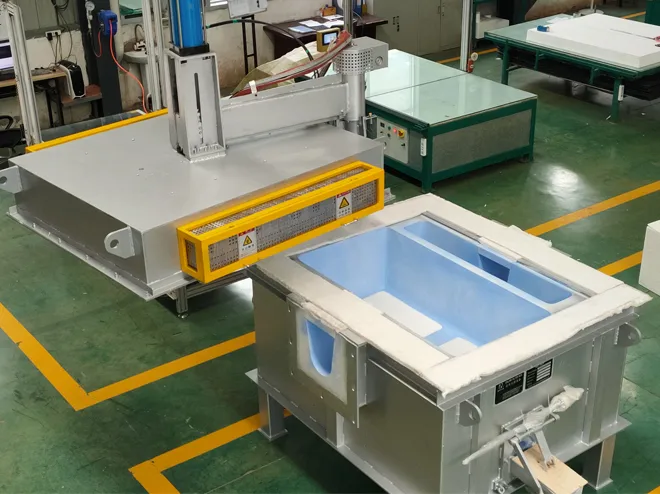
We designed the AdTech Deep Bed Filter system after analyzing production data from high-output aluminum casting facilities that documented significant operational costs from CFF-related line stoppages, filter preheating energy consumption, and the labor burden of frequent filter change-outs. The data consistently showed that the true cost of single-use filtration extended well beyond the filter purchase price.
Fundamental Differences Between Deep Bed and Surface Filtration Technologies
| Parameter | AdTech Deep Bed Filter | Ceramic Foam Filter (CFF) | Rigid Tube Filter | Cartridge Filter |
|---|---|---|---|---|
| Filtration mechanism | Volumetric depth filtration | Surface + shallow depth | Surface filtration | Surface filtration |
| Operation mode | Continuous | Batch (per heat) | Batch or continuous | Batch |
| Media replacement | Periodic maintenance | Every heat | Periodic | Periodic |
| Effective filtration depth | 400–800mm | 40–60mm | 10–20mm wall | 5–15mm wall |
| Max throughput per setup | Multi-heat continuous | Single heat | Multi-heat | Multi-heat |
| Inclusion removal efficiency | Very high (fine inclusions) | High (coarse inclusions) | Moderate | Moderate |
| Preheating requirement | System-level (not per heat) | Every filter change | Periodic | Periodic |
| Capital cost | Higher | Lower | Moderate | Moderate |
| Operating cost at high volume | Lower per ton | Higher per ton | Moderate | Moderate |
How Does the AdTech Deep Bed Filter Achieve Continuous High-Temperature Operation?
Continuous operation at temperatures between 680°C and 800°C — the typical range for aluminum alloy casting — requires engineering solutions across multiple system components simultaneously. Temperature maintenance, refractory integrity, media stability, and metal flow control must all function reliably without interruption across production periods measured in days rather than hours.
Refractory Shell and Thermal System Design
The AdTech Deep Bed Filter housing is constructed from high-alumina refractory materials selected for both thermal performance and chemical compatibility with molten aluminum and the alumina-based filter media. The shell design incorporates:
Multi-layer refractory construction: A hot-face lining of high-purity castable refractory (typically 70–80% Al₂O₃) directly contacts the molten metal and filter media. This inner layer is backed by insulating refractory layers that minimize heat loss while maintaining structural integrity of the filter vessel. The thermal gradient through the refractory wall is engineered to keep the hot-face temperature close to the melt temperature while limiting outer shell temperature to safe handling levels.
Integrated heating elements: Resistance heating elements embedded within or around the filter vessel maintain the metal and media temperature during periods of reduced metal flow and during system startup. Temperature control precision of ±5°C is achievable with properly tuned PID control systems, which is critical because temperature excursions — particularly metal cooling to the point of partial solidification within the filter bed — can cause catastrophic media blocking that requires complete media replacement.
Insulated lid and cover design: The filter vessel cover minimizes atmospheric exposure of the molten metal surface within the filter, reducing oxidation and hydrogen pickup during the filtration process. Some configurations incorporate inert gas (nitrogen or argon) blanketing of the metal surface within the filter vessel for premium-quality applications.
Metal Flow Control and Hydraulic Design
Maintaining controlled metal flow through the deep bed filter at a velocity that allows effective inclusion capture without channeling or turbulence requires careful hydraulic engineering:
Inlet distribution system: Metal enters the filter bed through a distribution manifold or refractory diffuser that spreads the incoming flow uniformly across the full cross-sectional area of the media bed. Non-uniform distribution creates preferential flow channels through the media where metal velocity is too high for effective inclusion capture, and low-velocity zones where metal may cool and partially solidify.
Controlled flow rate: The superficial velocity of metal through the filter bed — the volumetric flow rate divided by the filter cross-sectional area — is the critical hydraulic parameter. Effective deep bed filtration of aluminum occurs at superficial velocities of 0.5–3.0 cm/minute depending on inclusion target and media particle size. At velocities above this range, captured inclusions may be released from the media surface by hydrodynamic shear forces.
Head pressure management: Metal flows through the filter bed under gravity-driven head pressure created by the difference in metal level between the inlet and outlet sides of the filter. This head is engineered to maintain target flow velocity throughout the filtration period as the media bed gradually accumulates inclusions and pressure drop increases.
Temperature Monitoring and Control Architecture
The AdTech Deep Bed Filter system incorporates multiple thermocouple positions throughout the filter vessel:
- Inlet metal temperature monitoring.
- Multiple bed temperature measurements at different depths.
- Outlet metal temperature verification.
- Refractory shell temperature monitoring.
This temperature monitoring network serves both quality and safety functions. A temperature drop within the bed that is not explained by normal heat loss patterns may indicate localized flow channeling or the beginning of partial solidification — both conditions requiring immediate operator response. Temperature data from the filter system also provides indirect evidence of flow distribution quality.
What Inclusions and Contaminants Does Deep Bed Filtration Remove from Molten Aluminum?
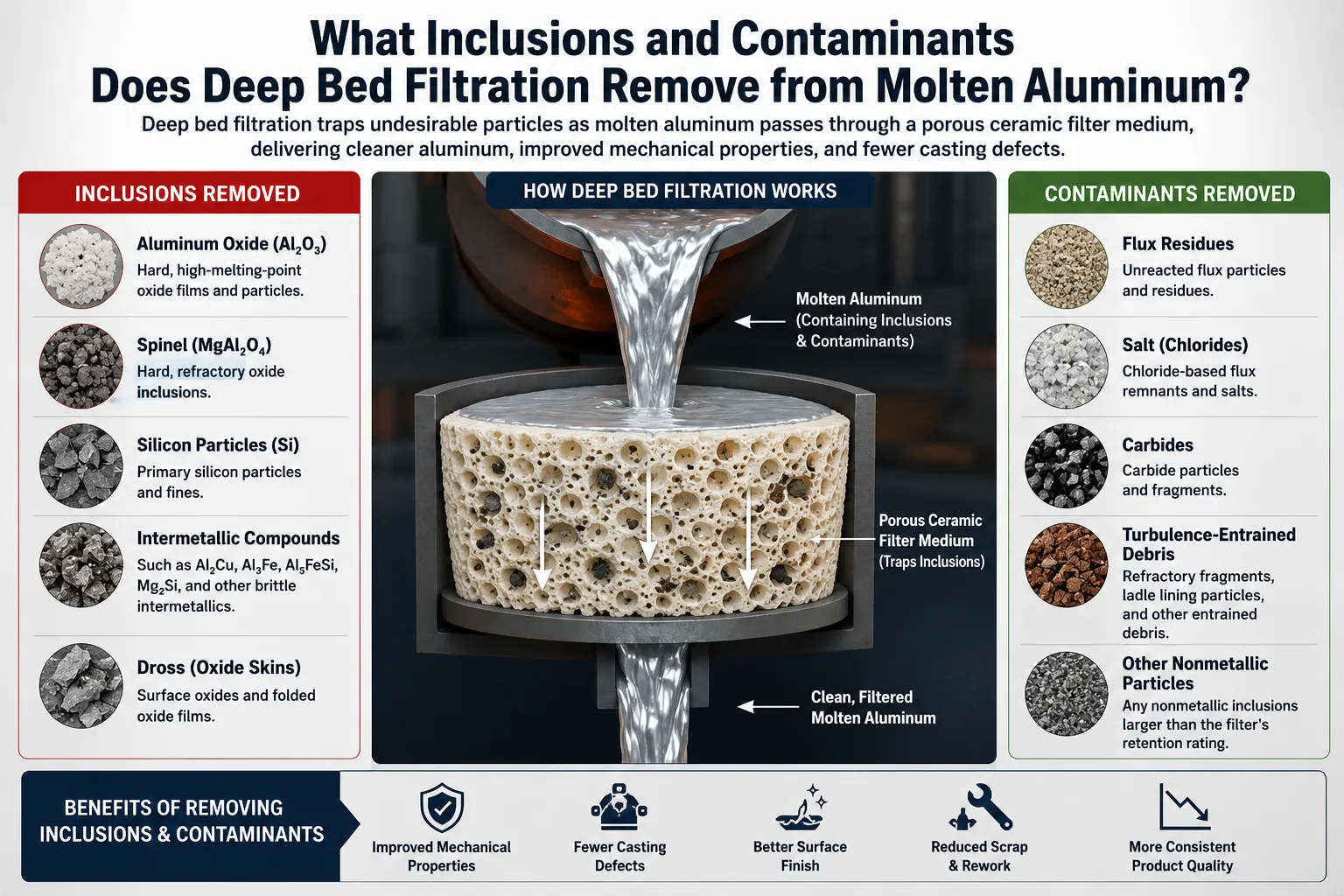
The inclusion population in molten aluminum consists of particles with different origins, compositions, size distributions, and surface chemistries. A deep bed filter’s ability to capture specific inclusion types depends on the capture mechanisms active at the operating conditions and the relationship between inclusion size and filter media particle size.
Oxide Film Inclusions
Aluminum oxide films (Al₂O₃ bifilms) are the most damaging and most prevalent inclusion type in most aluminum casting operations. They originate from folding of the melt surface during turbulent metal transfer, charging, or pouring operations. Oxide films are typically thin (sub-micron thickness) but can have lateral dimensions of millimeters to centimeters, making them extremely damaging stress concentrators in finished castings.
The capture of oxide films in a deep bed filter relies on their adhesion to the alumina media surface. The driving force for adhesion is the surface energy relationship between the oxide film, the molten aluminum, and the alumina media surface. Alumina-on-alumina adhesion is thermodynamically favorable — oxide films in contact with alumina media particles tend to attach and remain captured rather than returning to the metal stream.
Spinels and Intermetallic Inclusions
Magnesium-aluminum spinel (MgAl₂O₄) forms when magnesium-containing alloys are processed with insufficient flux protection. Titanium diboride (TiB₂) particles from grain refiner additions can agglomerate into clusters that behave as inclusions. Iron-rich intermetallics (Al₃Fe, Al₅FeSi, and related phases) precipitate from alloys with high iron content and can create brittle phases in castings.
These particles are generally harder and denser than oxide films, making them more amenable to capture through inertial and gravitational mechanisms in addition to surface adhesion. Deep bed filtration removes spinel and intermetallic inclusions at higher efficiency than the finest ceramic foam filters for particles in the 10–100 micron size range.
Inclusion Size and Capture Efficiency Relationship
| Inclusion Size Range | Primary Capture Mechanism | CFF Efficiency (50 PPI) | Deep Bed Filter Efficiency |
|---|---|---|---|
| Above 100 microns | Mechanical sieving | Very high (95%+) | Very high (95%+) |
| 20–100 microns | Inertial impaction + sieving | High (80–95%) | Very high (90–98%) |
| 5–20 microns | Inertial impaction + interception | Moderate (50–80%) | High (80–95%) |
| 1–5 microns | Diffusion + interception | Low (20–50%) | Moderate-High (60–85%) |
| Below 1 micron | Diffusion | Very low (below 20%) | Moderate (40–70%) |
Dissolved Hydrogen Interaction
Deep bed filtration does not directly remove dissolved hydrogen from molten aluminum — that is the function of degassing systems upstream. However, the filtration process has an indirect positive effect on hydrogen-related porosity in castings. Many fine oxide film inclusions act as nucleation sites for hydrogen porosity during solidification. By removing these nucleation sites, deep bed filtration reduces the tendency for hydrogen to precipitate as discrete pores even when the dissolved hydrogen content is not fully reduced to target levels. This synergistic effect means that deep bed filtration often produces measurable porosity reduction beyond what would be expected from inclusion removal alone.
What Are the Technical Specifications of the AdTech Deep Bed Filter System?
Technical specifications for the AdTech Deep Bed Filter system are presented to allow engineers to assess compatibility with their specific production requirements. These values reflect the standard product range; custom configurations are available for specific applications.
Standard System Dimensions and Capacity
| Specification Parameter | Standard Range | Notes |
|---|---|---|
| Filter bed cross-section | 0.5 m² to 4.0 m² | Scales with throughput requirement |
| Filter bed depth | 400mm to 800mm | Deeper beds for finer inclusion removal |
| Metal holding capacity | 200 kg to 5,000 kg | Depends on vessel configuration |
| Maximum throughput | 1 to 40 MT/hour | Based on bed area and flow velocity |
| Operating temperature range | 680°C to 800°C | Alloy-dependent |
| Temperature control accuracy | ±5°C | With PID control |
| Maximum metal head pressure | 300mm to 600mm | Drives metal flow through bed |
| Filtration media particle size | 3mm to 20mm | Selected per application |
| Refractory hot-face material | 75–80% Al₂O₃ castable | High purity, aluminum-compatible |
| Installed power (heating) | 15 kW to 150 kW | Depends on vessel size |
| System weight (empty) | 500 kg to 8,000 kg | Structural loading planning required |
Filtration Performance Specifications
| Performance Parameter | Specification | Test Condition |
|---|---|---|
| Inclusion removal efficiency (above 20 microns) | Above 90% | PoDFA measurement, upstream vs. downstream |
| Inclusion removal efficiency (5–20 microns) | Above 80% | PoDFA measurement |
| Density index improvement | 30–60% reduction | RPT comparison upstream vs. downstream |
| Metal temperature drop across filter | Below 5°C | At design flow rate |
| Metal yield through filter | Above 98% | Percentage of metal entering filter recovered |
| Maximum continuous operating period | 30–120 days | Depending on melt quality and alloy |
| Startup time to operating temperature | 8–24 hours | Cold start; faster from warm standby |
Refractory and Materials Specifications
The refractory materials used in AdTech Deep Bed Filter construction are selected specifically for aluminum contact service:
Hot-face castable: High-purity alumina castable (75% Al₂O₃ minimum) with controlled silica content (below 15%) to minimize silicon dissolution into the aluminum melt. Pre-mixed formulation with controlled particle size distribution for consistent casting properties.
Insulating backup: Multi-layer insulation system using medium-density insulating firebrick (IFB) and ceramic fiber blanket to achieve the target outer shell temperature while maintaining the inner hot-face at melt temperature.
Mortar and jointing: Alumina-based refractory mortar compatible with the hot-face castable thermal expansion characteristics to prevent joint cracking during thermal cycling.
How Does Deep Bed Filtration Performance Compare to Ceramic Foam Filter Technology?
The comparison between deep bed filtration and ceramic foam filter technology is the question most frequently raised by engineers evaluating whether to invest in a deep bed system. The answer is not simply that one technology is better — each has genuine advantages in specific operational contexts.
Inclusion Removal Performance Comparison
In direct head-to-head comparison with ceramic foam filters for fine inclusion removal, deep bed filters consistently achieve higher removal efficiency for inclusions below 20 microns in diameter. This advantage stems from the greater filtration path length and the multiple capture mechanisms active throughout the media bed depth.
For inclusions above 50 microns, both technologies achieve high removal rates and the performance difference is less significant. The practical implication is that deep bed filtration delivers its greatest advantage in applications where fine inclusion content is the critical quality driver — structural automotive castings, aerospace applications, and thin-wall components where fine inclusions are the primary defect source.
Throughput and Operational Flexibility Comparison
| Operational Factor | Deep Bed Filter | 50 PPI Ceramic Foam Filter |
|---|---|---|
| Setup time per heat | None (continuous) | 20–45 minutes (change + preheat) |
| Maximum heat size | Unlimited (continuous) | Limited by filter area |
| Fine inclusion removal | Very high | High |
| Coarse inclusion removal | Very high | Very high |
| Suitable for mixed alloy runs | With media consideration | Excellent flexibility |
| Metal loss per filter change | Not applicable | 2–5 kg per change |
| Labor requirement | Lower (no per-heat changes) | Higher |
| Filter media cost | Lower per ton at high volume | Higher per ton at high volume |
| System flexibility for small runs | Lower | Higher |
When Ceramic Foam Filters Remain the Better Choice
Deep bed filtration is not the optimal solution for every casting operation. CFF technology retains clear advantages in:
High alloy variety operations: Foundries that cast many different alloys with frequent changes benefit from the flexibility of CFF, which can be matched to each alloy without concern for media cross-contamination.
Low-volume or batch operations: Operations producing fewer than 5,000 MT per year may not generate sufficient volume to justify the capital investment in deep bed filtration infrastructure.
Gravity and tilt-pour casting: Some casting configurations do not accommodate inline filtration before the casting station, making filter-box CFF applications the practical solution.
Emergency and backup filtration: Even facilities with deep bed filtration typically maintain CFF capability for maintenance periods or emergency backup.
Which Aluminum Casting Operations Benefit Most from Continuous Deep Bed Filtration?
The operational profile that generates the greatest return from deep bed filtration investment has several consistent characteristics. Understanding whether your operation matches this profile is the practical starting point for evaluating the AdTech Deep Bed Filter.
High-Volume Continuous Casting Operations
Continuous casting operations — producing aluminum billet, slab, rod, or strip on a continuous basis — represent the ideal application environment for deep bed filtration. These operations run 24 hours per day, require consistent metal quality across the full production run, and cannot tolerate the throughput interruptions that per-heat CFF changes create.
A continuous casting line producing 200 mm diameter billet at 5 MT/hour would require CFF changes every 60–90 minutes if using conventional single-use filters of standard commercial size. Each change involves stopping metal flow, replacing the filter, preheating the new filter, and restarting — a process consuming 20–45 minutes and creating quality transition zones in the billet that must be scrapped. At 16 filter changes per 24-hour shift, this represents 5–12 hours of productive time lost per day and 16 sections of billet requiring crop and scrap. Deep bed filtration eliminates this entirely.
Automotive Structural Component Production
Automotive structural castings — suspension components, steering knuckles, crash management systems, battery housing structures — face increasingly stringent cleanliness specifications driven by safety and weight reduction imperatives. The 2024–2026 generation of structural aluminum requirements at major automotive OEMs effectively requires cleanliness levels that push the performance limits of conventional CFF technology. Deep bed filtration provides the filtration margin needed to consistently meet these specifications.
Aerospace and Defense Aluminum Casting
Aerospace casting operations have historically led the industry in melt cleanliness requirements. Aircraft structural components, propulsion system housings, and avionics enclosures face inclusion and porosity specifications that require the highest achievable filtration performance. The combination of deep bed filtration with upstream degassing and flux treatment creates a melt quality system capable of meeting aerospace requirements on a production basis.
Application Suitability Matrix
| Operation Type | Volume | Alloy Variety | Cleanliness Req. | Deep Bed Suitability |
|---|---|---|---|---|
| Continuous billet casting | Very high | Low-Moderate | High | Excellent |
| Continuous slab casting | Very high | Low | High | Excellent |
| Rod casting (Properzi/CCR) | High | Very low | High | Excellent |
| Automotive structural die casting | High | Low | Very high | Very good |
| Aerospace sand/investment casting | Moderate | Moderate | Extreme | Good |
| General die casting | Moderate-High | Moderate | Moderate | Good |
| Mixed alloy foundry | Variable | High | Variable | Less suitable |
| R&D and prototype | Low | Very high | Variable | Not suitable |
What Is the Filtration Media Used in AdTech Deep Bed Filters and How Is It Maintained?
The filtration media is the working heart of the deep bed filter system. Its properties — particle size, chemical composition, surface characteristics, and mechanical strength — directly determine filtration effectiveness and operational reliability.
Alumina-Based Filter Media Characteristics
AdTech Deep Bed Filters use alumina ceramic particles as the primary filtration medium. This material selection is deliberate and based on the surface chemistry requirements of effective inclusion capture from molten aluminum:
Chemical compatibility: Alumina media has essentially zero reactivity with molten aluminum under normal operating conditions. It does not dissolve into the melt, does not release contaminating elements, and does not react with common alloying elements including silicon, magnesium, copper, and zinc.
Favorable surface energy: The surface energy relationship between alumina media, aluminum oxide inclusions, and molten aluminum is thermodynamically favorable for inclusion capture. Oxide inclusions arriving at an alumina media surface experience attractive forces that promote adhesion and retention.
Thermal stability: Alumina retains its mechanical properties and dimensional stability at temperatures up to 1,600°C, well above the maximum aluminum processing temperature of 800°C. Thermal shock resistance is adequate for the modest temperature cycling that occurs during production operations.
Mechanical strength: The compressive strength of the alumina media particles must be sufficient to withstand the weight of the metal-saturated bed above without particle fracture that would create fines migrating into the filtered metal stream.
Media Particle Size Selection
| Media Particle Size | Filtration Fineness | Pressure Drop | Application Context |
|---|---|---|---|
| 15–20mm | Coarser (above 50 micron focus) | Very low | Pre-filtration, high throughput |
| 8–15mm | Moderate (20–50 micron focus) | Low | General continuous casting |
| 4–8mm | Fine (10–20 micron focus) | Moderate | Automotive structural applications |
| 2–4mm | Very fine (5–10 micron focus) | Higher | Aerospace, premium quality |
In practice, many deep bed filter installations use a graded media bed — coarser particles at the metal inlet and progressively finer particles in the lower sections — that replicates the graduated layer concept used in catalyst support beds. This grading maximizes both coarse particle capture in the upper layers and fine particle capture in the lower sections while managing overall pressure drop.
Media Maintenance and Replacement Protocol
The operational advantage of deep bed filtration over single-use filters lies partly in the extended maintenance interval, but media management remains an important operational procedure:
Continuous operation period: Well-operated deep bed filters in continuous casting applications typically run for 30–90 days between planned media maintenance events, depending on melt cleanliness, alloy type, and throughput rate.
Inclusion saturation monitoring: As the media bed accumulates inclusions, pressure drop across the bed increases progressively. Monitoring the head pressure required to maintain target flow rate provides a continuous indirect measurement of media saturation. When pressure drop reaches a defined limit, media maintenance is scheduled.
Media recovery and cleaning: In some AdTech Deep Bed Filter configurations, the alumina media can be removed, cleaned, and returned to service after appropriate treatment. The alumina media particles themselves are not consumed by the filtration process — only the accumulated inclusions require removal.
Full media replacement: When media has reached the end of its useful service life — typically after multiple cleaning cycles — full media replacement is performed during a planned maintenance shutdown. The replacement procedure involves draining residual metal, removing the spent media, inspecting and if necessary repairing the refractory lining, and installing fresh media with the appropriate graded configuration.
How Do You Integrate a Deep Bed Filter into an Existing Aluminum Casting Line?
Integration of the AdTech Deep Bed Filter into an operating aluminum casting line is a significant engineering project that requires coordination across multiple disciplines: process metallurgy, mechanical engineering, civil/structural engineering, electrical systems, and production scheduling.
Positioning in the Melt Treatment Process Chain
The deep bed filter occupies a specific position within the overall melt treatment sequence. Best practice in aluminum casting line design places filtration as the final melt quality step immediately before the casting unit, following degassing and flux treatment:
Recommended melt treatment sequence:
- Melting and charge preparation (furnace).
- Flux treatment and dross removal (holding furnace).
- Online degassing (rotary degassing unit).
- Deep bed filtration (AdTech Deep Bed Filter).
- Casting machine (DC casting, continuous casting, or other).
Placing filtration after degassing rather than before is important because rotary degassing creates turbulence that can generate new oxide inclusions. These post-degassing inclusions must be captured by the filter before the metal reaches the casting point.
Civil and Structural Requirements
The AdTech Deep Bed Filter is a substantial refractory structure with significant mass both empty and when filled with alumina media and molten aluminum. Civil requirements include:
Foundation loading: A medium-size deep bed filter installation may impose floor loading of 5,000–15,000 kg concentrated over the filter footprint. Existing casting floor load ratings must be verified and reinforcement provided if required.
Elevation and metal flow: The filter must be positioned at the correct elevation relative to the holding furnace outlet and the casting machine inlet to achieve gravity-driven metal flow without pumps. This often requires platform construction or pit installation to accommodate height differences.
Refractory dryout access: The filter refractory must be fully dried before first metal contact. This dryout process (typically 24–72 hours at controlled temperature ramp) requires access for temperature monitoring equipment and heating system connection.
Process Integration Checklist
| Integration Element | Requirement | Verification Method |
|---|---|---|
| Metal flow path continuity | Gravity-driven flow from furnace through filter to casting | Hydraulic calculation |
| Temperature maintenance | Filter outlet temperature within 5°C of target | Thermocouple calibration |
| Flow rate control | Variable control from 20% to 100% of design rate | Flow measurement at casting |
| Emergency metal drainage | Complete drainage capability within 30 minutes | Drainage system test |
| Refractory dryout completion | Zero moisture in refractory before metal contact | Temperature profile verification |
| Startup sequence procedure | Documented step-by-step startup protocol | Operator training |
| Alarm and interlock systems | High/low temperature alarms, flow alarms | Control system commissioning |
What Quality Improvements Can Foundries Expect from Deep Bed Filtration?
The quality case for deep bed filtration rests on documented improvements in casting quality metrics that translate directly into economic outcomes — reduced scrap rates, improved mechanical property consistency, longer fatigue life, and fewer customer returns.
Inclusion Content Reduction
The most direct quality measurement is the reduction in non-metallic inclusion content between unfiltered metal and metal processed through the deep bed filter. AdTech system performance data from operating installations shows:
PoDFA (Porous Disc Filtration Analysis) results: Typical upstream inclusion content of 0.3–1.5 mm²/kg in secondary aluminum processing operations reduces to 0.05–0.15 mm²/kg after deep bed filtration — a reduction of 70–90% in measured inclusion content.
K-Mold test results: Inclusion-related fracture scores in K-mold testing consistently improve by 2–4 quality grades when deep bed filtered metal is compared to CFF-only filtered metal from the same charge.
Mechanical Property Improvements in Castings
Reduced inclusion content translates to measurable improvements in mechanical properties, particularly those most sensitive to discontinuities:
| Property | Improvement from Deep Bed Filtration | Primary Mechanism |
|---|---|---|
| Ultimate tensile strength | 5–15% increase | Fewer large inclusion stress concentrators |
| Elongation to fracture | 15–40% increase | Fewer fracture initiation sites |
| Fatigue life (high-cycle) | 30–100% increase | Elimination of fine oxide film nucleation sites |
| Charpy impact energy | 10–25% increase | Improved microstructural integrity |
| Porosity (X-ray rating) | 1–2 grade improvement | Both inclusion and hydrogen porosity reduction |
Production Quality Metrics
Beyond individual casting mechanical properties, deep bed filtration affects production-level quality metrics:
Scrap rate reduction: Operations transitioning from CFF-only filtration to deep bed filtration typically report casting scrap rate reductions of 1–3 percentage points. At a facility producing 10,000 MT of castings annually at $3/kg value, each 1% scrap reduction represents $300,000 in annual recovered value.
Customer return reduction: Inclusion-related field failures that generate warranty claims and customer returns are among the most expensive quality failures in the automotive aluminum supply chain. Deep bed filtration reduces this risk significantly.
Consistency across production runs: The stable filtration performance of a properly operating deep bed filter eliminates the quality variation between heats that occurs with CFF filtration — variation from filter preheating differences, filter-to-filter consistency, and the end-of-heat degradation seen with conventional filters.
Operating Costs, Media Life, and Total Cost of Ownership Analysis
The capital cost of an AdTech Deep Bed Filter system is higher than a comparable CFF filter box installation. The total cost of ownership calculation, however, must account for the full operational economics over the equipment lifetime.
Cost Elements in the Total Cost of Ownership Model
Capital cost components:
- Deep bed filter vessel with refractory lining
- Heating system (elements, controllers, power supply)
- Temperature monitoring system
- Metal flow control components
- Structural supports, platforms, and integration hardware
- Installation and commissioning
Operating cost components:
- Heating energy (maintaining filter temperature)
- Alumina filter media (replacement cost over equipment lifetime)
- Labor for media maintenance and replacement
- Refractory repair and relining (periodic)
- Instrumentation maintenance
Cost savings from deep bed filtration:
- Elimination of per-heat CFF purchase cost
- Elimination of per-heat CFF change labor
- Elimination of CFF preheating energy
- Reduction in casting scrap value
- Reduction in customer return costs
- Extended production uptime value
Break-Even Volume Analysis
| Annual Production Volume | Estimated Deep Bed Filter Payback Period |
|---|---|
| Below 3,000 MT/year | Typically not economically justified |
| 3,000–8,000 MT/year | 3–5 year payback |
| 8,000–20,000 MT/year | 1.5–3 year payback |
| Above 20,000 MT/year | Below 18 months payback |
These estimates assume current CFF pricing, labor rates, and aluminum metal value. Operations with particularly high scrap rates from inclusion defects or significant customer return costs may achieve faster payback at lower volumes.
Media Life and Replacement Cost
Alumina filtration media life varies with operating conditions but typically spans 6–24 months of operation before requiring replacement. The cost of replacing the alumina media bed is a fraction of the capital cost of the filter system itself, and should be budgeted as a regular maintenance expense in the total cost of ownership model.
Troubleshooting Deep Bed Filter Performance in Production Environments
Operating a deep bed filter system over extended production periods involves managing a range of potential performance deviations. The following troubleshooting framework addresses the most commonly encountered operational problems.
Elevated Pressure Drop Across the Filter Bed
Symptom: Head pressure required to maintain target flow rate increases faster than expected, potentially restricting throughput before scheduled media maintenance.
Probable causes:
- Higher than expected inclusion loading in the incoming metal (check upstream melt quality)
- Partial blockage of metal inlet distribution system.
- Local media compaction from excessively high flow rates.
- Partial solidification within the bed from temperature control issues.
Diagnostic approach: Monitor temperature distribution across the bed to identify cold spots. Check inlet distributor for blockage. Compare actual inclusion loading against design basis by testing upstream metal quality.
Inclusion Breakthrough to Filtered Metal
Symptom: Downstream metal quality measurements show inclusion content approaching or exceeding upstream values, indicating filtration effectiveness has collapsed.
Probable causes:
- Media bed saturation has reached capacity — inclusions are not captured but bypass through the bed.
- Channeling has developed within the bed due to uneven flow distribution.
- Metal velocity through the bed is too high for effective capture.
- Temperature excursion has caused partial re-melting of captured oxide inclusions.
Diagnostic approach: Measure actual flow rate and compare to design superficial velocity. Inspect flow distribution uniformity. Check for temperature uniformity across the bed cross-section.
Temperature Loss Across the Filter
Symptom: Outlet metal temperature is significantly below inlet temperature or below casting target temperature.
Probable causes:
- Heating element failure (one or more elements offline)
- Refractory lining damage creating heat loss pathway.
- Metal flow rate significantly above design (too little residence time for heat exchange with media)
- Extended low-flow period allowing media and vessel to cool.
Corrective actions: Verify heating element continuity. Reduce flow rate temporarily to allow temperature recovery. Inspect refractory condition during next scheduled maintenance.
FAQs About Continuous High-Temperature Deep Bed Filtration
Q1: What is a deep bed filter in aluminum casting and how does it work?
A deep bed filter is a refractory-lined vessel containing a packed bed of alumina ceramic particles, typically 400–800mm deep, through which molten aluminum flows continuously. As metal passes through the granular media bed, non-metallic inclusions (primarily aluminum oxide films, spinels, and intermetallic particles) are captured throughout the bed depth by multiple mechanisms: inertial impaction, interception, diffusion, and surface adhesion to the alumina media. Unlike ceramic foam filters that operate as single-use surface filters, deep bed filtration processes metal continuously across multiple production heats without replacement or interruption, making it the preferred technology for high-volume continuous casting operations.
Q2: How does the AdTech Deep Bed Filter differ from ceramic foam filters?
Ceramic foam filters (CFF) are single-use, planar filters typically 50mm thick that are installed for one casting heat and then discarded. They require preheating for 30–45 minutes before each heat, and the change process interrupts production regularly. The AdTech Deep Bed Filter operates continuously with a filtration path of 400–800mm through alumina granular media, providing much higher inclusion holding capacity, superior fine inclusion removal (below 20 microns), and elimination of the throughput interruptions associated with per-heat filter changes. The economic advantage of deep bed filtration is strongest at high production volumes where the accumulated savings from fewer interruptions and lower per-ton filtration cost outweigh the higher capital investment.
Q3: What temperature range does the AdTech Deep Bed Filter operate at?
The AdTech Deep Bed Filter is designed for continuous operation at temperatures from 680°C to 800°C, covering the full range of aluminum alloy holding and casting temperatures. The refractory vessel, integrated heating system, and temperature control architecture maintain the metal and media within ±5°C of the target temperature throughout the production period. The system includes multiple thermocouple monitoring points and alarm interlocks that alert operators to temperature deviations before they affect metal quality or cause operational problems.
Q4: How long can a deep bed filter operate before the media needs replacement?
Under typical continuous casting operating conditions, AdTech Deep Bed Filter media operates for 30–120 days between maintenance events, depending on the inclusion loading of the incoming metal, production throughput rate, and alloy type. The primary operational indicator is the pressure drop across the bed — as the media accumulates inclusions, the head pressure required to maintain target flow rate increases progressively. Planned media maintenance is scheduled when pressure drop reaches a defined limit. Full media replacement is typically required every 6–24 months of operation.
Q5: What types of inclusions does deep bed filtration remove from aluminum?
Deep bed filtration removes all major non-metallic inclusion categories found in molten aluminum: aluminum oxide films (the most damaging inclusion type), magnesium-aluminum spinel particles, titanium diboride agglomerates from grain refiner additions, iron-rich intermetallic particles, and carbonaceous inclusions from charge materials. The removal efficiency varies with inclusion size — particles above 20 microns are captured at 90%+ efficiency, while particles in the 5–20 micron range achieve 80–95% removal depending on media particle size and bed depth. Fine inclusions below 5 microns are partially captured through diffusion mechanisms.
Q6: How much does installing an AdTech Deep Bed Filter improve casting quality?
Quality improvements from deep bed filtration are consistently measurable across multiple metrics. PoDFA inclusion measurements typically show 70–90% reduction in non-metallic inclusion content compared to incoming metal. Casting elongation to fracture improves by 15–40% in typical structural aluminum alloys. High-cycle fatigue life increases by 30–100% due to elimination of fine oxide film nucleation sites for fatigue crack initiation. Production scrap rates from inclusion-related defects typically decrease by 1–3 percentage points. These improvements are most significant in applications with demanding cleanliness specifications such as automotive structural components and aerospace castings.
Q7: What is the minimum production volume that justifies investing in deep bed filtration?
Based on operating cost analysis comparing deep bed filtration against ceramic foam filter technology, operations producing less than approximately 3,000 MT of aluminum per year typically cannot generate sufficient cost savings from reduced filter consumption and higher production uptime to recover the capital investment within a commercially acceptable payback period. Operations in the 3,000–8,000 MT/year range typically achieve payback in 3–5 years. Above 8,000 MT/year, payback periods of 1.5–3 years are typical. Operations with unusually high scrap rates from inclusion defects or significant customer return costs from quality failures may justify deep bed filtration at lower volumes.
Q8: Can deep bed filtration be used with all aluminum alloys?
The AdTech Deep Bed Filter is compatible with the full range of wrought and casting aluminum alloys processed at standard temperatures. The alumina media is chemically inert to all common alloying elements including silicon, copper, magnesium, zinc, and manganese at standard processing temperatures. The primary consideration for alloy-specific applications is ensuring that the alumina media selection and system operating temperature are appropriate for the specific alloy’s metallurgical characteristics. Magnesium-containing alloys above 3% Mg may warrant specific media selection to ensure compatibility.
Q9: How is the AdTech Deep Bed Filter started up after installation or extended shutdown?
The startup procedure for the AdTech Deep Bed Filter begins with a refractory dryout phase that removes moisture from the castable refractory lining. This dryout follows a controlled temperature ramp profile over 24–72 hours using the integrated heating system, typically rising from ambient to 150°C (moisture evolution phase), then continuing to 600°C (structural dryout), then to operating temperature. After dryout completion, the alumina media is preheated to operating temperature before metal is introduced. First metal introduction follows a controlled priming sequence that establishes stable flow and temperature before the filter is connected to the main casting line flow path.
Q10: What maintenance does an AdTech Deep Bed Filter require during continuous operation?
During continuous operation, the AdTech Deep Bed Filter requires monitoring of temperature, flow rate, and pressure drop parameters — typically automated through the control system with operator review of trend data. Scheduled maintenance events include: visual inspection of the filter vessel exterior and accessible refractory surfaces, verification of thermocouple calibration, heating element condition check, cleaning of metal inlet and outlet passages, and measurement of actual media bed depth (settling over time reduces effective bed depth). Full media replacement and refractory inspection occur at intervals determined by operating experience but typically every 6–24 months.
Conclusion: Why Continuous Deep Bed Filtration Represents the Performance Standard for High-Volume Aluminum Casting
The case for adopting continuous deep bed filtration in high-volume aluminum casting operations is built on straightforward engineering and economics. Single-use ceramic foam filter technology served the industry well for decades and continues to be appropriate for many applications — but the combination of tightening cleanliness specifications from end markets, increasing production volumes, and rising labor and energy costs has shifted the cost-performance balance decisively toward deep bed filtration for operations above certain volume thresholds.
The AdTech Deep Bed Filter system addresses the specific operational frustrations that high-throughput casting facilities consistently report: interruptions to production for filter changes, inconsistent filtration performance between heats, and the inability of conventional surface filtration to reliably remove fine inclusions below 20 microns. The volumetric filtration principle, combined with the thermal engineering of a properly designed refractory vessel with integrated heating, creates a system where filtration performance is stable, predictable, and continuous rather than variable and batch-limited.
At AdTech, we continue to refine the deep bed filter platform based on operating experience across diverse casting environments. The application data from deployed systems provides the foundation for continuous improvement in media selection, bed geometry, flow distribution design, and control system sophistication. The result is a filtration technology that meets the documented performance requirements of the aluminum industry’s most demanding quality segments while delivering operating economics that make the investment decision straightforward for qualifying production volumes.