

High-quality degassing rotors and shafts made in China, when chosen for the right material, coating and geometry, deliver reliable hydrogen removal and inclusion flotation in molten aluminum, extend service life, lower operating cost and protect downstream filters; to gain predictable performance purchase parts sized to your melt volume, follow strict preheat and installation routines, control rotational speed and gas flow, and monitor wear patterns to replace rotors before geometry degrades.
Why rotors and shafts matter in aluminum melt treatment
Rotary degassing is the dominant practical method for removing dissolved hydrogen and aiding inclusion flotation in many aluminum casting operations. The rotor generates fine inert-gas bubbles that rise through the melt and transport hydrogen and small inclusions to the surface. The shaft transfers torque and delivers the purge gas into the rotor assembly. Rotor geometry, shaft integrity and surface condition drive bubble size distribution and mechanical lifetime. Poorly chosen or degraded rotors lead to lower hydrogen removal efficiency, higher scrap and accelerated wear on other components.
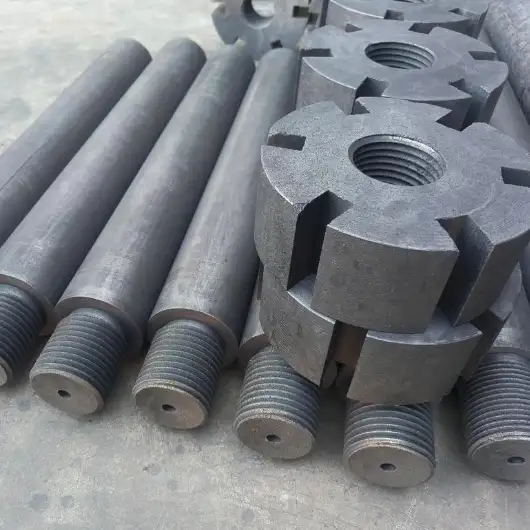
Overview of common rotor families and shaft designs
Graphite rotors and graphite shafts
Graphite remains widespread because it handles high temperature, provides low density and can be shaped into complex impeller geometries. Typical rotors are near-isotropic, high-purity graphite that have been machined to close tolerances and often impregnated or coated to reduce oxidation and metal wetting. Shafts made from graphite may be solid or hollow to pass gas through the axis. Proper impregnation extends life by filling open pores and improving oxidation resistance.
Ceramic rotors and silicon nitride shafts
Advanced shops use sintered ceramic rotors or silicon nitride components where abrasion resistance and oxidation durability are paramount. Silicon nitride offers high strength, low fracture toughness relative to graphite but excellent wear resistance. Ceramic rotors suit continuous heavy-duty operations and specialist alloys that erode graphite faster. Chinese manufacturers produce silicon nitride and other ceramic rotors tailored for industrial degassing.
Coated and composite designs
Several designs combine a graphite core with wear-resistant coatings or impregnations. Coatings can be proprietary anti-oxidation treatments, BN-like anti-wetting layers or ceramic coatings that reduce pore exposure and improve life. Composite rotors combine toughness of sintered bodies with low wettability of coated surfaces.
Material choice and chemical compatibility
Selecting rotor material requires matching alloy chemistry, operating temperature and expected abrasion. Typical materials and their strengths are summarized below.
Table 1: Materials comparison summary
| Material family | Typical form | Key strengths | Typical weakness |
|---|---|---|---|
| Graphite (high purity) | Machined rotors and shafts | Excellent thermal shock resistance, easy to machine, low density | Oxidation at high temperature, pore absorption without impregnation |
| Impregnated graphite | Same shapes, sealed pores | Improved oxidation resistance and longer life | Higher cost, coating wear over time |
| Silicon nitride (Si3N4) | Sintered rotor or shaft | High strength, wear resistant, low oxidation | Brittle fracture risk, higher cost and harder to machine |
| Bonded SiC or SiC-reinforced alumina | Cast or sintered bodies | Very high abrasion resistance, thermal durability | Heavier, more costly manufacturing |
| Coated graphite / ceramic coated | Graphite core with external barrier | Best balance of machinability and improved durability | Coating delamination risk under impact |
Sources from Chinese suppliers show all these materials are offered with varying surface treatments and production volumes.
Rotor geometry and bubble formation fundamentals
Rotor head shape and vane profile define how inert gas breaks into bubbles. Smaller, uniformly sized bubbles present higher surface area for hydrogen exchange. Key geometric factors include:
-
Vane number and pitch.
-
Axial versus radial vane orientation.
-
Rotor diameter relative to ladle or crucible size.
-
Immersion depth and distance from furnace walls.
Proper geometry promotes fine bubble dispersion, fast hydrogen mass transfer and avoids vortexing that draws slag downward. Vendor performance curves often chart hydrogen reduction versus treatment time for a given rotor design. Vesuvius and other major OEMs provide comparative curves showing the effect of rotor design on degassing kinetics.
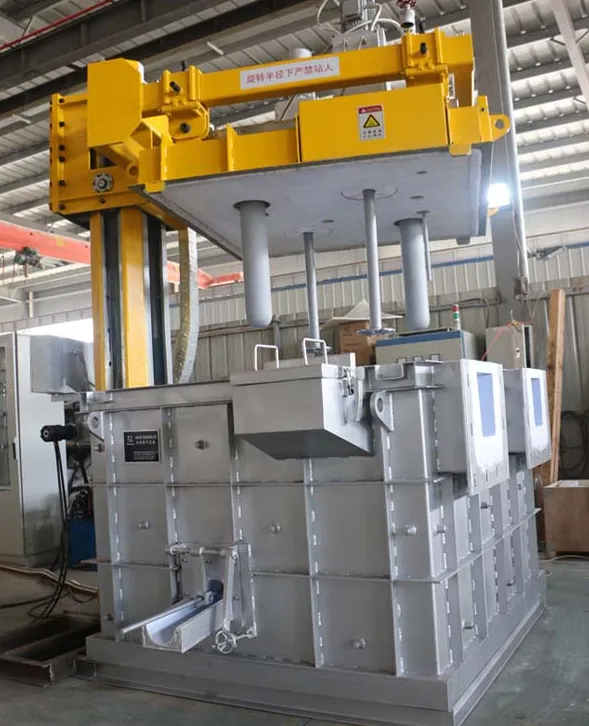
Degassing System with Rotor used for Molten Aluminum.
Manufacturing processes and quality controls used by Chinese suppliers
Manufacturing steps typically include material selection, machining or pressing, sintering for ceramics, impregnation for graphite, dimensional finishing, and surface treatment. Quality checkpoints to demand from vendors include:
-
Chemical purity certificate for graphite or ceramic composition
-
Dimensional tolerance report including concentricity and vane profile deviation
-
Porosity or density measurement for sintered bodies
-
Impregnation or coating batch certificate showing process parameters and penetration depth
-
Traceable batch numbers and test records for mechanical strength
Chinese producers range from small workshops to ISO-aligned factories. Buyers should request third-party inspection or sample testing when procuring critical components. Manufacturer listings show many Chinese firms offering graphite rotor sets with impregnation and coating options.
Surface treatment, impregnation and coating technologies
Open-porosity graphite absorbs metal and oxidizes. Impregnation fills pores with resins or metal-compatible compounds. Common treatments include:
-
Resin impregnation followed by heat cure and surface sealing.
-
Anti-oxidation chemical layers applied by dip coating or spray.
-
Nano-scale infill treatments claimed to raise oxidation temperature and reduce gas uptake.
-
Ceramic or SiC coatings applied by slurry or plasma spraying for wear resistance.
Supplier claims suggest impregnated graphite can achieve several times the lifetime of untreated pieces under similar duty cycles. Independent case data indicate meaningful life extension, while noting that geometry wear still governs end of life.
Shaft connection methods and gas delivery paths
Shafts carry torque and typically convey purge gas. Common shaft designs:
-
Hollow shafts with internal gas channels that deliver inert gas to a central bore and then to the rotor head
-
Solid shafts with external gas feed via swivel joints at the rotating coupling point
-
Modular shafts with replaceable tip adapters to customize immersion depth or to fit different rotor heads
Swivel and rotary feed joints must be oil-free and leak-proof. Gas purity and dryness are critical; moisture or oil contamination shortens life and contaminates the melt. Some systems include mass-flow control and gas dryness monitors to protect shaft and rotor components.
Operational parameters: speed, gas type and flow rate, immersion depth
Practical operating windows vary with rotor type and melt volume. Typical ranges used in industry practice:
Table 2: Typical operating parameters
| Parameter | Typical range | Notes |
|---|---|---|
| Rotor speed | 200 to 1,600 rpm | Common foundry practice often uses 200 to 1,200 rpm; match speed to rotor design and melt turbulence limits. |
| Purge gas | Argon or nitrogen | Argon provides better removal and avoids nitride risk in some alloys; nitrogen used where cost constraints apply. |
| Gas flow per rotor | 5 to 30 L/min for small rotors; higher for larger heads | Flow must be controlled to generate fine bubbles without surface boiling. |
| Immersion depth | 1 to 3 rotor diameters below surface | Immersion affects breakdown and bubble rise path; too deep can accelerate rotor wear. |
| Treatment time | 5 to 20 minutes per batch typical | Alloy, melt cleanliness target and rotor efficiency determine duration. |
Set control recipes for each alloy and pour size and record RPT or hydrogen titration values to tune settings.
Installation, preheat and commissioning routines
Proper installation extends service life and ensures safety. Steps include:
-
Inspect rotor and shaft for shipping damage and dimensional compliance.
-
Preheat shaft and rotor in a controlled oven or by gradual immersion technique per vendor guidance to remove moisture and avoid thermal shock.
-
Confirm gas supply is oil-free and dry with inline filter and moisture monitor.
-
Verify coupling torque, axial run-out and concentricity at low speed before hot test.
-
Run a staged commissioning sequence with incremental speed and gas settings and sample for Reduced Pressure Test or hydrogen titration after each shift.
Many suppliers provide preheat schedules. Chinese vendor literature often states operating speeds and recommended preheat to avoid cracking and reduce early life failures.
Measurement, verification and metallurgical checks
To confirm degassing performance use a combination of:
-
Reduced Pressure Test (RPT) for porosity comparison pre- and post-treatment
-
Laboratory hydrogen titration when precise ppm is required
-
X-ray or ultrasonic inspection for critical castings
-
Visual and microscopic inclusion counts for process trending
Document baseline and post-installation results. For repeatability keep control charts and tie rotor serial numbers to treatment data.
Wear modes, failure signs and end-of-life criteria
Common wear and failure modes:
-
Vane rounding and distortion reducing bubble breakup efficiency
-
Shaft eccentricity from abrasion and bearing wear causing vibration
-
Surface coating loss leading to increased oxidation and adherence of metal
-
Cracking in ceramic rotors from thermal shock or mechanical impact
Replace rotors when geometry tolerance exceeds vendor limits or when performance metrics degrade beyond acceptance. Visual inspection, vibration monitoring and change in hydrogen removal rates provide actionable signals. Supplier case studies show impregnated graphite can extend life but still requires scheduled replacement.
Maintenance plan and spare strategy
A practical preventive maintenance schedule includes:
-
Daily: visual check of shaft seals, gas supply and quick run at low RPM to confirm smooth rotation
-
Weekly: inspect rotor head geometry and record any visual chipping or coating loss
-
Monthly: measure rotor diameters and vane profiles, check for eccentricity and inspect coupling faces
-
Replace: keep inventory of at least one spare rotor and one spare shaft per critical production line to avoid downtime
Document run hours and tonnes of melt treated to predict replacement intervals and optimize spare stocking.
Table 3: Example maintenance schedule
| Interval | Activity |
|---|---|
| Daily | Visual inspection, gas purity check, confirm no leaks |
| Weekly | Low-speed run test, check rotor condition |
| Monthly | Dimensional check, record wear metrics |
| Per failure or scheduled | Replace rotor and re-commission |
Safety, environmental and handling rules
Key safety points:
-
Prevent moisture contact with hot rotor or shaft during preheat to avoid steam explosions.
-
Use oil-free gas supply equipment and explosion-proof blowers for compressors.
-
Provide appropriate fume extraction when fluxing or skimming occurs near degassing station.
-
Train operators on emergency shutoff and hot swap procedures.
Dispose of worn rotors and shaft pieces according to local environmental rules; many graphite components contain binders or coatings that require proper handling.
Selection criteria for procurement teams
When evaluating Chinese suppliers, require:
-
Material certificates and batch test data for graphite or ceramic raw materials
-
Sample parts with measured tolerances and test-run results in a lab melt if possible
-
Records of coating or impregnation process including penetration depth and test method
-
Warranty terms and replacement policy including lead time for spares
-
References and case studies for similar alloy use and duty cycles
Obtain a technical datasheet that lists expected life in run-hours or tonnes treated under defined operating conditions.
Comparative table: rotor/shaft options for different foundry scales
Table 4: Suggested rotor family by production class
| Foundry class | Typical rotor material | Typical shaft design | Rationale |
|---|---|---|---|
| Small batch / lab | Machined graphite, impregnated | Hollow graphite shaft | Low capital, easy replacement, good thermal shock tolerance |
| Medium production | Impregnated graphite with coating | Modular hollow shaft with gas swivel | Balance cost and life, better oxidation resistance |
| High throughput / continuous | Silicon nitride or SiC-reinforced rotors | Ceramic or coated steel shaft with gas sealing | Maximize abrasion and oxidation resistance under heavy duty |
| Specialty alloys / aerospace | Engineered ceramic rotors | Precision ceramic shafts and high-quality swivel feed | Lowest contamination risk, best lifetime and reproducibility |
Compare supplier performance curves before final choice and insist on pilot run if possible.
Cost drivers, warranty and total cost of ownership
Key cost items:
-
Unit price for rotor plus shaft and coupling
-
Coating and impregnation premium
-
Freight and customs for imported components
-
Downtime cost if spares are not available
-
Operator training and commissioning service costs
Total cost of ownership favors slightly higher initial spend on long-life material when downtime or scrap costs are high. Many purchasers find impregnated graphite or ceramic options deliver better lifecycle economics in medium and large plants.
Troubleshooting matrix
Table 5: Troubleshooting quick reference
| Symptom | Probable cause | Corrective action |
|---|---|---|
| Rapid drop in degassing efficiency | Rotor vane wear or coating loss | Replace rotor, adjust RPM/flow settings and retest |
| Excess vibration | Shaft eccentricity or bearing wear | Inspect coupling, replace shaft or bearings, rebalance rotor |
| Coating flaking | Poor surface prep or thermal shock | Replace rotor, review preheat protocol, choose different coating |
| Gas bubbles too large | Excessive gas flow or worn vane edges | Reduce gas flow, check vane geometry or head design |
| Frequent shaft failure | Contaminated gas or oil ingress | Install oil-free gas treatment, check swivel seals |
Log issues with time stamps and alloy data to speed root cause analysis.
Standards, tests and documentation to request
Ask suppliers for:
-
Material test reports for raw graphite or ceramic (density, purity, porosity)
-
Dimensional inspection certificate and run-out tolerance report
-
Coating adhesion or impregnation depth test data
-
Recommended operating window and life expectancy expressed in run-hours or tonnes treated
-
Installation, preheat and maintenance manuals and recommended checklists
Where possible obtain third-party lab verification for critical purchases.
Practical case notes and examples
-
Case 1: A medium automotive foundry switched from uncoated graphite to impregnated graphite rotors. The measured rotor life increased roughly threefold and filter life extended, producing a payback in under 12 months.
-
Case 2: A high-throughput plant trialed silicon nitride rotors in one line. The rotors lasted longer under abrasive duty but required stricter handling during replacement due to brittleness. Project concluded that ceramic parts paid off where downtime cost exceeded the premium.
Procurement checklist and sample RFQ items
When requesting quotes include:
-
Alloy types and typical melt temperature
-
Batch/ladle sizes and expected treatment mass per shift
-
Target hydrogen levels or RPT acceptance criteria
-
Expected RPM, immersion depths and gas type preference
-
Required lead time and spare part kit list
-
Desired warranty terms and service support options
Provide these items to shortlisted suppliers and request sample test runs or performance data.
FAQs
1. What material rotors are best for heavy abrasive duty?
Silicon nitride (Si3N4) or SiC-reinforced ceramic rotors show superior abrasion resistance for long-term use. For moderate duty or shorter production runs, impregnated graphite often provides the best lifecycle value due to its lower cost and ease of handling.
2. Does coating always lengthen rotor life?
3. Should I use argon or nitrogen for purge?
4. How do I know when a rotor needs replacement?
Replace the rotor when vane geometry is rounded (reducing shear efficiency), when RPT (Reduced Pressure Test) results fall below standards, or if visual cracks, coating loss, or abnormal vibration appear.